
 TRIAL LESSON
Haydn Sonatas, HOME PAGE
Haydn in London: The 3 London Piano Sonatas
Mar
Haydn in London: The 3 London Piano Sonatas
I continue my dialogue with Haydn piano works that seem to not find a clear ending any soon. In my trip towards organising the justifications and history behind the production of this wide collection of piano sonatas. It is yet not clear if he wrote 52 or 62 sonatas, the 10 sonatas in excess of 52 include pieces that resourfaced in the years that place us apart from Haydn death and others of doubtful authorship; maybe the most remarkable one the Bb major one, later attributed to Johann Gottfried Schwanenberger.
In this article, I aim to explore the context and conditions that set the stage for the production of Haydn’s final three sonatas—the London Sonatas, as classified in the Hoboken index. From my perspective, these works constitute a rich field for performative creativity. Haydn’s deliberately economical writing leaves generous space for cadenzas and spontaneous reinterpretations, providing a perfect framework for virtuosos to insert their own bridging material between musical ideas. This open-ended approach invites a level of creative integration that is far less accessible in Mozart’s sonatas and even more so in Beethoven’s later works, where the composers impose more specific, detailed instructions.
Setting the Scene in London
London’s vibrant cultural life during the late 18th century created an unparalleled environment for musical innovation. The city’s salons, concert halls, and burgeoning middle-class patronage coincided with dramatic improvements in keyboard technology—most notably, the evolution of the fortepiano with its extended range and dynamic sensitivity. This unique convergence of artistic and technological forces established London as a fertile ground for composers like Haydn, whose work would come to redefine the keyboard sonata.
Haydn’s London Sojourns and Their Impact
Joseph Haydn’s two visits to London, spanning from January 1791 to June 1792 and February 1794 to August 1795, marked a turning point in his compositional career. These sojourns were among the most creatively prolific periods of his life, during which he produced some of his most celebrated works, including the “London” symphonies and a series of groundbreaking piano sonatas.
While Haydn is often recognized for his orchestral achievements during these years, his keyboard works stand as equally significant contributions to music history. In particular, his London sonatas reflect a bold adaptation to the English fortepiano, an instrument with an extended range and enhanced dynamic capabilities. These sonatas represent an evolution in his compositional style, showcasing expanded harmonic language, greater textural variety, and a newfound emphasis on the interplay of melodic voices—features that would later influence composers such as Beethoven.
Crucially, Haydn’s engagement with the London musical scene was not merely theoretical; it was deeply practical and performance-driven. His works were composed in response to the city’s vibrant concert culture, and several of his London sonatas were dedicated to virtuoso performers, most notably Therese Jansen Bartolozzi, one of the leading pianists of her time. The technical demands of these sonatas underscore Haydn’s understanding of the English piano’s expressive potential and the exceptional abilities of the musicians for whom he wrote.
By fully embracing the opportunities presented by London’s musical culture, Haydn redefined the role of the piano sonata, pushing the genre toward the expressive and dramatic heights that would later be realized by the next generation of composers. His London years not only enriched his own output but also left a lasting imprint on the trajectory of keyboard music.
London as a Catalyst for Musical Innovation
The Rise of the English Piano and Fortepiano
The late 18th century witnessed a technological revolution in keyboard instruments as the fortepiano emerged as a superior alternative to the harpsichord. English manufacturers like Broadwood produced instruments with extended ranges and improved dynamic sensitivity—qualities that reshaped musical composition. Haydn’s London sonatas were composed specifically with these new capabilities in mind. His innovative adaptations, marked by nuanced dynamic gradations and clearer tonal balance, exemplify how the “English piano” opened up unprecedented expressive possibilities. For a detailed look at these advancements, see the discussion on Haydn Sonatas at Piano Composer Teacher London.
Patronage, Salomon Concerts, and the Cultural Climate
London’s cultural landscape during Haydn’s visits was charged with a spirit of artistic experimentation and refined taste. Sponsored by influential figures such as Johann Peter Salomon, the Salomon concerts became crucial platforms for introducing innovative works to an eager and diverse audience. Haydn’s close connections with leading patrons—most notably virtuoso Therese Jansen Bartolozzi—allowed him the creative freedom to adapt his compositions to local tastes, thus cementing the reputation of his “London sonatas” on the international stage.
This rich patronage and performance culture persists today. In fact, London remains a global hub for exceptional pianistic talent; a recent article on our website, “10 London Based Famous International World Class Pianists,” showcases the enduring legacy of this tradition by profiling top-tier performers who continue to set the standard for excellence. Their achievements reflect the lasting influence of the London musical climate that once nurtured Haydn and continues to drive innovation in classical piano performance.
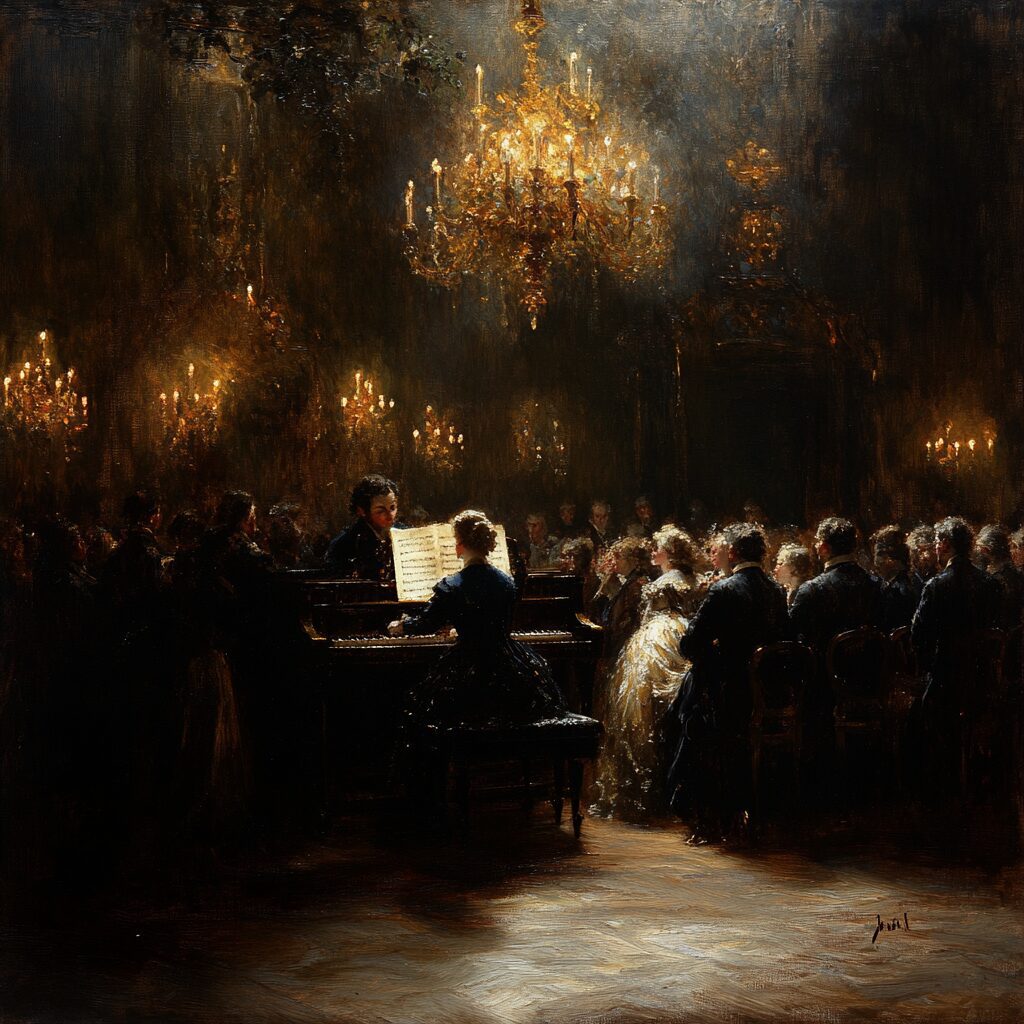
Together, these factors—historical patronage, groundbreaking concerts, and a thriving contemporary scene—underscore London’s pivotal role in shaping both Haydn’s keyboard innovations and the broader evolution of the Classical style.
Haydn’s Reception in London
Haydn’s arrival in London was met with immense enthusiasm, and he quickly became a celebrity among the English musical elite. Unlike his earlier years at the Esterházy court—where he composed in relative isolation—London placed him at the center of a thriving public concert culture. Newspapers and music journals frequently praised his compositions, and he was lauded as a “musical genius” in publications such as the Morning Chronicle.
One of the defining moments of Haydn’s London experience was his meeting with King George III, who personally admired his compositions. Haydn’s widespread appeal extended beyond aristocratic circles; even members of the rising middle class attended performances of his works, demonstrating the increasing democratization of classical music in London.
His financial success was also unprecedented. Thanks to generous patronage and the lucrative nature of public concerts, Haydn earned significantly more in London than he ever had in Austria. The financial independence he achieved allowed him to compose freely, without the restrictions of courtly commissions, further fueling his creative output.
Haydn’s Transformation: From Chamber Trios to Solo Sonatas
Chamber Origins: The Influence of the Esterházy Trios (Hob. XV Series)
Haydn’s early years at the Esterházy court nurtured an environment where intimate chamber music thrived. In the Hob. XV series—the chamber trios composed for keyboard, violin, and cello—Haydn established a conversational interplay among instruments that was both refined and inventive. These trios served as laboratories for experimenting with counterpoint, thematic dialogue, and dynamic balance. The very principles of voice leading and textural clarity that define these chamber works laid the groundwork for his later innovations.
As Haydn’s music scholar H. C. Robbins Landon has noted -Landon, H. C. Robbins. Haydn: Chronicle and Works. Bloomington: Indiana University Press, 1978.-, the meticulous balance within these early works was essential for setting the stage for the dramatic transformations evident in his subsequent solo compositions. By internalizing the dialogue of ensemble playing, Haydn developed a unique ability to rework and expand musical ideas—a process that would later be realized in his London sonatas. For further insights into the evolution of keyboard techniques, visit our Haydn Sonatas research page.
Haydn’s London output for piano is best represented by his innovative solo keyboard works and chamber pieces rather than by new piano concertos. In other words, while many of his piano concertos (catalogued in the Hob. XVIII series) were published in London, none of them were composed during his London sojourns. Instead, his creative focus in London was on reworking chamber textures for the fortepiano and expanding the expressive range of his keyboard writing.
Below, a consolidated list of Haydn’s piano works that were written—or at least conceived and substantially revised—in London.
The last Haydn Sonatas: The London Sonatas
Piano Sonata in C major, Hob. XVI:50
Joseph Haydn’s Piano Sonata in C major, Hob. XVI:50, composed during his 1794 London sojourn, stands as a wonderful example of the symbiotic relationship between composer and context. This piece, dedicated to the virtuoso Therese Jansen Bartolozzi, reflects the confluence of London’s vibrant concert scene and the technological advancements of the English fortepiano.
Technical Innovations and the English Fortepiano
The late 18th-century English fortepianos, notably those by Broadwood, offered an extended range and dynamic sensitivity unparalleled at the time. Haydn, ever the innovator, harnessed these features to expand his compositional palette. In this sonata, he explores:
- Dynamic Nuance: Haydn’s inclusion of “open pedal” markings in the first movement’s development section suggests a deliberate use of the una corda pedal, creating a shift in tonal color that transforms the thematic material into a more enigmatic character.
- Expanded Range: The third movement spans six octaves, from C to a³, showcasing Haydn’s intent to fully exploit the fortepiano’s capabilities.
- Articulation and Texture: The sonata features rapid alternations between staccato and legato passages, along with intricate ornamentation, demanding both precision and expressive depth from the performer.
London’s Concert Culture and Its Impact
Haydn’s time in London immersed him in a dynamic public concert culture, a stark contrast to his previous experiences in more private court settings. This exposure influenced the sonata’s:
- Structural Ambition: The first movement develops a simple triadic theme into complex textures, incorporating full, rolling chords and contrapuntal interplay, reflecting the grandeur appreciated by London audiences.
- Virtuosic Demands: Composed for Jansen Bartolozzi, the sonata includes challenging elements such as parallel thirds and broken octaves, tailored to her exceptional technique.
- Expressive Depth: The Adagio movement, while seemingly improvisational, is meticulously crafted, allowing for a profound emotional journey that resonated with the sophisticated London listeners.
In essence, Haydn’s C major sonata is a product of its environment, embodying the innovative spirit of London and the technological advancements of its instruments. It serves as a bridge between classical formality and the expressive possibilities that would come to define the Romantic era.
ADVISE FOR PIANOTEACHERS & STUDENTS
In my experience, the first movement of this C Major sonata presents an exciting yet formidable challenge for intermediate-advanced performers. Its meticulously exposed formal design calls for every note to be treated as a precious pearl—a detail that requires both technical precision and the spontaneity of a well-crafted cadenza. The work’s transparent textures and clear cadences invite you to explore nuanced phrasing and dynamic planning; each phrase unfolds almost as an improvisatory statement, demanding that you balance rigorous practice with creative interpretation.
I recommend that students work slowly through its intricate passages, paying close attention to the interplay between arpeggiated figures and carefully structured harmonic progressions. As you navigate the sonata’s unfolding exposition and its contrasting thematic material, focus on gradually building a sense of spontaneity that doesn’t compromise the clarity of each individual gesture. In doing so, you not only master the technical challenges but also capture the fresh, vibrant spirit that Haydn so artfully imparts—transforming each note into an integral part of a larger, dynamic musical dialogue.
In terms of age suitability, I believe this piece is best appreciated by mature performers. Its extended length and the rich, exploratory sonorities demand an appetite for detail and a willingness to uncover the treasures hidden within its intricacies. Much like Mozart, yet in his own unique way, Haydn expects the performer to engage deeply with the score. Without a well-developed musical sensitivity—often more common in adult musicians or exceptionally mature young talents—the performance may not fully convey the work’s intended expressive depth. Thus, while the sonata offers a wealth of interpretative possibilities, it is ideally suited for those who have the necessary maturity and experience to bring out its subtleties.
Piano Sonata in D major, Hob. XVI:51
In Joseph Haydn’s Piano Sonata in D major, Hob. XVI:51, composed during his 1794–1795 London sojourn, the influence of the English fortepiano’s advancements is evident. The instrument’s extended range and dynamic capabilities inspired Haydn to explore new sonic textures, particularly through the use of arpeggios that exploit the fortepiano’s resonance and sustain.
Arpeggios and Sonic Exploration
In the first movement, Andante, Haydn employs arpeggiated figures that span across the keyboard, creating a rich tapestry of sound. These passages not only highlight the instrument’s expanded range but also its ability to produce a warm, resonant tone. The arpeggios serve as a foundation, over which Haydn weaves delicate melodies, allowing the harmonics to blend seamlessly, thus enhancing the sonata’s pastoral character.
The second movement, Presto, features brisk arpeggiated sequences that drive the energetic momentum forward. Here, Haydn’s writing takes full advantage of the fortepiano’s responsive action, enabling rapid execution of these figures while maintaining clarity and precision. The arpeggios in this context not only contribute to the movement’s vivacity but also showcase the instrument’s ability to articulate swift passages with distinct tonal color.
Pastoral Character and Two-Movement Structure
The sonata’s two-movement form deviates from the traditional three-movement structure, a choice that may reflect Haydn’s desire for conciseness and directness, perhaps influenced by the preferences of London audiences. The pastoral quality is evident throughout, with the arpeggios imitating the gentle undulations of the countryside landscape, evoking a serene and bucolic atmosphere. This stylistic choice aligns with the 18th-century aesthetic that idealized rural life, resonating with the cultural sentiments of the time.
In essence, Haydn’s Piano Sonata in D major, Hob. XVI:51, exemplifies his innovative spirit, seamlessly integrating the technological advancements of the English fortepiano with his compositional prowess. The strategic use of arpeggios not only enhances the sonic palette but also reinforces the work’s pastoral charm, offering a glimpse into Haydn’s adaptive genius during his London period.
Range & Broadwood
Highest Note Used
Haydn stretches the piano’s upper compass in this sonata, writing a cadenza-like run in the Andante (second movement) that ascends to A₆—virtually the top of the late-18th-century English fortepiano he had at his disposal. For instance, around bars 61–63 (in many modern editions of the Andante), one sees a long, brilliant scale culminating in a trill on A₆. This note was just below the absolute top C₇ on certain six-octave Broadwood instruments from the 1790s. Haydn exploits this extreme high register to dramatic effect, highlighting the expanded keyboard range available in London.
Lowest Note Used
At the opposite end, Haydn also employs the piano’s deep bass. Although by the 1790s some English fortepianos had expanded down to low C, Haydn stops just above that, using F₁ (a whole step above the modern E₁) as his lowest pitch. This low F appears prominently around bars 42–45 of the first movement’s development in certain editions, where a pedal point on F undergirds the harmony and creates a rumbling foundation. For pianos that still only spanned five octaves, F₁ was near the bottom edge, so drawing on that note gave the music notable gravity and dark sonority.
Six-Octave Span
From the low F (F₁) up to the high A (A₆), the sonata covers nearly six octaves. Although Haydn does not literally use every single pitch in that compass, he showcases both extremes:
- Bars ~42–45 in the first movement (low F pedal).
- Bars ~61–63 in the second movement (Andante) for the upper A trill.
This near-complete exploitation of the extended English fortepiano range was innovative for its time. Haydn doesn’t go down to C₁ or up to C₇, but by working from F₁ up to A₆, he underscores the piano’s expanded six-octave potential. Contemporary audiences would have found these contrasts between sonorous bass pedals and striking high-register trills both technically impressive and musically dramatic, a testament to Haydn’s ability to compose idiomatically for the latest instruments available in London.
For a deeper appreciation, consider this performance:
ADVISE FOR PIANO STUDENTS & TEACHERS
This sonata proves to be an invaluable pedagogical resource for intermediate students, offering plentiful opportunities to engage with Haydn’s signature arpeggiated passages and chains of thirds. Its clean, transparent textures in the upper registers provide an ideal setting to explore sonority and to follow a smooth harmonic progression—thus enabling students to gain a nuanced understanding of how harmonic movement shapes musical form and expression.
For piano teachers, this work is particularly well suited as an introductory Haydn sonata. Its idiomatic, clear style, which is quintessentially Haydn yet more manageable than that found in his more technically demanding C major and E♭ London sonatas, makes it a prime choice for those beginning to delve into his repertoire.
Furthermore, the second movement, though structurally simple, reveals Haydn’s evolving affinity for polyphonic textures during his later period. This movement serves as an excellent platform for students to exercise their interpretative imagination, allowing them to experiment with varied iterations and subtle personal inflections while practicing stylistic framing and harmonic analysis.
Piano Sonata in Eb major, Hob. XVI:52
Joseph Haydn’s Piano Sonata in E-flat major, Hob. XVI:52 (1794) stands as a culmination of his keyboard writing, deeply influenced by his London experience. Composed during Haydn’s second London visit, it was dedicated to Therese Jansen, a virtuoso pianist (and Clementi’s pupil) in London .
The sonata’s architecture and syntax were shaped by the powerful Broadwood-type fortepianos he encountered, and its style reflects a shift toward a concert-oriented, upper middle-class audience. The work even embodies a certain “Englishness” in its grand style and contemporary reception. Below, we explore these elements and analyze the sonata’s form (especially the first movement) using William Caplin’s formal paradigm, noting its novel features. We’ll also give a brief overview of the other movements and compare this sonata to Haydn’s earlier keyboard works, highlighting the expanded range, dynamic contrasts, and harmonic innovations inspired by the Broadwood piano. Period-informed performances on historical instruments will be noted where relevant.
Broadwood Influence and the London Audience
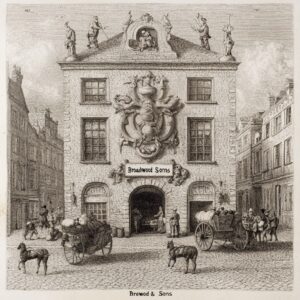
London’s pianos and audiences transformed Haydn’s keyboard style. In London, Haydn became “intimately familiar with the English piano”, particularly the Broadwood instruments. These pianos had a fuller sound, a heavier action, pedals, and a larger range than the Viennese fortepianos Haydn knew in Austria. Haydn eagerly exploited these new capabilities in Hob. XVI:52 – we hear a noticeably fuller, chordal texture in the first two movements, likely inspired by the Broadwood’s sonority. The architecture of phrases and syntax of musical ideas expand to fill a “grandest and most spacious” design, as this sonata was Haydn’s “grandest piano solo work” to date.
A Curious Note: During his time in England, Haydn was captivated by the affable nature of the upper class, which he saw as well-integrated with society and genuinely inspiring. As Landon recounts in Haydn in England, he enjoyed their company but never aspired to be one of them, always acknowledging himself as a loyal servant to his art. While he found pleasure in their refinement, he had no desire to adopt their way of life—an attitude that contrasted sharply with his rather distant view of the lower classe”
This sonata was also shaped by its intended venue and audience. Unlike Haydn’s earlier sonatas written for students or aristocratic patrons, the London sonatas were designed for public performance by a virtuoso (Jansen) in a concert setting. By the 1790s, public concerts in London were booming, drawing in the rising middle class. As one contemporary observed, “Music is everywhere the rage – it has spread from the West to the East… extending from the highest to the lowest classes of society.”—-
Haydn thus wrote Hob. XVI:52 with concert flair – its dramatic contrasts and brilliant passages aimed to captivate a broad audience rather than serve as mere drawing-room teaching pieces. In this way, the sonata’s bold gestures and virtuosic display reflect an “upper middle-class” taste for excitement and surprise.
Elements of “Englishness” are evident in both the style and the contemporary reception of this work. Haydn absorbed the English pianistic style popularized by resident composers like Clementi and Dussek. The sonata features hallmarks of “English” piano virtuosity: “grand opening chords, use of wide register spacings, octave doublings, enormous forte sonorities, rapid scales (including in thirds), repeated notes, and even a treble melody placed above an accompaniment”. These were trademarks of the powerful English fortepiano technique, and Haydn uses them lavishly. London listeners, in turn, recognized and admired these traits – the work’s brilliance and breadth were very much in line with what the world at large regarded as the essence of Englishness in music. Notably, while the first two movements revel in this English grandiosity, Haydn balances it with a finale that brings a “Viennese lightness and sparkle”, a nod to his own roots. This blend of styles may have further endeared the piece to audiences, who got the best of both worlds: English power and Viennese wit.
First Movement (Allegro moderato): Form and Formal Novelties
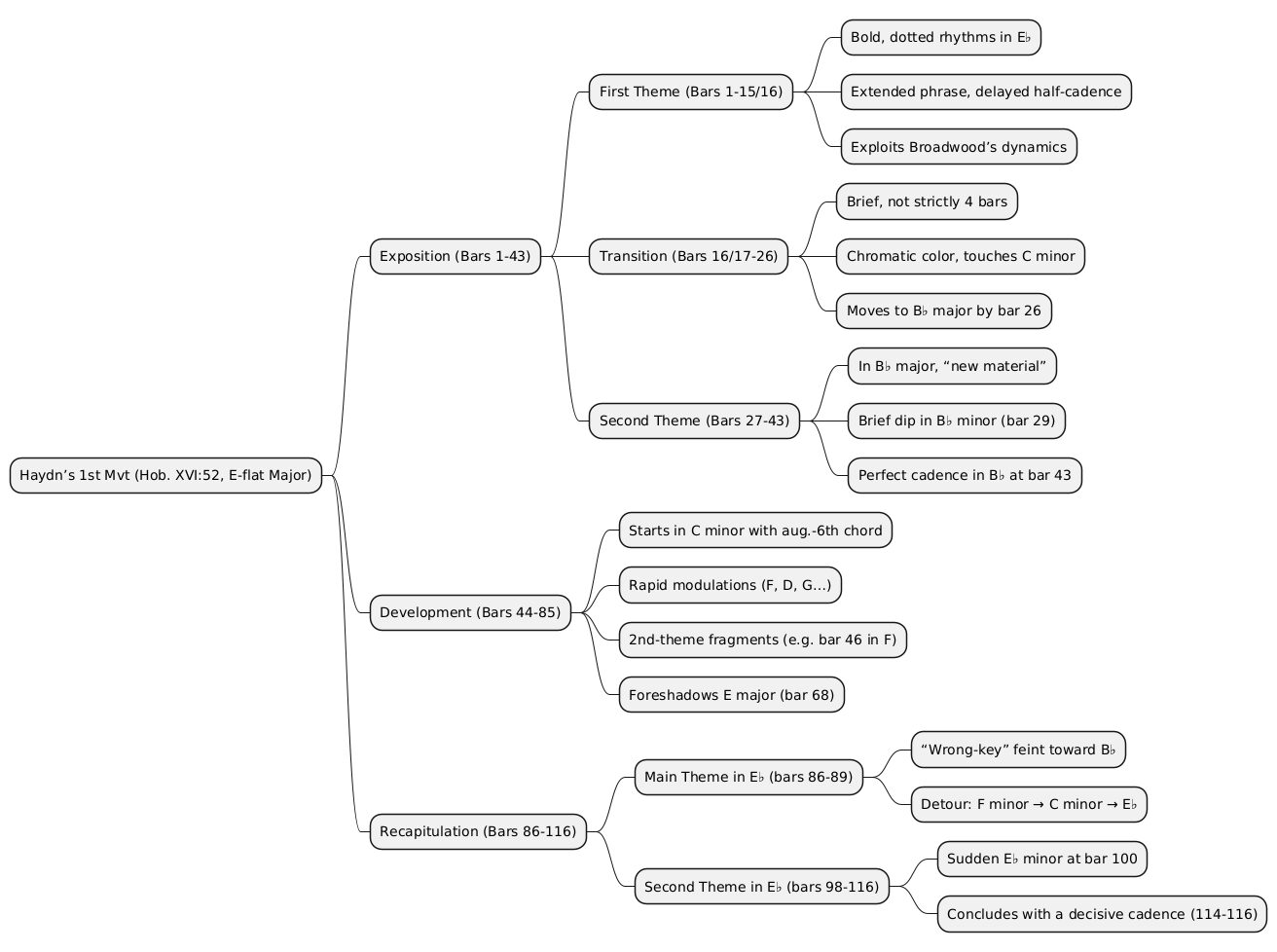
Haydn opens the Allegro moderato in E-flat major with a bold gesture that truly shows off the Broadwood’s capabilities. The movement is indeed on a grand scale, featuring a declamatory opening in dotted rhythms followed by brilliant, fiery passagework. Rather than presenting a neat eight-bar sentence that cleanly ends at bar 8, Haydn expands his first subject group, delaying a conclusive half-cadence and weaving in additional flourish. While a local cadence point emerges early, the overarching theme extends beyond the typical bounds of a Caplin-style sentence, resulting in a more spacious and dramatic opening statement—one that fully exploits the instrument’s dynamic possibilities.
Following this broader main theme, Haydn’s transition is concise yet not strictly limited to four bars. It moves toward the dominant, B-flat major, over several measures, spicing the journey with brief shifts to C minor and other chromatic touches. Although Haydn reaches a half-cadence that sets up the secondary key, this moment arrives only after an active and colorful harmonic detour. Such artful balance between brevity and grandeur typifies the movement’s design, illustrating how Haydn creates momentum while still offering a richly varied tonal palette.
The Second Theme (second subject) arrives in B-flat major (the dominant) at Bar 27 . Unlike Haydn’s earlier monothematic expositions, here the second theme offers new material, contributing to what one commentator called a movement “rich in diverse ideas” . Haydn’s syntax here feels almost improvisational – he even veers into B-flat minor momentarily (Bar 29) before returning to B-flat major . This mixture of major/minor mode and the abundance of thematic ideas add a layer of unpredictability. The exposition concludes with a strong perfect cadence in B-flat by Bar 43 , and is then repeated.
Moving into the Development, Haydn truly shows off “wide-ranging modulations” . He roams through a sequence of distant keys: starting in C minor with a dramatic augmented-sixth chord, then cycling through F major, D minor, G minor, etc., in rapid succession . Notably, he introduces bits of the second theme in various keys during the development (e.g., in F major at Bar 46) , treating his themes with great flexibility. Throughout, the Broadwood’s strength is on display: we hear bold dynamic contrasts and thick textures even as the music travels far afield harmonically. One audacious detail is how Haydn hints at the upcoming E-major tonality (for the slow movement) during this development. He “flags this audacious move” by visiting E-natural in the context of remote keys (Bar 68) – a subtle foreshadowing that rewards attentive listeners and smooths the jump to E major later.
The Recapitulation brings back the main theme in E-flat, but Haydn doesn’t just copy-paste the exposition. He plays another little trick in the recap’s “transition.” Bars 86–89 unexpectedly start in B-flat major (as if the dominant were trying to return!), then detour through F minor and C minor before realigning to E-flat major . This detour is a formal peculiarity: instead of the usual straightforward retransition in the home key, Haydn momentarily feints toward a wrong key in the recapitulation – a witty disruption that likely delighted listeners. When the second theme reappears (Bars 98–116), it is now firmly in E-flat major as expected, but with a twist: Haydn colors it in E-flat minor briefly at Bar 100 , introducing a sudden dark shading. This use of the parallel minor in the recapitulated second theme is another novelty in syntax, amplifying the expressive depth in the recapitulation. The movement ends with a decisive perfect authentic cadence in E-flat (Bars 114–116) . Overall, the first movement exemplifies Haydn’s mature handling of Classical form – adhering to sonata-form conventions while weaving in surprises (remote keys, mode mixtures, truncations) that expand the expressive and formal scope.
Second Movement (Adagio): Sound Exploration and Improvisatory Virtuosity
Haydn’s Adagio second movement is remarkable and was instantly noted by listeners for its unusual key and expressive character. It is set in E major, a key extremely remote from the sonata’s home E-flat major. In fact, E major is the Neapolitan key (flat II) in the context of E-flat – a “far-flung” choice that is perhaps the most striking feature of the sonata . This half-step displacement upward creates a wonderfully unexpected sound. The effect is to heighten the Adagio’s “searching, introspective mood”, as one scholar notes . The London audience, accustomed to bold contrasts, would have found this harmonic shift novel and expressive – an embodiment of Haydn’s wit and sublime daring rolled into one.
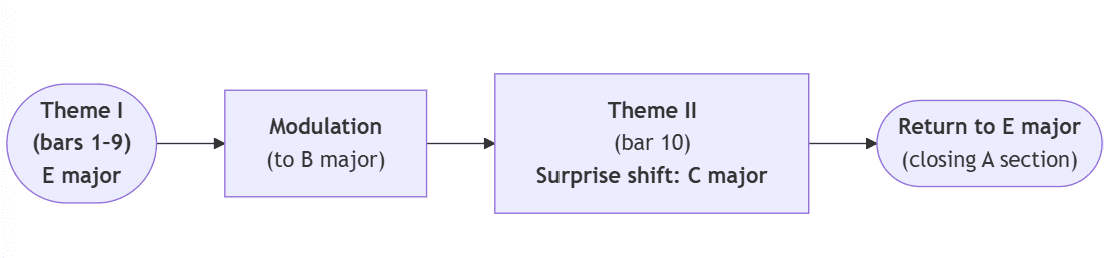
Formally, the Adagio can be understood as a ternary (ABA) form , though it also has the character of an improvisatory fantasia. In Caplin’s terms, we might say it has two contrasting themes in the A section and a developmental middle section. The A section (Part I, Bars 1–19) actually contains two themes: “Theme I” (Bars 1–9) sings warmly in E major, then modulates to its dominant (B major) ; “Theme II” (Bars 10–19) startlingly begins in C major (a distant key, creating a magical color against E major) before finding its way back to a cadence in E major . Both themes are lyrical and embellished – likely an opportunity for the performer to savor the Broadwood’s singing tone in the high register. Haydn notates each section with repeats, as if inviting a decorative, improvisational approach on the repeats (a common Classical practice).
The middle section (Part II, Bars 20–33) plunges into E minor, the tonic minor, introducing a more shadowy variant of the themes . Haydn treats this section almost like a miniature development: the music drifts through keys like G major, A minor, and even features an “inverted dominant pedal” in G major while moving through E minor . This creates an unsettled atmosphere, full of diminished chords and suspensions – as if the music is searching for a way back. Throughout this Adagio, Haydn indulges in sound exploration unique to the piano: we hear widely spaced chords (taking advantage of the expanded range), rich dynamic swells made possible by the piano’s sustain pedal, and most strikingly, elaborate scalar passages that feel like improvised cadenzas. For example, at cadential points Haydn often inserts a long, florid scale or ornamental run that sweeps across the keyboard, only to land gently back on a focal harmony or melody note. These “elaborate scalar passages” act as expressive embellishments that return to focal pitches, a hallmark of Classical improvisatory style. On a Broadwood piano, such passages would shimmer thanks to the instrument’s lingering after-ring (the English pianos had a longer resonance), giving the Adagio an ethereal halo of sound. Contemporary listeners likely heard this as deeply affecting and innovative piano writing – a far cry from the simple two-part textures of Haydn’s early sonatas.
In the return of the A section (Part III, Bars 34–55), Haydn brings back the opening themes in E major, now slightly elaborated . The repeats are typically not taken here, so Haydn writes out some embellishments directly, including more virtuosic filigree. A brief coda (Bars 51–55) sustains a low pedal E in the bass (possible only on a piano with good sustain) while the upper voice weaves a final contemplative line, ending in a gentle perfect cadence.
The Adagio thus fades away with a kind of improvised sigh. This movement’s blend of lyricism, daring harmonic choice, and ornamental virtuosity epitomizes Haydn’s London-influenced style – it feels almost like an intimate improvisation performed before a rapt audience, showcasing the piano’s newfound expressive depth.
Finale (Presto): Virtuosity with Viennese Charm
The third movement, a Presto in E-flat major, shifts back to a lighter mood, though it remains technically challenging. Formally it is a sonata-form finale (not a rondo), and quite a substantial one: the exposition alone is over 100 bars , containing multiple themes or sections. Haydn starts the Presto with a playful motif of five repeated notes in the main theme – a simple idea that he then varies by changing its register, ornamentation, and accentuation as the music progresses . This repeating-note joke is very much in the spirit of Haydn’s wit. It also subtly nods to the English piano’s strength in the upper register: by shifting the repeated-note motif across different octaves, Haydn shows off the even power of the Broadwood’s treble (English pianos had particularly strong treble sound).
The first subject of the finale spans Bars 1–29 in E-flat, with some quick forays (e.g., a brief detour to F minor) before a closing cadence . The transition then zips through the minor again (C minor) and even touches F major, keeping the listener off balance, before leading to the dominant key . The second subject group (Bars 45–103) unfolds in B-flat major, but again Haydn divides it into several sections– essentially a string of lively ideas, including perhaps folk-like riffs and sparkling passagework. He even drops to B-flat minor in one section (Bar 79), just as he did in the first movement, to inject a touch of drama. Throughout the finale, Haydn integrates virtuosic elements: rapid scale runs, chains of thirds in the right hand (a “finger-twisting” technique noted in the first movement as well ), and leaping bass lines. These all serve to challenge the performer and thrill the audience – the movement would have been a brilliant showstopper, likely earning laughter and applause for its mix of humor and bravura.
Despite all the virtuosity, the finale’s character is often noted for its “Viennese” lightness. Compared to the weighty first movement and soulful Adagio, the Presto has a more playful, effervescent tone reminiscent of Haydn’s earlier works. In Caplin’s terms, themes in this finale often resemble small binary forms or periods that are straightforward and witty, rather than expansive sentences – a contrast to the opening movement. This brings a nice balance to the sonata: after demonstrating English power and polish, Haydn leaves the listener with a taste of his Austrian humor. Contemporary reports indicate that such finales in Haydn’s London works were crowd-pleasers; for instance, a London premiere of one of his symphony finales was so popular it was encored . We can imagine the finale of Hob. XVI:52 elicited a similarly delighted response for its sparkling mix of virtuosity and charm.
ADVISE FOR PIANO TEACHERS AND STUDENTS
Having devoted a significant portion of my mature performing life to this work, I can attest that Haydn’s Sonata in E♭ major, Hob. XVI:52 represents one of the most advanced challenges in the keyboard repertoire. This sonata demands total expressive commitment from the performer, requiring not only technical precision but also a deep, personal connection to its musical narrative.
The score is richly populated with intricate scales, sweeping arpeggios, and delicate ornaments. However, what truly sets this work apart is that the execution of these elements is not predetermined solely by the notation; it is also shaped by the performer’s interpretative insight. Every figure and ornament functions like a pearl in a necklace—the beauty of the whole depends on how each note is individually realized and emotionally infused.
A particular point of focus is the secondary theme, which poses significant interpretative challenges. Teachers should encourage students to look beyond the literal notes on the page, seeking instead to uncover the underlying expressive purpose of the theme. By doing so, the performer can transform the notation into a clear, communicative statement—much like choosing a single, well-defined word to convey an entire thought.
In practical terms, this means that when working on this sonata, students should:
- Delve Deep into Expression: Approach each passage with the aim of revealing its emotional intent.
- Balance Technical Rigor with Spontaneity: While the piece is technically demanding, it equally rewards spontaneous phrasing and personal interpretation.
- Engage in Reflective Practice: Regularly revisit and refine your interpretation, always searching for the “treasures” hidden within its intricate details.
Given its length, dynamic range, and the refined interplay between structure and improvisatory potential, this sonata is best suited for mature, intermediate-advanced students. It offers an invaluable opportunity to cultivate both technical mastery and an artistic sensibility that elevates the performance beyond mere reproduction of the score.
By embracing the challenges of Hob. XVI:52, students not only gain the technical skills required to navigate complex musical passages but also develop a deeper understanding of how harmony and form interact to convey profound emotion—a lesson that resonates well beyond the keyboard.
A Culminating Legacy, A New Keyboard Era: Hob. XVI:52 as the Pinnacle of Haydn’s Sonatas and the Dawn of Modern Piano Writing
Haydn’s Piano Sonata in E-flat major, Hob. XVI:52 is a landmark composition that encapsulates the crossroads of culture, technology, and artistry at the end of the 18th century. The influence of the Broadwood piano is evident in every movement’s fabric – from the robust, multi-layered textures and extended keyboard range to the virtuosic syntax of scales and thirds crafted for a powerful instrument. The work’s design speaks to a new era: no longer confined to palace drawing rooms, it was meant for the concert stage, aiming at the hearts of an engaged middle-class audience whose tastes ran to the dramatic and impressive. In its bold strokes and surprises, the sonata carries a flavor of “Englishness,” mirroring the dynamism of London’s musical scene that Haydn so successfully captured.
Using Caplin’s formal lens, we see how Haydn both honors and playfully tweaks classical form – the first movement’s grand sentence theme, sudden key detours, and inventive recapitulation show a master operating with free spirited confidence. The luminous Adagio in an unexpected key, with its improvisatory flights, reflects Haydn’s joy in sound exploration made possible by the latest piano technology. And the rousing Presto finale ties everything together with a wink and virtuoso flourish, reminding us that Haydn, even as the venerable “Papa” of classical music, never lost his sense of humor or adventure.
In comparison to his earlier keyboard works, Hob. XVI:52 stands out as a forward-looking tour de force – symphonic in scope, intimate in expression, and cutting-edge in its exploitation of the piano’s resources. It foreshadows the path that the piano sonata would take in the hands of Beethoven and beyond. Whether heard on a modern concert grand or a period-correct Broadwood fortepiano, Haydn’s last piano sonata continues to delight and inspire. It remains a brilliant testament to how a composer can evolve with his audience and his instrument, creating music that is at once entertaining, inventive, and profoundly human.
Further Reflections: Global Echoes and a New Paradigm in Piano Composition
Haydn’s London years not only redefined his keyboard output but also heralded a transformative moment in Western music. His sojourn in London—spanning 1791–1792 and 1794–1795—offered more than an opportunity to compose for the new, powerful Broadwood fortepiano. It set the stage for a cultural revolution that would eventually ripple across the entire classical period and beyond.
A Synthesis of Tradition and Innovation
In London, Haydn encountered a world where art and technology converged. The Broadwood piano, with its extended six-octave range, heavier action, and dynamic nuance, allowed him to explore previously uncharted musical territories. His London sonatas, with their bold cadenzas, rapid arpeggios, and playful modulations, not only pushed the boundaries of sonata form but also foreshadowed the innovations that later composers—most notably Ludwig van Beethoven—would bring to the genre. While echoes of Johann Sebastian Bach’s counterpoint and the refined elegance of Wolfgang Amadeus Mozart are evident in his earlier works, it was in London that Haydn’s music acquired a distinctive “Englishness.” His compositions now resonated with the grandeur of a public concert setting, rivaling the robust sonorities of military fanfares (think bold trumpet statements) and the expansive textures of an imagined string section or even a choir.
A Cosmopolitan Musical Dialogue
Haydn’s London adventures were deeply intertwined with the city’s vibrant cultural life. Concerts organized by figures like Johann Peter Salomon—held in prestigious venues such as the Hanover Square Rooms—exposed him to an eclectic mix of influences. Here, he mingled with celebrated performers, including virtuosos akin to Muzio Clementi and Carl Philipp Emanuel Bach, and even exchanged ideas with contemporaries whose work ranged from the intimate charm of chamber music (as heard in his early string quartets and trios) to the expansive expressions of orchestral masterpieces later performed by the London Symphony Orchestra.
This dynamic environment encouraged Haydn to experiment with dramatic modulations, unexpected key shifts (such as his daring forays into C minor and B♭ minor), and inventive cadenzas that seem almost improvisatory in nature. His work, replete with witty departures—sometimes reminiscent of a sudden drum roll or a delicate oboe line in a violin concerto—exemplifies the ingenious blend of Viennese clarity and English bravado. These adventurous twists, sometimes described in modern urtext editions and shared widely via PDF downloads on platforms like the International Music Score Library Project (IMSLP), continue to captivate both scholars and performers today.
The Wider Context: From the Esterházy Court to the Public Stage
Before London, Haydn’s musical world had been largely confined to the intimacy of the Esterházy court in Austria. His early chamber works—those finely balanced Hob. XV trios—exemplified the delicate interplay of voices that marked his formative years. Yet in London, he transcended these constraints. Embracing the bustling public concert culture of the United Kingdom, he reimagined the piano sonata as a work meant for a diverse audience, ranging from aristocrats to the emerging middle class. This marked a departure from the more reserved, often didactic style of earlier keyboard compositions and ushered in a new era in which virtuosity, improvisation, and expressive freedom were paramount.
His innovative spirit resonated internationally. The enthusiasm in London—where even King George III acknowledged his genius—mirrored broader European trends. Amid the intellectual fervor of the Age of Enlightenment and the turbulent political climate of revolutionary Europe, Haydn’s music offered both solace and inspiration. His creative output in England anticipated later movements such as sturm und drang and the Romantic idiom, influencing not only the orchestral and chamber genres but also paving the way for the grand operatic and oratorio projects of his successors, including his own later masterpiece, The Creation.
Enduring Legacy in the Modern Era
Today, Haydn’s London sonatas remain a focal point for performers and scholars alike. They are celebrated not only for their technical demands—challenging feats like rapid scale runs, intricate finger work, and rich dynamic contrasts—but also for their enduring humor and wit. Recorded by renowned artists such as Alfred Brendel, Evgeny Kissin, and emerging talents influenced by the legacy of Muzio Clementi, these works are a staple in both live performances and academic study. Modern sheet music and scholarly urtext editions (readily available in PDF format) ensure that his innovations are preserved and accessible, inviting new generations to explore the full spectrum of his creative genius—from the rumbling depths of a pedal point on F₁ to the dazzling heights of a trill on A₆.
Moreover, the international dialogue sparked by Haydn’s London experiences continues to inform today’s musical landscape. His legacy is discussed in forums ranging from academic treatises to lively conversations on Reddit, and his influence is felt in the programming of institutions like the London Symphony Orchestra and recordings by labels such as Hyperion Records. Whether in the context of a digital piano performance, a live concert in a historic theatre, or as part of a comprehensive Hoboken Catalogue study, Haydn’s pioneering spirit endures—an ever-relevant reminder of how cultural exchange, technological innovation, and artistic freedom can redefine a musical era.
In sum, Haydn’s London sojourn not only marked the culmination of his own piano sonata production but also laid the foundations for a new paradigm in piano writing. His ability to integrate and transform influences—from the rich textures of baroque music to the refined interplay of later string quartets—ensured that his work would resonate far beyond his time, setting the stage for the full flowering of Romantic expression and modern keyboard virtuosity across Europe and beyond.