 TRIAL LESSON
Are they ready?
Attention, curiosity, coordination and response to simple instruction matter more than choosing one “perfect” starting age.

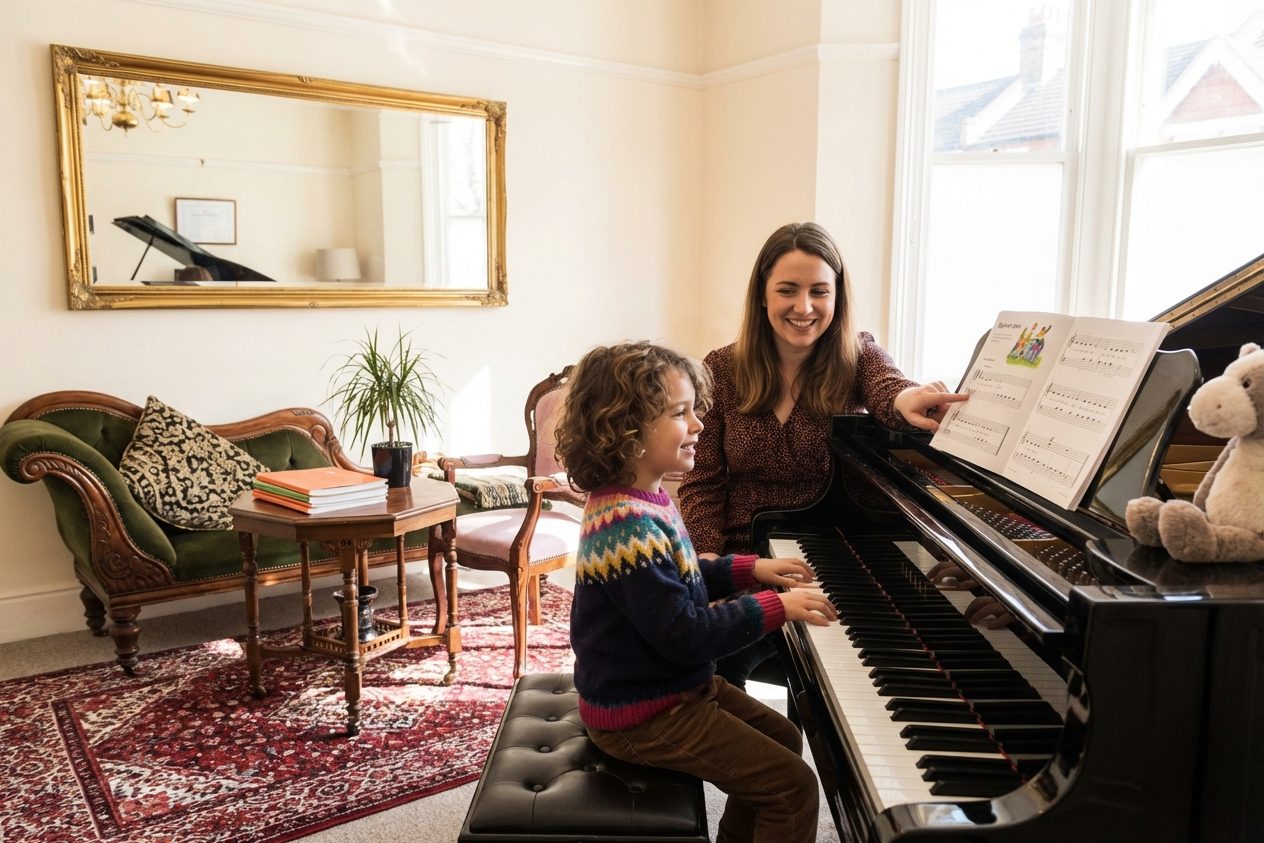
Private children's piano lessons shaped around your child's age, attention and musical development—with DBS-checked teachers in West Kensington, Camberwell and Bermondsey.
Not sure whether your child is ready? The trial is designed to assess readiness, teacher fit and the right pace before regular tuition.
A useful children's piano page should help you decide, not simply ask you to book. The first conversation is about readiness, teacher fit, the weekly routine and what progress should mean for your child.
Attention, curiosity, coordination and response to simple instruction matter more than choosing one “perfect” starting age.
The teacher should match the child's age, personality and present level—not only the parent's long-term ambition.
A realistic practice routine should be short enough to repeat, clear enough to follow and positive enough to sustain.
Exams can provide structure, but technique, reading, listening, repertoire and musical enjoyment remain the wider education.
A four-year-old, an eight-year-old and a teenager should not receive the same lesson in a different-sized package. WKMT adapts the pace, language and musical tasks to the child's stage.
Gentle, readiness-led lessons use listening, rhythm, keyboard discovery, simple patterns and physical coordination to build a positive first relationship with music.
Students develop reading, coordination, phrasing, repertoire and a repeatable practice routine. Exam preparation can begin when it supports the wider programme.
Teenagers can work with greater independence on technique, interpretation, grades, auditions, performances and repertoire that gives them a reason to continue.
Parents need a clear sense of what the child is learning and how to help, while the child needs space to develop confidence and musical independence.
View current lesson feesThe teacher introduces one manageable technical, reading and musical priority at a time, then checks understanding at the piano.
The child follows a clear practice note. Younger learners may need a parent nearby; older students gradually take ownership.
Repertoire, reading, coordination, listening and confidence develop together. Exams are used when they serve that wider progress.
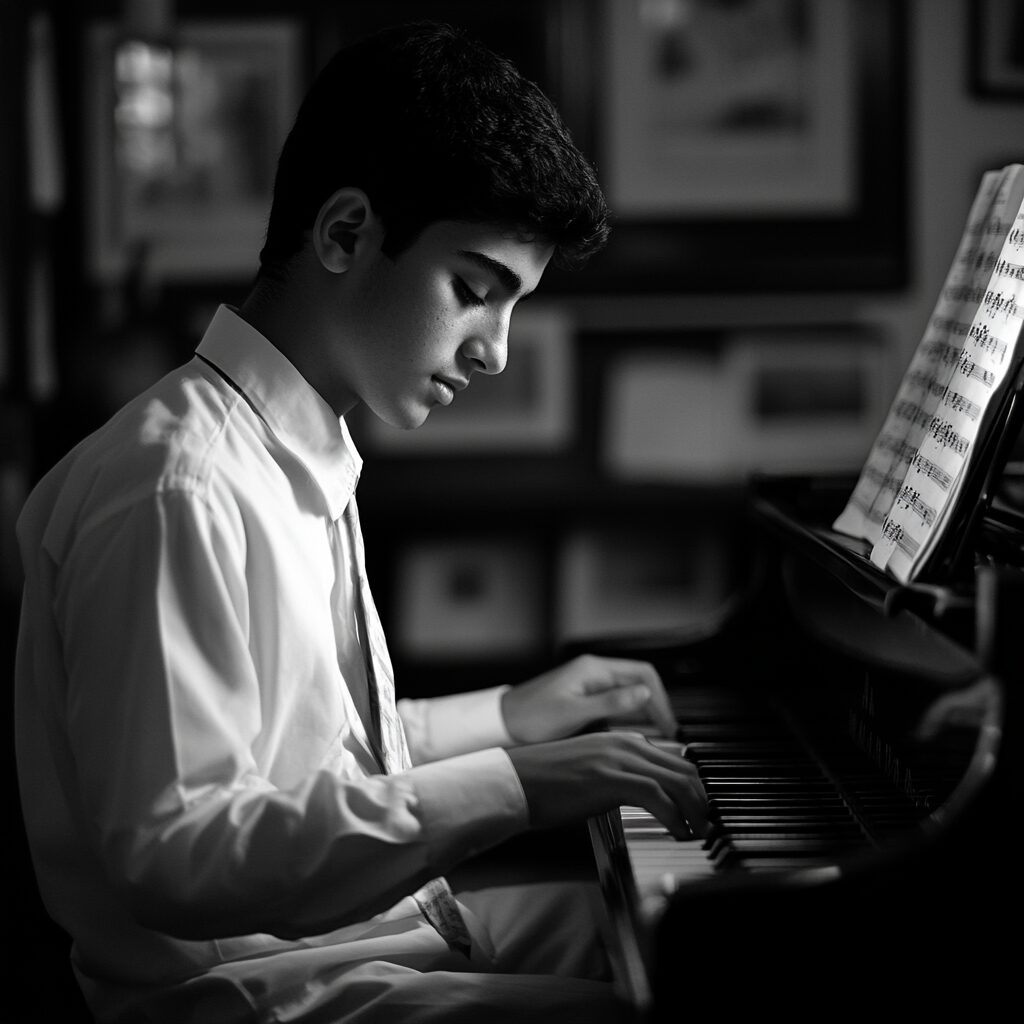
Children need a teacher who can teach music rigorously without making the lesson intimidating. WKMT combines professional standards, DBS checks and parent communication with an age-appropriate teaching approach.
Explanations, pacing and correction change with concentration span, experience and confidence.
The trial helps identify the teacher whose manner and expertise fit the child's needs and musical direction.
Parents understand the practice priorities, the purpose of exam work and when the programme should be adjusted.
One-to-one teaching allows the balance to change as the child develops. The aim is not to rush through pieces, but to build a way of learning that can support increasingly demanding music.
WKMT's Scaramuzza-influenced approach is adapted carefully for children, with attention to posture, natural coordination, freedom and tone.
Reading, rhythm, singing, memory, theory and attentive listening develop alongside the physical act of playing.
ABRSM or Trinity grades can offer a useful destination. They should support the programme rather than narrow it to a sequence of tests.
These existing WKMT performance clips give parents a concrete view of musical focus, confidence and progression within the school.
A higher-level student performance showing technique, musical shaping and the confidence to present prepared work.
A practical example of focus, tone and age-appropriate musical development in the WKMT environment.
Choose the studio that works for school, travel and family life. The lesson approach remains one-to-one, with the teacher and programme matched to the child.
W14 9LT · One minute from West Kensington station, serving families across Kensington, Chelsea and Hammersmith & Fulham.
View contact details →SE5 7NJ · A calm studio option near Burgess Park for families in South London.
View Camberwell →SE16 3UG · A practical studio option near Bermondsey station.
View Bermondsey →The trial is a practical first meeting for the child, parent and teacher. Its purpose is to establish readiness, fit and the right next step before regular tuition.
The teacher considers age, experience, attention, musical curiosity and how the child responds to instruction.
Your child experiences the teacher's way of explaining, listening and turning a musical task into something achievable.
You leave with a clearer view of teacher fit, studio, lesson direction and an age-appropriate practice rhythm.
WKMT teaches children and teenagers aged 4 to 18. Very young children begin with a gentle, readiness-based approach, while older children can follow a more structured programme.
Readiness is not decided by age alone. Attention, curiosity, coordination and the ability to respond to simple instruction are considered during the trial lesson.
Yes. WKMT works with DBS-checked piano teachers and uses the trial to help match the child with an appropriate teacher.
The useful amount depends on age and goals. Younger children usually need short, regular sessions with parent support; older students can gradually take responsibility for a more detailed plan.
Yes, when exam preparation supports the child's musical development. Exams can provide structure, but they do not replace technique, reading, listening and repertoire.
Lessons are available at WKMT studios in West Kensington W14 9LT, Camberwell SE5 7NJ and Bermondsey SE16 3UG. Current fees are published on the WKMT lesson-fees page.
Give your child a first lesson that helps you understand the teacher, the pace and the musical direction before committing to regular tuition.
Book a child's trial lesson