
 TRIAL LESSON
Piano Lessons
Piano Lessons for 3 Year Olds: Readiness, Play and First Steps
Jul
Piano lessons for 3 year olds in London with WKMT – Complete Guide
WKMT parent guide
Piano Lessons for 3 Year Olds: Readiness, Play and First Steps
Piano lessons for 3 year olds can be valuable when they are playful, brief and led by readiness rather than by exam ambition.
Quick answer: some three-year-olds can begin piano happily, but the lesson should be short, sensory and flexible. A good teacher watches listening, imitation, curiosity, separation from the parent and fine-motor comfort before expecting regular practice.
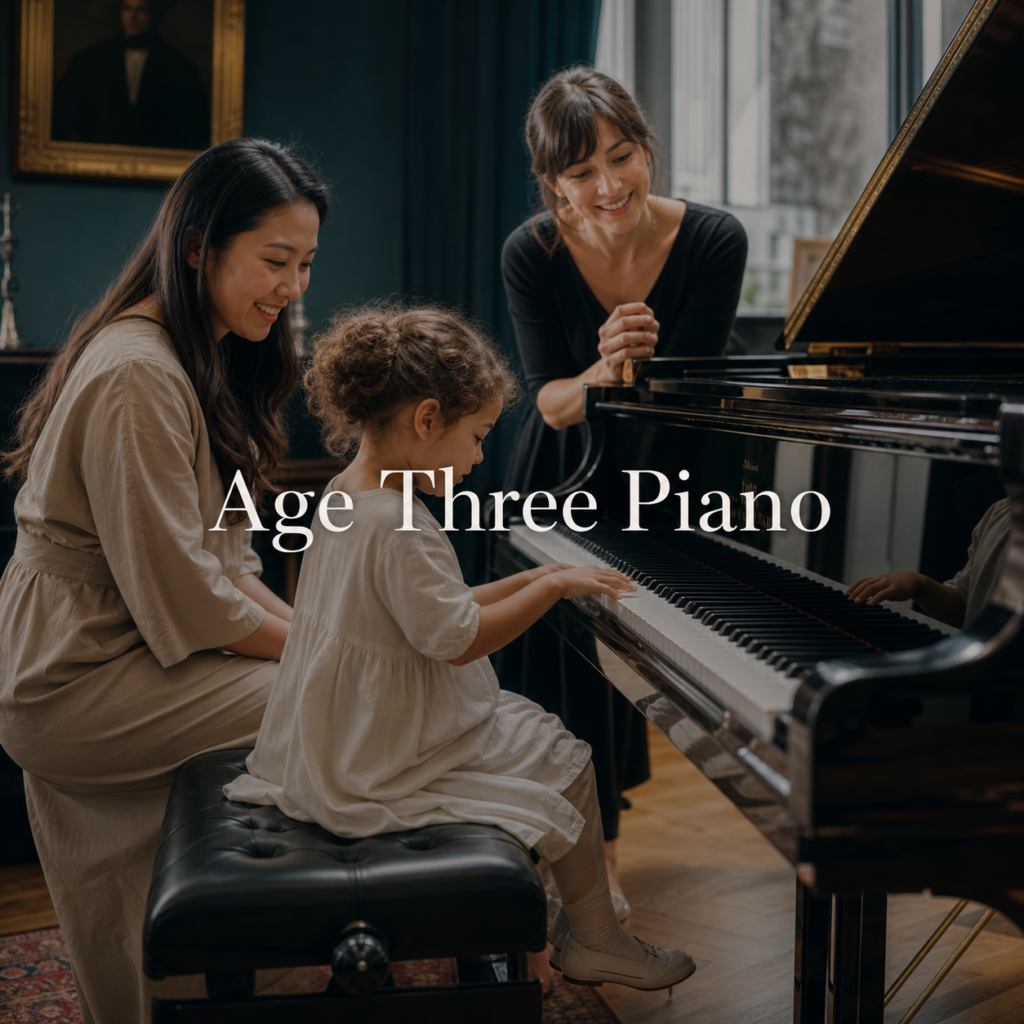
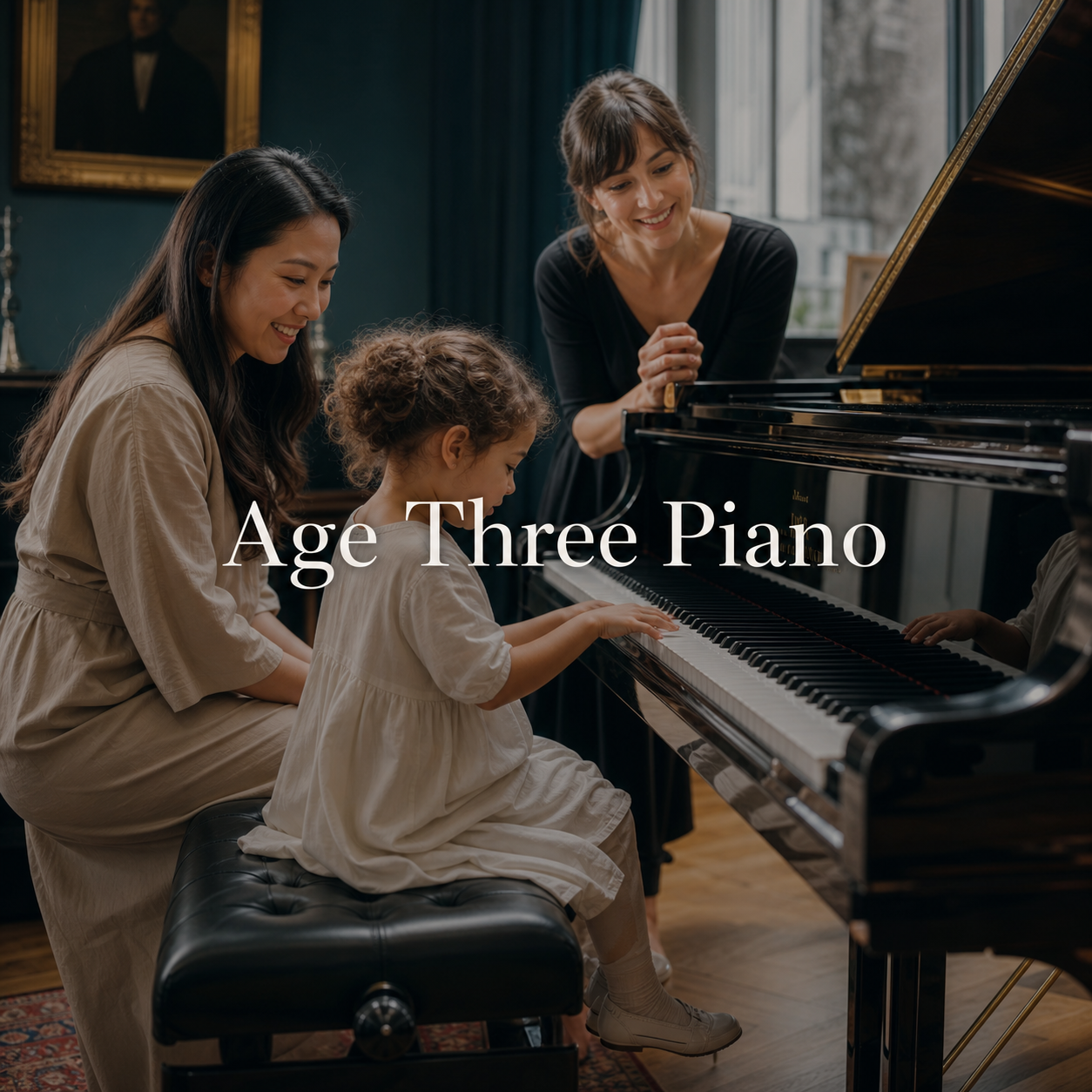
Parents searching for piano lessons for 3 year olds are usually asking a careful question: is this a promising moment, or is it too early? The honest answer is that age alone is a poor guide. One child may enjoy a ten-minute musical routine at the piano; another may need six months of singing, movement and rhythm games before formal tuition feels kind.
At WKMT, the child-facing path is always connected to the broader standards of structured piano lessons for children in London, but a three-year-old should not be treated like a miniature seven-year-old. The purpose is not to race towards notation. It is to find whether the child can listen, copy, explore sound, and leave the room wanting to return.
Is three too young for piano lessons?
Three is often too young for conventional piano lessons, but not too young for musical foundations. The Early Years Foundation Stage in England places heavy emphasis on communication and language, physical development, and personal, social and emotional development. Those areas matter at the piano: a child needs to listen, take turns, move comfortably and feel secure with an adult-led activity.
The best first session tests those foundations gently. A teacher may ask the child to copy high and low sounds, tap a steady pulse, find groups of black keys, sing a short echo, or stop and start with a musical cue. If the child can follow one or two of these with pleasure, a very short lesson format may work. If the child resists, hides, becomes tired quickly or only wants to bang loudly, the answer is not failure. It is information.
For parents
If the first lesson feels like a battle, pause. A month of musical games at home can do more good than a term of reluctant formal lessons.
The readiness signs to look for
A three-year-old does not need to read letters, count fluently or sit perfectly still. Those expectations belong later. What matters is whether the child can enjoy a small musical exchange. Look for these signs:
- Listening: the child can notice loud and soft, high and low, start and stop.
- Imitation: the child can copy a two-tap rhythm or a simple movement.
- Fine-motor ease: the child can use one finger gently without strain.
- Turn-taking: the child can let the teacher play, then respond.
- Emotional security: the child can stay curious with the parent nearby.
None of these needs to be perfect. A skilled teacher reads the whole child, not a checklist. The danger is mistaking early enthusiasm for readiness to practise. A three-year-old may love the piano one minute and need the floor, a toy or a cuddle the next. The lesson must be elastic enough to keep music associated with trust.
Copies short patterns, enjoys one-to-one adult attention, accepts gentle direction.
Needs constant movement, becomes distressed by instruction, only wants free noise.
Use singing, rhythm, movement and parent-child musical play before formal lessons.
What a good lesson looks like at age three
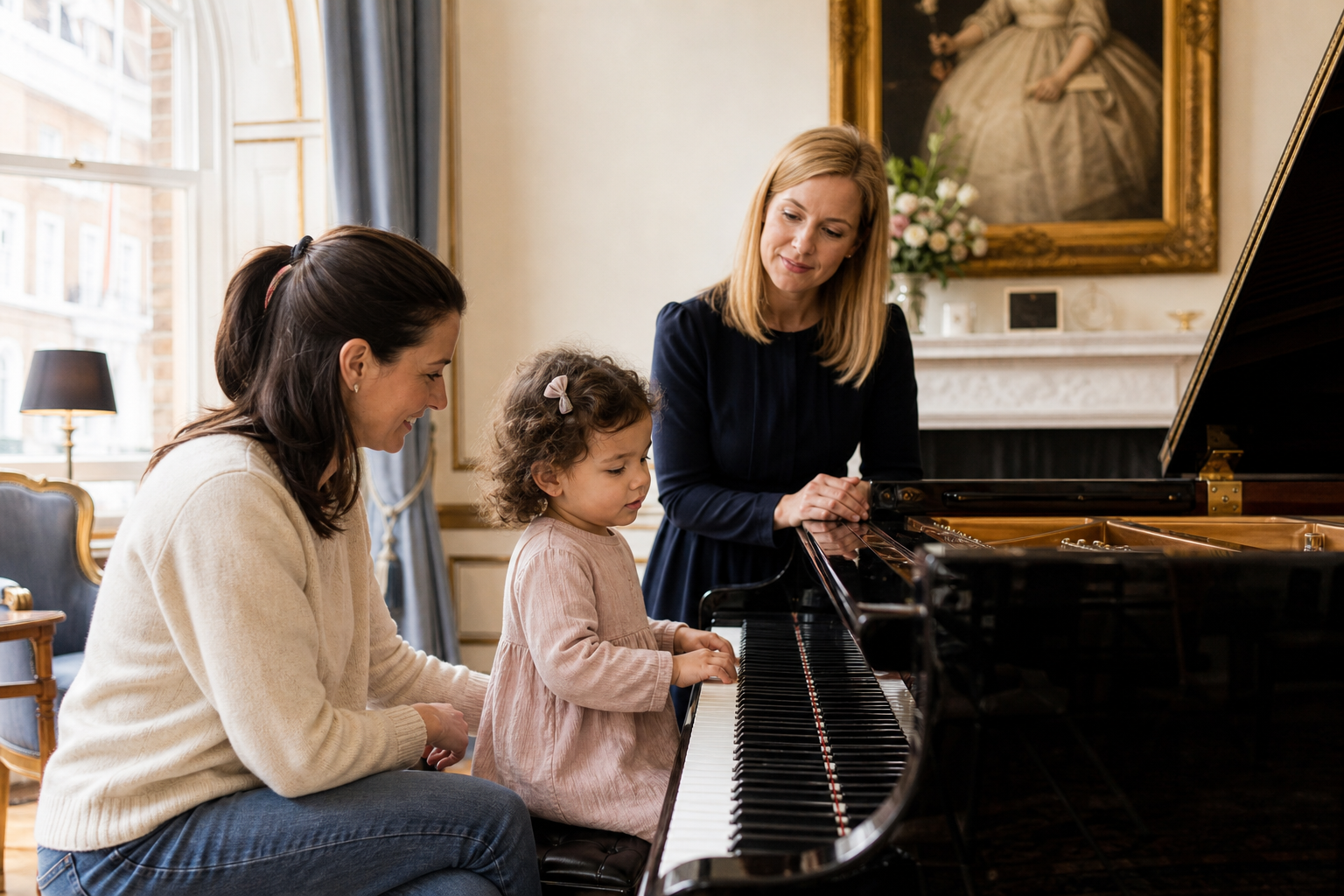
A strong age-three lesson is short and varied. Twenty minutes may be enough. The teacher might begin away from the keyboard with a pulse game, move to two groups of black keys, sing a question-and-answer phrase, then finish with a tiny success the child can remember. The parent normally stays involved, because the home routine depends on them.
There should be no pressure to read staff notation. Naming finger numbers, hearing contrasts, finding patterns and learning how to touch the piano beautifully are more appropriate. ABRSM and Trinity both offer graded piano pathways from Initial Grade through Grade 8, but exams are not the measure of success for a three-year-old. The early measure is whether musical attention is growing without anxiety.
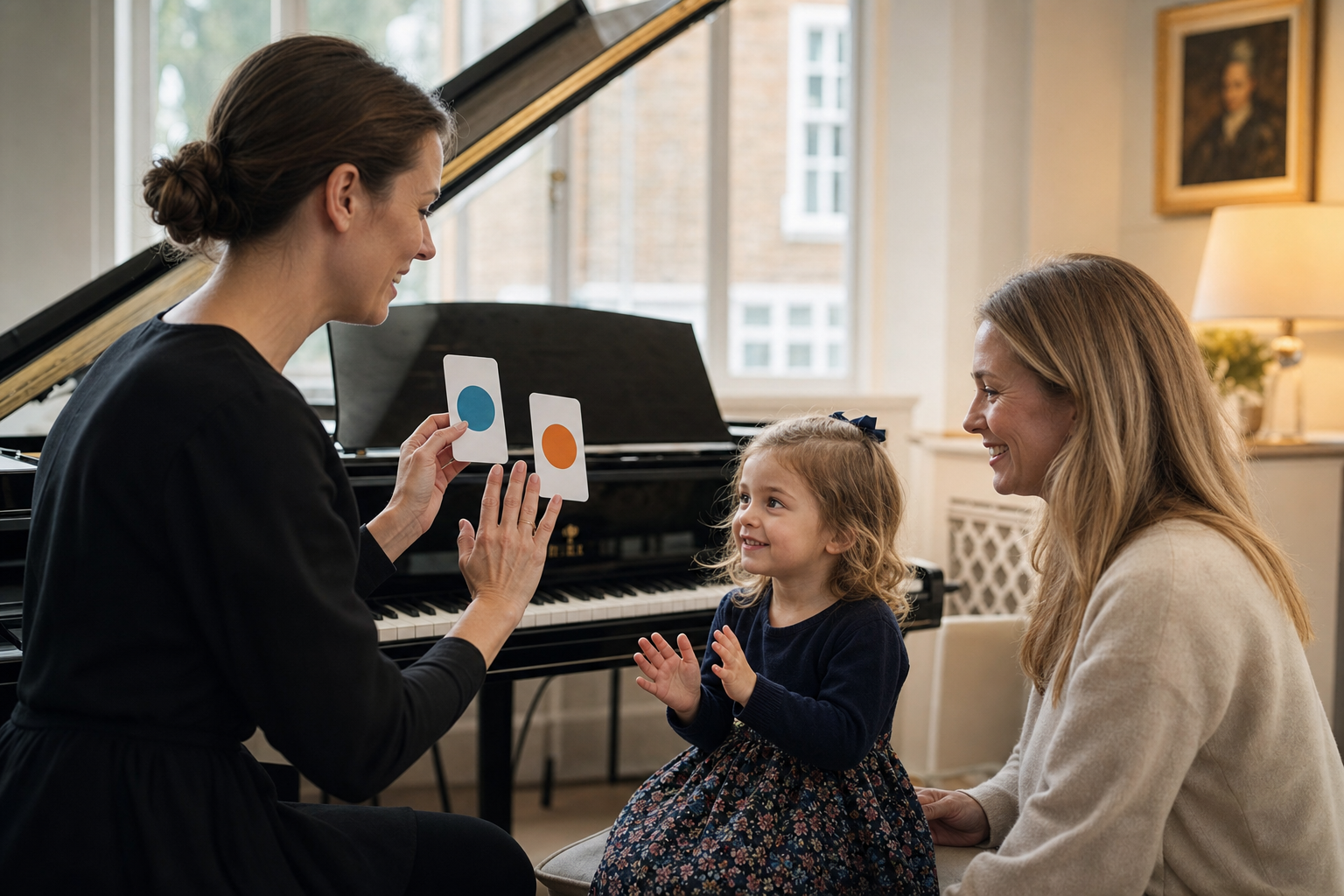
A three-year-old does not need a syllabus first. They need a musical adult who can turn curiosity into a repeatable, joyful habit.
Home practice should be tiny
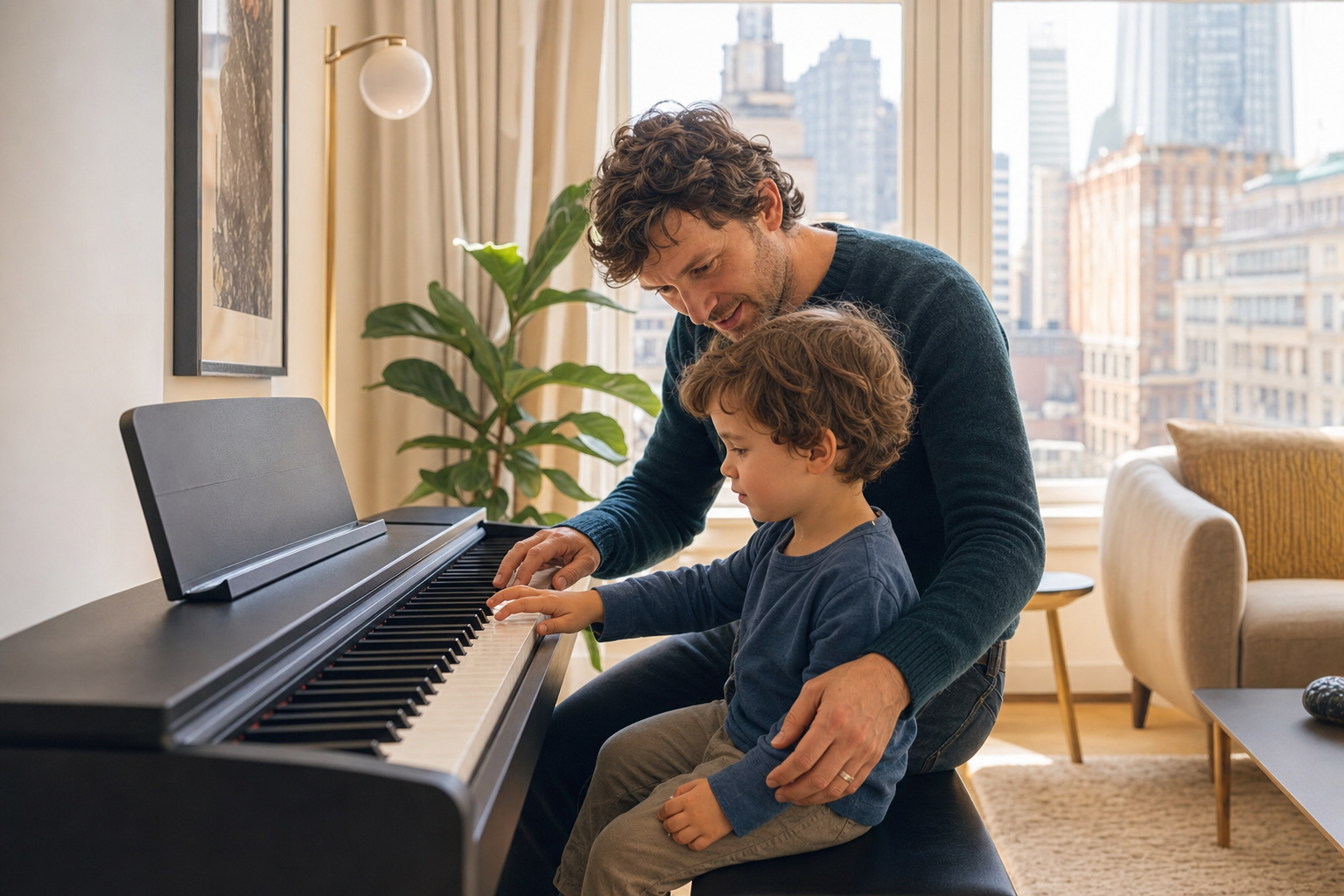
For this age, the word practice can mislead. A better target is a two-to-five-minute musical routine, three or four times a week. Repeat the same little game: tap and copy, find two black keys, play high then low, sing a note back, or make a soft sound followed by a strong sound. Stop while the child is still pleased.
Parents should not correct constantly. Their role is to create rhythm around the activity: same time of day, warm tone of voice, no bargaining, no long speeches. In London homes where space and sound are practical concerns, a good digital piano with full-size weighted or touch-sensitive keys can be a sensible start. The instrument should invite gentle touch, not become another screen or toy.
A simple first-month framework
| Week 1 | Explore high, low, soft and strong sounds. |
| Week 2 | Copy two-tap and three-tap rhythms. |
| Week 3 | Find black-key groups and play with one careful finger. |
| Week 4 | Repeat a favourite game and notice whether attention is growing. |
Choosing a teacher for piano lessons for 3 year olds
The teacher matters more than the method label. Ask whether they regularly teach preschool children, how long the first session lasts, whether parents stay in the room, and how they respond when a child loses focus. Safeguarding and clear professional boundaries are essential for any child lesson. In the UK, parents should feel able to ask about suitability, supervision, communication and the studio’s approach to child welfare.
Be cautious with any programme that promises rapid note-reading or exam progress at three. A good teacher can be ambitious about musicianship while modest about pace. You should hear phrases such as “let us observe”, “we can keep this playful”, and “we may wait if your child is not ready”.
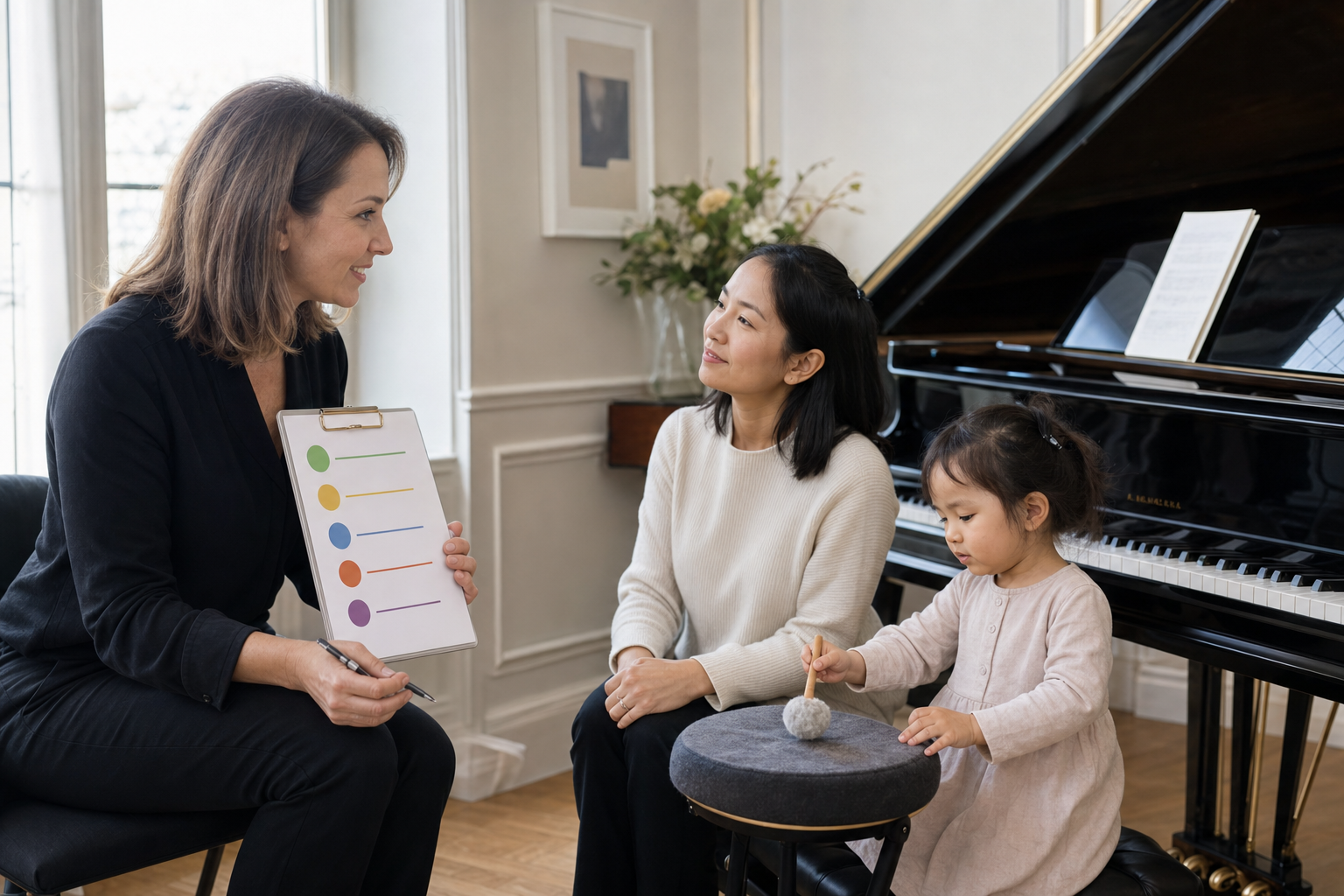
Teacher’s note
If a child remembers one musical idea from the previous week, greets the piano with interest, and leaves emotionally settled, the lesson is doing its work.
When to wait, and what to do instead
Waiting is sometimes the wisest musical decision. If your child cannot yet follow one-step instructions, is distressed by the room, or wants only unstructured noise, choose a musical bridge. Sing nursery songs, clap patterns, dance to contrasting music, attend child-friendly concerts, or try parent-child rhythm games. The piano can remain present without becoming a demand.
For many families, a later start at four or five produces faster, calmer progress. WKMT already covers nearby pathways such as piano lessons for four-year-olds, preschool piano readiness and young-beginner first steps. Those articles can help you compare the age-three decision with the next stage.
A careful first step for your child
If you are unsure whether your three-year-old is ready, WKMT can help you choose between a playful introduction, a short assessment, or waiting until formal lessons feel natural.
Frequently asked questions
Should a three-year-old have weekly piano lessons?
Only if the lessons are short, flexible and enjoyable. Some children do better with fortnightly sessions or a parent-child musical routine first.
Does my child need a piano at home?
A full acoustic piano is not essential at the beginning. A good digital piano with full-size keys is usually enough for brief, gentle exploration.
When should exams enter the conversation?
Much later. Initial Grade pathways from ABRSM or Trinity can be useful once a child has secure attention, basic coordination and a real appetite for pieces.
Sources
- Department for Education, Early years foundation stage statutory framework GOV.UK
- Foundation Years, What to expect in the Early Years Foundation Stage Foundation Years
- ABRSM piano assessments and Performance Grades ABRSM Piano
- Trinity College London piano grades Trinity Piano
- WKMT children’s piano lessons page and related sitemap pages WKMT piano lessons for kids