
 TRIAL LESSON
Piano Lessons
Music Lessons for Preschoolers: When Piano Readiness Starts to Make Sense
Jul
Music Lessons for Preschoolers in London with WKMT
WKMT parent guide
Music Lessons for Preschoolers: When Piano Readiness Starts to Make Sense
Music lessons for preschoolers work best when they build listening, pulse, confidence and gentle curiosity before formal piano study begins.
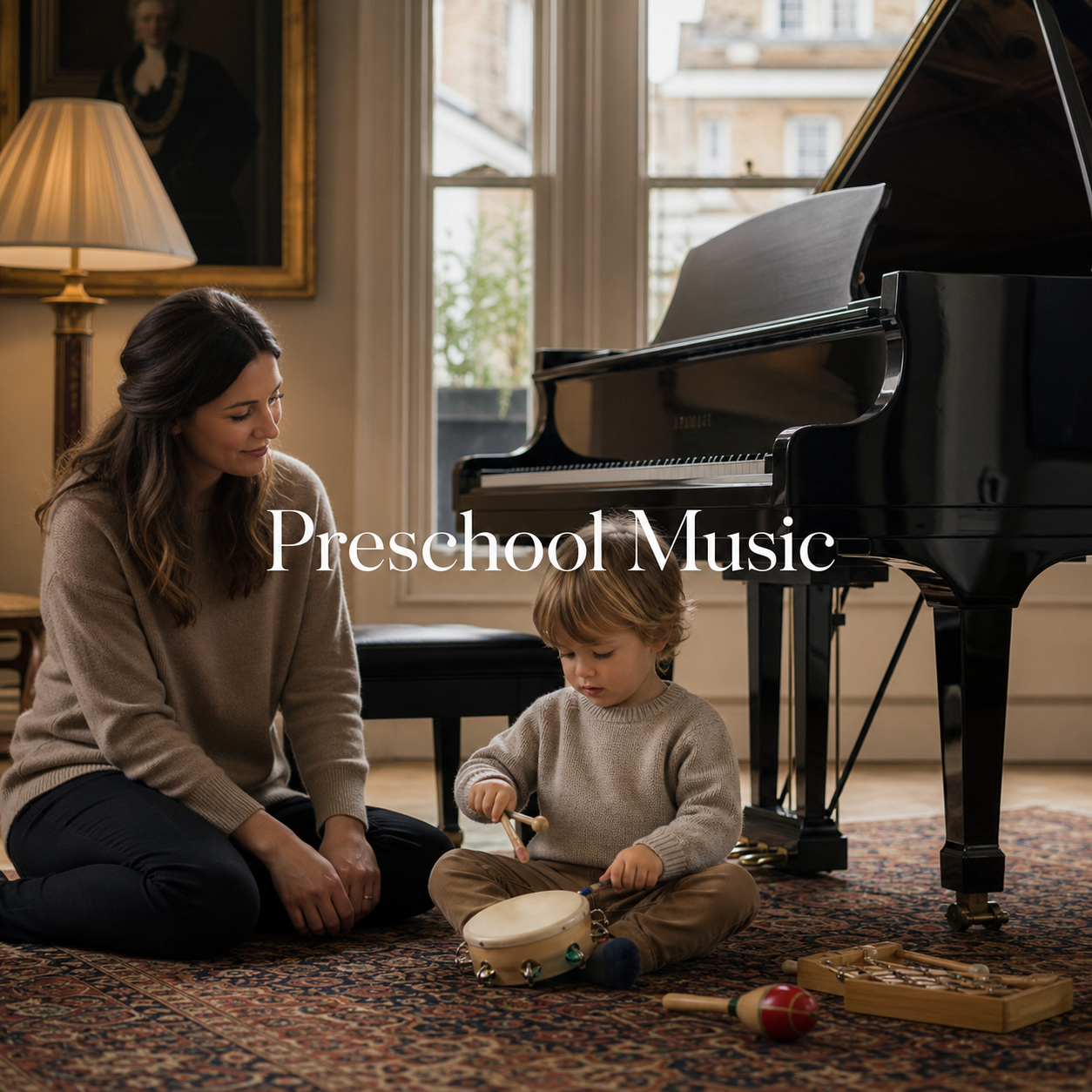
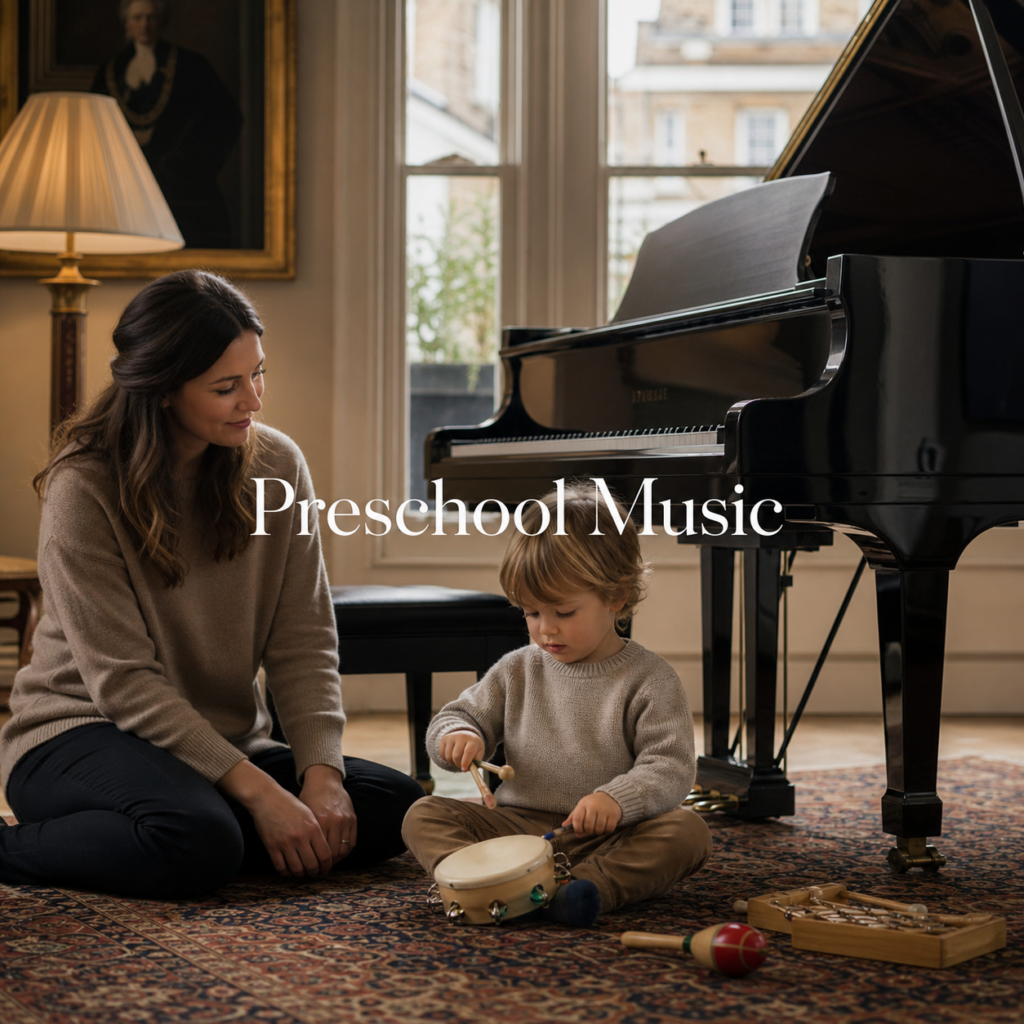
Quick answer: good music lessons for preschoolers should be short, responsive and play-based. They should prepare the child for later piano learning through singing, rhythm, movement, listening and careful one-finger exploration, rather than through early pressure to read notation.
Parents often ask whether preschool music should mean piano lessons, singing classes, rhythm games, or simply more music at home. The sensible answer is that all of these can help, but the order matters. A preschool child needs musical trust before musical instruction. They need to hear, copy, move, wait, respond and enjoy a small success.
At WKMT, that early path supports structured piano lessons for children in London without rushing a young child into a lesson format they are not ready to sustain. The aim is not to make a four-year-old behave like an older beginner. It is to recognise when musical foundations are strong enough for a kind, serious next step.
What preschool music should achieve
Preschool music is valuable because it reaches several early skills at once. A child hears contrast, matches pulse, waits for a turn, imitates an adult, uses fine motor control and learns that sound can carry feeling. The Early Years Foundation Stage in England includes expressive arts and design among the areas of learning for children from birth to five, and the Department for Education’s early-years guidance places imagination, creativity and communication at the centre of this stage.
For music lessons for preschoolers, this means the lesson should feel alive and responsive. A teacher might sing a phrase and leave space for the child to answer; tap a simple pattern; ask the child to move like high notes or low notes; or invite one careful finger to play two black keys. These are not distractions from piano learning. They are the foundations that later make piano learning calm and meaningful.
For parents
A preschool child does not need a long lesson to make progress. Ten attentive minutes with a musical adult can be more useful than thirty minutes of fatigue.
The readiness signs that matter
Age is only a starting point. Some children are ready for a gentle piano-based introduction at three or four; others need more time with singing and movement first. The useful signs are practical and observable:
- Listening: the child notices loud and soft, fast and slow, high and low.
- Imitation: the child can copy a short rhythm, gesture or sung phrase.
- Turn-taking: the child can let the adult play first, then respond.
- Fine-motor comfort: the child can use one finger gently without strain.
- Emotional security: the child remains curious with a parent nearby.
- Return interest: the child wants to revisit a familiar song or sound game.
The strongest sign is not stillness. Preschoolers move. A child can wriggle and still be musical. What matters is whether the child can rejoin the activity when the teacher gives a musical cue. That rejoining skill is central to future lessons.
Copies small patterns, enjoys adult attention, explores keys gently, and can stop and start with a cue.
Finds instruction distressing, only wants loud free play, or loses confidence when asked to copy.
Singing, clapping, movement and short parent-child routines can prepare the ground.
What a good preschool lesson looks like
A good preschool lesson has rhythm, variety and a clear adult presence. It may begin on the floor with a pulse game, move to a song, touch the piano for a tiny keyboard discovery, then close with a repeated activity the child recognises. The same structure can repeat each week because young children gain confidence from recognition.
The lesson should not depend on worksheets, long explanations or a promise that the child will soon take exams. ABRSM and Trinity graded piano pathways can become relevant later, but the preschool stage is earlier than that. The work is musical orientation: posture without stiffness, pulse without counting anxiety, listening without interrogation, and touch without forcing tiny hands into adult shapes.
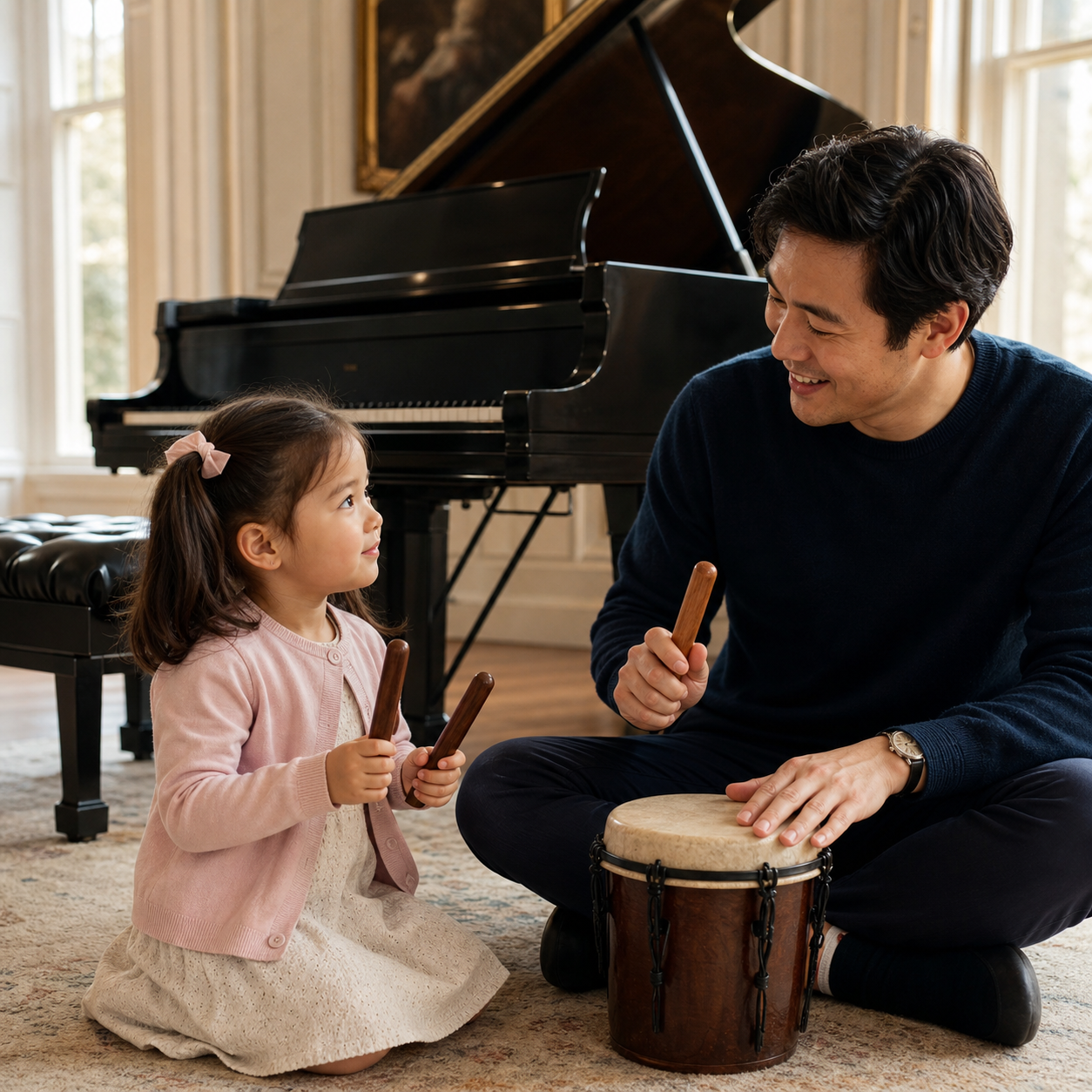
The best preschool music teaching turns curiosity into a repeatable habit, then lets piano learning grow from that habit.
When piano becomes the right next step
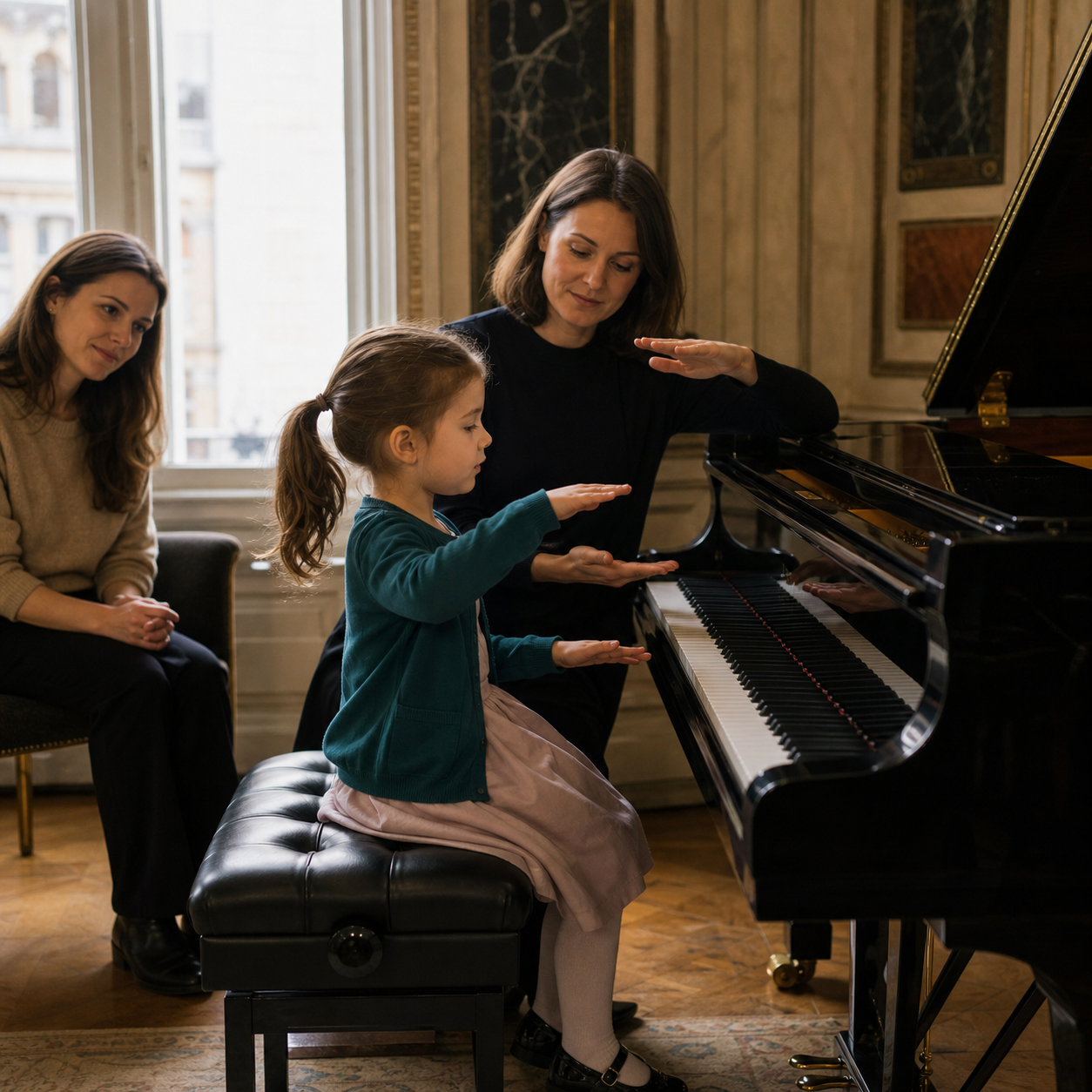
Piano readiness begins when the child can treat the instrument as a place for listening rather than only as a place for noise. A teacher can then introduce very small keyboard tasks: finding groups of two black keys, making a soft sound, copying a two-note pattern, or answering a sung phrase on one key. These activities are simple, but they are already musical.
Parents should watch the child’s response after the lesson. Does the child sing the song again at home? Do they ask to show someone the high sound and low sound? Do they remember the teacher’s rhythm game? If so, a short piano-based routine may be worth continuing. If the child leaves depleted or resistant, preschool music without formal piano may be the wiser route for now.
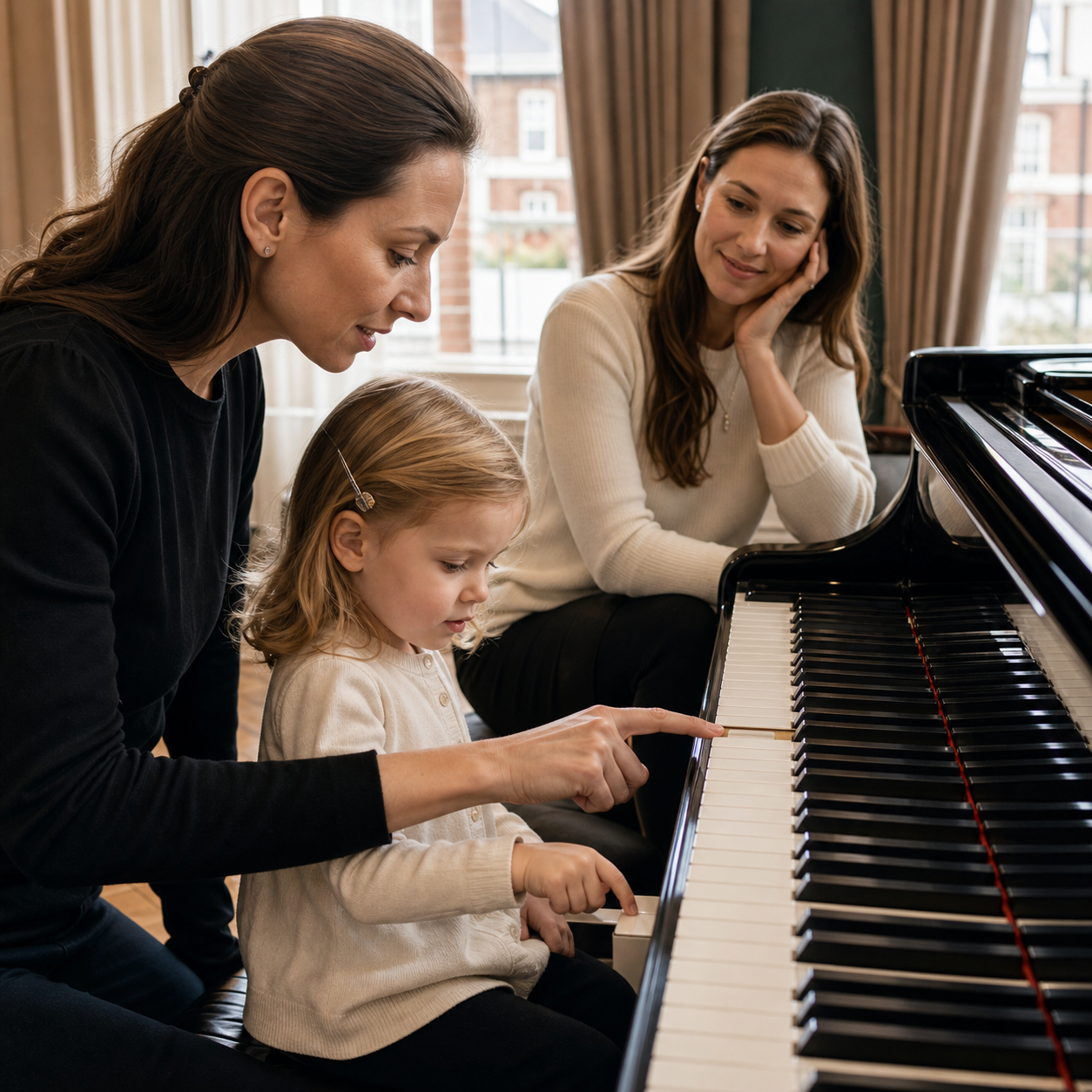
A preschool-to-piano pathway
| Stage 1 | Singing, pulse games, movement, stop-start listening and echo patterns. |
| Stage 2 | Keyboard exploration: high and low, soft and strong, groups of black keys. |
| Stage 3 | Short piano lesson with parent involvement and a two-to-five-minute home routine. |
| Stage 4 | A fuller beginner lesson when attention, confidence and home rhythm are stable. |
How parents can help at home
Home support should be tiny and regular. Two to five minutes is enough for many preschoolers. Repeat a single activity: clap the child’s name, sing a call-and-response phrase, tap a soft pulse on the piano lid, find two black keys, or make a high bird sound and a low bear sound. Stop while the child is still pleased.
This is where the science of responsive interaction matters. The Center on the Developing Child at Harvard University describes “serve and return” exchanges as back-and-forth interactions between a young child and a caring adult. Music gives parents a natural way to do that: the child offers a sound, gesture or rhythm, and the adult answers musically rather than turning the moment into a test.
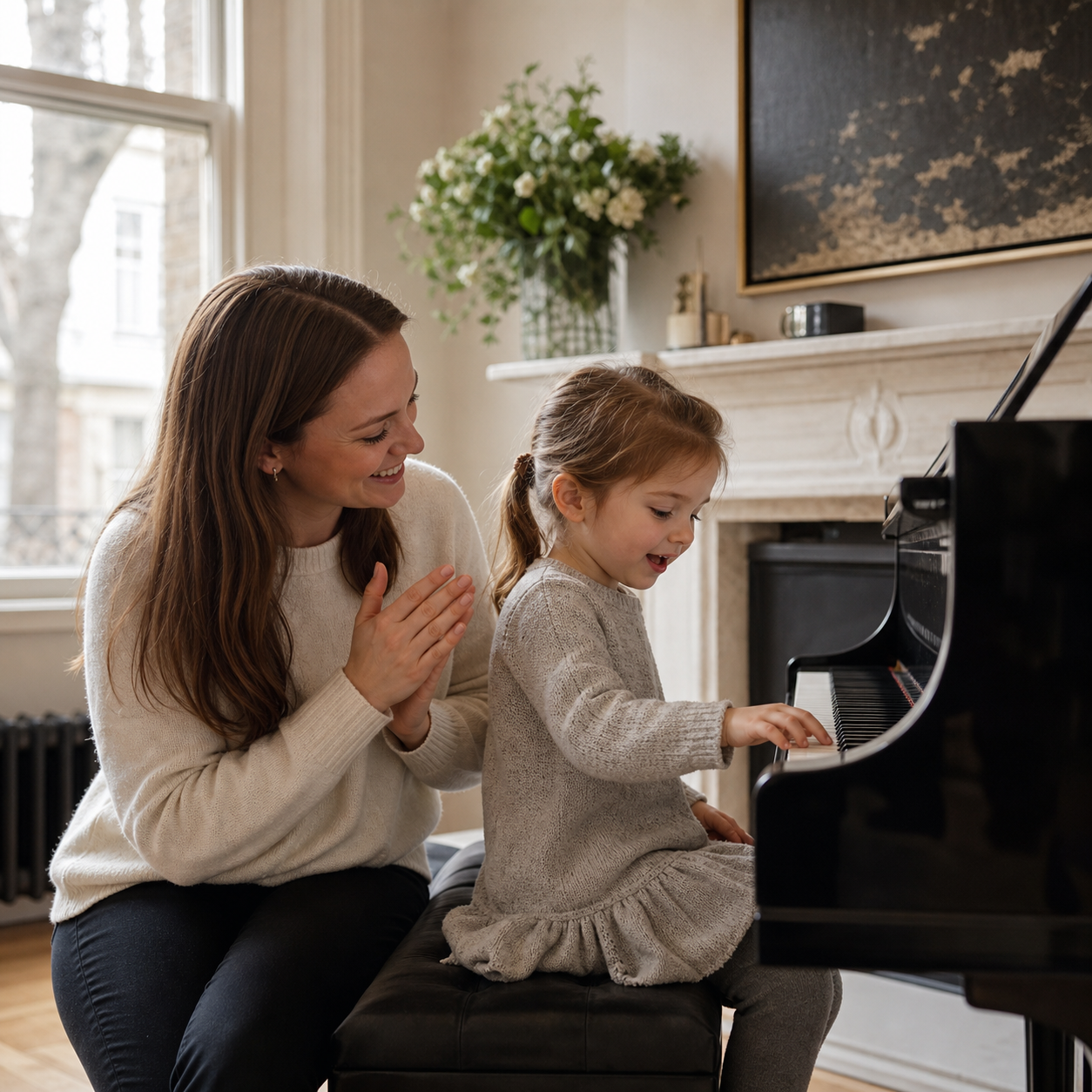
Teacher’s note
If a child wants to repeat the same song every week, use it. Repetition is not a lack of progress at this age; it is often the route to confidence, memory and expressive control.
Choosing the right setting in London
Parents in London often compare group music classes, nursery music, private piano lessons and home routines. Each can be useful. Group classes are good for movement, confidence and social energy. Nursery music supports general creativity. Private lessons are best when the child is ready for individual attention and when the teacher understands preschool development.
For a child close to piano readiness, the strongest option is usually a gentle consultation or trial lesson with a teacher who can advise honestly. WKMT’s children’s piano route is most suitable when the child can accept short direction, enjoy sound exploration and return to a musical task without distress. The lesson must fit the child, not the other way round.
A careful next step for young beginners
If your preschool child is curious about the piano, WKMT can help you decide whether to begin with musical play, a short piano introduction, or a fuller children’s lesson path.
A practical decision guide
Use the following guide before booking music lessons for preschoolers, especially if the goal is eventual piano study:
- Start with the child’s response to sound. Do they listen, copy and return to a musical idea?
- Choose a teacher who can slow down. Preschool teaching requires flexibility, not just simplified older-child teaching.
- Keep the parent involved. At this age, home rhythm matters more than independent practice.
- Avoid exam language too early. Let graded pathways wait until the child has stable musical habits.
- Review after four sessions. You should see curiosity, not pressure; confidence, not compliance alone.
Practice insight
The parent should measure success by the child’s willingness to return. A preschool child who says “again” after a short rhythm game is already building the emotional basis of practice.
Sources on Music lessons for preschoolers
- Department for Education, Early Years Foundation Stage
- Department for Education, Imagination and creativity: help for early years providers
- Center on the Developing Child at Harvard University, Serve and Return: Back-and-forth exchanges
- ABRSM, Piano
- Trinity College London, Piano grade exams
- WKMT, Piano lessons for kids