
 TRIAL LESSON
Piano Lessons
Piano Lessons for 4 Year Olds: Readiness, Confidence and First Steps
Jul
Piano lessons for 4 year olds in London with WKMT
WKMT parent guide
Piano Lessons for 4 Year Olds: Readiness, Confidence and First Steps
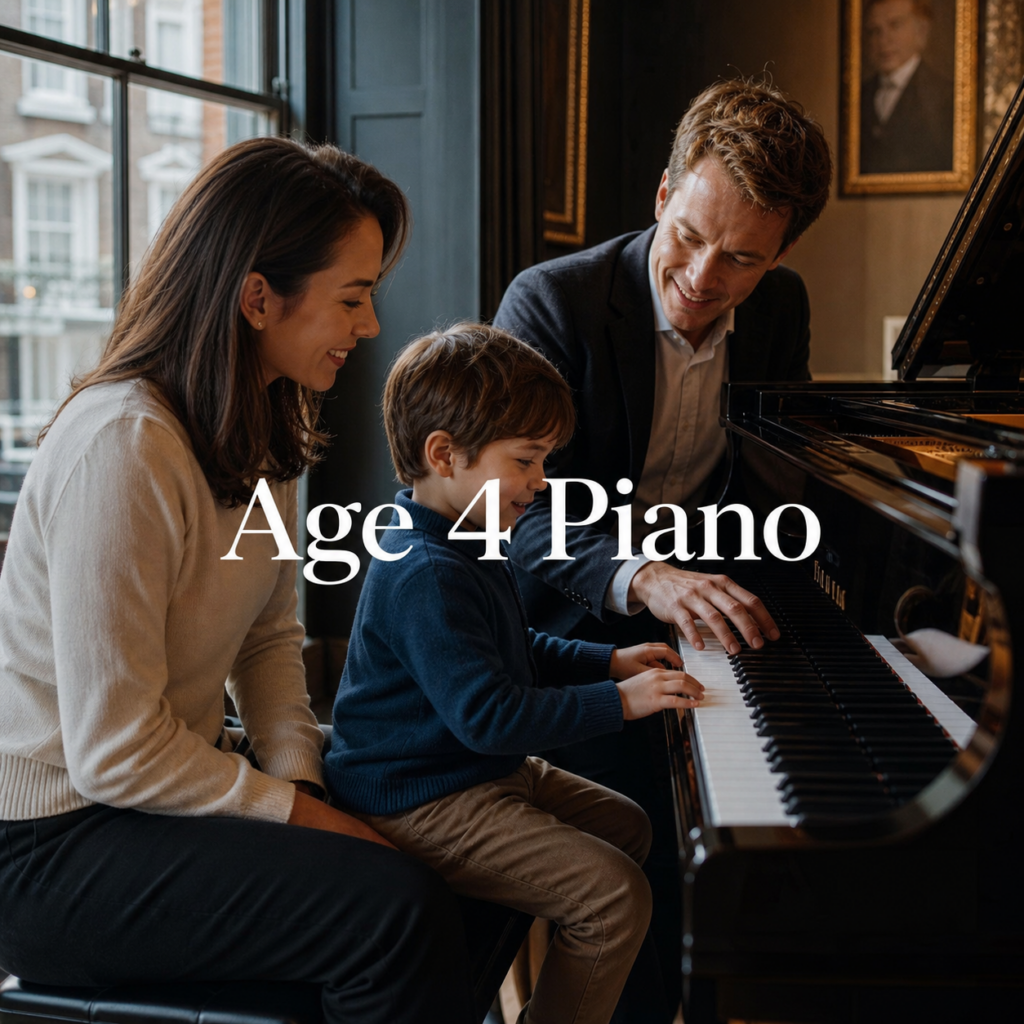
Four can be a beautiful age to meet the piano, provided the lesson is playful, short, expert and honest about readiness. The aim is not early pressure. It is a calm first musical relationship.
Quick answer: should a 4 year old start piano lessons?
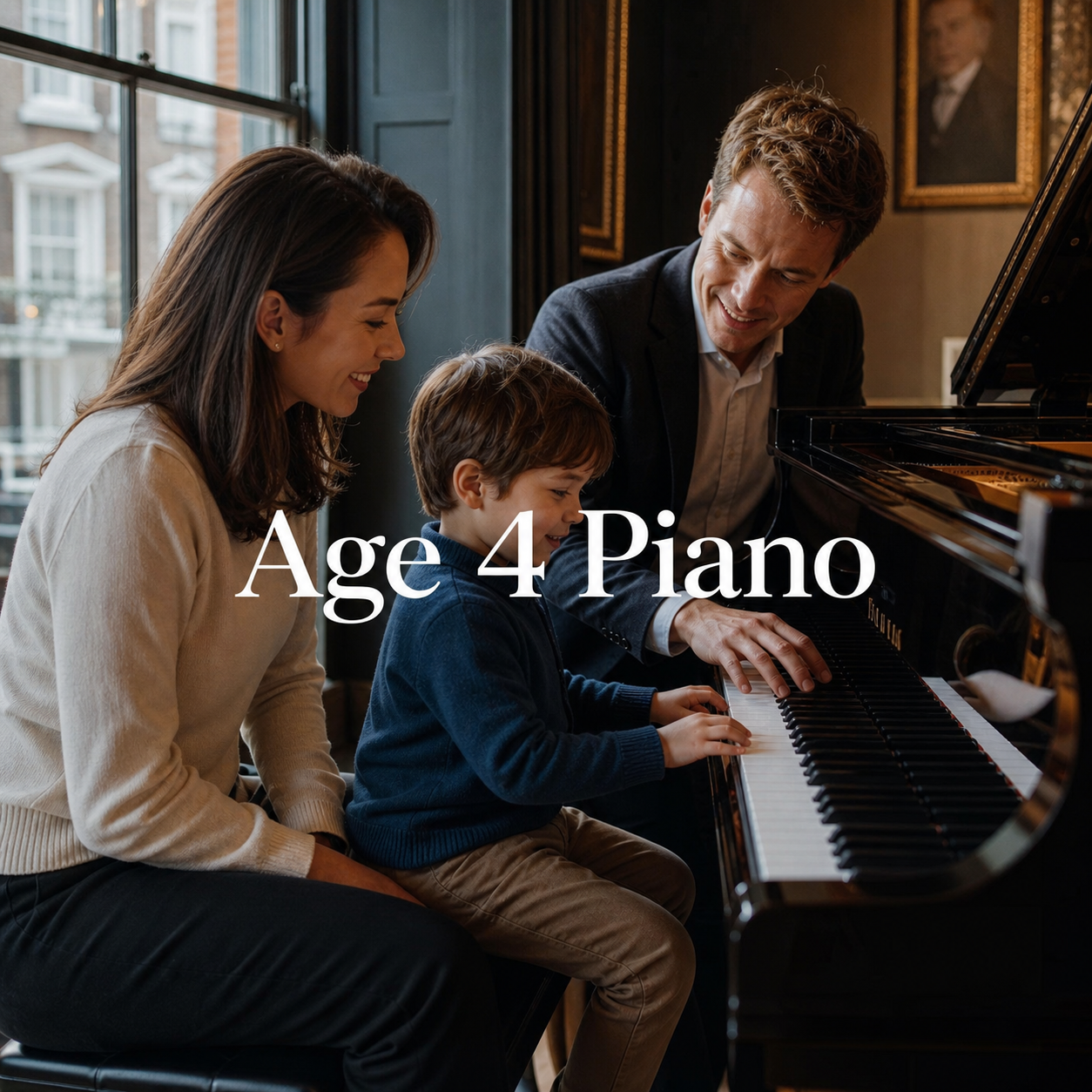
Yes, piano lessons for 4 year olds can be worthwhile when the child is curious, comfortable with a trusted adult, able to follow brief instructions, and happy to explore sound without being pushed into formal practice too soon. Four is not the age for rigid exam preparation or long technical work. It is the age for listening, rhythm, singing, gentle keyboard geography, turn-taking and confidence. If a child resists every week, cannot settle even briefly, or becomes anxious around the instrument, it is usually better to wait a few months and try again with no sense of failure.
London parents often ask this question because they can see real musical interest at home: a child copying older siblings, inventing songs, tapping rhythms, or asking to touch the piano. WKMT’s structured piano lessons for children in London are the right money-page route for families who want careful, parent-aware teaching rather than a generic activity class.
A four-year-old does not need to be made serious. They need a serious teacher who knows how to protect play, attention and trust.
What readiness really means at age four
Readiness is not the same as talent. A child may sing beautifully and still be too tired for a weekly individual lesson. Another may have no obvious musical background but show excellent listening, imitation and curiosity at the keyboard. At four, the best signs are simple: the child can separate briefly from the parent or work with the parent nearby, wait for a turn, copy a short rhythm, name high and low sounds, and recover quickly when something is difficult.
The Early Years Foundation Stage places expressive arts and design inside a wider picture of play, communication, physical development and emotional security. That is useful for parents because piano readiness depends on the whole child, not only on fingers. Fine motor control, language, confidence, sleep, school nursery routine and temperament all influence the first lesson.
For parents
If your child can enjoy a ten-minute shared task, imitate sounds, and leave the piano still liking music, that is a stronger first sign than sitting perfectly still for half an hour.
What a good first piano lesson looks like
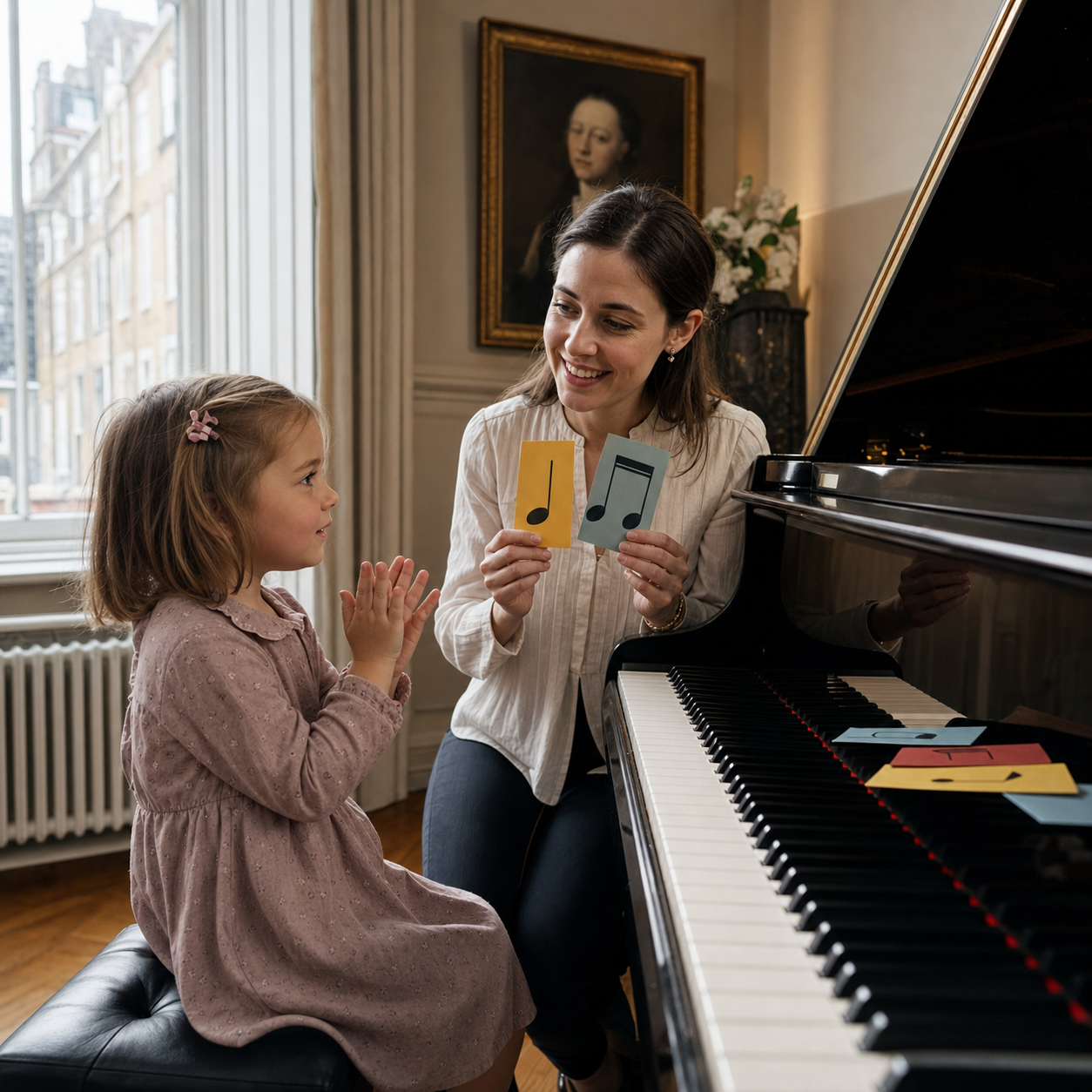
A good lesson for a four-year-old has a clear shape but a flexible pace. It may begin away from the keyboard with clapping, singing or movement, then move to the piano for high and low sounds, black-key patterns, short echo games and simple stories. The teacher should use language the child understands, keep instructions short, and move between activities before concentration collapses.
Parents should not expect a page of notation in week one. Reading may appear gradually through patterns, pictures, finger numbers or simple rhythm symbols, but the musical foundation is listening first. The teacher is watching how the child responds to pulse, sound, direction, frustration and praise. That observation is valuable because it tells the family whether individual lessons, paired lessons, a short trial block or waiting a little longer is the right next step.
| Lesson element | At age four | Parent watch point |
|---|---|---|
| Keyboard exploration | High, low, loud, soft, black-key groups, short echoes | Curiosity matters more than accuracy |
| Rhythm and pulse | Clapping, walking, tapping, call-and-response | The child should feel rhythm before naming it |
| Notation | Very light, visual and introduced slowly | Avoid forcing reading before listening is secure |
Home practice without pressure
The home routine for piano lessons for 4 year olds should be short enough to protect joy. Think of two to five minutes, several times a week, rather than a formal daily practice demand. A parent might ask the child to show the two-black-key groups, copy a rhythm, play a soft sound, or sing the song from the lesson. Stop while the child is still willing. Ending well is part of the pedagogy.
The home instrument does not have to be a grand piano. A stable digital piano with weighted keys can work for a first stage, especially in a London flat where space and noise matter. Toy keyboards, however, quickly limit sound, touch and posture. If the child continues, the family should plan for a proper digital or acoustic instrument that lets the teacher build healthy habits.
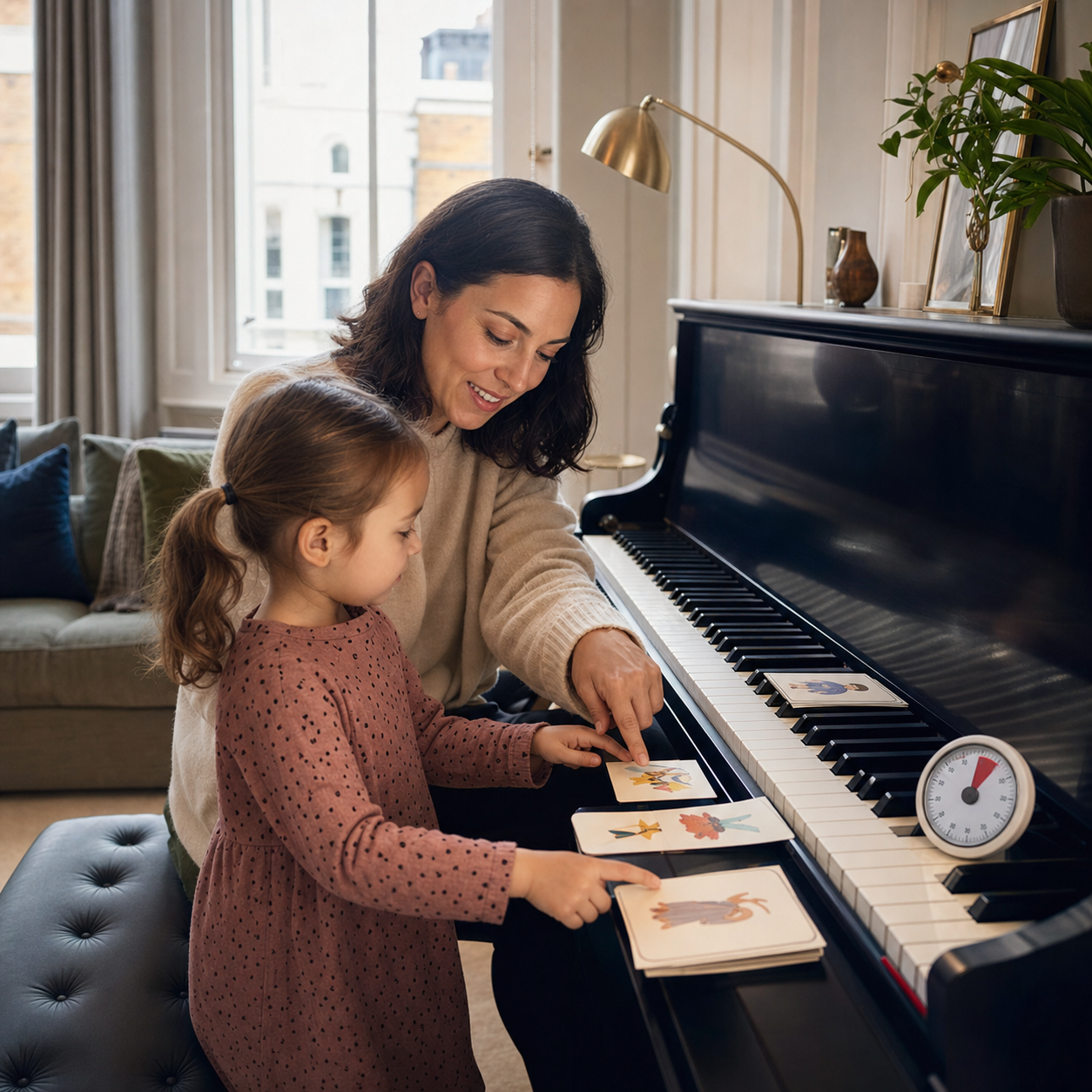
Settle into the teacher, piano geography and simple listening games.
Remember short patterns, echo rhythms and show growing confidence.
Move towards simple pieces, stronger pulse and early reading readiness.
When to wait, and why waiting can be wise
Some children are ready at four; others are not. Waiting is not a lost opportunity. If the child is regularly distressed, unable to follow very short instructions, resistant to every home attempt, or physically uncomfortable at the instrument, a few months of singing, dancing, listening and informal piano play may be more productive than formal lessons.
The teacher should be honest with parents. A studio that recommends waiting is not rejecting the child; it is protecting the future relationship with music. Many children return at four and a half or five with far more ease. The difference can be remarkable because early childhood development changes quickly.
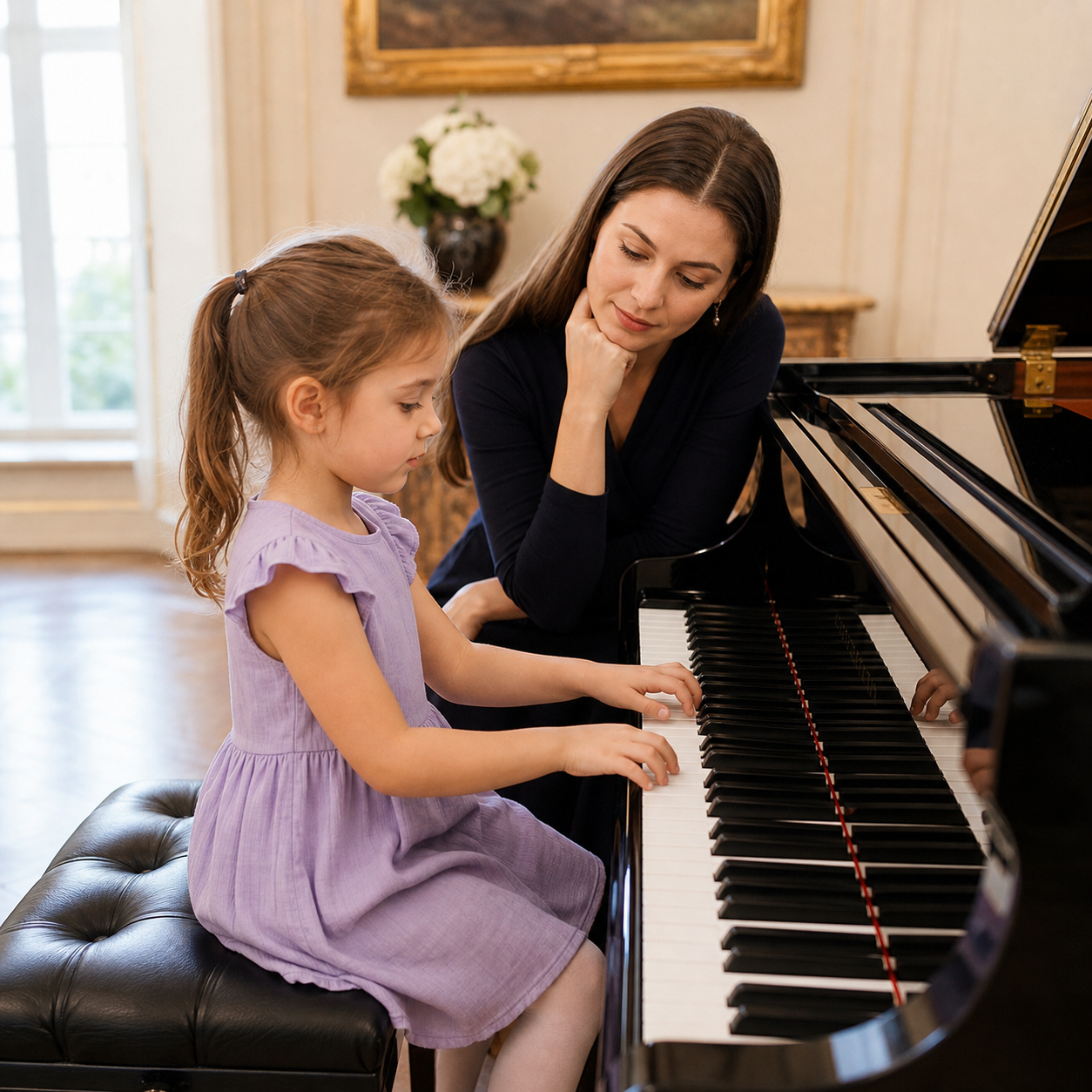
Teacher’s note
For a four-year-old, the first success is not a piece. It is the child wanting to return to the piano with trust intact.
Choosing a teacher in London
The right teacher for piano lessons for 4 year olds needs more than piano fluency. They need patience, early-childhood awareness, safeguarding clarity and the confidence to communicate realistically with parents. Ask how long the first trial will be, whether a parent stays in the room, how home tasks are set, and what signs would suggest waiting before continuing.
London logistics also matter. A tired four-year-old travelling across the city after nursery may not show their best self. A calm studio route, a sensible time of day and a teacher who can adapt the lesson length are often more important than an impressive but impractical timetable. Families considering a broader beginner route can also compare WKMT’s piano lessons for beginners, music lesson fees and contact details before booking.
Trial lesson checklist
- Does the teacher speak to the child calmly and concretely?
- Is the lesson short enough to end before fatigue takes over?
- Does the child explore sound rather than perform under pressure?
- Are parent role, safeguarding and communication expectations clear?
- Does the teacher explain whether to continue now or wait?
Start with the right level of care
For families considering a very young beginner, WKMT’s children-focused piano route keeps the parent, child and teacher aligned around readiness, confidence and gentle progress.
Performance, confidence and the first musical identity
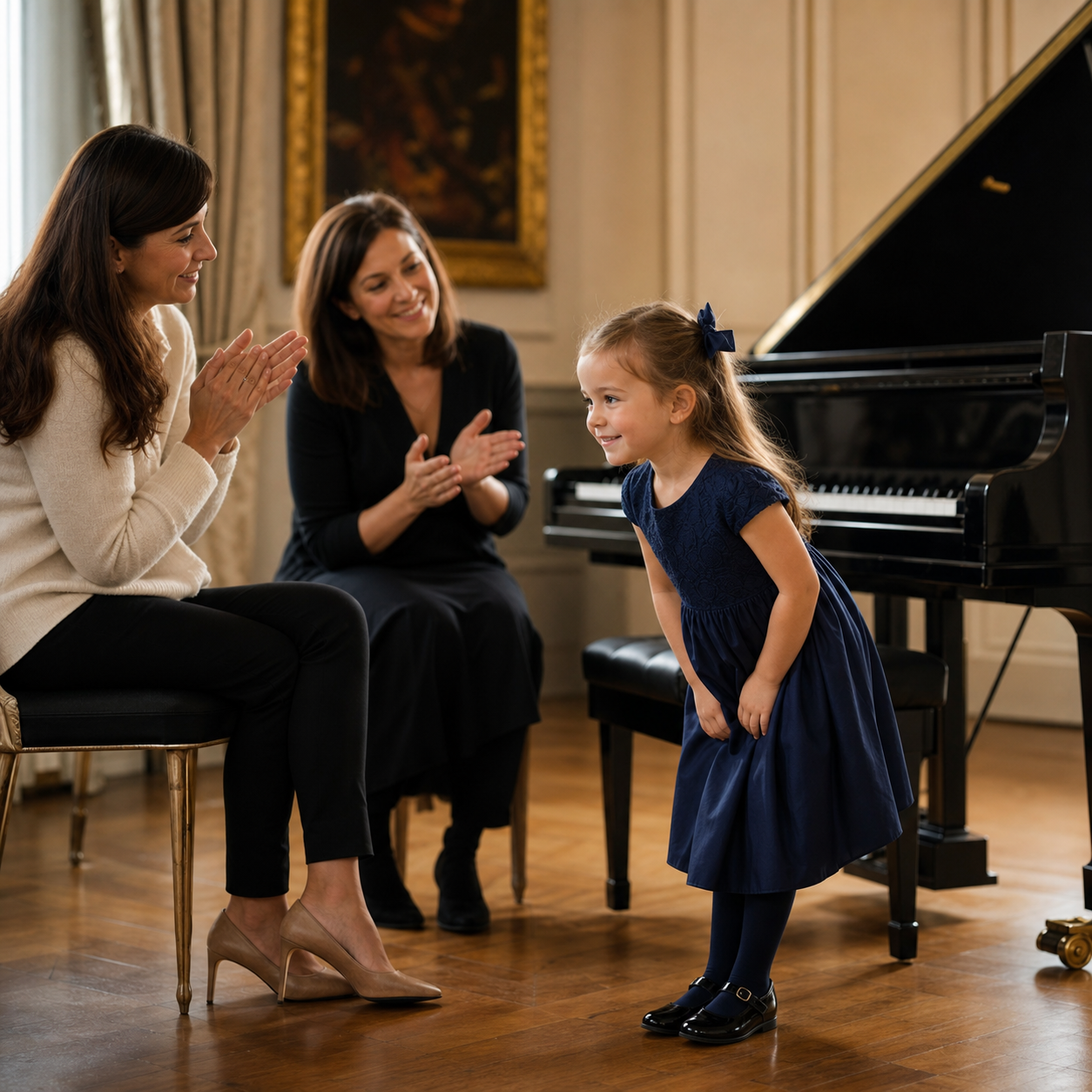
A four-year-old should not be hurried towards public display, but tiny moments of sharing can be powerful: playing a two-note echo for a parent, bowing after a studio game, or joining a simple rhythm in a friendly setting. WKMT’s wider musical culture, including London music festivals and student performance opportunities, gives families a long-term picture without making the first months performative.
The best early teaching helps the child feel, “I am someone who can make music.” That identity is delicate. It grows through repetition, humour, small successes and adults who know when to stop.
Frequently asked questions
Is four too young for piano lessons?
Not always. Four is suitable when lessons are playful, brief and readiness-led. It is too young for heavy notation, exams or long practice demands.
How long should a four-year-old piano lesson be?
Many children do best with a short trial or a flexible 20-30 minute lesson. The teacher should adjust the pace to attention and energy.
Should parents practise with a four-year-old every day?
No. Several two-to-five-minute musical moments each week are usually better than daily pressure. The routine should remain warm and achievable.
A careful first step into piano
The strongest piano lessons for 4 year olds are built around readiness, trust and musical curiosity. Parents should look for a teacher who understands early childhood, explains progress clearly and protects the child’s relationship with the instrument. When those conditions are in place, age four can be a gentle and memorable beginning.
Sources ON Piano Lessons for 4 Year Olds in London
- Department for Education, Early years foundation stage statutory framework gov.uk
- ABRSM, Piano Practical Grades syllabus and Practical Grades overview abrsm.org
- Trinity College London, Piano grade examstrinitycollege.com
- London Music Fund, music education opportunities for young Londoners londonmusicfund.org
- WKMT, piano lessons for kids piano-composer-teacher-london.co.uk