
 TRIAL LESSON
Piano Lessons
Piano Lessons for Preschoolers: Readiness, Play and First Progress
Jul
Piano lessons for preschoolers in London with WKMT
WKMT parent guide
Piano Lessons for Preschoolers: Readiness, Play and First Progress
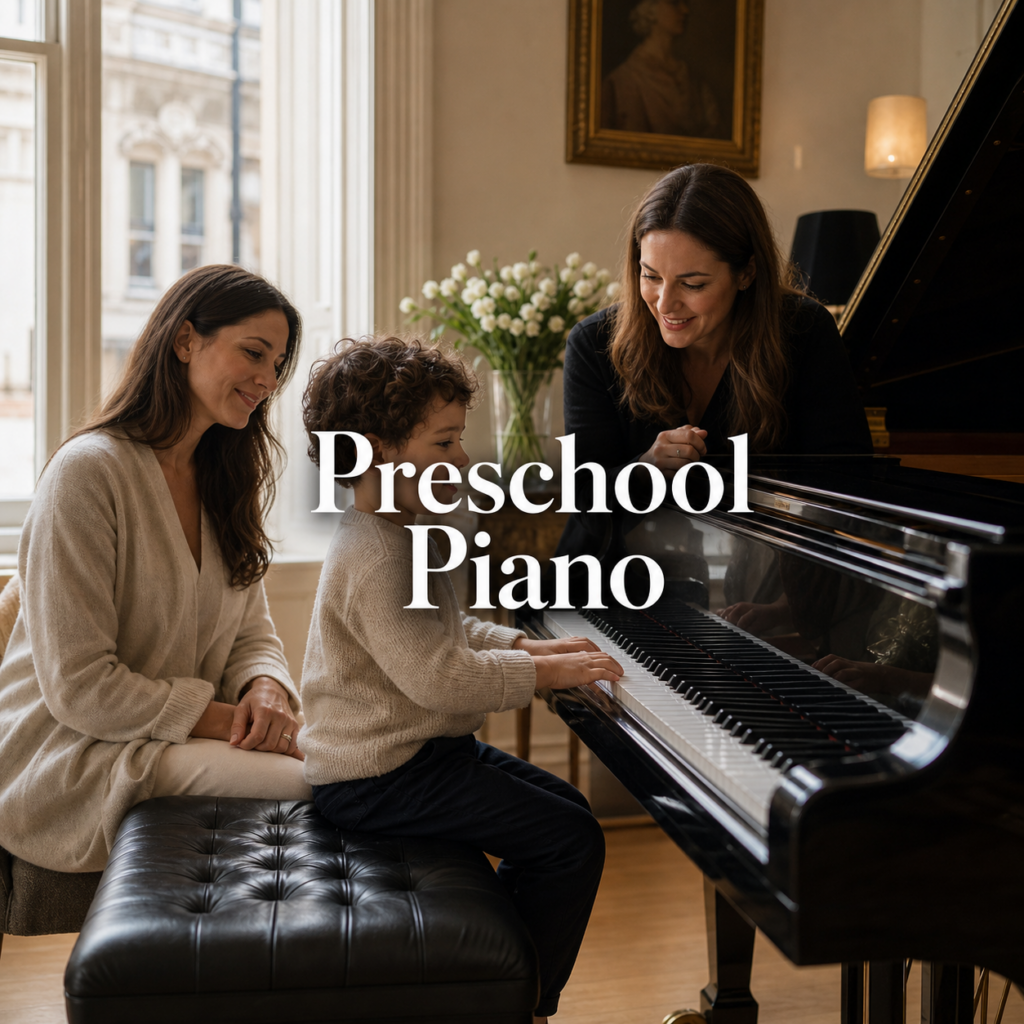
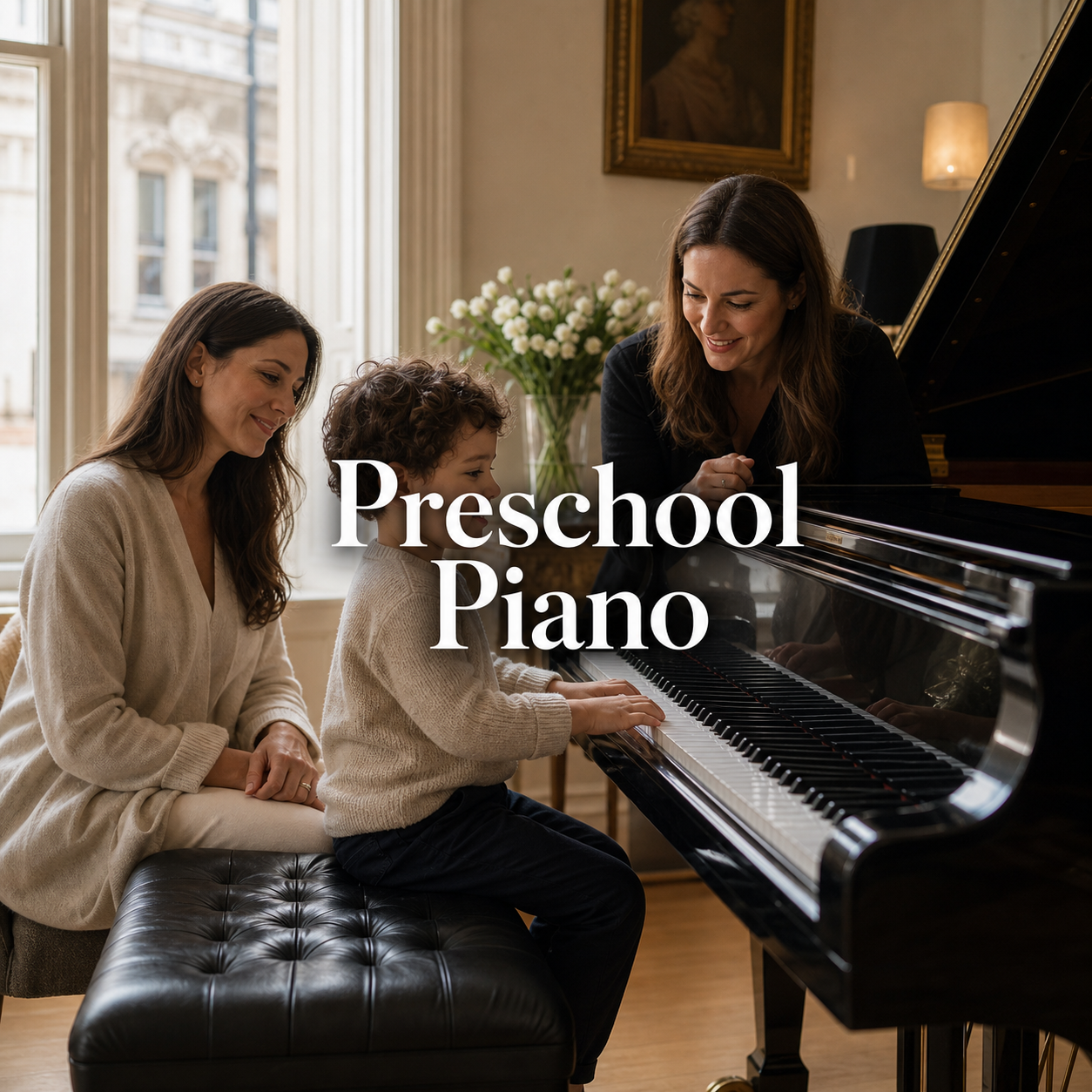
Piano lessons for preschoolers work best when they feel like guided musical play: short, attentive, safe and warm enough for a young child to want to return to the instrument.
The Short Answer for Parents
Preschool is not too early for music, but it is often too early for a conventional half-hour piano lesson built around reading, sitting still and repeated correction. The right question is not simply “Can my child start?” but “Can the teacher make the first steps musical, playful and emotionally safe?”
For many three- to five-year-olds, the best beginning is a short individual session or parent-supported lesson that mixes singing, rhythm, keyboard exploration, listening games and tiny moments at the piano. The aim is not to rush notation or exams. It is to help the child associate the piano with sound, pattern, imagination and a trusted adult. When families want a London teacher who understands this slower start, WKMT’s structured piano lessons for children provide a more suitable route than a generic beginner lesson.
For Parents: a preschool child is ready to begin when they can copy a simple sound, enjoy turn-taking, recover from a small mistake, and leave the lesson wanting to touch the piano again.
What Readiness Looks Like Before Formal Piano Study
The Early Years Foundation Stage frames young children’s learning around development, safety, imagination, expression, physical coordination and relationships with adults. That matters for piano. A preschool pupil is still learning how to share attention, move carefully, name feelings, copy patterns and use small tools with control. The keyboard can support all of that, but only when the lesson is designed for the child’s stage.
Useful readiness signs are modest. A child may listen when the teacher plays “high” and “low”; copy a two-note pattern; tap a steady pulse for a few seconds; sing back a tiny phrase; wait for a turn; or remember where middle C lives after several playful repetitions. These signs are stronger than a parent’s hope that an early start will guarantee fast progress.
A Preschool Piano Readiness Map
Can the child notice loud, soft, fast, slow, high and low without needing a lecture?
Can they sit safely, move hands gently and stop when asked?
Can they remember one tiny pattern or musical story from week to week?
Can they accept help from a teacher while a parent remains emotionally available?
This map keeps expectations humane. A preschooler who sings freely but cannot yet sit for long may still be ready for musical preparation. A child who reads letters early but becomes anxious at the piano may need more play, movement and parent-supported listening before formal pieces.
What a Good Preschool Lesson Should Include
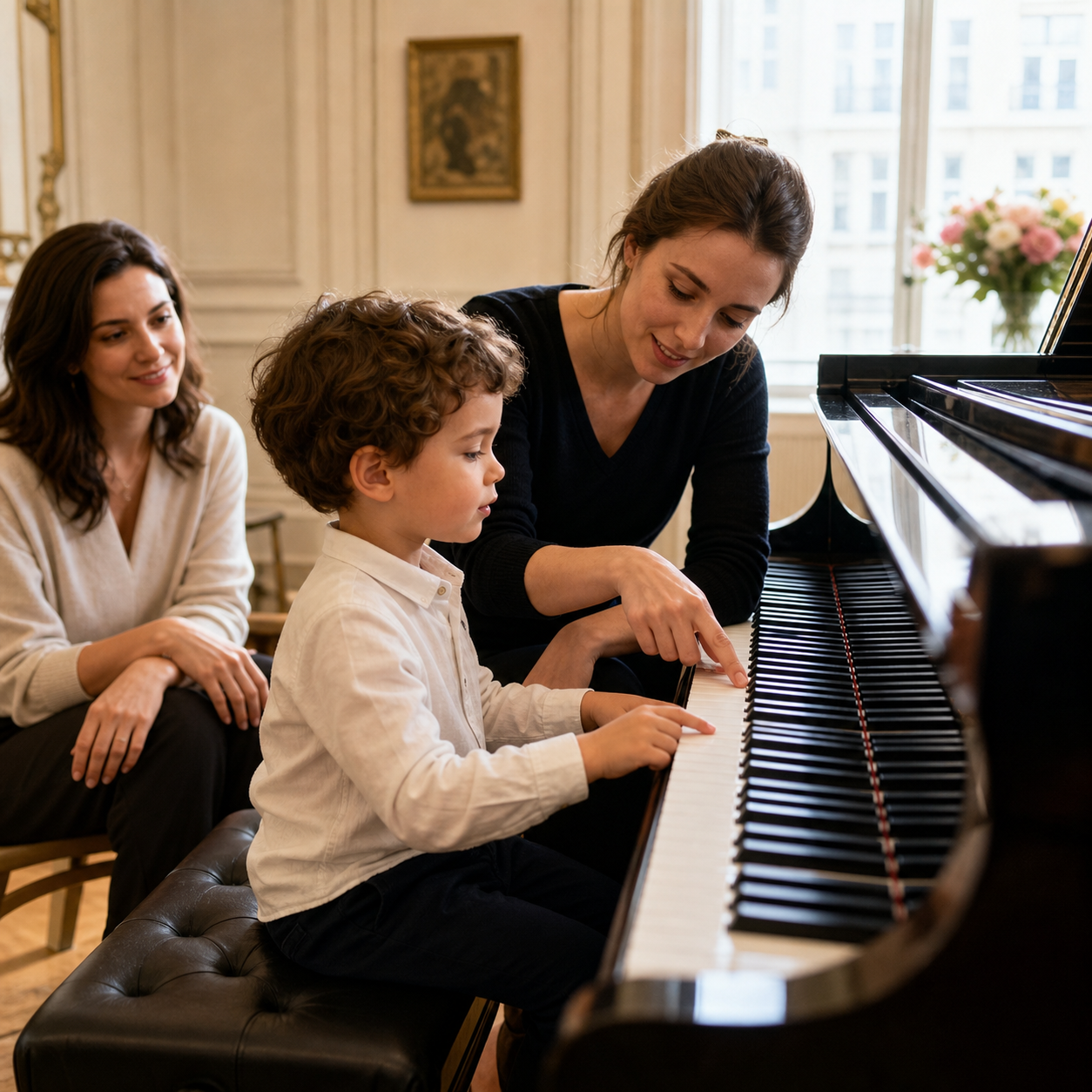
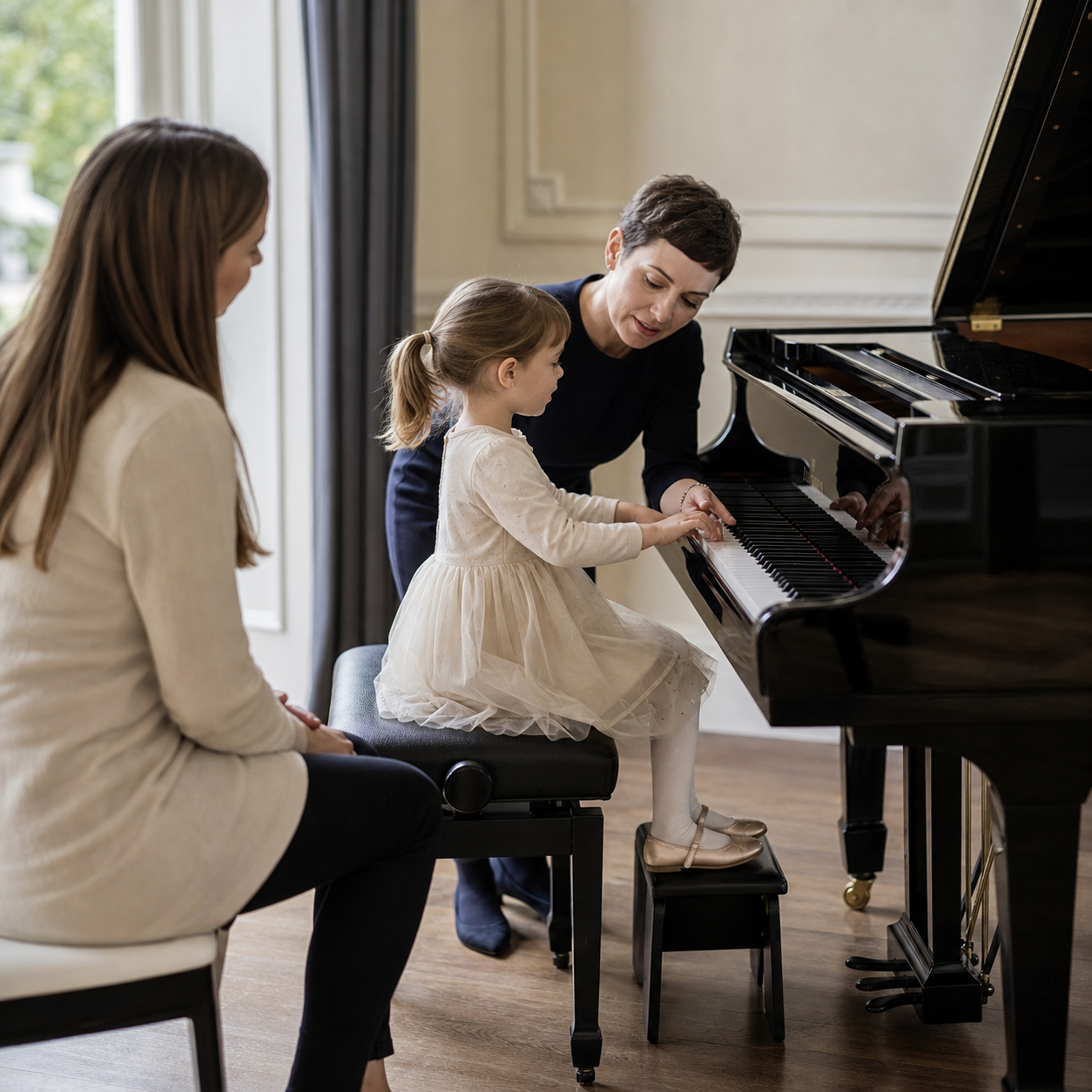
A strong preschool lesson is highly structured, but it should not look severe. The teacher may begin away from the bench with a rhythm echo or a short song, move to the keyboard for two or three sound games, then return to movement or a story before the child becomes tired. The discipline sits inside the pacing, not in adult pressure.
| Lesson element | Why it matters | Parent signal |
|---|---|---|
| Singing and echo games | Builds aural memory before notation | The child listens and copies happily |
| Keyboard exploration | Connects sound, touch and imagination | The child plays gently, not randomly for the whole lesson |
| Tiny routines | Creates security through repetition | The child remembers a greeting song or pattern |
| Parent participation | Turns home practice into encouragement | The parent knows exactly what to repeat |
“The first success is not a piece played perfectly. It is a child who learns that careful listening changes what the piano can say.”
Home Practice Without Turning the House Into a Classroom
Preschool practice should be short enough to remain welcome. Five minutes of joyful repetition can do more than twenty minutes of bargaining. Parents can make a simple pattern: clap a rhythm, sing a phrase, play two black-key sounds, then finish. The same order each day helps a young child feel capable.
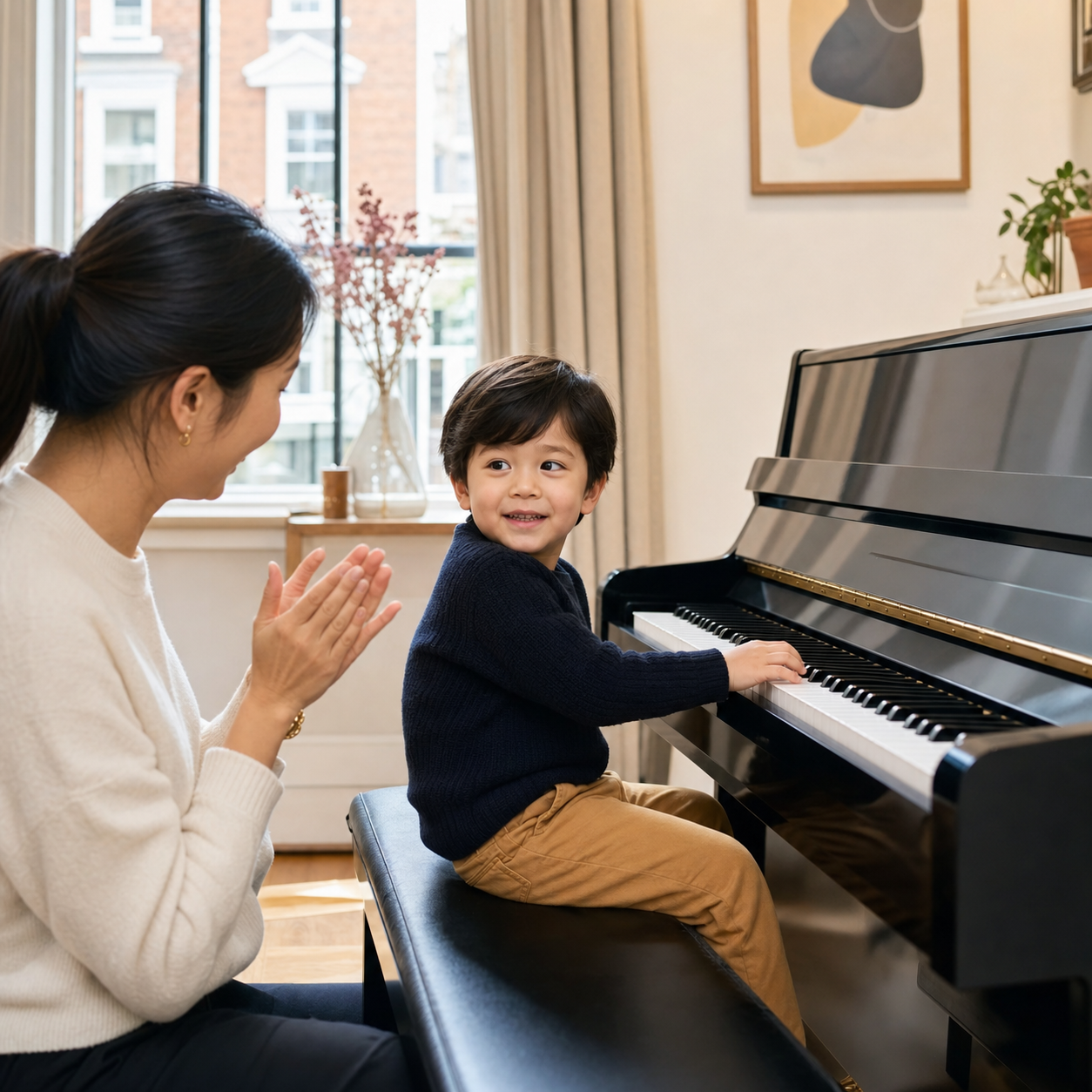
Practice Insight: choose one repeatable cue: “Can you find the two black keys?” or “Can you play the sleepy sound?” A preschooler needs memorable images more than technical vocabulary.
Teacher Choice, Safeguarding and the London Parent’s Checklist
For very young pupils, teacher choice matters more than method branding. A good preschool piano teacher should be musically serious and developmentally flexible. They should know when to move on, when to stop, when to ask the parent to help, and when a child needs a later start.
Parents should ask how the teacher handles safeguarding, observation, lesson boundaries, communication and tiredness. The NSPCC and Musicians’ Union both place safeguarding at the centre of children’s activities and music teaching. In practical terms, preschool lessons should be transparent, parent-friendly and never dependent on private pressure behind a closed door.
A Careful First Step With WKMT
If your child is curious about the piano but not ready for a conventional beginner programme, WKMT can help you judge the right pace. Our children’s piano teaching keeps parent confidence, musical quality and child readiness together, so the first lesson becomes a beginning rather than a test.
Exams, Reading and First-Term Progress
ABRSM and Trinity offer carefully structured graded pathways for piano, but preschool families should not treat exams as the immediate goal. Even Initial Grade belongs to a later stage for most children, after a pupil has developed reliable listening, hand coordination, memory, lesson confidence and enough concentration to enjoy a complete piece.
A realistic first term might include naming black-key groups, copying short rhythms, singing simple intervals, recognising up and down, playing a teacher-created pattern, and beginning to respect the instrument. That is genuine progress. It gives the future seven-year-old pianist a better foundation than hurried notation drilled into a tired four-year-old.
Common Parent Questions
What age is best for piano lessons for preschoolers?
Some children are ready around four or five; a smaller number respond well at three. Readiness depends on attention, communication, emotional confidence and the teacher’s ability to make the lesson playful.
Should my child read music straight away?
No. Listening, singing, rhythm, keyboard geography and hand comfort usually come first. Reading becomes meaningful when the child has enough musical experience to connect symbols with sound.
Is a keyboard acceptable at home?
A good acoustic piano is ideal, but a reliable touch-sensitive keyboard can support early exploration. The home instrument should invite short, calm repetition without becoming a battle.
Sources on Piano Lessons for Preschoolers in London
- Department for Education, Early years foundation stage statutory framework
- Department for Education, Expressive arts and design: help for early years providers
- Music Mark, Music in Early Childhood
- ABRSM, Piano assessments and grades
- Trinity College London, Piano graded exams
- NSPCC Learning, Safeguarding in the performing arts
- Musicians’ Union, Safeguarding responsibilities for music teachers