
 TRIAL LESSON
Piano Lessons
Piano Lessons for 2 Year Olds: Readiness, Play and When to Wait
Jul
Piano Lessons for 2 year olds in London with WKMT
WKMT parent guide
Piano Lessons for 2 Year Olds: Readiness, Play and When to Wait
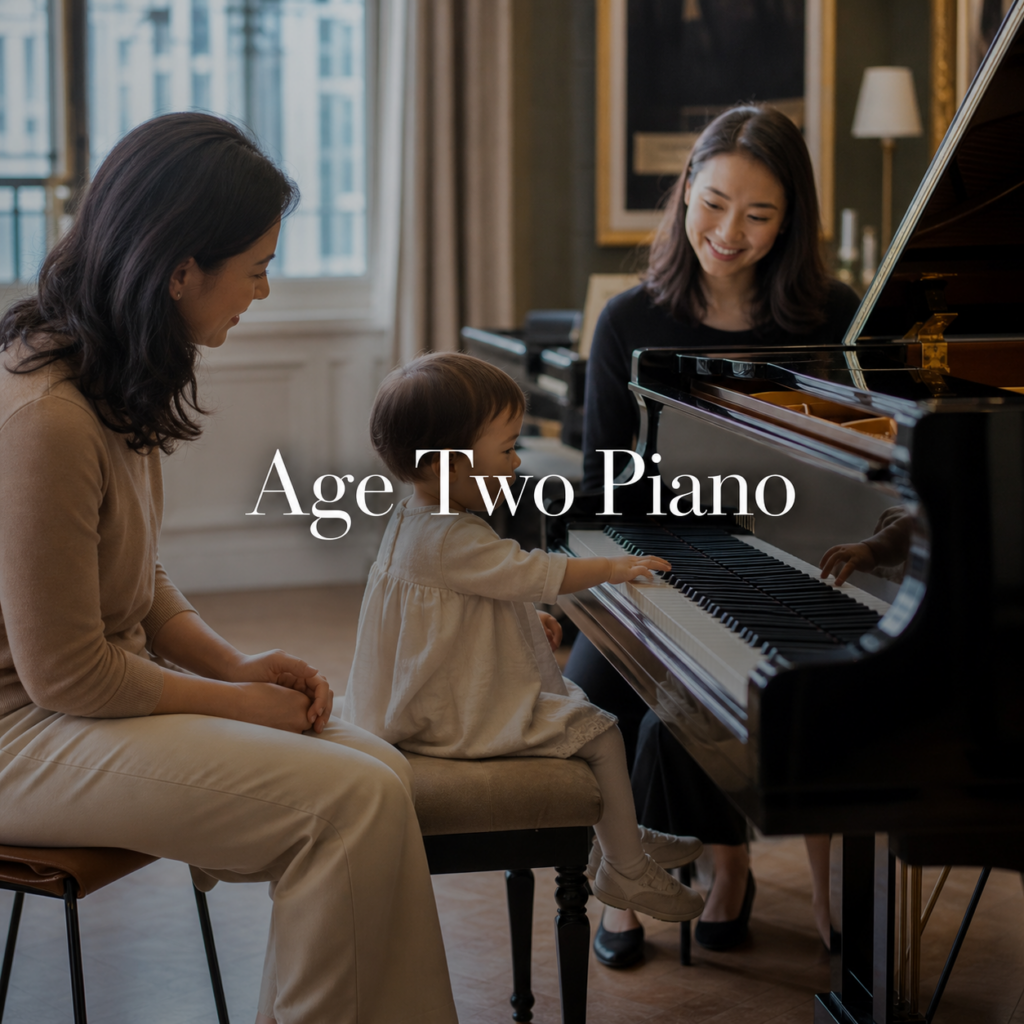
Piano lessons for 2 year olds should begin as musical readiness, not miniature formal tuition. The right question is not whether a toddler can sit like an older beginner, but whether music, movement and a short keyboard encounter can build confidence without pressure.
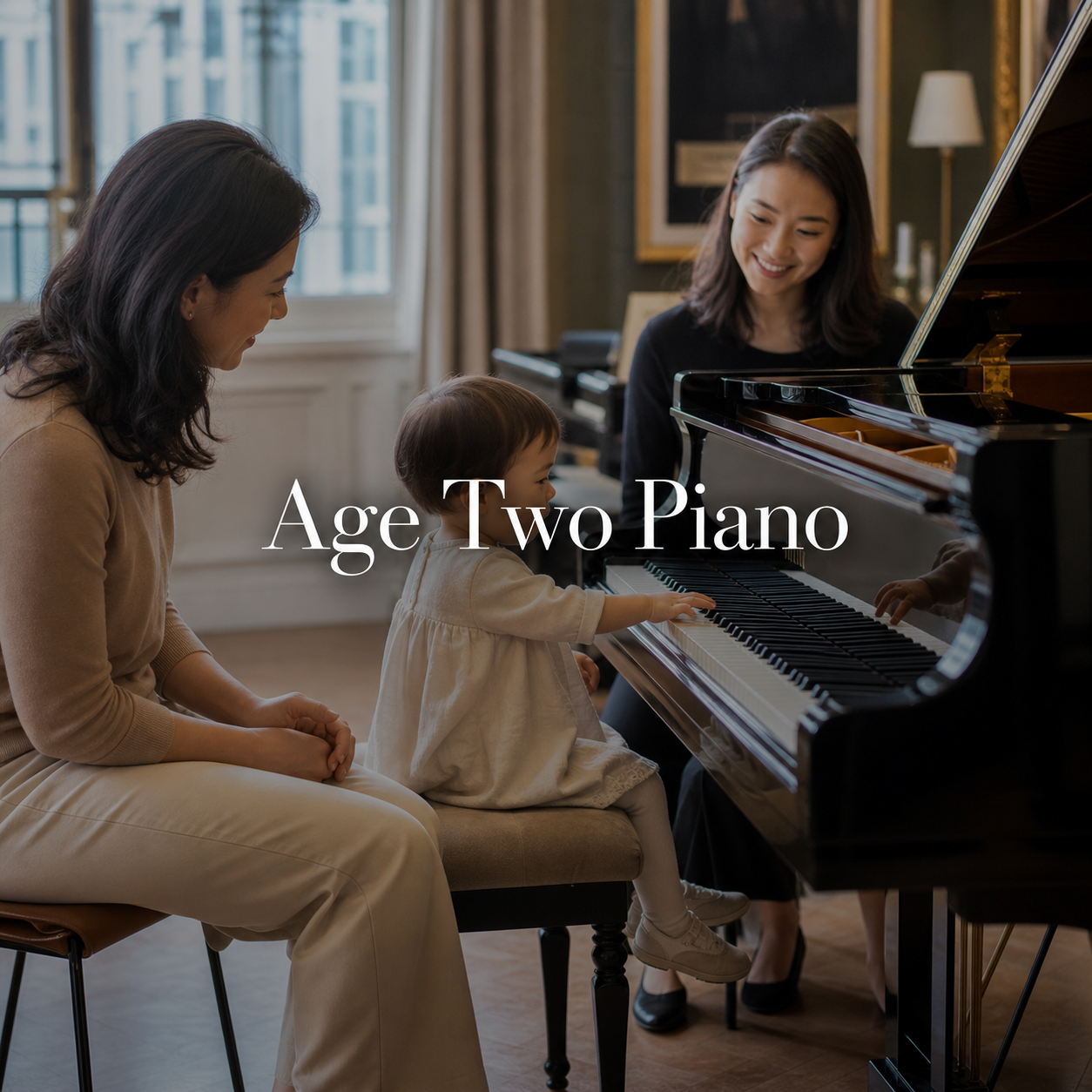
Readiness verdict: two is usually early for formal private piano lessons, but not too early for guided musical play. A toddler may benefit from short parent-and-child sessions if the teacher understands early years attention, movement, safety and when to stop.
Is My 2 Year Old Ready for Piano Lessons?
Parents searching for piano lessons for 2 year olds usually want a straight answer. The honest answer is conditional: some two-year-olds are ready for a musical introduction at the piano; very few are ready for a conventional lesson built around reading, repetition and independent practice.
Readiness at this age is visible in tiny signs. A child turns towards sound, imitates a short rhythm, enjoys sitting near the instrument, accepts simple turn-taking and can recover when an activity changes. The Early Years Foundation Stage places communication, physical development and expressive arts at the centre of young children’s learning, which is why music can be valuable when it stays responsive and playful [1].
Curiosity about sound, brief imitation, enjoyment of songs, gentle turn-taking and willingness to sit with a trusted adult.
Distress around instruction, strong resistance to stopping, no interest in sound play, or tiredness at the proposed lesson time.
Observe, model calm listening, help transitions and leave correction to the teacher.
What Toddler-Friendly Piano Lessons Look Like
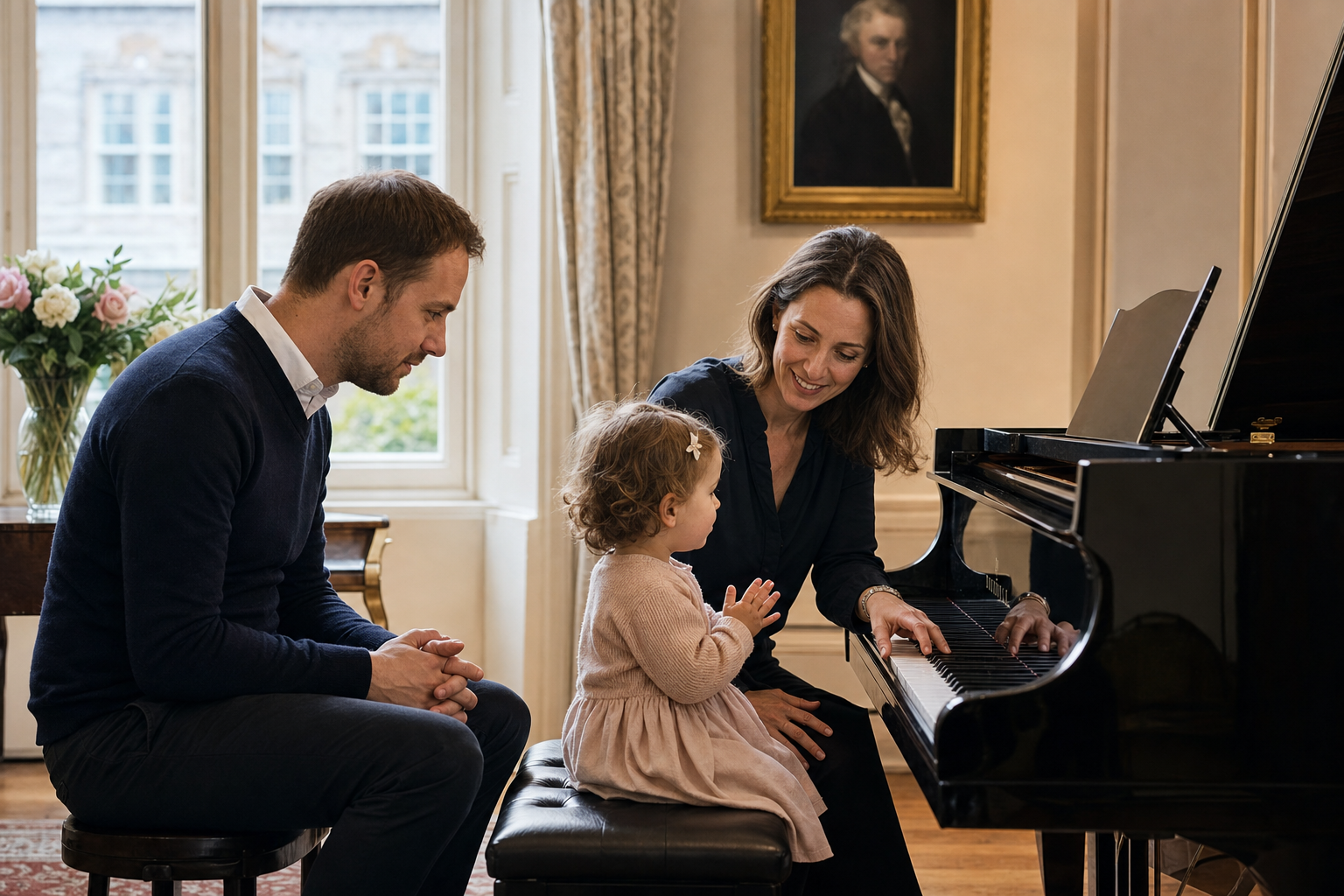
A toddler-friendly piano session is closer to an early musicianship meeting than a standard piano lesson. It may include singing, pulse games, call-and-response, high and low sounds, a few keys explored with care, and plenty of movement away from the piano. Ten focused minutes can be more useful than thirty minutes of negotiation.
The teacher should control the musical shape without forcing stillness. A child may play two black keys, step away to clap, return for a short echo, then finish with a listening game. That is not a failed lesson. It is age-appropriate musical contact.
Teacher’s note
For a two-year-old, the teacher is often teaching the adult as much as the child: how to notice pulse, avoid over-prompting and finish before the child’s goodwill collapses.
Safeguarding also matters. Families should expect clear policies for children, sensible adult presence and a professional approach to safer practice. UK statutory safeguarding guidance and performing-arts safeguarding resources both emphasise vigilance, supervision and appropriate boundaries around children [2][3].
Choosing Class Type: Group, Private or Parent-and-Child
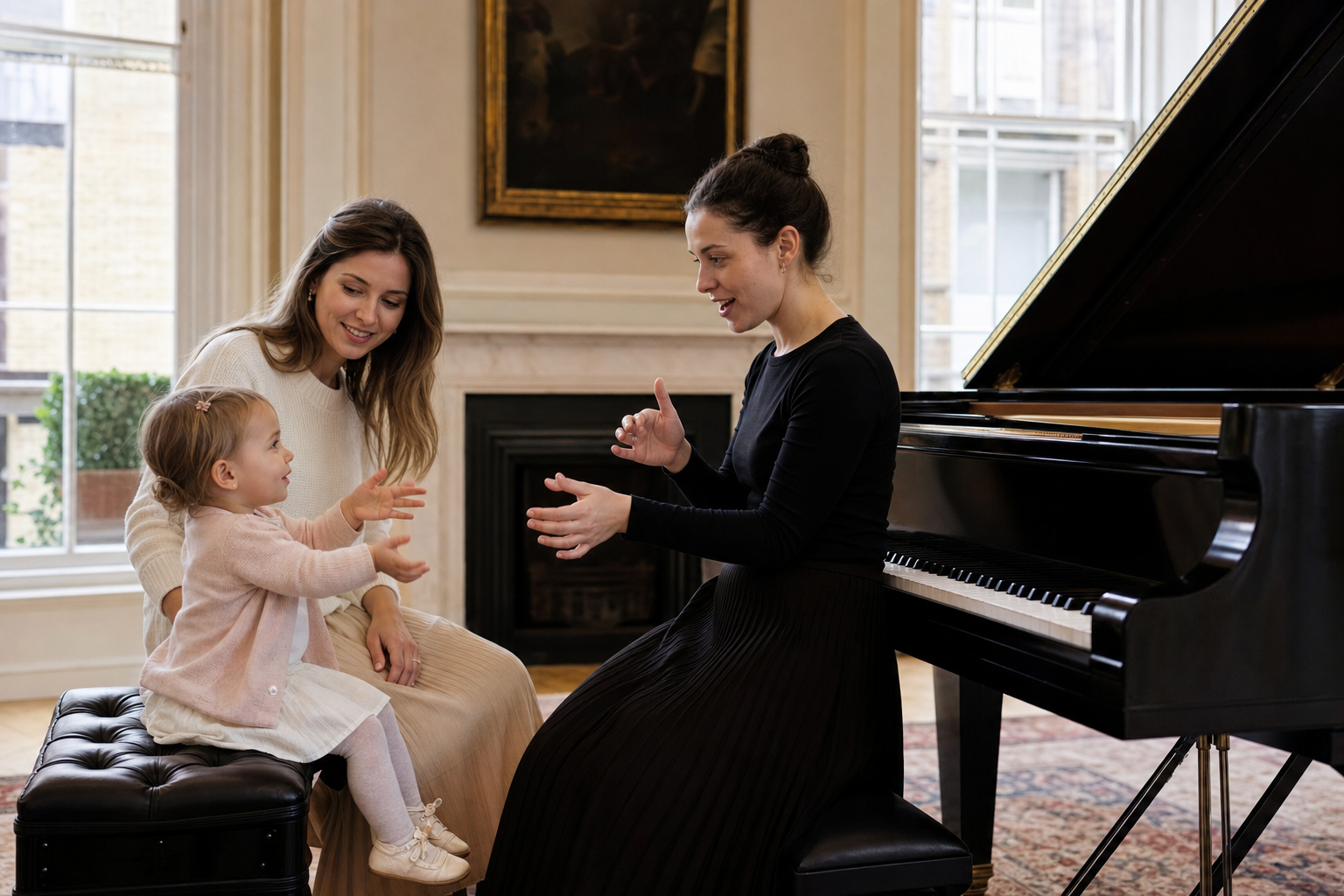
For most two-year-olds, parent-and-child or very small group music sessions make more sense than private piano tuition. They allow imitation, movement and social confidence while keeping the piano as one musical focus among several. Private lessons can work when the teacher is genuinely early-years trained and the family understands that the session will be brief and flexible.
| Format | Best for | Watch point |
|---|---|---|
| Parent-and-child | Toddlers who need security and shared attention | Parent must support, not steer |
| Small group | Children who copy rhythm and movement well | Ratios and room safety matter |
| Private introduction | A calm child with strong musical curiosity | Do not expect formal practice |
“At two, success is not a finished piece. It is a child leaving the piano curious enough to return.”
Practicalities for London Parents
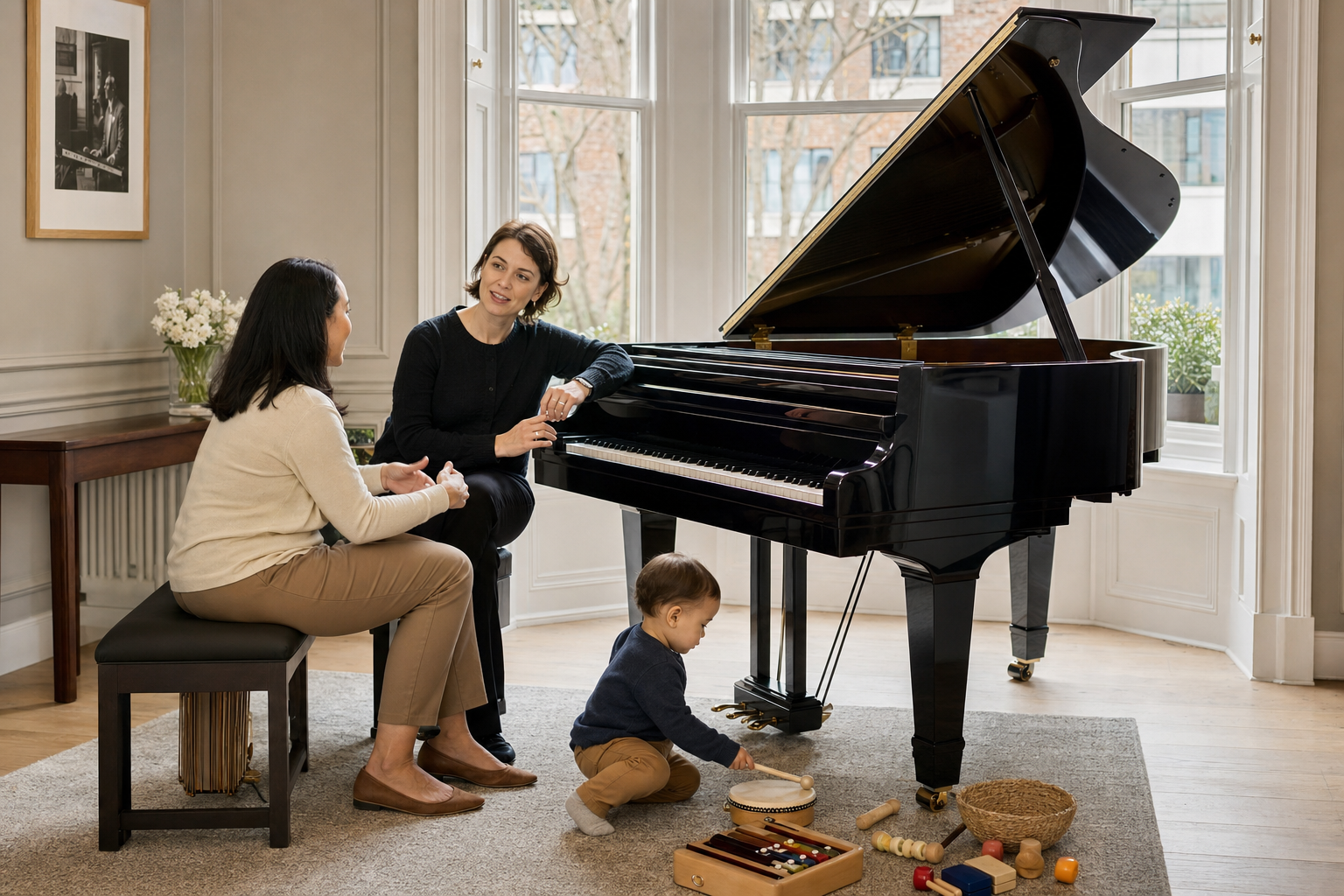
London families have practical constraints: nursery pickup, older siblings, travel time, flat noise and limited space. A brilliant toddler session at the wrong hour will not last. The best slot is usually when the child is fed, rested and not being carried across the city after a long day.
Instrument choice should stay modest. A stable digital piano or acoustic piano at a sensible height is enough for early exploration. Weighted keys are helpful later, but at two the priority is safe posture, clear sound, no wobbling stand and a parent who does not turn every sound into a correction.
Where families are already considering children’s piano lessons in London, the toddler stage should be framed as preparation: listening, confidence, rhythm and comfort around a real instrument. Related WKMT reading on why children start music lessons and teaching piano to children effectively can help parents think beyond the first enquiry.
When to Start Formal Lessons: Age Two to Four
A sensible timeline protects the child’s enthusiasm. At two, aim for musical play, parent-and-child sessions and positive contact with the piano. At three, some children begin to handle slightly longer turn-taking, simple echo patterns and more predictable lesson routines. At four, many children are closer to readiness for early piano habits, provided the teaching remains imaginative and physically appropriate.
Sound exploration, movement, songs, parent participation and comfort around the instrument.
Shorter routines, simple pulse games, echo patterns and emerging turn-taking.
More stable attention, early keyboard geography and readiness for a gentle lesson structure.
ABRSM and Trinity graded piano pathways are valuable later, but they are not the purpose of a two-year-old’s first musical contact [4][5]. If a provider speaks more about exams than readiness, pause and ask how they adapt teaching to toddlers.
Evidence, Expert Viewpoints and Common Questions
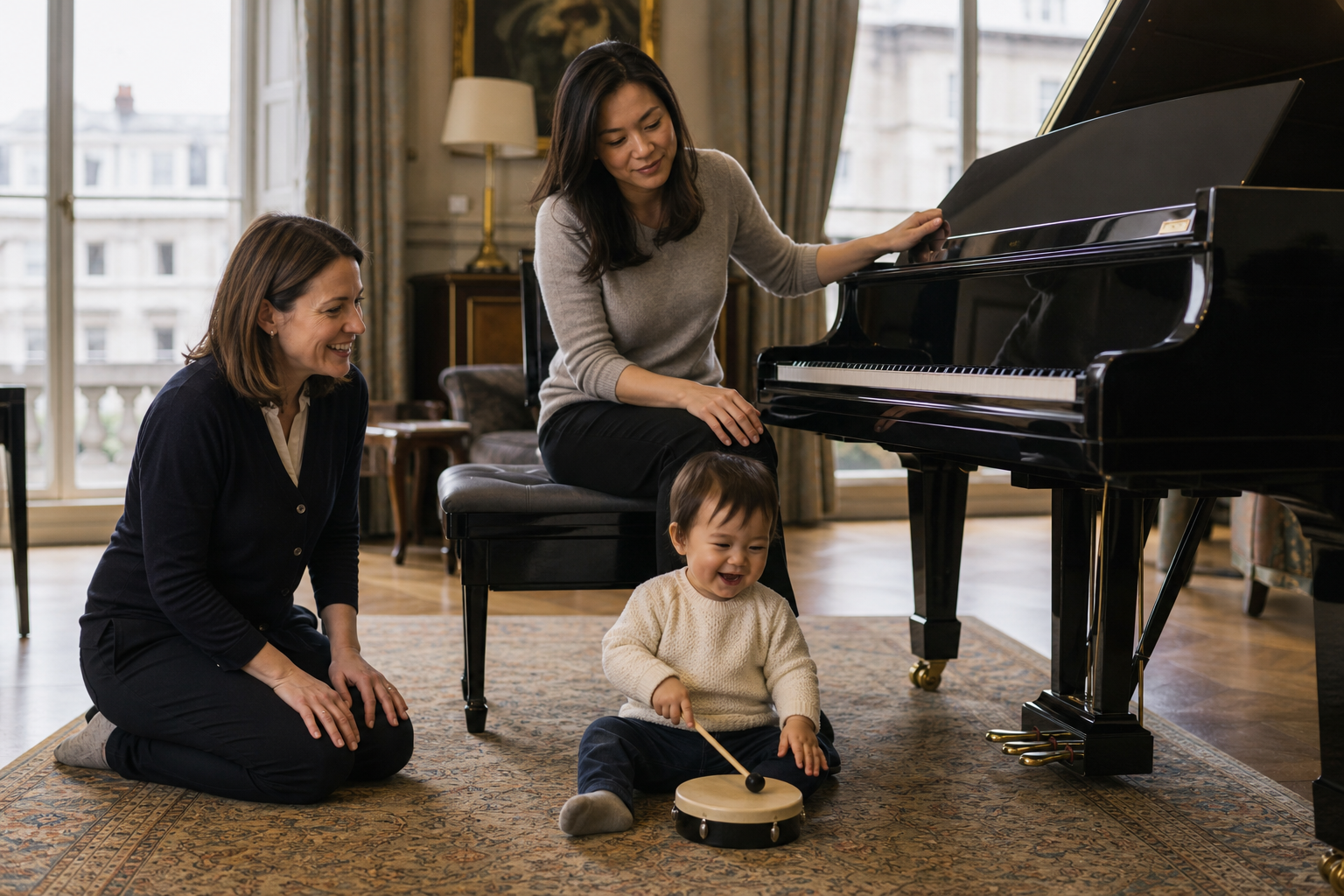
Research and public guidance around early childhood consistently point towards responsive, play-based learning. For piano, that means the adult should notice attention, movement, language and emotional comfort before asking for repetition. A London parent may feel that starting earlier gives a competitive advantage; in practice, an overly formal start can make the piano feel like a test before it feels like music.
Is two too young for piano lessons? It is usually too young for formal piano lessons, but not too young for parent-supported musical play near the piano.
Should we buy a piano first? No. Begin with a safe, stable instrument or studio access. Upgrade when the child is ready for regular, independent practice.
How do I know whether to wait? Wait if the child is distressed, uninterested, exhausted at the lesson time, or happier with general music-and-movement sessions for now.
Start with readiness, not pressure
WKMT’s children’s piano pathway can help parents decide whether a toddler introduction, a wait-and-prepare approach, or later individual lessons will serve the child best.