
 TRIAL LESSON
Piano Lessons
Family Piano Lessons: How Parents and Children Can Learn Together Without Losing Focus
Jul
Family Piano Lessons | Parent Guide
WKMT parent guide
Family Piano Lessons: How Parents and Children Can Learn Together Without Losing Focus
Family piano lessons work best when they are not treated as ordinary private lessons with extra people in the room. They need clear roles, measured expectations and a teacher who understands how children, siblings and parents learn differently.
Quick answer: family piano lessons are a useful bridge for parents and children who want a shared musical language at home. They are strongest for early motivation, sibling confidence and parent understanding; they should gradually give way to individual tuition when a child needs deeper technical independence.
What Are Family Piano Lessons?
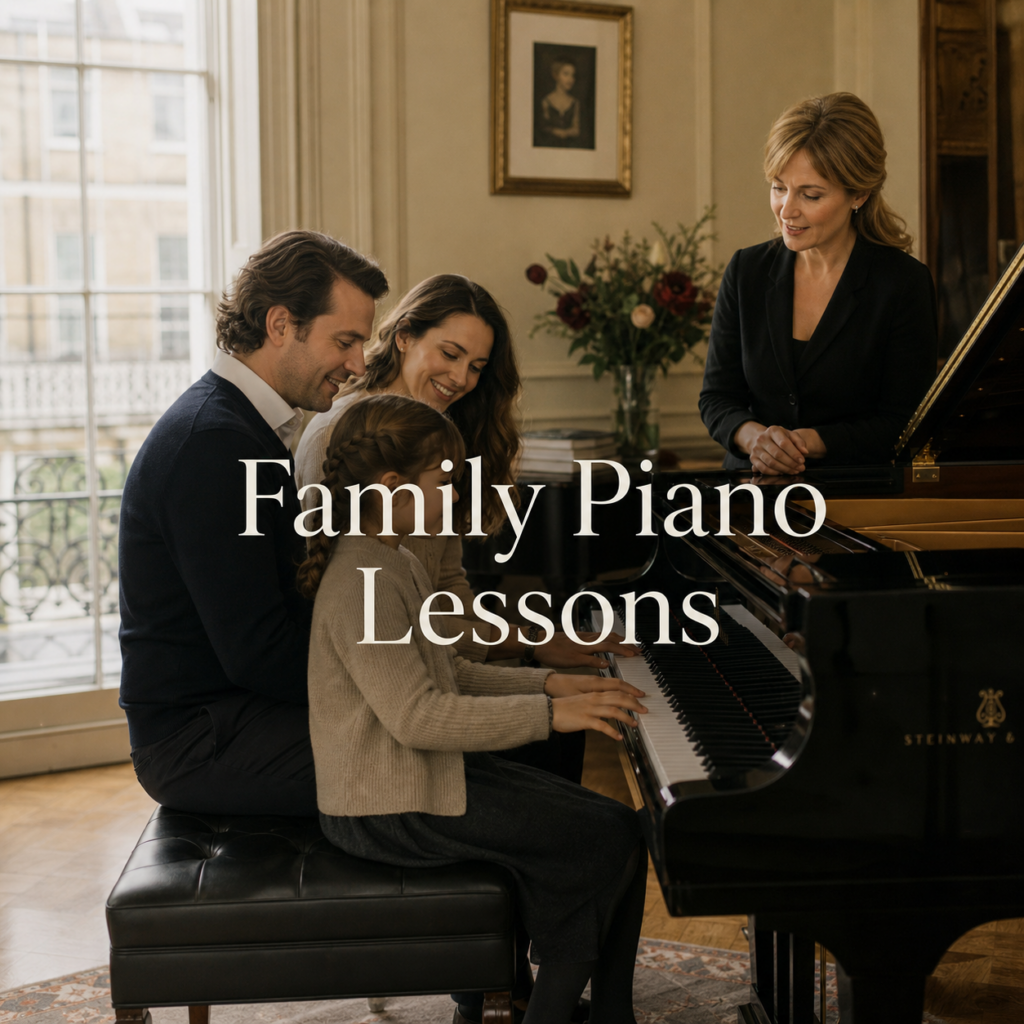
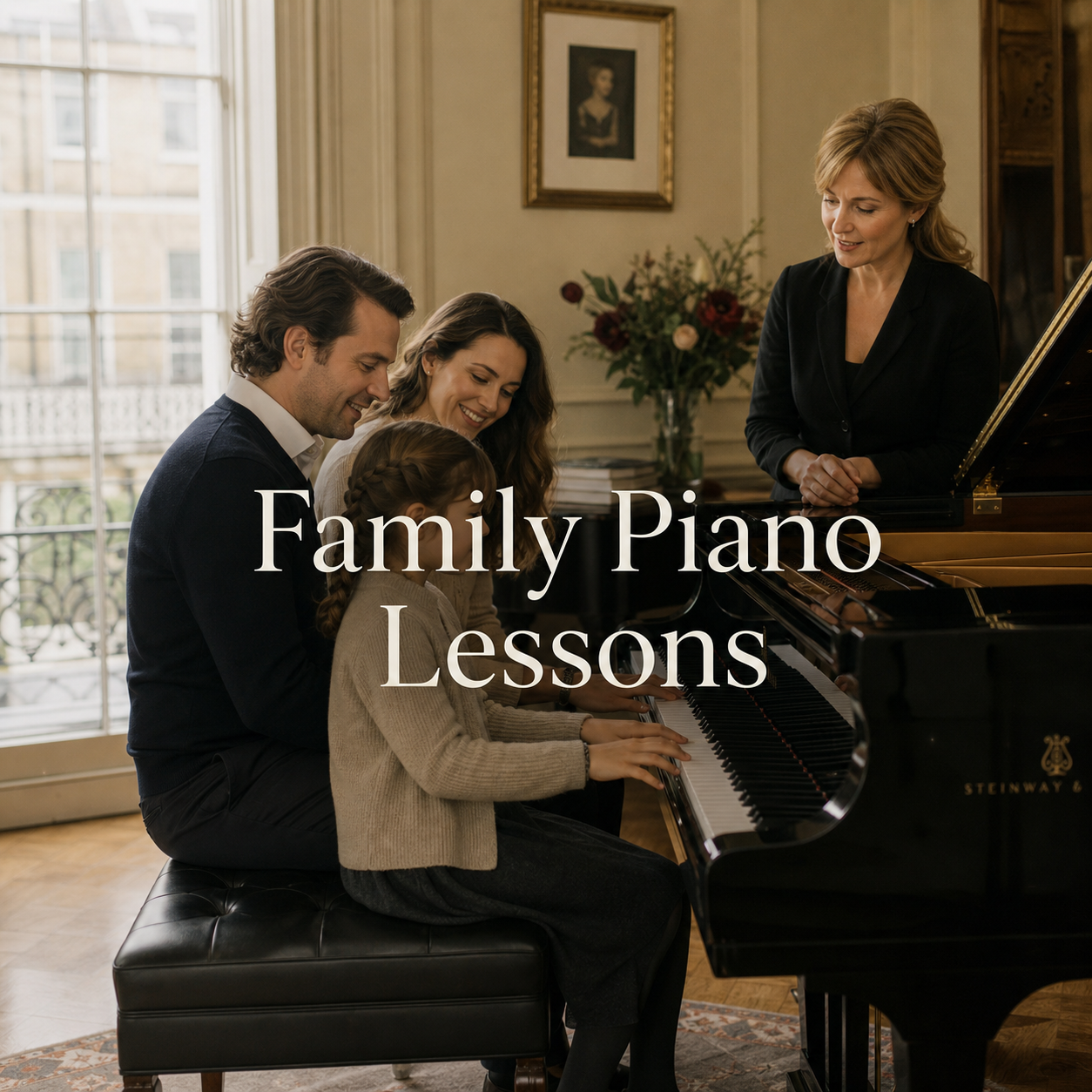
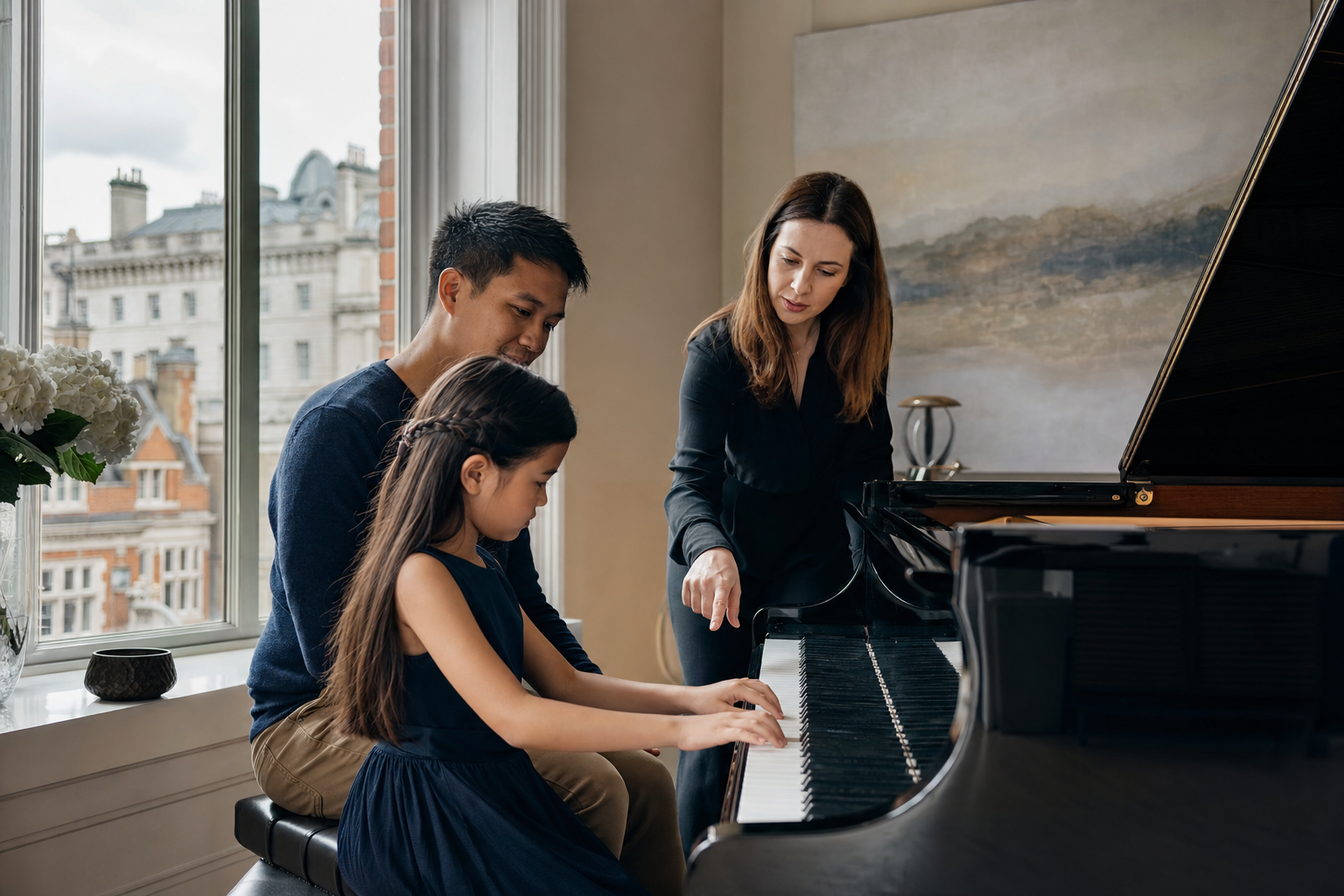
Family piano lessons usually mean one of three models: a parent and child learning together, siblings sharing part of a lesson, or a small family group combining listening, keyboard orientation and guided musical habits. In London, a fourth model is increasingly common: a hybrid arrangement where a teacher sees the child in person and uses occasional online sessions to help the parent understand practice expectations.
The purpose is not to make the parent a second teacher. It is to make home support calmer and more musically informed. A parent who understands pulse, posture, reading readiness and a child´ attention span can encourage practice without turning every evening into a negotiation.
For WKMT families considering structured piano lessons for children in London, family learning is best understood as a carefully bounded option within a wider children´ piano pathway, not a replacement for focused one-to-one teaching.
Who Benefits: Age, Development and Motivation
Family piano lessons tend to suit children who enjoy shared attention but still need adult help to organise themselves. Younger beginners often benefit because the parent can see what good enough´ home practice looks like. Older children may enjoy occasional shared sessions if they are not made to feel watched or compared.
UK early years guidance places expressive arts, communication and physical development at the centre of young children´ learning; music fits naturally within that frame when it is playful, social and responsive rather than pressurised. For school-age pupils, the question becomes less “can the child sit still and more can the family maintain a calm routine without damaging the child´ ownership?â€
Early beginners, cautious children, siblings who motivate one another, and parents who want to understand the teacher´ language.
Competitive siblings, very self-conscious pre-teens, and families where the parent tends to correct too quickly.
When a child needs private correction, graded-exam focus or independent repertoire ownership.
“The best family lesson gives the child more confidence, not more surveillance.â€
How Family Lessons Are Structured
A well-run family lesson has a clear rhythm. The teacher sets the musical aim, the child plays, the parent listens for one or two agreed signals, and the lesson closes with a simple home expectation. The parent may play a short duet bass line, clap rhythm, or observe how the teacher corrects hand shape; they should not interrupt every attempt.
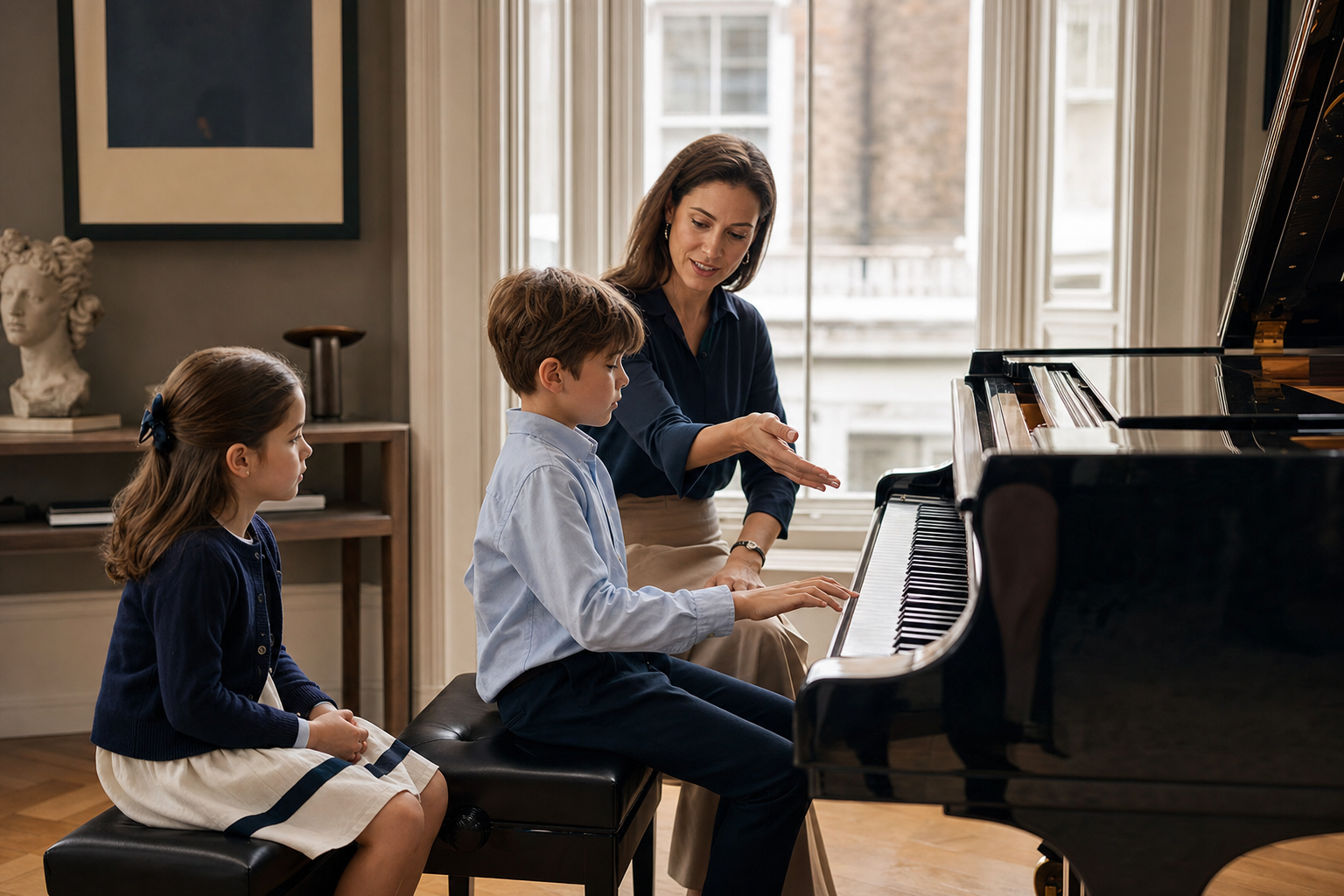
For siblings, the lesson needs turns, not a crowd at the keyboard. One child plays while another listens for a specific musical point: steady pulse, curved fingers, soft tone, or the ability to start again calmly. This prevents waiting time from becoming drift.
Lesson length depends on age and temperament. A younger child may manage a short shared slot; a more mature sibling pair may suit a longer divided lesson. Online family lessons can help parents understand home setup, but the camera must show posture, hands and the keyboard clearly.
Choosing the Right Teacher, Curriculum and Exams
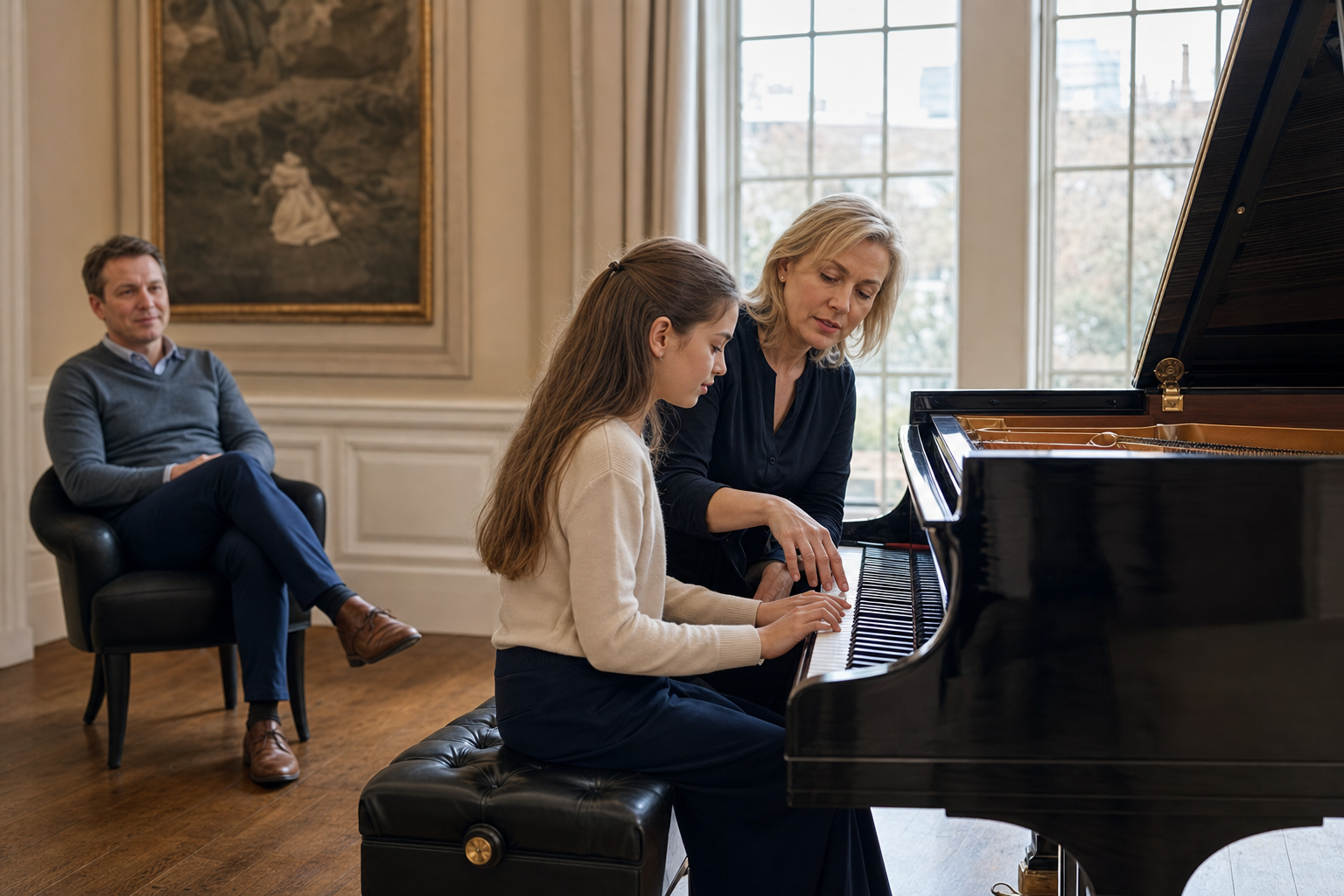
The right teacher is comfortable teaching children in front of parents without allowing the lesson to become a family debate. Ask how the teacher handles safeguarding, parent presence, sibling comparison, missed practice and transition to individual work. In England, families should expect a serious approach to child protection and safer working practice; DBS status is one element, but not the whole safeguarding culture.
For exam-minded families, ABRSM and Trinity both offer structured graded routes for piano, from early grades through Grade 8. A family lesson should not rush a child into grades simply because a sibling is moving faster. It can, however, help parents understand the difference between musical fluency, exam readiness and the ability to practise without friction.
Teacher questions worth asking
- How do you define the parent´ role during the lesson?
- When would you recommend separating siblings into individual tuition?
- How do you track progress without making exams the only measure?
- What safeguarding expectations apply in studio, home and online lessons?
Parents comparing group and shared formats may also find WKMT´ group piano lessons and music examination boards guide useful second-tier reading.
Pricing, Schedules and London Considerations
Family piano lessons can be priced as a shared lesson, a longer split lesson, or a bespoke timetable covering siblings and parent support. London families should compare the actual teaching time each child receives, not only the total price. A cheaper shared slot can become expensive if one child receives very little focused feedback.
Travel also matters. Families moving between school, work and studios in West London, South East London or nearby boroughs often do better with a stable weekly slot than with an ambitious timetable that collapses after two weeks. WKMT´ broader London location pages, including piano lessons in South East London and piano lessons in Kensington, can help families think practically about travel.
| Format | Best for | Watch point |
|---|---|---|
| Parent-child lesson | Early beginners and anxious starters | Parent must not over-correct |
| Sibling split lesson | Two children with close schedules | Avoid direct comparison |
| Hybrid support session | Busy London households | Camera and instrument setup matter |
Transitioning to Individual Lessons: Signs and Timelines
Family lessons should have an exit route. A child is ready for individual tuition when they can listen directly to the teacher, accept correction without looking to the parent, and remember a small musical task between lessons. Some children reach this point quickly; others need a term or two of shared confidence first.
Signs of readiness include choosing repertoire independently, asking musical questions, practising without needing a parent beside them, and becoming uncomfortable when siblings or adults hear every correction. That discomfort is not failure. It is often the beginning of musical ownership.
Parents can remain involved by managing the timetable, protecting practice time and attending occasional review lessons, while allowing the child to build a private musical relationship with the teacher.
Practical Home Considerations
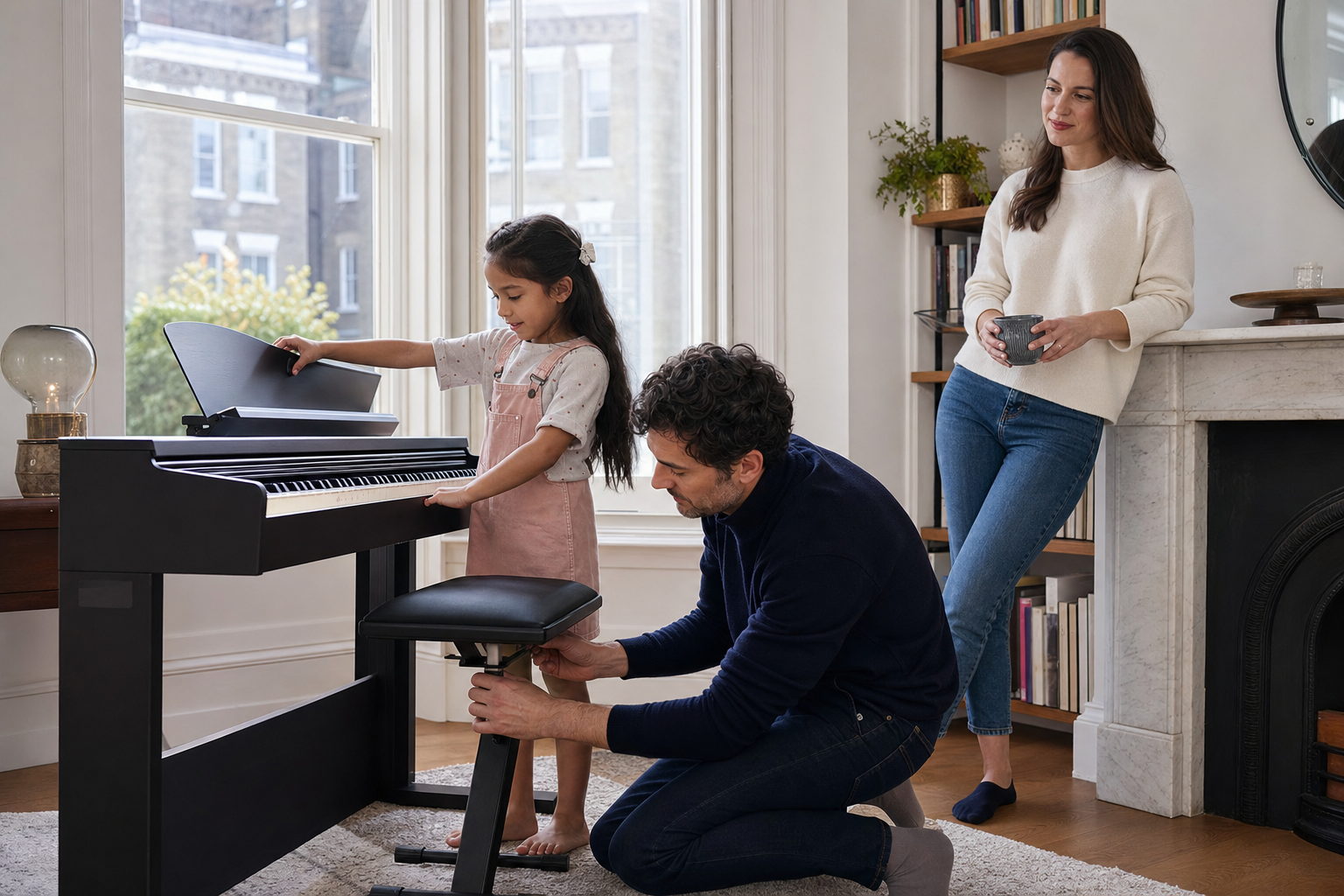
A family does not need a concert instrument to begin, but the keyboard must be stable, in tune if acoustic, and placed at a sensible height. Digital pianos can work well in London flats when they have weighted keys, a proper bench and a volume setting that does not turn practice into a household dispute.
The best practice environment is visible enough for support but calm enough for concentration. Avoid making the piano the site of constant correction. The parent´ most useful line is often: “Show me what your teacher asked you to listen for.â€
Case Studies, FAQs and Next Step
Can a parent learn piano at the same time as a child? Yes, if the teacher gives each learner a distinct role. The parent should model curiosity, not compete with the child.
Are family piano lessons suitable for exams? They can support exam preparation by helping parents understand repertoire, practice rhythm and confidence, but formal exam coaching usually needs individual attention.
Should siblings always share lessons? No. Shared lessons are useful when motivation is mutual. If comparison becomes the main emotional theme, separate lessons are kinder and more productive.
Plan family learning without blurring roles
WKMT can help parents decide whether a shared family format, sibling split lesson or individual children´ lesson is the right next step.
Sources on Family Piano Lessons
- Department for Education, Early years foundation stage statutory framework
- Department for Education, Keeping children safe in education
- ABRSM, Piano assessments and grades
- Trinity College London, Piano graded exams
- Trinity College London, About graded exams
- NSPCC Learning, Safeguarding for the performing arts