
 TRIAL LESSON
Piano Lessons
Parents’ Guide to Piano Lessons: Choosing the Right First Steps for Your Child
Jul
Parents Guide to Piano Lessons | WKMT
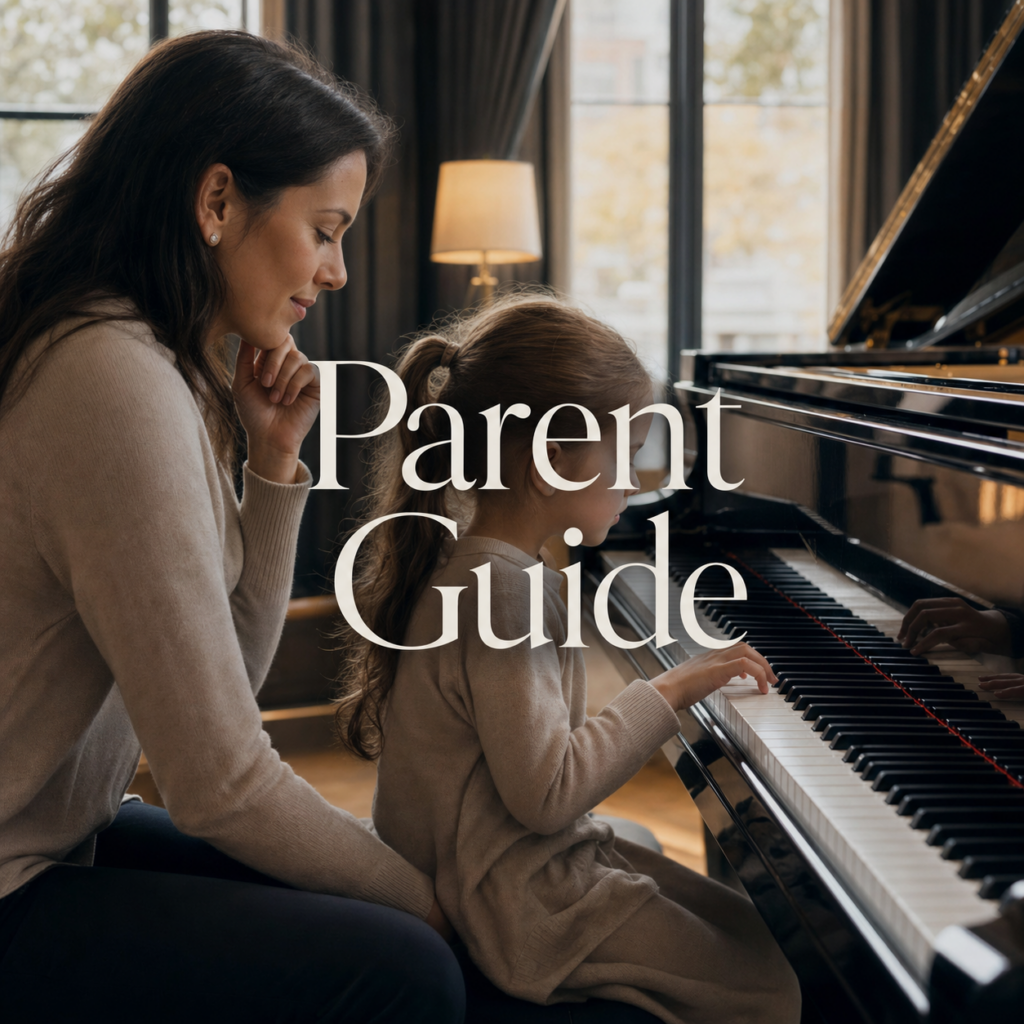
Parent guide
Parents’ Guide to Piano Lessons: Choosing the Right First Steps for Your Child
A practical London guide for parents who want to judge readiness, choose a teacher, understand early progress and begin children’s piano lessons with confidence.
- Your child can listen to a short instruction and try again without distress.
- The teacher can explain safety, communication, progress and home practice clearly.
- The first month has modest goals: rhythm, listening, hand shape, keyboard geography and enjoyment.
- Exams are treated as optional milestones, not the whole purpose of learning.
Parents guide to piano lessons is a deceptively simple search. Behind it sits a real family decision: is this the right age, the right teacher, the right commitment and the right kind of musical start? A good answer should not push every child towards lessons immediately. It should help you recognise readiness, ask sensible questions and choose a route that protects enthusiasm.
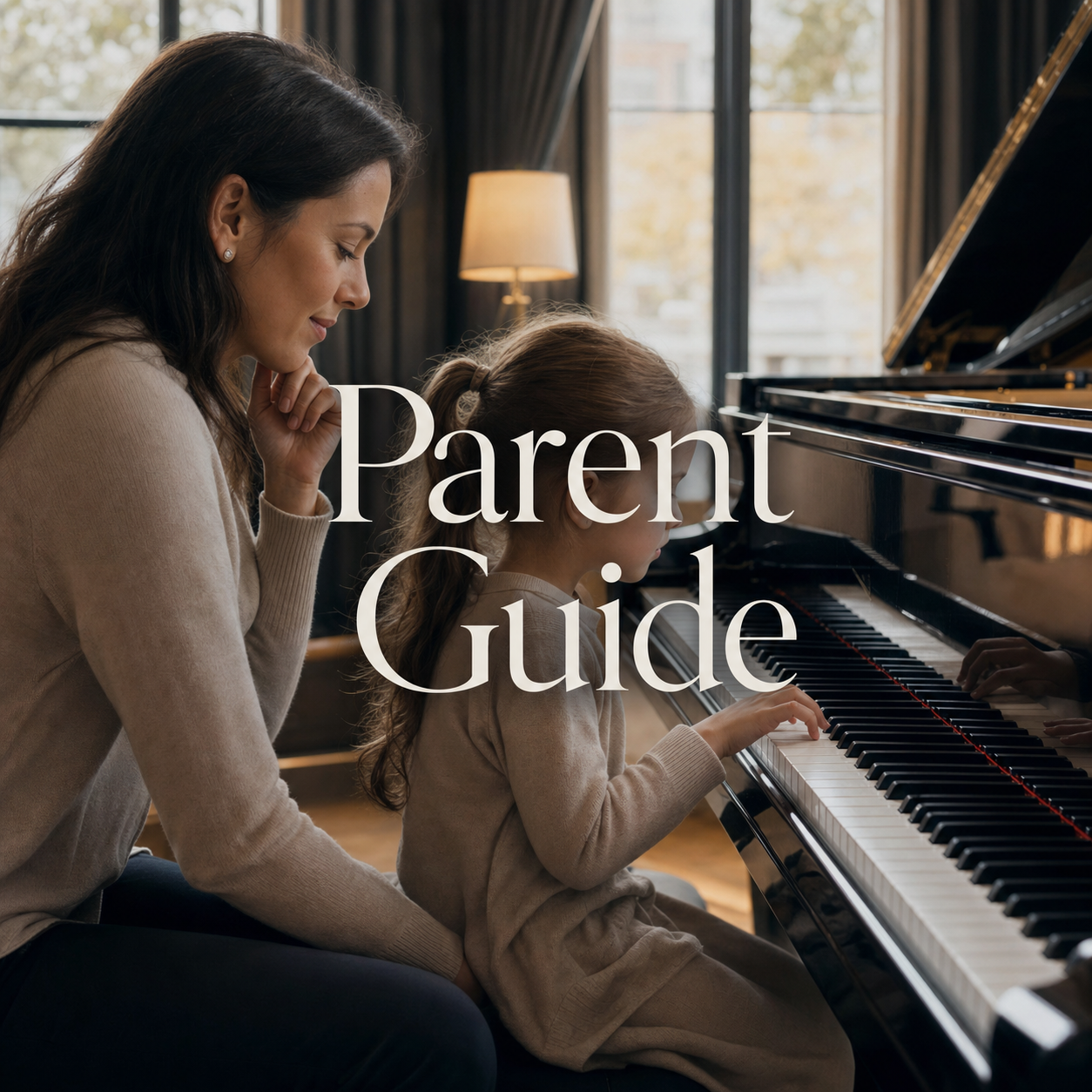
For London families, the best starting point is usually a trial lesson with an experienced, DBS-checked teacher who can observe the child directly. WKMT teaches private piano lessons for children in London across ages 4-18, with individual pacing rather than a generic group-class model. This guide explains what to look for before you book.
Is Your Child Ready for Piano Lessons?
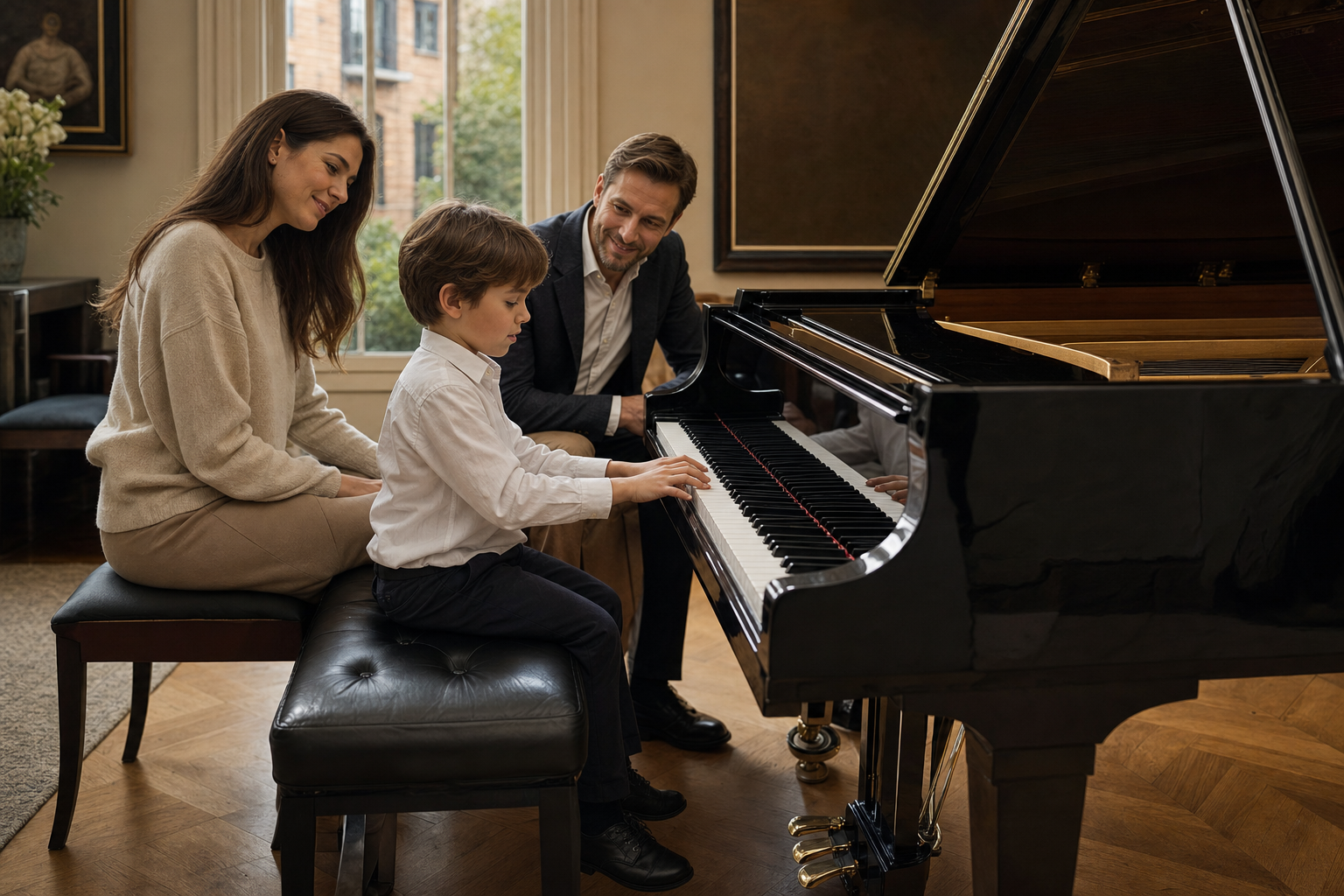
Age helps, but it is not the whole answer. Some four or five year olds are curious, settled and physically ready for short musical work. Some older children need reassurance before they can enjoy one-to-one learning. Readiness is a mixture of attention, listening, coordination and emotional security.
A young beginner can focus for a few minutes, listen, pause and respond.
The child can sit comfortably, move fingers individually and copy simple patterns.
They enjoy sound, rhythm, singing, stories or exploring the keyboard.
They can make a small mistake and try again with encouragement.
Do not worry if your child cannot read music yet. Early lessons can begin through rhythm, listening, singing, finger games, keyboard geography and musical imitation. The first question is not “can my child perform?” but “can this teacher make musical work feel safe, clear and worthwhile?” The UK National Plan for Music Education also recognises music as part of a broad education that supports participation and progression, not only examination outcomes [1].
Choosing the Right Teacher or School
A strong children’s piano teacher combines musicianship with patience, structure and judgement. Ask about qualifications, but also ask how the teacher adapts lessons for shy children, energetic children, very young beginners and pupils who dislike practising at home.
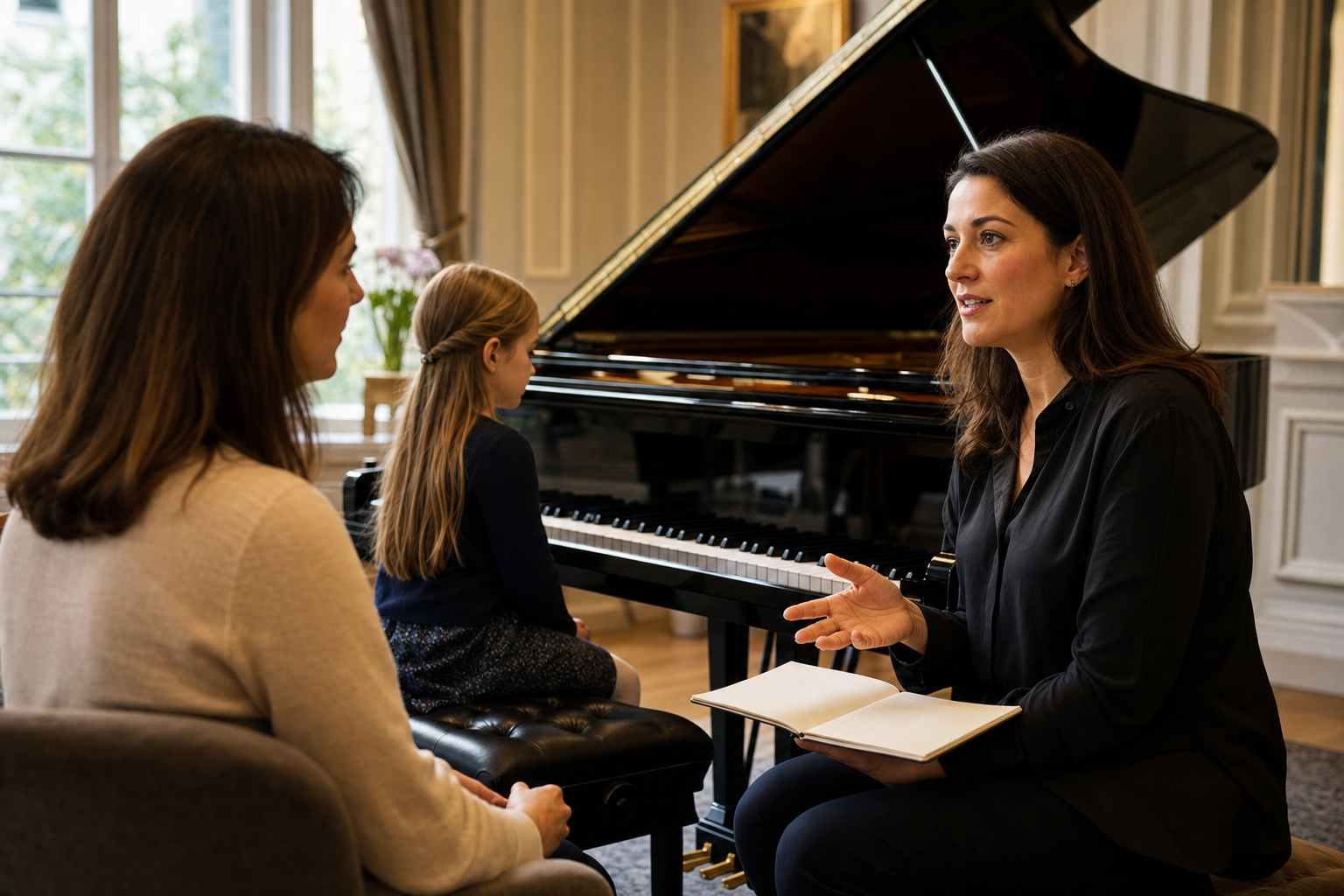
- How do you assess readiness during a trial lesson?
- How often will parents receive progress feedback?
- Do you prepare children for ABRSM or Trinity only when it suits the pupil?
- What should home practice look like for this age?
- What safeguarding and communication standards are in place?
Method labels can be useful, but they should not become a sales pitch. Suzuki, Kodaly-inspired musicianship, traditional notation-led teaching and repertoire-led work all have value when used intelligently. For a private piano lesson, the teacher’s ability to notice the individual child matters more than a fashionable label. If a child leaves the trial lesson calmer, more curious and clearer about what to try next, the first step has probably been handled well.
What Happens in the First Month?
The first month should feel purposeful but not heavy. The teacher is building trust, observing attention span and introducing basic musical habits. Parents should expect small, repeatable tasks rather than long practice demands.
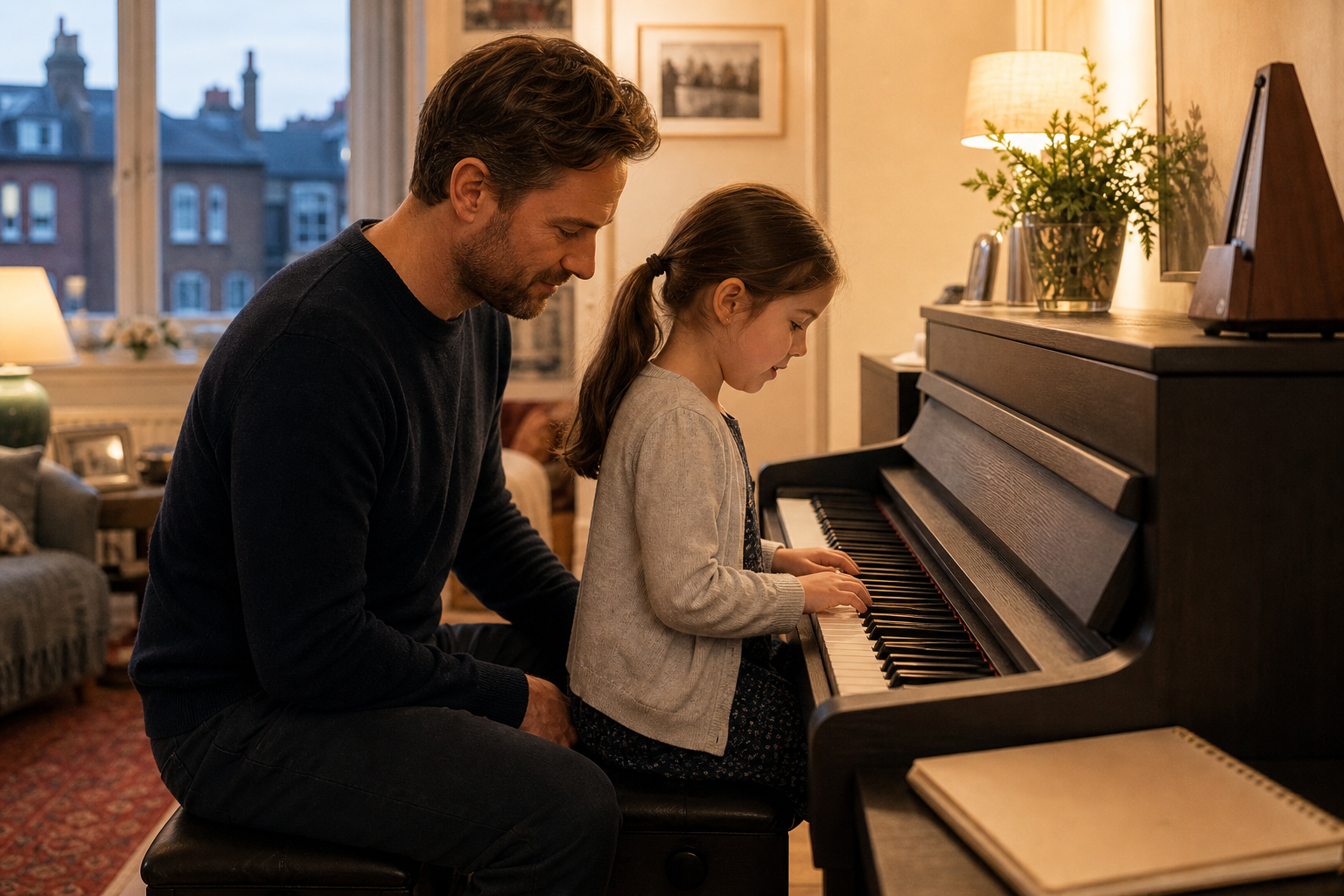
Trial, posture, listening, keyboard geography and one tiny home task.
Rhythm, finger numbers, short patterns and how the parent should help.
First reading habits, memory, simple pulse and teacher feedback.
Review readiness, lesson length, practice rhythm and next repertoire.
For very young children, five focused minutes can be more useful than twenty reluctant minutes. For primary-age children, short regular practice usually works better than one large weekend session. The parent role is not to become a second teacher. It is to protect the routine, praise effort, keep the piano accessible and help the child return to the teacher’s notes.
Progression Paths and Assessment
ABRSM and Trinity are the two exam names most London parents encounter. ABRSM offers Practical Grades and Performance Grades from Initial Grade to Grade 8, with the Prep Test described as an early, non-pass/fail assessment [2]. Trinity’s piano pathway also runs from Initial Grade to Grade 8 and includes broad repertoire choices across its current syllabus [3].
Exams can motivate some children, but they should never flatten the lesson into box-ticking. A healthy first year may include rhythm, listening, singing, reading, technique, memory, sight-reading, theory, duets, informal performance and repertoire the child genuinely wants to play. WKMT’s own music examination boards guide gives parents a useful overview when grades become relevant.
Cost, Scheduling and Instruments
Lesson cost in London varies with teacher experience, studio quality, lesson length and location. WKMT’s children’s page states that lessons start from GBP49.90 per hour, with trial lessons available; check the current figure before booking because fees can change (last checked: 2026-07-12) [4]. Some children do well with 30 or 45 minutes at the beginning, while older or more focused pupils may benefit from a full hour.
| Decision | Parent-friendly guidance |
|---|---|
| Lesson length | Begin with the teacher’s recommendation after the trial, not a fixed family assumption. |
| Instrument | A good digital piano with full-size weighted keys can suit many beginners; acoustic advice can come later. |
| Practice routine | Short, regular, calm sessions are better than occasional battles. |
If you are buying a first instrument, prioritise full-size keys, a stable stand, a proper stool and touch that allows the child to feel differences in weight. A toy keyboard may spark curiosity, but it is not a long-term substitute for piano technique.
Safety and Safeguarding
Safeguarding is not a decorative extra. NSPCC Learning advises tutors and organisations working with children to have safeguarding and child protection procedures in place, including clear steps for keeping children safe and responding to concerns [5]. Parents should feel able to ask about DBS checks, lesson-room arrangements, parent communication, online lesson boundaries and how concerns would be handled.
A professional school should answer these questions plainly. WKMT’s children page sets out DBS-checked teachers, ages 4-18, ABRSM and Trinity preparation, and trial lessons as part of its parent-facing offer [4]. The point is not to create anxiety. It is to make trust concrete.
Local Next Steps for London Families
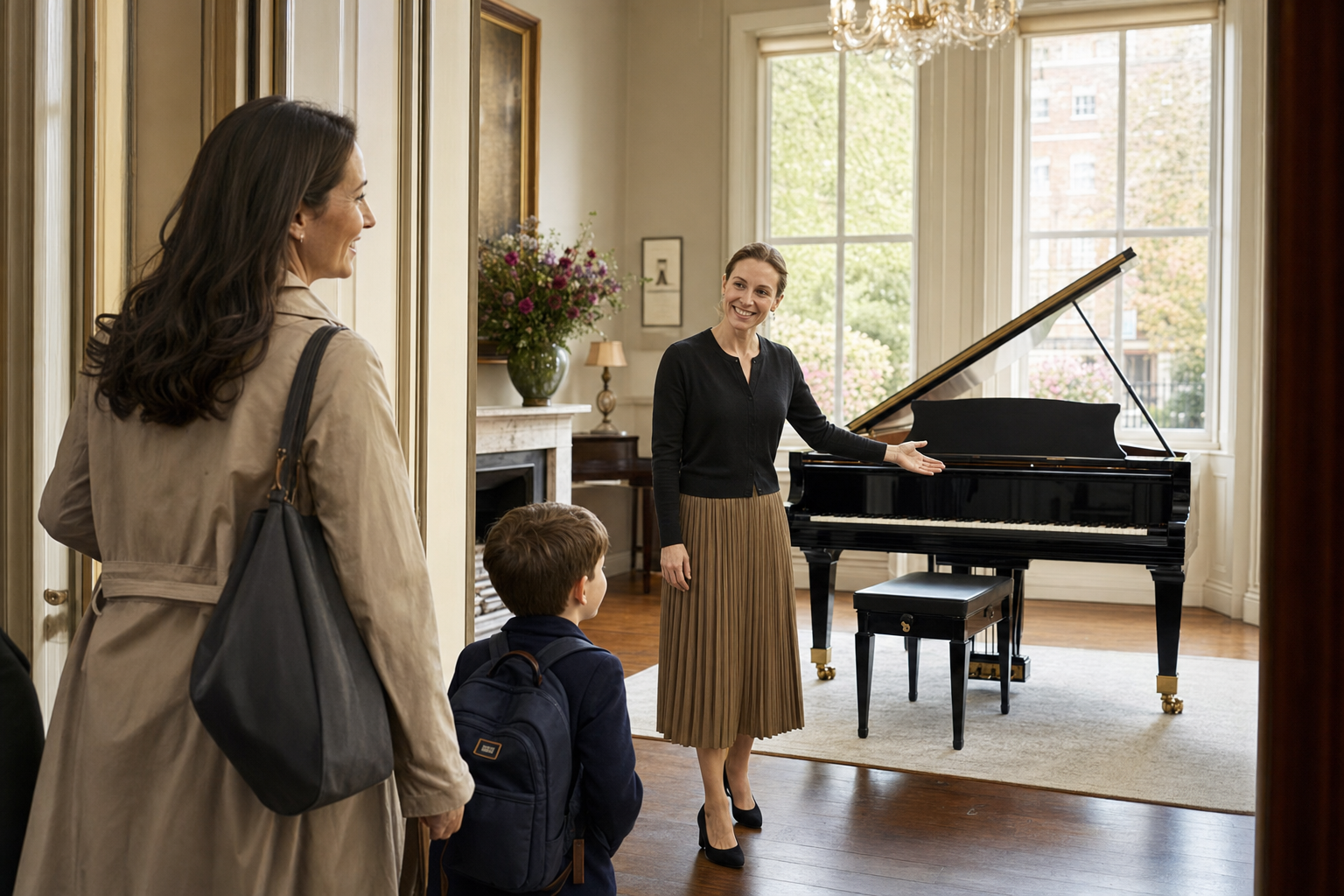
If your child seems ready, the next step is not a full-year commitment. It is a careful trial, followed by a recommendation. WKMT teaches children in West Kensington, Camberwell and Bermondsey, and the trial lesson helps match the teacher, pace and lesson format to the child.
Before booking, you may also find WKMT’s guides on first piano lesson activities for children, the best age to start piano lessons and children’s sight-reading skills useful background reading.
Begin with a calm trial lesson
If you want structured children’s piano lessons in London, use the trial lesson to assess readiness, teacher fit and the right first routine.
FAQs: Parents Guide to Piano Lessons
What age should my child start piano lessons?
Many children begin around 4-7, but readiness matters more than age. A trial lesson can test attention, curiosity, coordination and emotional comfort.
Do children need exams?
No. ABRSM and Trinity can be helpful when the child is ready, but early musical development should also include listening, rhythm, technique, memory and repertoire.
Do we need an acoustic piano at home?
Not immediately. A good digital piano with full-size weighted keys can be suitable for many beginners. The teacher can advise when an acoustic piano becomes useful.
Sources on Parents guide to piano lessons in London
- Department for Education, The Power of Music to Change Lives, National Plan for Music Education
- ABRSM, Piano and Practical Grades guidance
- Trinity College London, Piano grade exams
- WKMT, Piano Lessons for Kids in London
- NSPCC Learning, Safeguarding and child protection for tutors
- Music Mark, Susan Hallam research synthesis on music education