
 TRIAL LESSON
Piano Lessons
Piano Lessons for Young Beginners: First Steps, Readiness and Confidence
Jul
Piano Lessons for Young Beginners | Parent Guide
WKMT parent guide
Piano Lessons for Young Beginners: First Steps, Readiness and Confidence
A practical London guide for parents deciding when a young child is ready for first piano lessons, what the opening weeks should look like, and how to support steady musical confidence at home.
Quick answer for parents
Piano lessons for young beginners work best when the child can listen briefly, copy a simple rhythm, sit at the instrument for a few minutes, and leave the lesson wanting to return. For most families, the first question is not whether a child is “talented”, but whether the lesson format respects the child’s age, attention span and emotional readiness.
Parents often arrive with two worries: starting too early, or missing a window when the child is curious and receptive. Both concerns are understandable. Early music study can support listening, coordination and confidence, but formal one-to-one piano work should still feel like a child’s first musical conversation rather than a miniature exam programme.
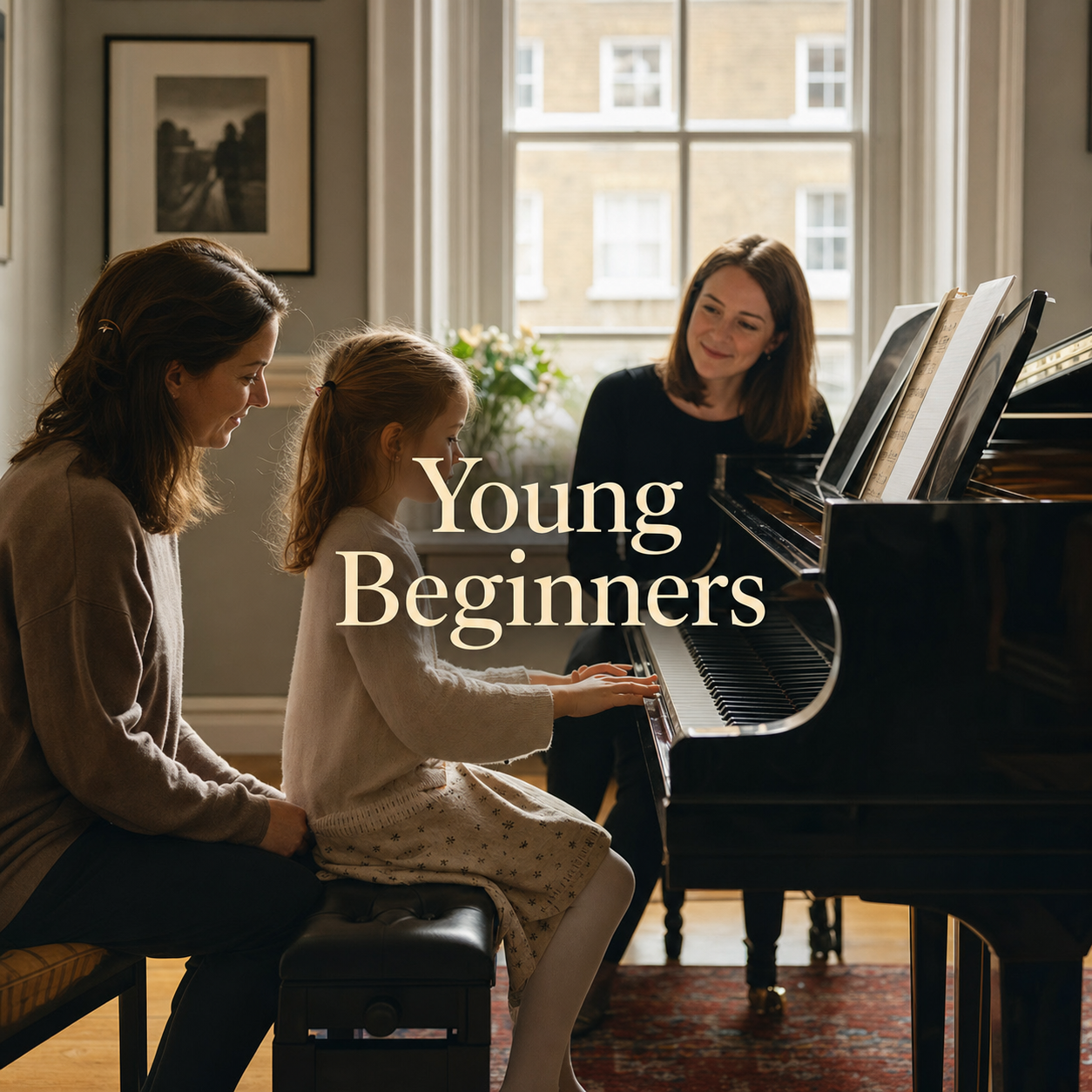
At WKMT, the best early lessons are structured, warm and observational. A teacher watches how the child responds to sound, turn-taking, short patterns and gentle correction. The parent learns what to do at home without turning the piano into a battleground. This article supports our children’s piano lessons in London by helping families decide what a young beginner actually needs before committing to a full routine.
A young child does not need to prove seriousness before beginning. The lesson itself should reveal whether attention, curiosity and trust are ready to grow.
How to tell whether a young child is ready
Readiness is not a single age. The Department for Education’s early years framework describes learning through communication, physical development, personal confidence and creative expression; piano study touches all four areas when it is taught well. A child who can follow a short instruction, wait for a turn and respond to musical play may be ready for a short trial even if they cannot yet read fluently.
Useful signs include a wish to return to the keyboard, a willingness to copy simple patterns, enough fine-motor control to use individual fingers sometimes, and the emotional security to accept help from an adult outside the family. A child who bangs, runs away, hides, or becomes distressed may still benefit from musical play, but formal lessons can wait.
Curious, copies rhythm, accepts help, enjoys short keyboard turns.
Interested but tired quickly; needs parent nearby and very short tasks.
Distressed by instruction, unable to pause, or resistant to the teacher.
What the first lesson should include
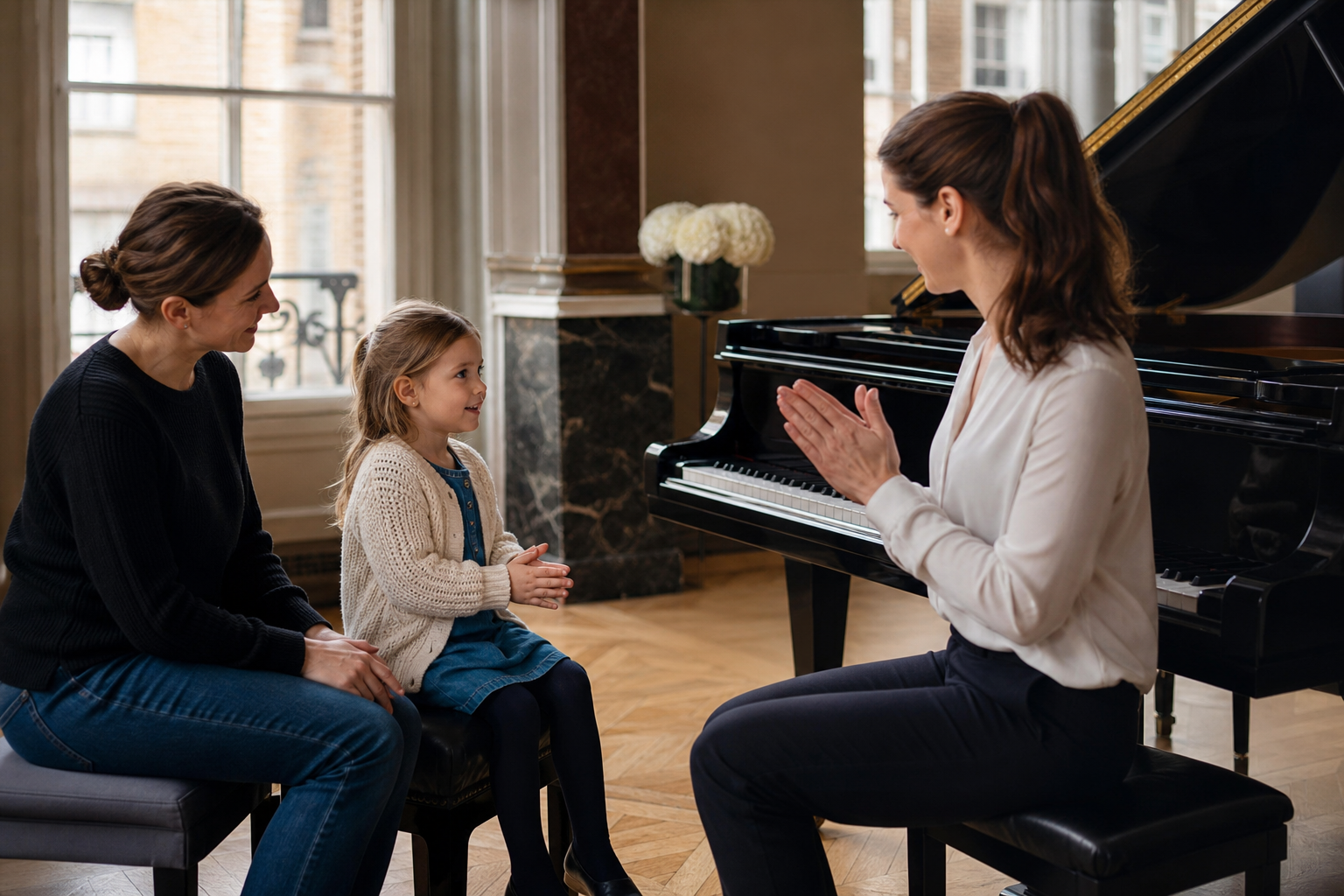
A first lesson for a young beginner should not begin with a long explanation of notes. It should begin with sound, movement and trust. The teacher might ask the child to find high and low sounds, copy a two-note pattern, play loud and soft, clap a rhythm, and sit at the piano with balanced posture for a short time. These activities look simple, but they reveal listening, impulse control and musical imagination.
For very young pupils, lesson length matters. Twenty to thirty minutes can be plenty at the beginning. Older young beginners may manage a standard half-hour with varied tasks. The aim is to finish while the child still feels successful. Stretching a tired child past that point teaches the wrong association: piano becomes something endured.
Teacher’s note
A good teacher does not rush a young beginner towards notation. Pulse, listening, singing, hand shape and confidence are the roots. Reading can grow from those roots once the child knows that the piano is a place where sound makes sense.
Choosing the right format in London
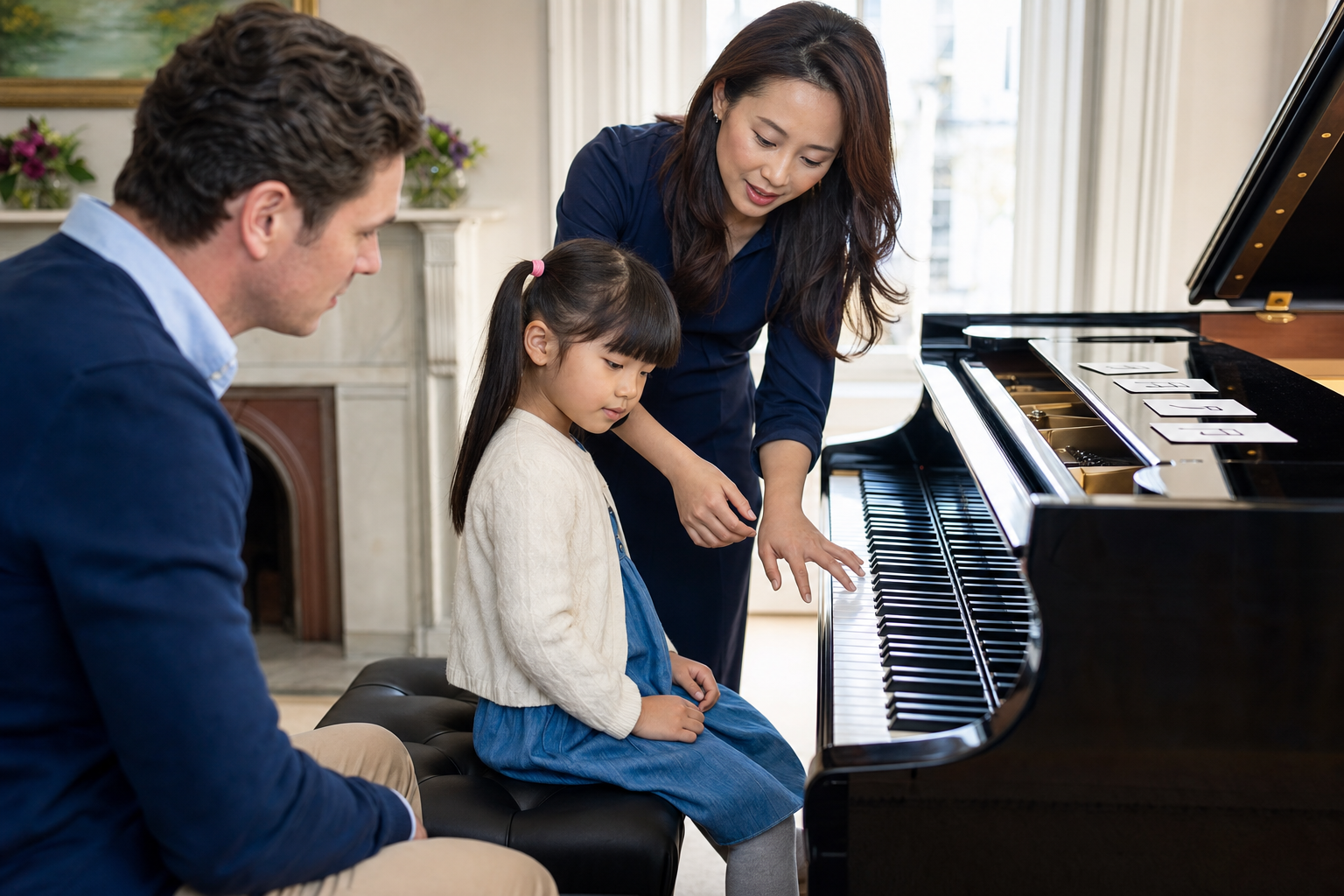
London families often balance school, travel, siblings and limited home space. The right format is the one the child can attend consistently without arriving exhausted. A studio lesson gives the teacher a proper instrument and a focused setting. A home routine can still work beautifully if the family has a reliable instrument, a quiet corner and realistic expectations. Online lessons can support older children, but very young beginners usually need an adult present and a teacher who can keep tasks clear.
| Format | Best for | Parent watchpoint |
|---|---|---|
| Studio lesson | Clear routine, good instrument, teacher-led focus | Avoid late slots when the child is tired |
| Home practice | Short daily reinforcement | Keep it calm and brief |
| Parent-supported online | Older young beginners with good attention | Requires adult setup and supervision |
Safeguarding also matters. Parents should expect a professional studio to treat children’s safety seriously, with clear communication, appropriate supervision and responsible teaching boundaries. UK safeguarding guidance from the Department for Education and NSPCC Learning is useful background for parents comparing children’s activities. Piano Lessons for Young Beginners with WKMT London.
Home practice without pressure
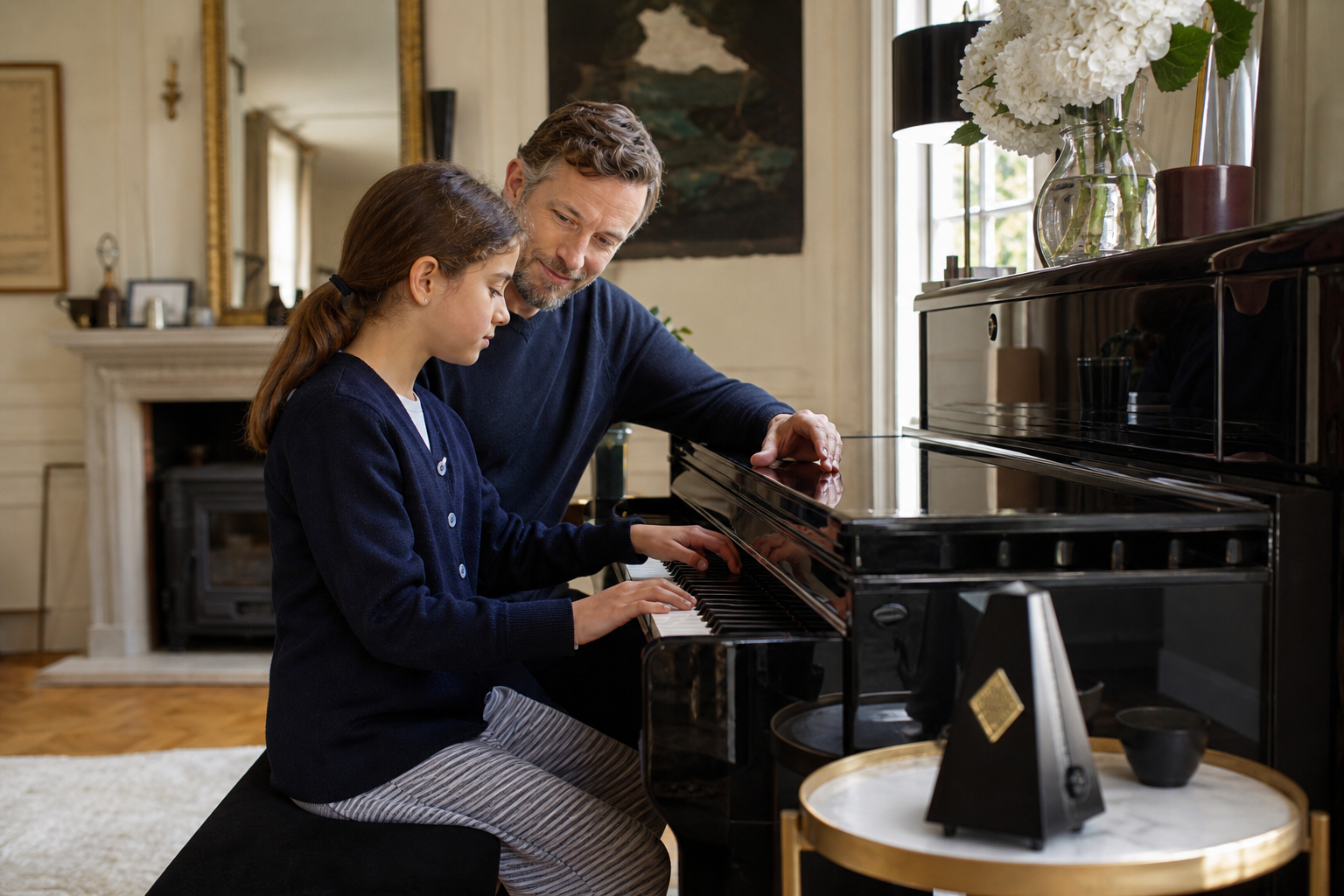
Young beginners do not need long practice sessions. They need frequent, positive contact with the instrument. Five calm minutes can be more valuable than twenty minutes of bargaining. Ask the child to show one sound, one rhythm, one short pattern and one “favourite thing from the lesson”. Stop before frustration takes over.
The parent role is to protect the routine, not to become a second teacher. Sit nearby, praise specific effort, and keep language concrete: “I heard the two quiet notes” is better than “good job”. If the child resists, return later. Consistency grows faster when the piano remains emotionally safe.
For parents
Try a four-part routine: open the piano, play one familiar pattern, repeat one teacher task, then let the child choose a sound. This keeps practice musical while quietly building attention and memory.
Progress, exams and realistic expectations
Early progress is not a race to grades. ABRSM and Trinity graded pathways can become useful later, but the first priority is musical literacy in the broad sense: pulse, listening, finger independence, pattern recognition, confidence and the habit of returning to a task. Some children are ready for early exam-style goals after a year or two; others need longer before that structure is helpful.
A young beginner’s first term might include steady sitting posture, simple finger numbers, high and low sounds, two-hand alternation, short call-and-response patterns, singing a phrase, and recognising simple rhythm shapes. The strongest sign of progress is not speed. It is the child’s ability to remember what happened last week and approach the piano with less hesitation.
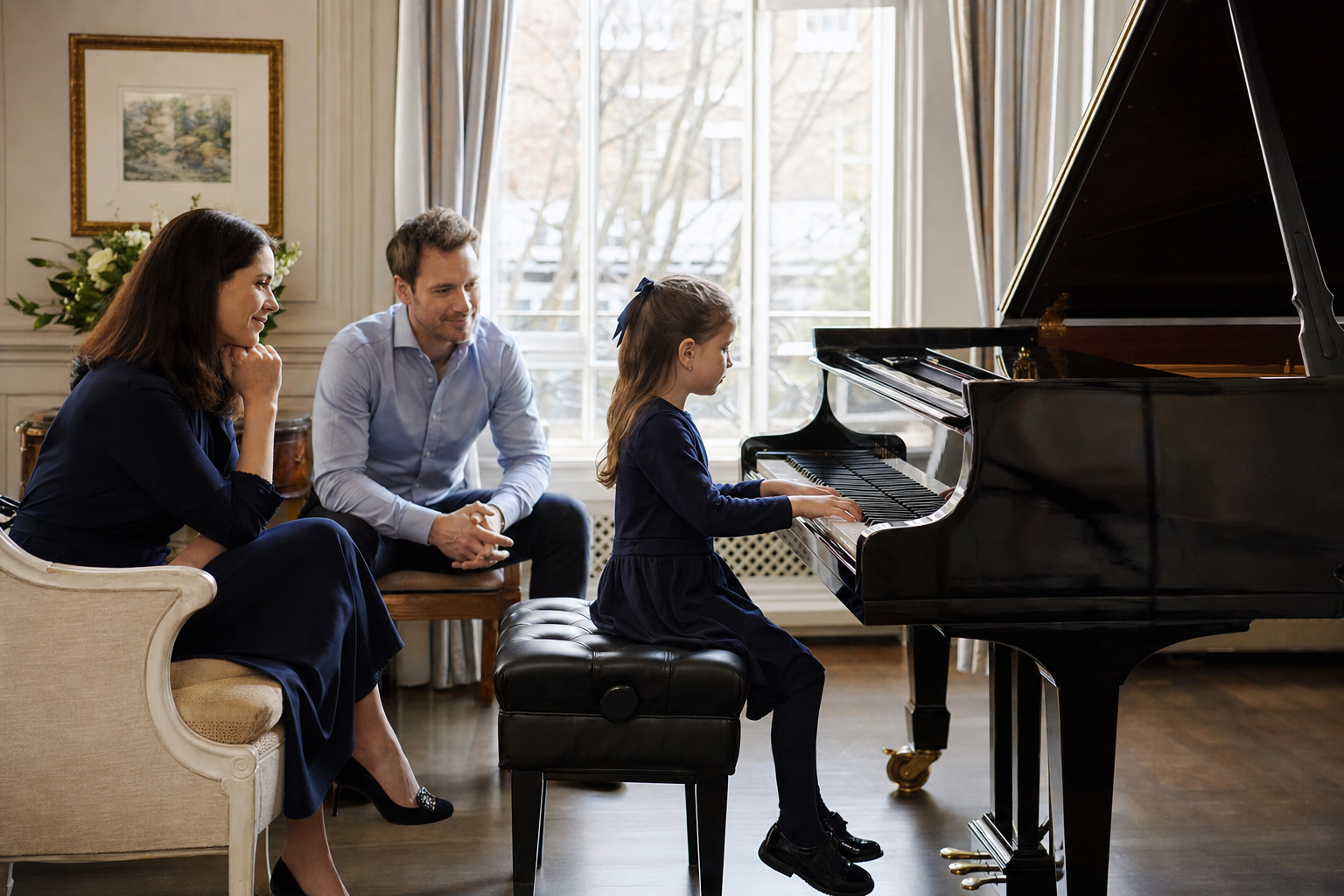
Parents can also look at performance confidence. A tiny studio sharing, playing for one parent, or recording a short piece at home can help a young child learn that music is communicative. Keep this gentle. The purpose is not applause; it is ownership.
When to wait
Waiting is not failure. If a child is overwhelmed by one-to-one instruction, dislikes being corrected, cannot settle at the instrument, or becomes anxious before every lesson, a pause may be wise. Keep music in daily life through singing, listening, clapping games and occasional free exploration at the piano. Return to formal lessons when curiosity is stronger than resistance.
Families sometimes worry that a pause will mean losing momentum. In practice, a well-timed wait often protects future motivation. A child who starts six months later with confidence may progress more smoothly than one who began too early and associated lessons with stress.
Next step with WKMT
If your child is ready for a calm, structured first step, WKMT can help you choose an age-aware lesson format and a teacher suited to young beginners.
Sources on Piano Lessons for Young Beginners in London with WKMT
- Department for Education, Early years foundation stage statutory framework gov.uk
- Department for Education, Keeping children safe in education, last checked 2026-07-08: gov.uk
- NSPCC Learning, Safeguarding for the performing arts nspcc.org.uk
- ABRSM, Piano exams and assessments abrsm.org
- Trinity College London, Piano graded exams trinitycollege.com
- NHS, Development reviews and child development context nhs.uk