
 TRIAL LESSON
Piano Lessons
Piano Lessons for Teenagers: Motivation, Independence and Confident Progress
Jul
Piano Lessons for Teenagers in London with WKMT
Parent guide
Piano Lessons for Teenagers: Motivation, Independence and Confident Progress
A practical London guide for parents choosing teenage piano tuition that respects independence, protects confidence and keeps musical standards clear.
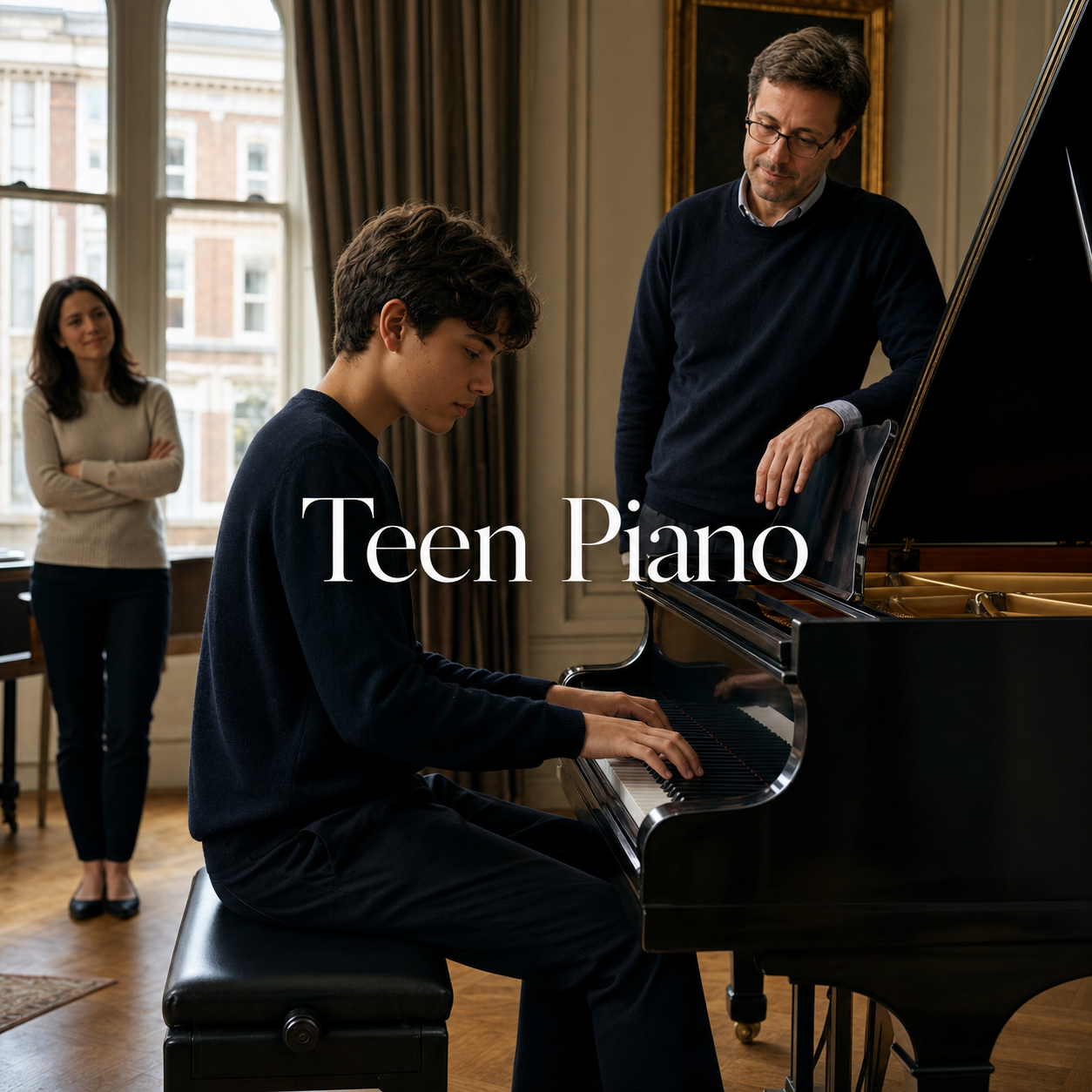
A teenager walks into a lesson with exam pressure, a favourite song, a busy timetable and a strong wish not to be treated like a small child. Good teaching begins there.
Parents searching for piano lessons for teenagers usually need more than a timetable. They need to know whether a teacher can motivate without nagging, prepare exams without narrowing the pupil, and give enough structure for progress while allowing a young musician to feel ownership. At WKMT, teenage pupils are taught as emerging independent learners: technically guided, musically stretched and supported with a calm route through repertoire, performance, grades, GCSE or A-level music, and personal confidence. Piano Lessons for Teenagers in London with WKMT.
Considering lessons for a teenager?
Start with the wider WKMT approach to piano lessons for children and teens, then use the guide below to choose the right teenage pathway.
Why Do Teen-Specific Piano Lessons Work?
Teenage learning is different from early childhood learning. A six-year-old often needs short activities and immediate encouragement; a fifteen-year-old needs reasons, choice, musical relevance and a teacher who can speak seriously without becoming severe. The lesson should still be disciplined, but discipline works best when it is connected to a goal the pupil recognises.
That may be an ABRSM or Trinity grade, a school performance, a piece from a film score, a Beethoven sonata movement, a jazz standard, or support for GCSE Music, where performing, composing and appraising sit together in the official subject content [1]. The point is not to make everything casual. The point is to connect technique to purpose.
For London families, this often means choosing a teacher who can hold several aims at once. A teenager might want to play a piece that feels socially meaningful, prepare a grade, keep options open for school music, and avoid feeling watched by parents at every practice session. Teen-specific tuition gives these aims a hierarchy. Technique supports repertoire; repertoire supports confidence; confidence supports the habit of returning to the instrument even during exam terms. Piano Lessons for Teenagers in London Guide
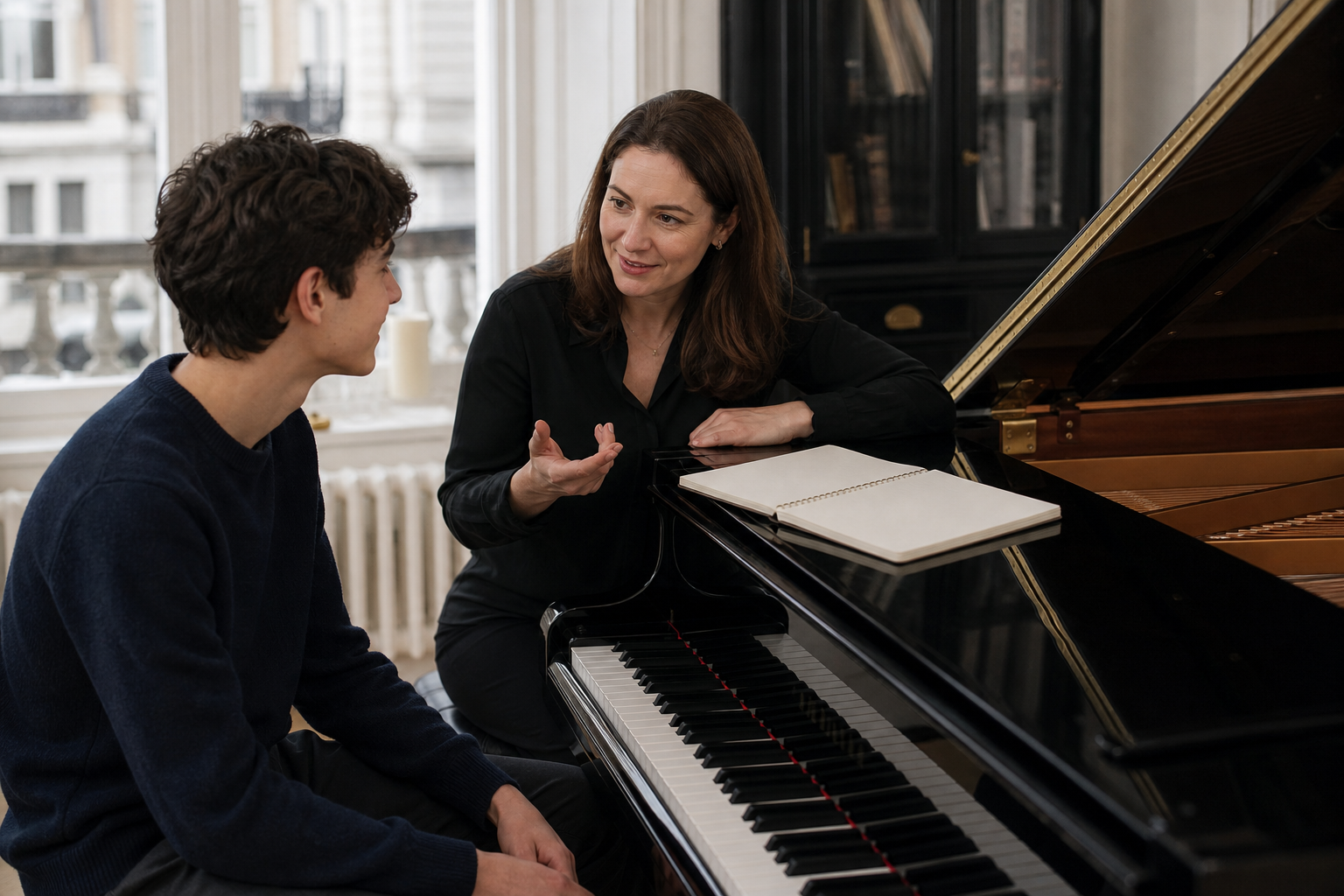
Teacher’s note: A teenager who helps choose repertoire is more likely to practise responsibly. The teacher’s role is to keep that choice musically useful: good fingering, strong rhythm, clear sound and an honest standard.
What Should Parents Expect from Lessons for Teenagers?
The first sign of a good teenage lesson is pace. The teacher should quickly identify the pupil’s current level, reading fluency, technical habits, listening skills and confidence. A teenager who has played before may need repair work on rhythm or hand use; a complete beginner needs a route that avoids childish material while building foundations properly.
Most teenage pupils benefit from weekly lessons, with lesson length chosen according to concentration, level and goals. Shorter lessons can work for beginners with heavy school weeks; longer sessions suit exam preparation, advanced repertoire or pupils combining performance with theory. The teacher should explain what practice means in plain terms: not hours for their own sake, but regular, measurable work on the exact bars, rhythms, sounds and memory points that need attention.
A strong first month should usually produce three things: a realistic repertoire plan, a technical priority, and a communication rhythm between teacher, pupil and parent. The repertoire plan tells the teenager what they are moving towards. The technical priority prevents scattered correction. The communication rhythm keeps parents informed without turning the pupil into a managed project. That balance is especially important for older beginners, who may compare themselves unfairly with friends who started younger.
Which Lesson Format Fits a Teenager Best?
In-studio lessons give teenagers a focused musical space, a proper acoustic instrument and a clear distinction between school, home and serious study. Home lessons may suit younger families or packed schedules, provided the instrument and environment are suitable. Online lessons can support continuity, theory, repertoire discussion and occasional travel weeks, though tone production and posture are usually easier to refine in person.
The format can also change over time. A pupil preparing a performance may benefit from more studio time on a grand piano; a busy GCSE period may require occasional online continuity; a new beginner may need in-person lessons until posture, hand shape and listening habits are secure. The best arrangement is not the most convenient one on paper, but the one the teenager can maintain without losing musical quality.
| Format | Best for | Watch point |
|---|---|---|
| Studio | Tone, posture, exam preparation, performance confidence | Travel time must fit the school week |
| Home | Busy families and pupils who practise on the same instrument | Household distractions can weaken focus |
| Online | Continuity, theory, travel weeks and mature independent pupils | Sound quality and camera angle matter |
For families comparing options, WKMT’s online piano lessons page can help clarify where remote study is useful and where in-person teaching remains preferable.
How Should You Choose the Right Teacher?
Teenagers need teachers who can combine musical authority with psychological tact. Qualifications matter, but so does the ability to read the pupil in front of them: shy, ambitious, distracted, perfectionistic, self-taught, exam-driven or returning after a break. Parents should ask about conservatoire training, grade exam experience, youth teaching, safeguarding expectations and the teacher’s approach to repertoire.
Three teacher profiles can work particularly well for teenage pupils. The conservatoire-trained classical teacher is useful when technique, tone and exam standards need sharpening. The broad musicianship teacher is valuable for pupils who compose, improvise, sing or connect piano with school coursework. The performance-confidence teacher helps pupils who can play privately but become tense when asked to share music. The safest match is the one that fits the pupil’s temperament as well as their level.
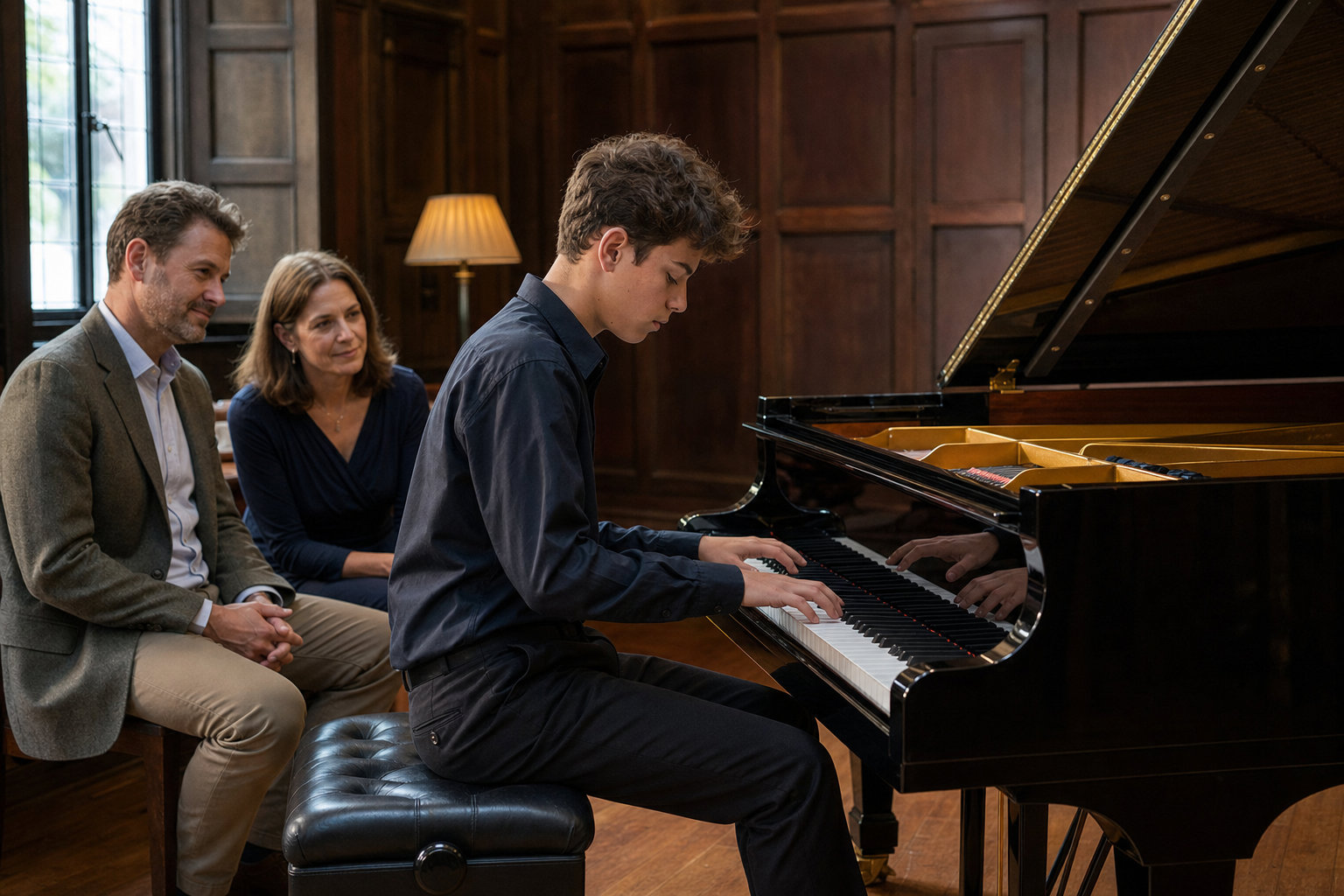
Best for pupils preparing ABRSM, Trinity, auditions or serious repertoire with careful technique.
Best for teenagers interested in composing, arranging, improvising or linking piano to school music.
Best for pupils who need steady performance experience without being rushed into pressure.
Safeguarding is also part of professional teaching culture. UK guidance for schools and colleges sets out duties to safeguard and promote the welfare of under-18s [2], while performing arts safeguarding guidance stresses appropriate arrangements for children and young people in music and performance settings [3]. A serious studio should be comfortable discussing supervision, communication and boundaries.
What Progress Pathways Are Available?
Grades are useful when they serve the pupil, not when they become the whole purpose of music. ABRSM Performance Grades are digital exams assessed from video and available from Grades 1 to 8 [4]. Trinity offers face-to-face and digital grade exam options for piano [5], plus certificate exams that can work well for recital-style programmes [6]. These routes give teenagers a recognised framework, but they are not the only measure of success.
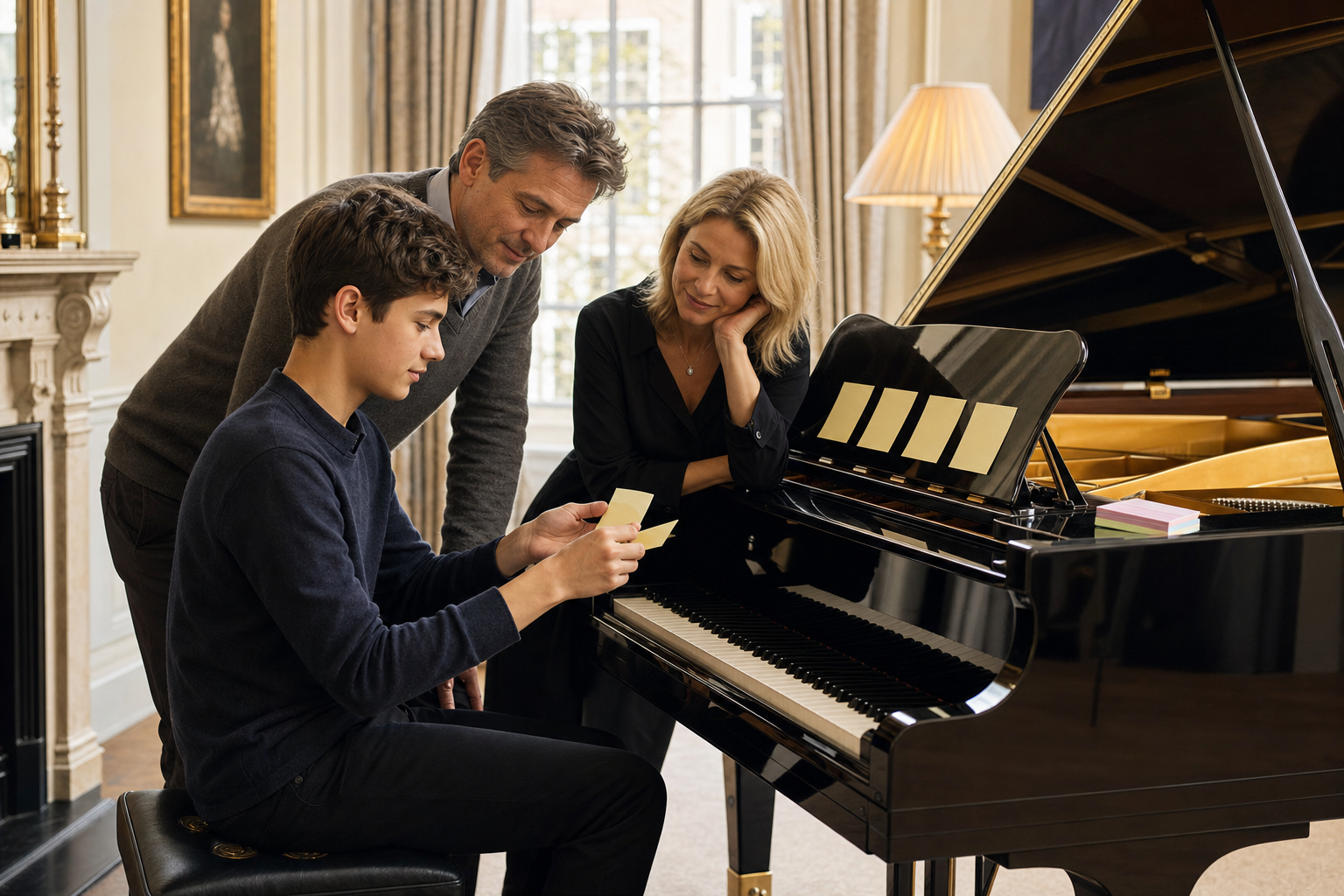
A good teenage pathway lets a pupil become more independent without becoming musically isolated.
Some teenagers thrive on exams. Others progress through concerts, composition projects, duet work, school performances, theory, recording or advanced repertoire. WKMT’s article on music examination boards in the UK can help parents compare formal routes before committing to one board.
Parents should also distinguish between pace and pressure. A motivated teenager can move quickly when the work is well chosen, but rushing grades can create brittle playing: correct notes without flexible rhythm, speed without sound, memory without understanding. A healthy pathway includes listening, sight-reading, theory, performance practice and repertoire that is not always examined. That wider musicianship is what keeps piano study useful beyond a certificate.
How Can Parents Support Motivation Without Taking Over?
Teenagers usually practise better when parents support the conditions rather than police every detail. Agree the lesson time, protect a realistic practice slot, make sure the instrument is usable, and let the teacher handle most technical correction. Parents can ask, “What are you working on this week?” rather than “Have you practised enough?”
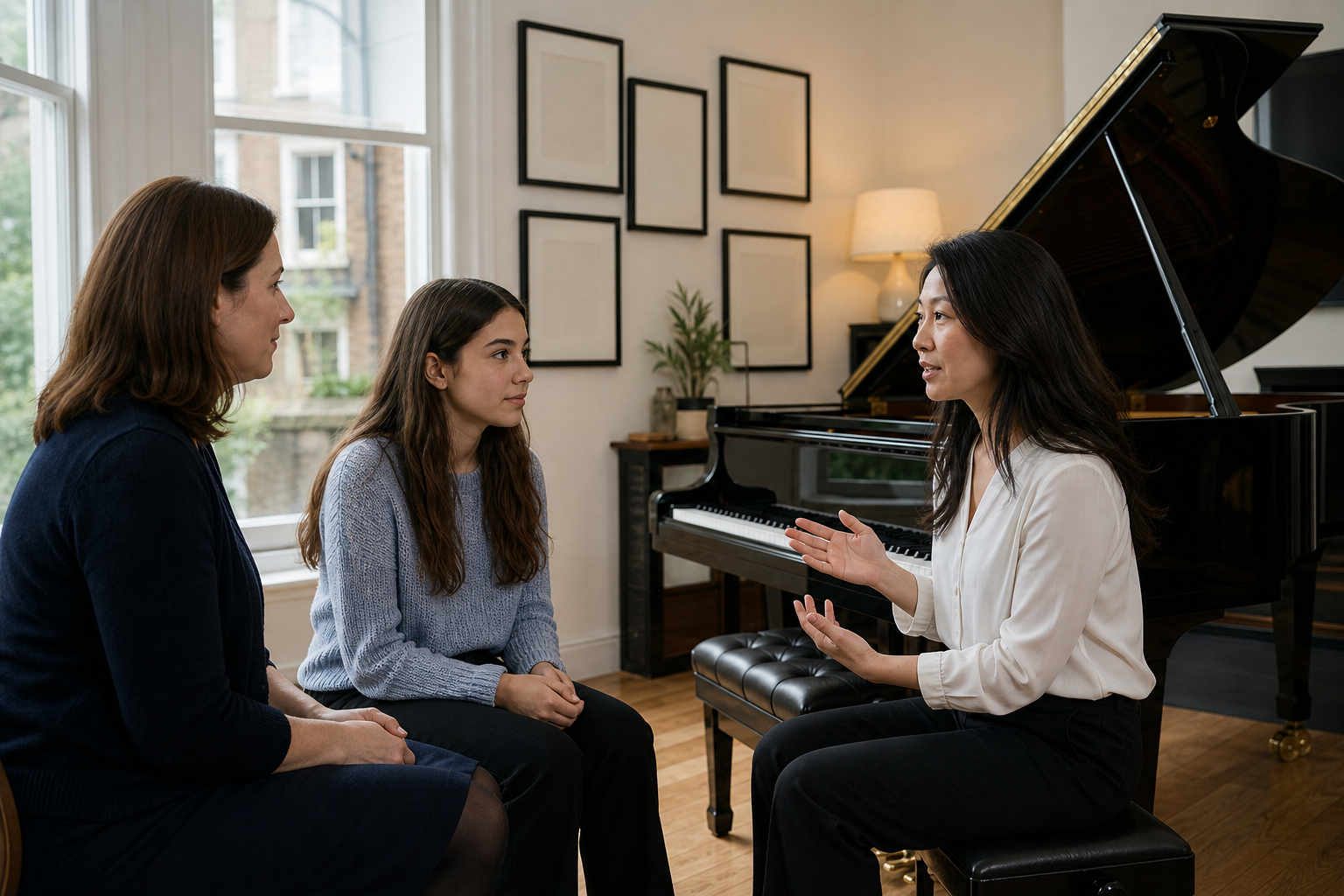
For parents: ask for a clear weekly target. It should name the piece, the exact passage, the musical aim and the practice method. Vague instructions create vague practice.
For the teenager, the lesson should make progress visible. That can be a cleaner left-hand pattern, a steadier tempo, a more confident performance, or a better understanding of harmony for GCSE or A-level music. Small wins matter because they prove that effort changes sound.
It also helps to separate practice from performance at home. Practice is allowed to sound unfinished. Parents who only hear polished playing may accidentally make the teenager hide the real work: slow repetition, hands separately, awkward counting, problem bars and quiet correction. A useful family culture allows imperfect practice while still expecting consistency. That is often the difference between a teenager who keeps going and one who stops because every mistake feels public.
What About Pricing, Trial Lessons and Booking?
Fees should be transparent enough for parents to plan properly. Rather than guessing from generic tutor listings, use WKMT’s current music lesson fees page and confirm the best lesson length for your teenager’s level. A first consultation or trial-style meeting should clarify the pupil’s current standard, musical interests, school commitments, likely route and teacher match.
For a teenager, booking the cheapest possible option can become expensive if motivation collapses. The better question is whether the teacher can keep the pupil moving: musically, technically and personally.
WKMT perspective
Teenage piano tuition should feel grown-up, structured and humane. The right teacher gives enough authority to protect standards, and enough flexibility to let the young musician become responsible for their own sound.
FAQs and Sources on Piano Lessons for Teenagers in London
Is it too late to start piano as a teenager?
No. Teenagers can start well because they often understand goals, style and practice logic quickly. The teacher must avoid childish beginner material and build foundations carefully.
Should a teenager take ABRSM or Trinity exams?
Only when exams support the pupil’s musical direction. Grades can be excellent for structure, but concerts, recordings, school music and repertoire projects can also mark progress.
How much should parents be involved?
Parents should protect the routine and communicate practical concerns, while letting the teacher and teenager build a direct musical relationship.
- Department for Education, GCSE music subject content: https://www.gov.uk/government/publications/gcse-music
- Department for Education, Keeping children safe in education: https://www.gov.uk/government/publications/keeping-children-safe-in-education–2
- NSPCC Learning, Safeguarding in the performing arts: https://learning.nspcc.org.uk/safeguarding-child-protection/for-performing-arts
- ABRSM, Performance Grades
- Trinity College London, Piano grade exams: https://www.trinitycollege.com/qualifications/music/grade-exams/piano
- Trinity College London, Piano certificate exams