
 TRIAL LESSON
Music Theory Resoucers, Piano Lessons
Music Education for Early Childhood: A Parent’s Guide to Listening, Play and First Piano Steps
Jul
Music Education for Early Childhood
A parent’s guide to the first six years
Music Education for Early Childhood: From Listening and Play to First Piano Steps
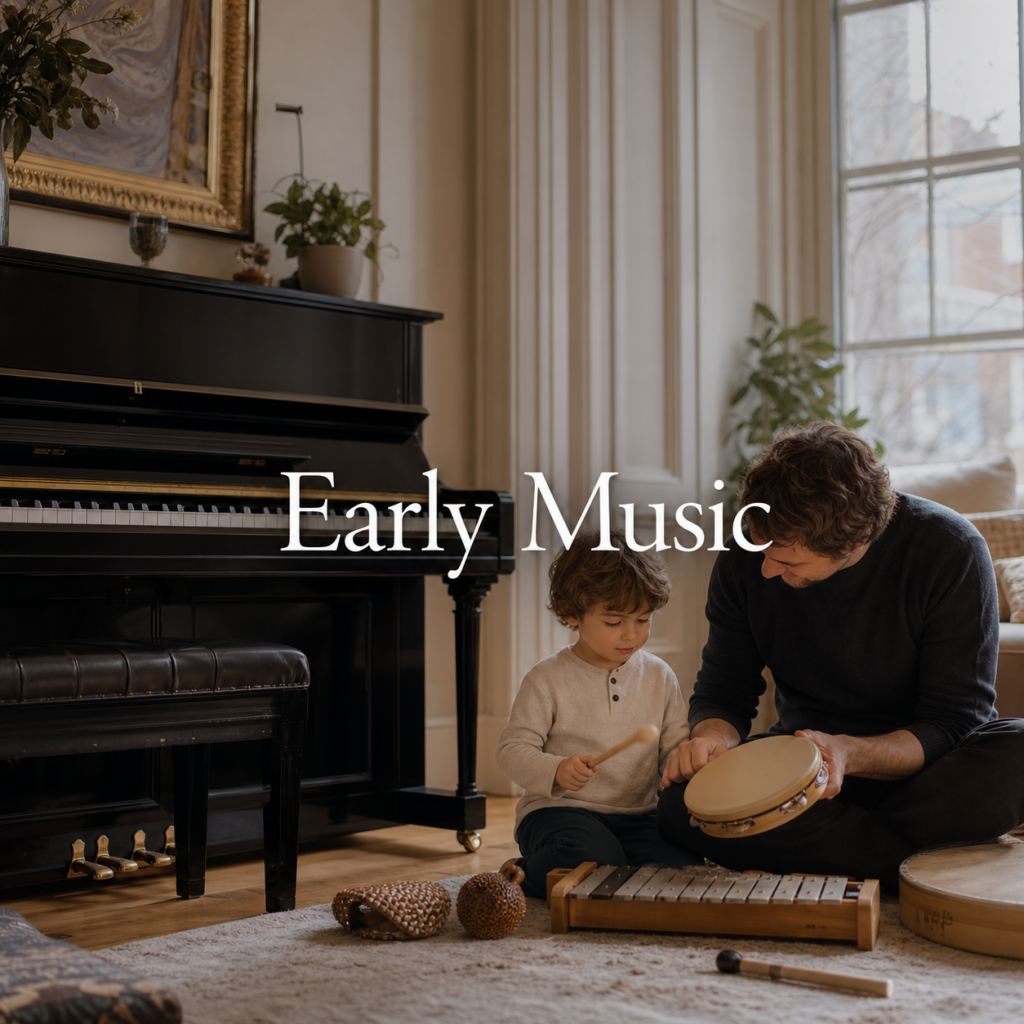
The youngest children do not need a miniature version of a formal instrumental lesson. They need responsive singing, movement, repeated listening and permission to discover sound. This guide shows how those experiences can grow naturally towards the piano. Guide on music education for early childhood
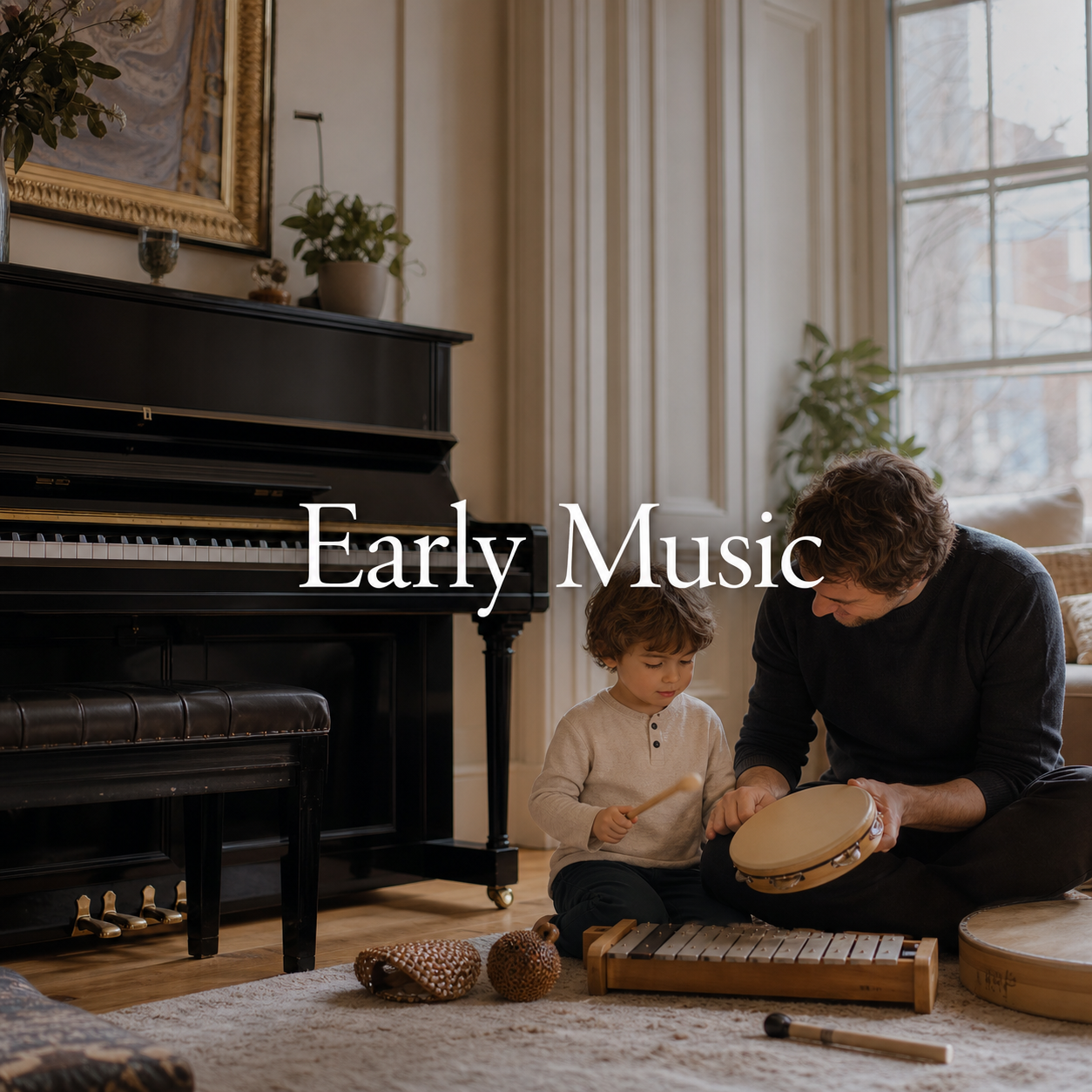
Music education for early childhood is best understood as a path, not a race. A baby who turns towards a parent’s song, a toddler who repeats a rhythm and a four-year-old who returns curiously to the keyboard are all building musical understanding. None needs to be pushed towards notation or performance before attention, coordination and enjoyment are ready. When that readiness appears, structured piano lessons for children in London can give curiosity a careful next step.
England’s Early Years Foundation Stage places expressive arts and design among the central areas of learning, while Music Mark’s early-years guidance argues for child-centred musical experiences that begin with what each child can already do.1 2 For parents, the practical message is reassuring: ordinary musical moments count.
The early-music pathway at a glance
Why early musical experience matters
Music belongs in early childhood first because it is a rich form of expression. Children vocalise while playing, invent sound effects for toys, tap objects rhythmically and turn phrases into songs. Music Mark cautions against valuing these experiences only for their possible effect on language, wellbeing or later tuition; young children deserve music as an art in its own right.2
There are useful wider connections. Singing face to face invites turn-taking and attentive listening. Repeated rhymes make patterns predictable. Moving to a pulse links hearing with the body. Yet parents should be wary of extravagant promises that music will automatically make a child cleverer. The stronger goal is simpler: nurture attention, imagination, coordination, confidence and a lasting appetite for listening.
For parents
Follow the child’s response. Repeat what delights them, simplify what overwhelms them and stop while the experience is still enjoyable. Frequency and warmth matter more than an impressive activity.
Music education for early childhood, age by age
Development is uneven, and family culture matters. Treat the following as invitations rather than tests. Youth Music’s guidance similarly warns against rigid sequences: children’s musical lives differ, and careful observation should shape what comes next.3
Birth to 12 months: voice, pulse and connection
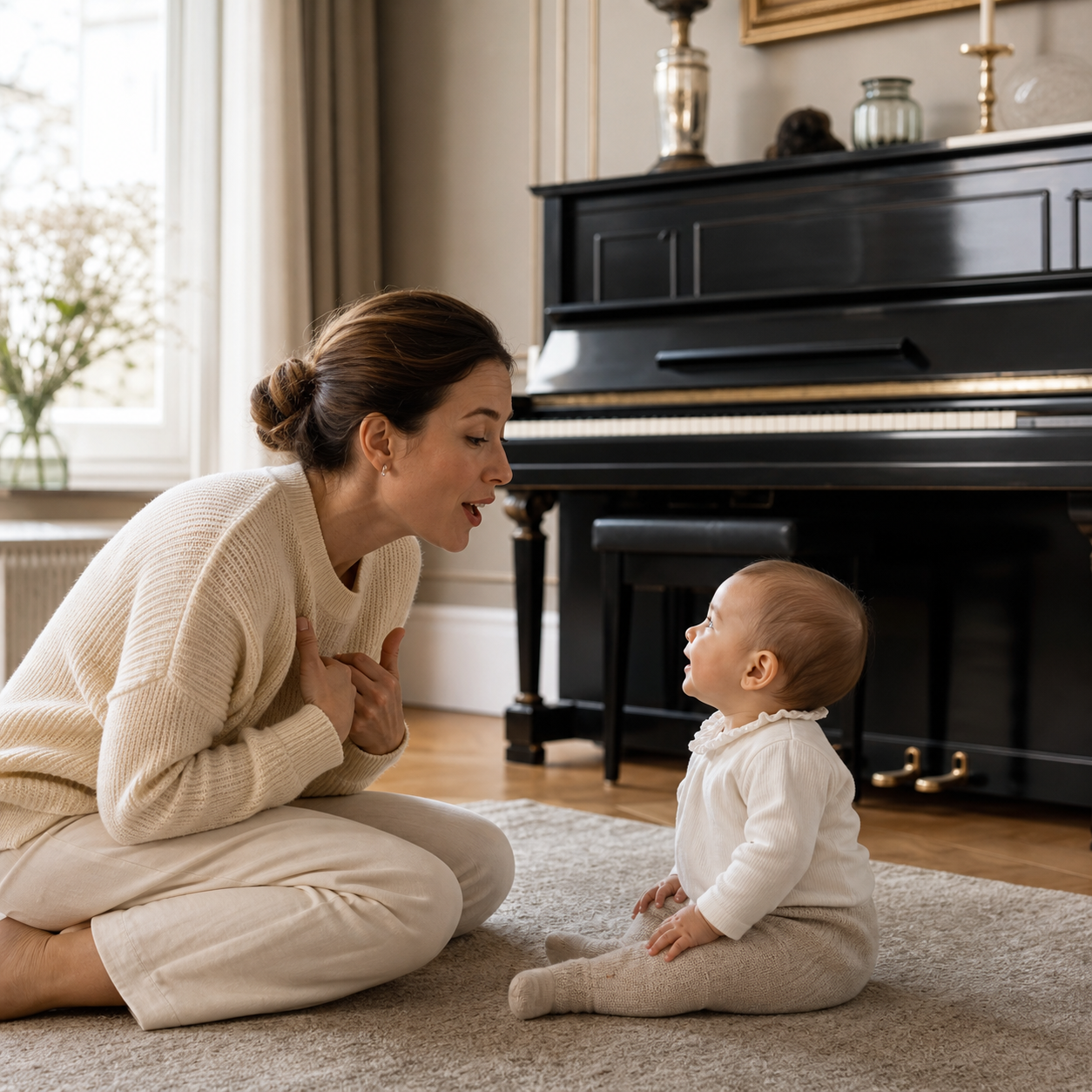
Sing during familiar routines, keeping your face close enough for the baby to watch. Use a small repertoire and welcome repetition. The NHS notes that babies enjoy hearing the same songs and rhymes repeatedly and recommends singing as part of ordinary care.4 Rock gently, pause for a vocal response and answer it as though you are having a musical conversation.
A recording can add colour, but it should not replace interaction. The valuable event is the exchange: the baby turns, the adult notices, the phrase returns. Keep volume comfortable and leave quiet space between sounds.
One to two years: imitation and joyful repetition
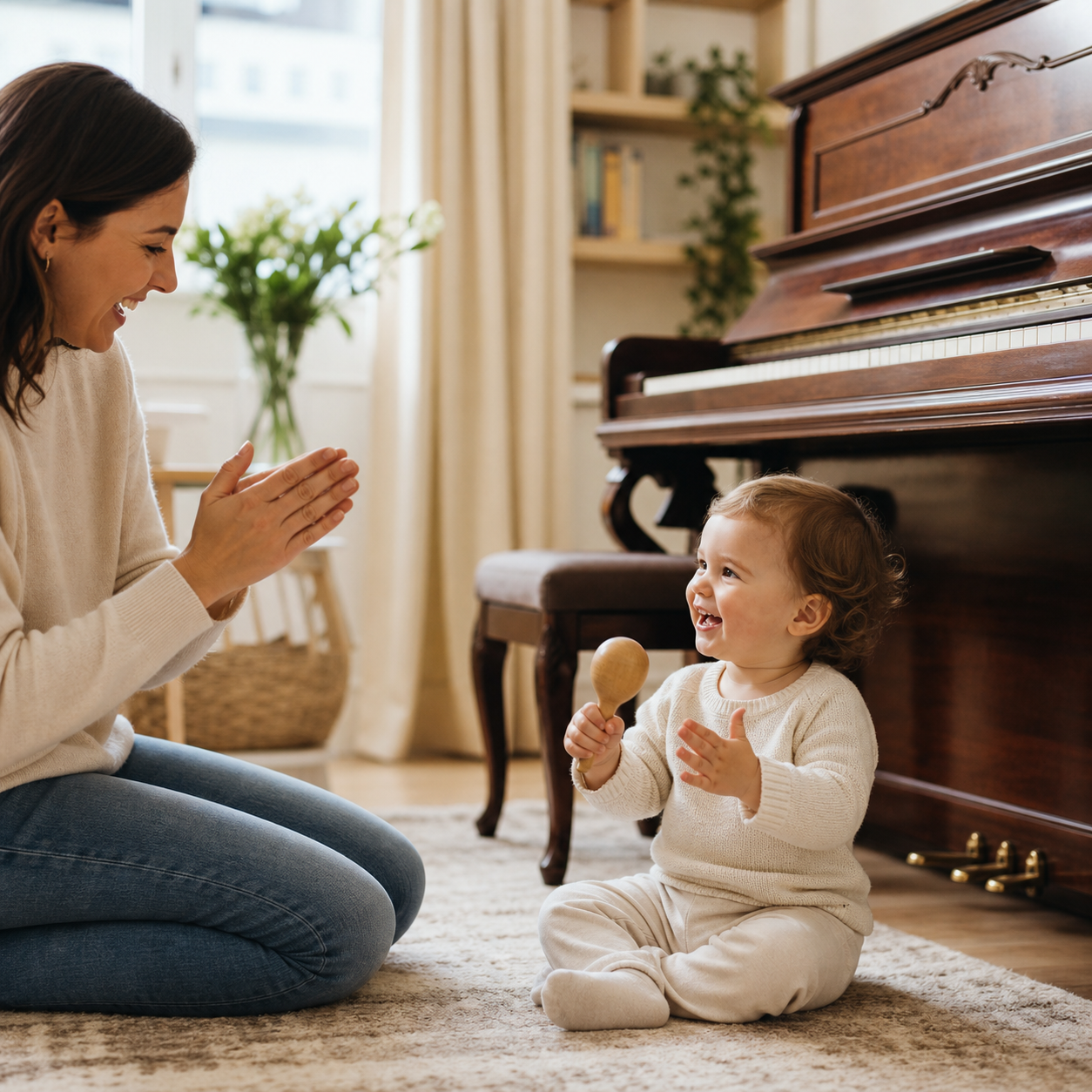
Toddlers often delight in an obvious beat, a sudden stop or the contrast between loud and soft. Clap a short pattern and wait. Offer one safe shaker rather than a crowded basket. Add actions to familiar songs and allow the child to choose which one comes next.
At this age, participation may look fleeting. A child can wander away, return for the last line and still be listening. Avoid demanding a complete song or perfectly matched pulse. Musical attention grows through successful fragments.
Two to four years: sound play and keyboard curiosity
Children now create stories through sound. A high note may become a bird; a low note, a large animal. Invite them to find two contrasting sounds on a piano with clean hands and gentle fingers. Keep the lid secure, supervise closely and treat the instrument with respect without making it forbidden.
Short musical games can include walking to a steady pulse, echoing a two-note phrase or choosing music for a toy’s movement. WKMT’s guide to piano nursery rhymes offers a natural bridge between familiar singing and keyboard sound. At three, some children may also enjoy the playful expectations described in first piano experiences for three-year-olds.
Four to six years: readiness for greater structure
Some children can now follow a short sequence, distinguish patterns, coordinate individual fingers and accept gentle correction without losing heart. These are helpful signs, but age alone does not decide readiness. A well-designed introduction still uses imagination, singing and movement alongside the keyboard.
For families deciding between general music and instrumental study, the article on piano lessons for preschoolers explores this transition in more detail.
| Stage | Helpful experience | Avoid |
|---|---|---|
| Infancy | Singing, rocking, vocal turn-taking | High volume and constant background sound |
| Toddler | Action songs, imitation, simple instruments | Long adult-led sessions |
| Preschool | Sound stories, choices, supervised keys | Early pressure to read notation |
| Reception age | Short responsive lessons and home continuity | Comparisons with other children |
How to recognise readiness for first piano steps
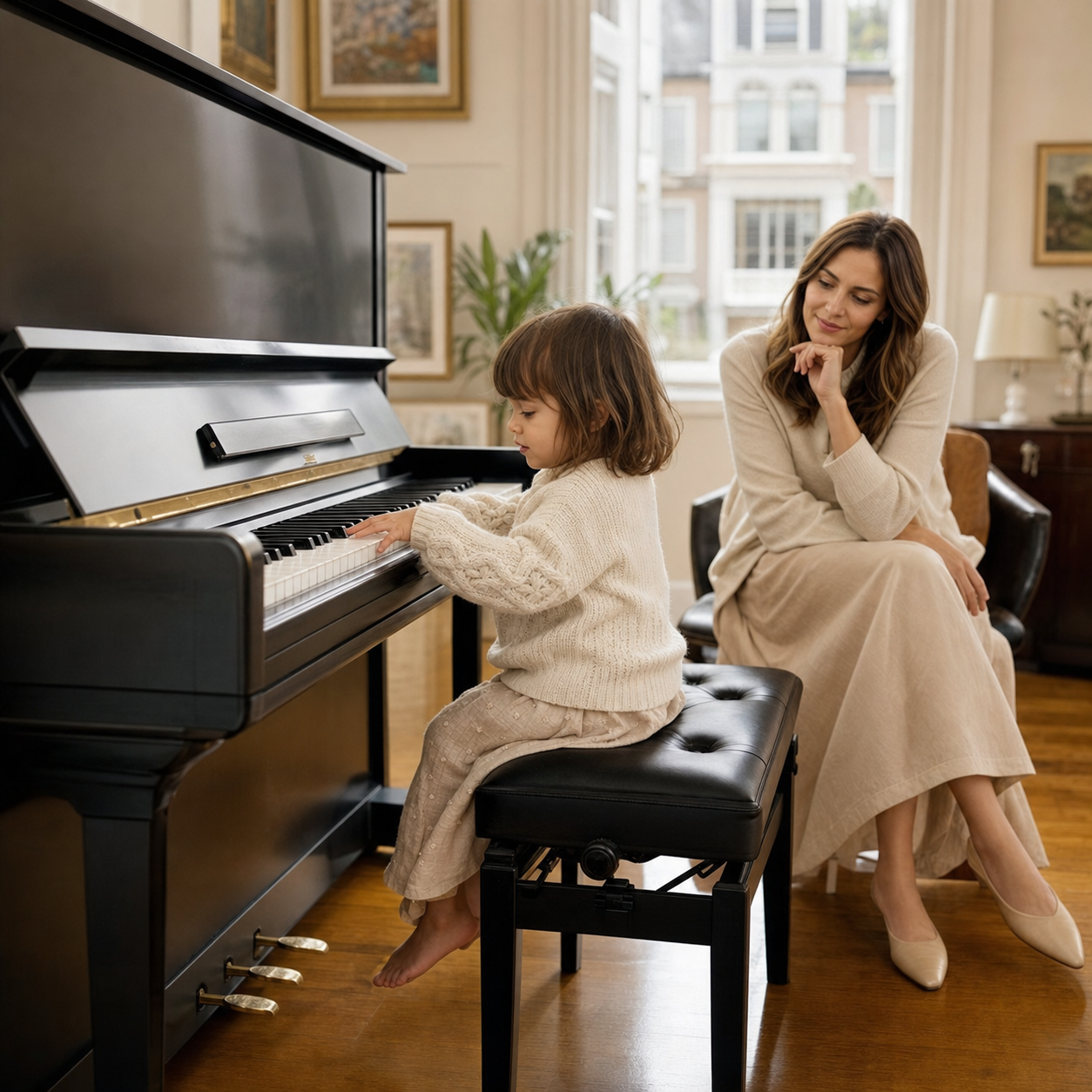
Readiness is a cluster of behaviours. Look for a child who repeatedly approaches the instrument, listens to a short instruction, copies a simple gesture, notices differences in sound and can finish a brief activity with support. Fine-motor control helps, but willingness to engage and recover from small mistakes matters just as much.
“The right starting point is the moment when curiosity can accept a little structure without losing its spark.”
A trial lesson should reveal more than whether the child can press the correct key. Notice whether the teacher adjusts their language, uses singing or movement when useful, allows thinking time and builds a warm boundary around the instrument. Ask how parents should support between lessons, how progress is communicated and what happens when concentration fades.
A useful readiness check
Can your child share attention for five to ten minutes, imitate one small action, choose between two musical ideas and leave the activity without distress? A “mostly yes” is more informative than a birthday.
Choosing a teacher and lesson format in London
For very young children, specialist teaching skill matters more than a grand promise of fast progress. Look for experience with the relevant age, clear safeguarding practice, patient communication and a method flexible enough to include singing, listening and movement. A conservatoire background can signal strong musicianship, but parents should also ask how the teacher understands early development.
Parent-and-child sessions suit children who still rely on an adult to enter the activity. Small groups offer imitation and sociability but less individual pacing. One-to-one lessons become valuable when a child can sustain a relationship with the teacher and benefits from precise musical response. No format is universally superior.
London families can build a musical environment without filling every week with classes. A family concert, a library rhyme session and a few minutes of shared listening at home can complement formal tuition. The Youth Music Early Years Hub stresses inclusive, child-responsive practice and offers guidance for parents and practitioners who want to understand musical development without imposing a fixed ladder.5 Check official venue and borough pages for current sessions, access arrangements and age guidance before travelling.
Imagine a family returning from a short concert on a rainy Saturday. Their four-year-old remembers one quiet orchestral sound and searches for something similar on the piano. That small act of recollection is useful musical learning: the child has listened, retained a colour and made an independent connection.
When comparing options, consider the whole week. A theoretically excellent class at an exhausting time may achieve less than a modest session a child can reach calmly. Travel, hunger, nursery hours and sibling arrangements all affect readiness. Choose a schedule that leaves enough emotional room for the child to arrive curious.
It is also reasonable to try a format and revise the decision. After three or four meetings, ask whether the child anticipates the session, remembers any musical idea and relates comfortably to the teacher. Progress at this stage may be visible in listening, confidence and imaginative response before it appears in a recognisable piece.
Questions worth asking
- How do you adapt a lesson when attention changes?
- What musical behaviours do you expect at this age?
- How should a parent participate during and after lessons?
- How do you keep technique safe without making the lesson rigid?
- How will we know whether the format is working after the first month?
Preparing for a successful beginning
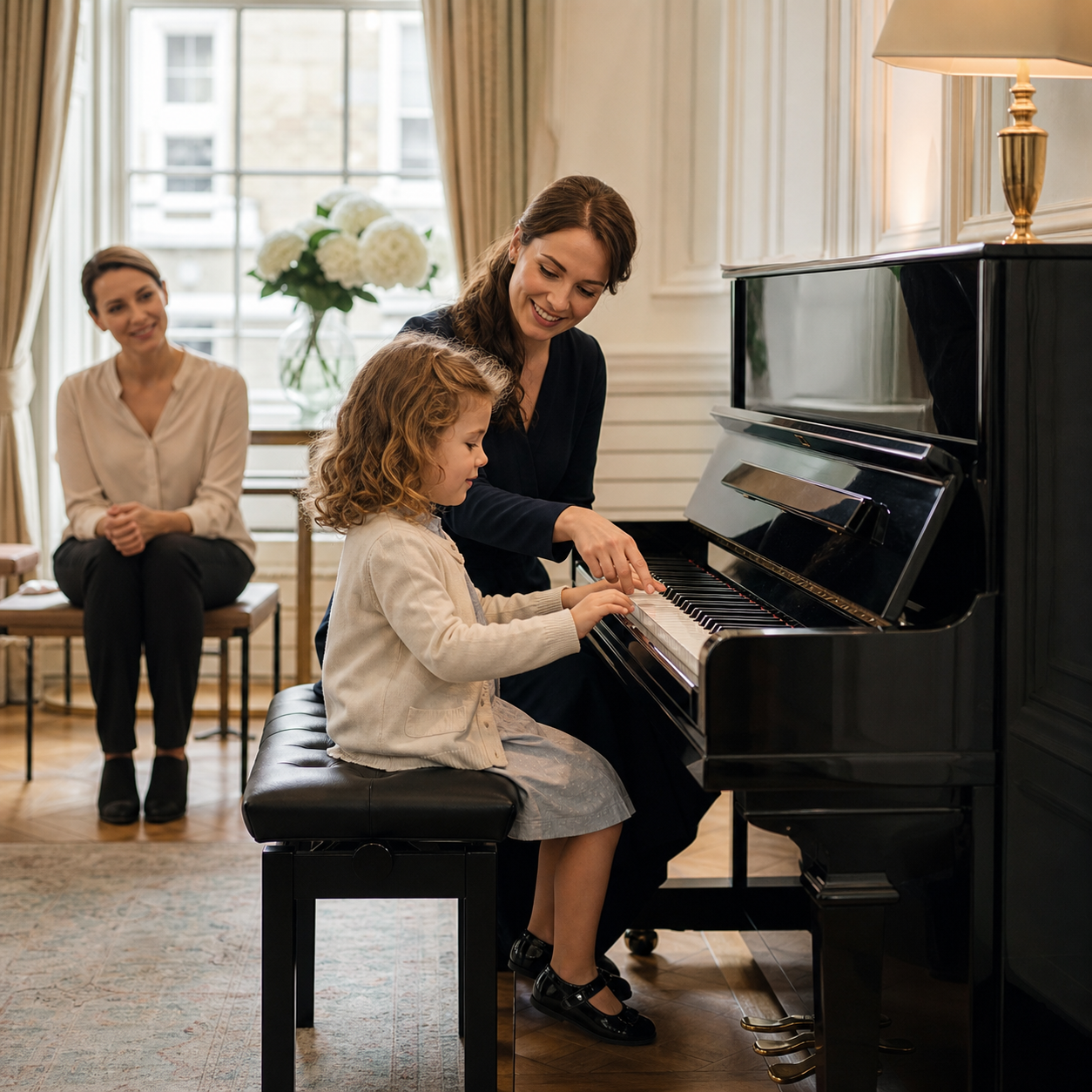
Before lessons begin, agree on a calm time of day, a realistic session length and who will accompany the child. Keep the instrument accessible but supervised. A stable bench or suitable foot support matters because young bodies tire when they cannot sit securely. Let the teacher advise on materials rather than buying a large method-book collection in advance.
At home, protect continuity without turning every musical moment into assigned work. A child can sing, listen, move and revisit a tiny lesson idea. Praise attention, care and discovery rather than speed. If resistance becomes consistent, discuss it with the teacher early; a shorter format, different time or temporary return to musical play may be wiser than pressure.
Ready to explore first piano steps?
WKMT offers structured, age-aware guidance for families who want musical curiosity to grow into confident learning.
Frequently asked questions
Is two or three too young for piano?
It is usually too young for a conventional lesson built around sustained keyboard instruction, but not too young for musical play, singing and supervised sound exploration. Some children enjoy very short specialist sessions with a parent present.
Should we buy a keyboard before a trial lesson?
Not necessarily. A trial can help clarify whether the child is ready and what instrument features will support healthy learning. When study becomes regular, touch, key size, stability and pedal setup matter more than novelty functions.
What if my child will not sit still?
Stillness is not the only sign of attention. Young children may listen while moving. A skilled teacher can alternate brief keyboard turns with singing, rhythm or movement, while gradually building the ability to focus.
Sources for music education for early childhood
- Department for Education, Early Years Foundation Stage
- Music Mark, Music in Early Childhood: A Common Approach
- Youth Music and LSO Discovery, Children’s Musical Development
- NHS Best Start in Life, Baby’s First Sounds: 0 to 6 Months
- Youth Music, Early Years Hub
- Department for Education, Communicating Through Arts