
 TRIAL LESSON
Uncategorized
Young Pianist Competition: A Parent’s Guide to Readiness, Confidence and Healthy Preparation
Jul
Young Pianist Competition: Parent Guide
WKMT parent guide
Young Pianist Competition: A Parent’s Guide to Readiness, Confidence and Healthy Preparation
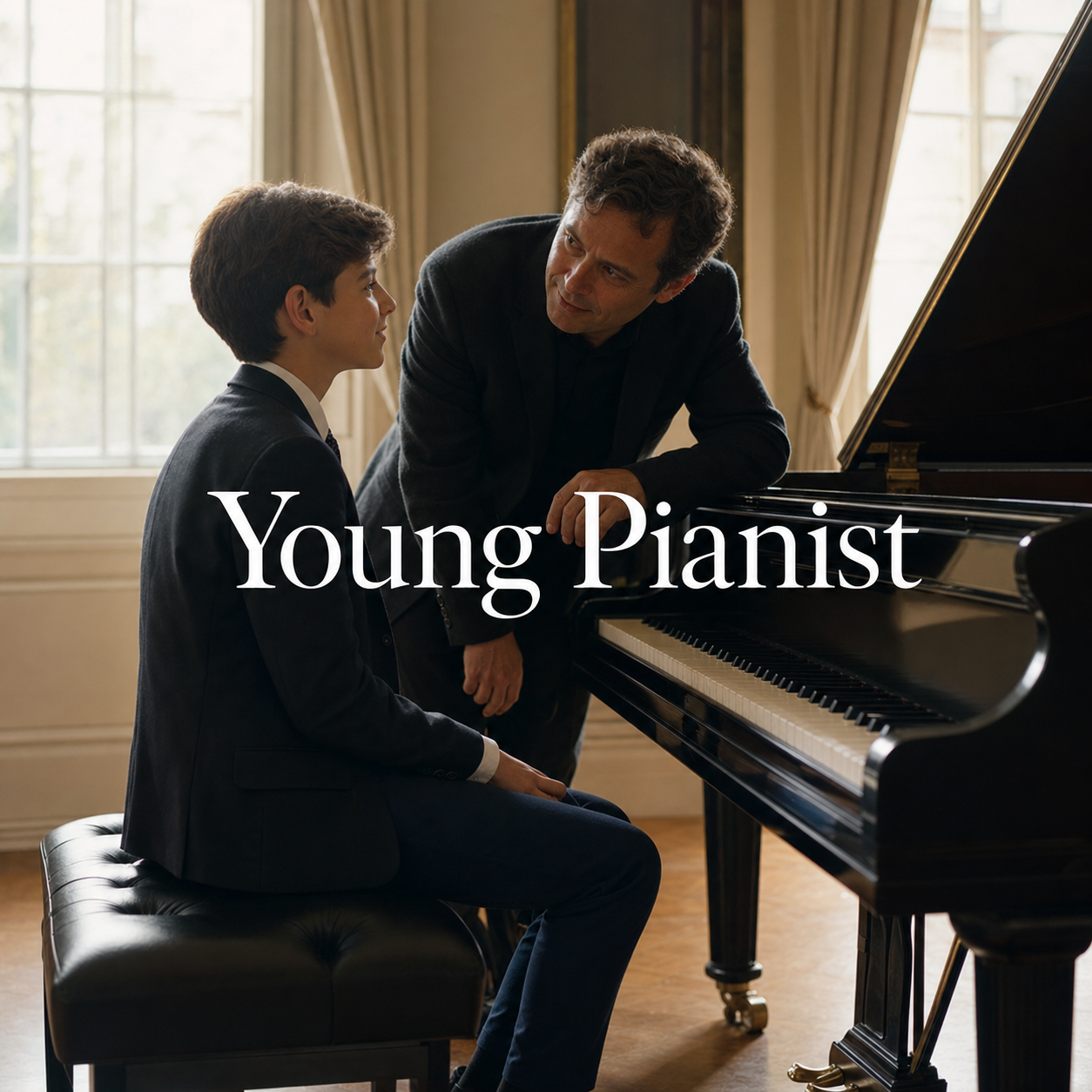
A young pianist competition can give a child purpose, listening experience and a memorable performance goal. It is most valuable when readiness comes before ambition and the result remains smaller than the music.
A secure piece, recoverable slips, willingness to perform and curiosity about feedback.
Milestones, mock performances, rest and musical detail rather than endless repetition.
The child finishes with more self-knowledge, whatever the ranking or prize.
Parents searching for a young pianist competition usually meet pages full of categories, deadlines and prizes. Those facts matter, but they do not answer the first question: will this experience help this particular child now? A competition is an educational frame, not a verdict on talent. Used well, it sharpens preparation and teaches a young musician to communicate under pressure. Used too early, it can turn every lesson into an audition.
This guide offers a practical decision path for families. It explains readiness, category choice, adjudication, a sustainable twelve-week plan, performance-day routines and the language parents can use after results. For a child who needs stronger foundations first, structured piano lessons for children in London remain the sounder next step.
Young pianist competition readiness: five signs
Age bands are useful for organisers, but they are a poor substitute for musical readiness. One eight-year-old may enjoy a small performance class; another may need another year of informal playing. Look for five signs together:
- Ownership: the child can name a genuine reason for entering beyond pleasing an adult.
- Security: the piece survives a missed note without collapsing.
- Attention: the child can work on one musical detail without playing the whole piece repeatedly.
- Performance experience: family play-throughs, lesson performances or a small class no longer feel completely unfamiliar.
- Recovery: disappointment can be discussed without shame or catastrophising.
A secure piece is not a flawless piece. ABRSM’s published performance criteria separate pitch, time, tone, shape and performance communication [1]. That is a useful parental reminder: accuracy is only one strand of musicianship. Trinity’s overall-performance criteria likewise consider focus, continuity, musical awareness and personal interpretation across a programme [2].
Ask, “Would you still like to prepare if there were no prize?” A thoughtful yes is more useful than an excited response to a trophy photograph.
Choosing the right level and format
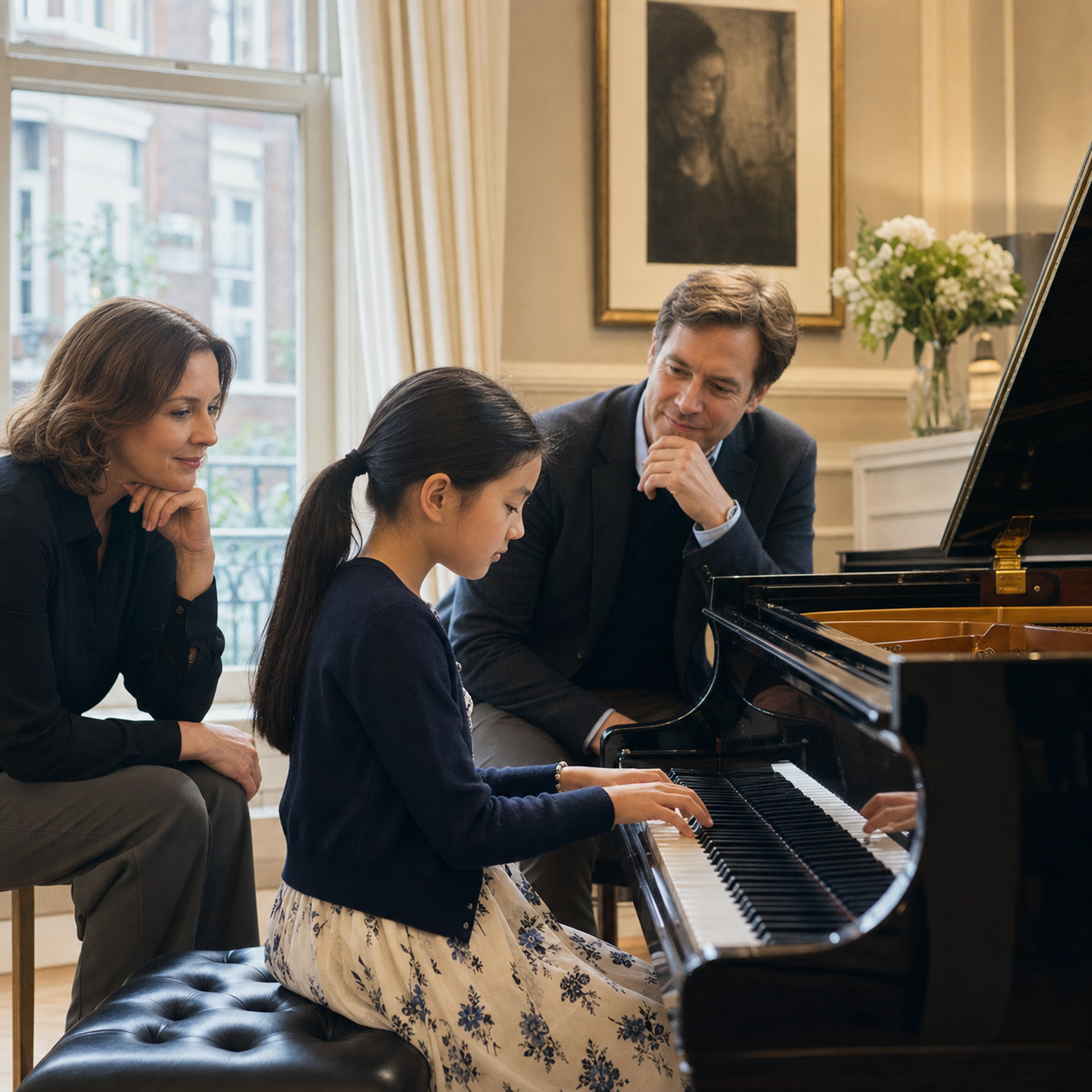
Begin with the rules, then consider the culture. A well-chosen young pianist competition should fit the child’s present musical life. Is the event local or international, live or video-based, single-round or multi-stage? Does the category specify an age, grade, programme length or repertoire period? Who adjudicates, what feedback is provided, and may teachers or parents attend?
London Youth Piano Competition publishes category, prize and application information on its official site [3]. Treat any current date, fee or repertoire rule as time-sensitive and read the organiser’s page in full; event details were last checked on 22 July 2026. Conservatoire junior departments show the broader context. The Royal Academy of Music describes wellbeing and excellence as joint priorities in Junior Academy [4], while the Royal College of Music Junior Department combines individual lessons, musicianship, ensemble work and performance for students aged 8–18 [5]. Competition is one part of a musical education, not the whole of it.
What adjudicators are listening for
Most panels are listening for musical coherence: reliable notes and rhythm, a convincing pulse, tonal control, phrase shape, stylistic awareness and communication. The precise weighting varies, so families should read the published rules. A child should never be told that a dramatic gesture will compensate for unstable basics, nor that technical accuracy alone guarantees a result.
| Area | What to prepare | What to avoid |
|---|---|---|
| Security | Stable pulse and a recovery plan after slips | Restarting whenever a note is missed |
| Sound | Tone, voicing, balance and pedalling suited to the piece | Playing louder simply to appear confident |
| Communication | Clear character, direction and endings | Borrowed gestures without musical purpose |
If the repertoire is still changing every week, wait. A competition programme should fit the child’s present technique and musical imagination. WKMT’s guide to piano exam preparation in London is useful for families building the same habits of steady preparation and performance continuity.
A healthy twelve-week preparation plan
A healthy young pianist competition plan narrows the task gradually. It does not keep the child at maximum intensity for three months.
Confirm rules and edition. Establish fingering, rhythm, structure and realistic tempo. Record one baseline play-through.
Refine sound and phrasing. Practise starts, joins and endings. Perform for one trusted listener.
Run the complete programme, then repair only what the recording reveals. Rehearse on another piano if possible.
Reduce volume. Protect sleep, movement and ordinary family life. Keep the last lesson reassuring and specific.
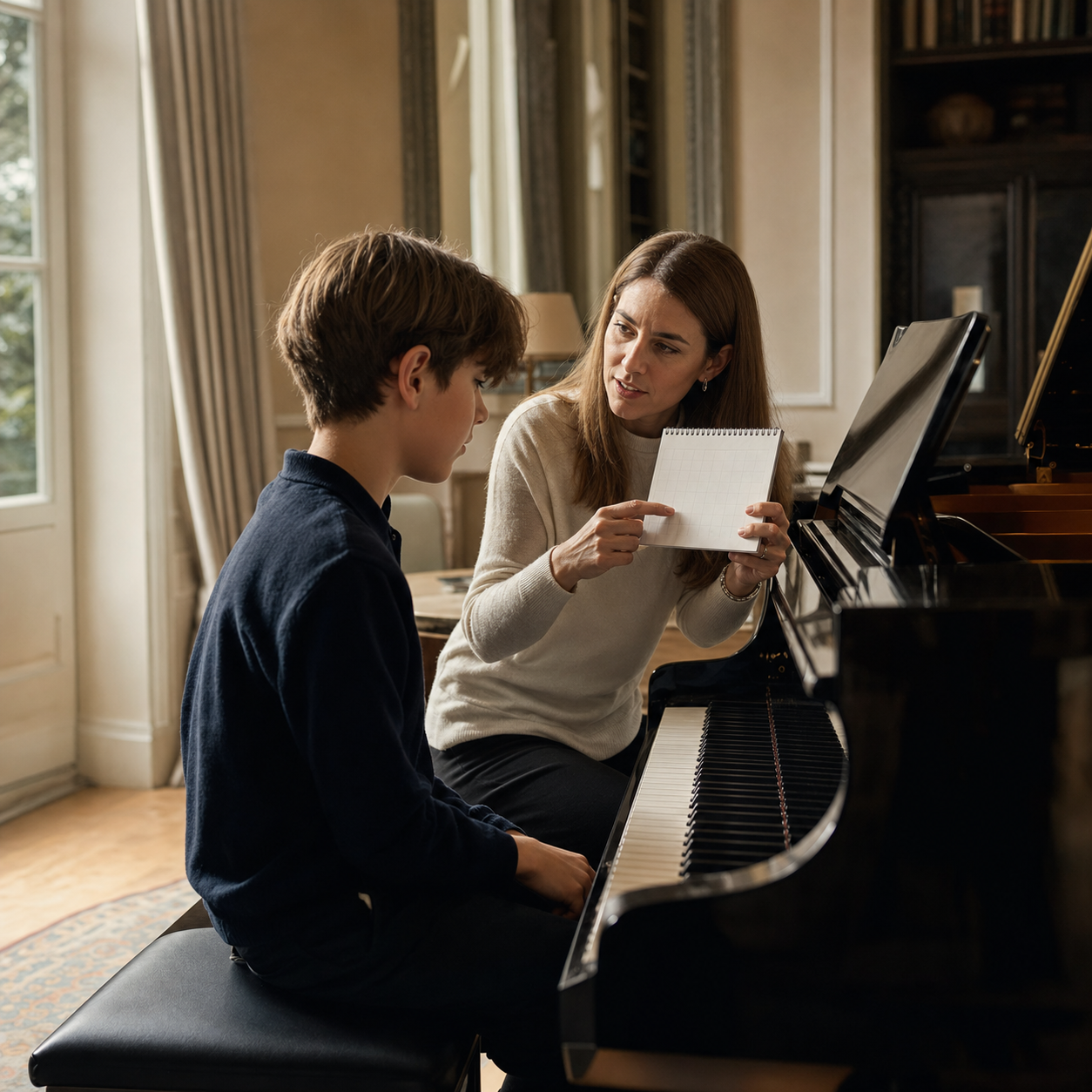
A specialist teacher should be able to explain why the event suits the child, choose repertoire without overreaching, plan mock performances and discuss results without inflating or diminishing them. Ask how often the pupil will perform before the event, how memory slips will be handled and what learning goal remains if no prize is awarded.
Performance day and video auditions
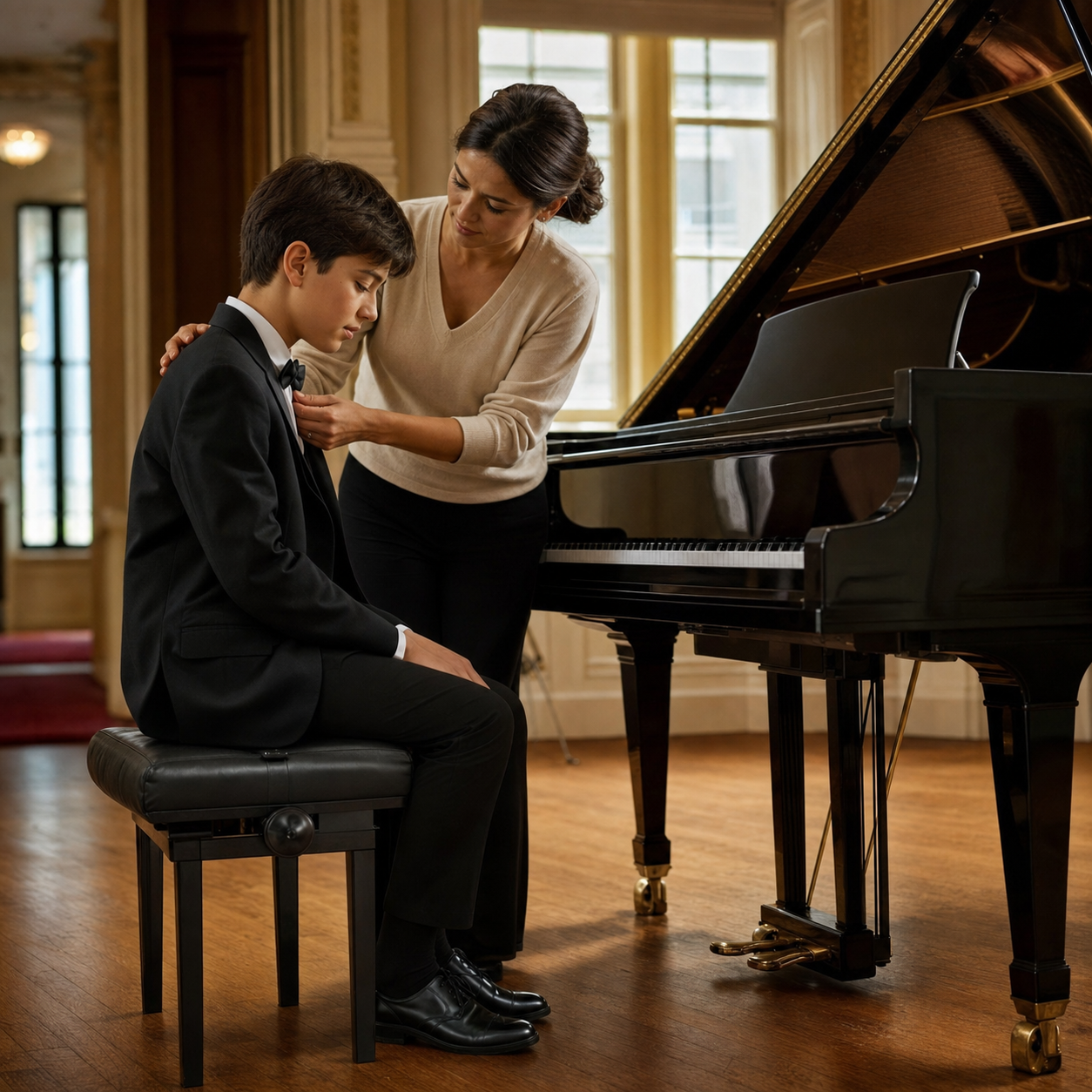
On young pianist competition day, plan the journey, arrival time, food, clothing and warm-up before the final week. Bring original scores if rules require them. Keep the warm-up short and familiar; performance day is not the moment for a new fingering or interpretative lecture.
For video entry, follow the organiser’s technical rules exactly. Check whether editing is forbidden, whether the camera must show the whole body and instrument, and which file format or platform is required. Place the camera where hands, keyboard and posture are visible, but do not sacrifice clean audio by standing too far away. Record a test on the same device, listen through headphones, remove background noise and confirm the complete file before uploading.
Before: “Your job is to tell the musical story and continue if anything changes.” After: “What felt strong? What did you notice? What would you like to try next time?”
Confidence, nerves and the result
Nervousness is not proof that a child is unready. Research with young amateur musicians distinguishes more general anxiety from the anxiety attached to a specific performance situation [6]. That distinction is helpful: some pupils settle once they know the room and routine; others need broader support. Persistent panic, sleep disruption, physical symptoms, avoidance or harsh self-criticism deserve attention beyond “more practice”. Speak with the teacher and, where appropriate, a qualified health professional.
Parents influence the meaning of the result. Avoid public post-mortems, comparisons with other children and promises attached to prizes. Read adjudicator comments after the child has eaten and rested. Sort feedback into three boxes: keep, explore with the teacher, and set aside. Not every comment has equal relevance to the pupil’s long-term development.
Do not rush into the next competition to repair disappointment. Return to repertoire chosen for pleasure, chamber playing, improvisation or a studio event. WKMT’s London piano masterclasses and music festival culture can broaden performance experience beyond ranking alone.
Build competition readiness through secure lessons
A thoughtful competition plan begins long before the application form: repertoire that fits, reliable technique, healthy practice and regular chances to play for others. WKMT teachers help young pianists prepare without letting the event eclipse their wider musical development.
WKMT is a London piano school with a broad classical teaching culture. Families can learn more about the studio’s approach from the WKMT London homepage, while keeping the children’s lesson page as the practical destination for a young learner.
Frequently asked questions
What age should a child enter a first piano competition?
There is no universal age. Choose by readiness: a secure piece, willingness to perform, ability to recover from slips and enough emotional distance to treat results as feedback rather than identity.
Should a first competition piece be difficult?
No. For a first young pianist competition, a slightly easier piece played with control, shape and character usually teaches more than an over-ambitious work that consumes every lesson and remains unstable.
How should parents respond if their child does not place?
Let the child decompress, name what went well, read feedback later and agree one or two useful next steps with the teacher. Do not compare rankings or enter another event immediately to erase the feeling.
Sources on Young Pianist Competition
- ABRSM, Performance Grades marking criteria, last checked 2026-07-22.
- Trinity College London, Overall performance criteria
- London Youth Piano Competition, official competition information
- Royal Academy of Music, Junior Academy
- Royal College of Music, RCM Junior Department
- Spahn, Tenbaum, Immerz, Hohagen and Nusseck, Dispositional and performance-specific music performance anxiety in young amateur musicians, Frontiers in Psychology (2023)
- WKMT, Piano lessons for kids