
 TRIAL LESSON
Piano Lessons
Piano Prodigy: A Parent’s Guide to Talent, Pressure and Healthy Progress
Jul
Piano Prodigy: Parent Guide to Talent and Wellbeing
WKMT parent guide
Piano Prodigy: A Parent’s Guide to Talent, Pressure and Healthy Progress
A child who learns with unusual speed needs perceptive teaching, ordinary childhood pleasures and adults who value the person more than the performance.
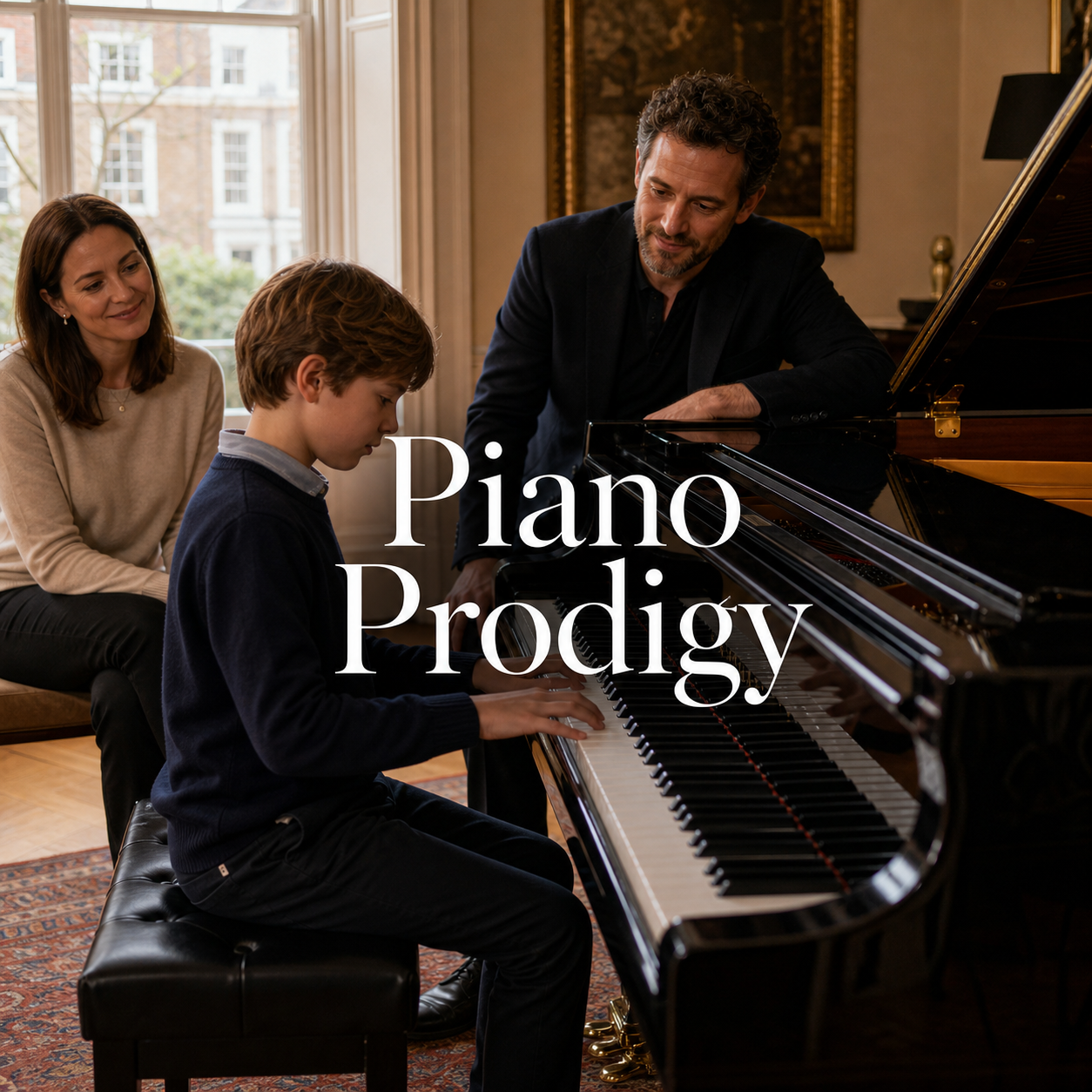
The phrase piano prodigy can feel thrilling and frightening at once. Parents may notice an exact musical memory, rapid imitation, an appetite for harmony or a striking ability to shape a phrase. Those observations deserve attention, but no single party trick proves a rare developmental profile. The useful question is not, “Is my child a genius?” It is, “What kind of musical environment will help this child remain curious, healthy and steadily challenged?”
This guide offers a measured answer. It explains what unusual aptitude can look like at different ages, how teachers distinguish deep musicianship from quick copying, how parental pressure changes the experience, and when London pathways may be appropriate. For most families, thoughtfully structured piano lessons for children in London are the right foundation: the label matters less than the quality of the learning.
Look for memory, listening, invention and transfer across several months, not one polished piece.
Keep praise unconditional, preserve rest and friendships, and let the child own musical goals.
Seek a teacher who develops reading, ear, technique, imagination and musical independence together.
What “piano prodigy” should mean in family life
Historically, a prodigy is a child whose output in a demanding field approaches an unusually mature level. That is a far stronger claim than being ahead of classmates, learning early or winning a local prize. Musical development is uneven: a child may have an extraordinary ear and ordinary reading, remarkable memory and immature physical coordination, or brilliant spontaneity with little patience for repetition.
A responsible assessment therefore looks for a cluster of abilities. Can the child retain music after hearing it? Do they recognise relationships between keys or patterns? Can they transfer an idea from one piece to another? Do they invent convincing endings, vary a phrase or solve a fingering problem? Most importantly, does the interest persist without constant adult prompting?
Keep an observation note for eight to twelve weeks. Record what the child chose to do, what they remembered, what they changed creatively and how they responded when something was difficult. This is more informative than collecting impressive anecdotes.
Piano prodigy signs by age: what to notice
Age changes the meaning of the evidence. Physical growth, language, attention and previous exposure all matter, so comparisons between children should remain cautious.
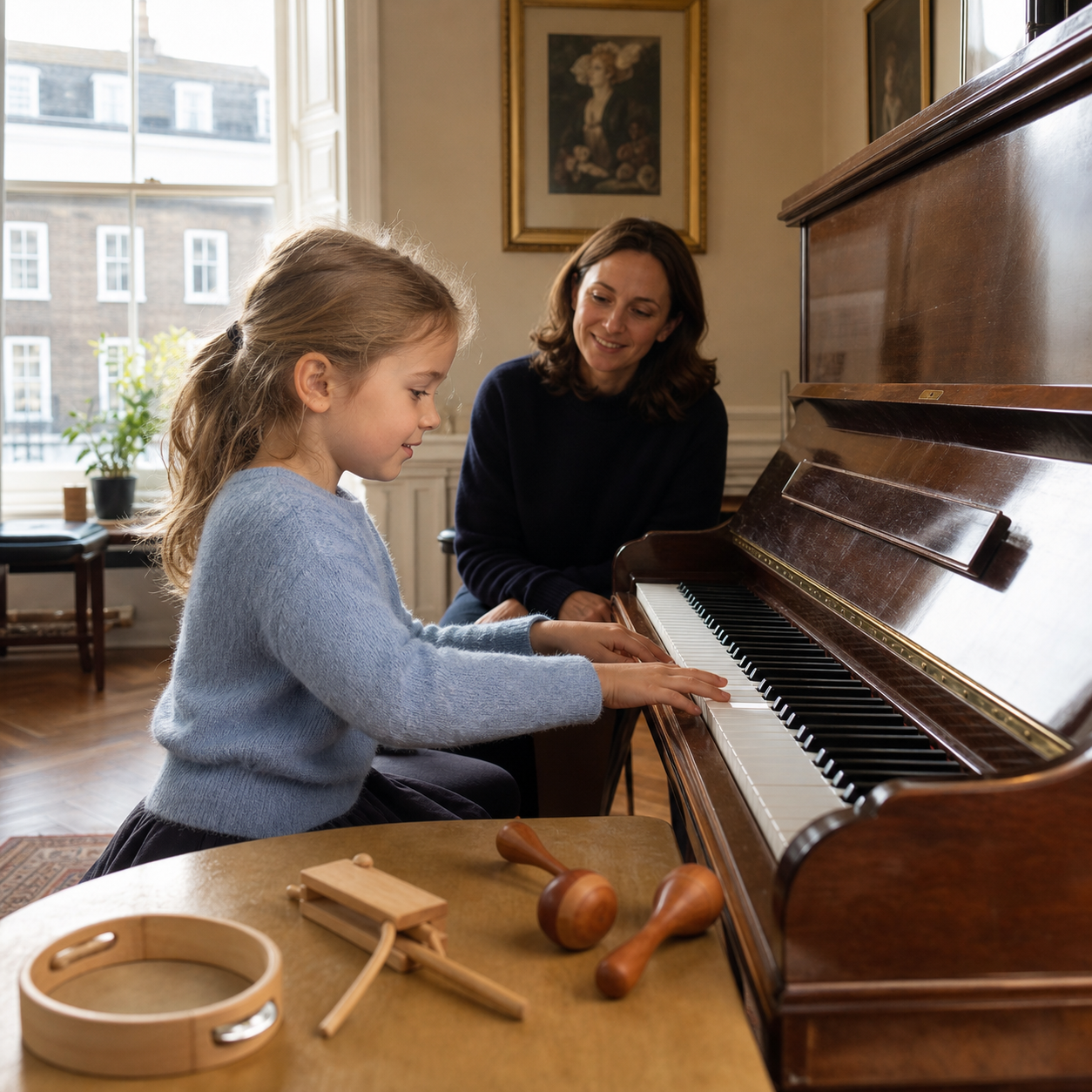
None of these signs requires a child to practise for adult hours. A six-year-old who returns to the piano voluntarily and listens intensely may reveal more than one who performs a difficult piece through heavy coaching. Equally, a late-starting child can develop exceptional musicianship. Early visibility and long-term potential are related imperfectly.
Deep aptitude or a precocious beginning?
Fast imitation can be impressive while remaining narrow. Deep aptitude becomes visible when the child understands and transfers. A skilled teacher changes the task gently: asks for the phrase in another key, removes the demonstration, introduces an unfamiliar pattern, invites an improvised answer or returns to the material after a week. The aim is not to catch the child out, but to discover how learning works.
| Evidence | Promising depth | What needs context |
|---|---|---|
| Memory | Retains structure and can restart from several places | One piece memorised through constant repetition |
| Ear | Recognises patterns and transfers them to new music | Exact copying immediately after a demonstration |
| Technique | Coordinates movement efficiently and adapts to new textures | Speed achieved with tension or a rehearsed trick |
| Imagination | Makes coherent expressive choices and can vary them | Gestures borrowed without understanding |
Wellbeing before achievement
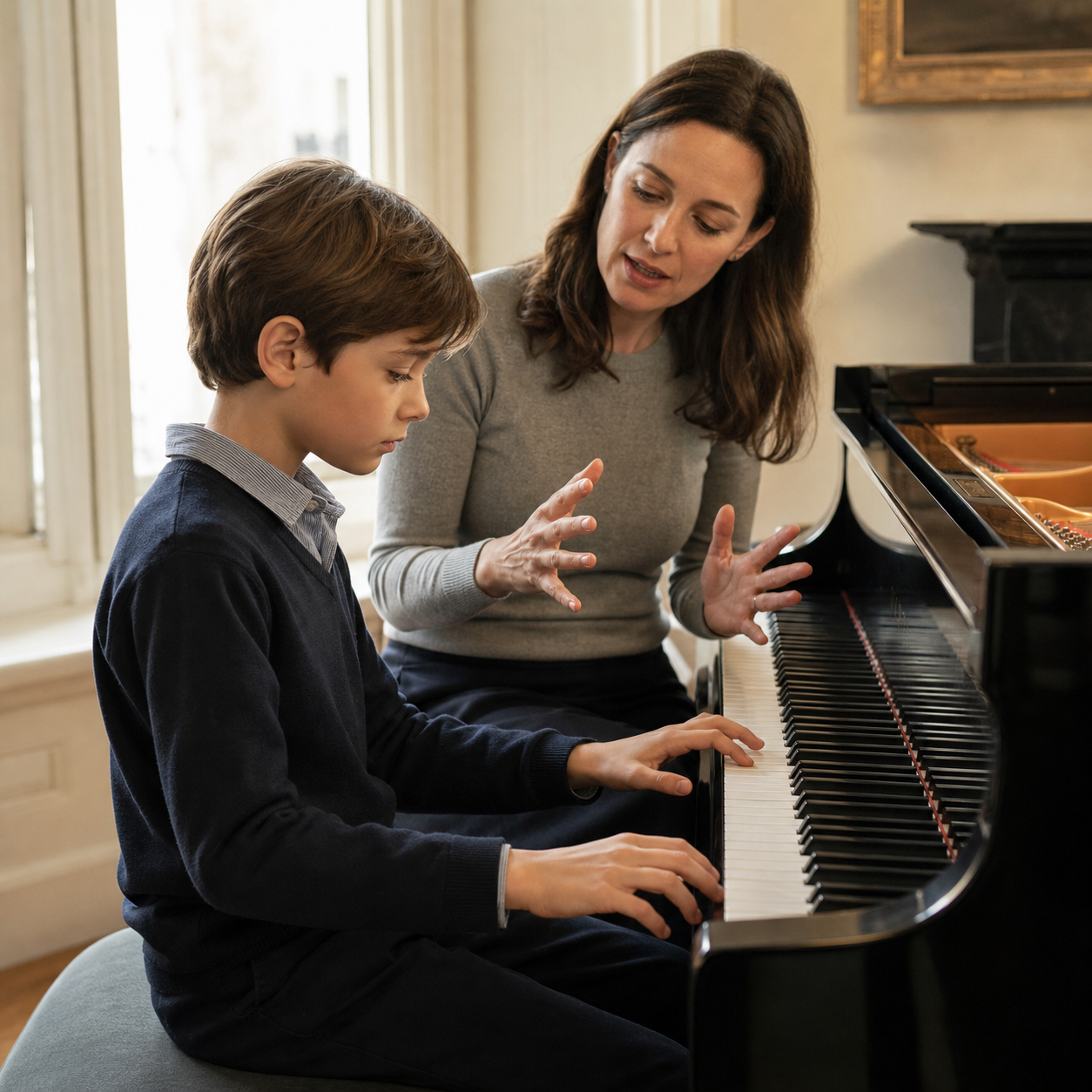
Research on music performance anxiety makes parental climate impossible to ignore. A 2023 study of parenting experiences and performance anxiety found that themes of high expectations, criticism, control and conditional approval appeared prominently in accounts of severe anxiety; the authors are careful not to claim simple causation, but the pattern matters for families and teachers [1]. Another 2023 study of piano pupils aged 11–17 found that age, self-esteem, practice time and parents’ own musical education were associated with performance-anxiety measures [2].
Healthy support is active without becoming controlling. Parents can provide transport, a predictable practice window, food, sleep, concert experiences and sympathetic listening. They should avoid comparing siblings, turning every visitor into an audience, bargaining affection for results or making a child’s musical status the centre of family identity.
Pause and speak with the teacher if sleep changes, stomach aches cluster around lessons, mistakes trigger panic, schoolwork or friendships are squeezed out, or the child says they are playing mainly to prevent adult disappointment.
Practice should expand capacity rather than prove worth. Build in stopping points, movement, days of lighter work and music chosen for pleasure. Small performances can develop confidence when the child agrees to them and the debrief centres on communication and learning. WKMT’s guidance on preparing a first music performance offers a useful next stage when public playing becomes appropriate.

Choosing a teacher and a London pathway
The right teacher combines musical authority with developmental judgement. Ask how they assess listening, reading, technique and creativity; how they handle a child who learns quickly but resists detail; how they protect posture and coordination during growth; and how they communicate with parents without talking over the pupil. For work with children, safeguarding practice and appropriate background checks are basic professional expectations.
Beware of anyone who promises a fixed route to fame, uses fear as motivation or treats exams and competitions as proof of personal value. A strong teacher can recommend a slower season, broader repertoire, chamber music or composition. They can also say when an external audition would be educational.
A first consultation should feel like a musical conversation, not an audition for family prestige. Let the child play something comfortable, try a short unfamiliar task and talk about what they enjoy. The teacher should notice strengths while remaining curious about gaps. If the phrase piano prodigy arises, ask what observable evidence supports it and what would change in the teaching plan. Often the answer should be modest: richer material, closer listening and more room for independent thought, not a dramatic increase in workload. A sound plan is revisited as the child grows. Hands change, interests widen and school demands shift; a pathway that was right at eight may need rebalancing at ten.
- Secure the weekly foundation: balanced individual teaching, broad repertoire and healthy home support.
- Add low-pressure musicianship: ensemble playing, theory, composition, masterclasses and small concerts.
- Seek an external opinion: a trusted specialist can assess readiness without requiring a label.
- Consider advanced provision: only when the child wants the commitment and the whole programme fits family life.
London’s specialist options include the Royal Academy of Music Junior Academy, the Royal College of Music Junior Department and Junior Guildhall. Their current official pages describe broad programmes rather than piano lessons alone: individual study sits alongside musicianship, ensemble work and performance [3][4][5]. Ages, auditions, fees and deadlines change, so consult each institution directly; details were last checked on 23 July 2026. GOV.UK also lists the Music and Dance Scheme and Centres for Advanced Training, with income-assessed support routes for eligible families [6]. Access should be discussed early, not treated as an afterthought.
Build the right foundation for your child
A calm assessment can clarify strengths, gaps and the next appropriate challenge without attaching a grand label. WKMT’s structured teaching keeps musicianship, technique, confidence and childhood wellbeing in the same conversation.
Two family stories and three persistent myths
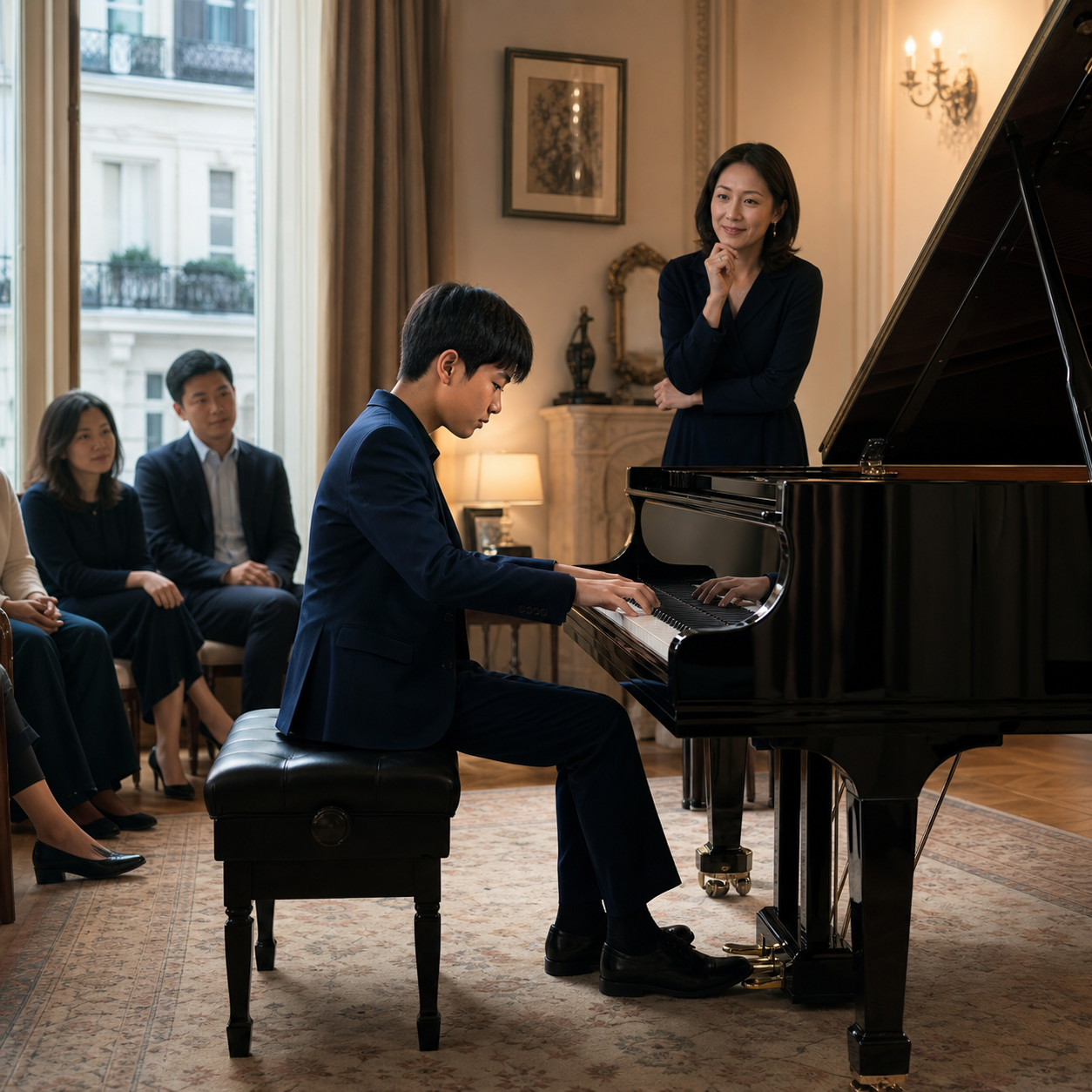
The quick learner. An eight-year-old arrived able to reproduce long passages after one hearing. A broader assessment showed a remarkable ear but hesitant reading and tension at speed. The wisest plan did not accelerate repertoire. It developed notation, free improvisation and easy coordination, allowing the ear to become part of a complete musicianship.
The late-visible musician. An eleven-year-old seemed ordinary during the first months, then began making unusually perceptive structural and tonal choices. With time, she became an independent, thoughtful performer. The story is a reminder that potential is not always loud or early.
- Myth: exceptional children need relentless hours. Quality, recovery and physical ease matter; volume without judgement can consolidate tension and fear.
- Myth: prizes confirm the label. Results reflect one performance, category and panel. They do not measure the whole musician.
- Myth: a serious pathway must lead to a solo career. RCM notes that many junior pupils choose other careers [4]. Deep musical education remains valuable in performance, teaching, composition and life beyond the profession.
Frequently asked questions
Should I tell my child they are a piano prodigy?
Describe what you genuinely observe: unusual memory, curiosity, expressiveness or speed of learning. Avoid making a fixed identity that the child must continually defend.
When should we consider a junior conservatoire?
When the child wants a broader, demanding programme; the weekly workload remains healthy; their teacher supports the move; and the family understands travel, finance and schooling implications. Read current audition guidance from each institution.
Are graded exams necessary?
No single exam sequence defines exceptional musicianship. Exams can provide useful goals and external feedback, but repertoire, ear, creativity, ensemble skill and wellbeing should remain broader than a grade. WKMT’s overview of UK music examination boards can help families compare routes.
Sources and further reading on Piano Prodigy Guide
- Kirsner, Wilson and Osborne, Music performance anxiety: parenting experiences and cognitive schemas, Frontiers in Psychology
- Ryan, Boucher and Ryan, Practice, Performance, and Anxiety, Music & Science
- Royal Academy of Music Junior Academy course.
- Royal College of Music Junior Department.
- Junior Guildhall courses and programmes.
- Music and Dance Scheme funding, GOV.UK.
- Piano lessons for kids, WKMT London.