
 TRIAL LESSON
Uncategorized
Piano Nursery Rhymes: Playful First Songs for Young Beginners
Jul
Piano Nursery Rhymes: First Songs Guide
WKMT parent guide
Piano Nursery Rhymes: Playful First Songs for Young Beginners
Piano nursery rhymes give very young beginners something precious: a tune they can sing before they can read, feel before they can count, and shape at the keyboard before piano study becomes formal.
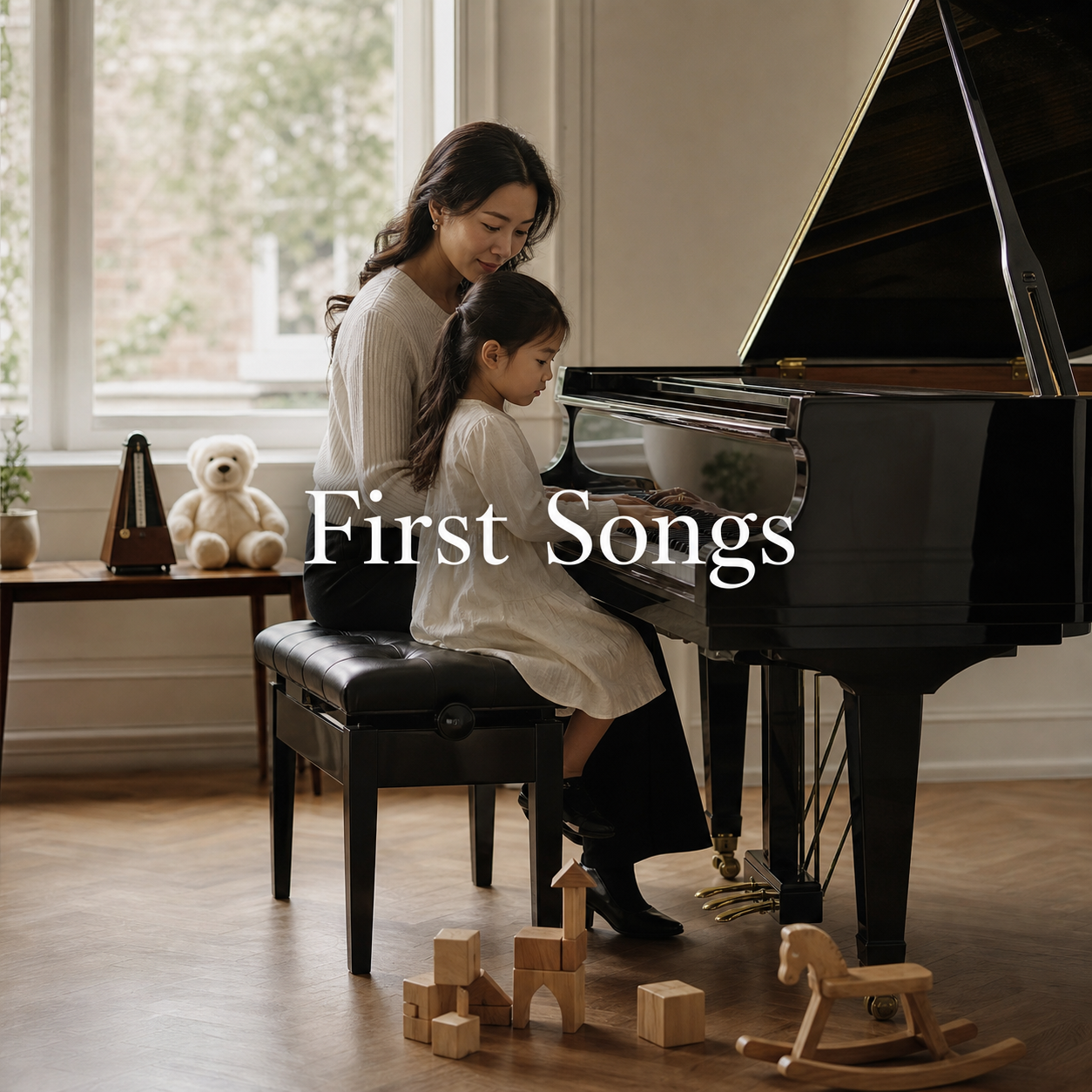
Parents of children aged roughly 3-7, plus teachers planning first keyboard activities.
Singing, clapping, one-finger melody, then two or three fingers once the pulse is steady.
Use rhymes as musical play, then move into structured children’s piano lessons.
Parents often ask whether a small child should begin with scales, reading, or a book. The answer is usually more musical than that: begin with a song the child already owns in the ear. A nursery rhyme shortens the distance between imagination and the keyboard. The child can sing the tune, tap the rhythm, find the direction of the melody, and enjoy a recognisable result before the lesson turns into a test of literacy.
This guide gives parents and young beginners a practical route into piano nursery rhymes: why they work, how to set up the instrument, twenty first-song ideas with simple note patterns, and how to move from playful melodies into early pieces, Prep Test-style musicianship and Initial-level confidence. For London families who want this handled gently and progressively, WKMT’s structured piano lessons for children in London turn these first songs into secure technique, listening and musical independence.
Why nursery rhymes work for early piano learning
Nursery rhymes sit at the point where language, rhythm and memory meet. The National Literacy Trust describes nursery rhymes as valuable for early language, confidence, and preparation for reading and writing [1]. In piano lessons, the same qualities become musical assets. A child who can chant a rhyme can usually feel a pulse. A child who knows where the tune rises and falls can begin to hear melodic shape. A child who can copy a short phrase can start building the coordination needed for keyboard playing.
For toddlers and preschool children, this matters because the first piano experience should not depend only on sitting still. The current early years framework expects children to sing familiar songs and rhymes, perform them with others, and move in time with music [2]. Piano can serve that developmental world beautifully when it begins with voice, movement and touch.
A nursery rhyme is not a shortcut around musicianship. It is musicianship in miniature: pulse, phrase, memory, pitch direction, character and turn-taking all appear inside a few bars.
Quick guide: what you need
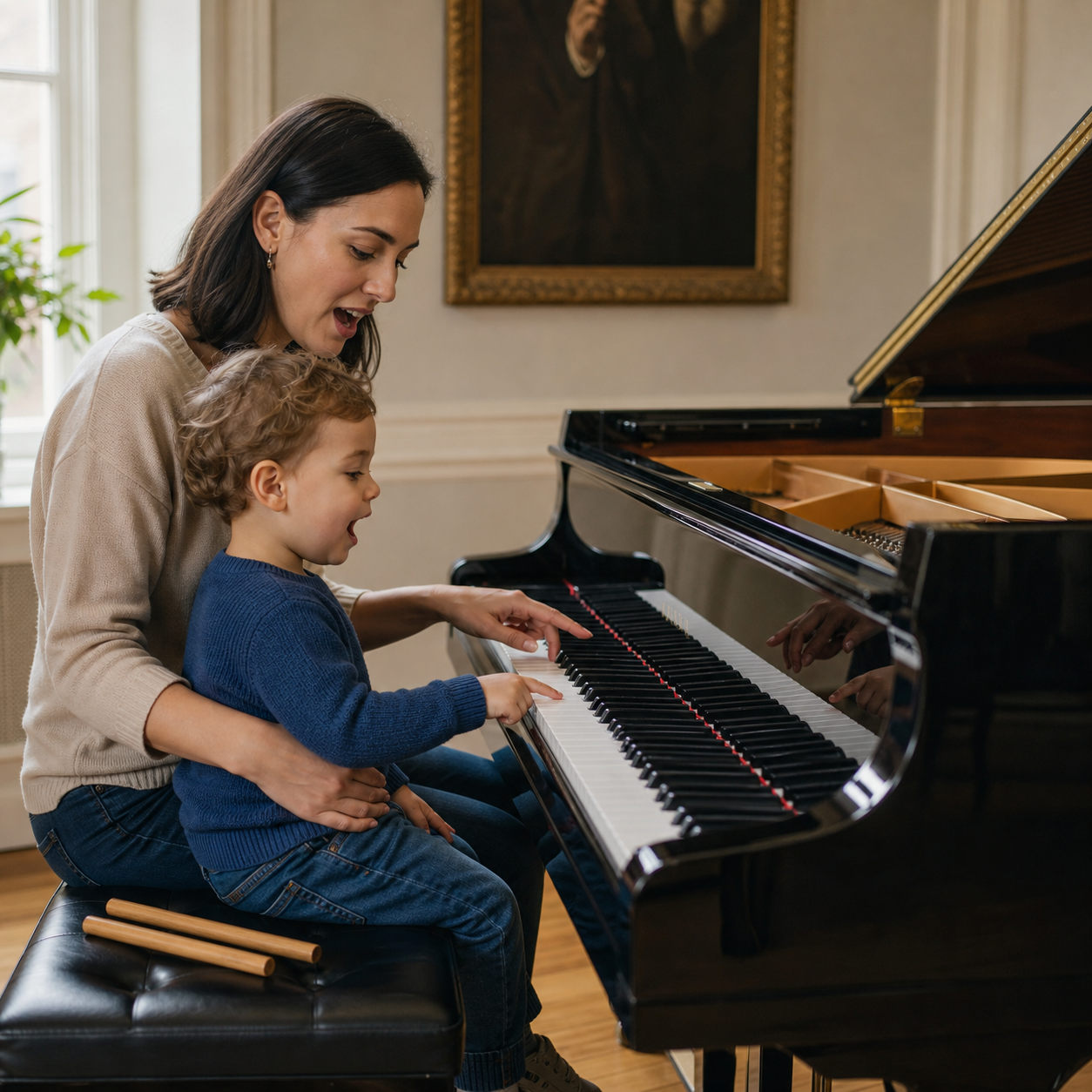
A young beginner does not need a concert instrument at home, but the keyboard must invite good habits. An acoustic piano is ideal when it is tuned and comfortable. A digital piano should have touch-sensitive keys; 61 keys can be enough for playful exploration, while 76 or 88 keys gives more room as lessons become regular. Avoid toy keyboards with tiny keys if the child is expected to develop hand shape and finger control.
Seat height matters more than parents expect. The child’s forearm should not drop steeply below the keyboard, and feet should rest on a box or stool if they cannot reach the floor. Begin with three to seven minutes, not half an hour. A short, repeated musical moment is better than one heroic session that leaves everyone tired.
20 best piano nursery rhymes for young beginners
The patterns below are deliberately simple. They are not full concert arrangements; they are first-contact maps. Use right hand finger 1 for thumb, 2 for index, and so on. Keep every tune slow enough for the child to sing while playing.
Why: secure repeated notes and stepwise motion. Pattern: C C G G A A G, fingers 1 1 5 5 5 5 5. Left hand: C and G bass notes. Tip: sing each phrase before playing.
Why: three-note melody is ideal for ages 3-5. Pattern: E D C D E E E, fingers 3 2 1 2 3 3 3. Left hand: C chord only. Tip: keep the hand still.
Why: strong UK cultural link and clear downward movement. Pattern: G A G F E F G. Left hand: C and G. Tip: ask the child to show when the tune falls.
Why: perfect for first three fingers. Pattern: E D C, E D C, C C C C D D D D E D C. Left hand: C drone. Tip: clap long and short groups first.
Why: compact phrases suit short attention spans. Pattern: G E G G E G, G A G E C. Left hand: C then G. Tip: use soft fingertips and quiet sound.
Why: same opening contour as Twinkle helps transfer learning. Pattern: C C G G A A G. Left hand: C-G-C. Tip: compare with Twinkle, then spot the difference later.
Why: playful animal sounds support rhythm. Pattern: G G G D E E D, B B A A G. Left hand: G and D. Tip: let the child choose one sound between phrases.
Why: legato phrasing becomes natural. Pattern: C C C D E, E D E F G. Left hand: C broken fifth. Tip: play like one smooth breath.
Why: rhythm and clock-like pulse are obvious. Pattern: G C C D E, G E C. Left hand: C repeated beat. Tip: use a gentle tick-tock tap before playing.
Why: speech rhythm maps well to musical rhythm. Pattern: C C E G G E C, D D F A A F D. Left hand: C and G. Tip: speak rhythm, then play.
Why: rising shape is easy to dramatise. Pattern: C C D E E D C D E. Left hand: C then G. Tip: move fingers upward like climbing, without lifting the wrist.
Why: descending three-note idea is memorable. Pattern: E D C, E D C, G F F E. Left hand: C chord. Tip: keep it slow and avoid rushing the repeated fall.
Why: London reference gives local colour. Pattern: C D E C, C D E C, E F G. Left hand: C and G. Tip: make the bell-like notes rounded.
Why: simple canon idea for older beginners. Pattern: C D E C, C D E C, E F G. Left hand: C drone. Tip: parent sings a second entry for fun.
Why: lively pulse for ages 5-7. Pattern: C C D E C E D, C C D E C B. Left hand: C and G. Tip: march the beat before sitting down.
Why: gentle lyrical playing. Pattern: G A G E, G A G E, D E F G. Left hand: C broken chord. Tip: ask for a singing tone, not speed.
Why: phrase endings are clear. Pattern: G E E F D D, C D E F G. Left hand: C and G. Tip: breathe at the end of each small sentence.
Why: surprise ending supports listening. Pattern: C C D D E G E, C C D D E C. Left hand: C-G. Tip: leave a tiny silence before the surprise note.
Why: circular rhythm helps group playing. Pattern: G G E E F F D, C D E F G. Left hand: C drone. Tip: play after walking in a circle.
Why: comic imagery keeps attention alive. Pattern: C D E G, G E D C, E F G. Left hand: C then G. Tip: choose one phrase and make it characterful.
For printable references, MakingMusicFun maintains nursery rhyme and beginner piano sheet music indexes [3][4]. Treat printouts as support, not the centre of the lesson. With small children, the ear leads; paper follows.
Progression path: from nursery rhymes to first pieces
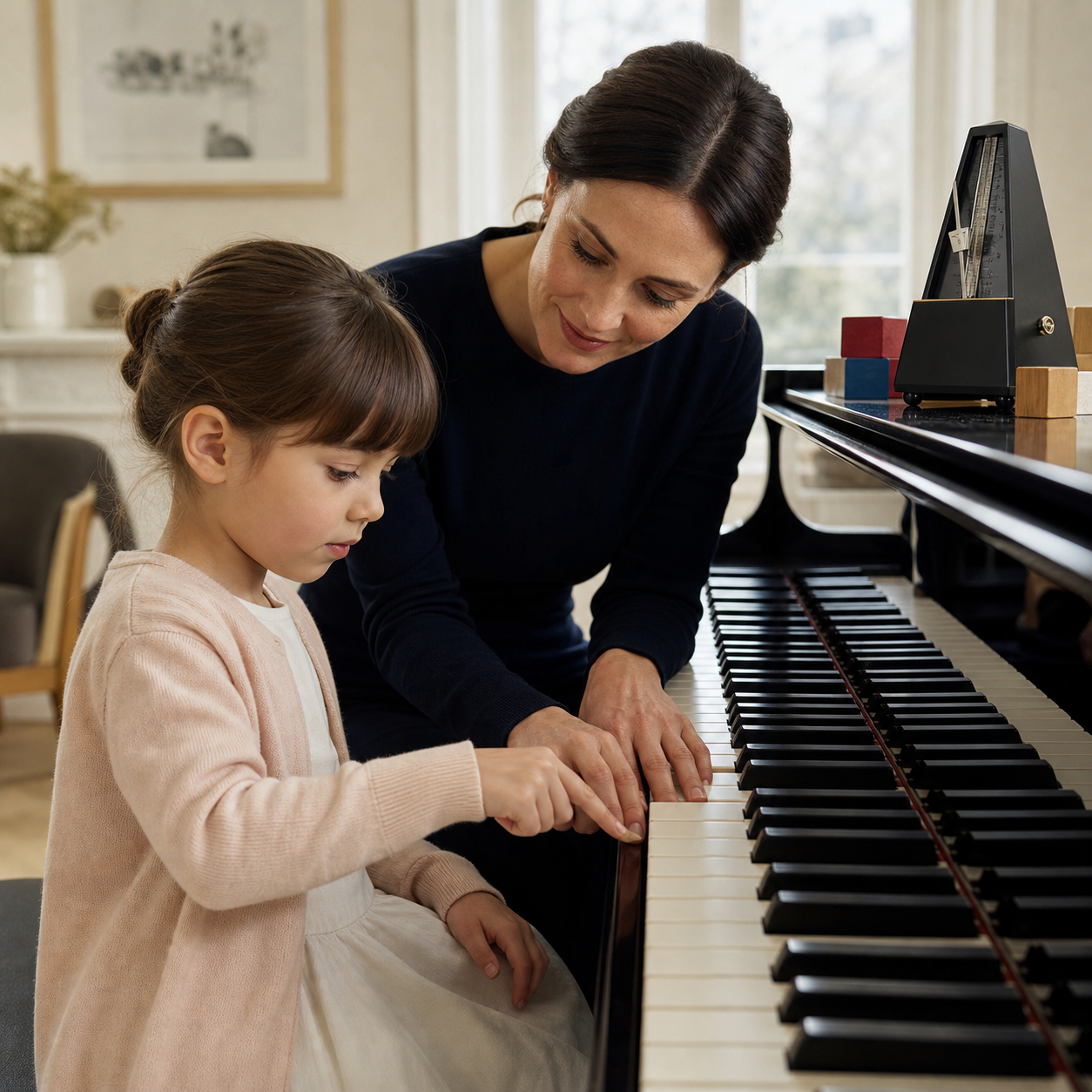
Once a child can sing and play a small tune calmly, the next stage is not to make everything harder at once. Add one new musical responsibility at a time. First, ask for a steady beat. Then ask for a rounded hand. Then add a left-hand drone. Later, introduce a blocked chord, a two-bar phrase, a quiet ending, or a simple duet part with the teacher.
ABRSM describes its Prep Test as a short first assessment focused on musical skills, with no pass or fail [5]. Trinity College London lists Piano Initial as the first graded step, with repertoire for face-to-face and digital exams from 2023 [6]. Nursery rhymes are not exam pieces by default, but they prepare the behaviours behind early assessment: listening, pulse, memory, phrase endings, coordination and confidence in front of another adult.
Printable and free resources
Use printable sheets selectively. A child who loves drawing may enjoy colouring notes; a child who learns by imitation may prefer watching the teacher’s hand and copying by ear. Good resources include MakingMusicFun’s nursery rhyme piano index and wider beginner piano index [3][4], ABRSM’s beginner pathway and Prep Test information [5], and Trinity’s Piano Initial page for families thinking ahead to a formal first assessment [6].
Do not turn every familiar tune into homework. Pick one rhyme per week, play one phrase beautifully, and let the child leave the piano while the song still feels successful.
London and cultural connections
Some nursery rhymes carry their own local atmosphere. London Bridge lets a child connect musical descent with a real London image. Oranges and Lemons evokes city bells and historic neighbourhood sound. These associations should be handled lightly; the goal is not a history lecture, but a sense that music belongs to the child’s world.
At WKMT, this local thread can continue through lessons, studio events, informal performances and the discipline of regular musical contact. A child who begins by finding the shape of London Bridge may later play in a student concert, prepare a first exam, or join a broader musical community through WKMT’s London music festivals and piano masterclass culture.
A calmer route into children’s piano lessons
If your child enjoys singing, copying, tapping or making up endings, nursery rhymes can become the bridge into proper piano study. WKMT teachers help families turn these first songs into posture, listening, rhythm and confident weekly progress.
FAQs
What age can a child start piano nursery rhymes?
Many children can begin singing, tapping and finding single notes from around three or four, but readiness varies. A formal lesson routine usually works best when the child can copy a short instruction, listen for a few minutes, and enjoy repetition without pressure.
Should parents write note names on the keys?
Use key labels sparingly, if at all. They can help in a short activity, but they often prevent children from learning the keyboard’s geography. Black-key groups, singing direction and repeated patterns are stronger long-term tools.
Do nursery rhymes delay proper piano technique?
No, provided they are taught musically. A skilled teacher can use a simple rhyme to develop hand shape, pulse, tone, listening and memory. The danger is not simplicity; the danger is careless repetition.
Sources on piano nursery rhymes
- National Literacy Trust, Nursery Rhymes in the Early Years
- Department for Education / GOV.UK, Development Matters
- MakingMusicFun.net, Nursery Rhyme Piano Sheet Music/li>
- MakingMusicFun.net, Free Beginner and Easy Piano Sheet Music
- ABRSM, Prep Test
- Trinity College London, Piano Initial
- WKMT, Piano lessons for kids