
 TRIAL LESSON
Piano Lessons
Piano Practice Tips for Parents: A Calm Home Routine for Young Learners
Jul
Piano Practice tips for Parents – Complete Guide
WKMT parent practice guide
Piano Practice Tips for Parents: A Calm Home Routine for Young Learners
Piano practice tips for parents work best when they make the week calmer, not heavier. The goal is a home routine a child can repeat, understand and gradually own.
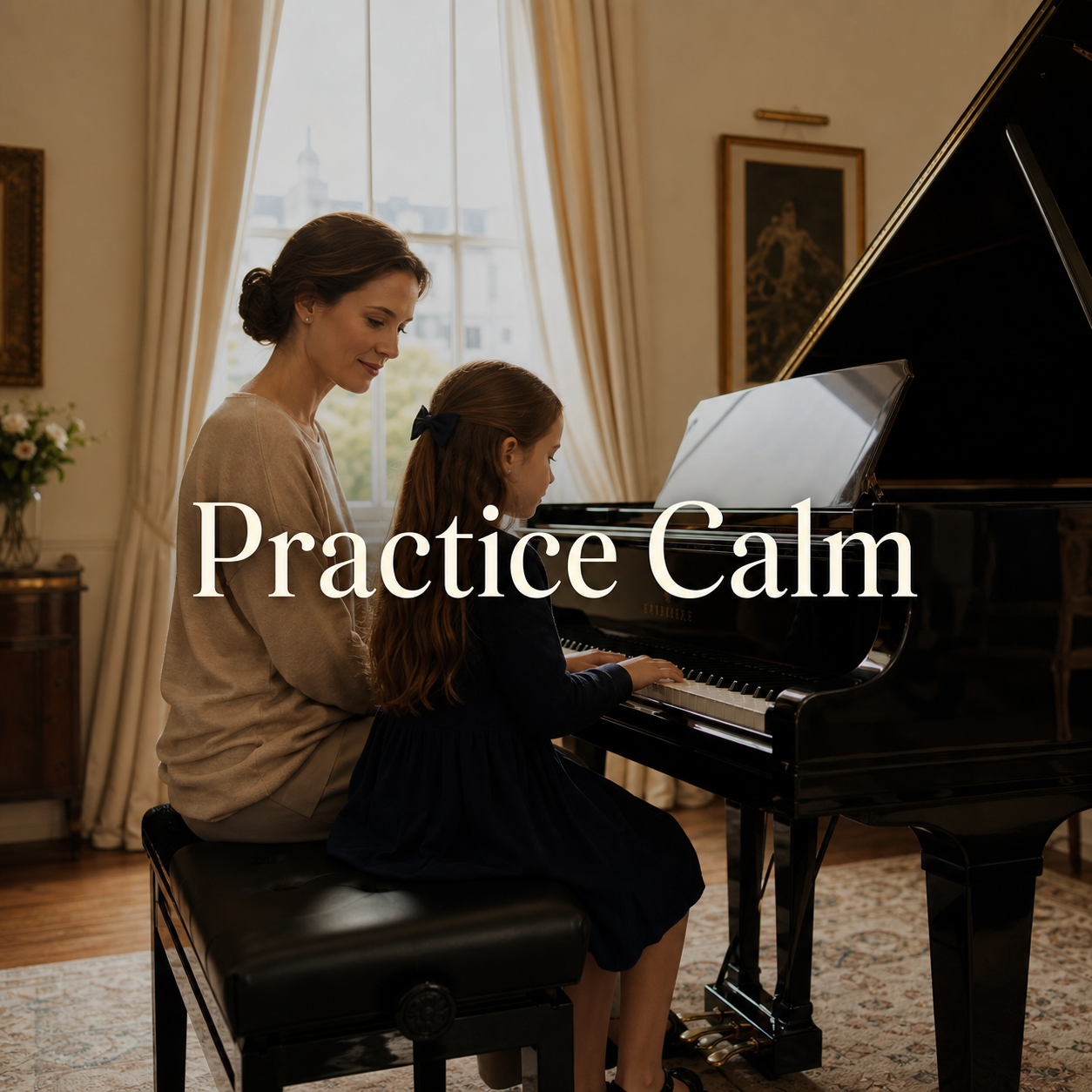
The Practice Problem Most Parents Actually Have
Most families do not fail because a child lacks talent. They struggle because the lesson is clear on Saturday and the home routine becomes vague by Tuesday. A parent asks for practice, the child hears interruption, and the piano starts to feel like another argument.
The better approach is small, visible and repeatable. The parent protects the setting, the teacher defines the task, and the child learns how to begin without emotional negotiation. For WKMT families considering structured piano lessons for children in London, that weekly bridge between lesson and home is where progress becomes reliable.
Ten focused minutes beat thirty resentful ones.
Practise one bar, one hand, one rhythm, one sound.
Notice accuracy, listening, posture and recovery.
The child must slowly become the musician.
Build the First Ten Minutes
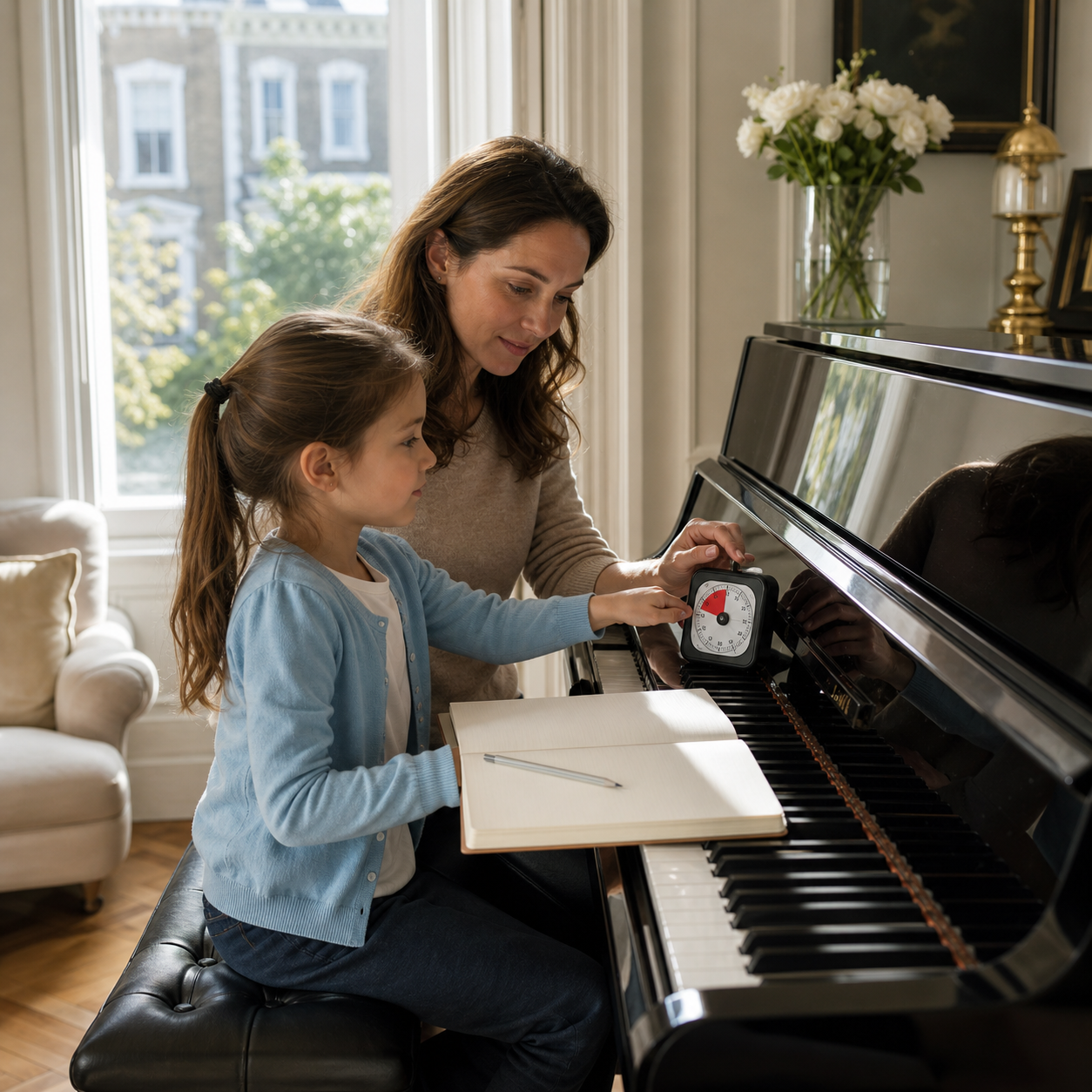
The first ten minutes decide the mood of practice. If the child arrives tired, hungry or already defensive, no clever instruction will help. Choose a consistent time that fits the household: before screens, after a snack, before homework becomes heavy, or at another calm point in the day. Keep the instrument ready, the notebook open, and the pencil nearby.
A young learner should know what beginning looks like. Sit down, breathe, play the assigned warm-up, then tackle the week’s first teacher note. That sequence matters because it removes choice at the point where children are most likely to resist. Good piano practice tips for parents are not elaborate systems; they are small cues repeated until the child can begin without drama.
For Parents
Do not ask, “Do you want to practise?” when practice is already agreed. Try: “Let us do the first ten minutes, then you can show me the best bar.” The wording is quiet, but it tells the child that practice is part of the day rather than a debate.
What to Practise: Turn the Teacher’s Notes into Actions
Many parents listen faithfully but do not know what they are hearing. The solution is to translate the teacher’s notes into actions a child can understand. “Practise the left hand” is too broad. “Play the left hand of bars 5-8 three times slowly, then add the right hand once” is usable. If the notebook is unclear, ask the teacher to write one priority for accuracy, one for sound, and one for rhythm.
For beginners, practice should usually include a small technical pattern, a reading task, a piece, and a listening or singing moment. Children learning through beginner piano foundations need repetition, but repetition must have a purpose. Count aloud, clap the rhythm, name the notes, play one hand alone, or test whether the phrase sounds more even.
How to Encourage Without Becoming the Practice Police
Children hear adult tension very quickly. If every correction arrives with urgency, they learn that the piano is a place where mistakes are dangerous. A parent’s useful role is not to become a second teacher. It is to keep the emotional climate steady and help the child notice what changed.
Replace judgement with evidence. “That was better” becomes “the second attempt kept the rhythm steadier.” “You are not concentrating” becomes “let us try only the first two bars and listen for even fingers.” Children can work with specific information. They often cannot work with adult disappointment.
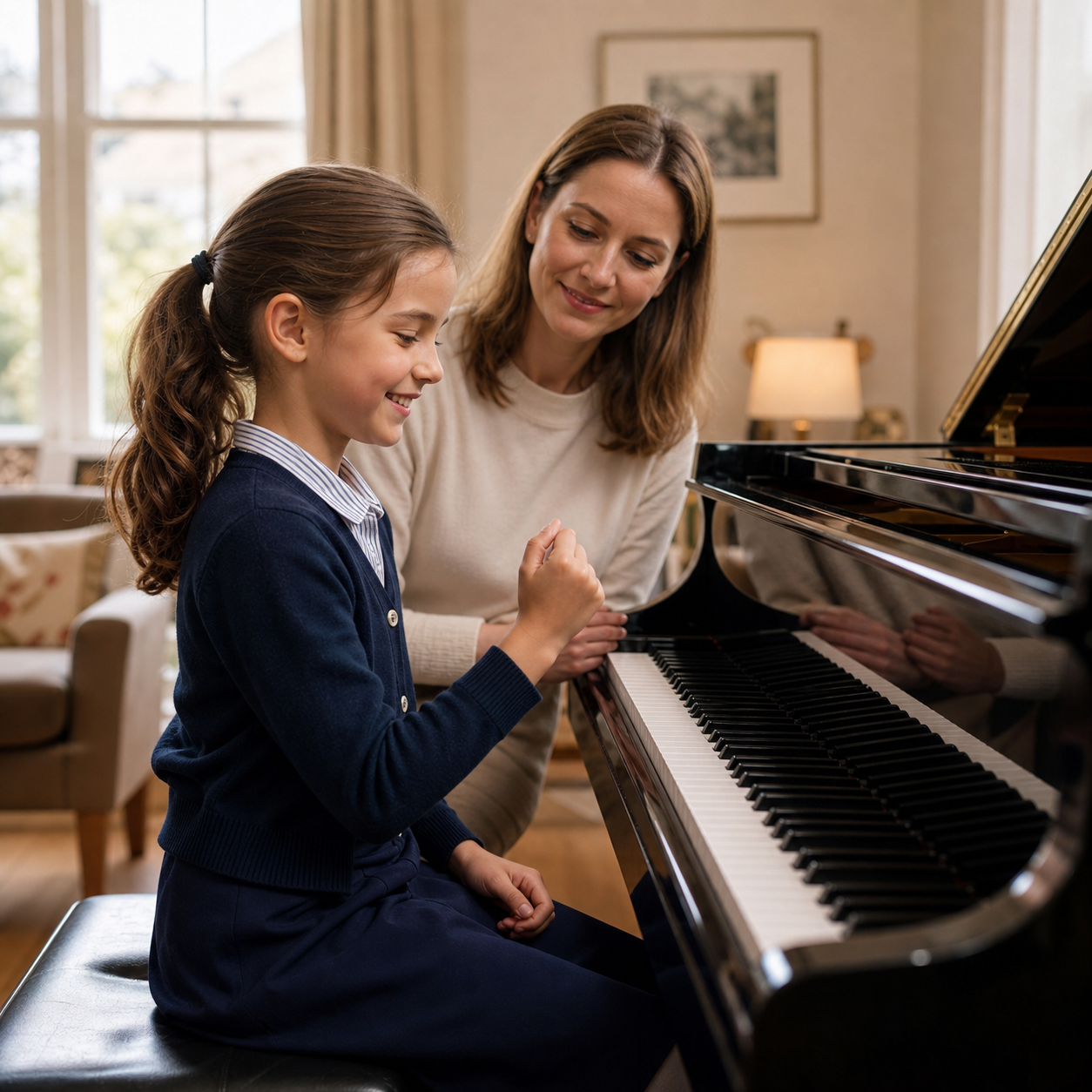
“The best home practice does not make the parent louder. It makes the musical task clearer.”
A Weekly Routine That Fits Real Family Life
Busy London families need a routine that survives school, travel, homework and tired evenings. A good weekly plan has rhythm rather than perfection. After the lesson, read the teacher’s notes together and choose the smallest first task. The next two practices should be slow and careful. Midweek, record a short section or play it for a parent. Before the next lesson, ask the child to identify one question for the teacher.
This pattern also gives the teacher better information. If a child only says, “I practised,” the lesson begins with guesswork. If the child says, “Bars 9-12 still rush when I add the left hand,” the teacher can teach immediately. That is why home practice and lesson quality are linked.
| Day | Parent Role | Child Task |
|---|---|---|
| Lesson day | Clarify one priority with the teacher. | Show the first task at home while it is fresh. |
| Early week | Protect ten quiet minutes. | Repeat slowly, hands separate if needed. |
| Midweek | Listen once without interrupting. | Perform a small section and name what improved. |
| Before next lesson | Help write one question. | Bring the question and the marked passage. |
Teacher’s Note
If a child is regularly distressed by practice, reduce the task before increasing the pressure. A smaller assignment practised with care is more valuable than a full page played resentfully and inaccurately.
When to Help, When to Step Back
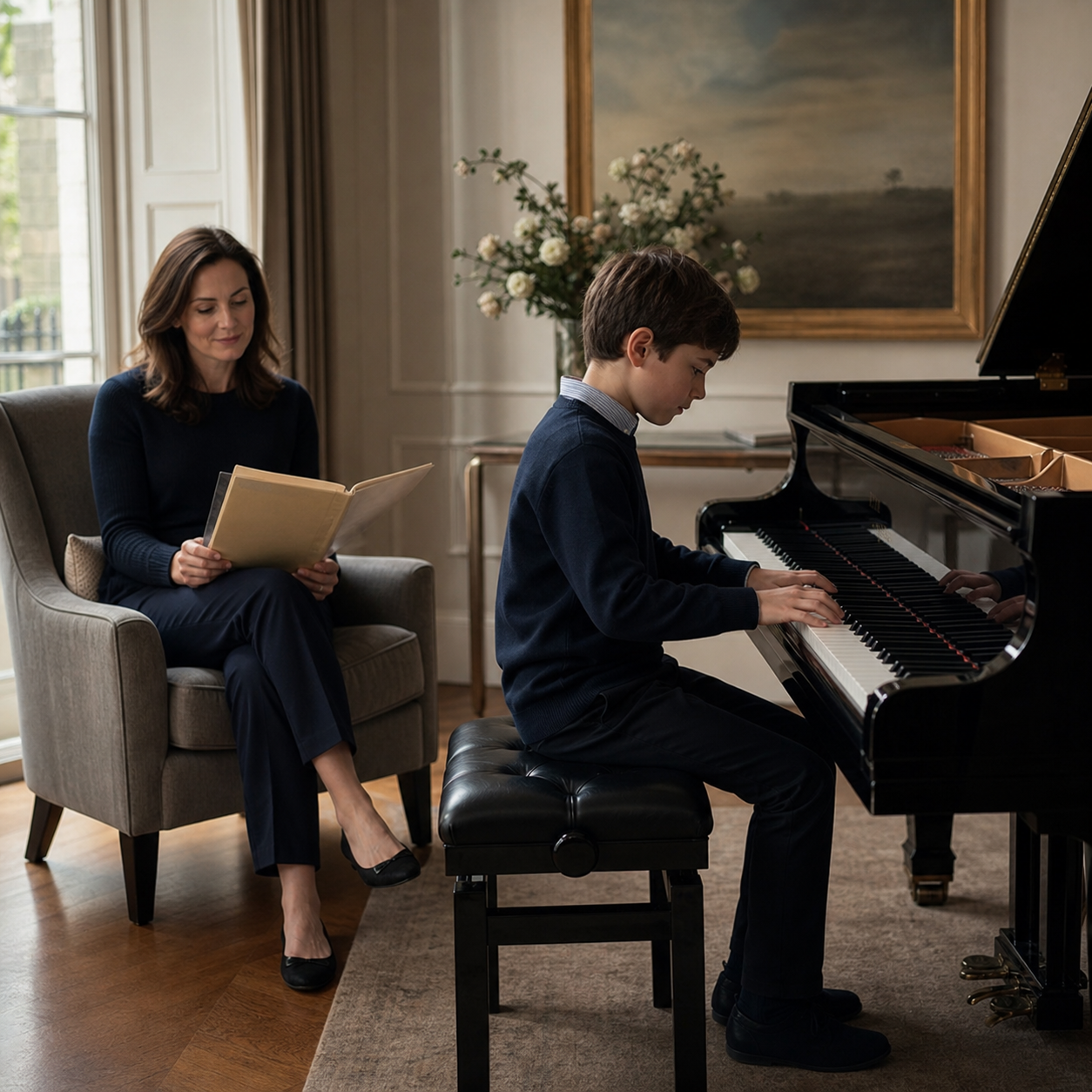
Parents are essential in the early stages, but they should not remain permanently in charge of every detail. The younger the child, the more the parent manages the setting. As the child matures, the parent should move from director to listener. Ask the child to explain the task, choose the first section, or decide whether the repeat was successful.
Musical independence grows through small decisions. A child who can hear that a rhythm is uneven, recognise that the thumb is tense, or choose a slower tempo is learning more than notes. They are learning how to practise. That skill is central to technical work such as scales and arpeggios, repertoire learning and eventual performance preparation.
What Good Progress Looks Like
Progress is not always a new piece. Sometimes it is a child playing the same phrase with a better hand shape, a steadier pulse, a more natural release, or less fear after a mistake. Parents should learn to value these signs, because they are often the foundation for later confidence.
In children’s piano study, progress has three layers. The first is visible: more notes, more pieces, more pages. The second is behavioural: beginning without complaint, recovering from error, accepting slow practice. The third is musical: listening to tone, shaping a phrase, noticing balance. The third layer is the most subtle, and it is where a good teacher’s guidance matters.
Support Your Child’s Piano Routine
WKMT’s children’s piano lessons help families turn weekly teaching into calm, practical progress at home.
Common Parent Mistakes to Avoid
The first mistake is correcting everything. Choose one musical issue at a time. The second is making practice too long after a difficult school day. A tired child needs a clean success, not a heroic session. The third is using rewards in a way that makes the music feel like a punishment to endure. A small reward can help a routine, but the deeper message should be that playing the piano is worthwhile in itself.
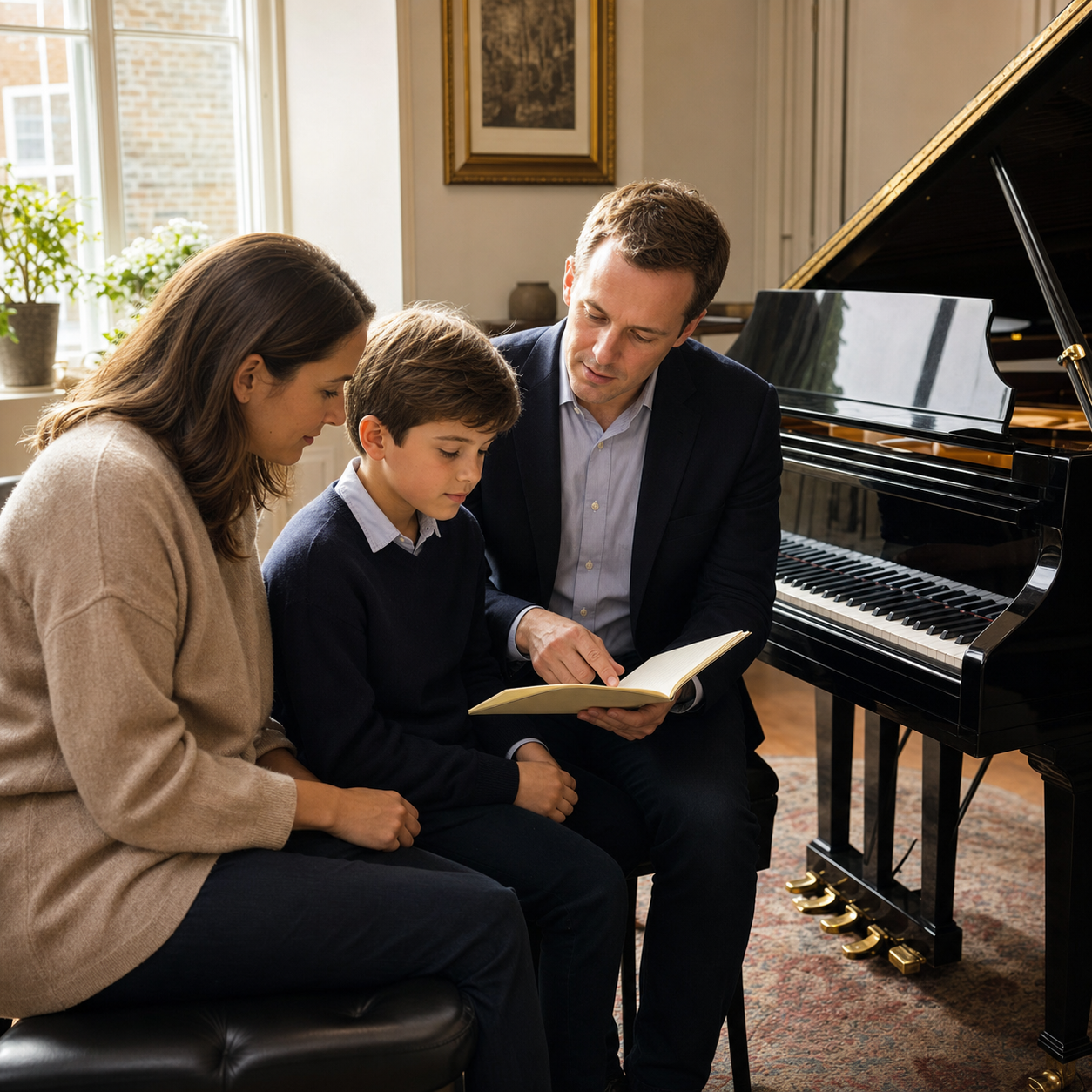
The final mistake is silence between parent and teacher. If the home routine is failing, say so plainly. A good teacher can simplify the assignment, record a demonstration, adjust the week’s goal, or help the child understand how to practise. Parent involvement works best when it is honest, practical and calm.
Practice Insight
A child who practises five days for ten minutes often develops a stronger habit than a child who practises once for an hour. Frequency teaches the body and ear that the piano belongs to ordinary life.
A Calmer Closing Thought
The most useful piano practice tips for parents are rarely dramatic. Keep the instrument ready. Begin at the same time. Make the task small enough to start. Praise what the child can repeat. Ask the teacher for clarity. Step back as independence appears.
Children learn music through trust, structure and repetition. When the home routine reflects those values, practice stops being a daily confrontation and becomes what it should be: a modest, serious, beautiful habit.
Sources on Piano Practice Tips for Parents
- Arianna Mae Studios, “Practice Tips for Parents” https://www.ariannamaestudios.com/blog/practice-tips-for-parents
- Musiah, “Motivating Your Child: Piano Practice Tips for Parents” https://www.musiah.com/articles/practice-tips/piano-practice-tips-for-parents-part-1-of-2.html
- Colourful Keys, “Establishing a Regular Piano Practice Routine”, last checked 2026-07-18. https://colourfulkeys.ie/piano-practice-routine/
- ABRSM, piano and assessment information https://www.abrsm.org/en-gb/piano
- WKMT, “Piano Lessons for Kids” https://www.piano-composer-teacher-london.co.uk/piano-lessons-for-kids/