
 TRIAL LESSON
Piano Lessons
Trinity Initial Piano: A Parent’s Guide to a Confident First Exam Step
Jul
Trinity Initial Piano Guide
WKMT parent exam guide
Trinity Initial Piano: A Parent’s Guide to a Confident First Exam Step
Trinity initial piano can be a gentle first assessment for a young beginner when the preparation is musical, calm and properly paced.
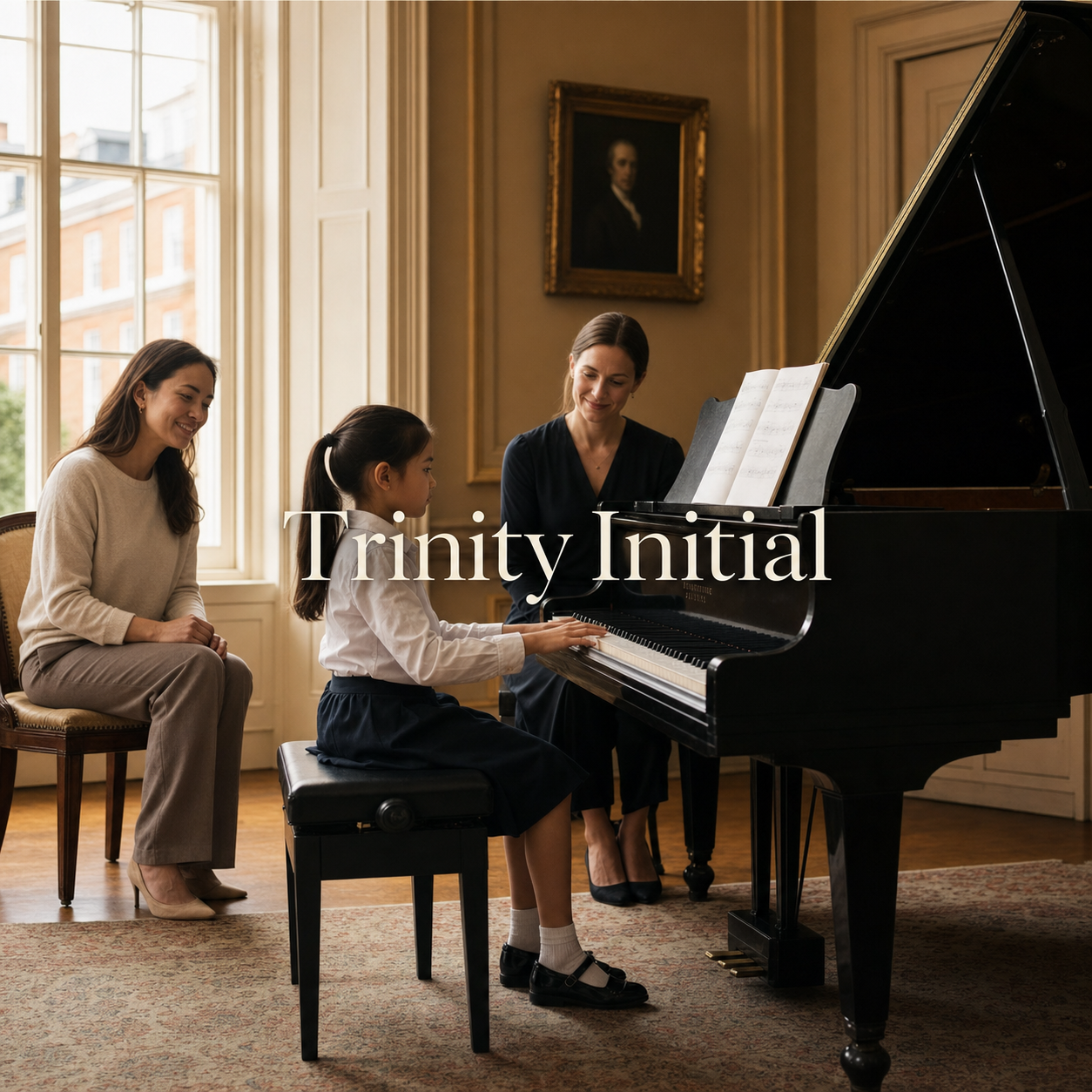
Trinity Initial Piano Quick Facts
Trinity College London lists Piano Initial repertoire for face-to-face and digital exams from 2023, with syllabus guidance for repertoire selection and an own-composition option [1].
Young beginners ready for a small formal goal.
Face-to-face or digital options in the UK [2].
Usually several calm weeks, not a last-minute push.
Grade 1, or more time consolidating musicianship.
Parents often discover the exam page before they understand the child. The official information is useful, but it does not tell you whether your son or daughter is emotionally ready, how to practise without pressure, or how a teacher should shape the first assessment. This guide explains the musical and practical decisions behind Trinity initial piano while keeping the focus on confidence, listening and steady progress.
For families considering structured piano lessons for children in London, the exam should support the lesson journey. It should not replace it. A good first assessment gives a child a clear target, a certificate moment and a reason to polish small pieces with care.
Is Your Child Ready? A Parent’s Checklist
Readiness is not only about age. Some six-year-olds are exam-ready; some older beginners need more time. Look first for attention span, basic independence at the keyboard and emotional steadiness after mistakes. A child who can restart calmly, follow a short teacher instruction and play two or three tiny pieces with a recognisable beginning and ending is closer to readiness than a child who simply races through more notes.
Parents should also watch the home routine. If practice is still a daily battle, entering an exam may make the problem sharper. If the child can manage short, regular practice and enjoys showing a finished piece, Trinity Initial may provide useful structure. The teacher’s judgement matters here, because the teacher sees whether the child’s rhythm, hand shape and listening are becoming reliable.
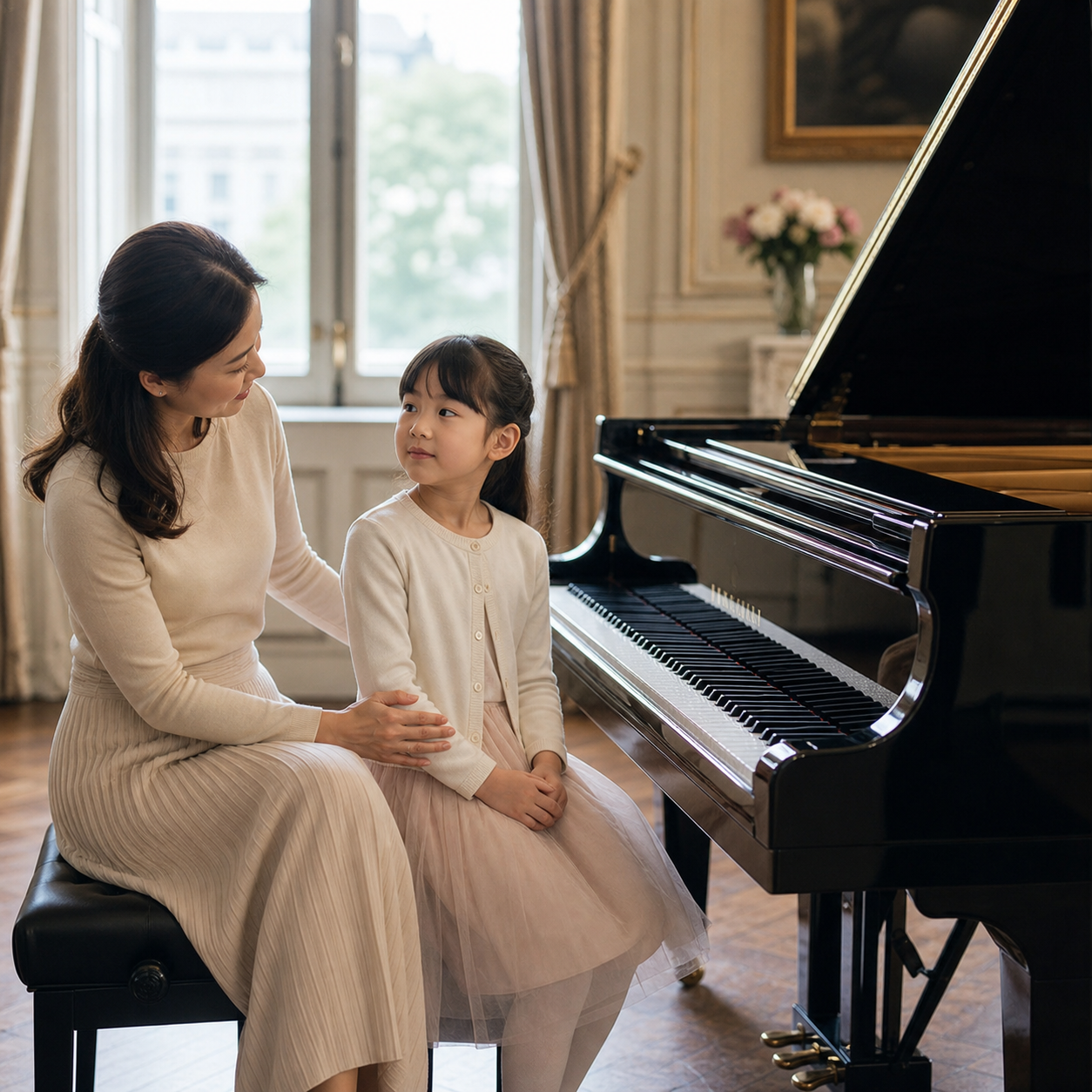
For Parents
Ask the teacher one direct question: “Would this exam make my child more confident, or more tense?” The answer is more important than the date of the next session.
Trinity Initial Piano Format and Choosing Repertoire
The official Trinity page points families towards the Piano Initial repertoire list and the syllabus for full guidance [1]. The repertoire PDF contains a broad Initial list, including short classical, educational and popular-style choices, plus duet options and pieces such as Handel’s Gavotte in C, Kodaly’s Children’s Dance, the Pokemon Theme arrangement and Can’t Help Falling in Love [3]. That range is useful because children differ: one pupil needs character, another needs a steady pulse, another needs something familiar enough to practise willingly.
A teacher should choose pieces that show contrast without overloading the child. One piece may be lyrical and even; another may be rhythmic and playful. The own-composition option can be valuable for a child who invents music naturally, but it still needs careful preparation. The point is not to pick the flashiest piece. It is to select music the child can play securely, musically and with a sense of ownership.
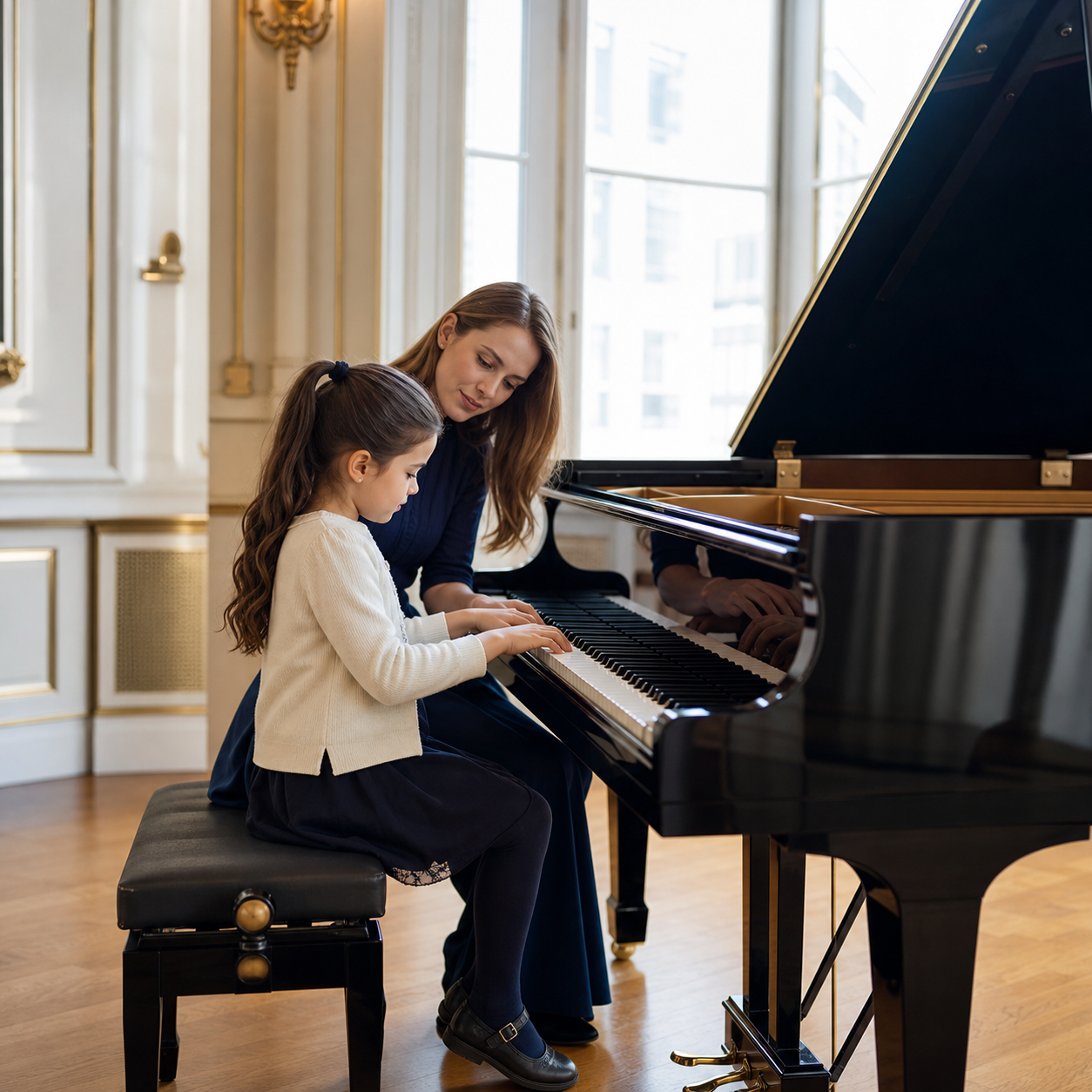
Digital or Face-to-Face: What Parents Need to Know
Trinity states that UK Classical and Jazz candidates can book either face-to-face or digital exam delivery [2]. Digital Classical and Jazz Grades offer pathway choices, including a technical work pathway with three repertoire pieces and technical work, or a repertoire-only pathway with four pieces [4]. Parents should confirm the current requirements with the teacher and the official Trinity pages before entering, because exam rules and fee schedules can change.
Face-to-face exams suit children who respond well to a formal room and a real examiner. Digital exams suit families who need flexibility, but they require a calm recording environment, a tuned instrument, sensible camera placement and a child who can play through without repeated stopping. In either format, the parent should not turn the process into a film production. The musical preparation comes first.
Teacher’s Note
A digital route can be excellent, but only if the child has already learnt to play a complete take calmly. If every recording attempt becomes emotional, choose a different timing or format.
Preparation Timeline and Mock-Exam Tips
A sensible Trinity Initial preparation plan usually begins with repertoire security. First, the child learns the notes slowly and accurately. Next, the teacher shapes rhythm, tone, endings and character. Only then should the family start mock performances. Too many parents reverse the order, asking for complete run-throughs before the child has the tools to succeed.
Use mock exams sparingly. Once a week is often enough for a young beginner. The child walks to the piano, adjusts the bench, takes a breath, plays the chosen music, bows or smiles, and leaves the instrument without commentary for a moment. Feedback comes afterwards and should be specific: rhythm, tone, restart, hand shape, or confidence. This mirrors the calm performance habits developed through WKMT student concerts and London piano masterclass opportunities.
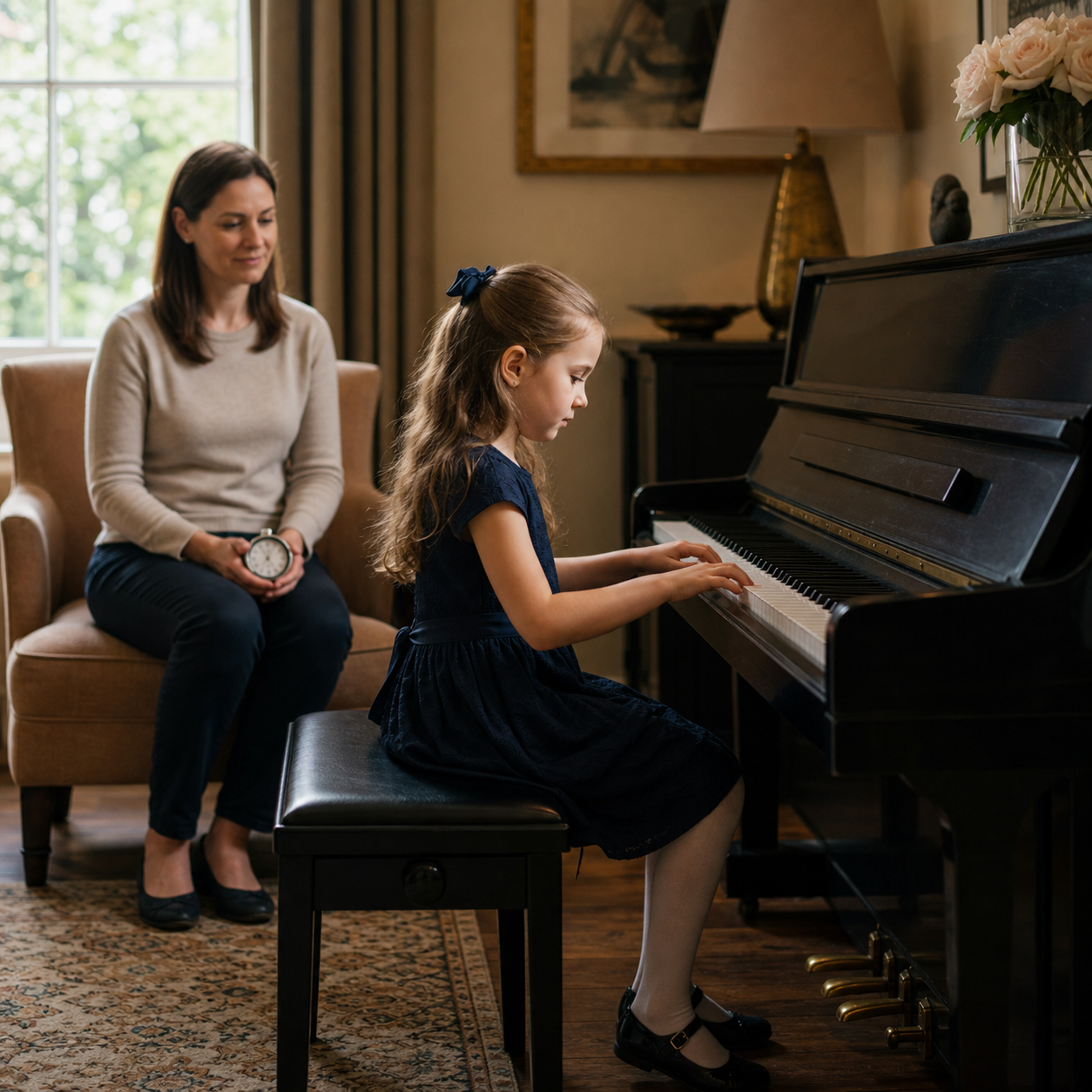
Exam-Day Practicals and Managing Nerves
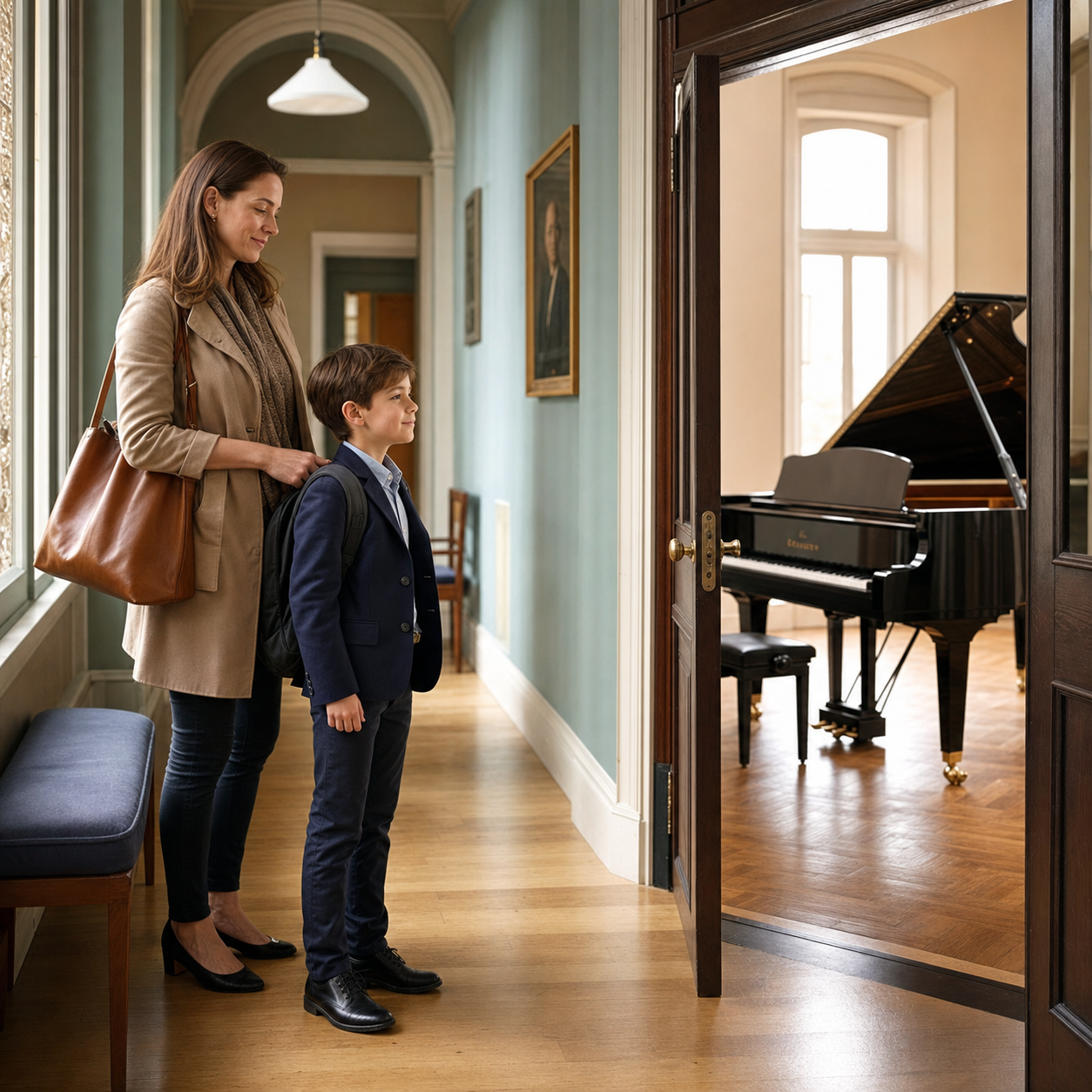
On exam day, reduce novelty. Keep breakfast ordinary, leave early, bring the music and any required documents, and avoid last-minute technical lectures. A young child needs a familiar adult rhythm: coat, journey, arrival, warm hands, quiet encouragement. The parent’s face often sets the emotional weather.
If the child makes a mistake, the skill is to continue. This is why preparation should include small restarts and recovery practice. Nervous children do not need grand speeches. They need to know that a wrong note is not a disaster, that the examiner is listening for musical control, and that the family values courage as much as the result.
“A first exam has done its job when the child leaves feeling more capable than before.”
Costs, Booking and Trinity Initial vs ABRSM
Trinity publishes UK and Ireland music exam fees for exams taking place from 1 January to 31 December 2026, noting that fees include a digital certificate, with paper certificate options available in many cases [5]. Parents should check the current fee page before booking, because the exact figure depends on date, location and delivery route.
ABRSM also offers piano assessments from Initial Grade to Grade 8, with face-to-face Practical Grades and digital Performance Grades [6]. The practical choice is not a question of brand loyalty. Some children respond to Trinity’s repertoire breadth and digital flexibility; others fit ABRSM’s structure better. A serious teacher chooses the route that supports the child’s musical development rather than the route that looks quickest on paper.
| Question | Trinity Initial may suit when… | Wait or choose another route when… |
|---|---|---|
| Repertoire | The child connects with a suitable piece from the list. | Every option feels too hard or emotionally flat. |
| Confidence | A clear target would motivate practice. | The child is already anxious about lessons. |
| Format | Face-to-face or digital options fit the family. | Recording or travel would dominate the experience. |
Support a Calm First Piano Assessment
WKMT helps children prepare musically, not mechanically, so exams support confidence and long-term progress.
FAQs and Next Steps
How long does Trinity initial piano preparation take?
It depends on the child’s lesson history, practice routine and confidence. Many young beginners need several steady weeks after the notes are learnt, because the real work is secure rhythm, calm performance and musical character.
Is Trinity Initial only for very young children?
No. Initial level can suit any beginner who would benefit from a first formal step before Grade 1. The parent-led angle is common because many candidates are children, but the level itself is not restricted to one age.
Should my child take Trinity Initial or go straight to Grade 1?
If Grade 1 preparation would be rushed or brittle, Initial can be the wiser musical step. If the child already plays securely, reads confidently and performs calmly, the teacher may recommend moving towards Grade 1.
The best next step is a teacher conversation. Bring the current pieces, ask whether an assessment would strengthen motivation, and keep the exam in its proper place: a useful musical milestone inside a broader education.
Practice Insight
An exam is healthy when it improves the child’s weekly listening, patience and finish. If it only adds pressure, the timing is wrong.
Sources
- [1] Trinity College London, “Piano Initial” https://www.trinitycollege.com/qualifications/music/grade-exams/piano/piano-initial
- [2] Trinity College London, “Book exam”https://www.trinitycollege.com/book-exam
- [3] Trinity College London, “Piano repertoire list from 2023” https://www.trinitycollege.com/resource?id=10125
- [4] Trinity College London, “Digital Classical & Jazz Grades” https://www.trinitycollege.com/qualifications/music/grade-exams/digital
- [5] Trinity College London, “Exam fees” https://www.trinitycollege.com/local-trinity/UK/music/book-exam/exam-fees
- [6] ABRSM, “Piano” https://www.abrsm.org/en-gb/piano
- WKMT, “Piano Lessons for Kids” https://www.piano-composer-teacher-london.co.uk/piano-lessons-for-kids/