
 TRIAL LESSON
Music Theory Resoucers, Piano Lessons
Music Education Benefits: What Parents Should Know About Learning, Confidence and Piano
Aug
Music education benefits Complete Guide by WKMT London
A practical guide for parents
Music Education Benefits: What Parents Should Know About Learning, Confidence and Piano
Music education benefits children most clearly when it helps them listen, make, practise and belong. Here is how to recognise genuine progress without turning music into a promise of higher marks or instant talent.
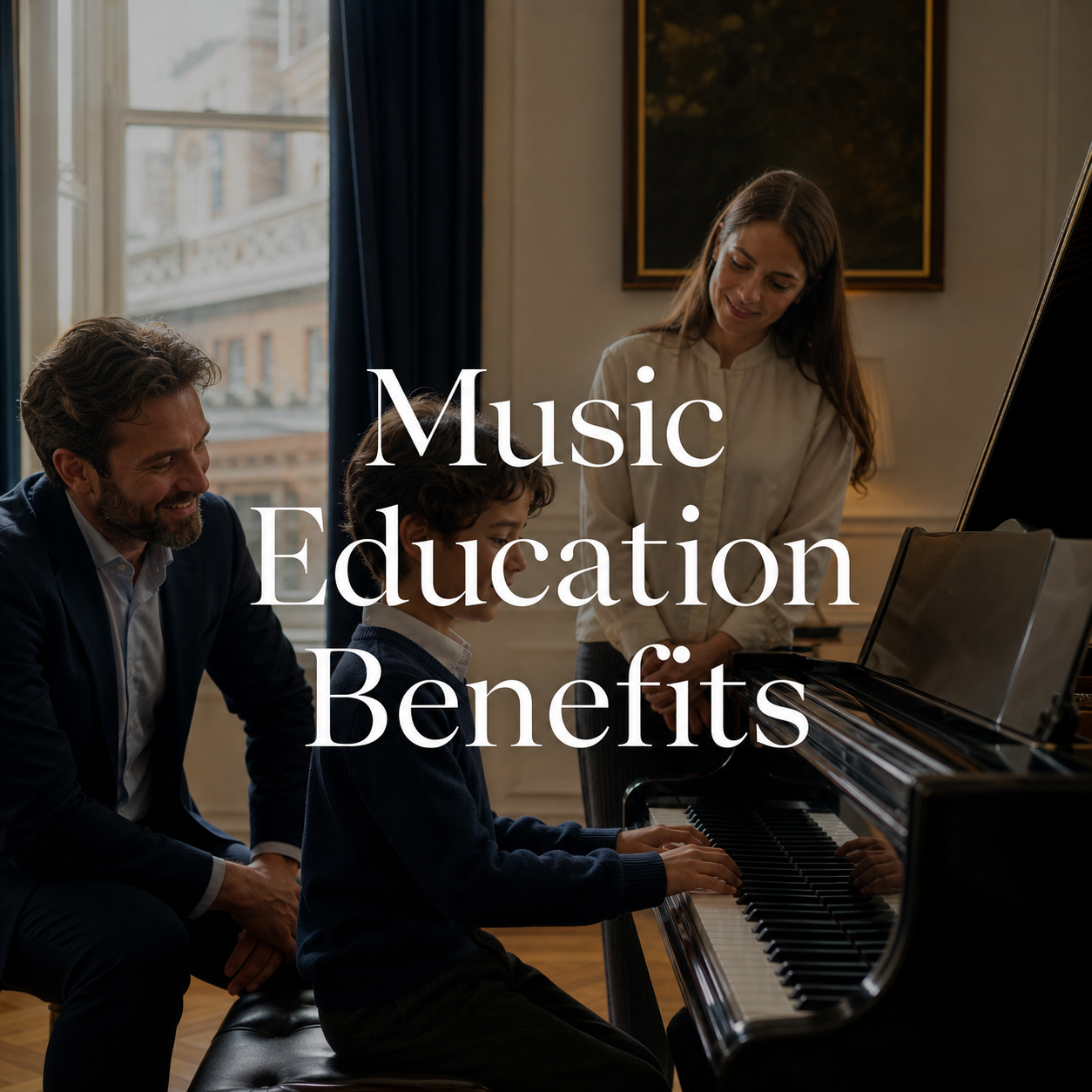
Parents often meet sweeping claims about music: that it raises intelligence, guarantees academic success or produces unusually disciplined children. The reality is more useful and more interesting. A good musical education gives a child a language of sound, a craft they can refine, and repeated experience of turning attention into expression. Those are substantial gains in their own right.
Research offers encouraging evidence around engagement, confidence, emotional development and some academic outcomes, but it does not support every popular claim. A rigorous meta-analysis found that far-transfer effects on general cognition and attainment became very small or absent in the strongest studies. That is not a case against music. It is a reminder to value what the child is genuinely learning: to hear relationships, coordinate action, make choices, recover from mistakes and communicate through performance.
What counts as music education?
Music education is broader than a weekly instrument lesson. England’s curriculum expects pupils to perform, listen, review, evaluate, sing, compose and learn an instrument. The national plan for music education also emphasises making music together and creating routes for children to develop their interests. In practice, the richest experience usually combines several strands:
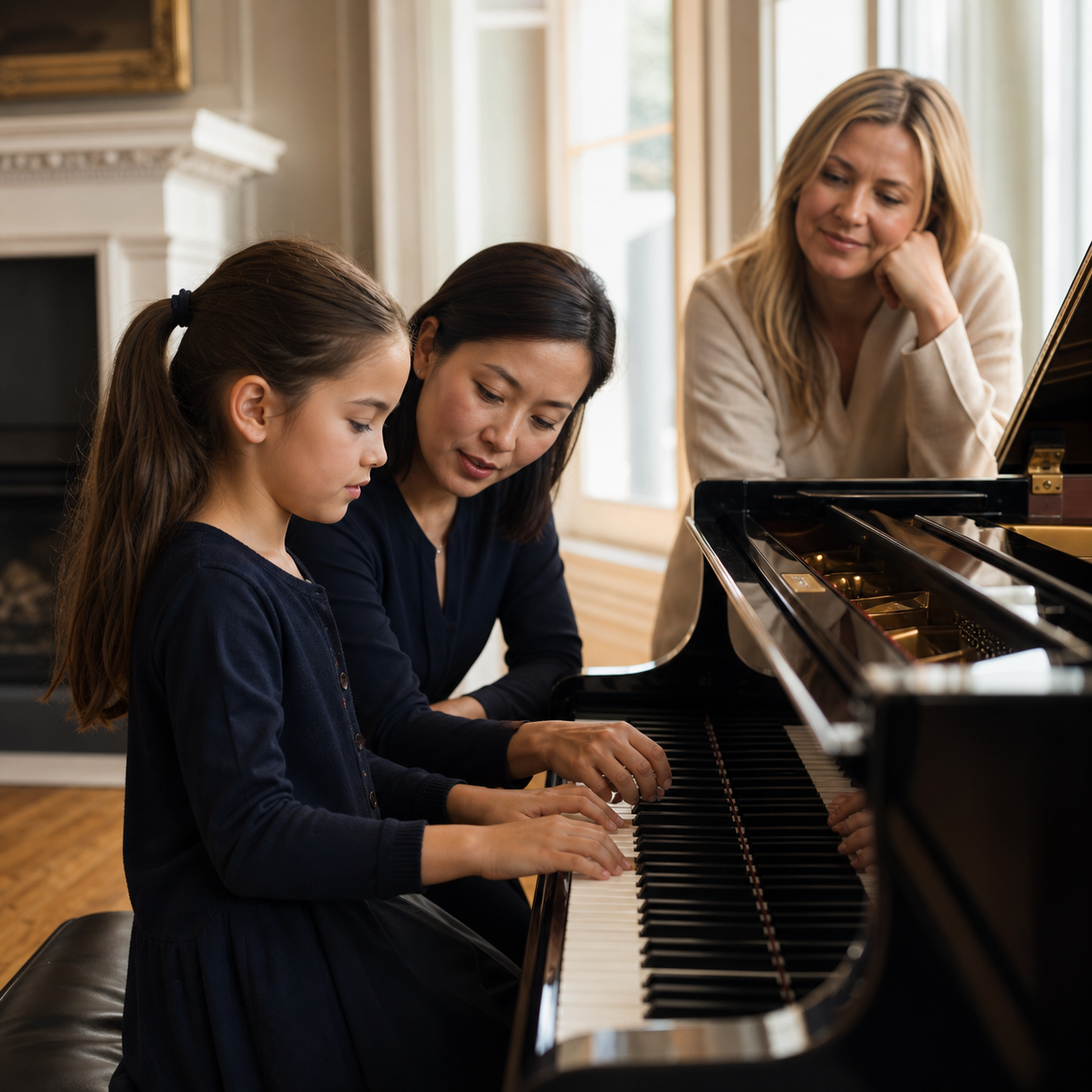
School provision can create breadth and shared musical culture. Individual tuition can add continuity, precise feedback and a repertoire chosen for the pupil. These music education benefits become tangible for a young pianist. Structured piano lessons for children in London can connect the strands through one instrument: the child hears, reads, coordinates, imagines and performs in every well-designed session.
Which music education benefits are best supported?
The most defensible music education benefits are close to the activity itself. They emerge because children repeatedly do something musical, receive feedback and try again.
1. Musical understanding and attentive listening
A child learns to distinguish higher from lower, stable from tense, detached from connected, balanced from uneven. These are not abstract extras. They are the foundations of musical judgement. At the piano, listening directs every physical choice: whether a melody projects, whether an accompaniment is too heavy, and whether a cadence truly settles.
2. Confidence built on competence
Musical confidence is not loudness or fearlessness. It is the quiet knowledge that a difficult passage can be understood and improved. A child who can prepare eight bars, play them for another person and explain what changed has experienced earned confidence. The national curriculum explicitly links high-quality music education with self-confidence, creativity and a sense of achievement.
3. Emotional vocabulary and expression
A systematic review of research involving children aged three to twelve reported promising associations between educational uses of music and emotional perception, expression, regulation and prosocial behaviour. The studies were varied, so parents should avoid treating the findings as a guarantee. Even so, music offers a particularly safe way to explore intensity, suspense, tenderness and release without requiring a child to explain every feeling in words.
4. Participation, cooperation and belonging
Duets, ensembles and shared rhythm work demand timing, turn-taking and attention to someone else’s part. The Education Endowment Foundation’s wider review of arts participation finds a positive average impact on academic outcomes, while rating the evidence as moderate and noting variation between programmes. The practical message is simple: quality, frequency and implementation matter.
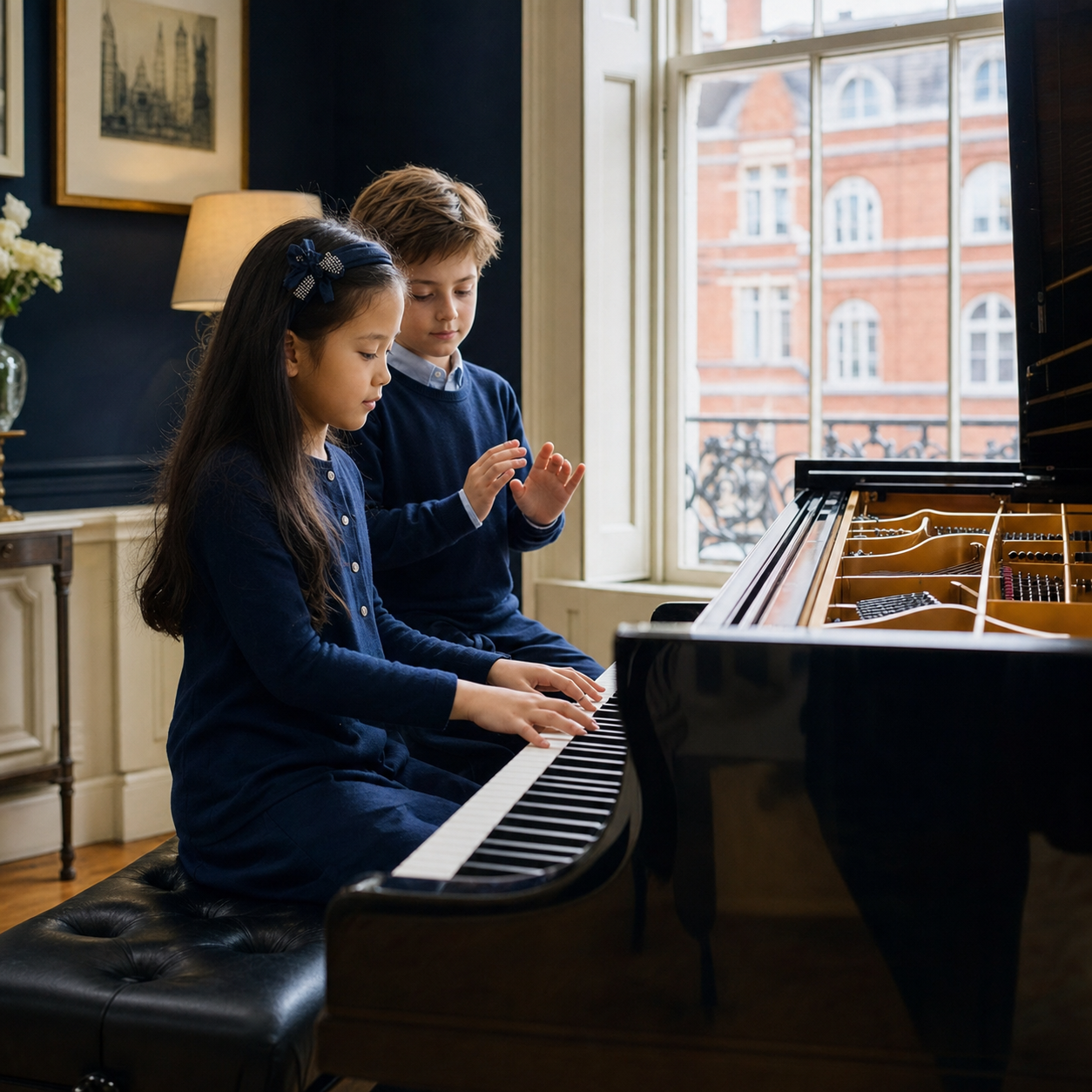
“Music’s strongest educational value is not a shortcut to another subject. It is the disciplined pleasure of learning to hear, choose and communicate.”
What music cannot honestly promise
Claims that instrumental lessons make every child smarter are attractive because they make an artistic education sound measurable. Yet the best evidence asks for restraint. In a large meta-analysis, apparent cognitive and academic advantages were strongest in weaker study designs; trials with active control groups or random assignment showed null or near-zero far-transfer effects.
This distinction protects children. Piano should not become another test-preparation device. It can strengthen music-specific memory, listening and coordination because those are practised directly. It may also create conditions that help learning more broadly: regular attention, feedback, satisfaction and belonging. But a correlation between musically trained children and strong attainment can also reflect family resources, motivation and selection.
| Claim | A careful reading | What parents can observe |
|---|---|---|
| “Music raises intelligence” | Strong causal evidence for broad cognitive transfer is weak. | Better musical listening, recall and judgement. |
| “Music creates discipline” | Habits grow when routines are manageable and supported. | Starting independently and repairing a passage. |
| “Performance builds confidence” | It can, when challenge is gradual and psychologically safe. | A child can play, reflect and try again without shame. |
How piano makes the learning visible
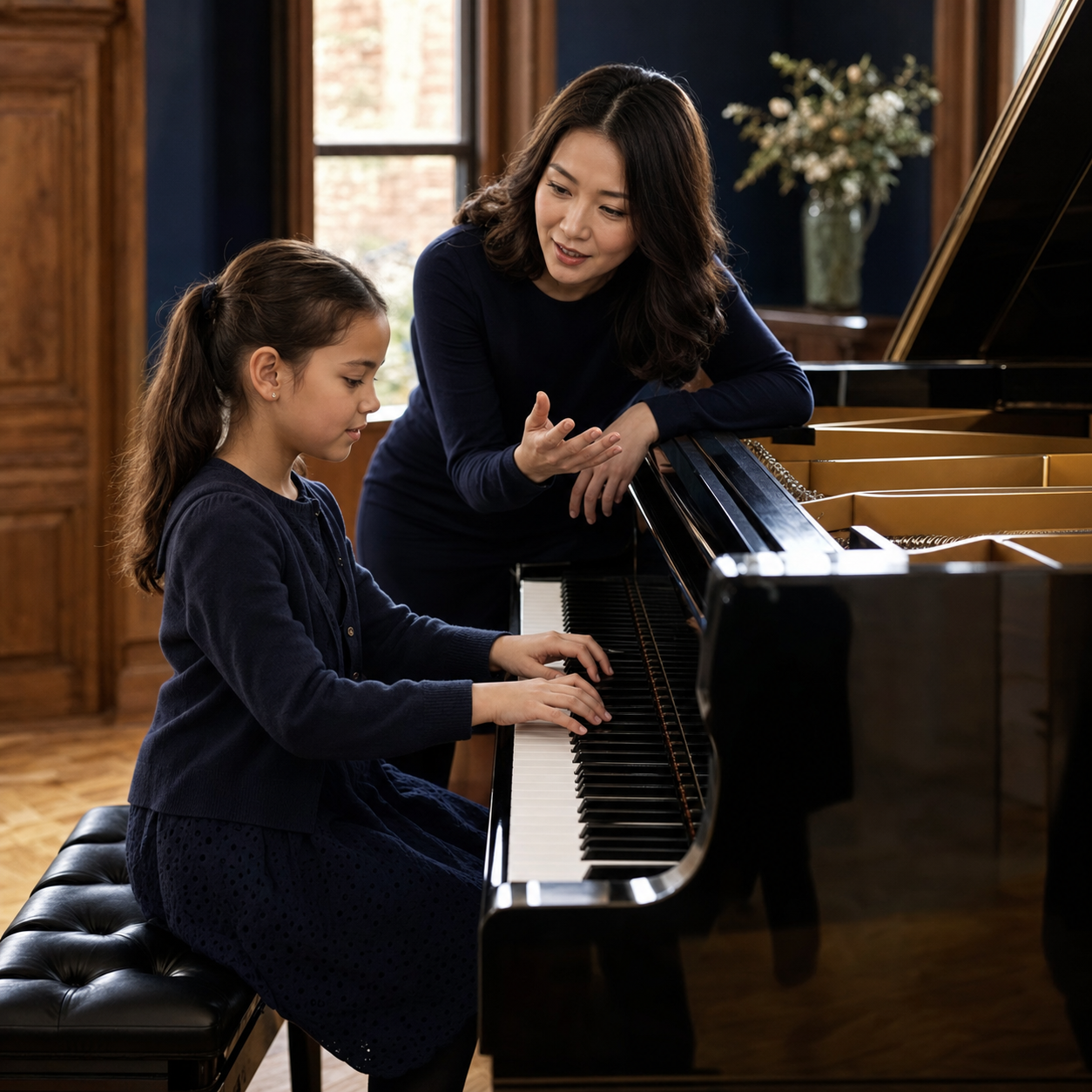
The piano gives immediate, intelligible feedback. Pressing a key produces a defined pitch; changing weight or speed changes the character of the sound. Two hands can hold different roles, and the keyboard’s visual layout makes intervals and harmony easier to inspect. This clarity helps a teacher turn broad music education benefits into observable tasks.
A well-paced lesson might ask a child to clap a rhythm, sing the phrase, locate a pattern, play it slowly, choose a character and finally perform it without interruption. That sequence moves from hearing to understanding, then from control to expression. It also shows why specialist teaching matters: the teacher adjusts the size of each challenge so success requires thought but remains attainable.
Parents wondering whether lessons are timely can use WKMT’s guide to recognising a child’s musical curiosity. For younger children, the article on music education in early childhood offers a related developmental perspective. These are supporting resources; the child’s present response remains more informative than a fixed label of talent.
A five-part family framework
- Hear: begin with a short performance or recording and ask what the child notices.
- Name: choose one musical idea such as pulse, phrase, contrast or balance.
- Try: practise a small, achievable section with a clear sound goal.
- Choose: let the child decide one expressive detail and explain it.
- Share: finish with an uninterrupted play-through for an attentive listener.
This framework takes ten to fifteen minutes and avoids turning home practice into supervision by correction. If a child is tired, reduce the task rather than the warmth. If motivation has stalled, WKMT’s piano practice guidance for parents offers further practical ideas.
Give musical curiosity a clear next step
Thoughtful tuition can turn listening, imagination and small daily efforts into secure musical understanding.
What good progress looks like
Music education benefits children when progress is defined with care. Look for a child who listens more precisely than last term, starts a familiar task with less prompting, tolerates a mistake without abandoning the piece, or shapes a phrase with an idea of their own. Grades and performances can be valuable milestones, but they are strongest when they reveal learning rather than replace it.
The decisive question is not whether music can be justified by mathematics, reading or future employability. It is whether the child is acquiring a durable relationship with sound and the confidence to develop it. When the answer is yes, the most valuable music education benefits are already present.
Sources on Music Education Benefits: A Practical Parent Guide
- Department for Culture, Media and Sport, Turn It Up: Our plan for music
- Department for Education and DCMS, The power of music to change lives
- Department for Education, national curriculum music programmes of study
- Education Endowment Foundation, Arts participation evidence review
- Sala and Gobet, cognitive and academic benefits of music training with children: a multilevel meta-analysis
- Blasco-Magraner et al., educational use of music and children’s emotional development: a systematic review