
 TRIAL LESSON
HOME PAGE, Piano Lessons
A Guide to London’s 5+ Premier Piano Schools
Dec
London Piano Schools Guide
A Guide to London’s Premier Piano Schools
Key Takeaways
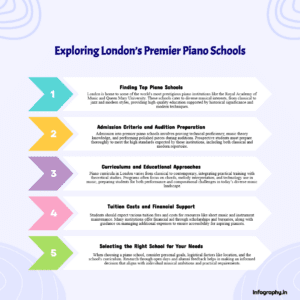
- Find London’s top piano schools for aspiring pianists.
- Learn about admission criteria of premier music institutions.
- Compare piano curriculums and teaching approaches.
- Meet London’s esteemed piano educators.
- Explore tuition costs and financial support options.
- Select the ideal London piano school for your needs.
Find London’s Top Piano Schools for Aspiring Pianists
As we explore the vibrant musical landscape of Greater London, aspiring pianists have a unique opportunity to study at some of the world’s most prestigious institutions, such as Queen Mary University of London and the Royal Academy of Music. These schools offer a diverse range of programmes for both children and adults, focusing on the study of piano as a central musical instrument alongside other disciplines, such as violin, guitar, and even synthesizer.
The River Thames flows through the heart of this capital city, connecting institutions rich in history with a vision for the future. Whether you seek to master classical music, delve into jazz piano, or experiment with digital piano and electronic keyboard technologies, London’s schools are equipped to nurture your artistic ambitions. These schools stand as pillars of musical education, supported by initiatives fostering sustainable development and inclusive practices, aligned with the United Nations’ Sustainable Development Goals.
Greater London’s historical connection to music is unparalleled. For instance, the Royal Academy of Music, established in 1822, houses a museum featuring a Bösendorfer grand piano used by celebrated composers. The city’s institutions also collaborate with global music hubs in Italy, France, and the European Union, ensuring that students receive a well-rounded, international music education. Guide on London piano schools.

Discover Central London’s Leading Piano Academies
Central London boasts an array of piano academies celebrated for their innovative teaching methodologies. From the historic sounds of the fortepiano and clavichord to the modern versatility of stage pianos, students explore the evolution of the keyboard instrument. These institutions uphold the Teaching Excellence Framework, ensuring quality education and impactful learning experiences.
Prominent schools like the Guildhall School of Music and Drama emphasise a blend of traditional and modern approaches, incorporating technology such as MIDI tools and sampling techniques to prepare students for today’s musical landscape. Whether performing on a grand piano or experimenting with a sustain pedal on a Nord Stage keyboard, students gain hands-on experience under the guidance of esteemed educators.
For amateur musicians visiting London, the city offers fascinating historical spots like Charing Cross and Trafalgar Square, where concerts often echo the sounds of historical pipe organs and hammered dulcimers. These cultural landmarks enrich the experience of studying music in London, providing inspiration around every corner. Top London piano schools.
Spotlight on WKMT (West Kensington Music Team)
One of the most prominent music schools in Greater London is WKMT, located in West Kensington. Known for its rigorous adherence to the Scaramuzza piano technique, WKMT has earned a reputation for excellence in classical piano training. Its founder, Juan Rezzuto, envisioned a school where students could blend technical mastery with expressive artistry, a vision that continues to guide the institution today.
WKMT’s facilities include state-of-the-art equipment, from traditional grand pianos to cutting-edge digital pianos and electronic keyboards. The school offers tailored programmes for students of all levels, from beginners to advanced performers, with specialised classes in jazz piano, classical repertoire, and modern styles like pop music. Its dedication to fostering talent has made it a cornerstone of piano education in the City of London.
In addition to individual lessons, WKMT organises regular masterclasses, recitals, and workshops. These events take place in prestigious venues providing students with invaluable performance opportunities. The school’s integration of the Scaramuzza Technique into its curriculum ensures students develop not only technical precision but also physical ease while playing, reducing tension and enhancing performance.
Renowned Educators and Their Specialities
These professionals often hold degrees from leading universities such as Cambridge University and possess accolades from the field of conducting piano performance and composition. Many have contributed to the growing body of research on piano pedagogy, ensuring their teaching remains at the forefront of education. At WKMT, instructors also specialise in guiding students through the complexities of keyboard amplifiers and sound modules, equipping them with skills for diverse performance settings.
Discover exceptional music lessons with WKMT, a leader in music education since 2010. Available in-studio in London or online worldwide.
Learn About the Admission Criteria of Premier Music Institutions
The journey to joining London’s premier piano schools begins with understanding their rigorous admission criteria. Prospective students must demonstrate technical proficiency on the piano, along with a solid foundation in music theory and the ability to interpret works by composers such as Johann Sebastian Bach, Wolfgang Amadeus Mozart, and Frédéric Chopin. Let’s go through the key facts on the Top London Piano Schools.
Prepare for Auditions and Examinations
Admissions processes often include auditions requiring performances of varying pitch, dynamics, and rhythm. Candidates are expected to present polished renditions of pieces from classical repertoire while showcasing their ability to adapt to modern styles like pop music and rock music. Similar to preparing for an exam at the University of London, prospective students need meticulous preparation to meet the high standards set by these institutions.
Compare Piano Curriculums and Teaching Approaches
London’s piano schools offer curriculums tailored to the diverse aspirations of students. At the heart of these programmes lies a focus on understanding musical chords, mastering octaves, and developing a nuanced interpretation of a melody.
Classical vs Contemporary Programmes
Students can choose between classical programmes that honour London’s rich history of art and music or contemporary tracks that explore the versatility of electronic pianos, sampling techniques, and modern performance tools like the Hammond organ and electric guitar. Notable programmes often delve into the history of Bartolomeo Cristofori, the inventor of the modern piano, blending historical insight with modern practice.
Balance Between Practical and Theory Lessons
Most schools strive to integrate practical piano training with theoretical lessons. Theoretical studies often delve into the works of Cristofori and the science behind vibration and acoustics. Practical lessons frequently utilise tools like the metronome, ensuring precise timing and rhythm. Advanced students also explore the mechanics of piano tuning and the nuances of using pedal keyboards. Best London piano schools ever.
Historical Piano Institutions in London
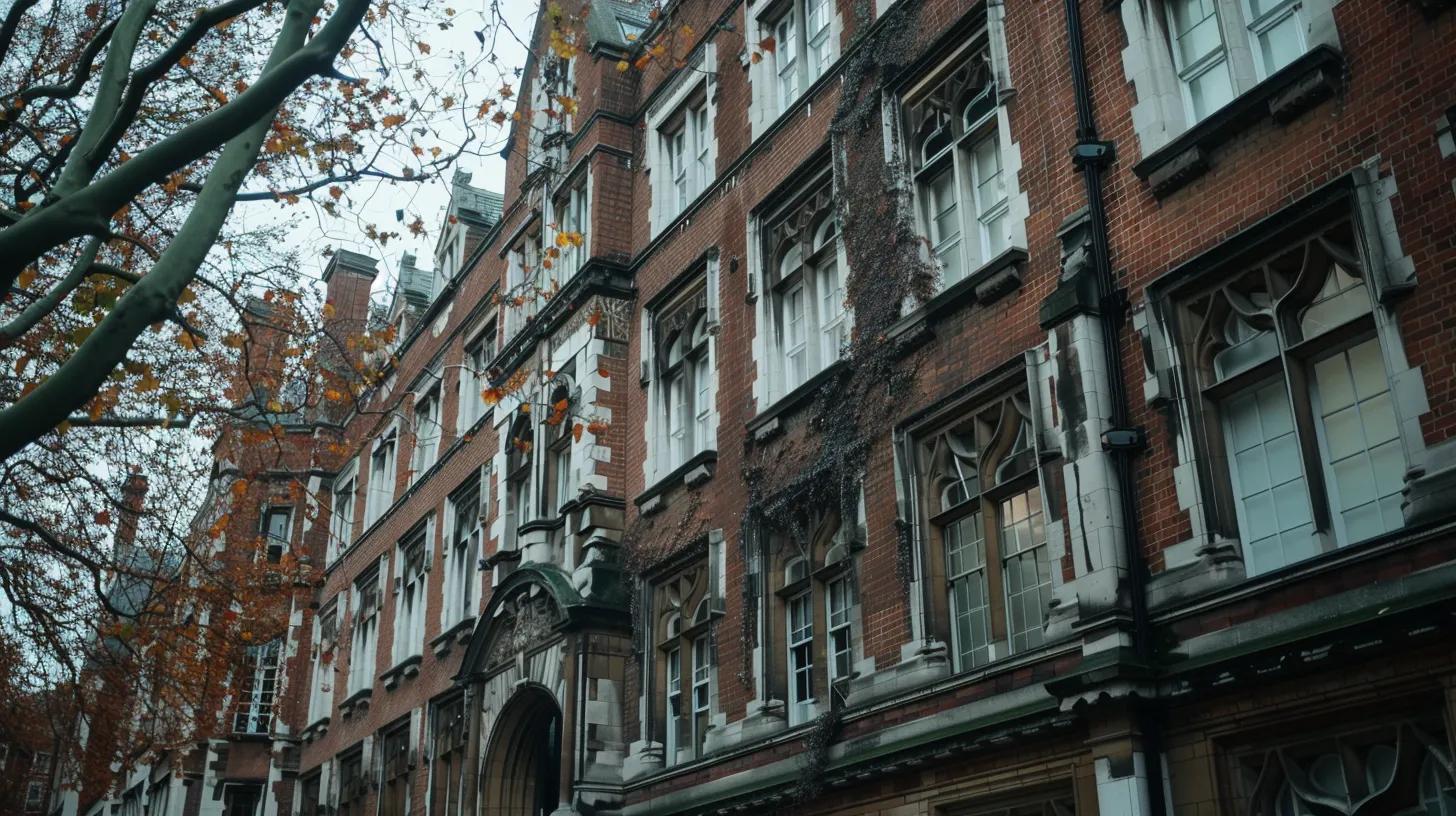
London’s music schools are home to some of the most accomplished educators and performers in the world. From classical maestros to experts in jazz piano, these tutors bring a wealth of experience from international stages and renowned institutions. Going through the top London piano schools to learn from.
London is a global hub for music education, and its piano institutions have played a pivotal role in shaping the landscape of classical music. For amateur musicians and enthusiasts exploring the city’s rich cultural heritage, these institutions offer fascinating insights into their historical significance, their connection with celebrated composers and pianists, and their influence on the world stage. Below, we explore five of the most prominent piano institutions in London.
1. Trinity Laban Conservatoire of Music and Dance
Trinity Laban, located in Greenwich, is one of London’s most respected music conservatoires. It was established in 2005 following the merger of Trinity College of Music and Laban Dance Centre, though its history dates back to 1872. Known for its innovative approach to music education, Trinity Laban boasts an illustrious alumni list that includes notable pianists such as John Lill, who won the Tchaikovsky International Piano Competition in 1970.
Historically, Trinity Laban’s roots are intertwined with the Victorian era’s flourishing music culture. The institution’s Old Royal Naval College setting provides a stunning backdrop for performances, connecting students and audiences to centuries of artistic tradition. Today, it is known for hosting the Trinity Laban Soloists’ Competition, a platform that has launched many careers.
2. Royal Academy of Music
The Royal Academy of Music (RAM), founded in 1822, is Britain’s oldest conservatoire. Situated on Marylebone Road, it has cultivated a legacy of excellence in piano performance and pedagogy. Composers such as Sir Arthur Sullivan and Sir Michael Tippett studied here, and the institution remains a beacon for aspiring pianists.
Notable pianists who taught at RAM include Dame Myra Hess, famous for her wartime lunchtime concerts at the National Gallery. These concerts not only brought solace during World War II but also reinforced London’s role as a cultural stronghold. The Academy’s museum houses a remarkable collection of pianos, manuscripts, and artefacts, offering visitors a glimpse into its historical connections with music greats.
3. Royal College of Music
Located in South Kensington, the Royal College of Music (RCM) was founded in 1882 by Sir George Grove, who is also renowned for compiling “Grove’s Dictionary of Music and Musicians.” The College has been associated with numerous legendary figures, including Ralph Vaughan Williams and Gustav Holst. For pianists, it is especially significant, with luminaries such as Clara Schumann giving concerts in London during RCM’s formative years.
RCM is home to the renowned Keyboard Faculty, which regularly hosts masterclasses with international piano stars. Its Amaryllis Fleming Concert Hall, a venue of architectural beauty and superb acoustics, has witnessed countless world-class performances. The College’s archives hold invaluable materials, including manuscripts from significant 19th and 20th-century composers.
4. Guildhall School of Music and Drama
The Guildhall School of Music and Drama, located in the heart of London’s Barbican Centre, is a world-class conservatoire with a history stretching back to 1880. Its piano department has nurtured talent that includes Paul Lewis and Stephen Hough, both celebrated for their contributions to the classical music repertoire.
Guildhall’s connection to London’s vibrant cultural scene is unparalleled. The school’s Milton Court Concert Hall is a modern marvel, hosting performances by students, alumni, and renowned guest artists. Historically, Guildhall played a crucial role in the post-war rebuilding of London’s musical life, producing artists who helped revive the city’s cultural vibrancy.
5. London College of Music
The London College of Music (LCM), now part of the University of West London, was founded in 1887. Though slightly less prominent internationally, it remains an integral part of London’s musical education landscape. Known for its accessible examination system and diverse syllabus, LCM has brought classical and contemporary piano music to a broader audience.
Notable composers connected to LCM include William Lloyd Webber, who served as its Director. His legacy continues to influence the College’s approach to composition and performance. LCM’s emphasis on inclusivity and innovation makes it a unique institution in London’s classical music scene.
Anecdotes and Memorable Concerts
Each of these institutions has been the setting for extraordinary musical events, leaving indelible marks on London’s cultural history:
- Trinity Laban Conservatoire of Music and Dance: One notable concert took place in the Old Royal Naval College’s Painted Hall, where pianist Angela Hewitt performed Bach’s “Goldberg Variations.” The venue’s magnificent Baroque architecture added a unique resonance to the performance, captivating audiences.
- Royal Academy of Music: The Academy hosted a historic recital by Alfred Brendel in 1973. His interpretation of Schubert’s piano sonatas was lauded for its depth and sensitivity, marking one of the most memorable events in the institution’s recital series.
- Royal College of Music: In 1964, a young Vladimir Ashkenazy performed Rachmaninoff’s Piano Concerto No. 2 with the RCM Symphony Orchestra. This electrifying performance was a defining moment for both the pianist and the College’s reputation as a premier musical institution.
- Guildhall School of Music and Drama: Guildhall’s Milton Court Concert Hall was the site of a landmark performance in 2015, where pianist Yuja Wang delivered a stunning recital that included works by Chopin, Scriabin, and Prokofiev. Her technical prowess and artistry left audiences in awe.
- London College of Music: In a more contemporary context, LCM hosted a tribute concert to William Lloyd Webber in 2017. The programme included performances of his lesser-known piano works, shedding light on his contributions to 20th-century British music.
Prominent Pianists Who Taught at These Institutions
Each of these conservatoires has been shaped by the expertise and artistry of prominent pianists who have taught there:
- Trinity Laban Conservatoire of Music and Dance: Philip Fowke, often referred to as “The Keyboard Charmer,” taught here during the late 20th century. His charismatic teaching style and exceptional performances greatly influenced students.
- Royal Academy of Music: Dame Myra Hess, who was associated with the Academy during the mid-20th century, left an enduring legacy. Her commitment to musical integrity and her famous wartime concerts were hallmarks of her tenure.
- Royal College of Music: Marguerite Long, the celebrated French pianist, gave masterclasses at RCM during the early 20th century. Her interpretations of Debussy and Fauré shaped generations of pianists. Marguerite was also one of the almighty maestros of Bruno Leonardo Gelber one of the best examples of the Scaramuzza Piano technique. He met Marguerite during his scholarship period in Paris while still being a teenager.
- Guildhall School of Music and Drama: Joan Havill, a distinguished piano pedagogue, has been a faculty member for several decades, nurturing talents like Paul Lewis and James Rhodes.
- London College of Music: Simon Callaghan, a current tutor and an acclaimed performer, has contributed significantly to the piano department with his dedication to both teaching and performance.
These remarkable educators have not only advanced piano pedagogy but have also inspired countless students to pursue excellence in their craft.
Interesting Facts About London’s Piano Institutions
- Trinity Laban Conservatoire of Music and Dance:
- The Old Royal Naval College, where Trinity Laban is based, is a UNESCO World Heritage Site. Its Painted Hall is sometimes called the “Sistine Chapel of the UK,” making it one of the most breathtaking venues for piano performances.
- Trinity Laban has a strong focus on contemporary music and regularly commissions new works from composers, encouraging students to perform avant-garde piano compositions.
- During World War II, part of the college was used for military purposes, reflecting its deep-rooted ties to London’s history.
- Royal Academy of Music:
- The Academy’s piano collection includes instruments once owned by legendary composers such as Franz Liszt and Clara Schumann, providing a tangible link to the history of piano music.
- It is the only conservatoire in the UK to have been granted the title “Royal” by King George IV shortly after its founding in 1822.
- The Royal Academy has partnerships with global institutions like Juilliard in New York, allowing students to exchange and collaborate internationally.
- Royal College of Music:
- The RCM is home to the International Keyboard Institute, which maintains one of the largest and most historically significant collections of early pianos in the world, including fortepianos and harpsichords.
- During its early years, the RCM was the venue for the London premieres of works by Brahms, who had strong ties with the institution.
- Sir Hubert Parry, the composer of “Jerusalem,” served as the RCM’s director, embedding a legacy of national pride and musical excellence.
- Guildhall School of Music and Drama:
- Guildhall’s piano department regularly collaborates with the Barbican Centre, one of Europe’s largest multi-arts venues, offering students unparalleled performance opportunities.
- The Guildhall Symphony Orchestra, often involving piano solos, has been conducted by luminaries such as Sir Simon Rattle.
- The institution was a trailblazer in integrating music and drama studies, fostering versatile performers who often excel in multiple disciplines.
- London College of Music:
- LCM’s emphasis on examinations has made it one of the most accessible institutions worldwide, with its certification system used in over 40 countries.
- The College is deeply involved in promoting British composers, frequently spotlighting works by figures like John Ireland and William Lloyd Webber.
- Its piano syllabus incorporates diverse styles, including jazz and pop, encouraging students to explore non-classical repertoire alongside traditional pieces.
Explore Tuition Costs and Financial Support Options
Embarking on a journey through London’s piano schools often requires navigating the complexities of piano tuition fees and additional costs. Institutions offer financial aid in the form of scholarships, loans, and bursaries to support aspiring pianists. Learning at the Best London Piano Schools. At WKMT we offer several ways to nurture the talent of young pianists:
Additional Costs
Apart from tuition, students should budget for costs related to piano tuning, sheet music, and examination fees. Investing in quality equipment, such as a sustain pedal or headphones and moving your piano is essential for practice and performance. Schools like WKMT provide detailed guidance on managing these expenses, ensuring students are well-prepared.
Financial Aid and Accessibility
The inclusivity of London’s piano schools reflects the city’s commitment to sustainability and gender equality. Financial services often collaborate with institutions to offer accessible payment plans. Students can also explore external funding sources, such as grants from cultural organisations promoting the arts.
Select the Ideal London Piano School for Your Needs
The choice of a piano school in London must align with both your goals and logistical requirements. Factors like proximity to transport links and the City of London‘s cultural hubs, such as South Kensington and the National Gallery, play a crucial role in creating a seamless educational experience. London piano schools for everyone!
Research and Decision-Making
Conduct thorough research into each school’s offerings, including their faculty, curriculum, and reputation. Attending open days and gathering feedback from alumni can provide valuable information to guide your decision.
London piano schools are more than places of learning; they are institutions where the rich legacy of music meets the promise of innovation. By combining the artistry of the past with the possibilities of the future, these schools ensure that their students achieve technical mastery and contribute meaningfully to the world of music.