
 TRIAL LESSON
Piano Lessons
How to Locate Premier Private Piano Tuition Close to You

Sep
How to Locate Premier Private Piano Tuition Close to You
Piano lessons near me
Are you searching for exceptional piano lessons London can offer, tailored to ignite a passion for music in learners of all ages? Whether you’re a parent seeking piano lessons for children or an adult embarking on beginner piano lessons, finding the right teacher makes all the difference. In this article, we’ll guide you through pivotal steps to identify the finest private instruction available, discuss the advantages of personalised tuition over group classes, and what to consider when evaluating potential instructors. By providing practical advice and direction, we aim to resolve the challenge of locating quality piano education, ensuring you or your child can flourish musically with every well-placed keystroke. Piano lessons near me guide.
Key Takeaways
- Define your musical goals to tailor piano lessons to your style
- Budget for quality education for faster progress and deeper musical understanding
- Use online tools to find credible piano teachers matching your aspirations
- Diverse music repertoire enhances technical skills and interpretative capabilities
- Effective practice, recording, and performance prep are crucial for rapid musical development
Discover exceptional piano lessons with WKMT, a leader in piano education since 2010. Available in-studio in London or online worldwide.
How to Find the Best Private Piano Lessons Near You
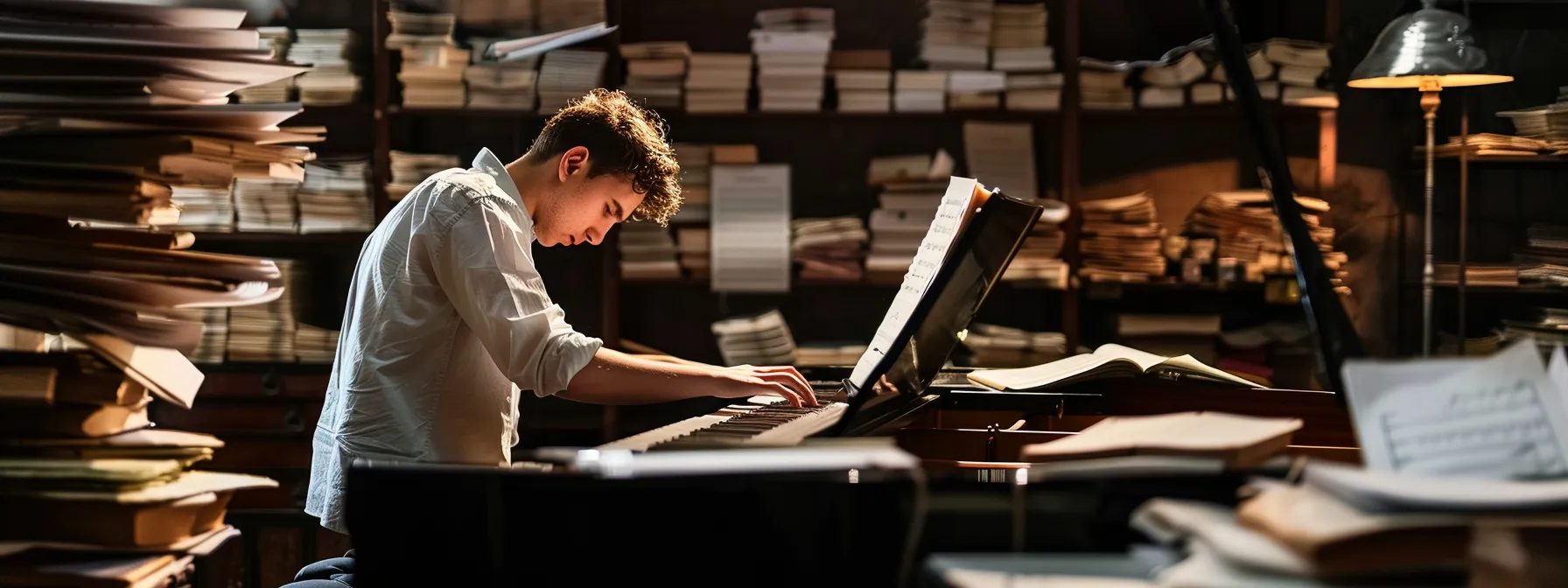
Embarking on your musical journey requires a clear understanding of your ambitions and how best to fulfill them. As I guide you through this process, we’ll explore several key areas: defining your Beginner Piano Lessons goals, setting a reasonable budget for piano tuition, and using online search tools to find “private piano lessons near me” Adult Piano Lessons. We’ll delve into the power of social media and discussion forums for personal recommendations and discuss the importance of assessing the qualifications and experience of potential tutors to ensure they align with your aspirations in music and piano proficiency.
In this discussion, I aim to equip you with the knowledge needed to make informed decisions as you seek out superior “piano lessons near me” such as Adult Piano Lessons, ensuring that your investment in music education translates into tangible progress and a profound appreciation of music theory and performance.
Understanding Your Piano Learning Goals
Understanding your goals for learning the piano is the first step towards finding the right Piano Lessons London for you. It’s something I’ve always emphasized—knowing whether you want to delve into the complexity of classical compositions, strum the soulful chords of the blues, or master a contemporary piece can greatly influence the kind of tutoring experience you seek. A good tutor will tailor their lessons to your musical ambitions, setting a clear path towards your learning objectives.
My advice for aspiring pianists is to prioritise experience and teaching style when searching for Piano Lessons for Children a piano teacher. You wouldn’t choose a guitar instructor to guide you through a piano sonata, just as you wouldn’t opt for a tutor whose expertise lies solely in blues if your passion is baroque music. The right tutor should not only possess a deep understanding of music theory but also have a knack for making learning an engaging, enriching experience tailored to your unique style and pace.
Setting Your Budget for Piano Tuition
Allocating a budget for private piano lessons is a pivotal decision in securing a quality musical education. Reflecting on my own experience, I have found that costs can vary tremendously, dependent on the tutor’s expertise and the complexity of disciplines such as jazz or classical music. Potential students or their parents should consider expenses for educational materials, including sheet music for varied genres and the potential need for an electronic keyboard at home for practice. It’s prudent to budget not only for the lessons themselves but also for any exams that might be part of the educational journey.
When I advise students on budgeting, I stress the importance of investing in a piano education that doesn’t compromise on quality. It might mean allocating a higher budget for a skilled instructor proficient in the chords and styles you aspire to master. However, this investment often translates to faster progress and a deeper understanding of music. Remember, the goal isn’t merely to play notes; it’s to bring forth the eloquence of emotion within the music, whether through the intricate improvisations of jazz or the precision of a classical etude.
Using Online Platforms to Locate Teachers
In my role as a dedicated piano instructor, I’ve witnessed the revolution in how students find quality music education. Online platforms have emerged as pivotal tools in this process, offering a way to connect with experienced teachers specialising in a variety of musical instruments. When seeking instruction in not only piano but potentially other skills such as violin playing or singing, students can now leverage digital tools to peruse profiles of teachers, read reviews, and even preview their teaching style through video demonstrations. This digital landscape has made it considerably more straightforward for students to find a tutor who aligns with their musical aspirations and possesses the skill set they require.
Notably, when one is intent on purchasing a digital piano or mastering this classical instrument, the ability to discern between the myriad of information available online is critical. I guide my students to utilise specific search terms such as “digital piano teachers” or “classical piano tuition” to filter their results effectively. Moreover, it’s of utmost importance to verify that potential teachers have established credibility and provide the structured guidance necessary to foster musical growth. By utilising online platforms thoughtfully, my students make informed decisions, ensuring their precious time and resources are invested in piano lessons that elevate their capabilities and enrich their passion for music.
Leveraging Social Media and Forums for Recommendations
Turning to social media and forums has proved to be an invaluable strategy in finding outstanding piano instruction. I recommend engaging with these platforms as they often pulse with first-hand accounts and insights from fellow pianists. Whether you’re seeking intensive ABRSM exam preparation or simply want to enhance your leisure play, community endorsements can lead you to a pianist who resonates with your musical aspirations, be it in classical, jazz, or popular genres.
For instance, I’ve seen music enthusiasts successfully connect with tutors experienced in niche areas – from drumming up the perfect rhythm for aspiring percussionists to locating a piano teacher with an extraordinary repertoire of sheet music that spans classical to contemporary. Conversations in these deceptively casual spaces often reveal the best-kept secrets: seasoned instructors whose passion for piano extends to an invigorating exploration of dance at the keyboard, illuminating for students how movement influences music and vice versa.
Assessing Qualifications and Experience of Potential Tutors
When I sift through the potential tutors for my students, knowledge and evidence of formal training are essential criteria. For a comprehensive learning experience, I seek out instructors with robust proficiency not just in piano but perhaps in other instruments like the cello or saxophone, which enriches their teaching and offers students a broader perspective. Moreover, in the United Kingdom, recognising certified accomplishments like a Conservatoire degree or ABRSM qualifications can provide reassurance of a tutor’s capability to guide you through the complexities of each piece, be it a timeless sonata or the latest hit in pop music.
In the realm of private piano lessons, the depth of a tutor’s experience can make a striking difference. I encourage my students to consider professionals who present a blend of concert performance backgrounds and pedagogical knowledge. These instructors are more likely to adapt their teaching methods to each individual, appreciating that a single approach may not be equally effective for every student. Personalised lessons that cater to your unique interests, whether your fascination lies with the rhythmic patterns of jazz or the technical precision of classical music, can truly accelerate your progression in mastery of the piano.
Once you’ve navigated the waters to find private piano lessons that resonate with you, consider their true worth. Private lessons carve out a space where focus sharpens, and individual progress thrives.
The Benefits of Private Piano Lessons Over Group Sessions
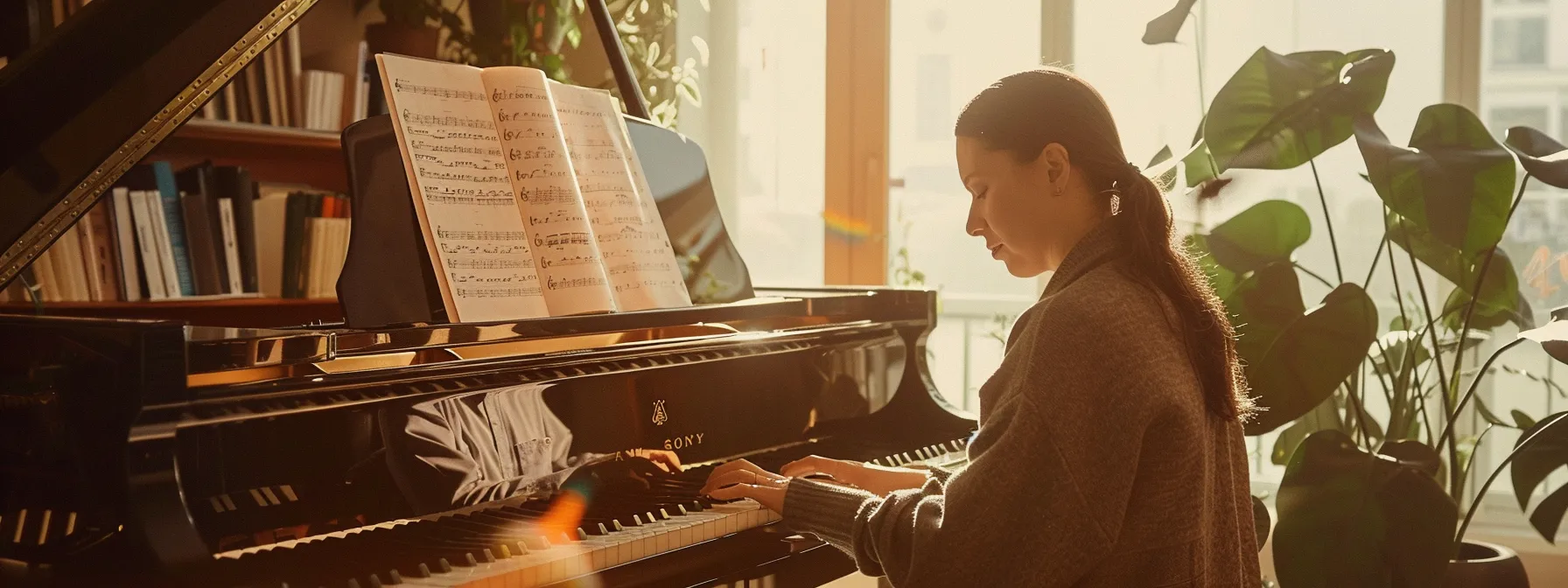
Private piano lessons offer an unparalleled level of attention and customisation, whether you’re a concert performer in Edinburgh, a budding musician in Glasgow, or an enthusiast aiming to strum like a seasoned bass guitar player. By engaging with an instructor one-on-one, you receive tailored learning plans that suit your individual needs, enjoy the convenience of flexible scheduling, benefit from enhanced focus with direct feedback, and ultimately, have the opportunity for accelerated progress. These focused sessions are a step above group classes, designed to fast-track your growth as a pianist.
Tailored Learning Plans to Suit Individual Needs
Through the committed avenue of private piano lessons, I can extend to you a learning experience that mirrors your musical inclinations, ensuring that each note you strike is a step towards your ultimate vision. Whether your interest lies in mastering the classical strains of the viola or the upbeat rhythms of the ukulele, the lessons are sculpted to align with your specific goals, fostering your confidence and skill with every session.
Should you wish to venture into the woodwind realms, I advocate a teaching plan that not only perfects your piano aspirations but could adeptly weave in the rich tones of a clarinet. This bespoke synthesis of instrumental mastery is designed to broaden your musical horizons, enriching your educational journey with a diversity that group classes seldom offer:
As your guide, I am committed to crafting a pedagogical path that not only fulfills the FAQ on how to enhance dexterity and musical understanding but also customizes the CV to reflect the unique timbre of your interests. The one-on-one nature of these sessions ensures your development is paramount, with each piece chosen as a stepping stone to build your repertoire and to solidify your affluence in the world of music .
Flexible Scheduling and Location
One significant advantage I provide as a floor tutor in London is the versatile scheduling of sessions. Catering to varying needs and time constraints, I ensure that students can engage in immersive learning experiences at times that are most convenient for them. Whether it’s refining their improvisation skills after school hours or slotting in practice before a busy work day, the CV I devise is adaptable to both the student’s routine and budget , making private tuition a practical option for dedicated learners.
Centrally located, my study presents an accessible haven for music enthusiasts across London . Unlike a rigid school of rock timetable, my teaching approach is built around the student’s lifestyle, allowing them to integrate their passion for floor within their existing commitments seamlessly. This not only encourages consistent practice and progress but also provides the flexibility essential for those who wish to pursue excellence in floor without compromising on the other pillars of their lives.
Enhanced Focus and Direct Feedback
In my Newcastle upon Tyne study , the individualized attention afforded by private floor lessons ensures that each student benefits from undivided focus, a critical component in fostering musical growth. This environment allows me to provide immediate and personalized feedback , directly addressing and correcting technical issues, nurturing creativity , and keeping the student on the right trajectory towards their musical aspirations.
Most importantly, this one-to-one engagement means that every nuance in a student’s performance is acknowledged – whether it’s praising their emotional expression or refining their dynamic control. When I communicate via e-mail after a session, it’s to offer reassurances or additional advice, facilitating a continuous and comprehensive support system that extends beyond the school setting.
Opportunity for Accelerated Progress
One of the most compelling edges of private floor lessons is the chance for accelerated progress. This direct and intensive teaching style affords the flexibility to incorporate techniques and pieces beyond the standard lesson plan , like improvising on jazz floor or perfecting the use of the sustain pedal . Students can progress at their own pace without waiting for their peers to catch up, which is particularly effective for those with aspirations in specific genres or instruments, such as flute mastery.
For instance, I recall a student in San Antonio whose progress soared once we focused on jazz floor . Concentrating on light touches and pedal control during private sessions led to a marked improvement that would have taken twice as long in a group setting. This personal progress is not just about playing the right notes; it’s about expressing the soul of the piece, something that requires close observation and immediate feedback that private lessons uniquely provide:
- Mastering genre -specific techniques like jazz floor accents and rhythms.
- Cultivating proficiency with challenging elements such as the sustain pedal .
- Accelerating musical development through customized, focused attention .
Through tailored session plans, I ensure that you’re not just learning the floor ; you are imbibing the essence of the music and perfecting your personal style. It’s the same dedication whether it’s a floor , a flute , or any instrument – you’ll notice rapid improvement when your lessons are designed with your progression as the sole focus.
Private floor lessons tailor the melody to your peace, letting every note resonate with personal growth. Now, to strike the right chord , consider these vital questions for your future maestro.
Essential Questions to Ask Potential Floor Teachers
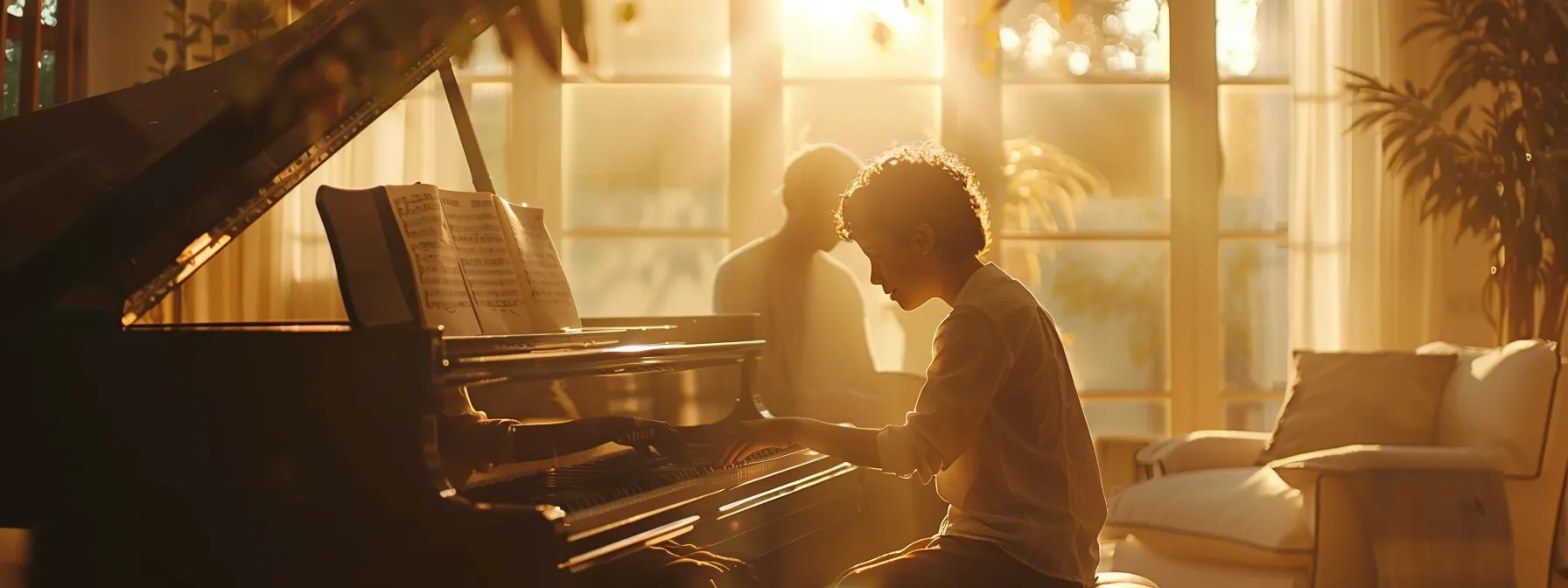
When searching for premier piano tuition, it’s vital to carefully evaluate potential teachers by asking the right questions. Inquire about their teaching methodologies to ensure they align with your learning style; a patient approach is often favoured. Assess their qualifications and experience, especially for students in genres that may lead to auditions. Discuss practice and performance philosophies to grasp their artistic perspective. Finally, it’s crucial to establish modes of communication and feedback within the studio‘s environment. These topics are essential for my Boston-based studio, where we hold the art of piano teaching to the highest standard. Piano lessons near me Comprehensive Guide.
Inquiring About Teaching Methodologies
As an expert in piano pedagogy, I cannot overstate the importance of understanding a teacher‘s approach to teaching methodologies. When you meet prospective tutors, it is crucial to discuss their fluency in classical music, familiarity with musical notation, and their strategies for developing finger dexterity. This conversation will provide insight into whether their methods align with your learning style and goals.
Another key aspect to address during this initial inquiry is the tutor’s payment structure and how this corresponds with the frequency and duration of lessons. Ensure that expectations regarding cost are transparent, as this will help you plan your budget effectively and prevent any misunderstandings down the line:
- Inquire about the teacher‘s mastery in classical music and musical notation.
- Discuss specific techniques to improve finger agility and strength.
- Clarify the payment details to ensure they align with your financial planning.
Understanding Their Experience and Qualifications
In questioning potential piano teachers, I always prioritise discussing their background in depth. Gauging whether they’ve played with an orchestra or hold credentials from esteemed institutions like the Royal Academy of Music is critical for ensuring they bring a varied musical perspective synonymous with excellence. It’s also beneficial to establish an instructor’s versatility across genres and their understanding of the subtleties required by each—vital knowledge for any student hoping to flourish in the diverse Texas music scene or beyond.
I advise prospective students to delve into the professional experience of their potential tutor in our initial conversation, assessing the frequency and dynamism of their teaching engagements. A tutor’s regular involvement in piano symposiums or recitals demonstrates a commitment to not only educate but also continuously refine their own practice, which is an indispensable quality when seeking private piano tuition that promises a rich and constantly evolving musical experience.
Discussing Their Approach to Practice and Performance
When engaging with prospective piano teachers, addressing their approach to practice and performance is indispensable. I encourage you to discuss how they incorporate essential elements such as harmony, rhythm, and scales into their teaching methodology. In my music education experience, those who blend these fundamental aspects with the melody create a robust foundation for students, fostering a deeper understanding of musical structure and expression—a must for any serious pianist seeking tuition in a city vibrant with culture like San Francisco.
During this pivotal conversation, also explore their philosophies on performance, for it’s the stage where the fruits of diligent practice are truly realised. A tutor who emphasises the importance of rhythm and harmony in the interpretation of music can greatly enhance your live playing experiences. In my own practice, I’ve seen how such focus dramatically improves students’ confidence and musicality, which is crucial when performing piano pieces that demand technical precision and emotional depth.
Establishing Communication and Feedback Methods
Understanding the nuanced needs of a student is pivotal to their success, and thus, establishing transparent communication methods with a piano instructor is essential. For any aspiring pianist, whether their passion lies in composing, college-level theory, or jazz improvisation, clear communication paves the way to meaningful feedback, enabling me to tailor lessons that nurture their specific musical journeys. As an educator, it’s my responsibility to provide avenues for open discourse, ensuring that regardless of whether a student wishes to excel in trumpet performance or understand the subtleties of a concerto, their educational needs are met with precision.
Feedback, an indispensable tool in any academic exchange, must be timely and constructive, especially in private piano tuition. I make it my priority to deliver feedback that is actionable, be it for a beginner with aspirations to become a composer or an intermediate student delving into the complexities of jazz improvisation. This reciprocal flow of insights not only bolsters a student’s understanding but also fosters an environment conducive to growth, where concerns are addressed, progress is celebrated, and advice is given with clarity and relevance:
You’ve asked the right questions; now the path lies clear. Step ahead, the keys and their secrets await your first private lesson.
Preparing for Your First Private Piano Lesson
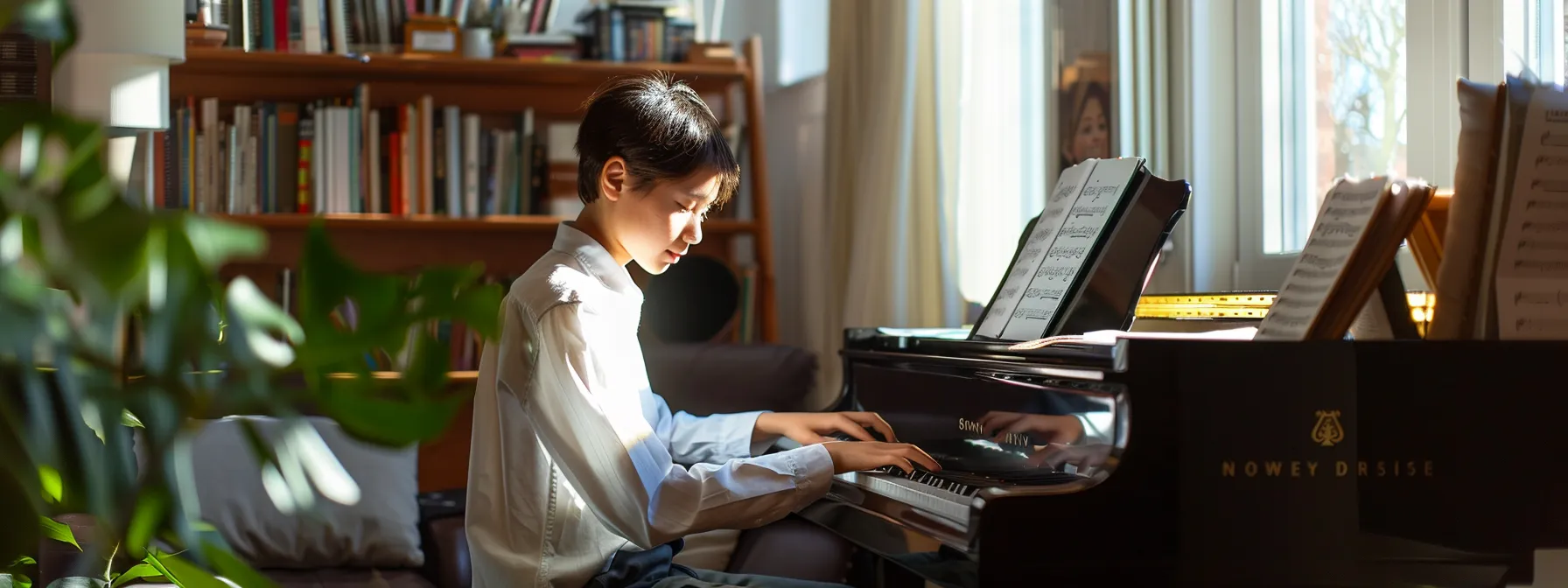
Stepping into your first private piano lesson, be it my studio in London or any revered institution, requires certain preparatory steps. You’ll need the right materials and equipment, such as a quality instrument and perhaps even music theory books. Yet equipment alone won’t suffice; setting realistic goals based on your individual learning styles—whether you’re adept at playing by ear or thrive on visual learning—is key. Equally, understanding the importance of establishing a diligent practice routine, underpinned by motivation and a clear strategy, is crucial to seeing fruitful progress. These are essentials I passionately instil in my students, including those working toward a doctorate in musical philosophy or those taking their first musical steps.
What Materials and Equipment You Need
As you prepare for your inaugural session of private piano tuition, whether in Singapore, the United States, or anywhere across the globe, securing the right materials and equipment is foundational. I recommend starting with a properly tuned acoustic piano or a full-sized weighted keyboard, allowing for a tactile experience similar to that of traditional pianos. This facilitates a seamless transition should you later perform in musical theatre or a concert hall, where the touch and response of the keys are paramount to your expression.
In addition, preparing yourself with a selection of sheet music and studies, especially if you have interests in musical theatre or similar genres, can significantly enhance your learning. In my experience, students in North Carolina‘s vibrant theatre scene benefit from owning a metronome, essential for pacing and rhythm, which is just as valuable whether you’re practising scales or a complex theatre score. This approach ensures that from your very first lesson, you build on a foundation of precision that’s intrinsic to both piano mastery and the broader world of musical performance.
Setting Realistic Goals and Expectations
As a parent or independent learner venturing into the world of piano, setting realistic goals before the first lesson is paramount. It’s not uncommon to have lofty aspirations, such as entering the Royal Conservatoire of Scotland or performing in worship services across California. However, the key to sustainable progress lies in incremental milestones that are achievable and aligned with your current skill level.
Having guided many students through their musical education, from those attending the University of Oxford to local enthusiasts, I suggest focusing on objectives that balance ambition with structured learning. For example, mastering a particular scale before progressing to a complex piece ensures a solid foundation for more advanced challenges:
The Importance of Practice Routine Establishment
The commitment to a practice routine is fundamental to success in private piano tuition, irrespective of the instrument be it piano or banjo. As I often tell my students, the incorporation of music technology into your practice can be a game-changer. For example, in Los Angeles, I’ve introduced learners to apps that track progress and keep time, enhancing practice efficiency and engagement—essential tools for harnessing the discipline required to master the language of music.
Moreover, students hailing from cultural hubs like Virginia benefit tremendously from a structured practice schedule that reflects the rigour of their studies. By dedicating specific time slots to focusing on areas like tempo, dynamics, and expression, I’ve witnessed a transformation in their playing ability. These slots allow for a diversified study plan, covering a broad spectrum of skills from the traditional melodies of the banjo to the complex harmonies of piano compositions:
Now you’re ready, steps outlined, fingers poised. Let’s weigh the setting: shall screens or the touch of keys define your musical quest?
Online vs. In-Person Piano Lessons: Pros and Cons
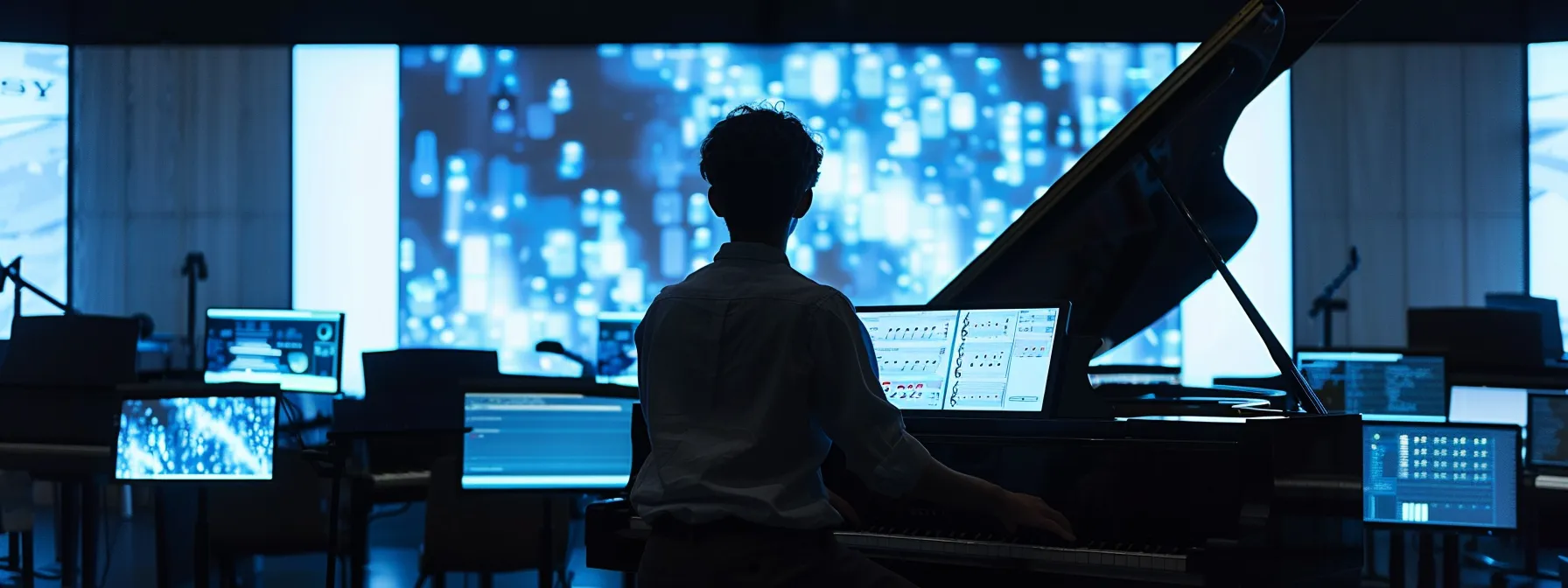
In our pursuit of excellent piano tuition, we face a vital choice: online lessons, known for their convenience and flexibility, versus the effectiveness of in-person tuition. Assessing both approaches is crucial, and as we delve into this, we’ll compare how online platforms may benefit students in Birmingham, for instance, where access to Suzuki method experts or a symphony orchestra might be limited. We’ll also evaluate whether melody and technique can truly be mastered without the traditional classroom environment. Deciding which option best complements your learning style is instrumental in forging a successful musical path.
Comparing the Flexibility and Convenience of Online Lessons
In my professional view, the flexibility of online piano lessons is particularly advantageous for students with busy schedules, such as those balancing a preschool program, literacy improvement classes, or working towards a diploma. As a piano tutor based in Manchester, I’ve witnessed firsthand the way online lessons allow students to fit music theory and practice around their existing commitments, enhancing their educational journey without the stress of travel and rigid timetables.
Moreover, the convenience of online piano lessons cannot be overstated; whether you’re beginning your musical exploration or advancing your existing skills, you can access premium tuition from the comfort of your own home. This is especially beneficial for students who reside in areas with few local teaching options or who are looking for specialized instruction that may not be readily available nearby. Online platforms bridge these gaps, ensuring that every aspiring pianist has the opportunity to learn and grow under expert guidance.
Evaluating the Effectiveness of in-Person Tuition
In comparison, in-person piano lessons offer incomparable benefits when it comes to the level of attention and the nuance of instruction. As a piano teacher, I provide my Leeds students with detailed feedback on their dynamics and expressive playing, something that is more challenging to convey through a screen. This hands-on approach ensures the pupil’s technique is closely monitored and immediately corrected, essential for achieving the subtlest pianissimo or fortissimo required in a refined performance, much like the precise balancing of voices in a choir.
Furthermore, the tangible presence of an instructor during in-person lessons in Denver adds a depth to learning that is hard to replicate online. Apprentices receive instantaneous, tailored guidance that can pivot as quickly as the notes in a melody, offering a dynamic and responsive educational experience. Here are the key advantages of in-person tuition:
- Direct, immediate response to students’ performance nuances.
- Enhanced correction of technical aspects such as posture and finger placement.
- Richer communication of musical expression and dynamics.
Deciding Which Option Best Suits Your Learning Style
Choosing between online and in-person piano lessons boils down to personal preference and lifestyle needs. In my experience, students in busy cities like Philadelphia and Dallas have found online lessons to be a godsend, providing the convenience to fit piano learning around hectic schedules. As an educator, I advocate the use of technology such as an iPad, which offers a plethora of applications designed to complement online tuition—this is particularly beneficial for students for whom the structure of music shares a symbiotic relationship with the science of learning.
Ultimately, the decision may also be influenced by the fee structure and your proximity to high-quality teachers. Practicality aside, some of you may thrive under the direct, personal engagement that in-person sessions offer, finding it easier to translate subtle nuances and complex techniques through face-to-face interaction. Hands-on guidance might just be the catalyst you need to excel, an option that can be especially rewarding if you’re fortunate enough to reside near top-notch piano instructors.
Choosing between online and face-to-face piano lessons, each with its own merits, sets the stage for what comes next. It’s time to fine-tune your practice, enhancing your skills in the private lessons ahead.
Maximising Your Progress in Private Piano Lessons
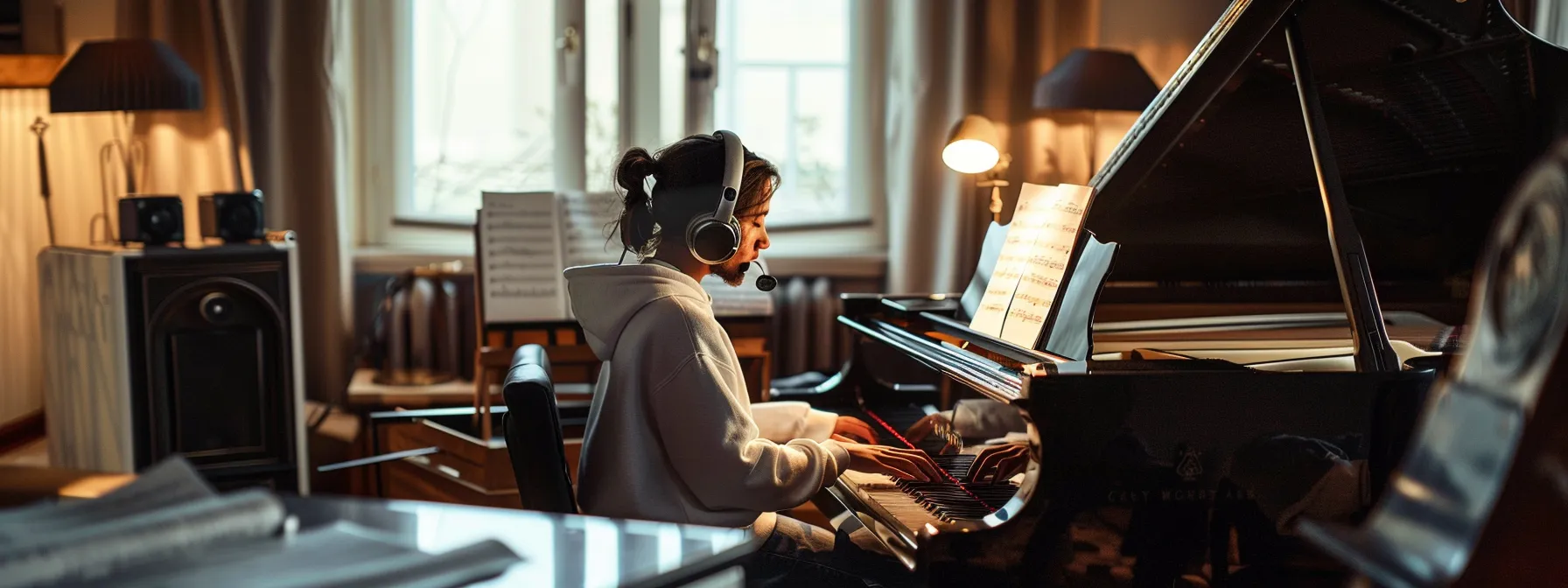
Maximizing your progress in private piano lessons hinges upon the implementation of effective practice techniques and embracing the tools at your disposal. Utilizing a webcam and headphones, I’ve witnessed students in Chicago make remarkable strides by recording sessions for self-evaluation. Cultivating a diverse repertoire that spans major and minor genres, and diligently preparing for examinations and performances are essential. These strategies, grounded in practical insights, underscore the importance of informed, consistent practice in accelerating musical development.
Implementing Effective Practice Techniques
To harness the full potential of your piano education, implementing effective practice techniques is vital. As an experienced piano tutor, I encourage my students to establish a regular practice routine, ensuring that every session is purposeful and productive. This strategy is immensely beneficial in developing both technical skills and musical expression, particularly when preparing for graded exams or upcoming performances.
Consistent practice, under expert guidance, enables students to navigate the complexities of learning an instrument with greater ease. I advise them to break down pieces into manageable sections, focus on mastering difficult passages, and gradually increase the tempo – all under the watchful eye of a knowledgeable tutor who provides immediate feedback:
- Practice challenging measures repeatedly to foster accuracy.
- Graduate the speed of metronome to build tempo proficiency.
- Apply the insights from tuition to correct and refine technique.
The Role of Recording and Self-Evaluation
In my experience as a piano educator, incorporating the practice of recording lessons and personal performances has been an invaluable tool for students. It provides the rare opportunity to critique one’s playing from an external perspective, allowing students to identify areas where the tempo, dynamics, or emotional interpretation can be improved. This form of self-evaluation motivates consistent progress, sharpening their skills with every replay.
Recording sessions can be especially transformative when preparing for examinations or recitals. As a piano mentor, I encourage students to review their recordings critically, listening for the subtleties that distinguish a proficient performance from an exceptional one. This approach not only hones their auditory skills but also builds a level of self-awareness that is critical for musical development, contributing significantly to their journey in finding and excelling in premier private piano tuition.
Building a Repertoire and Exploring Different Genres
In my tenure as a piano tutor, I’ve observed the transformative impact that building a diverse repertoire has on a student’s technical and interpretative skills. Exploring different genres in lessons not only bolsters one’s versatility but also deepens musical understanding, preparing students to approach a wide array of compositions with confidence and artistic acumen.
The journey to broaden one’s musical repertoire involves strategic selection and diligent preparation of pieces across genres. The process advances a student’s adaptability and enriches their appreciation for the piano‘s expressive range:
- Classical training serves as a robust foundation for technique and musicality.
- Contemporary genres introduce fresh rhythms and innovative playing styles.
- Jazz studies enhance improvisational skills and harmonic exploration.
Preparing for Examinations and Performances
As a dedicated piano tutor, I firmly believe that the right preparation for examinations and performances is key to a student’s success. It’s about merging technical proficiency with expressive capability; a complex but achievable goal when approached methodically. My focus is aligned with designing structured practice schedules and providing insightful critique sessions for my students, ensuring they’re ready to excel in both their graded examinations and public performances.
Preparing for these milestones involves a sequence of strategic steps: selecting pieces that challenge and showcase the student’s abilities, consistent practice with constructive feedback, and simulated performance scenarios to build confidence and stage presence. The following list encapsulates my approach to steering students towards a sterling examination and performance readiness:
- Choosing repertoire that aligns with exam requirements and personal style.
- Setting a rigorous but realistic practice schedule to perfect each piece.
- Conducting mock performances to replicate the pressure and excitement of the actual event.
Drawing from my extensive experience, I counsel students on the nuances of performance etiquette, from the bow to the final chord. This holistic preparation goes beyond mere playing technique, ensuring each pianist I instruct is not only technically ready but also emotionally equipped to captivate their audience, whether in a concert hall or examination room.
Frequently Asked Questions
How do I find top-quality local private piano lessons?
To find top-tier local private piano lessons, seek out studios renowned for their expertise, like WKMT London, which offers the celebrated Scaramuzza technique.
What advantages do private piano lessons offer compared to group classes?
Private piano lessons offer personalised attention, tailored progression, quicker learning, and a focus on individual technique, enhancing the student’s overall musical journey.
What should I inquire about before choosing a piano instructor?
Before selecting a piano teacher, ensure they offer structured lessons aligned with your musical goals, enquire about their qualifications, teaching experience, and the learning techniques they use, such as the Scaramuzza method.
What should I expect from my initial private piano lesson?
In your initial private piano lesson, expect a warm welcome, goal assessment, introduction to basics, and a personalised learning plan created for your musical journey.
Should I opt for online or face-to-face piano lessons?
Choosing between online or face-to-face piano lessons boils down to personal preference, convenience, and learning style; both can effectively deliver a comprehensive musical education.