
 TRIAL LESSON
Piano Lessons
Mastering Rock Piano: Essential Skills for Aspiring Musicians

Dec
Rock Piano Guide for Beginners
Mastering Rock Piano: Essential Skills for Aspiring Musicians
Are you struggling to capture the raw energy of rock music on the piano? This article demystifies the core skills needed for mastering rock piano, specifically tailored for beginners. Readers will delve into the fundamentals of rock piano, learn essential techniques, and explore various rock styles to elevate their playing. By understanding rock chord progressions and scales, musicians will unlock the ability to improvise with confidence. Engage with this content to overcome common challenges and amplify your rock piano skills, ensuring you’re equipped to thrive in the dynamic world of rock music.
Key Takeaways
- Rock piano‘s roots lie in the fusion of blues and jazz, shaping its unique sound
- Mastery of chord progressions and transitions is vital for dynamic rock piano performances
- The blues scale is essential for creating soulful, expressive rock piano solos
- Modal scales offer pianists a spectrum of tonal colours for sophisticated compositions
- Practising scale exercises is crucial for developing the technical skills needed in rock piano
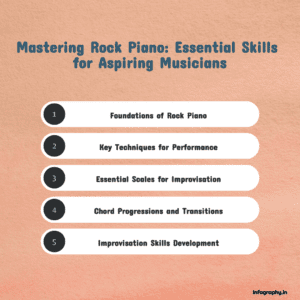
Understanding the Fundamentals of Rock Piano

Embarking on the journey of mastering rock piano begins with a solid grasp of its roots and evolution. This section delves into the origins of rock and roll, tracing the pivotal role of the keyboard instrument in shaping its distinctive sound. Aspiring musicians will recognise key characteristics of rock piano music, including its signature chord progressions and the interplay with guitar. Equipping oneself with the essential tools for rock pianists is crucial for capturing the genre’s raw energy and rhythm. Each subsequent topic will provide WKMT, ensuring musicians are well-prepared to excel in this dynamic field.
Explore the Origins and Evolution of Rock Piano
The genesis of rock piano can be traced back to the vibrant intermingling of blues and jazz, where the instrument found its voice amidst the cultural revolution of music. Pioneers of rock and roll harnessed the lessons versatility, blending rhythmic blues patterns with the improvisational spirit of jazz to forge a new, electrifying sound that would captivate audiences worldwide.
As rock music evolved, the piano remained a cornerstone, with sheet music sales soaring as enthusiasts sought to replicate the iconic riffs and solos that defined the genre. The instrument’s adaptability allowed musicians to craft complex arrangements that bridged classical training with the raw, emotive power of rock, showcasing the piano‘s enduring relevance in the tapestry of modern music.
Recognise Key Characteristics of Rock Piano Music
Rock piano music is distinguished by its driving rhythm and powerful chord progressions, which form the backbone of many iconic songs. The Beatles, for instance, often infused their pop music with rock piano elements, creating timeless tracks that continue to influence musicians. The instrument’s ability to both lead and accompany in rock compositions is central to its enduring appeal. If you are interested in learning more about playing rock piano, consider checking out WKMT London Piano Lessons for Adult Piano Lessons.
Another hallmark of rock piano is its dynamic range, showcased in masterpieces like Queen’s “Bohemian Rhapsody,” where the piano transitions seamlessly from delicate melodies to robust, anthemic sections. This versatility allows pianists to convey a spectrum of emotions, making the piano an indispensable tool for storytelling within the genre. If you are interested in learning more about rock piano, consider signing up for WKMT London Piano Lessons, which offers Adult Piano Lessons and Beginner Piano Lessons, as well as Piano Lessons for Children.
Equip Yourself With Essential Tools for Rock Pianists
To truly excel in rock piano, one must study the styles of maestros like Billy Joel and Elton John, whose command over the keyboard has left an indelible mark on the genre. Their ability to weave a tapestry of melodies that complement the bass guitar creates a rich, full sound that is both complex and captivating. Aspiring pianists should aim to master the interplay between piano and bassline, a skill that underpins the rhythmic foundation of rock music.
Moreover, the influence of guitar legends such as Eric Clapton on rock piano cannot be overstated. Observing the guitar‘s melodic contributions offers invaluable insights into creating piano arrangements that resonate with the soul of rock. By integrating these guitar-inspired techniques, pianists can enhance their performances, ensuring each note pulsates with the genre‘s signature vitality and emotion.
Now, grasp the keys with purpose. Ahead, the essential techniques await, the very tools to carve your path in rock piano.
Essential Techniques for Rock Pianists
For those eager to master rock piano, understanding and executing essential techniques is key. This includes mastering rock rhythms and groove patterns, akin to the pulsating energy of Jerry Lee Lewis‘s performances. Developing strong left-hand accompaniment skills is crucial, much like Paul McCartney‘s adeptness on the keys. Incorporating signature riffs and licks into one’s playing elevates the musical narrative, reminiscent of Queen‘s iconic soundscapes. Additionally, applying syncopation and accents effectively can transform a simple melody into a compelling piece. Each subsequent section will delve into these skills, guided by experienced teachers, to refine the artistry of aspiring rock pianists.
Master Rock Rhythms and Groove Patterns
To master rock rhythms and groove patterns, one must delve into the energetic world of rhythm and blues, where the piano‘s percussive potential truly shines. The iconic “Great Balls of Fire” serves as a prime example, with its relentless drive and fiery arpeggios that demand precision and passion from the pianist. Mastery of these elements allows for a compelling accompaniment that can stand alone or blend seamlessly with a band.
Aspiring musicians often find that integrating classical music techniques into rock piano enriches their playing, bringing a nuanced depth to the robust rhythms of rock. By practising arpeggios and honing their accompaniment skills, pianists develop a versatile foundation that enables them to inject classical finesse into the raw energy of rock, creating performances that resonate with both power and sophistication.
Develop Strong Left-Hand Accompaniment Skills
Developing strong left-hand accompaniment skills is a cornerstone for rock pianists, as it provides the rhythmic foundation that supports the melody. In iconic tracks like Led Zeppelin‘s “Stairway to Heaven,” the left hand creates a compelling undercurrent that allows the right hand‘s intricate melodies to soar. Mastery of this skill enables pianists to deliver the full-bodied sound characteristic of pop rock anthems, much like the unforgettable bass lines in The Beatles‘ “Hey Jude.”
Moreover, the left hand‘s role extends beyond mere support; it can drive a song‘s energy and emotion, as evidenced by David Bowie‘s dynamic piano-driven compositions. By focusing on developing a robust left-hand technique, pianists can enhance their ability to convey the narrative of a piece, ensuring each performance resonates with the spirit of rock and captivates the listener.
Incorporate Signature Riffs and Licks Into Your Playing
Integrating signature riffs and licks into one’s playing is a transformative step for any pianist aspiring to master the rock genre. The haunting melody of “A Whiter Shade of Pale” or the rhythmic intricacies of Pink Floyd‘s compositions serve as quintessential examples, demonstrating how these elements can define a song‘s identity. Through the study of music theory and the emulation of these iconic motifs, pianists can develop a distinctive style that resonates with the expressive depth of rock music.
Moreover, the narrative power of a well-placed riff, as heard in the storytelling prowess of “Piano Man,” can elevate a performance from mere singing accompaniment to a compelling musical experience. By mastering these techniques, pianists not only pay homage to the greats but also carve out their own place within the rich tapestry of rock music, ensuring their playing sings with authenticity and passion.
Apply Syncopation and Accents Effectively
Syncopation and the strategic placement of accents are pivotal for any pianist looking to capture the essence of classic rock. The timeless groove of Lynyrd Skynyrd‘s “Free Bird” exemplifies the impact of these techniques, where the piano‘s rhythmic displacement contributes to the song‘s soaring momentum. A pianist must learn to accentuate unexpected beats, creating a compelling tension that is synonymous with the genre‘s energetic pulse.
For the pianist eager to infuse their performances with the authentic groove of rock, mastering these elements is non-negotiable. Consider the following steps to enhance your playing:
- Listen to classic rock tracks and identify the syncopated patterns within.
- Practise accenting off-beats to develop a feel for rock‘s rhythmic nuances.
- Experiment with different groove combinations to discover what resonates with your personal style.
By internalising the groove and accent patterns that define classic rock, pianists can elevate their playing from mere notes on a page to a vibrant, living performance. It’s this mastery of rhythm and emphasis that will set them apart, allowing them to deliver music that truly resonates with the spirit of rock.
Mastering the keys is just the beginning. Let’s delve into the diverse world of rock piano styles that give this music its soul.
Exploring Different Rock Piano Styles

The journey of learning rock piano is as diverse as the genre itself, encompassing a range of styles that have shaped its history. From the pioneering techniques of Freddie Mercury to the energetic performances of Little Richard, each style offers unique insights into the fabric of rock music. This section will guide students through classic rock piano methods, the integration of blues elements, the complexities of progressive rock, and the evolving trends of contemporary rock. With a focus on practical application, musicians will understand how to infuse their playing with the essence of rock, from its foundational chords to the storytelling power of its lyrics.
Dive Into Classic Rock Piano Techniques
Delving into classic rock piano techniques, one encounters the art of improvisation, a skill that allows musicians to inject personal flair into their performances. The iconic “Tiny Dancer” by Elton John exemplifies this, with its seamless blend of melody and improvisational riffs that resonate with listeners. Aspiring pianists should focus on developing this improvisational ability, as it is crucial for adding depth and originality to their playing.
Another fundamental aspect is mastering the rhythmic complexity of funk and syncopation, which are integral to the rock piano style. These techniques, evident in the compelling grooves of classic rock anthems, require a pianist to accentuate off-beats, creating a dynamic and engaging musical experience. To enhance their skill set, musicians must practise these elements diligently:
- Study the rhythmic patterns of funk-infused rock songs to understand their underlying groove.
- Experiment with syncopation by shifting accents in various musical phrases.
- Incorporate riffs into improvisation exercises to build a repertoire of rock piano motifs.
Blend Blues Influences Into Rock Piano
Infusing rock piano with blues influences enriches the musical tapestry, allowing for a deeper exploration of harmony and comping techniques. The soul-stirring performance of “The Great Gig in the Sky” by Pink Floyd exemplifies the emotive power of blues-infused rock, where the piano transcends mere accompaniment to become the heartbeat of the band. Musicians must study these blues patterns to create a sound that resonates with the raw emotion and improvisational freedom characteristic of the genre.
Bruce Springsteen‘s work offers a masterclass in blending the storytelling tradition of blues with the driving force of rock piano. His band‘s sound, marked by rich harmonies and robust comping, provides a framework for pianists to develop a style that is both grounded in blues and elevated by rock‘s energetic dynamism. By emulating these techniques, pianists can craft performances that speak to the listener’s soul, bridging the gap between technical skill and expressive artistry.
Understand Progressive Rock Piano Elements
Progressive rock, with its intricate compositions and expansive structures, often draws upon the complex harmonies and improvisational elements of jazz piano. The genre‘s pioneers, such as Keith Emerson with his work on “Fanfare for the Common Man,” showcased a level of technical proficiency and creative expression that continues to inspire pianists. To excel in progressive rock, musicians must embrace these jazz-influenced techniques, allowing them to navigate the genre‘s challenging arrangements with agility and finesse.
The Doors, known for their unique blend of rock with elements of boogie and blues, exemplify the versatility required for progressive rock piano. Their keyboardist, Ray Manzarek, demonstrated how the piano can drive a song‘s narrative, creating a soundscape that is both rich and evocative. Aspiring musicians should study such examples to understand how to integrate a variety of styles into their playing, crafting performances that capture the innovative spirit of progressive rock.
Stay Updated With Contemporary Rock Trends
Keeping pace with contemporary rock trends is essential for pianists who wish to remain relevant and versatile. The Rolling Stones, for instance, continue to influence modern rock with their timeless arrangements, prompting musicians to study their use of scale and rhythm. A deep understanding of these elements, along with the incorporation of iconic sounds like John Lennon‘s organ techniques, equips pianists with the ability to adapt and innovate within the evolving landscape of rock music.
For the modern musician, the ability to craft an arrangement that resonates with today’s audience is paramount. This involves not only a mastery of traditional rock scales but also an openness to the fusion of genres and the integration of digital enhancements. By analysing contemporary hits and the stylistic nuances of bands like The Rolling Stones, pianists can develop a sound that is both classic and current:
- Examine the chord progressions and scale usage in recent rock hits.
- Explore the incorporation of digital sounds and effects in modern arrangements.
- Study the organ and keyboard styles of legendary musicians like John Lennon for inspiration.
From the solid ground of rock‘s rhythm, we venture into the realm of creation. Improvisation on the piano awaits, a skill where freedom and music collide.
Developing Improvisation Skills on the Piano

Mastering rock piano extends beyond the notes on a digital piano; it demands a fluency in piano improvisation. This section introduces musicians to the essentials of rock improvisation, guiding them through the process of practising over common rock progressions such as “November Rain” and “The House of the Rising Sun“. It will explore the use of pentatonic and blues scales in crafting soulful solos and provide strategies to build confidence for live improvisation, ensuring each performance resonates with the drum‘s tempo and the genre‘s spontaneous spirit.
Grasp the Fundamentals of Rock Improvisation
Understanding the fundamentals of rock improvisation is akin to unlocking a musical language that allows for spontaneous expression and connection with the audience. Bands like Jethro Tull and Fleetwood Mac exemplify the power of improvisation, weaving intricate solos that capture the essence of a moment. For the aspiring musician, mastering techniques such as the glissando and understanding the use of scales is essential for crafting solos that resonate with the raw energy of rock.
Procol Harum‘s “A Whiter Shade of Pale” demonstrates the emotive potential of rock piano improvisation, with its iconic organ solo that has captivated listeners for decades. To develop similar improvisational prowess, one must immerse themselves in the genre‘s classics, dissecting the solos and understanding the underlying techniques:
- Study the structure of solos in rock classics to identify common improvisational patterns.
- Practise the glissando and other expressive techniques to add flair to your improvisations.
- Listen to bands like Jethro Tull and Fleetwood Mac to understand the interplay between instruments during improvised sections.
By focusing on these aspects, musicians can build a solid foundation for rock improvisation, enabling them to create spontaneous compositions that are both technically sound and emotionally compelling. This understanding, coupled with regular practice, equips pianists with the skills to deliver performances that are not just heard but truly felt.
Practise Improvisation Over Common Rock Progressions
Practising improvisation over common rock progressions is a vital skill for any pianist looking to master the genre. For instance, the hauntingly beautiful progression in “My Immortal” offers a perfect canvas for exploring emotional depth through improvisation. Similarly, the soulful grooves of “Green Onions” provide an excellent opportunity for pianists to experiment with Chuck Leavell‘s style of voicing, adding a distinctive flavour to their playing.
As musicians delve into the anthemic “Come Sail Away,” they encounter a rich tapestry of chords that challenge and expand their improvisational vocabulary. This classic progression demands a nuanced understanding of voicing and dynamics, allowing the pianist to weave a narrative that resonates with the energy and spirit of rock music.
Use Pentatonic and Blues Scales in Solos
Utilising pentatonic and blues scales in solos is a fundamental technique for rock pianists seeking to emulate the soulful expressions of legends like Fats Domino and Billy Preston. These scales, stripped of potentially dissonant notes, allow for fluid improvisation that can easily adapt to the harmonic structure of a rock song. The musician‘s fingers dance across the keys, creating solos that resonate with the genre‘s characteristic emotional depth.
When a pianist masters these scales, they unlock the ability to convey a story through their instrument, much like a synthesizer weaves electronic tales. The simplicity of the pentatonic scale, in particular, lends itself to the creation of memorable musical phrases that can define a solo’s character. To enhance their improvisational skills, pianists should consider the following steps:
- Practise the five-note pentatonic scale in various keys to build muscle memory and versatility.
- Explore the blues scale by incorporating the flattened third and seventh degrees, adding a layer of complexity to their solos.
- Listen to recordings of Fats Domino and Billy Preston to analyse how these scales are artfully employed in rock piano solos.
By integrating these scales into their repertoire, pianists not only pay homage to the greats but also forge their own path in the rich landscape of rock music. The use of musical notation to chart out these scales can serve as a visual aid, reinforcing the relationship between the notes and their fingers as they navigate the keyboard.
Build Confidence for Live Improvisation
For the musician aspiring to the improvisational prowess of Joni Mitchell or Keith Emerson, building confidence for live performance is paramount. It begins with a deep familiarity with one’s instrument and a repertoire of well-rehearsed licks and chord progressions. The musician must also cultivate the ability to remain composed under the spotlight, transforming the adrenaline of the moment into a fuel for creativity and expression.
Live improvisation demands not only technical skill but also an intimate connection with the music, akin to the soulful performances of The Allman Brothers Band or the charismatic presence of Elvis Presley. Musicians can foster this connection by regularly engaging in practice sessions that mimic live conditions, allowing them to navigate the unpredictability of performance with assurance and artistry.
As one’s fingers dance with spontaneity across the ivories, the path to creativity widens. Let us march on to the robust world of rock, where chord progressions reign supreme.
Mastering Rock Chord Progressions
Mastering rock chord progressions is a fundamental skill for any aspiring musician looking to emulate the dynamic performances of icons like Ray Charles and Axl Rose. This section will guide students through learning common chord progressions that make audiences want to dance, enhancing transitions for seamless play, and utilising power chords and inversions to add depth. Additionally, it will provide insights into creating original rock progressions, drawing inspiration from the likes of Alicia Keys. Each topic is designed to equip pianists with the expertise needed to captivate with their dynamics and technical prowess.
Learn Common Chord Progressions in Rock Music
Within the diverse music genre of rock, the mastery of chord progressions is essential for any pianist. The interplay of major and minor chords forms the emotional backbone of many classic rock anthems, from the haunting melodies of “Bat Out of Hell” to the intricate compositions of Rick Wakeman. Understanding these progressions equips musicians with the versatility to navigate the genre‘s rich landscape, whether they’re replicating the ultimate guitar anthems or crafting their own original pieces.
For those seeking to deepen their understanding of rock‘s harmonic structures, the following steps are invaluable:
- Study the chord sequences used in timeless rock songs to grasp their impact on the music‘s mood and narrative.
- Practise transitioning between major and minor chords to gain fluency and enhance musical expression.
- Explore the use of power chords and inversions, as popularised by ultimate guitar icons, to add depth and energy to performances.
By delving into these chordal foundations, pianists not only pay homage to the greats but also pave the way for their own musical innovations. This knowledge is a stepping stone to creating compelling rock music that resonates with both the spirit of the genre and the individuality of the musician.
Enhance Chord Transitions for Smooth Play
Smooth chord transitions are the hallmark of a skilled rock pianist, turning a simple progression into a compelling musical journey. By studying the seamless flow in songs like “Bridge Over Troubled Water,” pianists can learn to connect chords with the finesse of a seasoned artist. This skill is particularly vital when navigating the energetic shifts in tracks such as “Locomotive Breath,” where the precision of movement between chords can make or break the performance.
For those looking to emulate the rhythmic drive of Chuck Berry, mastering the art of the ‘lick‘—a quick sequence of notes played between chords—is essential. It’s the root of rock‘s distinctive sound, providing a bridge that carries the listener from one chord to the next with an infectious groove. To enhance chord transitions for smooth play, consider the following steps:
- Practise moving between chords without pausing, ensuring each transition is fluid and confident.
- Incorporate licks that complement the song‘s style, using them to bridge gaps and maintain the rhythm.
- Listen to and emulate transitions in classic rock songs, focusing on how legends like Chuck Berry use licks to add energy and flow to their music.
Utilise Power Chords and Inversions
Power chords, a staple in the rock pianist‘s toolkit, are the bedrock of many a ballad and anthem. They provide a full, rich sound that can support a melody with minimal harmonic complexity, making them an essential skill for any musician. When one listens to the driving force behind “Layla” by Derek and the Dominos, it’s clear how power chords can underpin a track with their robust energy, transforming a simple chord progression into a memorable musical experience on any musical instrument.
Inversions are another key technique, offering a pathway to sophisticated soundscapes that captivate listeners. By altering the bass note of a chord, pianists can create subtle shifts in tone and mood, essential for the dynamic storytelling found in Muse‘s compositions. This skill allows for seamless transitions between chords, ensuring each piece flows with purpose and clarity.
- Master the use of power chords to add depth and strength to rock performances.
- Practise chord inversions to enhance the emotional impact of a ballad or rock piece.
- Study tracks by Muse and Derek and the Dominos to understand the application of these techniques on the musical instrument.
Create Your Own Rock Progressions
Creating one’s own rock progressions is a testament to a musician‘s knowledge and creativity within the genre. By analysing the chordal structures used by legendary guitarist from Styx or the keyboard virtuosity of Ray Manzarek, pianists can begin to craft unique progressions that resonate with the energetic spirit of rock. This process not only enhances their compositional skills but also allows them to leave a personal imprint on the music they create.
Aspiring musicians should draw upon their understanding of rock‘s rich history to forge new paths in their piano playing. By experimenting with different chord combinations and incorporating the rhythmic and melodic sensibilities of renowned guitarists, they can develop progressions that capture the essence of the genre. This hands-on approach to songwriting empowers pianists to contribute to the evolution of rock music with originality and confidence.
Chords are the foundation; scales are the map. Let’s navigate the landscape of rock with essential scales and modes.
Essential Scales and Modes for Rock Piano

For the aspiring rock pianist, mastering scales and modes is as crucial as the riffs that drive a guitar solo in “Stairway to Heaven” or the haunting organ in “A Whiter Shade of Pale“. This section introduces the major and minor pentatonic scales, foundational for emulating the solos in classics like “Layla“. It also delves into the blues scale, a key element for soulful soloing, and explores modal scales to broaden one’s musical vocabulary. Practical exercises are provided to ensure musicians develop the ear and dexterity needed for scale mastery.
Learn Major and Minor Pentatonic Scales
The major and minor pentatonic scales are the bedrock upon which rock piano, much like the electric guitar, builds its melodic and soloing prowess. These scales, favoured by musicians from Jonathan Cain of Journey to the progressive rock virtuosos of Dream Theater, provide a framework for creating emotive and memorable melodies that resonate with the genre‘s energy and spirit. Mastery of these scales allows pianists to navigate the keyboard with the same ease as a violinist glides through a chord chart, crafting solos that sing with clarity and impact.
Understanding the pentatonic scales equips aspiring rock pianists with the tools to improvise and compose with confidence, laying down a foundation that supports both rhythm and lead playing. These five-note scales, stripped of their more dissonant intervals, offer a simplified yet powerful approach to melody-making, akin to the iconic riffs that define rock‘s most enduring electric guitar solos. By internalising the major and minor pentatonic scales, musicians can unlock new creative possibilities and elevate their performances to new heights.
Explore the Blues Scale for Rock Soloing
The blues scale, a cornerstone of rock soloing, offers musicians a gateway to the soulful expressions that characterise timeless tracks like Billy Joel‘s “New York State of Mind“. This scale, with its distinctive flattened notes, provides a rich palette for improvisation, allowing pianists to channel the emotive depth reminiscent of Jon Lord‘s work with Deep Purple. Mastery of the blues scale enables pianists to infuse their solos with a raw, expressive quality that resonates with the listener’s core.
When aspiring rock pianists delve into the blues scale, they tap into a tradition upheld by greats such as Billy Powell of Lynyrd Skynyrd and the progressive sounds of Supertramp. The scale‘s versatility shines in various time signatures, offering a foundation upon which musicians can build complex, emotionally charged solos. It is this understanding and application of the blues scale that empowers pianists to create solos that not only complement the harmonic structure of a song but also tell a compelling story in their own right.
Apply Modal Scales in Rock Contexts
Modal scales, a key element in the repertoire of influential musicians like Christine McVie and Kate Bush, offer rock pianists a rich tapestry of tonal colours to explore. These scales, when applied effectively, can evoke the complex emotions and atmospheres found in tracks like “Firth of Fifth” or Coldplay‘s evocative melodies. Mastery of modal scales allows pianists to traverse the octave with a nuanced understanding of mood, enhancing their ability to craft compelling musical narratives.
For the aspiring rock pianist, integrating modal scales into their playing can be transformative, providing a fresh perspective on composition and improvisation. Practical application of these scales is evident in the layered textures of Christine McVie‘s work with Fleetwood Mac, where modal interplay adds depth to the band‘s iconic sound. By embracing modal scales, musicians can push the boundaries of conventional rock piano, creating pieces that resonate with a distinctive, sophisticated edge.
- Study the distinct characteristics of each mode and how they can alter a song‘s emotional impact.
- Listen to and analyse tracks by artists like Kate Bush to understand the application of modal scales in their compositions.
- Experiment with modal scales over familiar chord progressions to discover new sonic possibilities within the rock genre.
Practise Exercises for Scale Mastery
For the rock pianist looking to emulate the iconic sounds of the Hammond organ as heard in Deep Purple‘s legendary tracks, practising exercises for scale mastery is indispensable. Focusing on intervals within scales can help musicians understand the framework that underpins rock‘s most memorable melodies. The band‘s success in the United States and beyond was partly due to their mastery of these musical building blocks, demonstrating the universal power of well-executed scale work.
Scale mastery exercises should be approached with a methodical mindset, ensuring each note is played with precision and clarity. Aspiring musicians can benefit from slow, deliberate practice, gradually increasing the tempo as their confidence grows. This foundational work lays the groundwork for the expressive solos and rich textures that characterise the rock genre, providing pianists with the tools to create music that resonates across the United States and beyond.
Frequently Asked Questions
What are the core fundamentals of rock piano?
The core fundamentals of rock piano include strong rhythm, improvisation, basic chord knowledge, and the ability to play both melody and accompaniment.
Which techniques are crucial for a rock pianist?
A rock pianist must master rhythm, improvisation, and powerful chord progressions to captivate audiences with dynamic performances.
How can I differentiate between rock piano styles?
Differentiating rock piano styles involves recognising rhythmic patterns, chord progressions, and the influence of blues, jazz, or classical elements distinctive to each genre.
What are the best ways to develop improvisation on the piano?
Developing improvisation on the piano hinges on mastering scales, practising chord progressions, and actively listening to jazz greats to internalize diverse styles.
Which scales and modes are essential for rock piano mastery?
Rock piano mastery hinges on fluency in the Minor Pentatonic, Blues Scale, and Mixolydian and Dorian modes, each vital for the genre‘s characteristic sound.
Do not miss our post about the most famous Rock and Roll Walking Tours London.