
 TRIAL LESSON
Uncategorized
Piano Rock and Roll Walking Tour London: The Piano Musicians, Streets, and Stories That Shaped the Sound
Dec
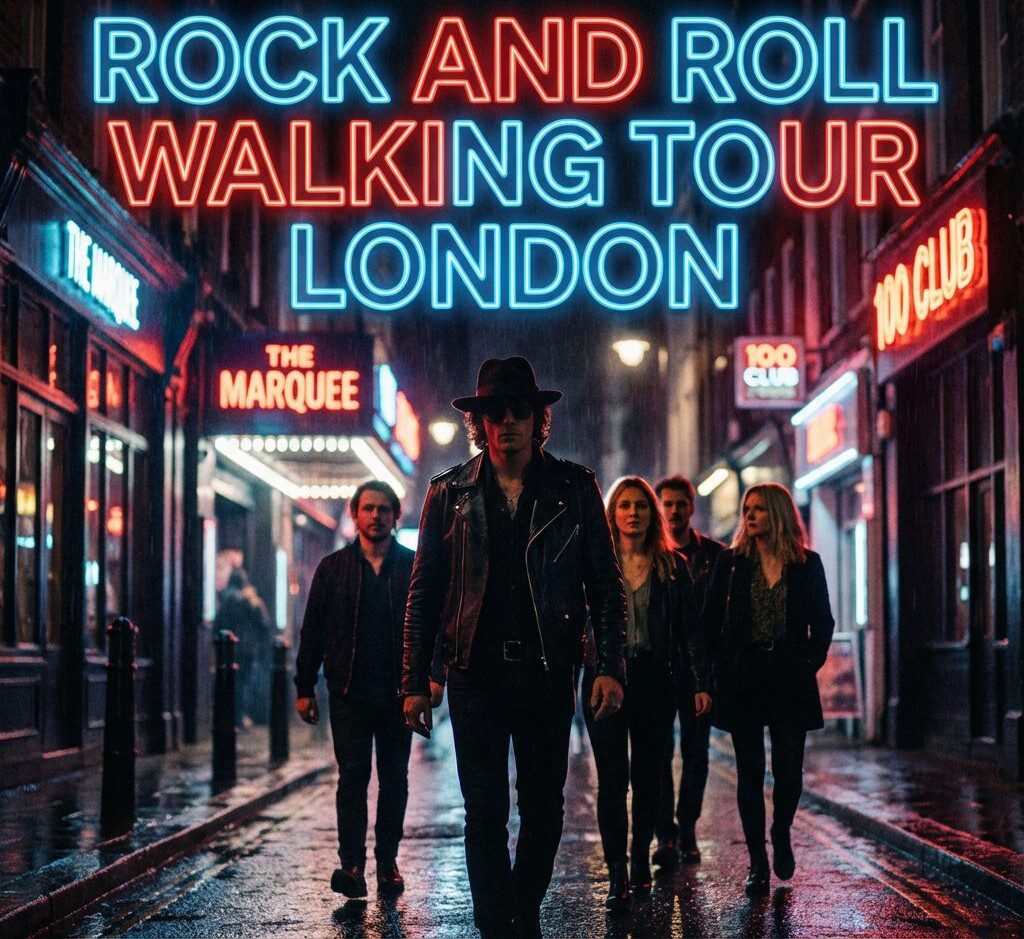
Rock and Roll Walking Tour London
Rock and Roll Walking Tour London: WKMT’s Piano-Led Routes Through Soho, Camden, Chelsea & the West End
London’s streets are steeped in rock history — and more often than not, there was a piano in the room. This page is your complete guide to a rock and roll walking tour London can be proud of: four compact routes, studio-by-studio stories, and practical booking options for both guided and self-guided explorers.
Why London Matters to Rock & Roll
The soundscape: clubs, studios and piano-driven hits
In the 1960s, London’s studios and clubs became a production line for modern rock. The Marquee Club in Soho, opened in 1958, was a launchpad for acts from the Rolling Stones to Queen and Pink Floyd. Punk’s spark caught in Camden’s Roundhouse. The city’s recording rooms — led by Abbey Road — gave artists the acoustic precision, engineers and instruments that defined an era. Studio Two at Abbey Road hosted The Beatles’ core catalogue and sessions for Pink Floyd, Kate Bush and Oasis. Across town, smaller rooms such as Regent Sound on Denmark Street served as crucibles where bands learned to work quickly, economically — and with pianos at the heart of many arrangements.
Timeline: 1950s–90s highlights tied to London streets
1950s–60s: publishers clustered on Denmark Street, where teenagers shopped, hustled and found session work. 1964: the Rolling Stones cut early covers at Regent Sound; 1967: The Beatles polished tracks for Sgt. Pepper’s; 1969: David Bowie assembled collaborators in a Denmark Street café. 1970s: punk and post-punk radiated from Camden’s venues, while Chelsea’s King’s Road fused fashion and attitude. 1990s: Britpop’s social life converged in Camden’s pubs and small stages, helping bands build momentum before their first studio takes. Each of our routes maps these shifts onto real streets so you can see how geography shaped the sound.
Signature Routes
Soho & Tin Pan Alley
Distance/time: ~0.3 mi / 15–20 minutes on foot. A compact loop around Denmark Street and nearby Soho lanes.
Route: Start at Tottenham Court Road Station (exit 4, Oxford Street) → walk southeast onto Denmark Street → stops at 4 Denmark Street (Regent Sound Studio site), 9 Denmark Street (former La Gioconda Café), 6 Denmark Street → optional loop via Old Compton Street or Wardour Street and back.
Anecdotes and piano takes:
- 1967: The Beatles finished elements of “Fixing a Hole” for Sgt. Pepper’s at Regent Sound (4 Denmark Street).
- 1964: The Rolling Stones recorded R&B covers including “Route 66” at the same studio, leaning on the room’s tight acoustics.
- 1969: David Bowie met future bandmates in La Gioconda Café (9 Denmark Street), a hub for writers and session players.
- Early 1960s: A teenage Elton John worked for a Denmark Street music publisher — the route from desk to piano stardom was short but decisive.
Top 5 facts:
- Denmark Street is London’s historic music quarter, with publishers trading there since 1911.
- Regent Sound (No. 4) welcomed the Beatles, the Stones and Hendrix, while the nearby Marquee Club helped shape their early careers.
- The former 12 Bar Club (No. 26) is now Lower Third, a tribute space linked to Bowie’s circle.
- Soho institutions such as Ronnie Scott’s (47 Frith Street) and the Marquee (Wardour Street) regularly featured piano-led rock and blues.
- Despite redevelopment, Denmark Street’s guitar shops and music businesses preserve its “street of sound” character.
Photo tip: Regent Sound (4 Denmark Street) — the façade that witnessed Beatles and Stones sessions.
Guided vs. self-guided: Guided Soho music walks (up to ~12) run ~2 hours from about £50pp. Our self-guided audio map costs ~£10–£15 for ~2 hours. WKMT offers both, with private options on request.
CTA: Explore Soho’s Rock Roots: join WKMT’s guided Tin Pan Alley walk from ~£45pp (groups ≤ 12, last checked: 2025-12-21) or choose the self-guided audio map (£10).
Camden & Chalk Farm
Distance/time: ~1 mi / 30–40 minutes round-trip.
Route: Start at Camden Town Tube → Stables Market (Amy Winehouse statue) → The Dublin Castle (Castlehaven Road) → The Hawley Arms (Jamestown Road) → Electric Ballroom (Camden High Street) → Roundhouse (Chalk Farm Road) → return via the canal path.
Anecdotes and piano takes:
- July 1976: The Ramones, with The Stranglers, played the Roundhouse — a spark for UK punk.
- 16 January 1998: Coldplay’s first ever show (as “Starfish”) took place in the Laurel Tree’s upstairs room near Camden, with Chris Martin at the helm.
- 2003: Amy Winehouse sang in the back room of The Dublin Castle during the Camden Crawl, later a regular at the Hawley Arms.
Top 5 facts:
- Camden has long been at the beating heart of London’s music scene.
- Roundhouse, Electric Ballroom, Dingwalls and KOKO hosted artists from Jimi Hendrix and The Clash to Coldplay.
- The Amy Winehouse statue by Stables Market honours her local legacy and Camden’s 2000s soul revival.
- Rehearsal spaces thrived in old market buildings; a Clash album cover shoot took place in a nearby alley beside their studio.
- Street art, vinyl shops and canal pubs retain the district’s music pulse.
Photo tip: The Roundhouse — an industrial shell turned iconic stage since the 1960s.
Guided vs. self-guided: WKMT’s 2-hour Camden tours start from ~£40pp (groups ≤ 12), focused on punk and Britpop. Self-guided packs (audio + map) are ~£10, with turn-by-turn directions. Family and open-group formats available.
CTA: Feel Camden’s Sound: book WKMT’s Camden Rock Tour (from ~£40pp, groups 4–15) or download the self-guided route (£10).
King’s Road & Chelsea
Distance/time: ~1 mi / 30–40 minutes round-trip.
Route: Start at Sloane Square → Duke of York Square (former barracks) → 484 King’s Road (Led Zeppelin’s Swan Song label HQ site) → World’s End (Vivienne Westwood’s shop site and nearby flats) → the Chelsea Drugstore building near Duke of York Street.
Anecdotes and piano takes:
- 1966: The Who played on the parade ground at the Duke of York’s Barracks — the counterculture at arm’s length from formality.
- 1974: Led Zeppelin opened Swan Song Records at 484 King’s Road — imagine Page and Jones reviewing masters down the corridor.
- 1971: Malcolm McLaren opened a boutique on King’s Road that helped set the visual tone for punk.
Top 5 facts:
- King’s Road fused fashion and music through the 60s–70s, drawing artists from the Beatles to Hendrix.
- Vivienne Westwood’s World’s End shop (430 King’s Road) became a symbol of punk style.
- The Chelsea Drugstore building was immortalised on film, a sign of the area’s pop-cultural reach.
- Local addresses trace Stones and Dusty Springfield connections across Chelsea and Earls Court.
- The street’s royal origin in the 17th century throws its 20th-century rock history into sharp relief.
Guided vs. self-guided: Chelsea & King’s Road tours (~2 hours, ~£45pp, groups ≤ 10) explore Swinging London and punk origins. Self-guided options (maps + audio) are ~£10. Flat pavements; wheelchair-friendly paths can be arranged.
CTA: Rock the King’s Road: join our Chelsea rock and fashion walk (from ~£45pp, 2–10 people, last checked: 2025-12-21) or take the audio guide (£10).
West End Pianos & Recording Studios
Distance/time: Variable route, ~1–2 mi depending on stops. A central survey of studio lore and piano landmarks.
Route: Trident Studios (17 St Anne’s Court, Soho) → Abbey Road Studios (3 Abbey Road, NW8) → Regent Sound Studio (4 Denmark Street) → smaller West End spots including Metropolis Studios (W1). Along the way, we point out piano fixtures in bookshops and theatre pubs.
Anecdotes and piano takes:
- 1967: At Abbey Road, producer George Martin and Chris Thomas oversaw McCartney’s piano on “A Day in the Life.”
- 1967: The Beatles returned to Regent Sound to finish “Fixing a Hole.”
- 1968: Session great Nicky Hopkins, a Londoner by birth, contributed piano to Rolling Stones sessions such as “Sympathy for the Devil.”
Top 5 facts:
- Abbey Road, opened in 1931, is often cited as the first purpose-built recording studio.
- Studio Two at Abbey Road hosted Beatles albums and major film scores.
- Olympic Studios (originally central, later in Barnes) recorded Hendrix, Bowie, Led Zeppelin and Queen.
- Regent Sound (4 Denmark Street) was a crucial 1960s room used by the Beatles and Jimi Hendrix.
- Even West End pubs and theatres kept baby grands and pit pianos, sustaining a live-to-studio pipeline.
Photo tip: Inside Abbey Road’s Studio Two — the Steinway that underpinned countless takes; or Regent Sound’s street frontage.
Guided vs. self-guided: Our West End studios tour runs ~2 hours at ~£50pp (groups up to 8). Self-guided audio routes (6–8 stops) are ~£10. Evening and weekend departures available.
CTA: Record Your Own History: book a West End studio walk from ~£50pp (private tours available, last checked: 2025-12-21) or use our 2-hour audio guide (£10).
Piano Musicians & Stories That Shaped London Rock
Session hands at the console
Much of London’s rock character came from pianists and keyboardists who sat a little outside the spotlight. Nicky Hopkins — later honoured for contributions to more than 250 albums — cut parts in London rooms for the Rolling Stones, The Who, The Kinks and The Beatles. His lines were lean and lyrical, the sort of touch that holds a track together. On the Stones’ 1968 sessions for “Sympathy for the Devil,” you can hear how a piano line can act as glue.
Elton John’s origin story is equally London: long before stadiums, he was a teenage staffer in a Denmark Street publisher’s office, absorbing the publisher–studio ecosystem that would shape his writing and recording. Arrangers such as John Cameron supported early Beatles work at Abbey Road, evidence of how the city’s studios paired bands with craftsmen who understood harmony, voicing and — crucially — how to serve a song.
Tracks, rooms and instruments
In June 1967, The Beatles used Regent Sound in Soho to complete elements of “Fixing a Hole” — a reminder that even the biggest bands relied on efficient central rooms for finishing passes. In Studio Two at Abbey Road, McCartney’s piano on “A Day in the Life” shows how the instrument anchors orchestral ambition. Across the decades, the city’s clubs kept instruments on hand: a house upright at the 100 Club, baby grands in theatre pubs, and studio Steinways that passed through countless takes. Each route on this page is designed to reconnect the dots between the hands, the keys and the rooms.
Practicalities — Booking, Accessibility & Timing
Best London Rock Tours
Here are three of the most reputable and widely recommended websites offering rock and roll walking tours in London:
1. London Rock Tours
Website: londonrocktour.com
Overview: Run by music historian Bruce Cherry, this independent outfit has been a staple for over two decades. Tours cover Beatles, Stones, Hendrix, David Bowie, and punk history, with a deep focus on West End and Chelsea landmarks.
Highlights: Small group van and walking tours; expert-led; praised in Time Out and Lonely Planet; highly rated for narrative depth.
2. Brit Icon Tours
Website: briticontours.com
Overview: Offers immersive walking and private chauffeur-led tours of London’s music landmarks — including Beatles, David Bowie, Queen, and Pink Floyd locations.
Highlights: Small group walks; often led by musicians or historians; featured by VisitBritain; consistently positive reviews on TripAdvisor.
3. GetYourGuide – London Rock ‘n’ Roll Walking Tour
Website: getyourguide.com
Overview: Aggregator hosting several walking tours operated by vetted local guides, including “London Rock ‘n’ Roll History Tour” and “Soho Music Tour.”
Highlights: Easy online booking; user-rated (typically 4.8★+); flexible cancellation; ideal for self-guided or last-minute bookings.
Guided vs self-guided
All WKMT guided walks run year-round, typically ~2 hours, covering 1–1.5 miles. Expect musician-led commentary, small groups (usually 2–12), and time for photos. Prices start around £45–£55pp depending on route and group size. Our self-guided audio maps include turn-by-turn directions, offline access and curated clips; they cost ~£9–£12 and can be shared across your group.
Getting there, mobility and timing
Most routes begin near Tottenham Court Road, Camden Town or Sloane Square. London’s transport network is increasingly accessible: around one-third of Tube stations are step-free and all buses carry ramps. We plan flat pavements and avoid steep steps where possible; please advise mobility needs in advance so we can adjust or arrange an accessible taxi to the start. For up-to-date step-free routing, consult Transport for London.
Midday tours avoid heavy late-night crowds. Evening versions — especially in Soho — can be arranged to capture after-hours atmosphere. Standard departures are typically 10:00 and 14:00 daily; private/after-hours slots available on request. For schedules and current pricing (last checked: 2025-12-21), see our booking page.
Sample 90–120 Minute Self-Guided Itinerary
Goal: A two-hour sampler that links Soho’s studios to Camden’s stages.
Steps: Start at Tottenham Court Road Station → walk Denmark Street (Tin Pan Alley) → Regent Sound (No. 4) and nearby stops (Nos. 6–9) → swing by Old Compton Street and the site of the Marquee on Wardour Street → take the Tube or bus to Camden Town → pause at the Amy Winehouse statue (Stables Market) → The Dublin Castle → The Hawley Arms → finish at the Roundhouse (Chalk Farm). Total walking distance is roughly 1.3 miles, with 10–15 minutes at each stop.
Result: You’ll experience London’s publishing-to-stage pipeline in miniature: from Tin Pan Alley’s offices and small studios to Camden’s pubs and major venues.
What to Bring / Local Etiquette
- Comfortable shoes, water, a charged phone or camera; headphones for the audio tour.
- Use crossings; traffic is unforgiving. Keep pavements clear when pausing for photos.
- In pubs, keep voices moderate; tip ~10% only when you receive table service.
- Ask before photographing private interiors or people.
- Many stops are working venues — be courteous to staff and patrons.
Related Experiences & Events
Pair this route with WKMT’s Beatles & Abbey Road walk, or our “Swinging London: Mod to Punk” itinerary. Check our calendar for upcoming concerts and masterclasses, and explore more London music heritage across our programmes.
Reviews, Press & How to Book
Travellers consistently rate London rock walks highly. A comparable Rock & Roll tour reports an average of 4.96/5 from more than 1,600 reviews, with praise for knowledgeable guides and vivid storytelling. We hold ourselves to the same standard: factual, engaging and musician-led.
Book now: Guided groups are small (up to 12–15), and peak times sell out quickly. Reserve your place or download the self-guided audio map for flexible timing.
Conclusion on Rock and Roll Walking Tour London
London’s rock history is not a museum piece; it still lives in its streets, rooms and pianos. Walk it with someone who speaks the language — tempos, takes, and the small decisions that make great records. Whether you choose a guided walk or the self-guided route, you’ll leave with places under your feet and songs in your head.
Sources for Rock and Roll Walking Tour London
Apollo Magazine (Denmark St history)
American Songwriter (Regent Sound story)
Camden Town London (Camden music scene)
CamdenMarket.com (punk milestones)
DistrictsLondon (King’s Road music trivia)
Rock & Roll Hall of Fame (Nicky Hopkins bio)