
 TRIAL LESSON
Piano Lessons
Fun Piano Lessons for 5-Year-Olds
Jul
Piano lessons for 5 year olds
Looking for professional tuition? Learn more about our Piano Lessons for Kids & Children in London at our WKMT studios.
Table Of Contents for Piano Lessons for 5 year olds:
- Engaging Piano Lessons for 5-Year-Olds: In-Person and Online Options
- Key Takeaways
- Choosing the Right Piano Lessons for Your 5-Year-Old
- Deciding Between in-Person and Online Lessons
- Identifying Your Child’s Learning Style
- Considering the Teacher’s Experience With Young Children
- Balancing Schedule and Flexibility
- Benefits of Online Piano Lessons for 5-Year-Olds
- Flexibility of Scheduling
- A Wide Range of Teaching Materials
- Engaging Interactive Technology
- Recorded Lessons for Repeated Practice
- Finding Engaging in-Person Piano Lessons Near You
- Utilising Local Music Schools and Tutors
- Seeking Recommendations From Other Parents
- Attending a Trial Lesson
- Incorporating Fun and Games Into Piano Learning
- Using Apps to Reinforce Learning
- Piano Learning Games for Young Children
- Rewarding Progress to Motivate Learners
- Age-Appropriate Piano Teaching Methods for 5-Year-Olds
- Developing Finger Dexterity Through Play
- Teaching Notes and Rhythms With Visual Aids
- Creating a Storytelling Experience With Music
- Preparing Your Child for Their First Piano Lesson
- What to Discuss Before the Lesson
- Setting Up a Practice Area at Home
- Encouraging a Positive Attitude Towards Learning
- How to Support Your Child’s Piano Learning Journey
- Establishing a Routine Practice Schedule
- Celebrating Milestones and Achievements
- Engaging With the Lessons as a Parent
- Success Stories: Young Pianists and Their Achievements
- Highlighting Students Who Started at 5 Years Old
- The Long-Term Benefits of Starting Early
- How Parents Can Contribute to Success
Engaging Piano Lessons for 5-Year-Olds: In-Person and Online Options
Welcome to the artful realm of the ivory keys, where the melody of learning begins as early as 5 years old. Piano lessons for children serve as the foundation for a lifetime of musical appreciation, and at WKMT London, we provide an expert backdrop for this development. From nurturing beginners to honing the talents of more experienced young musicians, we offer a tailored approach that suits every delicate stage of learning, whether it’s piano lessons for beginners or advanced sessions for adult piano lessons. In this article, you will discover a world where piano learning glistens with possibility, and each lesson is a stepping stone to greatness. Keep reading to unveil the engaging, fun-filled journey of piano mastery that awaits you and your child at WKMT London.
At age five, piano can become a joyful introduction to listening, rhythm, focus, and confidence when lessons are carefully adapted to a young child’s pace. In this article, we explore what makes piano learning engaging and realistic for this specific age group, while families looking for a broader overview of piano lessons for kids in London can visit our main WKMT page for full information on our teaching approach, locations, and lesson options.
Key Takeaways
- Choosing the right piano lessons is vital for a child’s musical growth
- Tailored teaching approaches can ignite a lifelong passion for music in children
- Interactive technology and games can enhance the learning experience for young students
- Parental involvement is crucial in supporting a child’s piano education journey
- Early piano education fosters a breadth of cognitive skills and disciplines
Choosing the Right Piano Lessons for Your 5-Year-Old
When the melodic journey beckons for your young one, selecting an appropriate piano lesson becomes a paramount choice. As a teacher, I understand that balancing a child’s eagerness to explore music with the practical considerations of their learning style and family routine is essential. The decision to opt for in-person or online music lessons should be made with your child’s comfort and engagement in mind. Moreover, considering a music teacher who has the patience and the skill to inspire young minds is vital. Lessons should be a harmonious blend of structure and spontaneity, allowing children the space to experiment while developing a solid foundation in music. It’s my experience that the right approach can ignite a lifelong passion for music, fostering growth and creativity in your child’s formative years. For those aspiring to enhance their piano skills, consider exploring adult piano lessons “WKMT London” for expert guidance, piano lessons for children, adult piano lessons.
Deciding Between in-Person and Online Piano Lessons
As we navigate the choices between in-person and online piano lessons for young learners, it’s essential to consider their unique learning styles. In-person lessons offer the invaluable benefit of direct interaction, where I can guide their hands on the keys and adjust their posture in real-time. Meanwhile, online lessons provide flexible scheduling and the comfort of learning from home, often aiding concentration for those who thrive in a familiar environment.
Deciphering sheet music and mastering finger placement require careful, consistent practice – whether that’s in a physical studio or a digital one. For those aspiring to enhance their piano skills, consider exploring “WKMT London” for expert guidance. By integrating singing and engaging brain games, I ensure that the online lesson experience mirrors the dynamism of piano lessons for children sessions. If you’re uncertain about the right fit, feel free to email me, and we can discuss the best path for your child’s musical development:
- Evaluating your child’s learning environment and how it could influence their piano education.
- Discussing the pros and cons of in-person versus online instruction based on your child’s needs.
- Outlining the structure of both lesson formats to align with your child’s piano journey.
Identifying Your Child’s Learning Style
Recognising how a child processes new information is crucial when introducing them to adult piano lessons. I have found that children in preschool often respond well to a multisensory approach to learning rhythm, an essential aspect of early music education.
- Observing your child to understand their receptivity to auditory and visual stimuli while interacting with a piano.
- Assessing their ability to follow rhythm and melody, which are foundational to their musical development.
- Determining if they show a natural inclination towards a particular learning style, which can be harnessed to tailor their piano education.
Here in Los Angeles, we’re fortunate to have a diverse range of educational resources that can support different learning styles, whether your child is an auditive, visual, or kinesthetic learner. For those aspiring to enhance their piano skills, consider exploring “WKMT London” for expert guidance. It’s a joy to adapt my teaching methods to align with each young pianist‘s unique way of engaging with piano education.
Considering the Piano Teacher’s Experience With Young Children
When entrusting a teacher with your child’s introduction to music, their piano lessons for children experience with young students becomes a defining factor in your child’s success. A seasoned instructor brings more than just knowledge of music theory; they bring an understanding of how to capture a young mind’s wandering attention and turn it into focus and fascination.
- Assess the teacher‘s ability to keep lessons engaging for little ones.
- Ensure they have strategies for maintaining attention, especially when introducing complex concepts like chord progression.
- Consider their patience and adaptability in teaching the intricacies of finger placement, whether on piano or guitar.
It’s not just about the teacher‘s capability to play or understand music; it’s equally about their skill in translating the language of music to eager, yet sometimes restless, young ears. For those aspiring to enhance their piano skills, consider exploring “WKMT London” for expert guidance. Patience and creativity in teaching methodology are what set apart an average music lesson from a transformative musical journey for a 5-year-old.
Balancing Schedule and Flexibility
For those aspiring to enhance their piano skills, consider exploring “WKMT London” for expert guidance, piano lessons for children, adult piano lessons, piano lessons for beginners. As a parent, scheduling piano lessons amid a bustling family calendar requires flexibility and a teacher who understands the nuances of a young student’s routine. An electronic keyboard at home allows practice to fit seamlessly into daily life, ensuring that skill-building in areas such as ear training progresses consistently alongside formal lessons.
- Finding a timeslot for regular piano sessions that meshes with your family’s timetable.
- Considering the ease of electronic keyboard practice to reinforce lessons learned.
- Assessing if the proposed lesson structure accommodates ear training, a vital skill for musical development.
Moreover, it’s essential to choose a piano programme that allows for adjustments when unexpected events disrupt the usual schedule. The ability to reschedule, especially with online lessons, helps to maintain the crucial hand on keyboard momentum vital for developing dexterity and confidence in young pianists.
As we transition into the digital age, the way we approach music education evolves. Discover how online piano lessons can enrich your child’s learning experience as never before.
Benefits of Online Piano Lessons for 5-Year-Olds
Online piano lessons present a versatile solution tailored to the modern family’s dynamic lifestyle. The flexibility of scheduling means that your 5-year-old can engage with melody and the fundamentals of music in a way that fits around other commitments, whether before a playdate or after school. A rich curriculum designed for online education opens doors to an extensive range of teaching materials, including digital scores and interactive exercises that instil discipline while captivating young minds. The use of engaging interactive technology not only makes lessons enjoyable but also ensures that each child can receive immediate feedback, just as if they were preparing for a concert. Additionally, one of the standout advantages is the ability to record lessons, allowing for repeated practice that solidifies learning. Should you wish to explore this flexible and comprehensive approach to your child’s musical education, please do not hesitate to provide your email address, enabling us to discuss how we can harmonise our teachings with your child’s needs and interests.
Flexibility of Scheduling
For the aspiring young pianist, the journey to mastering pitch and rhythm should never be hindered by a rigid schedule. Online lessons on the digital piano provide the adaptability that allows learning to be attuned to the ebb and flow of a child’s day-to-day life, keeping their motivation to learn consistently high.
- Ensuring practice can be integrated into their daily routine without disruption.
- Fostering a sense of independence as they manage their own learning schedule.
- Adapting lesson times to accommodate changes, be it family commitments or extracurricular activities.
My approach, whether it’s in classical or jazz piano, focuses on enabling students to thrive without the constraints of traditional timetabling. This flexibility ensures that every student can explore their musical interests when it suits them best, with a digital piano becoming an integral part of their learning environment at home.
A Wide Range of Teaching Materials
My studio prides itself on its versatile approach to piano education, utilising a rich assortment of teaching tools designed to inspire the young composer within each student. Delving into everything from the classics to the vibrant tunes of the school of rock, the curriculum is tailored to captivate and nurture versatile musical talents.
While our core programme is rooted in the piano, we recognise the importance of a broader musical understanding. That’s why our resources extend to complementary instruments like the violin, offering a well-rounded experience that supports the budding musician‘s growth and creative exploration:
- An exploration of varied musical genres to develop a well-rounded appreciation of the art form.
- Integration of theory and practical lessons that connect piano techniques with a broader musical context.
- Access to FAQs and support materials to reinforce learning and satisfy curious minds.
Should you have any inquiries regarding our curriculum or wish to learn more about our studio and online resources, please refer to our detailed FAQ section or reach out for a personal consultation. Together, we can chart a musical journey that resonates with the individuality and potential of your child.
Engaging Interactive Technology
The integration of interactive technology into our piano lessons is designed to keep even the shortest attention span enthralled. Using the versatility of the internet, I have developed methods incorporating drum rhythms and other instruments, creating an engaging, multi-instrumental music experience that captivates young learners in California and beyond.
Our use of technology supports various learning approaches, including homeschooling, by providing an array of digital resources that make piano practice an adventure. This online interactivity guarantees that every child’s experience is tailored to their individual needs, ensuring that each lesson is as captivating as it is educational:
- Utilizing engaging, interactive applications to make music theory and practice come alive.
- Offering a broad selection of digital music games that reinforce rhythm and note recognition for a fun learning experience.
- Simulating ensemble playing, allowing students to feel part of a band, boosting their confidence and musicality.
Recorded Lessons for Repeated Practice
One significant advantage of online piano lessons is the ability to record each session, a feature that has proven especially useful in reinforcing learning outcomes for young musicians. As they practice, students like Tim can revisit these recordings at their leisure, which not only aids with recall of key concepts discussed during lessons but helps to fine-tune their ear and deepen their understanding of the pieces, from classical to pop music.
The recorded lessons are akin to having a personal musician‘s library, where snippets of orchestra-quality demonstrations and in-depth explorations of rhythm and melody are always accessible. This resource is invaluable for parents who wish to be involved in their child’s musical education, allowing them to monitor progress and practice alongside their young ones.
Discovering the benefits of online piano lessons for young learners paves the way to the next exciting step: uncovering the vibrant world of in-person piano instruction. Let’s take that leap together and find the most engaging piano lessons in your vicinity.
Finding Engaging in-Person Piano Lessons Near You

Stepping into the world of piano lessons for a 5-year-old is an exciting journey, one that often begins with the serendipity of finding a local music school or tutor that resonates with your child. As I counsel parents, I remind them that a sprinkle of luck often leads to discovering a tutor who instills not just knowledge but also confidence in young learners. It’s key to engage children with a curriculum that opens their world to listening and playing by ear, embracing the concept that music is felt, not just read. Seeking recommendations from other parents can provide invaluable insights and lead you to environments that are both nurturing and challenging. By attending a trial lesson, both you and your young maestro can gauge the fit, ensuring the experience enriches their love for music right from the start.
Utilising Local Music Schools and Tutors
Delving into the search for suitable music education, parents might find themselves at the doorstep of local music schools that echo with the harmonious language of piano lessons tailored to engage young learners. These institutions provide a structured environment where concepts like the treble and bass clef become more than symbols on a sheet; they transform into a dance of fingers across the piano keys – playful and precise.
In these local settings, a method often introduced is the Suzuki method, respected for its ability to cultivate music appreciation akin to acquiring a language – naturally and fluently. Tutors adept in this philosophy often employ creative tools beyond the traditional toy piano, catering to the tactile and inquisitive nature of 5-year-olds, making each lesson an adventure in sound and discovery.
Seeking Recommendations From Other Parents
Seeking the insights of other parents who’ve navigated the piano–learning path grants an invaluable perspective on potential piano teachers. Their experience and feedback can spotlight instructors skilled in the art of improvisation, which is paramount to fostering a child’s creative expression and understanding of music.
- Gather first-hand information on instructors’ ability to incorporate improvisation into lessons.
- Seek testimonials on how teachers structure their lesson plans to balance technique with creativity.
- Discern which teachers are adept at nurturing young voices for those interested in piano and choir activities.
Moreover, dialogue with other parents can provide a well-rounded view of a teacher‘s methodology, ensuring their lesson plan aligns well with your child’s learning style. This exchange of information is vital to forming a community of support and helping to find a piano instructor who truly resonates with young students.
Attending a Trial Piano Lesson
Embarking on a trial lesson is a pivotal moment for a young mind drawn to classical music. It gives a clear glimpse into the wealth of knowledge that awaits them and provides a real-time experience of how technology can enhance traditional music education.
I always encourage parents, especially mothers who are often their child’s primary educator, to attend these trial sessions. It’s a unique opportunity to observe firsthand the interaction between pupil and teacher and to see the enthusiasm for music being kindled in a nurturing environment.
Now, imagine blending traditional piano instruction with the delight of interactive play. That’s where our unique method comes alive, infusing piano learning with fun and games to spark joy in every note.
Incorporating Fun and Games Into Piano Learning
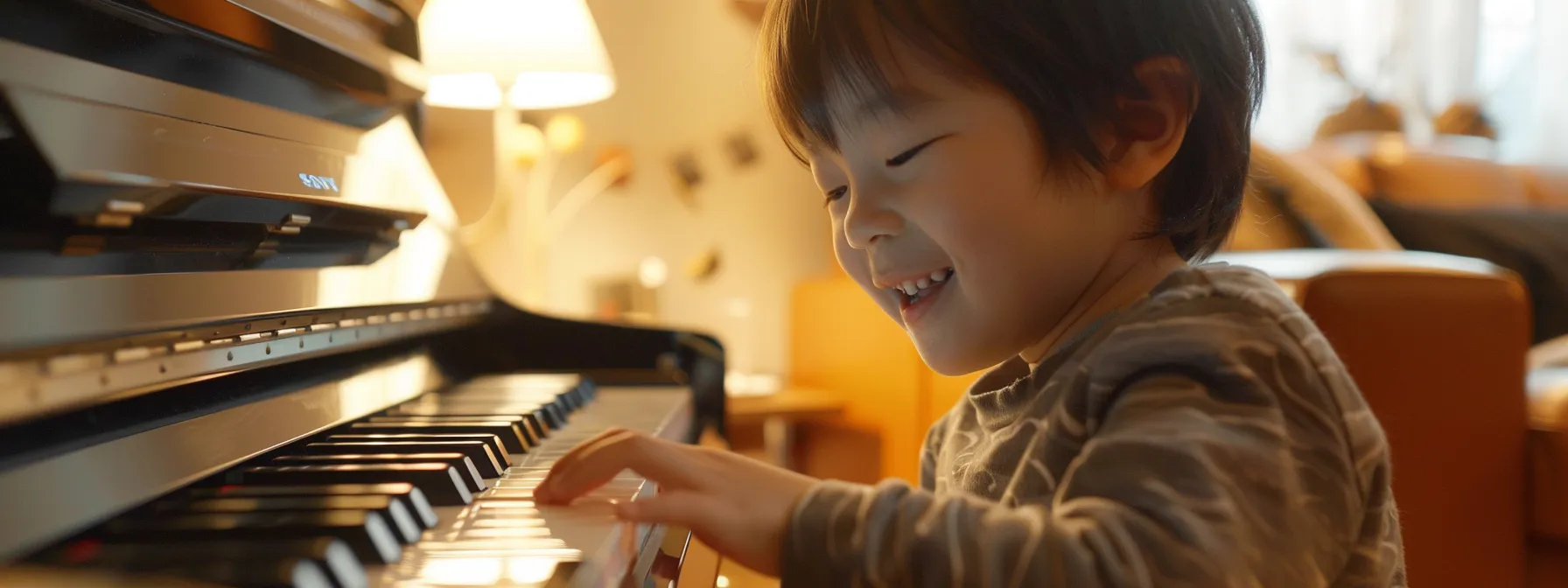
Nurturing a child’s musical aptitude requires more than repetition and drills; it calls for a blend of education and entertainment. I’ve observed that when piano learning is interlaced with play, it sparks joy and propels a student forward. Utilising interactive apps becomes more than screen time – it’s an engaging method where reading music and understanding sound theory merge with the interactive fun of the digital age. As their fingers dance across the keys gracefully, whether on a real piano or through a zoomed interface, a bit of competitive spirit and reward can go a long way. This blend of stimulation and incentive fosters a passion for learning, much like how soul music stirs the spirit. Integrating games into piano lessons for young children ensures their voyage into music is as pleasurable as it is educational, setting the foundation for a lifetime of musical enjoyment.
Using Apps to Reinforce Learning
Integrating learning apps into our piano lessons has proven instrumental in reinforcing the concepts taught during our sessions. These digital tools offer interactive exercises and challenges, which I find critical in solidifying the young student’s grasp on rhythm, pitch, and music notation.
Through these carefully selected apps, I have created a dynamic educational experience that supports repetitive learning without the tedium. This playful approach ensures consistent engagement, allowing skills to be practiced and retained more effectively in a format that young minds find naturally appealing and enjoyable.
Piano Learning Games for Young Children
As an advocate for engaging young minds through music, I encourage incorporating piano learning games that make concepts tangible for 5-year-olds. These games cleverly combine music education with interactive fun, helping children to grasp the fundamentals of piano playing while having an enjoyable time.
Utilising innovative game-based learning paves the way for an interactive learning experience where children can learn to identify notes and rhythms in a playful environment. They develop their musical skills in a manner that is both educational and immensely gratifying, laying the groundwork for a sustained interest in piano.
Rewarding Progress to Motivate Learners
Acknowledging each milestone in a child’s learning journey is a practice that I hold in high esteem. Providing positive reinforcement through praise and rewards can significantly boost a child’s enthusiasm and sustain their interest in piano lessons.
Structured rewards, such as certificates, stickers or even the promise of a special recital, give young learners tangible goals to strive toward. This form of motivation endorses their effort and progress, cultivating a sense of achievement and pride in their musical abilities:
- Granting certificates for mastering a new piece
- Offering stickers as a visual representation of achievements
- Organizing celebratory recitals for major learning milestones
Bridging enjoyment with education, we transition seamlessly to tailor methods for younger learners. Next, let’s delve into age-specific strategies that turn piano lessons into a playground of discovery for five-year-olds.
Age-Appropriate Piano Teaching Methods for 5-Year-Olds
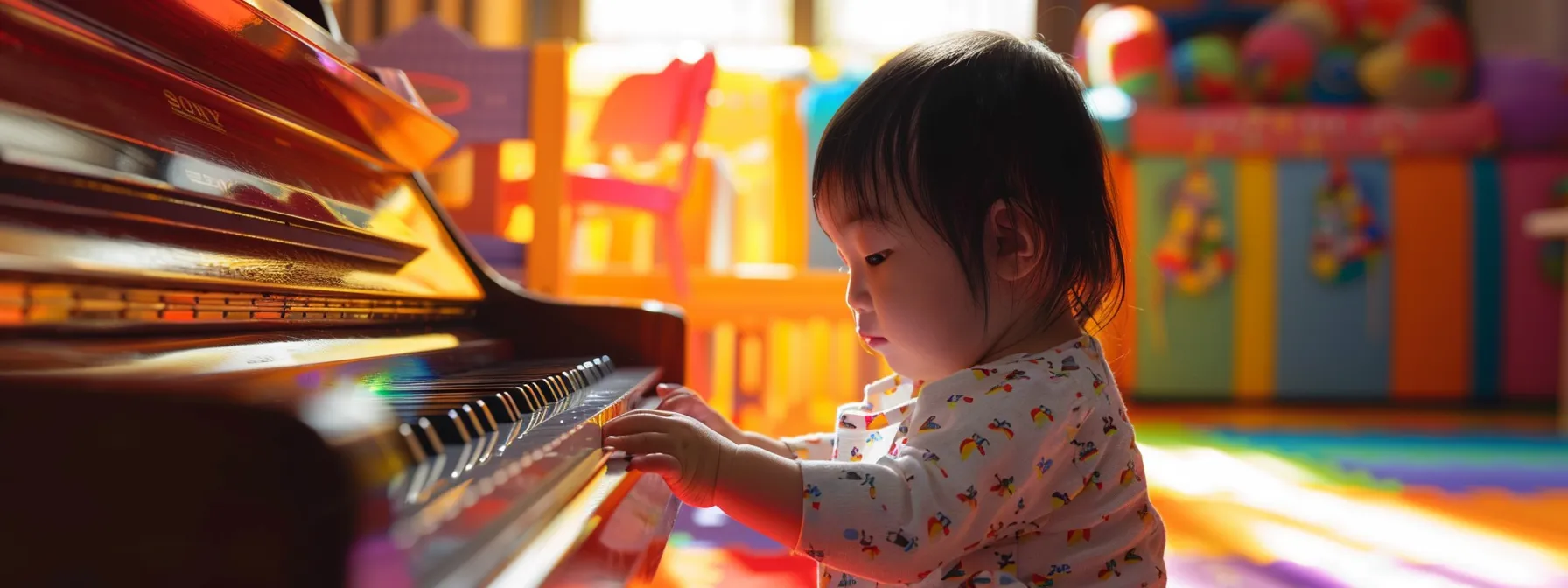
Embarking on the musical journey with a young child is an adventure filled with discovery and growth. Pivotal to fostering their innate abilities at this tender age of five, I focus on a trifecta of age-appropriate methods that combine learning with sheer enjoyment. Through playful activities, I aim to build finger dexterity, an essential skill for any budding musician. Introducing notes and rhythm becomes an exciting exploration when accompanied by vibrant visual aids. And by weaving music into storytelling, every lesson transforms into an immersive narrative that captivates and educates simultaneously. These approaches are more than teaching techniques; they’re the conduits through which a lifelong connection with music can be forged.
Developing Finger Dexterity Through Play
Encouraging young pianists to develop finger dexterity is immensely important; focusing on play allows children to build skills without the strain of laborious drills. Through imaginative play, such as pretending the piano keys are stepping-stones across a stream, children enhance their agility and coordination effortlessly.
Structured games, like ‘Musical Fingers’, also foster this essential aspect of piano learning: here, each finger becomes a character on an adventure, striking the keys in various sequences to embark on their quest:
- Index Finger journeys through a sequence of gentle notes.
- Thumb explores deeper tones, mimicking a cheerful gnome.
- Little Finger ventures to the higher octaves with delicate melody.
Indeed, harnessing the natural playfulness of 5-year-olds presents an enjoyable route to acquiring dexterity, ensuring young learners remain passionate and engaged in their piano education.
Teaching Notes and Rhythms With Visual Aids
For my young students, I’ve discovered that visual aids are instrumental in demystifying the abstract concepts of notes and rhythms. Colour-coded charts and large, illustrated note values transform learning into a visual experience, connecting the dots between the symbols on the page and their translation into sound.
I employ rhythmic patterns aligned with vivid imagery, such as animals marching to beats, which serves to clarify timing and duration in a manner that’s both memorable and engaging. These visual hooks not only support the learning process but also deepen a child’s connection with the music they create.
Creating a Storytelling Experience With Music
Creating a storytelling experience with music is a powerful method I employ to kindle imagination and musical aptitude in young children. Each piano lesson is designed to be an engaging narrative, with music reflecting the unfolding plot and allowing children to add their own creative flourishes to the story.
This approach to learning not only introduces musical concepts in an accessible way but also encourages active participation and emotional connection to the music. As each story progresses, the children’s fingers bring to life the melodies that underpin the tale, fostering a profound bond between the young pianist and the classical art form.
Transitioning from playful learning for the little ones, we now turn our attention to the anticipation of a child’s first piano lesson. Let’s prepare to make this inaugural experience both memorable and foundation-building for your young maestro.
Preparing Your Child for Their First Piano Lesson
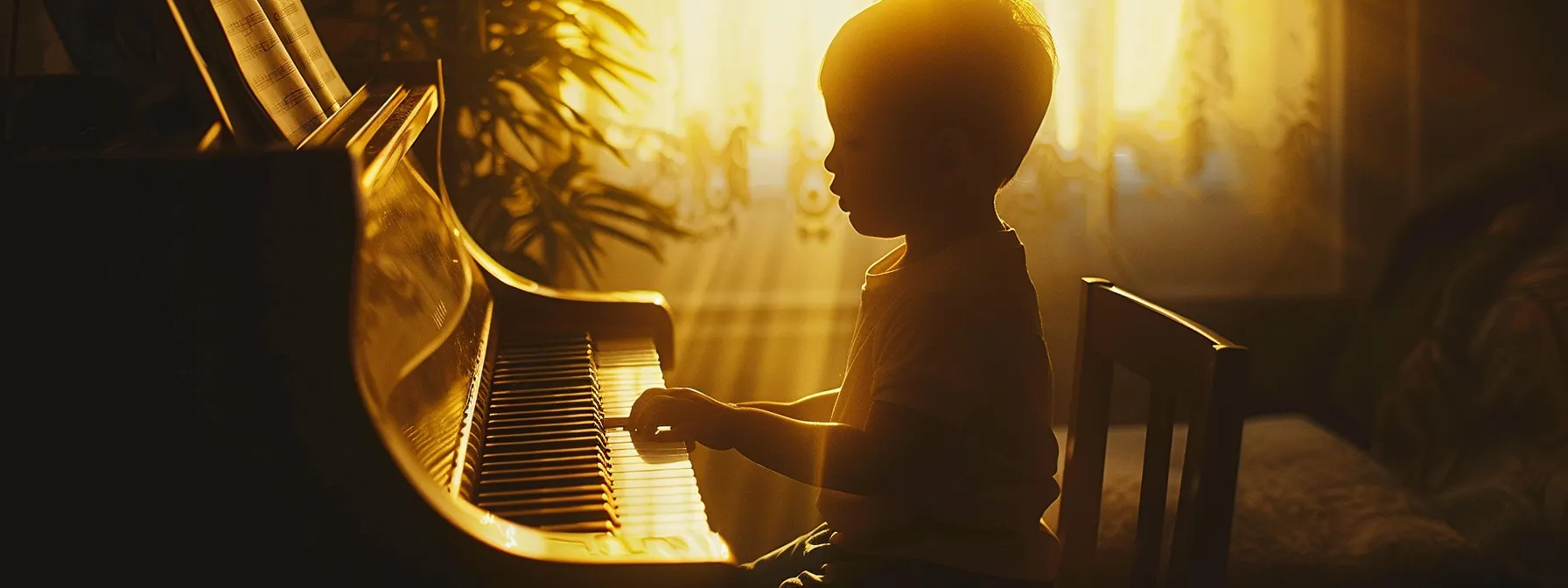
Embarking on piano lessons is a significant step in your child’s musical education, so it’s critical to ensure they’re fully prepared for this new endeavour. As their educator and guide, I recommend having a candid talk with your child about what the lessons entail and what they can anticipate learning. This prepares them mentally and emotionally for the journey ahead. A dedicated practice area in your home will serve as their personal space for musical exploration and development – it should be quiet, well-lit, and inviting. Above all, nurturing a positive mindset towards learning is essential; approach each lesson with enthusiasm and encouragement, highlighting the joy and creativity that comes with making music. This positive atmosphere will set the tone for a rewarding educational experience that piques their curiosity and sustains their interest in piano playing.
What to Discuss Before the Lesson
Before the initial lesson, discussions with your child about what to expect during their piano sessions are beneficial. This dialogue sets the stage, clarifying the lesson structure and easing any potential apprehensions they may have about learning a new instrument.
It’s also important to explore their musical preferences: do they have favorite songs or sounds that they’re drawn to? This can inform the lesson plan, ensuring it strikes a chord with your child’s interests and keeping them engaged from the outset:
Furthermore, setting up a practice routine and discussing its importance with your child establishes good habits. Emphasizing the fun aspect of practice and its role in improvement will encourage a positive attitude towards regular engagement with the piano.
Setting Up a Practice Area at Home
Creating a designated practice area for your child at home is pivotal; it should be a spot free from distractions, where focus and creativity can flourish. It needs to be comfortable yet functional, equipped with their piano or keyboard and a sturdy seat at the correct height.
A proper environment will aid your child’s concentration during practice sessions. Ensure the space has good lighting and, if possible, is away from the main foot traffic of your home to minimise interruptions:
Encouraging a Positive Attitude Towards Learning
Instilling a positive learning attitude in your child is essential; it transforms the educational process into an enriching experience. As their mentor, my role is to foster enthusiasm for learning that encourages them to view challenges as opportunities for growth.
Celebrating your child’s successes, no matter how small, reinforces their desire to learn and helps build confidence. By focusing on the joy of music and the excitement of discovering new skills, we set the stage for a rewarding journey in piano education.
Embarking on the initial piano lesson is a thrilling first step; what follows is the support and encouragement that sustains the musical voyage. Let’s explore how your involvement enriches your child’s ongoing piano education.
How to Support Your Child’s Piano Learning Journey
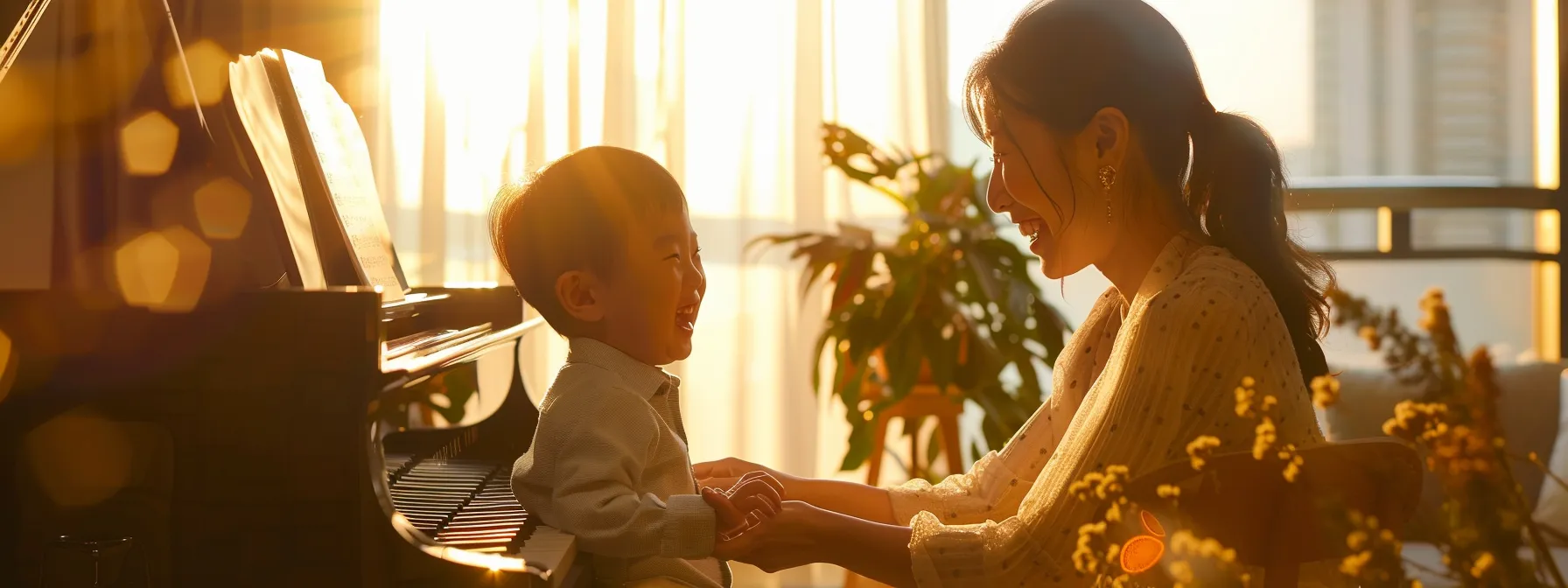
Embarking on piano lessons is a landmark step in your child’s development, and as their guide, it’s essential to champion the consistent progress they make. Establishing a routine practice schedule serves as the backbone of any musical training, solidifying weekly lessons with vital reinforcement at home. Celebrating every milestone and achievement along the way ignites a sense of pride and accomplishment within your young pianist, further fuelling their musical journey. As a parent, your involvement in their lessons is priceless; actively engaging with their learning process not only strengthens your connection with your child but significantly enhances their educational experience. Together, we create a supportive, enjoyable, and productive environment that nurtures your child’s burgeoning talent.
Establishing a Routine Practice Schedule
As we foster the musical growth of a 5-year-old, establishing a consistent practice schedule is vital to their development. Consistency not only reinforces the skills learnt but also builds a routine that gradually shapes a disciplined yet passionate musician.
I advise parents to carve out a daily practice slot, making it a natural part of the child’s day, just as integral as reading or playtime. This regular engagement with the instrument nurtures familiarity and eases the path toward pianistic fluency.
Celebrating Milestones and Achievements
Acknowledging every new skill and piece mastered is a core part of my teaching philosophy. Such celebrations infuse a child’s educational journey with joy and a sense of personal accomplishment, reinforcing their motivation to continue their musical exploration.
While navigating the melodic pathways of music education, little successes become significant landmarks in a young pianist‘s growth. I make it a point to recognise these moments, conveying to each child how proud I am of their progress, which in turn fuels their desire to reach even greater heights in their piano playing.
Engaging With the Lessons as a Parent
Your presence during piano lessons, whether in-person or through online platforms, serves as a pillar of encouragement for your little one. Watching their progress and offering support consolidates their efforts and reinforces the importance of this beautiful skill they’re acquiring.
As a parent, taking a moment to discuss the lessons with your child also plays an instrumental role. It keeps the lines of communication open, ensuring that their experience is positive and that any challenges are met with a supportive response, paving the way for a harmonious learning experience.
Guiding your child on their musical journey is just the beginning. Let’s now celebrate the accomplishments of young pianists who have soared to new heights through dedication and talent.
Success Stories: Young Pianists and Their Achievements
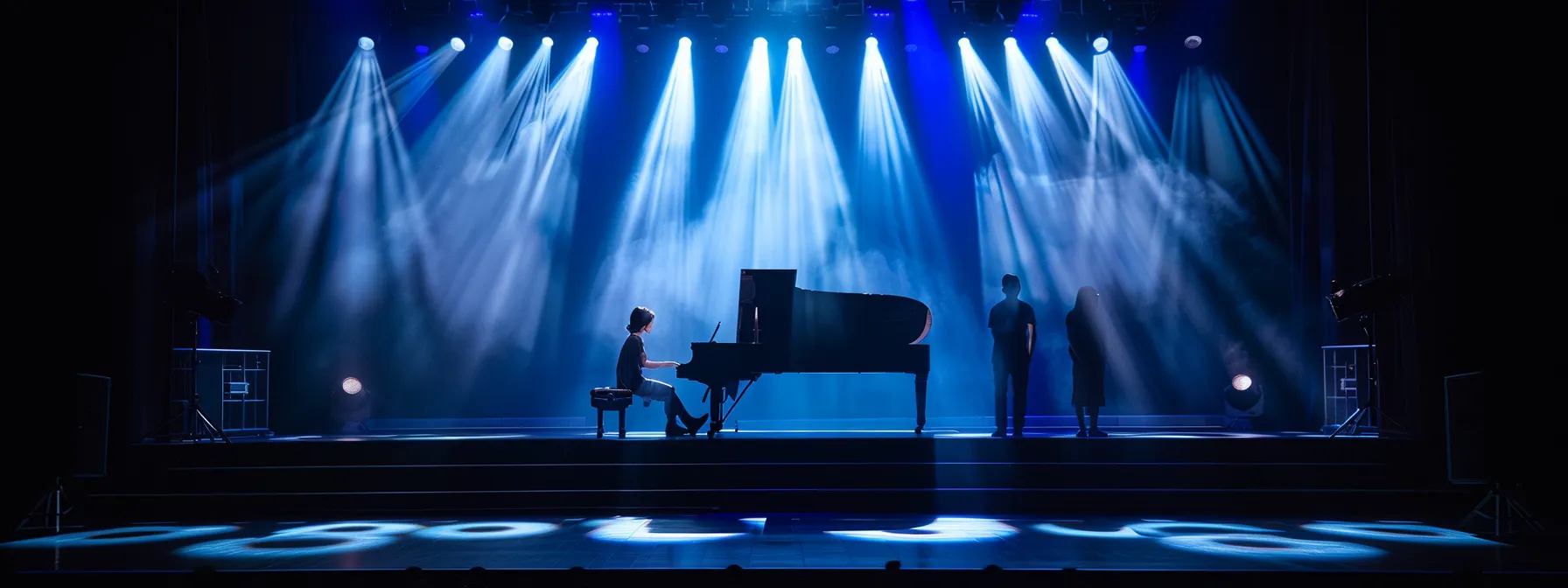
Reflecting upon the musical odysseys that embarked from our studio walls, it is inspiring to witness the achievements of young pianists who began their lessons at the tender age of five. These children, many of whom have matured into accomplished musicians, embody the tangible, long-term advantages of early music education. I have seen, time and again, such early starters develop remarkable proficiency and a nuanced understanding of musical expression. It’s crucial to acknowledge the significant role parents play in this success; their support and involvement are cornerstones in nurturing a child’s progress. Their dedication to encouraging practice and appreciation of music acts as a catalyst in enriching these young talents’ future achievements.
Highlighting Students Who Started at 5 Years Old
My experience as a piano educator has been particularly enriched by witnessing the growth of students who embarked on their musical journeys at five years old. Many have soared to impressive heights, with some even performing confidently at concerts and festivals, a testament to their dedication and our school’s nurturant approach to early music education.
One notable example is a pupil who began with us at the age of five and has since won several young musician competitions. Their ability to interpret complex classical pieces with both technical precision and emotive depth showcases the potential that early and well-guided piano education can unlock.
The Long-Term Benefits of Starting Early
The advantages of initiating piano education at an early age are manifold and extend far beyond mere musical proficiency. Beginning at age five unlocks the potential for developing critical cognitive skills, including enhanced memory, attention to detail, and problem-solving abilities, which are advantageous in various spheres of life as the child matures.
Moreover, the discipline and persistence cultivated through the process of learning an instrument are attributes that, once instilled at a young age, often carry through into adulthood. Young students who start early have the opportunity to embed a deep love for music, which can lead to a lifetime of enjoyment and potentially, professional pursuits in the arts.
How Parents Can Contribute to Success
As a proponent of early music education, I’m convinced that parental support lays the groundwork for a child’s success in piano learning. The role of parents in setting an example of dedication to practice and valuing the arts cannot be overstated, as a child’s enthusiasm often mirrors that of their family.
- Encouraging daily practice and showing genuine interest in their musical activities.
- Providing a supportive environment that recognises effort and progress.
- Being present, whether physically or virtually, during lessons and practice sessions.
Furthermore, by collaboratively setting achievable goals with their child and celebrating each small victory, parents help build confidence and a resilient learning spirit. Such involvement makes the piano–learning process more collaborative, fostering a shared journey of discovery and mastery.
Discover exceptional piano lessons with WKMT, a leader in piano education since 2010. Available in-studio in London or online worldwide.