
 TRIAL LESSON
Piano Lessons
6 Top Classical Music London Venues You Must Visit

Dec
Are you seeking the quintessence of classical music venues in London?
This article will guide you through the city’s most prestigious concert halls, where the echoes of Johann Sebastian Bach and the vibrant performances of the City of Birmingham Symphony Orchestra come to life. From the historic Royal Albert Hall to the intimate acoustics of Wigmore Hall, we’ll navigate the cultural heart of the United Kingdom‘s capital. For enthusiasts eager to immerse themselves in London‘s classical music scene, we address the challenge of where to find the most enriching experiences.
Discover these top venues and prepare to be moved by the power of live classical music.
Key Takeaways
- The Royal Albert Hall offers a rich programme for classical music enthusiasts
- St Martin-in-the-Fields hosts candlelit concerts for an intimate musical experience
- The Royal Opera House provides a diverse schedule of opera and ballet productions
- Booking tickets for performances is straightforward via official venue websites
- The Southbank Centre is a hub for free music events and family-friendly classical concerts
Explore the Royal Albert Hall: London‘s Iconic Venue
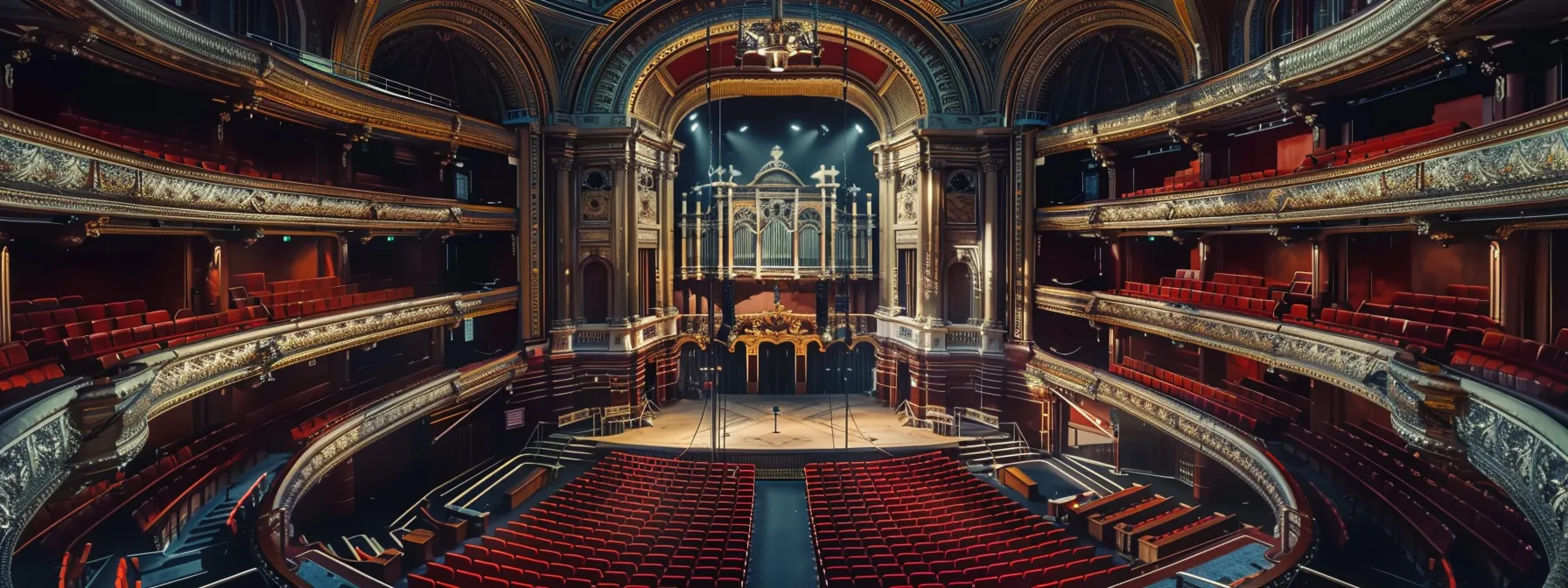
Stepping into the Royal Albert Hall, I’m immediately enveloped by a sense of history and grandeur. This iconic venue, a cornerstone of London’s classical music scene, has hosted performances by the Philharmonia Orchestra and the London Symphony Orchestra, resonating with the compositions of John Williams and Edward Elgar.
Whether you’re booking tickets for a night of theatre, planning to attend special events and festivals, or seeking tips for your first visit, the Royal Albert Hall promises an unforgettable experience.
Learn About the Royal Albert Hall’s Rich History
As I delve into the Royal Albert Hall’s rich history, it’s clear that this venue is not merely a building but a living testament to London‘s cultural legacy.
Opened in 1871 and named after Queen Victoria’s husband, it has been a cathedral of sound, hosting an array of orchestras, operas, and chamber music performances. The Hall’s distinctive architecture and commitment to promoting the arts have made it a beloved destination for both performers and audiences alike.
Understanding the significance of the Royal Albert Hall enriches any visit to this historic site. Here’s a brief timeline of its storied past:
- The foundation stone was laid by Queen Victoria in 1867, marking the beginning of its construction.
- In 1871, the Royal Albert Hall was officially opened by Queen Victoria, who was so overcome with emotion that the Prince of Wales had to speak on her behalf.
- Over the years, it has been the stage for the Proms concerts annually since 1941, becoming a symbol of resilience and continuity in London‘s classical music scene.
Attend a Classical Concert at the Royal Albert Hall
Attending a classical concert at the Royal Albert Hall is an experience I recommend to any music enthusiast. The acoustics in this grand space are designed to elevate performances by the world’s leading symphonies and choirs, creating an immersive auditory journey.
Whether you’re drawn to the delicate strings of a violin solo or the robust harmonies of a Glasgow-based symphony, the Hall’s diverse programme caters to all tastes. As a pianist, I appreciate the nuanced sounds that resonate within these walls, and I encourage you to partake in this quintessential London cultural experience.
Discover the Architectural Wonders of the Royal Albert Hall
As I wander through the Royal Albert Hall, the architectural splendour of this landmark is undeniable. From the intricate mosaics to the majestic organ that has accompanied the likes of Antonio Pappano, every detail contributes to an awe-inspiring concert experience. During the festive season, the Hall transforms into a magical venue for a ‘Christmas Carol‘ performance, where the harmonious blend of architecture and music creates an unforgettable atmosphere for all patrons alike.
The Royal Albert Hall, a masterpiece of Victorian ambition and engineering, stands as a proud emblem of Britain’s imperial prowess. Conceived in the aftermath of Prince Albert’s visionary Great Exhibition of 1851, it was intended to serve as the nucleus of a grand cultural complex—a “Kensington Gore” of enlightenment. The venue was born from the prince’s dream to foster art and science, a dream realized posthumously through Queen Victoria’s unwavering devotion. The task of translating this lofty vision into brick and mortar fell to engineers Captain Francis Fowke and Colonel Henry Y. D. Scott, whose initial plans evoked the grandeur of the Roman Colosseum. With its vast elliptical structure and wrought-iron dome, the hall was a marvel of both aesthetics and function, capable of accommodating 5,000 spectators while delivering near-perfect acoustics—a feat still celebrated today.
But the true genius of the Royal Albert Hall lies in its marriage of form and symbolism. Its façade, a kaleidoscope of terracotta friezes, mosaics, and inscriptions, celebrates the intellectual triumphs of humanity, from music and painting to astronomy and engineering. Opened by Queen Victoria in 1871, the building’s construction was not without its share of intrigue and calamity, from near-bankruptcy to the challenge of erecting what was then the largest unsupported dome in the world. Yet, under the auspices of the Royal Engineers and with a tenacity befitting the Victorian age, the project prevailed. To this day, the Royal Albert Hall stands not merely as a concert venue but as a testament to an era when Britain believed that art and science could shape the destiny of empires.
Find Out How to Book Tickets and Tours
Securing your seat to witness the Royal Philharmonic Orchestra or a mesmerising string quartet at the Royal Albert Hall is a straightforward process. I recommend visiting the venue’s official website, where you can find a detailed calendar of upcoming events in London, Leicester, Birmingham, and Oxford.
Booking online provides a seamless experience, and for those seeking a more in-depth exploration, guided tours can be arranged, offering a behind-the-scenes glimpse into this architectural marvel and its storied history.
Enjoy Special Events and Festivals Hosted at the Venue
As a pianist and connoisseur of London‘s classical music offerings, I find the Royal Albert Hall’s special events and festivals to be unparalleled. From the Leeds International Piano Competition to the Gloucester Choral Festival, this venue curates a rich tapestry of musical celebrations that resonate throughout London and beyond. Whether you’re in Edinburgh or right here in the capital, the Hall’s diverse calendar promises to captivate with performances that showcase the pinnacle of piano mastery and orchestral splendour.
Tips for Visiting the Royal Albert Hall for First-Timers
When I first visited the Royal Albert Hall, the splendour of classical music in such an iconic venue was overwhelming. For those new to this experience, I suggest booking your tickets early, especially for popular events around Christmas, to ensure the best possible seats. As a seasoned pianist, I recommend beginner piano students from WKMT Piano Lessons to attend concerts here to truly understand the depth and beauty of live classical music. Remember, the Hall is vast, and arriving with time to spare allows you to find your seat without haste and soak in the atmosphere before the performance begins.
5 Historical and Paradigmatic London Piano Performances at the ROYAL ALBERT HALL
The Royal Albert Hall has hosted numerous landmark piano performances throughout its history. Here are five particularly notable events:
-
Sergei Rachmaninoff’s London Debut (1911): The esteemed Russian pianist and composer Sergei Rachmaninoff made his London debut at the Royal Albert Hall in 1911, performing his own compositions, including the renowned “Prelude in C-sharp minor.”
-
Special Sunday Concerts (1926-1927) – Horowitz Piano Recital: Celebrated pianist Vladimir Horowitz gave a memorable recital at the Hall in 1982, marking his return to London after a long absence. His performance was lauded for its technical brilliance and emotional depth.
-
‘Piano Concerto No.3 in C Major’, Prokofiev (Martha Argerich, BBC Symphony Orchestra): Renowned pianist Martha Argerich delivered a powerful interpretation of Prokofiev’s Piano Concerto No. 3, captivating the audience with her virtuosic skill and dynamic expression.
-
Lang Lang’s Debut (2001): Chinese pianist Lang Lang made his Royal Albert Hall debut in 2001, performing works by Chopin and Liszt. His energetic and passionate playing style left a lasting impression on the audience.
-
Arsha Kaviani’s Performance of Rachmaninoff’s Piano Concerto No. 2 (2023): Rising star Arsha Kaviani delivered a thrilling rendition of Rachmaninoff’s Piano Concerto No. 2, captivating a packed Royal Albert Hall with his virtuosic performance.
These performances exemplify the Royal Albert Hall’s rich tradition of hosting world-class pianists, contributing significantly to its esteemed musical heritage.
From the grandeur of the Royal Albert Hall, we move to a space where music breathes more intimately. Wigmore Hall awaits, its chamber performances a quiet revelation.
Visit Wigmore Hall for Intimate Chamber Music Performances
Wigmore Hall stands as a pillar of chamber music, echoing the compositions of George Frideric Handel, Ludwig van Beethoven, and Ralph Vaughan Williams. As I guide you through planning your visit, we’ll explore the exceptional acoustics that make this venue a favourite for the Academy of Ancient Music and other distinguished ensembles. You’ll learn how to access tickets and discover the hall’s upcoming programmes, ensuring you’re well-prepared to immerse yourself in the intimate concert experience Wigmore Hall offers, along with nearby attractions to complete your cultural outing.
Understand the Significance of Wigmore Hall in Chamber Music
As a dedicated pianist and educator, I recognise Wigmore Hall as a pivotal venue in London‘s chamber music landscape. Its intimate setting has been the backdrop for the BBC Symphony Orchestra‘s renditions of concertos and the delicate chamber pieces of Johannes Brahms, offering a stark contrast to the grandeur of the Barbican Centre and the Royal Opera House. The hall’s acoustics are finely tuned to highlight the subtleties of each performance, making it a cherished space for both musicians and audiences seeking a profound connection with the music.
Plan Your Visit to a Wigmore Hall Concert
When I plan a visit to Wigmore Hall, I focus on the exceptional chamber music performances that await. For instance, securing tickets to witness Simon Rattle conducting a stirring rendition of ‘Messiah’ or a profound cello concerto can be transformative. I recommend checking the hall’s schedule well in advance, especially for performances during the festive season, which often coincide with events at Queen Elizabeth Hall. As a pianist, I understand the importance of acoustics, and Wigmore Hall’s intimate setting ensures every note of the cello resonates with clarity, providing an unparalleled musical experience.
Explore Upcoming Programmes and Featured Artists
Wigmore Hall, that jewel-box of chamber music nestled discreetly on London’s Wigmore Street, offers a concert program as finely curated as the hand-carved oak paneling of its Edwardian interior. Stepping inside, one enters a world where the frivolity of the outside melts away, replaced by an atmosphere of hushed reverence for the craft of music-making. Here, the giants of the classical repertoire—Schubert, Brahms, Beethoven—find their voice alongside contemporary composers whose daring works reaffirm the Hall’s commitment to innovation.
The stage, intimate yet commanding, hosts an array of performers, from the world’s most distinguished string quartets to emerging soloists who find in Wigmore a proving ground for excellence. Whether it is a song recital imbued with the melancholy of Mahler or a dazzling piano sonata that seems to set the very air alight, Wigmore Hall remains the crucible of musical refinement—a place where the sublime and the cerebral meet in perfect harmony.
Experience the Exceptional Acoustics of Wigmore Hall
As I reflect on my experiences at Wigmore Hall, the exceptional acoustics stand out as a defining feature of this intimate venue. The clarity and depth of sound here have the power to transport audiences, whether through the complex symphonies of Wolfgang Amadeus Mozart or the rhythmic innovations of George Gershwin.
I recall a performance where the intricate layers of Pyotr Ilyich Tchaikovsky’s compositions were rendered with such precision, it felt as though the orchestra was playing just for me. It’s a place where the soaring melodies of ‘The Dream of Gerontius’ can fill the space without losing a single nuance, a testament to the hall’s acoustic design that would have impressed Pierre Boulez himself.
Discover Nearby Attractions and Amenities
After the stirring melodies of Giacomo Puccini or the celestial harmonies of Gustav Holst at Wigmore Hall, I often recommend that my students explore the surrounding area. Just a stone’s throw away, you can find galleries featuring works that echo the same beauty as ‘Rhapsody in Blue’. For those who appreciate the vocal prowess of Jonas Kaufmann or the baroque elegance of Henry Purcell, nearby opera houses offer performances that complement the chamber music experience. These cultural hotspots, along with a selection of fine dining options, make for a perfect continuation of an enriching evening.
5 Historical and Paradigmatic London Piano Performances at the WIGMORE HALL
Wigmore Hall has been the venue for numerous significant piano performances. Here are five notable examples:
-
Ferruccio Busoni’s Inaugural Concert (1901): The Italian pianist and composer Ferruccio Busoni performed at the opening concert of Bechstein Hall (now Wigmore Hall) on 31 May 1901, marking the beginning of the venue’s rich musical history.
-
Artur Schnabel’s Recitals (1930s): Renowned pianist Artur Schnabel gave a series of recitals at Wigmore Hall during the 1930s, offering profound interpretations of classical and romantic repertoire.
-
Benjamin Britten’s Premieres (1940s): Composer and pianist Benjamin Britten premiered several of his works at Wigmore Hall, including the “Seven Sonnets of Michelangelo” in 1942, with tenor Peter Pears.
-
Vladimir Ashkenazy’s Performances (1960s): Pianist Vladimir Ashkenazy performed at Wigmore Hall in the 1960s, delivering interpretations that contributed to his international acclaim.
-
András Schiff’s Recitals (2000s): Pianist Sir András Schiff has maintained a long-standing relationship with Wigmore Hall, offering authoritative performances of works by composers such as Bach and Beethoven.
These performances exemplify Wigmore Hall’s commitment to hosting distinguished pianists and premiering significant works, reinforcing its status as a premier venue for classical music.
Leaving the hushed tones of Wigmore Hall behind, we step into the pulse of London ‘s contemporary scene. The Barbican Center awaits, a bold symphony of the modern classical world.
Experience the Barbican Centre: Modern Classical Music Hub
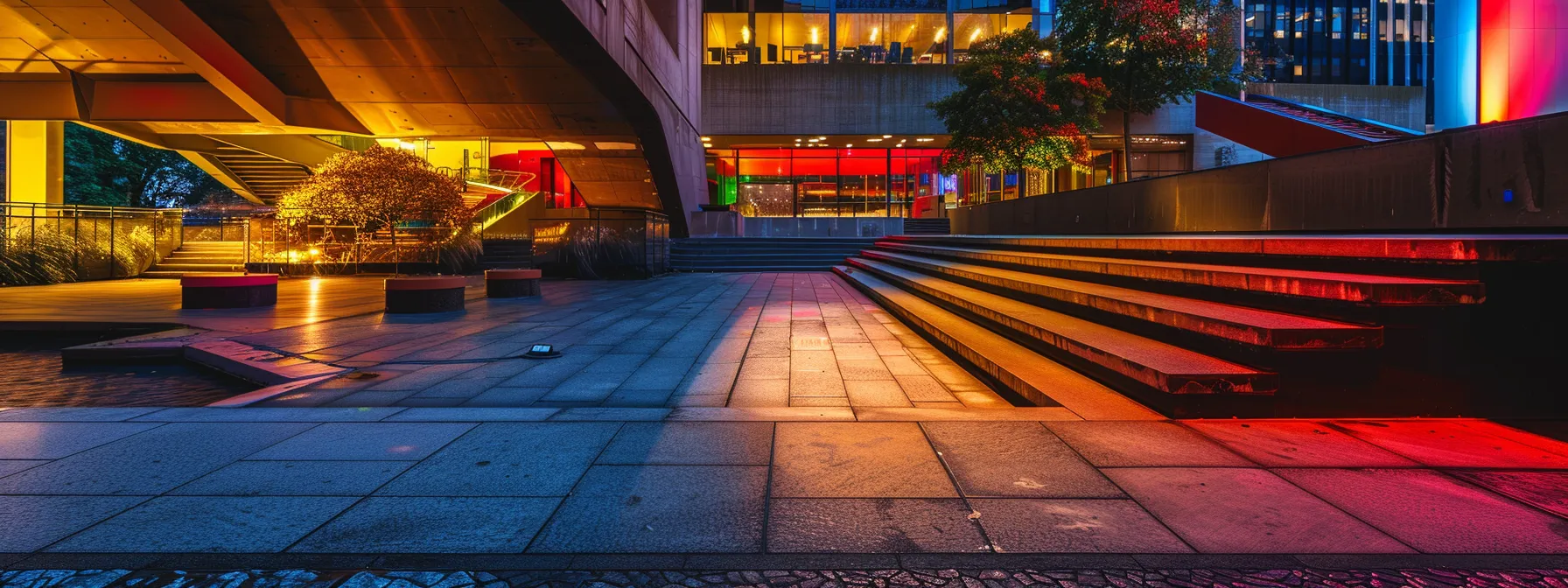
Immerse yourself in the Barbican Centre, a modern nexus for classical music enthusiasts. Here, you can explore a spectrum of classical concerts, including the powerful compositions of Richard Strauss and the nuanced performances by renowned tenors. As a pianist, I value the contemporary classical performances that echo the innovation of Benjamin Britten and the choral magnificence of the London Symphony Chorus. The Barbican’s multifaceted venues and educational workshops offer a deep dive into the arts, while nearby dining and accommodation ensure a complete cultural experience. Membership and ticket packages provide added benefits, making your visit both enriching and efficient.
Explore Classical Concerts at the Barbican Centre
At the Barbican Centre, I’ve witnessed the transformative power of classical concerts, where the music hall comes alive with the resonant chords of a sonata and the grandeur of opera house productions. The Royal Ballet’s performances here are complemented by contemporary compositions from artists like Eric Whitacre, creating a tapestry of sound that captivates and educates. As a pianist, I understand the importance of acoustics and ambience, and the Barbican Centre excels in providing an environment where every note is felt deeply, ensuring an unforgettable experience for connoisseurs and newcomers alike.
Attend Contemporary Classical Performances
When I attend contemporary classical performances at the Barbican Centre, the experience is always transformative. Under the baton of Sakari Oramo, the London Philharmonic Orchestra delivers concert performances that are both dynamic and poignant. The London Mozart Players, with their precise interpretations, and the English National Ballet, with their elegant fusion of music and movement, contribute to a rich, cultural tapestry. Each performance is a testament to London‘s vibrant classical music scene, offering profound engagement for aficionados and novices alike.
Navigate the Barbican’s Venues and Facilities
As I navigate the Barbican’s venues and facilities, I’m struck by the seamless integration of modern design and acoustic excellence. Here, the reverberations of Dmitri Shostakovich’s symphonies fill the halls, and the precision of the Academy of St Martin in the Fields is palpable. Under the guidance of conductors like Daniel Harding, the Sinfonia’s performances are elevated to new heights. The Barbican’s proximity to the Royal Festival Hall further cements its status as a linchpin of London‘s classical music scene, offering patrons a diverse array of world-class musical experiences.
Learn About Educational Programmes and Workshops
At the Barbican Centre, the educational programmes and workshops are a cornerstone of our commitment to nurturing musical talent and appreciation. For instance, a workshop with soprano Louise Alder offers invaluable insights into vocal performance, while masterclasses on Antonio Vivaldi’s ‘The Four Seasons’ provide a deep dive into baroque music interpretation. These sessions, often featuring luminaries like Bryn Terfel, are designed to inspire and educate, aligning with the ethos of the BBC Proms to make classical music accessible to all.
Find Dining and Accommodation Options Nearby
After the final reverberations of a piano concerto at the Barbican Centre, I often find my students and fellow enthusiasts seeking quality dining and accommodation options. Conveniently nestled within walking distance are a variety of establishments that cater to every palate and preference. Whether you’re craving a post-performance dinner or need a place to rest, options around Trafalgar Square offer an array of choices, from elegant eateries perfect for discussing the nuances of a baritone’s performance to comfortable hotels where the day’s melodies can be contemplated in peace.
Benefit From Membership and Ticket Packages
As a dedicated pianist and mentor, I’ve seen firsthand how membership and ticket packages at the Barbican Centre can significantly enhance the classical music experience. These packages offer priority booking, discounts on a range of performances, and exclusive access to rehearsals, which is invaluable for students and enthusiasts eager to delve deeper into the music. The benefits extend to special events, providing a cost-effective way to immerse oneself in London‘s vibrant classical scene:
- Priority booking ensures you secure the best seats for the most sought-after concerts.
- Discounts on performances allow for a broader exploration of the diverse musical offerings.
- Exclusive access to rehearsals offers a behind-the-scenes look at the preparation and dedication of world-class musicians.
5 Historical and Paradigmatic London Piano Performances at the BARBICAN CENTRE
The Barbican Centre has been the venue for numerous significant piano performances. Here are five particularly notable events:
-
Krystian Zimerman’s Performance of Beethoven’s Piano Concerto No. 3 (2020): Renowned pianist Krystian Zimerman delivered a compelling interpretation of Beethoven’s Third Piano Concerto, under the baton of Sir Simon Rattle with the London Symphony Orchestra. This performance was noted for its depth and precision.
-
Evgeny Kissin’s Recital (2024): Legendary pianist Evgeny Kissin returned to the Barbican with an ambitious program featuring sonatas by Beethoven and Prokofiev, alongside works by Brahms and Chopin. His performance was acclaimed for its formidable complexity and artistry.
-
Lang Lang’s Recital (2025): Superstar pianist Lang Lang performed solo piano versions of works by Fauré, Schumann, and Chopin, showcasing his virtuosic skill and interpretative depth.
-
Stephen Hough’s Recital (2024): Pianist and composer Stephen Hough presented a program that included Schumann’s Fantasie in C major, his own composition “Sonatina Nostalgica,” and Chopin’s Piano Sonata No. 3. His performance was praised for its fiery passion and reflective depth.
-
Kirill Gerstein’s Performance of Busoni’s Piano Concerto (2024): In a rare rendition of Busoni’s monumental Piano Concerto, Kirill Gerstein joined the BBC Symphony Orchestra under Sakari Oramo. The performance was lauded for its technical brilliance and interpretative insight.
These performances exemplify the Barbican Centre’s commitment to hosting world-class pianists and delivering exceptional musical experiences.
We leave the Barbican’s modern echoes behind. Ahead, the Southbank Centre beckons, pulsing with the city’s cultural heartbeat.
Discover the Southbank Centre: Cultural Heart of London
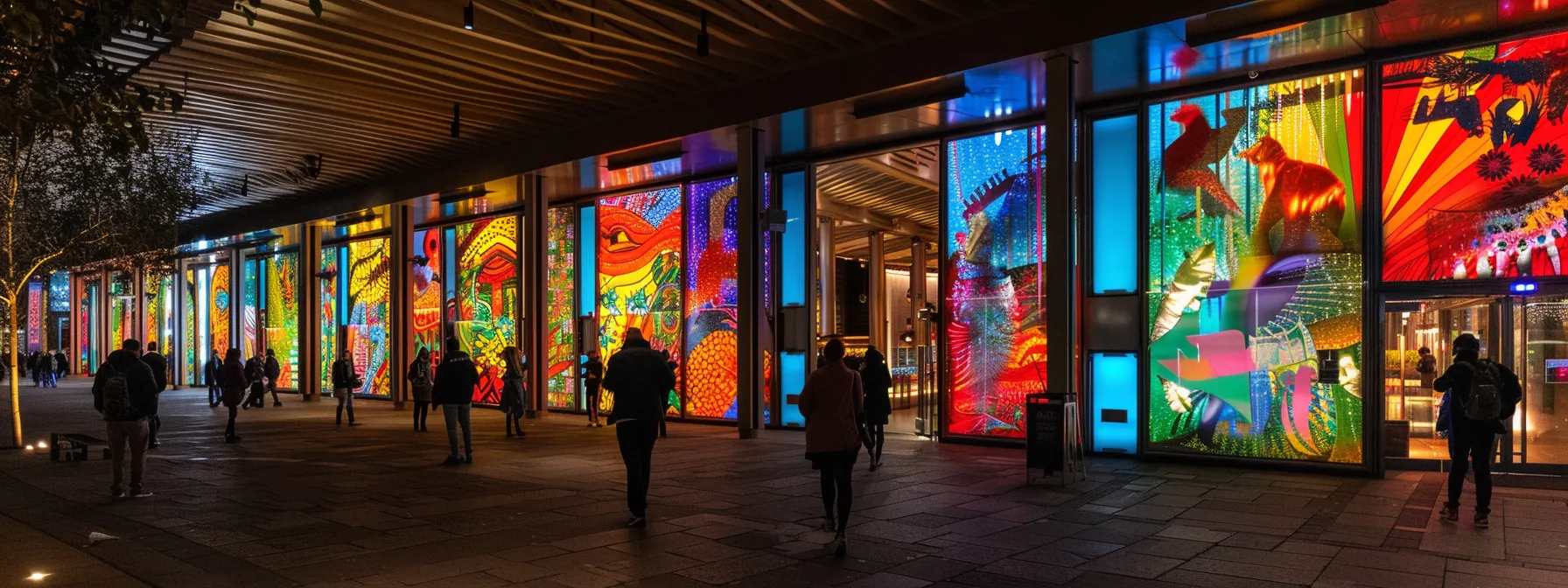
As I guide you through London‘s classical music landscape, the Southbank Centre emerges as a pivotal destination. Here, the Royal Festival Hall stands as a temple of classical concerts, while the centre’s free music events and festivals offer a wealth of cultural enrichment. We’ll explore its diverse classical offerings, enjoy the scenic riverside views adorned with public art, and discover family-friendly events that make classical music accessible to all ages. I’ll also share essential tips on planning your visit, focusing on transport and accessibility to ensure a seamless experience.
Visit the Royal Festival Hall for Classical Concerts
When I visit the Royal Festival Hall, the experience is always profound. This venue, nestled in the heart of the Southbank Centre, is a bastion for classical concerts, offering a diverse array of performances that cater to aficionados and newcomers alike. Its world-class acoustics and dynamic programming make it a must-visit destination for anyone seeking to immerse themselves in London‘s classical music scene.
Attend Free Music Events and Festivals
Immersing oneself in the Southbank Centre’s free music events and festivals is a delightful way to experience London‘s classical music offerings. I’ve found that these gatherings not only provide an accessible entry point for newcomers but also serve as a vibrant meeting ground for enthusiasts. They showcase a diverse range of talent, from emerging artists to established ensembles, ensuring that every visit resonates with the joy and discovery of live performance.
Explore the Southbank Centre’s Classical Offerings
Exploring the Southbank Centre’s classical offerings, I’m always struck by the sheer variety and quality of performances. This cultural hub, nestled along the Thames, presents a year-round programme that includes everything from intimate recitals to grand orchestral pieces. As a pianist, I find the Centre’s commitment to showcasing both legendary composers and contemporary talents truly enriching, providing a platform where every note played contributes to London‘s dynamic classical music tapestry.
Enjoy Riverside Views and Public Art Installations
As I stroll along the Southbank Centre, the panoramic riverside views and public art installations offer a visual symphony that complements the auditory feast found within. This cultural artery of London not only pulses with classical music but also with the vibrancy of contemporary art, inviting visitors to engage with sculptures and murals that narrate the city’s artistic legacy. It’s a place where the harmony of the Thames and the creativity of London‘s artists converge, providing an enriching backdrop to the Centre’s esteemed musical events.
Access Family-Friendly classical music events
At the Southbank Centre, I’ve always been impressed by the array of family-friendly classical music events that cater to the next generation of music lovers. These events are designed to introduce children to the wonders of classical music in an engaging and interactive way, often featuring performances and workshops that are both educational and entertaining. For example, the ‘Funharmonics‘ family concerts allow children to experience the thrill of live orchestral music , while the ‘Imagine Children’s Festival’ transforms the Southbank Center into a family-centric celebration of the arts:
- ‘Funharmonics’ Family Concerts: Orchestral Performances Tailored for Young Audiences.
- ‘Imagine Children’s Festival’: A multi-disciplinary arts festival for children and families.
These initiatives not only provide a delightful introduction to classical music but also foster a lifelong appreciation for the arts. As a pianist and educator, I find it crucial to support such events that make classical music accessible and enjoyable for families, ensuring the cultural tapestry of London continues to thrive for generations to come.
Plan Your Visit With Transportation and Accessibility Tips
Planning your visit to the Southbank Centre, you’ll find that reaching this hub of classical music it’s a breeze, thanks to London ‘s efficient transport network. I recommend using public transport, as the Center is well-served by numerous bus routes, and the nearest tube stations, Waterloo and Embankment, are just a short walk away. For those requiring accessibility options, the Southbank Center offers step-free access and facilities to accommodate all visitors, ensuring everyone can enjoy the rich musical offerings without hindrance:
- Check transport for London Its website for real-time updates on bus and tube services to plan your journey efficiently.
- Consider using the Thames Clippers river services for a scenic route to the Southbank Centre, disembarking at London Eye pear.
- For drivers, there are several car parks nearby, including the National theater ‘s, which offers Blue Badge spaces for those with mobility needs.
5 Historical and Paradigmatic London Piano Performances at the ROYAL FESTIVAL HALL
The Southbank Center stirs the soul with its artistic pulse. Now, let the timeless melodies at St Martin-in-the-Fields carry you to another chapter of London ‘s symphonic story.
Enjoy Classical Concerts at St Martin-in-the-Fields
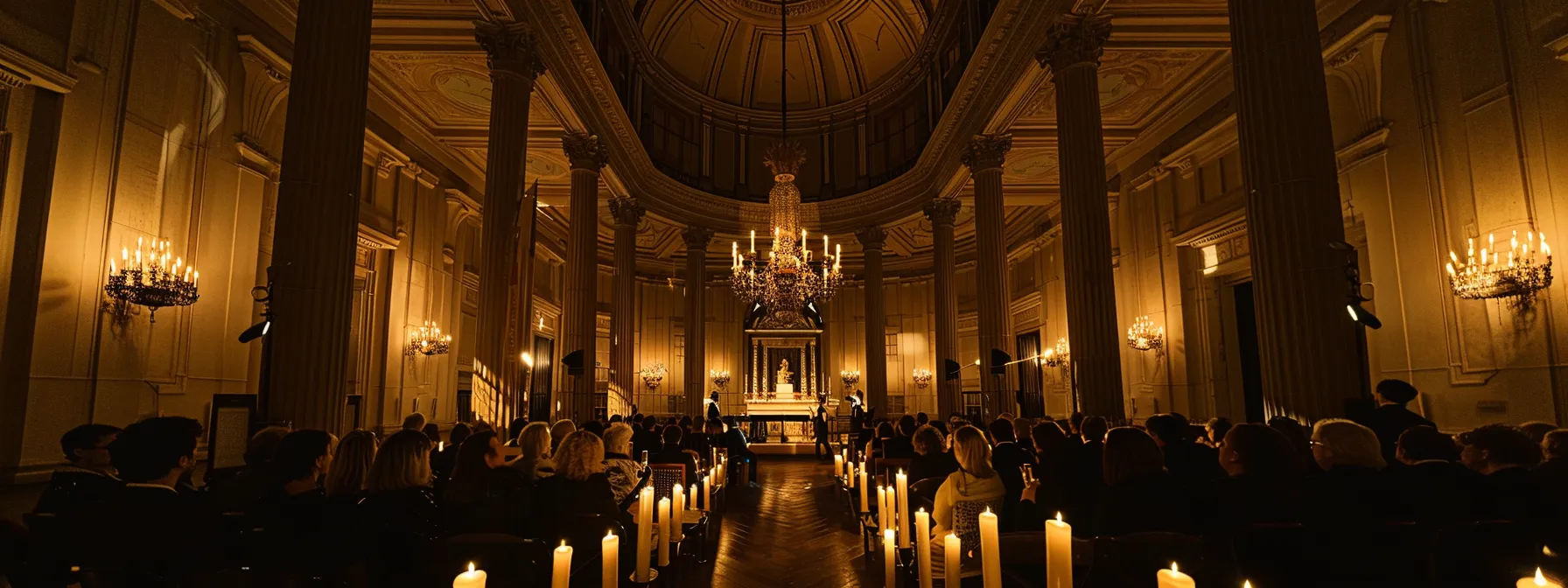
St Martin-in-the-Fields, a jewel in London‘s classical music crown, offers an enchanting array of candlelit concerts set against a backdrop of rich historical splendour. Here, I’ll share insights into its musical heritage, introduce you to the vibrant lunchtime concerts that spotlight emerging talent, and highlight the community programmes that enrich our city’s cultural fabric. You’ll also discover how to easily access event schedules and tickets, and I’ll guide you through the charming on-site café and gift shop, ensuring your visit is as seamless as it is memorable.
Experience Candlelit Concerts in a Historic Setting
Immersing oneself in the candlelit concerts at St Martin-in-the-Fields is to step back in time, enveloped by the warm glow of history. This cherished venue, nestled in the heart of London, offers an intimate setting where the sublime acoustics and serene atmosphere elevate the classical music experience. As a pianist, I’ve found that the combination of flickering candles and live, resonant performances creates a profoundly moving experience, unmatched in its ability to connect the audience with the essence of the music.
For those eager to partake in this unique musical journey, here are the steps to ensure a memorable evening at St Martin-in-the-Fields:
- Review the schedule of upcoming candlelit concerts on the venue’s website to select a performance that resonates with your musical preferences.
- Book your tickets in advance, as these intimate concerts often sell out quickly due to their popularity and limited seating.
- Arrive early to immerse yourself in the historic ambiance of the church, allowing the setting to transport you before the concert begins.
Learn About St Martin-in-the-Fields’ Musical Heritage
St Martin-in-the-Fields is not just a church; it’s a historical beacon in London‘s classical music scene. This landmark has been a cornerstone for musicians and music lovers since the 18th century, with its acoustics and atmosphere providing a sublime setting for Handel’s Messiah and other baroque masterpieces. As a pianist, I find that the venue’s legacy enhances the resonance of every performance, creating an experience that is as educational as it is enchanting.
Attend Lunchtime Concerts Featuring Emerging Artists
As a passionate advocate for classical music, I’ve found the lunchtime concerts at St Martin-in-the-Fields to be a remarkable platform for emerging artists. These recitals offer a unique opportunity for up-and-coming musicians to showcase their talents in a venue steeped in history. For visitors, it’s a chance to experience the vibrancy of London‘s classical music scene and perhaps witness the rise of the next great virtuoso.
Here’s how you can make the most of these lunchtime concerts:
- Check the St Martin-in-the-Fields website for the latest schedule and reserve your spot, as these popular events are often well-attended.
- Arrive with an open mind, ready to be inspired by a diverse repertoire ranging from baroque to contemporary pieces.
- Consider making a small donation, as these concerts are typically free, with contributions directly supporting the artists and the venue’s music programme.
Participate in Community and Outreach Programmes
At St Martin-in-the-Fields, I’ve witnessed the profound impact of their community and outreach programmes, which extend the joy of classical music beyond the concert hall. These initiatives engage diverse audiences, offering educational workshops and participatory events that foster a deeper connection with the arts. As a pianist, I’ve seen how these programmes can ignite a passion for music in individuals of all ages, creating inclusive opportunities for learning and cultural enrichment in the heart of London.
Find Ticket Information and Event Schedules
Securing your attendance at St Martin-in-the-Fields for an enriching classical concert is a seamless process. I recommend visiting their official website, where you’ll find a comprehensive schedule of events, including the much-anticipated lunchtime concerts and candlelit performances. Booking is straightforward, with clear information on ticket availability and pricing, ensuring you can plan your musical experience with ease. As a pianist, I value the importance of preparation, and I advise you to book in advance to avoid disappointment, as these concerts are a highlight of London‘s classical music calendar and seats fill up quickly.
Explore the on-Site Café and Gift Shop
After the stirring resonance of a classical concert at St Martin-in-the-Fields, I often find solace in the quaint on-site café, where the aroma of freshly brewed coffee complements the lingering notes of the evening’s performance. The adjacent gift shop is a treasure trove for music aficionados, offering an array of souvenirs and music scores that serve as mementos of the rich cultural experience. It’s here that visitors can take a piece of London‘s classical music heritage home with them:
- Browse the selection of classical CDs and vinyl records to relive the concert experience.
- Choose from a variety of books and unique gifts that celebrate the legacy of St Martin-in-the-Fields.
- Purchase sheet music to inspire your own musical journey or as a gift for fellow musicians.
5 Historical and Paradigmatic London Piano Performances at the ST MARTIN-IN-THE-FIELDS
St Martin-in-the-Fields has hosted numerous significant piano performances. Here are five particularly notable events:
-
Bruce Liu with the Academy of St Martin in the Fields (February 15, 2025): Bruce Liu, winner of the 2021 Chopin Piano Competition, performed Shostakovich’s Piano Concerto No. 1 and Mozart’s Piano Concerto No. 9 “Jenamy,” showcasing his exceptional talent.
-
Khatia Buniatishvili with the Academy of St Martin in the Fields (December 9, 2024): Renowned pianist Khatia Buniatishvili delivered a captivating rendition of Mozart’s Piano Concerto No. 23, accompanied by the Academy of St Martin in the Fields.
-
Maya Youssef with Zoe Rahman and Elizabeth Nott (October 11, 2024): Syrian-born qanun virtuoso Maya Youssef, alongside pianist Zoe Rahman and percussionist Elizabeth Nott, presented a unique fusion of Middle Eastern and Western musical traditions, offering a distinctive concert experience.
-
Plínio Fernandes and Hadewych van Gent (October 16, 2024): Guitarist Plínio Fernandes and cellist/singer Hadewych van Gent performed an intimate candlelit concert in the Crypt, featuring works by Bach and Villa-Lobos, creating a memorable and atmospheric evening.
-
Mark Padmore and Morgan Szymanski (September 17, 2024): Tenor Mark Padmore and guitarist Morgan Szymanski presented a recital of songs by John Dowland and Franz Schubert, along with works by Alec Roth and Benjamin Britten, blending historical and contemporary pieces in a compelling performance.
These performances highlight St Martin-in-the-Fields’ dedication to presenting a diverse array of piano and chamber music, enriching London’s cultural landscape.
The Royal Opera House: A Timeless Jewel in Covent Garden
A Storied Past: From Fires to Grandeur
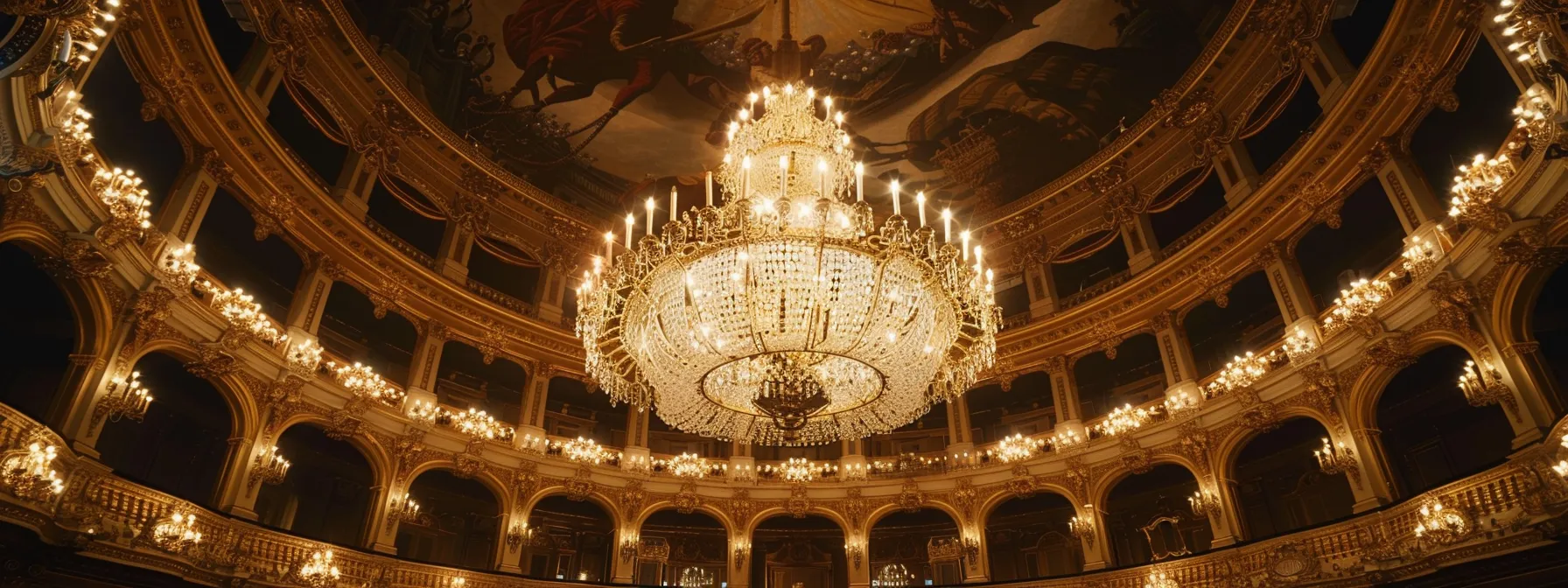
The Royal Opera House, nestled in London’s iconic Covent Garden, has a history as dramatic as the performances it hosts. Its origins date back to 1732, with the Theatre Royal established by John Rich. However, two devastating fires—in 1808 and 1856—led to the creation of the current neoclassical masterpiece, unveiled in 1858. Designed by Edward Middleton Barry, the building’s Corinthian columns and grand façade exude timeless elegance, a fitting entrance for this cultural landmark.
A Stage for the Sublime: Opera and Ballet Take Centre Stage
Since 1946, the Royal Opera House has been the home of both The Royal Opera and The Royal Ballet. Over the decades, it has witnessed unforgettable performances, including Maria Callas’s legendary portrayal of Norma and the world premiere of Kenneth MacMillan’s Romeo and Juliet. The venue has become synonymous with excellence in opera and ballet, offering a platform for the world’s greatest talent.
A Nod to the Piano: Rare, Yet Historic Moments
While predominantly an opera and ballet venue, the Royal Opera House has flirted with piano-centric performances. Most notably, in 1767, it hosted England’s first public piano recital, featuring Charles Dibdin accompanying Miss Bricker in an aria from Handel’s Judith. This historic moment highlights the venue’s occasional embrace of instrumental innovation amidst its vocal and dance traditions.
Experiencing the Magic: How to Get Tickets
Tickets for the Royal Opera House are available on their official website or at the box office. The offerings range from iconic operas like La Traviata to cutting-edge contemporary ballet productions. Whether you’re a seasoned enthusiast or a curious newcomer, the diverse program ensures something for everyone.
Curiosities and Hidden Gems: Beyond the Stage
The Royal Opera House isn’t just about performances. The adjacent Floral Hall, once a Victorian flower market, now serves as a dazzling atrium where visitors can enjoy a drink while soaking in the building’s history. Behind-the-scenes tours and educational workshops reveal the secrets of staging world-class productions, making it an engaging experience for all ages.
A Living Monument to Art
In every sense, the Royal Opera House is more than a theatre; it is a testament to London’s enduring cultural spirit. From its historic architecture to its cutting-edge productions, it continues to inspire and captivate audiences, proving that art truly has the power to transcend time.