
 TRIAL LESSON
Piano Lessons
London Piano Tuning: Essential Guide to Piano Tuning Best Practices

Nov
Piano Tuning in London Guide
London Piano Tuning: Essential Guide to Piano Tuning Best Practices
Table Of Contents:
- Key Takeaways
- The Importance of Regular Piano Tuning in London
- Finding the Right Piano Tuner in London
- Best Practices for Maintaining Optimal Piano Performance
- Preparing Your Piano for a Tuning Session
- Understanding How London’s Climate Affects Your Piano
- Frequently Asked Questions About Piano Tuning in London
- Frequently Asked Questions
As someone immersed in the world of classical piano education, I’d assert that routine ‘piano tuning‘ is not merely a suggestion but a necessity for any serious pianist. This post delves into the criticality of maintaining your instrument and securing the right tuner in London. We’ll look at tailor-made practices for sustaining your piano‘s prime condition and preparing for a tuning appointment, plus insights on London‘s unique climatic implications on your piano‘s performance. Understandably, many pianists experience frustration with tuning instability and tonal discrepancies; hence, I’ll guide you through the steps to address these issues. By reading on, you’ll uncover how to ensure your piano operates at its best, resonating with perfect harmony and precision.
Key Takeaways
- Regular piano tuning prevents damage and preserves sound quality
- Piano maintenance must account for London‘s fluctuating humidity levels
- Expert piano tuners understand the technical and environmental factors affecting sound
- Proper placement and humidity control can protect a piano‘s condition
- Post-relocation piano tuning is essential to regain stable sound quality
The Importance of Regular Piano Tuning in London

As a dedicated pianist and teacher, I can’t stress enough the significance of routine piano tuning for the instrument’s sound quality and longevity. Regular maintenance not only preserves the pitch but also prevents irreversible harm to your piano. In London’s fluctuating humidity, I recommend tuning your Piano biannually to maintain optimal musical tuning. Each tuning session ensures that every hammer strikes true, letting your music resonate with the clarity and brilliance it deserves.
How Regular Tuning Enhances Sound Quality
In my experience overseeing piano care and maintenance across London boroughs, I’ve learned that the regular employment, a finely calibrated tuning tool is vital. It is not simply a matter of adjusting an individual string; the intricate harmony between octaves is restored, enhancing the instrument’s voice to produce a cleaner, more resonant sound. Consequently, this delicate process substantially enriches the tonal quality, enabling pianists to express their music with greater fidelity to their artistic intentions.
As a member of the Piano Lessons London guild in the United Kingdom, I’ve observed that pianos untended by tuning can develop minute dissonances that accumulate, detracting from the intended sound. A routine tuning schedule is paramount, particularly in London where the variation in humidity impacts the wooden components of the piano. By ensuring consistent tuning, we preserve not only the instrument’s melodic purity but also safeguard its overall health, allowing pianists to perform confidently, without the distraction of an imperfect pitch.
Preventing Long-Term Damage Through Maintenance
In my role as a Piano Lessons London educator and tuner operating within the London Borough of Hammersmith & Fulham, I’ve witnessed the profound difference regular maintenance makes in preventing long-term damage. Regular tuning goes beyond the immediate correction of pitch; it’s a practice that preserves the integrity of the sound board – the heart of a piano‘s voice. Without due attention, this component can suffer from cracks and warps, leading to a compromised tone that no mute or digital enhancement can authentically rectify.
Students and professional pianists alike often share with me how the subtle, yet deleterious effects of neglect affect their instruments over time. An astute ear can detect when the sound board is losing its luster, which ultimately impacts the richness of the piano’s sound. Identifying and addressing maintenance needs early through dedicated Piano Lessons for Kids tuning can forestall these issues, ensuring both a vibrant tone and the longevity of the instrument, whether it’s a cherished traditional model or a critical digital piano setup.
Recommended Tuning Frequency for London Pianos
In my professional capacity, I advise that pianos within the London Borough of Camden—and indeed across the city—undergo tuning at least twice a year. This frequency is essential to maintain the harmonic richness a piano is prized for, ensuring that intervals are perfectly set and equal temperament is preserved. Given London‘s shifting climate, regular tuning also mitigates the risk of environmental stress affecting the tonal stability of the strings, much like the attention a fine guitar requires to remain in flawless condition.
My extensive experience tuning pianos for both concerts and home use has shown that a well-timed maintenance schedule is crucial. It facilitates smooth transitions across all octaves and the avoidance of discordance within complex chord structures. Additionally, in crowded urban environments like London, where ambient noise levels can challenge the clarity of a piano‘s sound, adhering to a six-monthly tuning cycle ensures that pianists can consistently produce pure and captivating tones on their instruments.
It would always depend of the current state of the piano, place of the instrument, use and way of using the keyboard, the age of the keyboard, if it is an upright or grand, etc. In my opinion, considering a piano student in need of piano tuner in London, I would say we should tune it once a year, or twice a year tuning service in case the piano is old and becomes off easily. But once a year should be mandatory in order to keep a well-maintained instrument.
Effects of London’s Climate on Piano Tuning
London‘s unique climate poses distinct challenges for maintaining the consistent tuning of musical instruments, particularly pianos. The city’s oscillating humidity levels can cause wood and strings to expand and contract, imperiling the stability of crucial intervals like the perfect fifth. Through my personal practice, I’ve observed that applying the tuning wrench with precision is essential during London‘s damp winters and comparatively dry summers, safeguarding the piano against subtle pitch shifts and maintaining the A440 standard demanded in concert tuning (A=440).
Also, not only the humidity but the temperature of the room in which we place the instrument. During long winters in London, heating is always on, and this is also a cause of dryness in excess, which may cause damage to the board. So let’s keep the room always humid around 60% throughout the year to make sure the instrument is moist enough and un-affected by weather and room temperature changes.
As a classical pianist teaching and performing in London, I know firsthand how crucial it is to adjust to the climatic variances to protect the sonic integrity of our instruments. When it drifts from its intended pitch, even a subtle deviation can diminish its vibrant character. My regular use of a tuning wrench, attuned to the finest nuances of the instrument, ensures that each musical piece, whether practiced in solitude or performed before an audience, resonates with the clarity and depth that truly honors the composer’s vision.
A finely tuned piano sings with a clarity that touches the soul. Let’s now seek out the skilled hands that can sustain such music care in London.
Finding the Right Piano Tuner in London

Selecting the right piano tuner in London can make all the difference to your instrument’s performance. Focus on identifying a tuner with a blend of expertise and precision, a master who wields the tuning fork like a violinist does their bow. I will guide you through the questions you need to pose to prospective tuners, pinpointing the benefits of entrusting your tuning schedule to a localized West London expert. Comparing services is essential; the right professional will ensure your piano resounds at the perfect frequency, harmonious with every keystroke.
Qualities of a Professional Piano Tuner
In my professional judgment, based on years of tuning pianos in Greenwich and Hampstead, a top-tier piano tuner must maintain a precise understanding of a piano‘s wire tensions and the harmonic series. This skill is critical because subtle changes in temperature and humidity, which are common in London, can affect wire tension, thereby altering sound. A tuner with this knowledge will ensure your piano maintains its perfect pitch and harmonic richness, even amid such environmental variations.
Furthermore, a truly adept tuner is not only proficient in the mechanics of the piano but also has an acute ear for detecting the slightest discrepancies in a piano‘s soundscape. They know that the wire tension must be adjusted exactly to avoid disrupting the instrument’s delicate balance. In my experience, a harmonious relationship between each component of the piano leads to an expressive and vibrant performance, something that any pianist in London, from Greenwich to Hampstead, deeply values.
Questions to Ask Prospective Tuners
In my many years of caring for pianos across the City of Westminster to Fulham, I recommend asking prospective tuners about their experience with various types of pianos, particularly if you own a harpsichord or an instrument with steel components. Their response can offer insights into their hands-on knowledge and capability to tune the unique sounds and technical requirements of your specific instrument.
Additionally, when seeking a tuner in the London Borough of Lambeth or beyond, do question them on their familiarity with the local climate’s impact on instruments. A tuner well-versed in the effects of London‘s humidity on piano wires will be indispensable for preserving your piano’s tonal integrity and preventing environmental stress from affecting performance.
Benefits of Choosing a Local London Specialist
Engaging a local London specialist, especially from areas like Kensington or Central London, carries the advantage of their skill being sharpened within this unique metropolitan setting. They possess a nuanced understanding of the urban acoustics and the specific challenges posed by the London Borough of Islington or the stately environments of Holborn. Such geography-specific expertise ensures your piano‘s tuning is tailored not just to your instrument, but also to the very space it inhabits.
Moreover, a tuner based in the heart of London is invariably attuned to the fluctuations inherent in an urban climate. They have a practical grasp of how these changes can affect a piano‘s components over time. Trusting your piano to a local expert means placing it in the hands of someone who has adapted their skill set to the bustling, vibrant life of London, safeguarding the instrument’s integrity and performance amidst the city’s rhythmic pulse.
Also, keeping a good professional may be beneficial in the long run since that tuner will be in charge of your instrument care, and will know more about it, which is great for future issues may happen with your instrument for a quick valoration.
Comparing Services Offered by London Piano Tuners
In my extensive experience mentoring pianists across London, including Surrey, the distinction between tuning services can greatly impact sound quality. A proficient tuner understands that achieving concert pitch goes beyond mere adjustments; it requires meticulous attention to inharmonicity—the subtle variations in harmonic frequencies produced by each string. Aspiring or professional pianists should seek tuners who demonstrate expertise in mitigating inharmonicity, as it directly correlates to the richness and accuracy of the piano’s sound.
It’s not just about who can tune your piano but how they approach the task. A premier tuner operating in London will exhibit a thorough grasp of the technical nuances and the environment in which the piano resides. A tuner who can fine-tune your instrument to withstand the dynamic urban soundscape truly understands the indispensability of maintaining stable sound, particularly for concert readiness. They’ll ensure your piano resounds with exceptional clarity, whether you’re rehearsing in a Surrey home studio or performing in a bustling London venue.
Once the piano is tuned, its voice is true. To keep it singing, follow these best practices for sustained performance.
Best Practices for Maintaining Optimal Piano Performance

As a pianist myself, I’m keenly aware of the best practices to keep a piano in top condition. Among these practices are keeping it clean and dust-free, placing it ideally in your home in locations like Clapham or Marylebone, and managing the ambient humidity closely. I’ve also learned to spot signs of wear or damage quickly. Neglecting these aspects can carry a fee, often larger than the expense of the regular care a piano necessitates. It’s been my experience that following these guidelines greatly contributes to the instrument’s optimal performance.
Keeping Your Piano Clean and Dust-Free
In my profession, I often encounter pianos in the London Borough of Hackney where the build-up of dust and airborne particles can form a pronounced curve in the accumulation, particularly along the less frequented keys and the soundboard. Attentiveness to regular cleaning not only safeguards the metal components from oxidative stress but also ensures that each note, from a delicate perfect fourth to the most robust forte, rings out with uncompromised purity.
Additionally, in my visits to students’ homes in Kentish Town, I frequently emphasise the importance of maintaining a clean environment around their piano. This involves removing dust from under the strings and around the tuning pins, as settled dust can dampen the vibrations, diminishing the clarity of the sound. By adhering to a consistent cleaning routine, pianists can prevent this subtle encroachment upon their instrument’s tonality, ensuring a clean soundstage for every performance.
We published a guide you should look at for best tips, on how to clean a piano. A properly way of cleaning the keys of a piano, and for keeping it disinfected.
Ideal Placement of Your Piano at Home
Choosing the right spot for your piano at home is critical to maintaining its scale and tone. Specifically, for a Blüthner piano—or any other high-calibre instrument—it is best placed in a part of your Highbury or Bloomsbury residence that avoids direct sunlight, extreme temperature changes, or heavy airflow from windows or doors. This preventive measure helps sustain the precision of the piano‘s unique scale, critical for those refined subtleties during practice or performance.
In my professional opinion, as someone deeply rooted in the upkeep of grand pianos across High Wycombe, the ideal location should also consider acoustic properties. A room with carpeted floors and heavy drapes may overly absorb sound, while a room with hardwood floors and sparse furnishings might reflect and amplify it. Therefore, place the piano in a space that balances sound reflection and absorption, enhancing your ability to hear true pitch and tone during tuning and practice sessions.
Regulating Humidity Levels for Piano Care
In my tenure instructing students in Finsbury and Camberwell, I’ve emphasised the necessity of dampening the effects of humidity on their pianos. Especially in areas like Maida Vale, where the variation in atmospheric moisture can be more pronounced, I advocate for the use of dehumidifiers during the wet months, and humidifiers when it’s too dry. This careful regulation ensures the wooden components of the piano stay stable, averting tuning complications and maintaining optimal sound quality.
My own experiences in New Malden have taught me the importance of regular hygrometer checks to monitor indoor humidity levels, a practice I pass on to pupils enthusiastic about learning the piano. By keeping the humidity within the recommended range – usually between 40% and 70% relative humidity – students and owners can preserve their piano‘s condition, minimising the risk of soundboard warping and pin block problems that interfere with perfect harmony and tuning stability.
Identifying Signs of Wear or Damage Early
In my profession, I often advise students and piano owners in Brixton and the wider London Borough of Bexley to be vigilant for early signs of wear or damage to their pianos. A sticky key or a dull thud where there should be a clear tone can often indicate underlying issues that, if not addressed, could lead to costly repairs down the line.
During my visits to clients’ homes in Finchley and Paddington, I’ve seen the tangible benefits of early intervention. Identifying problems such as loose tuning pins, worn hammers, or splintered bridges can prevent more severe damage. It’s essential for any pianist to be attentive to their instrument’s condition and seek professional assessment at the first sign of any anomaly in sound or performance.
Maintaining your piano ensures enduring quality of sound. Let’s move to prepare your instrument for the crucial next step: a tuning session.
Preparing Your Piano for a Tuning Session
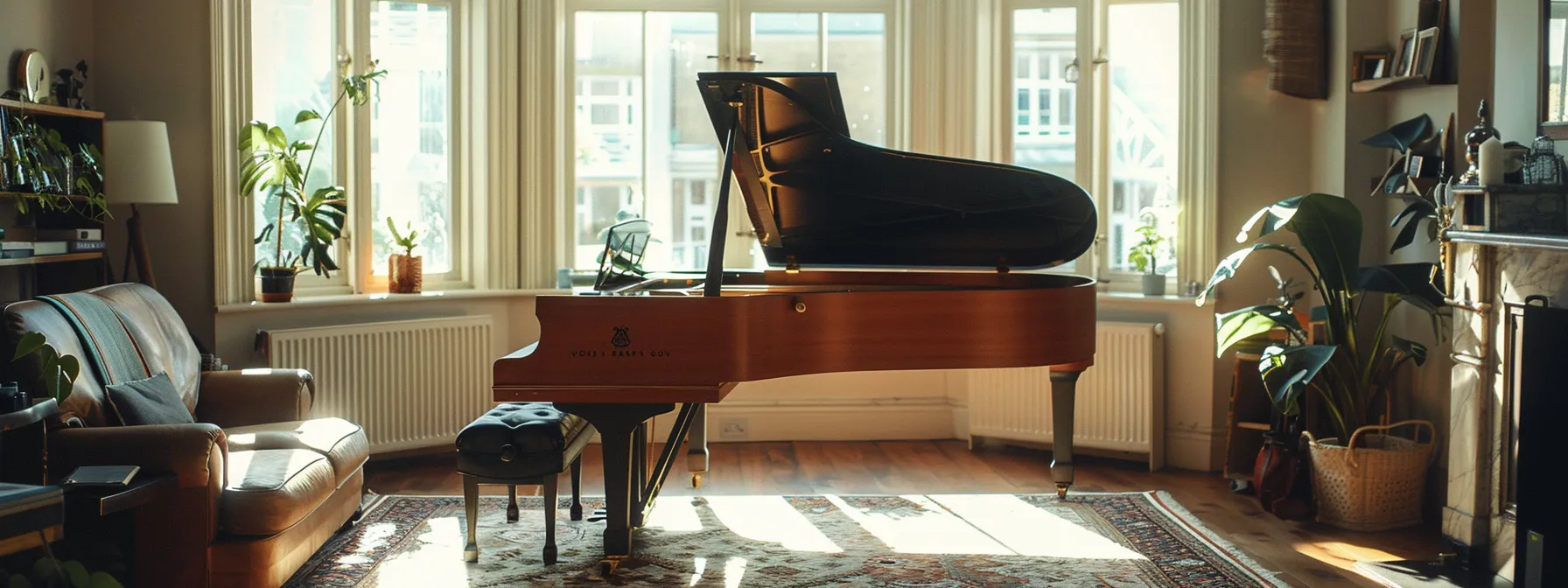
Preparing your piano for a tuning session is as crucial as the tuning itself. Clear the area for easy access, especially in snug London homes from Winchmore Hill to Mill Hill. Alert your tuner to any issues beforehand, and secure a quiet space free from vibrations and noise—vital for precision in areas bustling with life like Islington or Camden Town. Scheduling the tuning for a time that suits you ensures a focused and effective session.
Clearing the Surrounding Area for Accessibility
In my professional practice within the dynamic Covent Garden area, I understand how a cluttered space can impede the critical work of piano maintenance. Before the tuning expert arrives, I advise clients to clear the vicinity around the instrument, enabling unobstructed access to each crucial aspect of the piano. This preparation is not merely a courtesy but a necessity that allows the technician the full view and reach needed to refine the piano‘s tone to perfection.
The diligent approach of creating a clear working area is integral to a successful tuning, especially in London‘s compact living spaces. As a seasoned piano educator, I’ve seen clients in the London Borough of Southwark and Edgware benefit significantly from this simple yet effective step. It ensures that the tuner can operate with precision, facilitating meticulous tuning that upholds the harmonic excellence pianists in the United Kingdom and beyond have come to expect.
Notifying the Tuner of Any Known Issues
In my role as a piano maestro, I have often advised students and clients in Soho to communicate any known issues with their pianos to the tuner prior to a tuning appointment. This exchange of knowledge is crucial, as it prepares the tuner for the specific tension adjustments required, and allows them to bring the appropriate tools and spares that might be needed to address the issues, ensuring the tuning session proceeds smoothly.
If, for example, you observe a recurrent problem in a certain range of your piano, sharing this information ahead of the appointment enables the tuner to apply their knowledge and theory to diagnose the underlying cause. My experience with pianos in Dulwich has shown me that a tuner forewarned is better equipped to rectify any problematic string or hammer, saving time during the visit and averting potential damage from overlooking such details.
Ensuring a Quiet Environment During Tuning
In my personal experience, tuning a piano in the bustling areas of South London or the dense Bermondsey district necessitates a tranquil environment to detect pitch deviations with precision. I advise students and clients in England, especially those keen on perfecting their craft through piano lessons in London, to arrange for such conditions. This might involve scheduling sessions at quieter times of day or politely requesting a temporary cessation of noisy activities within the vicinity.
Securing a silent atmosphere is fundamental during piano tuning, as even the faintest background noise from a busy Kent road can mask the subtle sound discrepancies we are trained to adjust. As a trusted provider of piano lessons in London, I often underscore to my clients the importance of a serene environment, ensuring that tuners can harmonise each string to resonate with clear, undisturbed tones.
Scheduling Tunings at Convenient Times
In my years of providing Piano Lessons for Beginners, I’ve found that selecting a tuning time that aligns with your routine can significantly enhance the learning experience. Optimal timing for tunings is pertinent, not merely for sound quality, but also for ensuring students—be they kids taking their first piano lessons or adults refining their technique—can practice on an instrument that’s sonically reliable and inspiring.
For those invested in Adult Piano Lessons or seeking to school their children in music, coordinating piano tunings at moments least disruptive to your schedule is crucial. I encourage clients to consider their family’s timetable or personal commitments when booking tunings, thereby securing uninterrupted learning sessions post-tuning, guaranteeing that the benefits of a well-tuned piano are fully appreciated during practice.
With your piano ready to sound its best, it’s time to consider London‘s unique climate. How it breathes and sways with the seasons can shape your instrument’s voice in subtle ways.
Understanding How London’s Climate Affects Your Piano
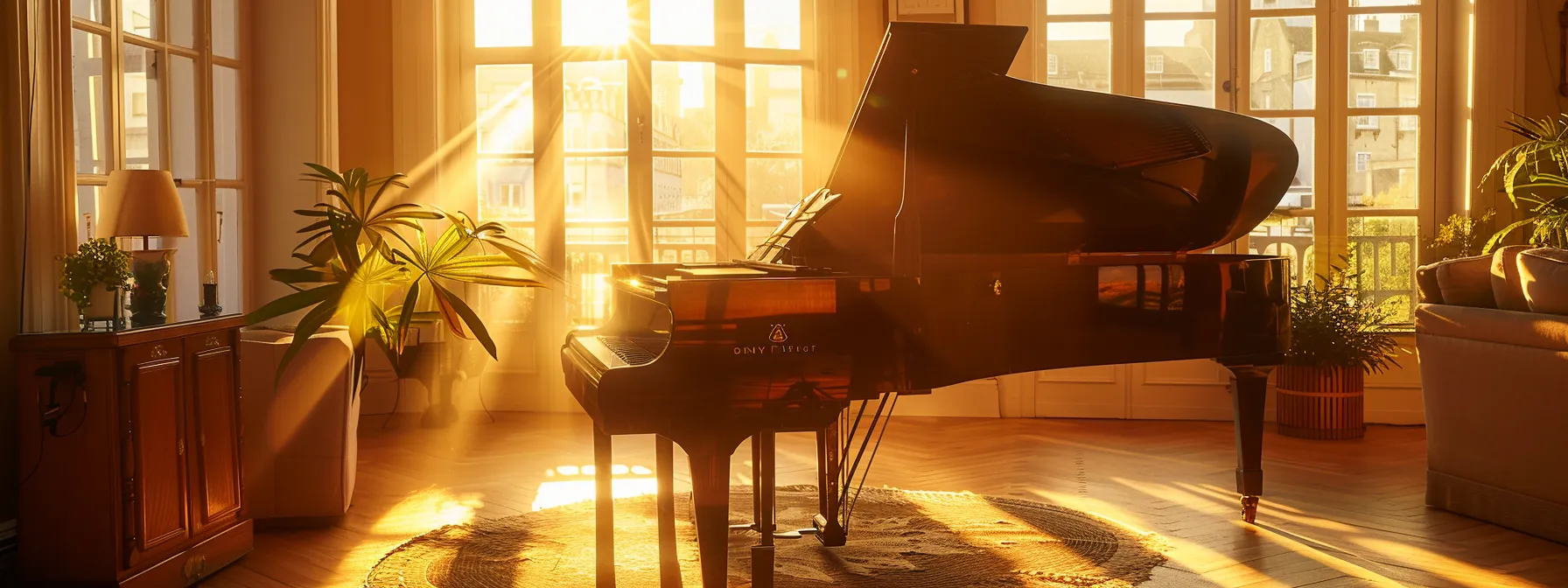
In my expertise guiding piano owners, understanding how London‘s climate with its humidity and temperature fluctuations can impact your piano is essential. Seasonal tips can offer crucial steps for maintaining your piano‘s performance in varying conditions. I will delve into protective measures that counteract environmental factors, asserting the vitality of such precautions in local piano care strategies. These insights are central to preserving the nuanced sound and mechanical functionality of your beloved instrument.
Impact of Humidity and Temperature Changes
In my tenure as a piano instructor and tuner, I’ve closely observed the profound impact that London‘s temperamental climate has on pianos. The continuous flux of humidity and temperature can cause the wooden parts of the piano to expand and contract, which in turn detunes the strings and warps precision-fitted components. Diligent attention to the ambient conditions in which pianos are housed is essential, as this directly affects the stability of tuning and the quality of the piano‘s sound.
Advising students and clients under my tutelage, I always emphasize the importance of maintaining a consistent environment for their instruments to mitigate these risks. For example, fluctuations in the home can lead to a compounding of tuning issues, necessitating more frequent adjustments. By controlling room temperature and humidity, pianists can reduce the frequency of piano tuning and preserve the integrity of their instrument’s tonal beauty, ensuring a responsive and resonant sound year-round.
Seasonal Tips for Piano Care in London
In my professional practice, I advise piano owners to adjust their care regimen with the changing seasons in London. During the humid summer months, I recommend using a dehumidifier to counteract the excess moisture that can lead to swelling and sticking of piano keys and actions. Conversely, in the cooler, dryer winter, a humidifier can add necessary moisture to prevent wood and felt from drying out and cracking, ensuring the piano‘s components function seamlessly.
As the temperatures drop, I also suggest keeping the piano away from sources of direct heat, such as radiators or fireplaces. This prevents sudden temperature changes that can cause the piano‘s wood to contract, impacting tuning stability. My experience has shown that maintaining a consistent room temperature fosters a stable environment for the piano, preserving the instrument’s tuning and voicing throughout London’s diverse seasons.
Protecting Your Piano From Environmental Factors
In my professional capacity, I consistently advise shielding your piano from London’s unpredictable environmental elements to maintain tuning stability. Utilising bespoke covers, especially when the instrument is not in use, can guard against dust and fluctuations in humidity that contribute to tuning drift. This preventative measure greatly assists in preserving the meticulous calibration of the strings and the integrity of the wood, which are both vulnerable to the city’s variable climate.
Moreover, as a pianist intimately familiar with the capricious London weather, I recommend positioning your piano away from windows and exterior walls where draughts and temperature shifts are most pronounced. This strategic placement significantly reduces the risk of damage caused by environmental extremes, ensuring your instrument remains in a stable condition, ready to deliver a flawless performance with every note.
London‘s ever-changing weather can be harsh on pianos, yet a well-tuned instrument defies the elements. Now, let’s tackle your pressing queries about keeping those keys in perfect harmony.
Frequently Asked Questions About Piano Tuning in London

Addressing common queries surrounding piano tuning in London, let’s delve into the how’s and why’s of maintaining your instrument. How often should a piano be tuned to preserve its tonal quality? What costs might be involved in professional tuning services? Is self-tuning a viable option, or should it be left to the experts? And lastly, how does relocating your piano influence its tuning stability? Each of these questions is pivotal to ensuring your piano‘s performance remains exemplary.
How Often Should I Tune My Piano?
As a piano instructor and technician in London, I advise you to tune your piano at least twice a year to ensure its performance remains at its best. The precise process equates to a vocal artist frequently warming up their voice; it keeps your piano sounding rich and in perfect harmony, vital for both practice and performance.
In my practice, I have found that the bustling London atmosphere and its variable climate can necessitate more frequent tuning, especially if the instrument is used extensively or kept near areas with fluctuating temperature and humidity. This regular adjustment helps to mitigate against the wear and seasonal effects on the piano, preserving the quality of its tone and touch.
What Is the Typical Cost of Piano Tuning?
Regarding the cost of piano tuning in London, my experience suggests that prices can vary depending on factors such as the piano‘s age, the regularity of past tunings, and the specific requirements of the instrument. Typically, you might expect to invest anywhere from £60 to £100 for a standard tuning session. However, if your piano has not been tuned regularly or requires additional adjustments, the price could be higher.
I always recommend seeking quotations from a few reputable tuners to understand the market rate fully. As a professional pianist and tuner, I’ve seen clients gain confidence and value when they’re aware of the tuning costs upfront. These quotes usually include a thorough assessment, the tuning itself, and minor repairs or adjustments, ensuring your piano is not only tuned but also well-maintained and performance-ready.
Can I Tune My Piano Myself?
As a professional pianist and educator, I often encounter the question of whether self-tuning is a feasible option for piano owners. In truth, while it is possible for individuals to learn basic tuning techniques, the precision and skill required typically necessitate a trained technician. Attempting to tune your piano without the proper expertise can lead to further tuning issues or even damage to your instrument.
During my tenure as a piano tutor, I’ve observed that self-tuning can be particularly challenging in London‘s varied climate. Even for those with some understanding of piano mechanics, the subtle intricacies involved in tuning can be easily overlooked, impacting the piano‘s harmonious sound. Therefore, I advocate consulting with a professional when it comes to tuning, to ensure your piano maintains its optimal performance and integrity.
Does Moving Affect My Piano’s Tuning?
Indeed, relocating a piano can significantly impact its tuning stability. The movement often jostles the intricate internal mechanics, which can unsettle the strings and alter the tension, thus affecting the overall sound. Especially in a bustling city like London, where transport can be quite vigorous, it’s advisable to schedule a tuning session after the piano has settled in its new location to ensure it maintains its harmonious character.
From my professional experience, I must highlight that changes in environment accompanying a move, such as differences in humidity and temperature between the old and new locations, can also influence the instrument’s tuning. After a relocation, one must allow the piano time to acclimate before tuning it to perfection again. This practice ensures the piano continues to provide the rich, precise sound that pianists and audiences cherish.
Frequently Asked Questions
Why is regular piano tuning crucial for London-based pianists?
Regular piano tuning is essential for London pianists to maintain accurate pitch, ensure optimal sound quality, and extend their instrument’s life, whether for practice, performance, or lessons.
How do I select a qualified piano tuner in London?
Select a qualified piano tuner in London by checking credentials, reading reviews, and seeking recommendations from respected music institutions like WKMT London.
What steps should I take to ensure my piano‘s peak performance?
Regular tuning, gentle cleaning, humidity control, and professional inspections are crucial for maintaining your piano‘s peak performance.
How should I prepare my piano before the tuner‘s visit?
Before the piano tuner‘s visit, ensure your instrument is clean and the area around it is accessible, allowing for efficient tuning.
Can London‘s unique climate impact my piano‘s tuning stability?
London‘s variable humidity and temperature can indeed influence your piano‘s tuning stability, necessitating more frequent tuning sessions to maintain optimal performance.