
 TRIAL LESSON
Piano Lessons
Crafting Your Ideal Daily Piano Practice Routine

Sep
Daily Piano Practice Routines
Crafting Your Ideal Daily Piano Practice Routine with WKMT London
Table Of Contents:
- Crafting Your Ideal Daily Piano Practice Routine
- Key Takeaways
- Define Your Piano Practice Goals
- Clarify Your Musical Objectives
- Identify Skills to Develop
- Set Realistic and Measurable Targets
- Organize Your Practice Schedule
- Determine Optimal Practice Times
- Break Sessions Into Focus Areas
- Allocate Time for Each Practice Element
- Develop a Balanced Practice Routine
- Warm-Up Exercises for Technique Enhancement
- Incorporate Scales and Arpeggios
- Practice Repertoire Pieces
- Include Sight-Reading and Ear Training
- Implement Effective Practice Strategies
- Use Slow Practice for Accuracy
- Break Down Complex Passages
- Apply Consistent Repetition
- Utilize Metronome for Timing
- Monitor and Evaluate Your Progress
- Keep a Practice Journal
- Record Your Playing Regularly
- Seek Feedback From Teachers or Peers
- Stay Motivated and Consistent
- Create a Dedicated Practice Space
- Set Short-Term Rewards
- Refresh Your Repertoire Periodically
Crafting Your Ideal Daily Piano Practice Routine
Does the prospect of sitting down at your piano and wondering what exactly to practice sound familiar? Let’s tackle that challenge together. This article will provide a structured guide to crafting a daily piano practice routine, emphasising the integration of ear training, an essential component often overlooked. You’ll learn how to organise a balanced schedule that incorporates music theory, triads, and rhythmic patterns to maximise learning efficiency. By the end of this discussion, you’ll have the tools to transform your practice sessions, making them more focused and productive, and ultimately enhancing your musical journey. Daily Piano Practice Routines with the London Team.
Key Takeaways
- Set clear, measurable goals to ensure effective piano practice
- A balanced routine includes warm-ups, scales, and repertoire for technical and expressive growth
- Slow, focused practice is key to mastering complex musical passages
- Recording sessions and seeking feedback are vital for tracking progress and improvement
- A dedicated practice space and short-term rewards aid motivation and consistency
Define Your Piano Practice Goals

As a musician, I understand that defining your practice goals is the bedrock of progress. To craft an ideal daily piano routine, we must first clarify our musical objectives. Identifying the skills you aim to develop, be it improvisation or mastering a complex scale, is crucial. Let’s then set realistic and measurable targets for each exercise, ensuring steady advancement in your piano prowess. This structured approach, I believe, will transform your practice into a truly effective endeavor.
Clarify Your Musical Objectives
As I guide you through your piano journey, clarifying your musical objectives is fundamental. Whether your focus is on mastery of major and minor keys, improving hand coordination, or playing blues with an authentic feel, clarity in these goals sets the tempo of your progress. It’s this understanding that enables us to tailor your practice sessions to address specific challenges and carve a path towards your desired skill level.
Identify Skills to Develop
In my experience as a piano educator, a keen focus on developing specific skills is paramount for progress. Take, for instance, the assimilation of melody; here, we work towards enhancing your ability to interpret and express music with the emotional depth a composer intended. Gaining this knowledge not only enriches your skill set but also invites a deeper connection with music itself. As we journey through our lessons, I’ll assist you in refining these competencies, which are the keystones of becoming not just a pianist, but a true musician.
Set Realistic and Measurable Targets
In my role as a piano teacher, I advise my students to set realistic and measurable targets, such as mastering the intricacies of c major scale fingering or honing their ear for the nuances in classical music. These goals, perhaps tied to the esteemed ABRSM exams, provide a framework for tracking progress. It’s vital to break down these aims into manageable tasks, ensuring that each finger movement or ear training exercise propels us a step closer to our musical aspirations. This approach ensures that every practice session is purposeful, bringing a sense of achievement that fuels our shared passion for the piano.
Goals give direction. Now, let us chart the course for progress.
Organize Your Practice Schedule
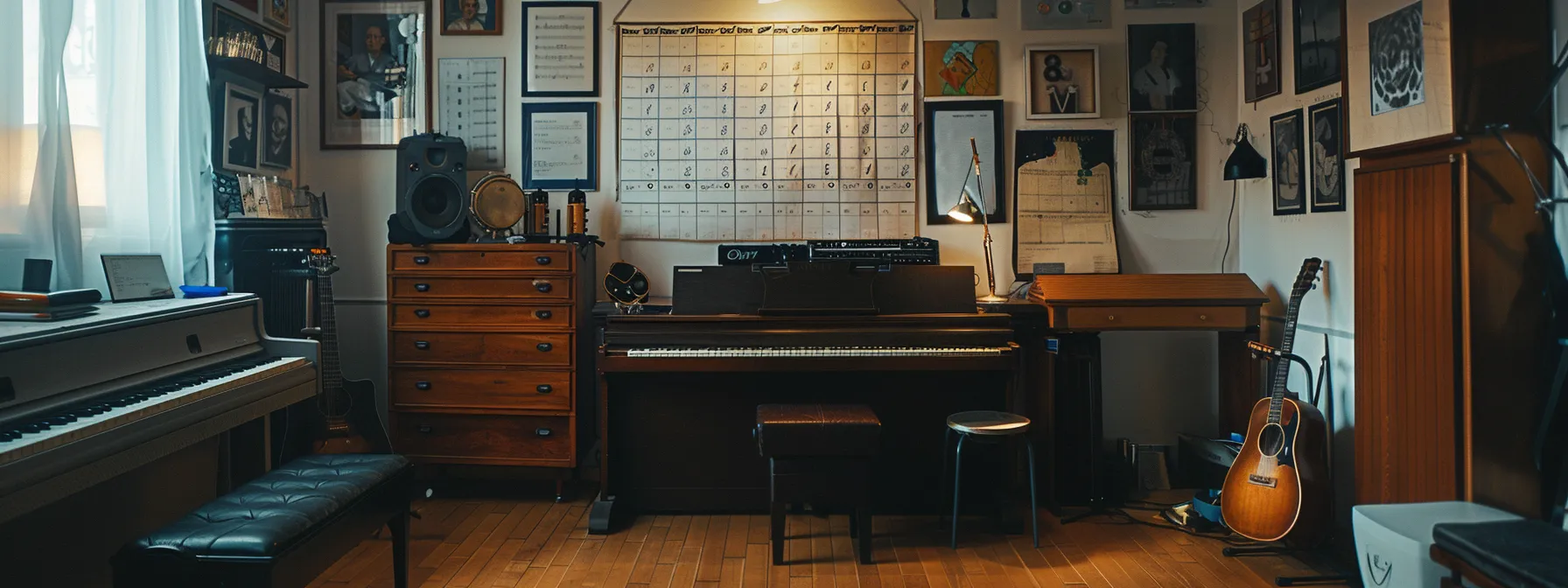
Transitioning from setting goals to actual practice, organising your schedule is paramount. Determining the optimal practice times for major scale proficiency, harmony, and minor scale development can significantly enhance your progress. Each session should be broken into focus areas, such as technique, ear training, and sheet music interpretation, with allocated time for each element. This systematic approach aligns closely with your musical goals, streamlining your path to mastery. Daily Piano Practice Routines made easy.
Determine Optimal Practice Times
As a teacher and mentor, I’ve observed that disciplined timing greatly enhances the development of a pianist. Therefore, identifying the periods of the day when you’re most alert and receptive can be transformative for your practice. Whether you’re finessing your jazz piano improvisation skills or honing the delicate art of playing by ear, earmarking these prime times not only optimizes absorption but also maximizes productivity, making your practice both efficient and enjoyable.
Break Sessions Into Focus Areas
In my capacity as a piano educator, I stress the importance of compartmentalising your practice sessions into focused areas of study. Concentrating on specific elements such as arpeggio pacing, octave transitions, chord progression fluency, and understanding key signatures, particularly within jazz constructs, will significantly propel your technical and theoretical comprehension. This dedicated approach allows for more in-depth learning, as I guide you to blend these elements into a harmonious routine that not only meets but exceeds your musical ambitions.
Allocate Time for Each Practice Element
In my role as a passionate piano instructor, I advise my students to judiciously allocate time for each element of their practice. For instance, during Piano Lessons London, I ensure that each song is given due attention, seamlessly integrating technique, interpretation, and expression. This principle is particularly beneficial for Piano Lessons for Children, where shorter, more focused sessions help in maintaining engagement and encouraging a deeper musical understanding. By thoughtfully apportioning time, we lay down a solid foundation for holistic development as a pianist.
A disciplined schedule sets the stage. Let’s now forge your daily practice into a rhythm as steady and purposeful as a metronome’s beat.
Develop a Balanced Practice Routine

In my capacity as a piano mentor, I advocate for a balanced practice routine that incorporates key elements for comprehensive musical development. Initiating with warm-up exercises, I enhance your technique, while scales and arpeggios build dexterity. Then, focusing on your repertoire pieces ensures expressive performance. Incorporating sight-reading and ear training completes this holistic approach, creating a scaffold for your musical evolution.
Warm-Up Exercises for Technique Enhancement
As your piano instructor, I advocate beginning each practice with warm-up exercises tailored to enhance your technique. A series of finger exercises and scales conditions your hands and prepares your mind for the complexities ahead. These preliminary exercises not only prime your dexterity but also lay the groundwork for a more productive and injury-free practice session. A review on Daily Piano Practice Routines.
Incorporating warm-up exercises into your daily routine ensures a nimble and precise touch on the keys. For instance, the five-finger scale exercise strengthens each digit, while also reinforcing your understanding of key signatures. Following this with Hanon’s virtuoso pianist exercises can further hone your technical abilities, making intricate pieces more accessible:
Incorporate Scales and Arpeggios
In my practice routine, incorporating scales and arpeggios is a pivotal component to develop musical understanding and technical proficiency. For students, engaging in structured scale patterns and arpeggio exercises sharpens finger coordination, strengthens hand independence, and solidifies knowledge of key signatures. By weaving these into your daily sessions, you establish a fundamental skill set that serves as the backbone for all advanced piano repertoire. By dedicating time to scale and arpeggio practice each day, my students experience significant improvements in their overall performance:
Practice Repertoire Pieces
In my teaching experience, I’ve found that dedicating a portion of your practice routine to repertoire pieces is essential for not just technical growth, but also for nurturing your expressive capabilities. Working on your selected pieces, whether they are time-honoured classics or contemporary compositions, allows you to apply technical skills in a musical context and gives you the satisfaction of seeing a piece evolve from the initial learning stages to a polished performance. Tailoring practice sessions to include significant time for these pieces can accelerate your development as a pianist, encouraging both technical refinement and expressive depth.
Include Sight-Reading and Ear Training
In constructing a balanced practice routine, I emphasise the importance of including sight-reading and ear training. These facets are fundamental in developing a keen musical ear and the ability to interpret new compositions with confidence. Sight-reading cultivates proficiency in decoding notations swiftly, while ear training enhances your capacity to recognise and replicate melodies and harmonies, bolstering your overall musicianship:
These skills allow you to approach new musical challenges with a well-rounded skill set, making you not only a proficient pianist but a versatile musician.
Master your daily routine and the piano keys await your command. It’s time to turn discipline into artistry through effective practice strategies.
Implement Effective Practice Strategies

Entering the heart of daily piano practice, I advocate strategies that bolster accuracy and timing. Slow practice is essential for precision, while dissecting complex passages aids in overcoming technical obstacles. Consistent repetition cements learning, as does using a metronome—a vital tool for impeccable timing. Understand, these methods are not merely suggestions; they are integral to the development of a skilled pianist. Let’s continue with the guide on Daily Piano Practice Routines.
Use Slow Practice for Accuracy
In our piano practice, I emphasise the virtue of slow practice to fine-tune accuracy. By gradually unfolding each piece at a measured pace, we allow ourselves the space to note every nuance and correct errors in real time, solidifying our grasp of the music. This method ensures that, when we eventually bring the tempo up to performance speed, the execution is precise and the musicality, intact.
Break Down Complex Passages
When confronting complex passages during your piano practice, my advice is to break them down into manageable components. Tackling each segment individually allows for a more in-depth focus on the intricate details, such as finger placement and articulation, gradually building up to the full passage. This meticulous approach streamlines the learning process, turning seemingly daunting musical phrases into achievable challenges and ensuring clear progress:
This strategic segmentation not only solidifies your execution but also builds confidence, encouraging a seamless transition to the complete piece. As your guide, I am devoted to helping you master each step, ensuring that every complex passage becomes a testament to your skill and dedication.
Apply Consistent Repetition
In my teaching practice, I’ve seen the tremendous value of consistent repetition for securing piano proficiency. By methodically rehearsing each segment of a piece, students engrain the essential techniques and rhythms in their muscle memory, forging a pathway to effortless performance. This routine repetition not only polishes specific sections but also ties the larger musical structure together, effectively paving the way for a confident and convincing delivery that resonates with the emotional core of the music.
Utilize Metronome for Timing
In my experience as a piano instructor, I’ve seen the metronome become an indispensable tool for students eager to improve their timing and rhythmic accuracy. A metronome not only provides a steady pulse to internalize various rhythms, but also acts as an honest measure of tempo, particularly beneficial during scale practice or when mastering new compositions. By integrating metronome use into your daily practice, you can foster an innate sense of timing, indispensable for solo or ensemble performances. To illustrate the effective use of a metronome, consider the following steps:
- Start with a slow tempo to become familiar with the rhythm and notes of a piece.
- Gradually increase the speed as your confidence and accuracy improve.
- Incorporate rhythmic variations to challenge your adaptability and further solidify your timing.
Practice paves the path; sharp and focused, each repetition a step closer to mastery. But to tread further, one must pause – to appraise, to adjust.
Monitor and Evaluate Your Progress
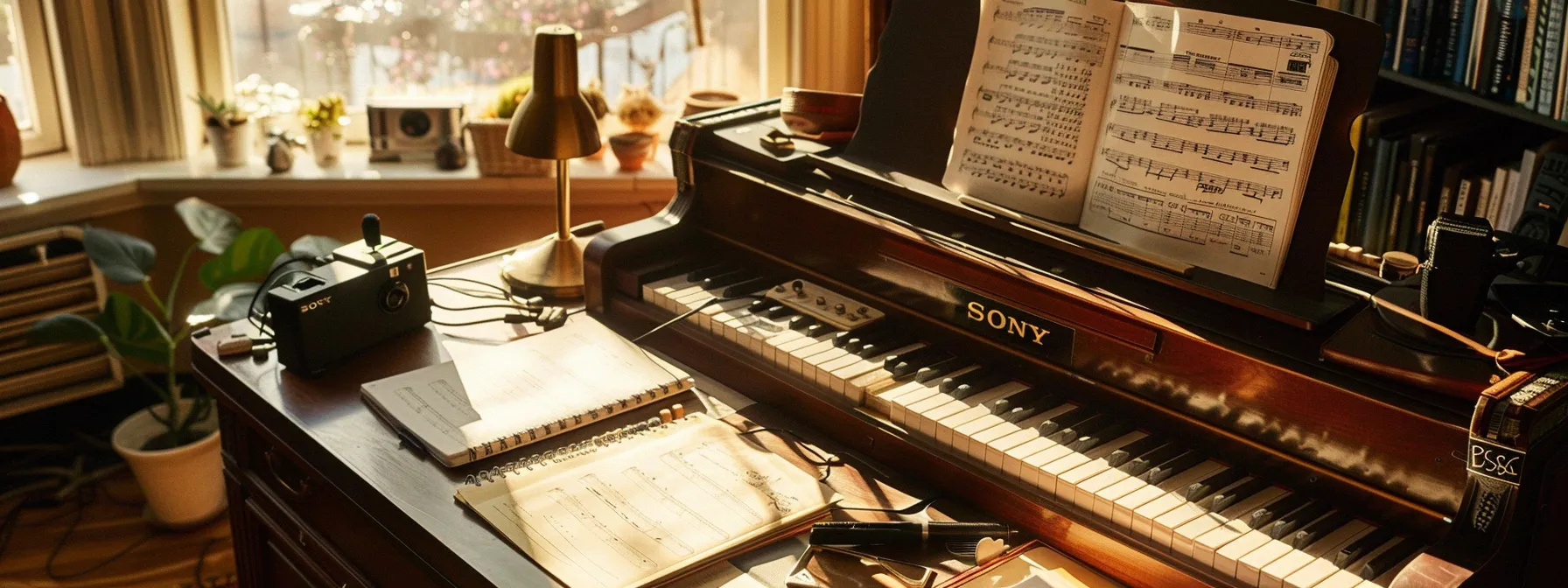
To elevate your piano practice, I encourage a structured approach to tracking progress. Maintaining a practice journal marks your daily advancements, while regular recordings of your playing provide tangible evidence of improvement. Seeking feedback from teachers or peers offers valuable insights that refine your playing technique. These methods ensure your practice routine remains dynamic and progresses towards your musical goals. Beginners’ Guide on Daily Piano Practice Routines.
Keep a Practice Journal
As a dedicated piano teacher, I encourage my students to maintain a practice journal as it serves as a critical tool for tracking their progress. Through daily entries, you can reflect on your practice sessions, note challenges, and celebrate successes, which dramatically enhances your ability to focus on areas needing improvement. By visualising your journey, this personalized log not only streamlines your practice strategy but also reinforces your commitment, keeping you motivated and aligned with your musical ambitions.
Record Your Playing Regularly
As your piano mentor, I’ve witnessed the profound impact that recording your playing regularly can have on a student’s progress. This practice allows you to objectively evaluate your performance and identify areas for improvement. I encourage my students to listen back to their recordings, noting any inconsistencies in rhythm or articulation, which might not be evident during practice. This technique, simple yet effective, provides a clear benchmark for growth and is an invaluable tool in our pursuit of musical perfection.
Seek Feedback From Teachers or Peers
As a devoted piano educator, I urge you to regularly seek feedback from teachers or peers; their insight can be invaluable. They offer fresh perspectives on your technique, help to identify areas that may require more focus, and provide encouragement that can boost your confidence. Implementing their constructive criticism into your practice routine is essential for continuous improvement and achieving excellence in your piano playing.
As a dedicated piano educator, I firmly advocate for the importance of seeking feedback from fellow teachers and peers on a regular basis. The insights they provide can be truly invaluable, offering fresh perspectives on your technique, pinpointing areas that may need more attention, and providing the encouragement needed to boost your confidence. Taking their constructive criticism to heart and incorporating it into your practice routine is crucial for making continuous improvements and striving for excellence in your piano playing.
Receiving feedback from others not only helps you to fine-tune your skills but also fosters a sense of community within the music education space. It opens up opportunities for collaborative learning and growth, as well as building strong connections with like-minded individuals who share your passion for music. Embracing feedback with an open mind and a willingness to learn from others can truly elevate your playing to new heights and enrich your overall musical journey. So, I encourage you to embrace feedback as a vital tool in your quest for mastery of the piano.
- Review technique and musicality
- Highlight areas for further development
- Encourage integration of constructive criticism
Tracking your progress lays a map of where you’ve been. Ahead lies the challenge to keep pushing, no matter the terrain.
Stay Motivated and Consistent
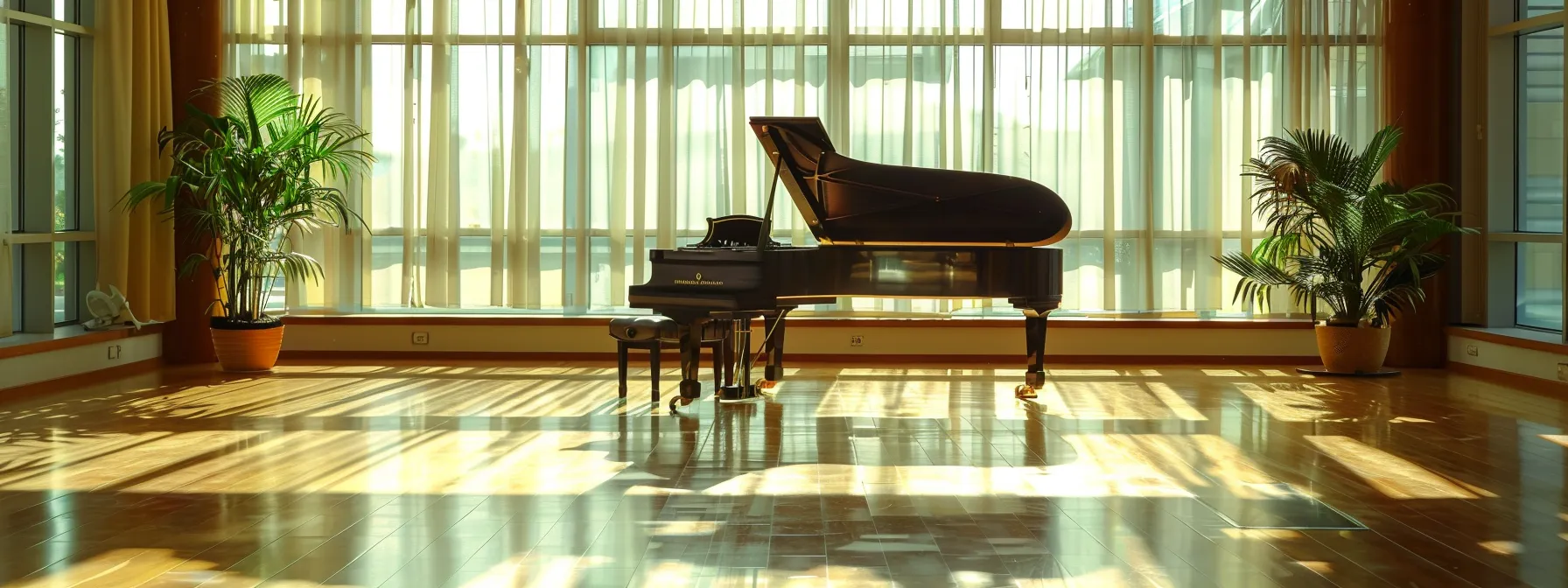
Maintaining motivation and consistency in your piano routine is as essential as the practice itself. I recommend creating a dedicated space for uninterrupted practice, setting attainable short-term rewards for motivation, and regularly refreshing your repertoire to keep your passion alive. Each step is crucial for a fulfilling and successful piano journey, providing a fresh impetus to your practice routine. Daily Piano Practice Routines Full guide.
Create a Dedicated Practice Space
In my years of coaching pianists, I’ve seen the profound impact that a dedicated practice space can have on maintaining motivation and consistency. Personalising a quiet, comfortable area, equipped with your piano and free from distractions, encourages regular practice and mental focus. Such a space becomes a sanctuary where concentration flourishes and creativity sparks, playing a pivotal role in the establishment of an effective practice routine.
Set Short-Term Rewards
In my professional capacity as a piano instructor, I’ve consistently observed that setting short-term rewards can significantly boost motivation during practice. Acknowledging your accomplishments, perhaps by treating yourself to a special activity after mastering a difficult piece, creates positive reinforcement that can re-energise your dedication to the piano. This approach, simplistic in nature, taps into the rewarding cycle of effort and gratification, propelling consistent, focused practice and enhancing overall musical development.Daily Piano Practice Routines Complete Guide for Beginners.
Refresh Your Repertoire Periodically
In my professional practice, I’ve observed the invigorating impact of periodically refreshing one’s piano repertoire. Introducing new pieces or revisiting previous works with a fresh perspective not only reignites your enthusiasm for practice but also broadens your musicality and hones interpretative skills. This dynamic approach to updating your playlist ensures continuous engagement, as you’re constantly challenged and inspired by fresh material, nurturing a deeper connection with the piano.
Discover exceptional piano lessons with WKMT, a leader in piano education since 2010. Available in-studio in London or online worldwide.