
 TRIAL LESSON
Piano Lessons
Piano Lessons for School Children: A Parent’s Guide to Readiness, Routine and Progress
Jul
Piano Lessons for School Children: Parent Guide
WKMT parent guide
Piano Lessons for School Children: A Parent’s Guide to Readiness, Routine and Progress
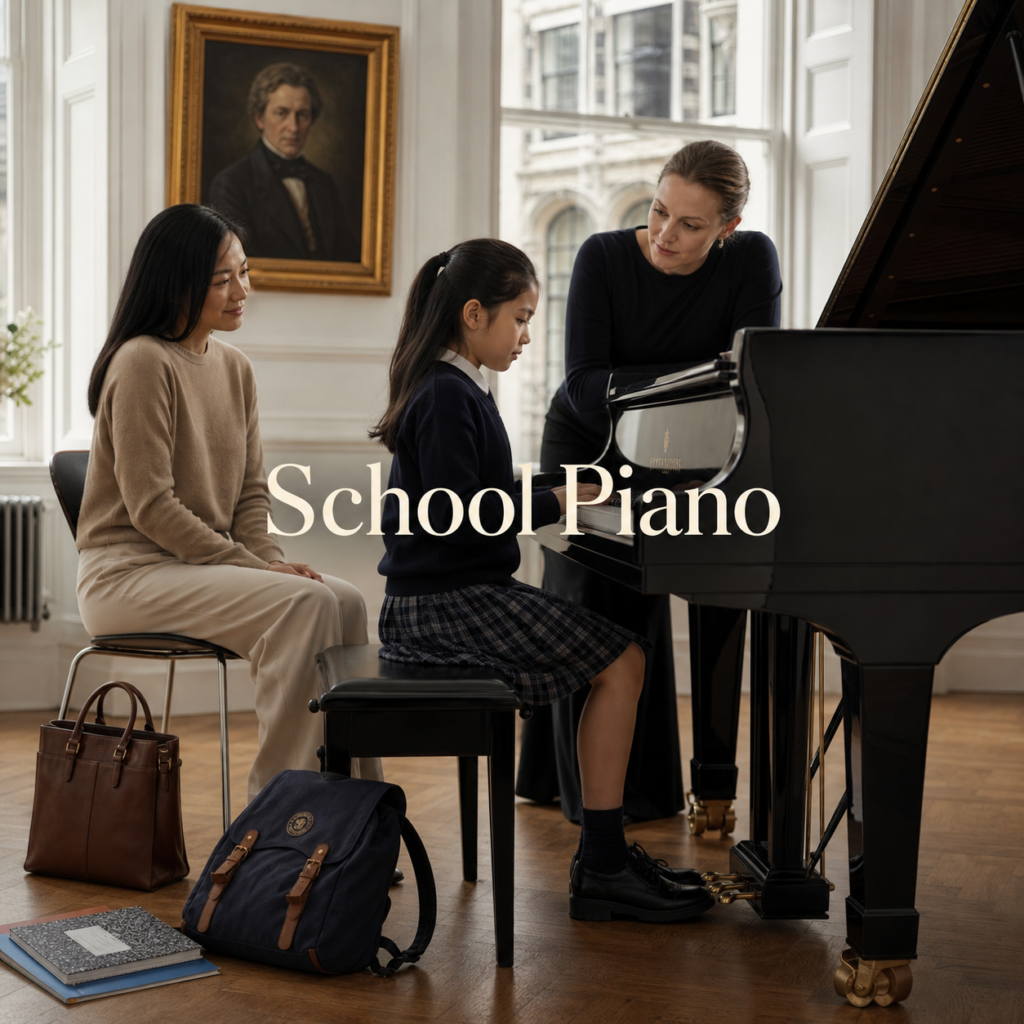
Piano lessons for school children work best when the teacher, parent and child share a simple plan: readiness first, a realistic weekly routine, and progress measured musically rather than impatiently.
What parents usually need to know first
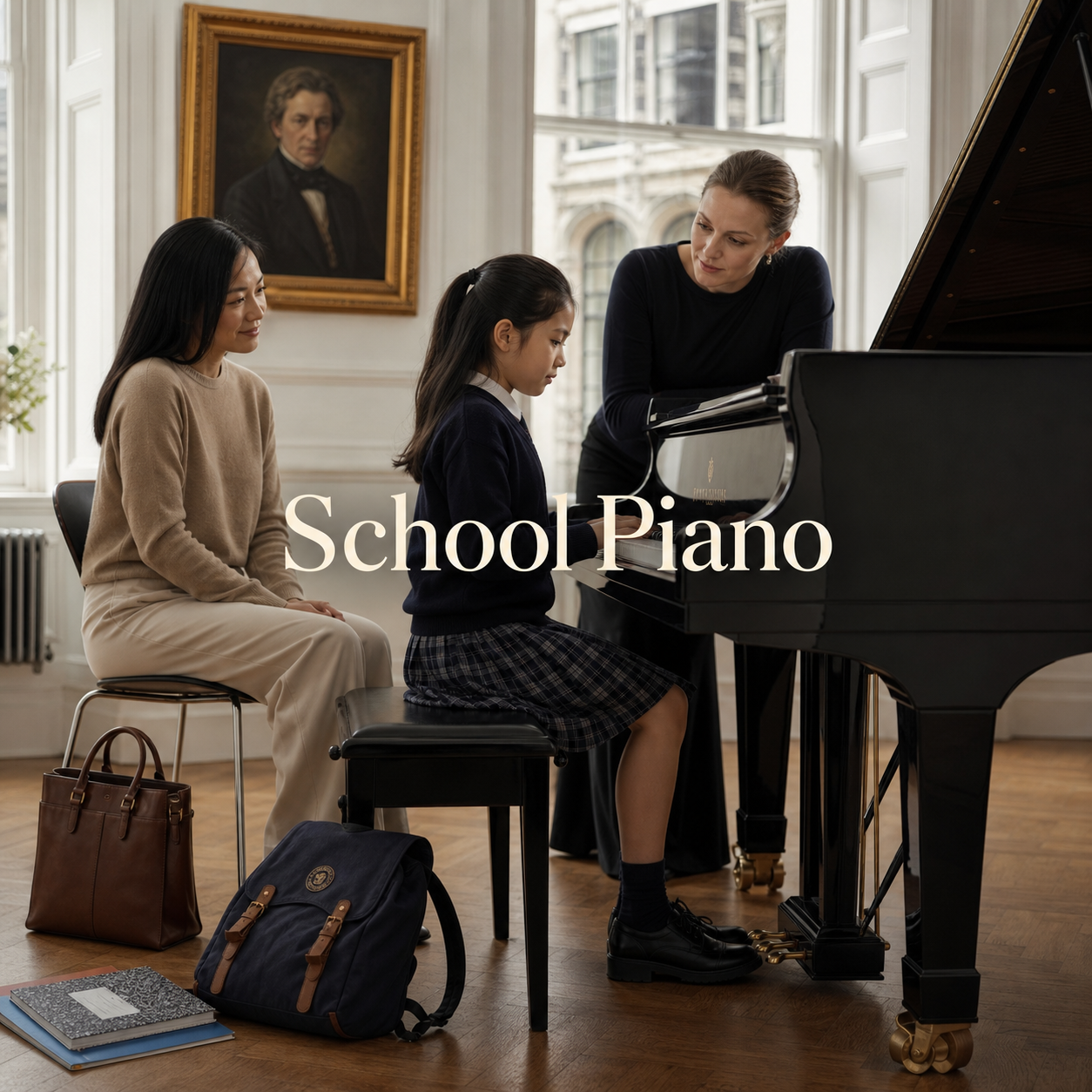
For many London families, the question is not simply whether a child is “old enough” for piano. School children may already read, concentrate for longer spells and follow instructions, yet they also carry homework, clubs, tired evenings and changing confidence. Good teaching respects that whole context.
A suitable child can sit at the instrument without strain, copy a short rhythm, listen to a sound and try again, accept gentle correction, and enjoy a small musical task without needing constant entertainment. That does not mean they must already read music. It means they can take part in a short learning conversation.
The best early sign is not talent. It is recoverable attention: the child can lose focus, be gently brought back, and still leave the lesson feeling capable.
That is why structured piano lessons for children in London should begin with a careful reading of the child, not a race towards the first exam. WKMT’s children’s piano page remains the main place to consider lesson options; this guide explains the school-age routine around it.
How school age changes the first lesson
School children arrive with advantages that very young beginners do not always have. They can often understand sequence, remember teacher language, copy a pattern from the board, and recognise that a task may take several attempts. These are valuable musical behaviours. They let the teacher move beyond novelty and begin forming habits.
They also arrive with school habits that need careful handling. Some children are worried about being wrong. Some want every task to look like a school worksheet. Others are used to quick praise and become unsettled when a musical sound needs repeated shaping. The first lesson should therefore feel precise but unthreatening: a little keyboard geography, a little rhythm, a little listening, a short piece, and one clear home task.
Parents can listen for the quality of the teacher’s language. A good children’s piano teacher will avoid vague pressure and give the child something observable to improve: quieter thumb, steadier pulse, rounder hand, clearer ending, slower start. This turns correction into craft. It also gives the parent a calm phrase to use at home.
Replace “play it again” with “play it once for steady rhythm, then once for a beautiful ending”. Children practise better when repetition has a musical reason.
A school-week routine that actually survives
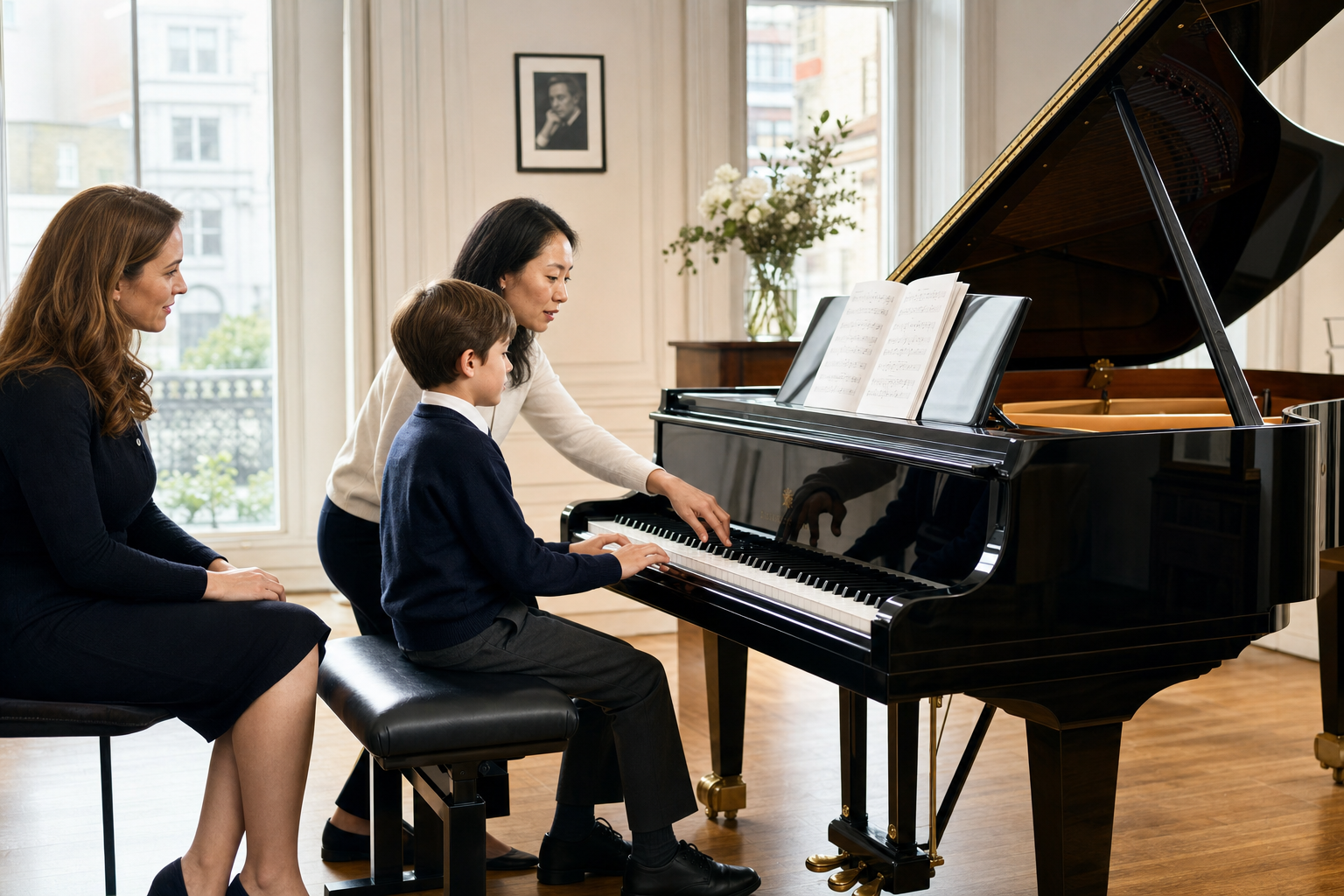
The strongest plan for piano lessons for school children is modest enough to repeat. Ten minutes of thoughtful work on four days normally achieves more than a single long session on Sunday night. The goal is to make music part of the week, not another battleground after homework.
After school, a child may need food, movement and decompression before touching the keyboard. Many families do better with a “same small window” habit: before dinner, after a short rest, or on weekend mornings. The routine should be visible and predictable, but not punitive.
Five to eight minutes, sound games, finger numbers, rhythm copying, one tiny piece.
Regular short practice, two or three pieces, simple note reading, steady pulse.
More independent starts, basic scales or patterns, clearer listening, small performance goals.
A secure beginner repertoire, better coordination, and a sensible view of exams if appropriate.
The parent role is to protect the routine, not to reteach the lesson. A parent can ask, “What did your teacher want you to listen for?” That question is better than, “How many times did you play it?” Listening keeps practice musical.
Choosing the right lesson length and format
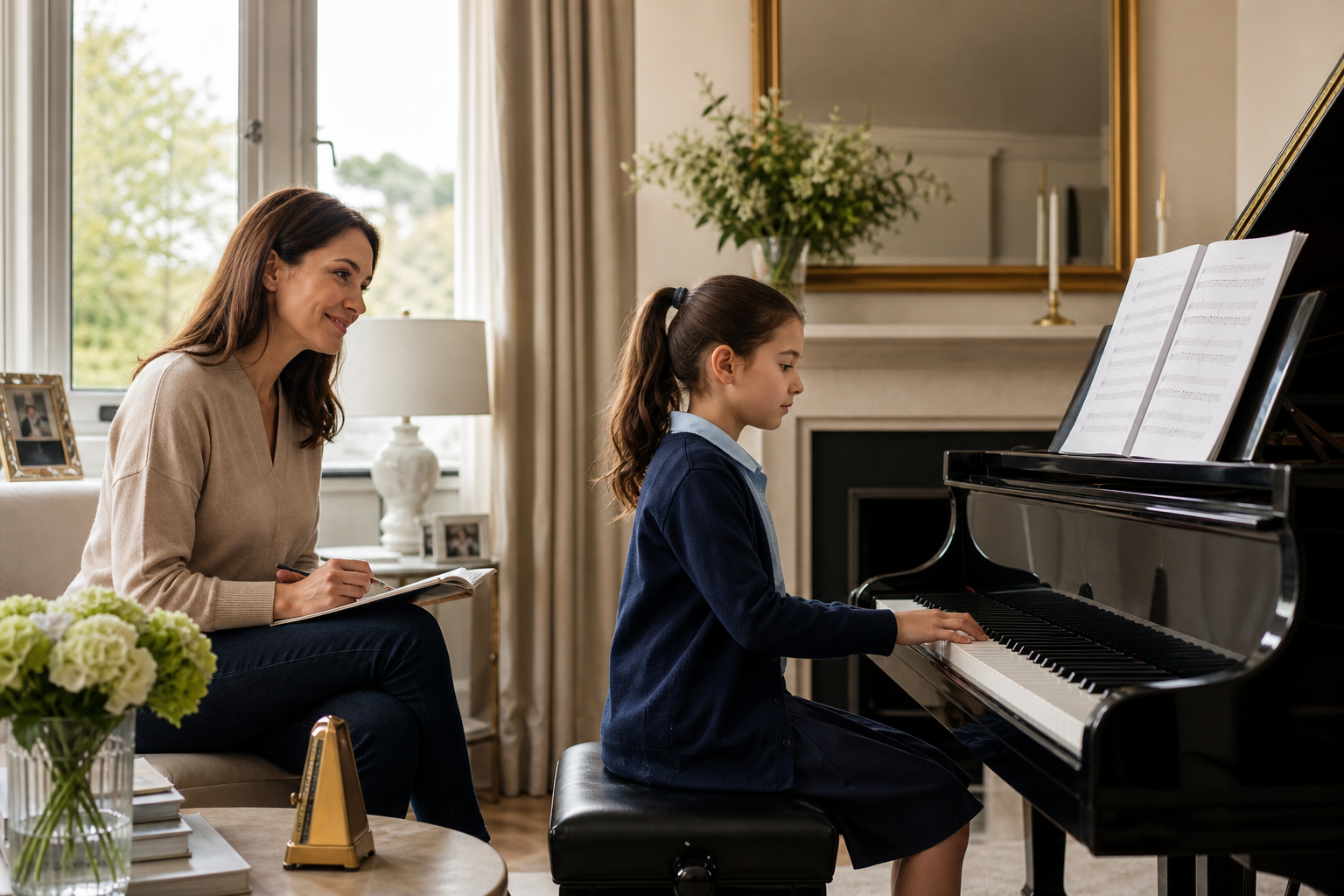
Most school-age beginners do well with a weekly individual lesson, often 30 minutes at first. Some older or especially focused children can manage 45 minutes, but length only helps when attention remains musical. A longer lesson that turns into passive compliance is not better value.
| Format | Best for | Watch point |
|---|---|---|
| 30-minute weekly lesson | Most primary-age beginners | Needs clear home tasks. |
| 45-minute lesson | Older pupils or children with established focus | Too long if the final third drifts. |
| Shared family support | Parents who can keep practice calm | Parent must support, not dominate. |
| Exam pathway later | Children who enjoy goals and performance | Avoid using exams as the only reason to practise. |
ABRSM and Trinity both offer recognised piano grade routes, including practical and performance-focused options. For a school child, these frameworks are useful when they clarify progress. They become unhelpful when the grade number replaces musicianship, posture, sound and enjoyment.
What progress should look like from term to term
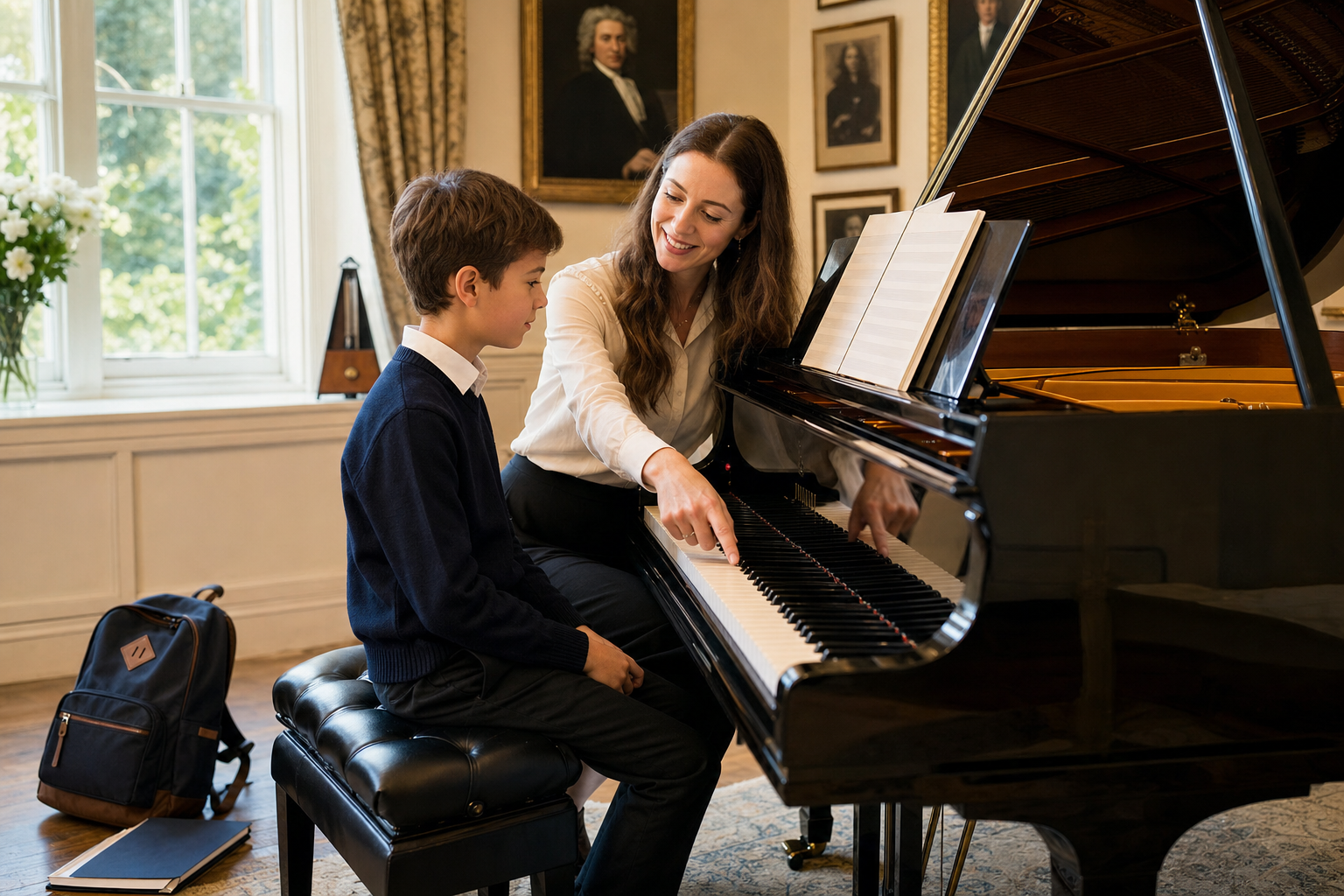
Parents often ask when a child will “play properly”. A better question is: what musical behaviours are becoming reliable? In the first term, the child should begin lessons with less hesitation, understand where to place the hands, recognise simple patterns and remember a short task between lessons.
By the second term, a school child may read a little more fluently, coordinate hands in simple pieces, and begin to notice tone. By the end of a year, some pupils are ready to consider an Initial Grade or early Grade 1 pathway; others benefit from broader repertoire, duets, improvisation, rhythm work and a school concert before an exam is discussed.
A child who learns to listen carefully has already begun to practise like a musician, even before the pieces sound polished.
This is where articles such as WKMT’s guide to piano lessons for 7 year olds and piano lessons for 6 year olds can help parents compare age-specific expectations. A school-child article has a wider remit: it must fit music into homework, clubs, fatigue and family routine.
Safeguarding, teacher quality and parent confidence
Parent confidence is not a soft extra. It is part of the learning environment. A good provider should be clear about supervision, professional boundaries, lesson communication, missed lessons, online lesson rules if relevant, and how concerns are handled. NSPCC guidance for tutors stresses professional boundaries and clear expectations; GOV.UK guidance explains when work with children may fall within regulated activity and DBS-related checks.
For children, a teacher’s musical qualification matters, but so does judgement: pacing, tone of correction, safeguarding awareness, and the ability to build trust without losing standards.
Parents should feel able to ask who teaches the lesson, what qualifications and experience they hold, how progress is reported, and whether performance or exam opportunities are available when the child is ready. In London, local continuity also matters: families need a lesson time and travel pattern they can sustain through dark winter evenings and school-term pressure.
Common parent worries, answered plainly
Will my child fall behind if we start later than friends?
Usually not. A school child who begins with focus and a stable routine can progress strongly. Musical maturity is not decided by who starts first; it is shaped by the quality and consistency of study.
Do we need an acoustic piano immediately?
A well-maintained acoustic instrument is ideal, but many families begin with a good digital piano with weighted keys and a proper stool. What matters most at the start is daily access, correct height, reliable touch and a sound that encourages listening.
How much should parents sit in?
For younger school children, some parent presence can help with memory and practice notes. For older pupils, brief check-ins may be better. The teacher should guide this. The aim is independence, but not isolation.
What if my child refuses to practise?
First shorten the task. Then make it more specific. If a child avoids practice repeatedly, the issue may be tired timing, unclear instructions, pieces that are too hard, or a parent-child dynamic that needs simplifying. A good teacher will adjust the home plan rather than blame the child.
When school, concerts and exams meet
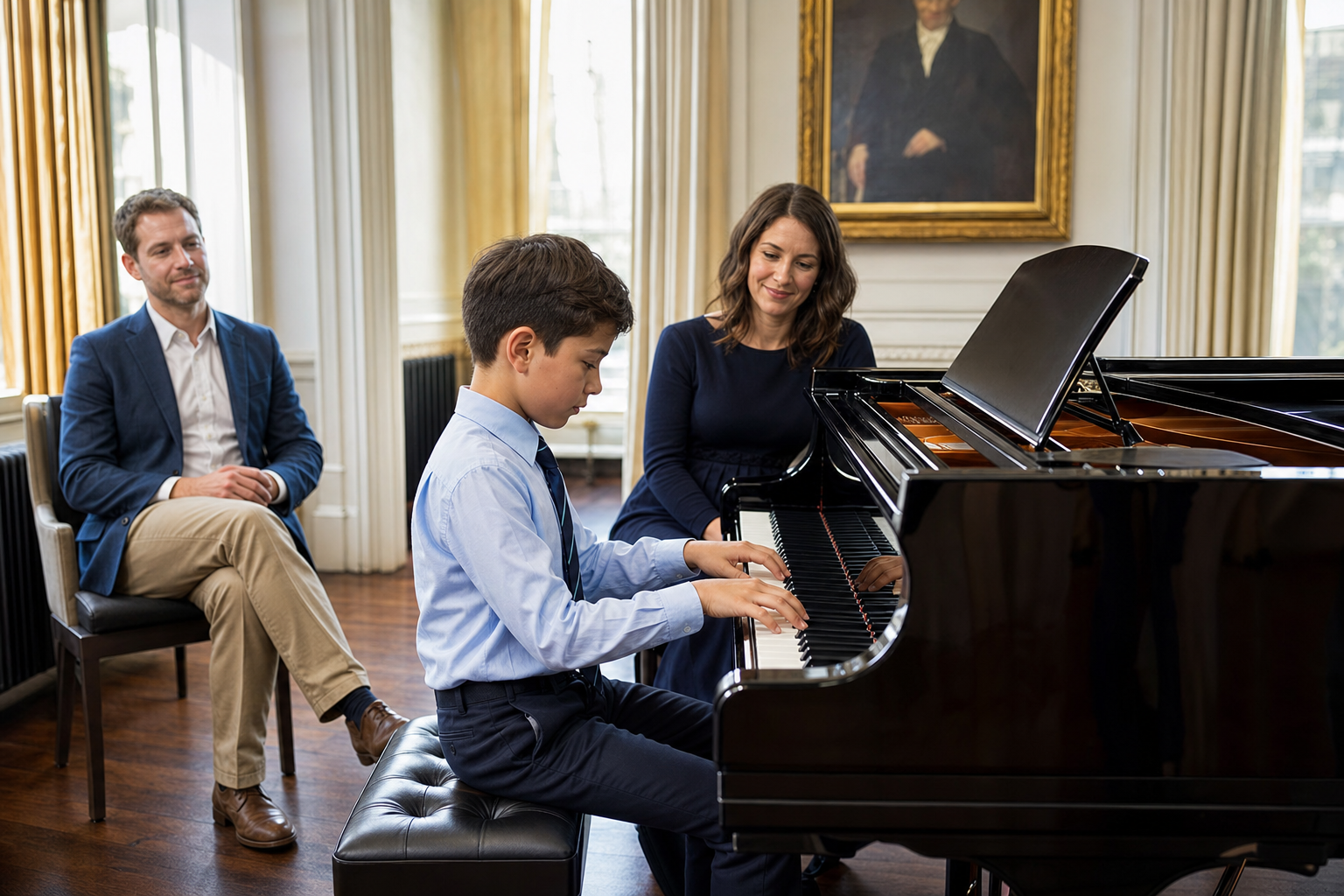
School children often enjoy goals when the goal feels proportionate. A class assembly, family performance, studio sharing class or junior recital can give a child the experience of preparing music for others without the formality of an exam. WKMT’s wider concert and masterclass culture, including London piano masterclasses and performance events, gives families a useful view of how serious study can remain warm and human.
Exams should come after foundations: pulse, reading, hand position, listening, and a secure practice habit. For some school children, that may be within a year. For others, the musical route is slower and richer if the first year is spent building sound, confidence and repertoire.
A steady next step for your child
If you are considering piano lessons for school children in London, begin with a teacher who can read your child’s stage, explain the routine clearly, and keep the lesson musically serious without making it heavy.
A short checklist before booking
- Your child can usually manage a short guided activity and recover attention after a distraction.
- The weekly lesson time does not clash with the most tired part of the school day.
- You can support four short practice moments each week without turning them into arguments.
- The teacher explains posture, reading, rhythm, listening and repertoire in parent-friendly language.
- Safeguarding expectations, lesson communication and attendance policies are clear.
- Exams are treated as one possible milestone, not the only proof of progress.
When those conditions are in place, piano becomes more than another activity in the school calendar. It becomes a disciplined, expressive space where a child learns to listen, coordinate, persist and take pride in small improvements.
The musical aim behind the routine
The deeper purpose of piano lessons for school children is not to fill a certificate folder. It is to develop a child’s capacity for attentive work. Piano study asks a pupil to hear before judging, coordinate both hands, shape a sound, notice small errors, and try again without drama. Those habits are musical, but they also support concentration more widely.
Parents should therefore look for lessons that balance warmth and standard. Too much softness leaves the child entertained but unchanged. Too much pressure makes music feel like another test. The strongest teaching sits between those extremes: kindly exact, patient, and clear about what the next small improvement should be.
When the family routine, teacher judgement and child’s readiness meet, the school week begins to hold music naturally. That is the point at which the piano stops being a separate obligation and becomes part of the child’s ordinary language of effort, listening and expression.
Sources on Piano lessons for school children
- ABRSM, Piano assessments and Practical/Performance Grades, last checked 27 June 2026: abrsm.org/en-gb/piano
- Trinity College London, Piano grade exams, last checked 27 June 2026: trinitycollege.com/qualifications/music/grade-exams/piano
- NSPCC Learning, Safeguarding and child protection for tutors, last checked 27 June 2026: learning.nspcc.org.uk/safeguarding-child-protection/tutors
- GOV.UK, Regulated activity with children in England and Wales, last checked 27 June 2026: gov.uk/government/publications/dbs-guidance-leaflets/regulated-activity-with-children
- WKMT London, children’s piano lessons page and live sitemap links, last checked 27 June 2026: piano-composer-teacher-london.co.uk/piano-lessons-for-kids/