
 TRIAL LESSON
Piano Lessons
Piano Lessons for 11 Year Olds: Confidence, School Transition and Steady Progress
Jul
Piano Lessons for 11 Year Olds: Parent Guide
Parent guide | London piano education
Piano Lessons for 11 Year Olds: Confidence, School Transition and Steady Progress
A clear guide for London parents deciding how an eleven-year-old should begin, continue or refocus piano study at the start of secondary-school life.
Quick Answer: Is 11 A Good Age To Start Or Continue Piano?
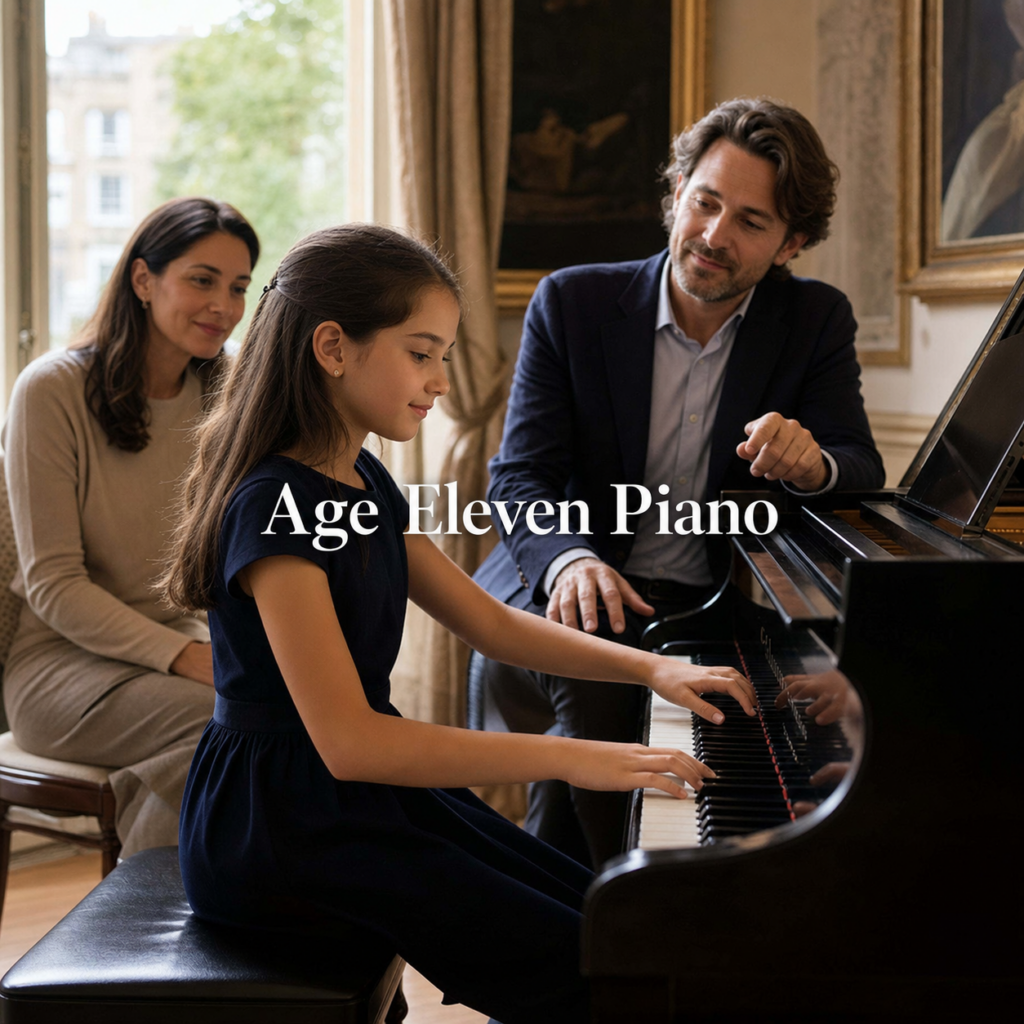
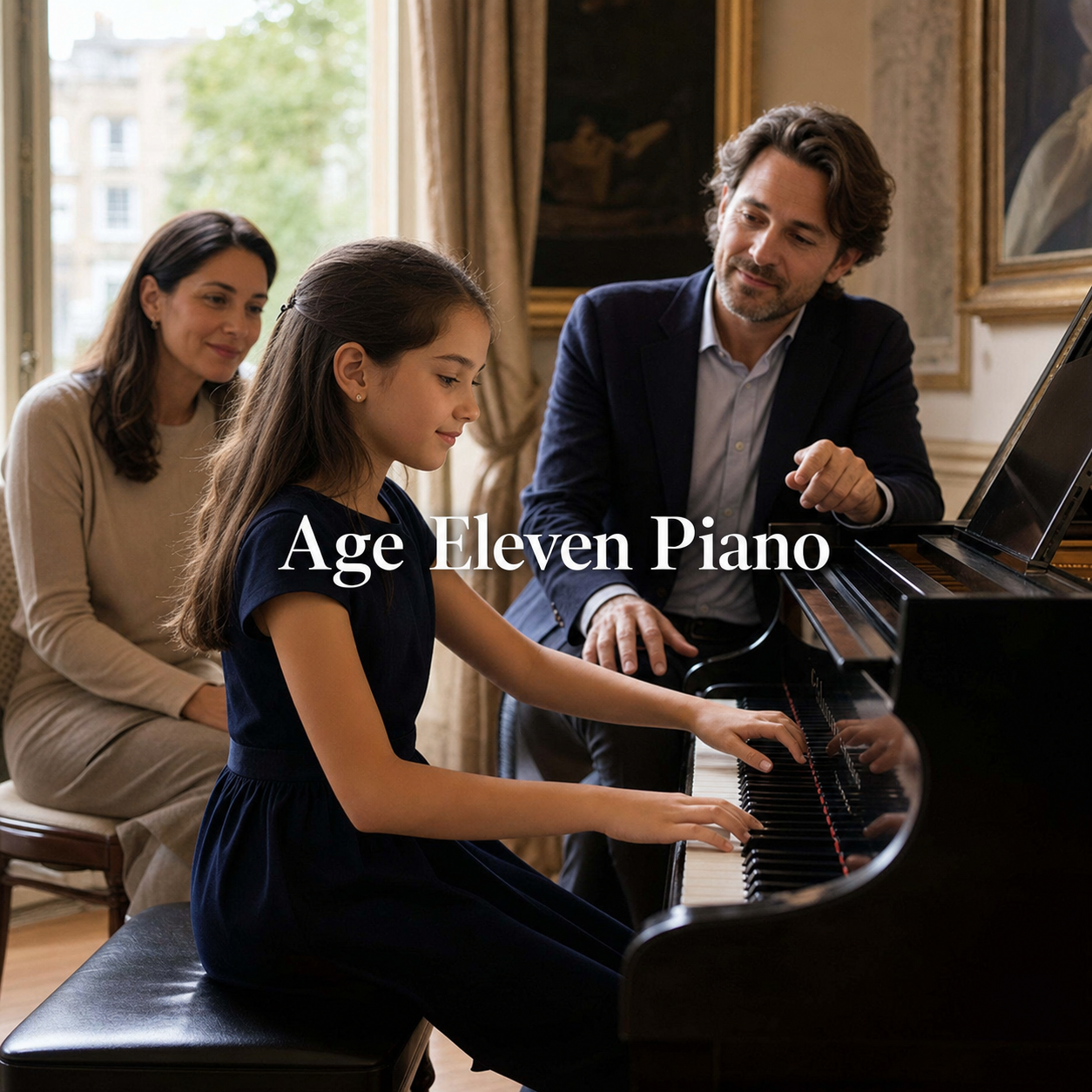
Yes. Piano lessons for 11 year olds can work extremely well, whether the child is a complete beginner, a returning pupil, or someone preparing for secondary-school music, graded exams or an 11+ music audition. Eleven is late enough for abstract thinking, reading confidence and independent organisation to help; it is still early enough for technique, listening and musical taste to develop naturally.
The important question is not whether eleven is too late. It is whether the lesson format respects the pupil’s age. A pre-teen does not need a childish beginner course, and should not be pushed into adult-style seriousness before trust has formed. The best first term combines musical curiosity, secure hand position, rhythm, reading, listening and a small but reliable weekly routine.
For parents: if your child can concentrate for 30-45 minutes, accept gentle correction, and repeat a short passage without feeling criticised, eleven is a strong age for structured piano tuition.
What Parents Of An Eleven-Year-Old Need To Know
At eleven, children often arrive with a mixture of confidence and self-consciousness. They can understand why scales, notation and rhythm matter, but they may also worry about looking slow, especially if friends already play. A thoughtful teacher protects dignity while building discipline.
The age also brings a more mature musical ear. Many pupils begin to recognise style: the neatness of Bach, the balance of Mozart, the lyricism of Tchaikovsky, the character pieces of Burgmuller or Kabalevsky. Repertoire choice matters because a pupil of this age wants music that sounds like music, not only exercises.
Start with posture, pulse, note reading, keyboard geography and short pieces that sound complete.
Audit technique, reading fluency, practice habits and whether previous repertoire has become too easy.
Set a realistic calendar early, then choose pieces that show musical judgement rather than speed alone.
“The best eleven-year-old beginners are often the ones who feel respected from lesson one,” says a WKMT teacher. “They want clarity, not babyish praise.”
What Progress Looks Like In The First Year
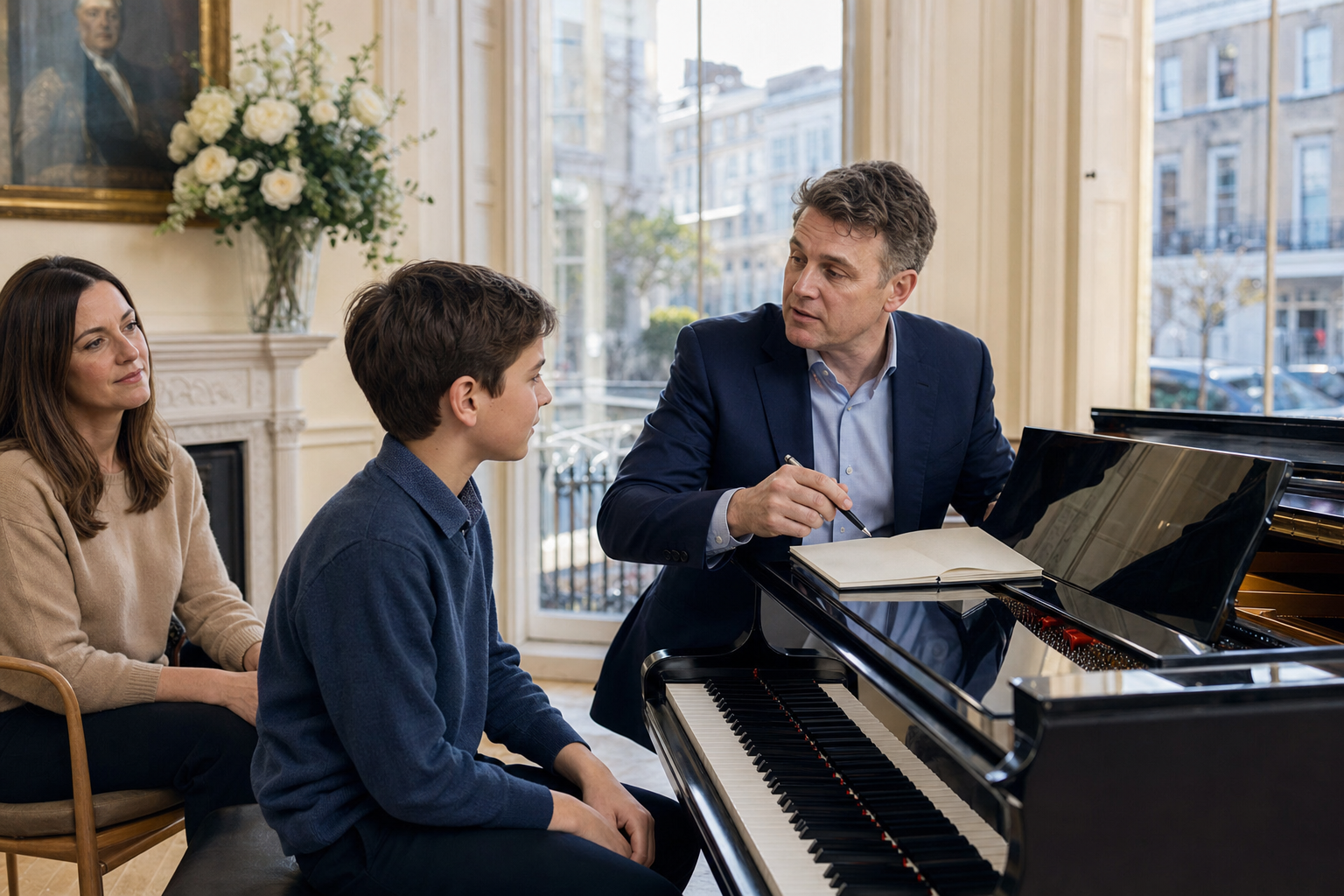
Progress should be visible, but it should not be measured only by exam speed. ABRSM offers piano assessments from Initial Grade to Grade 8, with Practical and Performance Grade routes available; Trinity also offers face-to-face and digital graded options from early levels through Grade 8 [1][2]. Those frameworks are useful, but they are not the curriculum itself. A child must first learn how to listen, practise and read reliably.
Parents should be cautious of promises that every eleven-year-old beginner will reach a named grade within a fixed number of months. Some do; some need longer. A secure Grade 1 is far more valuable than a rushed certificate that leaves rhythm, fingering and listening unresolved.
The aim is not to make an eleven-year-old sound advanced quickly; it is to make progress feel organised, audible and worth continuing.
Choosing The Right Teacher And Lesson Format In London
London parents have many choices: private one-to-one tuition, music school lessons, online support, group courses and hybrid arrangements. For most eleven-year-olds who are serious about piano, one-to-one teaching is the most efficient format because technique, reading and confidence can be corrected immediately.
Safeguarding should be part of the decision, not an awkward afterthought. The NSPCC advises tutors and parents to be clear about professional boundaries and appropriate behaviour [3]. GOV.UK guidance explains which child workforce roles and activities can fall within regulated activity and enhanced DBS-check eligibility [4]. For families, the practical question is simple: does the teacher or school have clear child-safety practice, transparent communication and an appropriate lesson environment?
Trial Lesson Checklist
- Does the teacher speak to the child respectfully, not only to the parent?
- Is the first correction specific and kind?
- Does the lesson include reading, rhythm, technique and musical expression?
- Are safeguarding, parent communication and missed-lesson policies clear?
- Does the teacher set a next step that feels achievable before the next lesson?
“We chose WKMT because the lesson felt calm and grown-up,” says one Kensington parent. “Our son was treated as a young musician, not as a small child.”
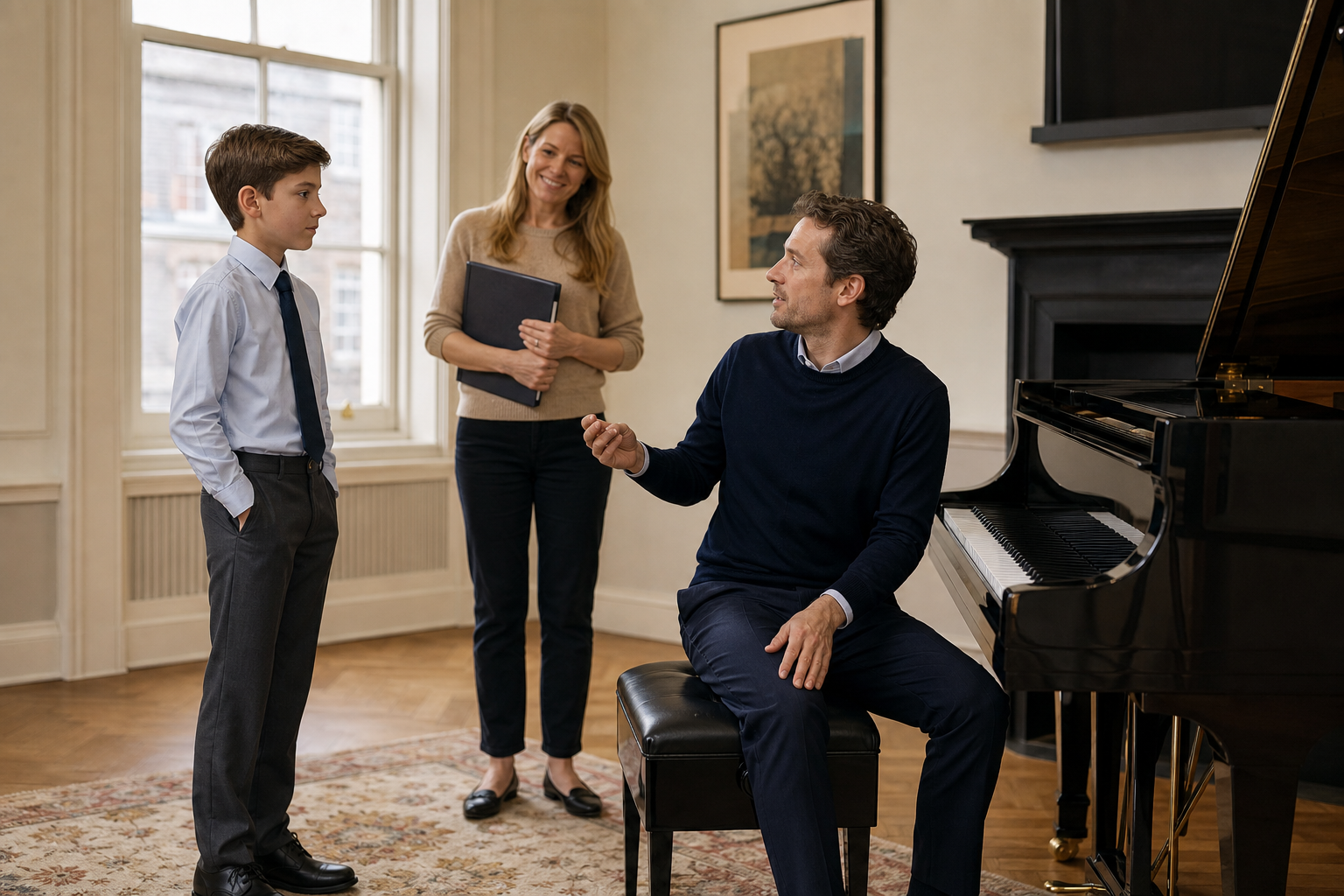
Secondary School Music, 11+ Auditions And Confidence
Eleven often coincides with a new school, more homework, changing friendships and a more public musical identity. A child who played privately at primary school may suddenly face ensembles, school concerts, keyboard labs, auditions or graded-exam conversations. Piano lessons for 11 year olds should therefore include confidence as a musical skill.
For 11+ music auditions or school scholarship routes, preparation should begin months before the deadline. A good teacher will clarify the expected format, choose repertoire that the child can perform reliably, and include sight-reading, aural work and interview-style conversation. The most persuasive audition is usually not the hardest piece. It is the piece played with poise, clear rhythm and musical shape.
Use piano to support focus, listening, memory and personal confidence during the move into KS3.
Set repertoire, aural and sight-reading priorities early, then rehearse walking in, beginning and recovering from slips.
Use ABRSM or Trinity grades when they clarify goals, not when they turn the lesson into paperwork.
Practical London Considerations: Piano, Time And Fees
London family life shapes piano study. Travel time, flat noise, school clubs, homework and instrument space all affect whether a child continues. The best arrangement is the one that can survive an ordinary Tuesday, not only an enthusiastic first week.
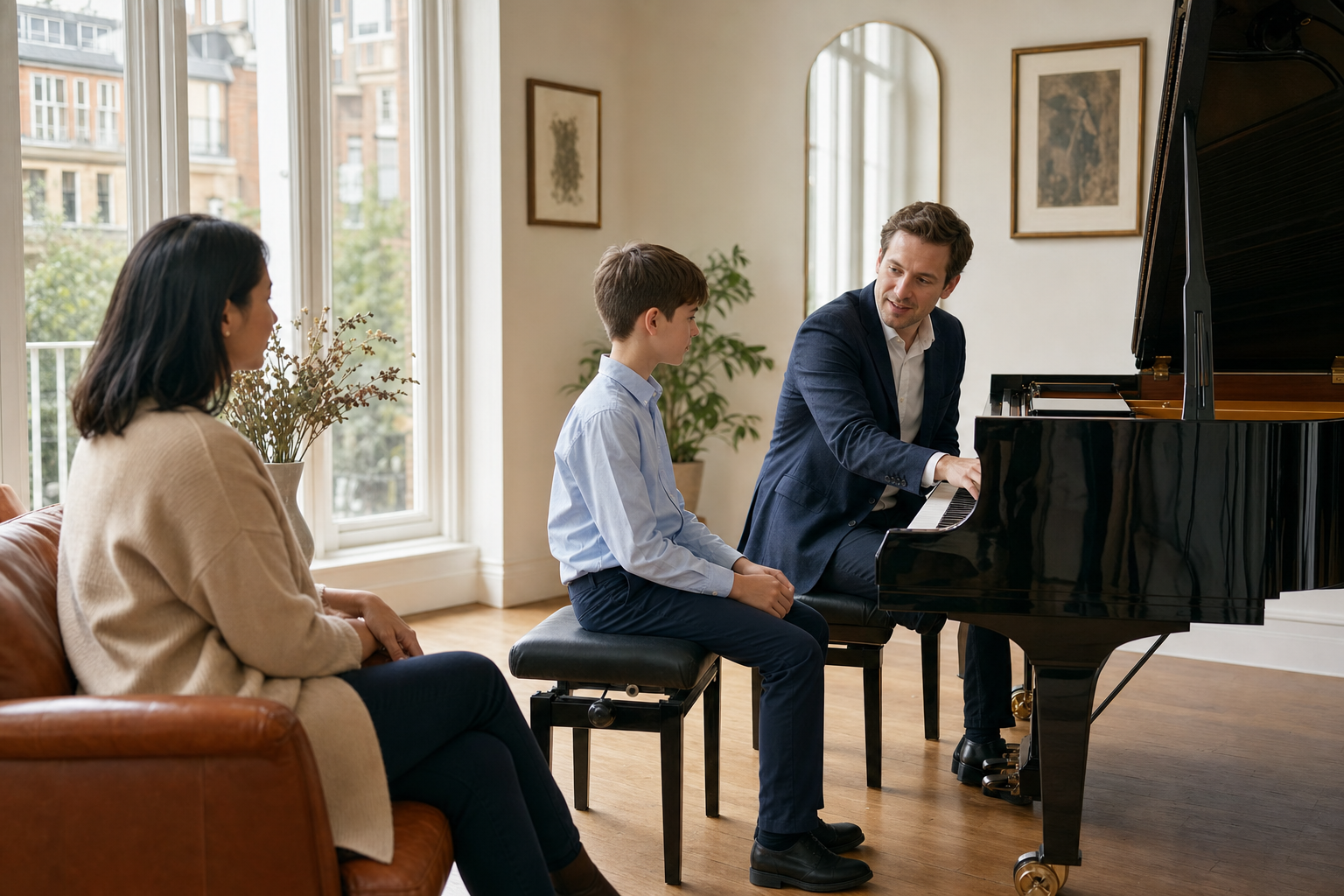
A good digital piano with weighted keys is often enough to begin, especially in a flat. An acoustic upright gives richer sound and touch, but it needs space, tuning and neighbour awareness. Headphones can help with practice timing, although children should also hear the instrument aloud so tone does not become mechanical.
Lesson length depends on stamina and ambition. Many eleven-year-olds manage 45 minutes well; serious pupils or audition candidates may benefit from 60 minutes. Thirty minutes can work for beginners if the teacher is focused and the home routine is stable.
Fees should be read alongside teaching quality and continuity. A cheaper lesson that changes teacher every few weeks can cost progress; an expensive lesson without a clear weekly plan can do the same. Parents should ask what is included: written notes, repertoire planning, exam guidance, concert preparation, teacher communication, and whether occasional online lessons are available when travel or illness interrupts the week.
For families moving between West Kensington, Camberwell, Bermondsey and central London school routes, travel time can decide whether lessons remain sustainable. A child who arrives tired after a long commute may learn less than a child who has a shorter journey and ten calm minutes before playing. This is why the practical arrangement should be discussed honestly at the beginning rather than corrected after motivation has already dipped.
A Useful Weekly Pattern
One lesson, four short home sessions, one listening moment, and one parent check-in is usually better than a dramatic Sunday catch-up. At eleven, autonomy grows when the routine is visible but not policed.
For WKMT families, the most relevant next step is to compare lesson formats, fees and teacher fit through the children’s lesson pathway and current lesson-fee information. See structured piano lessons for children in London and WKMT music lesson fees.
How Parents Can Help Without Taking Over
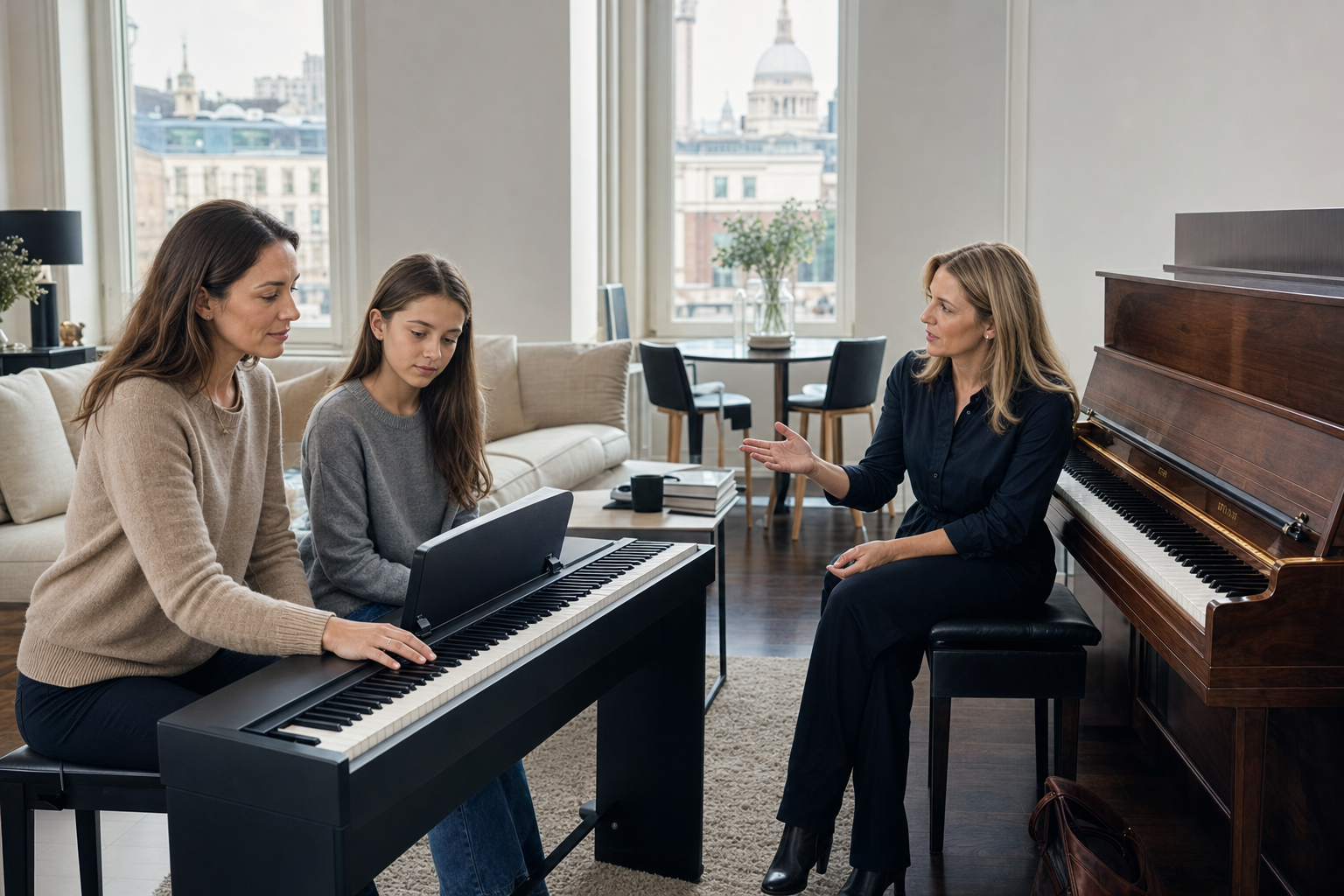
An eleven-year-old needs support, but not constant supervision. The parent’s role is to protect the conditions for learning: a working instrument, a predictable slot, calm transport, and a non-dramatic response when practice is imperfect. The teacher’s role is to diagnose, correct and lead.
The most useful parent questions are practical: “What should sound better by next week?”, “Which two bars need attention?”, “How long should this take?”, and “What should we do if schoolwork is heavy?” These questions create accountability without turning music into a domestic argument.
Motivation at this age is rarely constant. One week a child may practise eagerly; the next, homework, sport or friendship worries may absorb all attention. The solution is not to make the piano feel like another school punishment. It is to keep the task small enough to start and clear enough to finish. A teacher might ask for four careful repetitions of a left-hand pattern, one recorded play-through of a phrase, or a five-minute rhythm check before dinner. Those small tasks build trust because the pupil can succeed without pretending to have unlimited time.
Parents should also avoid turning every home session into a mini-lesson. If fingering, note reading or rhythm goes wrong repeatedly, make a short note for the teacher rather than correcting every detail at home. This keeps the parent-child relationship supportive and leaves technical authority with the teacher. The most helpful parent response is often: “Show me what improved today.”
Signs The Lesson Is Working
- Your child can explain the week’s task in their own words.
- Corrections become more specific: rhythm, fingering, balance, touch or phrase shape.
- The teacher adjusts repertoire before frustration becomes fixed.
- Practice is not perfect, but it becomes easier to restart after a missed day.
As repertoire grows, the teacher can widen the musical world carefully. Bach teaches line and steadiness; Mozart encourages balance; Tchaikovsky can give a young player colour and phrase; Kabalevsky offers character without unnecessary heaviness. Naming composers is not enough, of course. The teacher must choose pieces that match the child’s hand, reading level and confidence, then teach the child how to hear the difference between playing the notes and shaping the music.
Help Your Eleven-Year-Old Start Clearly
WKMT’s children’s piano pathway gives London parents a structured way to assess teacher fit, lesson length, progress expectations and musical confidence.
Frequently Asked Questions
Is 11 too late to start piano?
No. Eleven-year-old beginners often progress well because they can understand structure, read instructions and take more ownership than younger children.
Should my child take ABRSM or Trinity exams straight away?
Not immediately. Use the first months to build technique, rhythm, reading and confidence. Exams become helpful when they support musical growth rather than hurry it.
How much should an eleven-year-old practise?
Short, regular practice is better than long irregular sessions. Ten to twenty focused minutes on several days each week is a realistic starting point for many families.
Sources on Piano Lessons for 11 Year Olds: Parent Guide
- ABRSM, Piano assessments and practical grades, last checked 2026-06-29: https://www.abrsm.org/en-gb/piano
- Trinity College London, Piano grade exams, last checked 2026-06-29: https://www.trinitycollege.com/qualifications/music/grade-exams/piano
- NSPCC Learning, Safeguarding and child protection for tutors, last checked 2026-06-29: https://learning.nspcc.org.uk/safeguarding-child-protection/tutors
- GOV.UK, Regulated activity with children in England and Wales, last checked 2026-06-29: https://www.gov.uk/government/publications/dbs-guidance-leaflets/regulated-activity-with-children
- WKMT, Piano lessons for kids, last checked 2026-06-29: https://www.piano-composer-teacher-london.co.uk/piano-lessons-for-kids/
- WKMT, Music lesson fees, last checked 2026-06-29: https://www.piano-composer-teacher-london.co.uk/music-lesson-fees/