
 TRIAL LESSON
Piano Lessons
Piano Lessons for 12 Year Olds: Confidence, Independence and Secondary School Progress
Jul
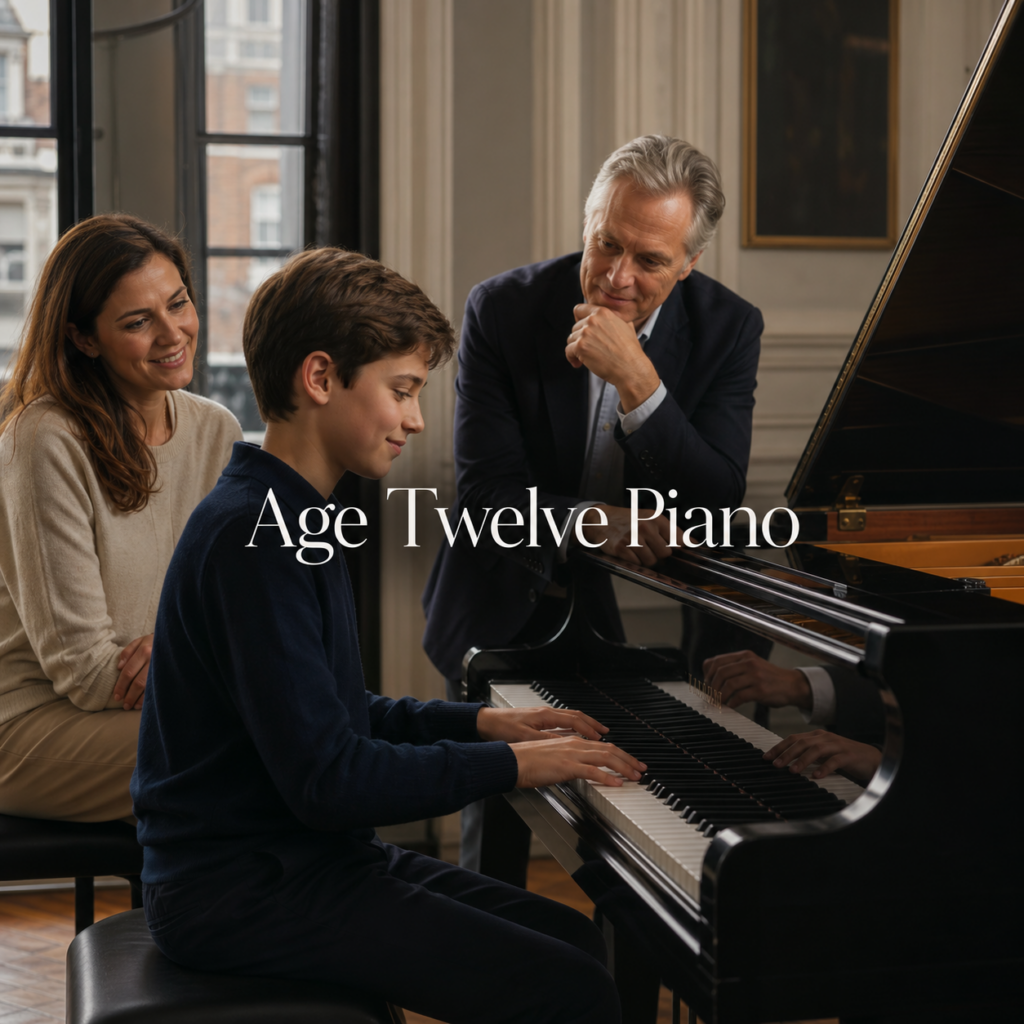
Piano Lessons for 12 Year Olds in London with WKMT
WKMT parent guide
Piano Lessons for 12 Year Olds: Confidence, Independence and Secondary School Progress
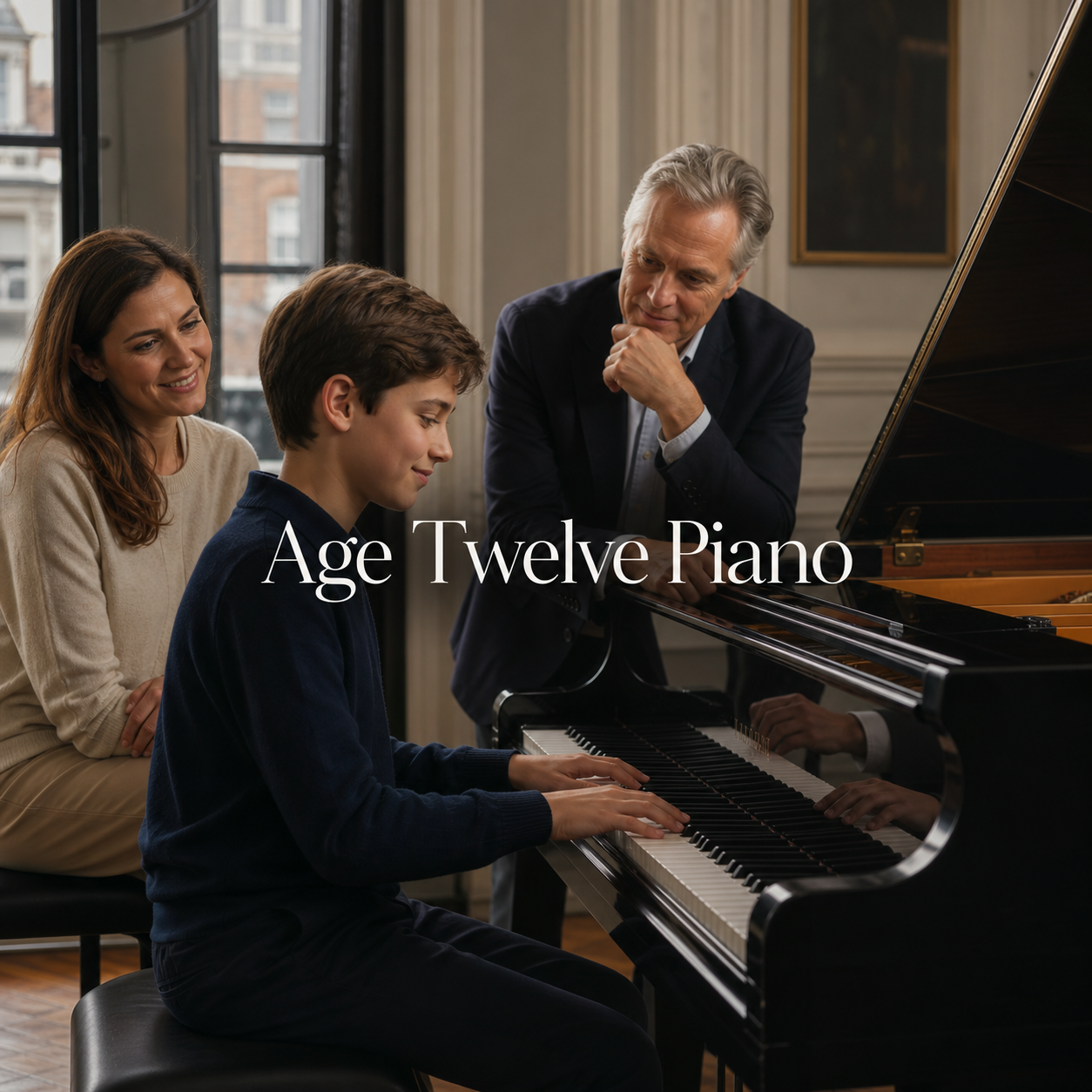
Piano lessons for 12 year olds work best when the teaching respects a pre-teen pupil’s growing independence while still giving parents a clear, calm structure for practice, progress and safeguarding.
The short answer for parents
For many families, twelve is an excellent age to begin or reset piano lessons. A child is usually old enough to understand goals, manage a short weekly routine, listen critically and discuss music with more maturity than a younger beginner.
The main risk is not age. It is a lesson format that treats the pupil either like a very young child or like a miniature adult. The best teaching sits between those extremes: musically serious, emotionally steady, and practical about school workload.
Why twelve is a distinctive piano-learning age
At twelve, pupils are often moving through the early secondary-school years. They may have more homework, a busier social life, stronger opinions about music and a sharper sense of whether they are being patronised. Good piano teaching uses that development rather than fighting it.
A twelve-year-old beginner can learn note reading, rhythm, hand coordination and listening habits very efficiently when the teacher gives precise tasks. A continuing pupil can also make a visible leap in tone, phrasing, technique and practice maturity because the mind is ready to connect cause and effect: how a wrist movement changes sound, how slow practice prevents errors, why pulse matters, and how musical character is shaped.
This is why structured piano lessons for children in London should not be built only around pieces. Repertoire matters, but the real curriculum is broader: reading, sound, movement, memory, confidence, concentration and the ability to practise without constant adult prompting.
Readiness signs before booking
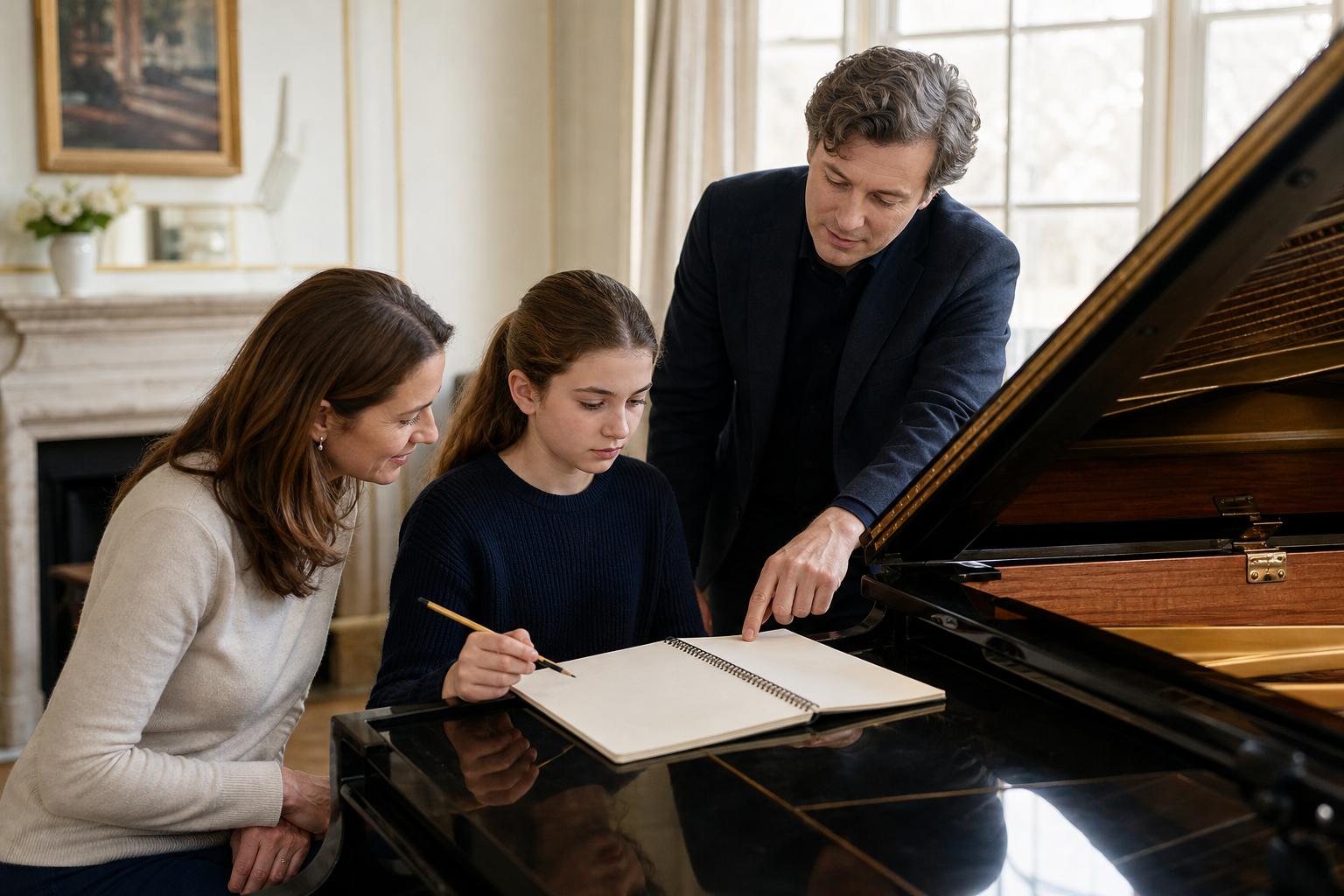
Parents do not need to wait for perfect motivation. Most children become motivated by experiencing progress. Still, a twelve-year-old is ready for lessons when several practical signs are present: they can follow a twenty- to thirty-minute one-to-one conversation, accept correction without feeling humiliated, try again after mistakes, and remember a small task from one week to the next.
Attention
Can listen, try, pause and retry without needing entertainment every minute.
Curiosity
Shows some interest in music, even if the style is not classical at first.
Routine
Can manage short, repeated practice slots with a parent’s light support.
Resilience
Can tolerate a few wrong notes without deciding that the whole activity has failed.
For parents
If your child is unsure, book the first month as a diagnostic period rather than a verdict on musical ability. The question is not “is my child talented?” but “does this lesson format help my child become calmer, more accurate and more engaged?”
Practice that respects independence
The home routine for piano lessons for 12 year olds should be short enough to survive school weeks and specific enough to prevent vague playing-through. A useful pattern is four or five sessions per week, each lasting fifteen to twenty-five minutes. Longer practice can come later, but consistency matters more than heroic bursts.
| Practice element | What it means at twelve | Parent role |
|---|---|---|
| Warm-up | Slow, even movement and listening for tone. | Check posture and calm start. |
| Reading | Small daily sight-reading or rhythm task. | Avoid correcting every note. |
| Focused repair | Two bars fixed slowly before the whole piece. | Ask what the target is. |
| Musical finish | Play something complete with expression. | Listen, then name one improvement. |
A parent should not become the second teacher. At this age, the healthiest support is logistical and emotional: protect the practice slot, keep the room quiet, ask the pupil to explain the task, and let the teacher handle detailed correction.
Exams, school music and realistic progress
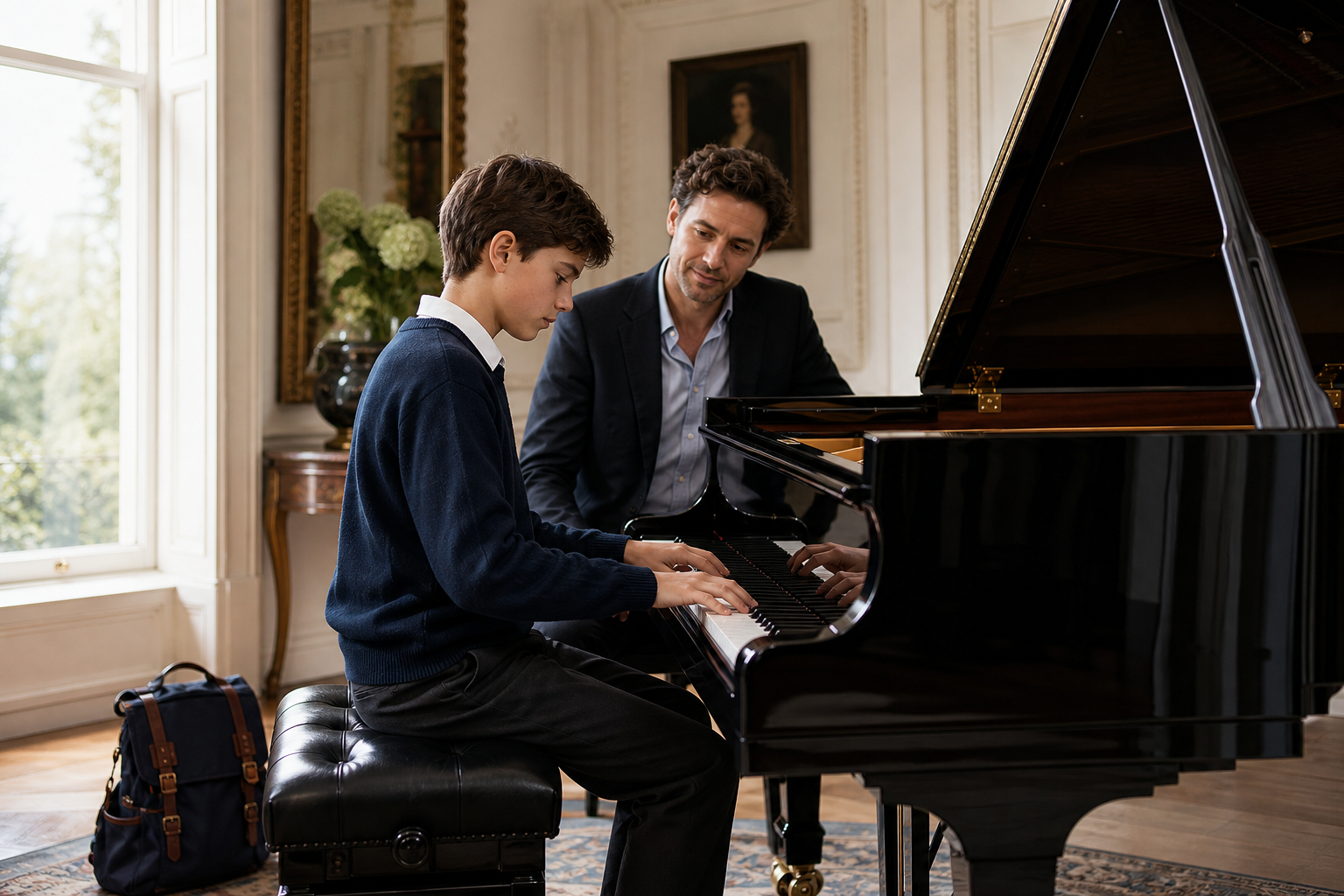
Some twelve-year-olds want graded exams; others need a season of freer study before formal assessment. Both routes can be serious. ABRSM and Trinity College London both offer graded piano pathways, but exams should clarify learning rather than dominate it. A pupil who is technically tense, rhythmically insecure or frightened of mistakes may need a stronger foundation before entering a grade.
For a beginner, the first six months should usually establish keyboard geography, reading habits, pulse, simple coordination, hand shape, listening and a few complete pieces. For a pupil who has already played for several years, twelve can be the moment to refine sound and independence: cleaner fingering, better pedalling, more mature phrasing and a more responsible approach to practice notes.
Teacher’s note
A good exam plan starts with musicianship. If the child can keep pulse, hear tone, explain a practice target and recover from errors, exam preparation becomes a useful structure rather than a pressure system.
Choosing the right teacher and lesson format
Families often ask whether a twelve-year-old needs a specialist children’s teacher or a more advanced classical teacher. The answer is usually both qualities in one person: a musician with real technical standards who also understands pre-teen confidence, safeguarding and family communication.
The teacher should explain practice clearly, demonstrate sound beautifully, correct without sarcasm, and keep the parent informed without making the child feel watched. Safeguarding matters too. UK guidance for people working with children, including tutors, emphasises safe practice, appropriate boundaries and clear responsibility. Parents are right to ask how lessons are supervised, how communication is handled and how progress will be reviewed.
For London families, logistics also matter. Travel, school finish times, sibling schedules and instrument access can make the difference between a good intention and a stable routine. WKMT’s music lesson fees page is a practical place to check lesson formats before choosing a weekly pattern.
London family logistics: making the week sustainable
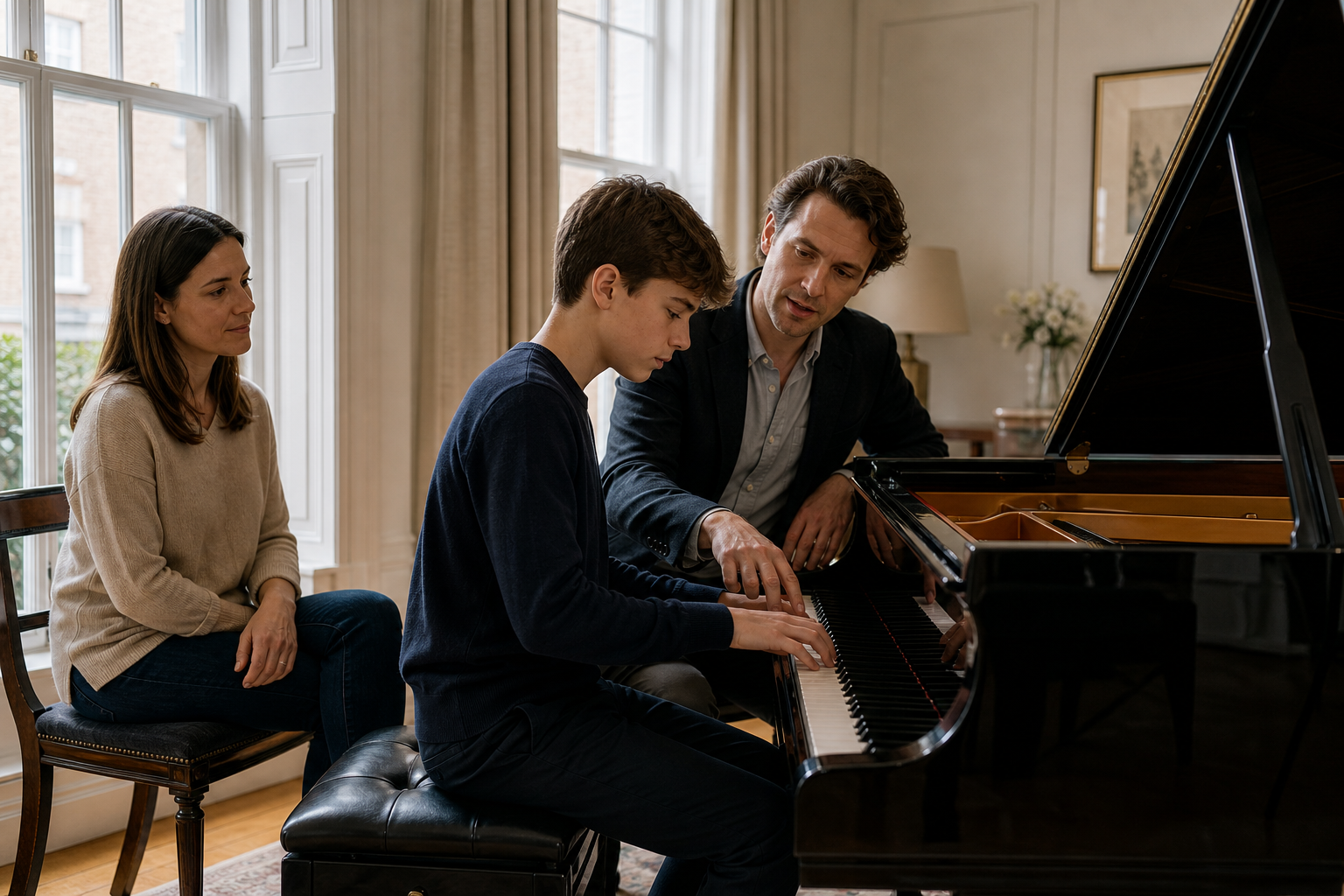
Many parents begin with the musical question and only later discover that the practical question decides whether lessons last. A twelve-year-old may have homework, clubs, sports, friendship commitments and a longer school day than before. Piano needs a regular place in that week, but it should not feel like another punishment after school.
The most successful families usually protect one lesson slot and three or four modest practice windows. These should be placed when the child is still alert: before dinner, after a short break from school, or on weekend mornings. Very late practice often trains frustration rather than musicianship. If the home has an acoustic piano, keep it tuned and accessible. If the family uses a digital piano, choose a full-size weighted keyboard and a proper bench rather than asking the child to practise at a desk height that encourages tension.
Practice insight
A twelve-year-old should be able to say, in one sentence, what today’s practice is for. If the answer is only “play my piece”, the task is too vague. Ask for a target: smoother left hand, steadier pulse, cleaner fingering, quieter ending or memorised first line.
Parents can also help by agreeing a calm language around errors. Instead of “that is wrong”, try “which bar needs the slow version?” Instead of “you have not practised enough”, try “show me the part your teacher asked you to repair.” This keeps responsibility with the child while avoiding the feeling of being judged at home.
When school exams or busy periods arrive, do not abandon piano completely. Reduce the practice task. Ten minutes of careful reading, tone work or one repaired phrase keeps the musical thread alive. Children who learn to scale practice intelligently are better prepared for long-term study than those who practise only when life is easy.
What good progress looks like
Progress at twelve should be visible in behaviour as much as repertoire. A child who can diagnose a mistake, slow down without resentment, listen for tone and return to the same passage tomorrow is becoming a musician. The pieces will follow.
A useful first-term framework
- Weeks 1-2: establish posture, keyboard geography, practice notebook and first reading tasks.
- Weeks 3-5: build two contrasting pieces and one technical habit, such as even finger action or relaxed arm weight.
- Weeks 6-8: introduce a small performance goal at home or in the studio.
- Weeks 9-12: review progress, decide whether exam, recital, repertoire or musicianship focus is the best next step.
“At twelve, the best piano lessons give a child enough structure to feel safe and enough responsibility to feel proud.”
Support your child’s next stage
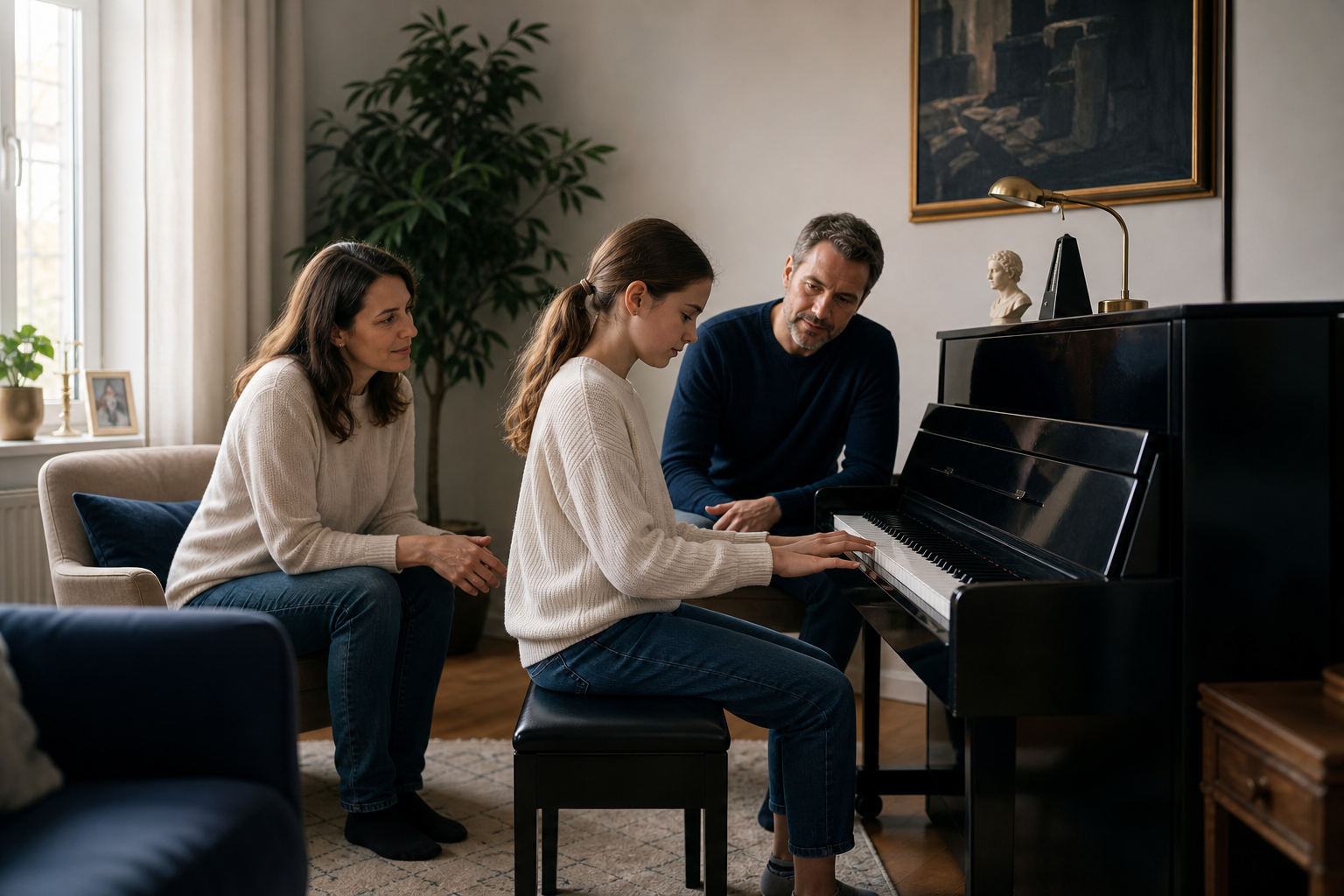
If your twelve-year-old is ready for serious but encouraging piano study, WKMT can help you choose a lesson rhythm that fits school, family life and musical growth.
Common parent questions
Is twelve too late to start piano?
No. A twelve-year-old can often progress quickly because reading, concentration and self-awareness are more developed. The first months need patient foundations, not rushed exam targets.
How much should a twelve-year-old practise?
Four or five short sessions per week is a sensible starting point. Fifteen focused minutes usually beats one tired hour before the lesson.
Should parents sit in lessons?
Occasionally, yes, especially at the beginning. Over time, many twelve-year-olds work better when the teacher gives feedback directly and the parent receives a concise progress summary.
Sources ON Piano Lessons for 12 Year Olds: Parent Guide
- ABRSM, Piano syllabus and piano assessment information https://www.abrsm.org/en-gb/piano
- Trinity College London, Piano grade exams https://www.trinitycollege.com/qualifications/music/grade-exams/piano
- NSPCC Learning, Safeguarding and child protection for tutors https://learning.nspcc.org.uk/safeguarding-child-protection/tutors
- GOV.UK, Regulated activity with children in England and Waleshttps://www.gov.uk/government/publications/dbs-guidance-leaflets/regulated-activity-with-children
- WKMT London, Piano lessons for kids https://www.piano-composer-teacher-london.co.uk/piano-lessons-for-kids/
- WKMT London, Music lesson fees https://www.piano-composer-teacher-london.co.uk/music-lesson-fees/