
 TRIAL LESSON
Piano Lessons
Piano Lessons for 6 Year Olds: A Parent’s Guide to Starting at the Right Pace

Jun
WKMT parent guide
Piano Lessons for 6 Year Olds: A Parent’s Guide to Starting at the Right Pace
Six is a promising age for beginning piano, provided lessons feel musical, structured and humane. The aim is not to hurry a child into formal study, but to build attention, listening, co-ordination and confidence in manageable steps.
The short answer for parents
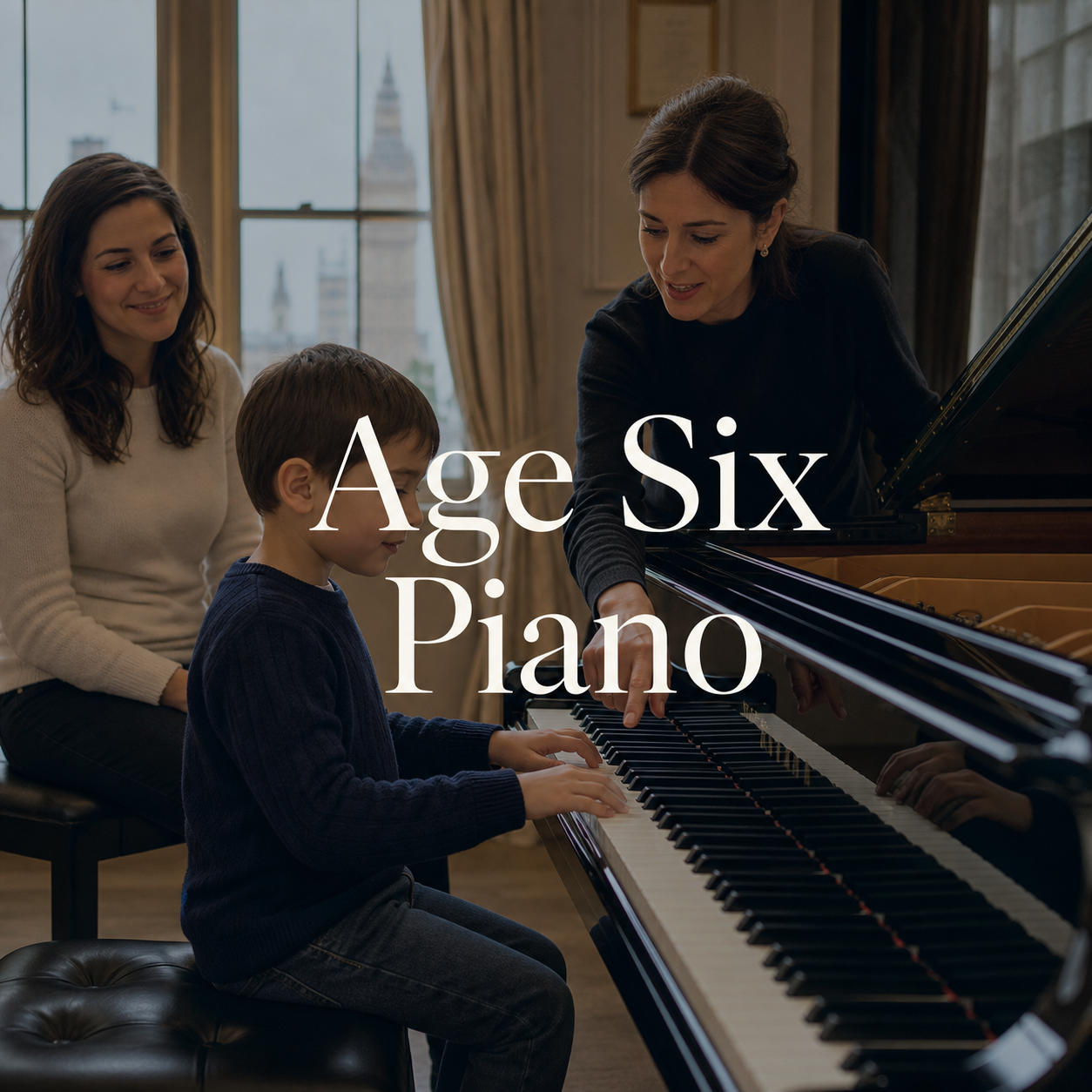
A six-year-old can begin piano lessons when they can sit with interest for short periods, follow a simple instruction, enjoy repeating a small task and accept gentle correction. At WKMT, this age usually calls for short musical episodes inside the lesson: singing, rhythm, keyboard geography, movement, listening and small pieces. Parents searching for piano lessons for 6 year olds should look for a teacher who protects curiosity while establishing reliable habits.
Is six the right age to start?
Six is often a good beginning age because many children are becoming more comfortable with routine, language, fine-motor control and school-style attention. That does not mean every six-year-old is ready for a conventional piano lesson. A child who loves sound but cannot yet manage ten focused minutes may still benefit from preparatory musical play. A child who is curious, responsive and able to try again after a small mistake can usually begin well.
The more useful question is not “Is six old enough?” but “What kind of first lesson suits this child?” A young beginner should not be treated like a miniature adult. The lesson needs musical purpose, but also proportion: one new idea at a time, frequent changes of activity, clear praise for effort and a quiet sense that mistakes are part of the work.
This is where structured piano lessons for children in London become valuable. The teacher is not merely showing notes; they are watching how the child thinks, listens, moves and responds emotionally to challenge.
Readiness signs that matter
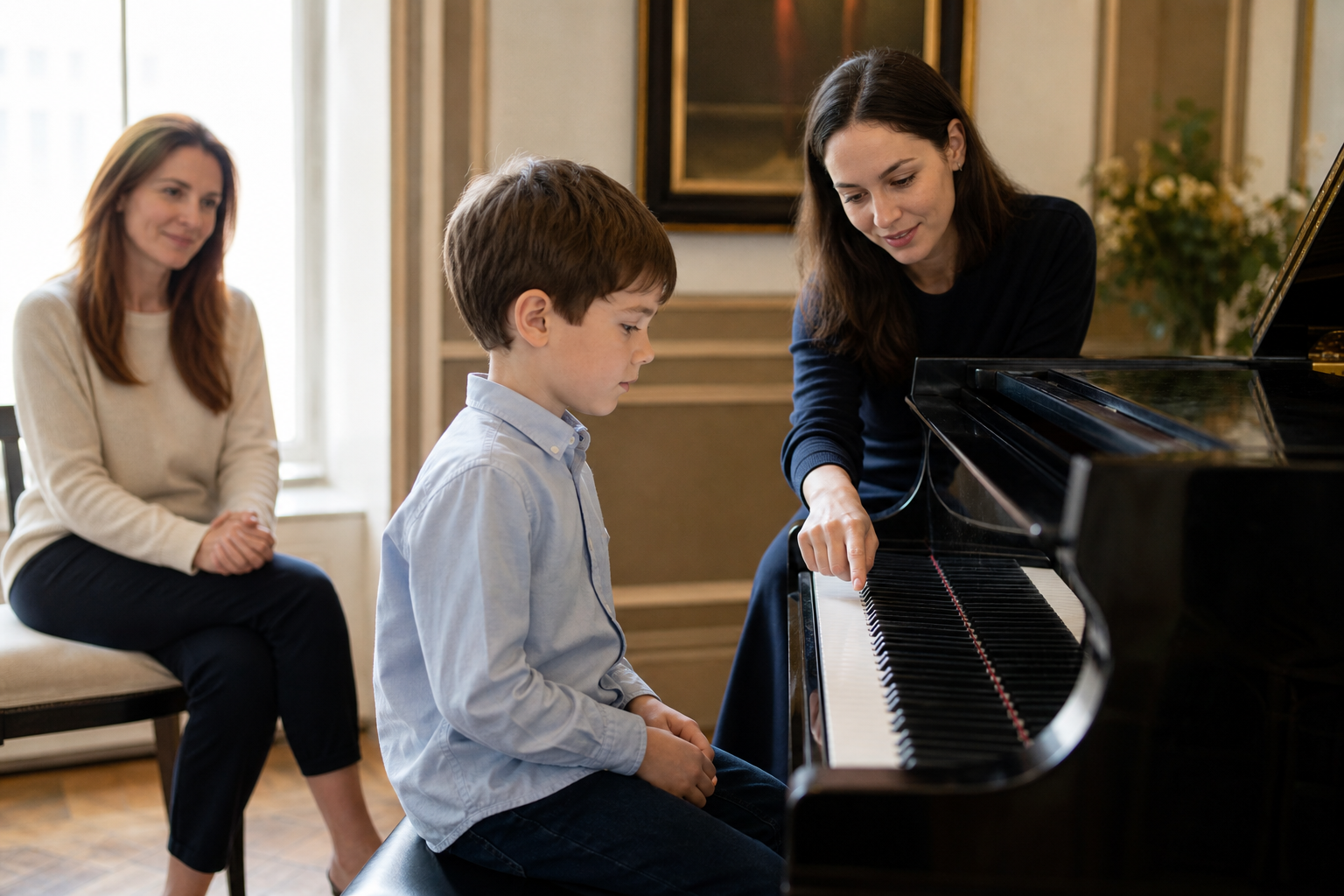
Parents often look for visible signs: the child knows the alphabet, recognises numbers, or can name a few notes. These help, but they are not the heart of readiness. A piano lesson asks for several things at once: listening, imitation, posture, finger awareness, patience and memory. The teacher’s task is to make those demands feel like music rather than schoolwork.
Can they stay with a short task for five to ten minutes when the activity changes gently?
Can they copy clapping, singing, finger patterns or two-note echoes?
Can they try again after a small correction without becoming distressed?
Do they enjoy sound, stories, rhythm, singing or exploring the keyboard?
None of these signs has to be perfect. A thoughtful teacher can build from partial readiness. What matters is whether the child leaves the lesson wanting to return to the instrument.
For Parents
Avoid asking, “Did you behave?” after the lesson. Ask, “What sound did you like today?” or “Can you show me the tiny pattern you played?” This keeps the conversation musical, not disciplinary.
What a good first lesson looks like
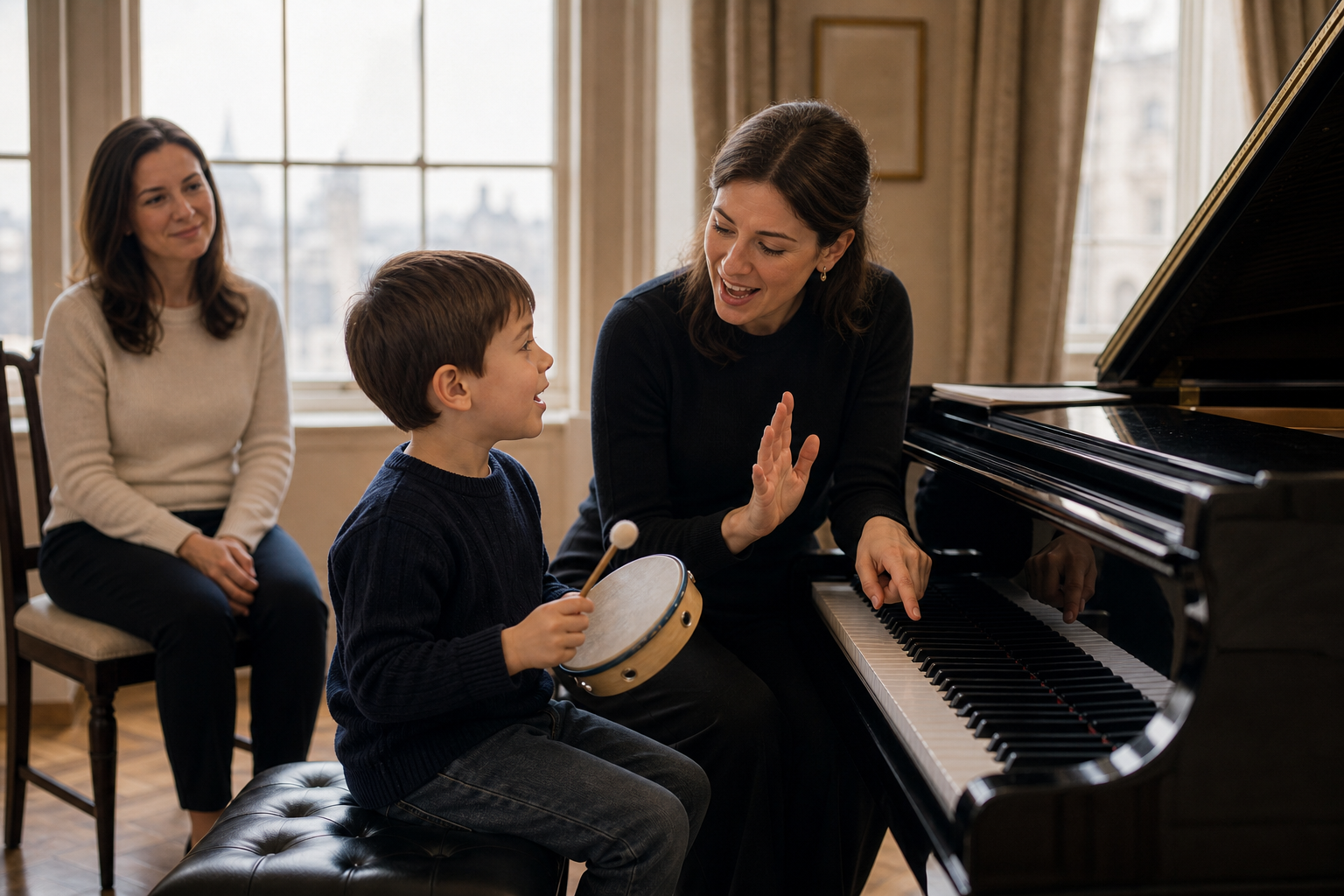
A productive lesson for a six-year-old is usually varied but not chaotic. The child might begin with a greeting song or a rhythm echo, then find groups of two and three black keys, play a small pattern, sing a phrase, listen to the teacher, and finish by showing the parent one thing to practise at home. The pace should feel purposeful without becoming crowded.
Reading can appear early, but it should not dominate before the child has a physical and aural relationship with the keyboard. Young beginners need to feel high and low, loud and soft, long and short, question and answer. These are not decorations before “real” piano; they are the foundations of real piano.
| Lesson element | Purpose | Parent expectation |
|---|---|---|
| Rhythm games | Pulse, listening and co-ordination | Short, lively, repeated often |
| Keyboard maps | Confidence finding notes and patterns | Exploration before heavy notation |
| Small pieces | Memory, phrasing and achievement | Tiny pieces can still be musical |
| Parent recap | Clear home practice | One or two tasks, not a long list |
How long should practice be?
For most six-year-olds, daily practice should be short, regular and specific. Five minutes done well is more useful than twenty minutes of negotiation. A good starting pattern is four to six short sessions per week, each built around one small assignment: play the two-note echo, find all the D keys, clap the rhythm, sing the tune, or repeat a phrase three times with relaxed hands.
Parents do not need to become second teachers. Their role is to protect the routine, keep the atmosphere kind and help the child remember what was assigned. If the practice turns into a battle, the problem is usually too much material, unclear instructions, tired timing or a task that is not yet secure.
A simple six-year-old practice map
- One minute: clap or speak the rhythm.
- Two minutes: play the pattern slowly with relaxed shoulders.
- One minute: sing the melody or name the direction of the notes.
- One minute: repeat the best version once and stop while the child still feels successful.
Families who are new to lessons may also find it useful to read about piano lessons for beginners in London, especially when an older sibling or parent is starting at the same time.
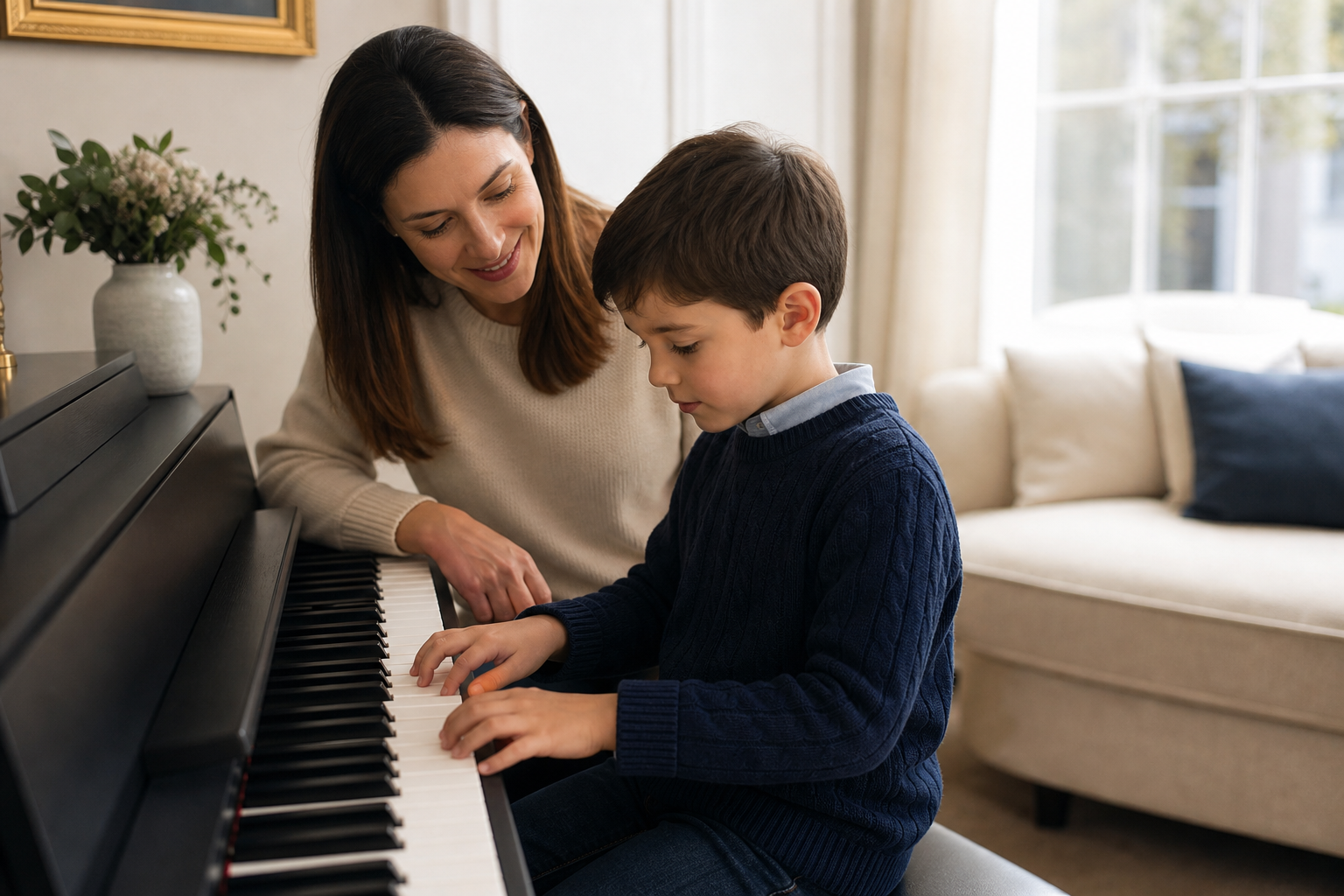
“At six, progress is not measured by how much music a child can be pushed through, but by whether rhythm, listening and touch are becoming part of the child’s normal week.”
Choosing lesson length and pace
Thirty minutes is often enough for a six-year-old beginner, especially at the start. Some children grow into longer lessons later; others do best with a focused half-hour for quite some time. Length is not a status symbol. The right lesson is the one in which the child is attentive enough to absorb, repeat and leave with a clear musical memory.
Parents should also consider the practical rhythm of the week. A tired child after a full school day may need a different time, a lighter lesson plan or a slower term. Piano lessons work best when they fit the child’s life rather than compete with sleep, school and family calm.
If budget and scheduling are part of the decision, WKMT’s music lesson fees and prices page gives parents a clearer route into practical planning before committing to a regular timetable.
Practice note
A child who appears restless may still be musical. Restlessness becomes useful information: the activity may need more movement, more singing, a clearer goal or a shorter unit of work.
When to think about exams, concerts and pieces
Exams are not the immediate priority for most six-year-olds. The first priority is a healthy relationship with the instrument: listening, pulse, posture, finger awareness and the pleasure of playing something complete. Later, graded routes can help when they are used as structure rather than pressure.
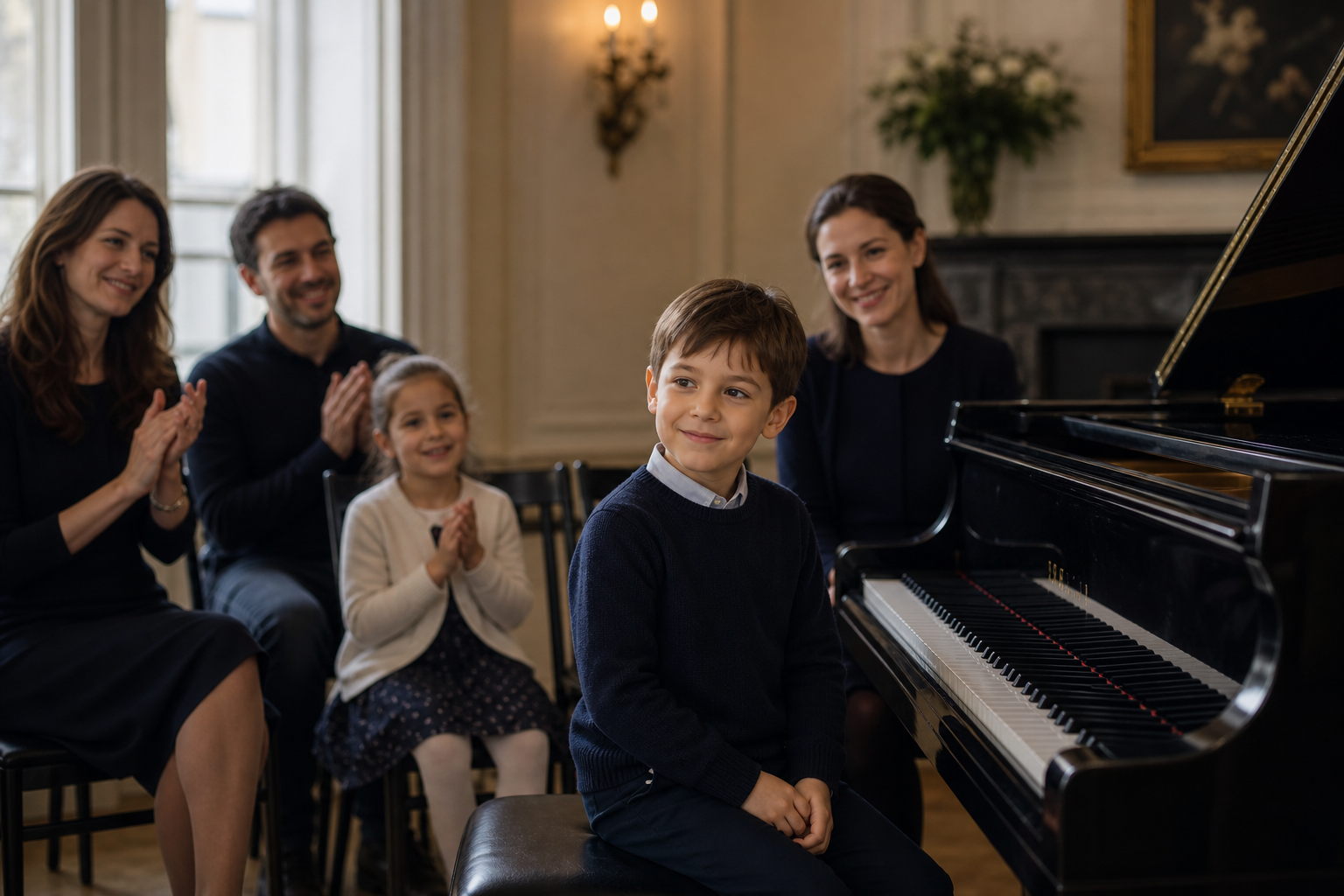
Small performances can be useful earlier than exams. Playing a tiny piece for a parent, grandparent or studio group teaches beginning and ending, listening to silence, and recovering from a slip. A child who has practised calmly at home and played informally for a friendly listener is better prepared for future assessments, should the family choose that path.
WKMT’s London music festivals and student performance opportunities are part of that broader culture: not rushing children onto a stage, but giving young musicians a reason to listen, prepare and share music in a supportive setting.
What parents should watch during the first term
The first term is diagnostic as much as instructional. Parents should not expect a dramatic catalogue of pieces by week six. They should expect clearer musical behaviour: the child knows where to sit, understands that the piano has patterns, can repeat a small task, hears the difference between heavy and light sound, and begins to associate practice with a short daily ritual rather than a large emotional event.
There will be uneven days. A six-year-old may play beautifully one week and seem to forget everything the next. That is normal when attention, co-ordination and memory are still developing together. The teacher should respond by simplifying the material without lowering the musical standard: slower pulse, fewer notes, clearer sound, one hand at a time, more singing, or a return to a secure pattern.
Parents should also watch the child’s language after lessons. “I can’t do it” is not a failure if the teacher helps the child add “yet”. “I don’t like practising” may mean the routine is too long, too late in the day, or too dependent on adult correction. “Can I show you?” is one of the best signs: the child is beginning to own a piece of musical knowledge.
By the end of a first term, the most valuable result is not speed. It is a child who understands that music asks for attention, repetition and listening, and who still feels that the piano belongs to them. That is the foundation from which more formal technique, reading and repertoire can grow.
A calm route into children’s piano lessons
For families considering piano lessons for 6 year olds, the best first step is an honest musical assessment: how your child listens, moves, imitates, concentrates and responds to small challenges. WKMT’s children-focused piano lessons are built around those observations, so the pace can be serious without becoming heavy.
Explore piano lessons for childrenCommon parent questions
Does my child need a piano at home?
An acoustic piano is ideal when possible, but a good weighted digital piano can support the first stage. The important point is regular access to a reliable instrument with full-sized keys, stable tuning or sound, and a quiet place to practise.
Should a six-year-old read music straight away?
Reading can begin early, but it should be linked to sound, movement and keyboard understanding. Notation without listening becomes mechanical; listening without structure can become vague. A good lesson balances both.
What if my child practises only a little?
Little can be enough when it is consistent. A five-minute routine, repeated calmly, teaches more than occasional long sessions. The teacher should give small, memorable tasks that a child can complete with pride.
Sources and further reading on Piano lessons for 6 year olds
- WKMT, Piano Lessons for Kids in London
- WKMT, Piano Lessons for Beginners in London
- WKMT, Music Lesson Fees and Prices
- ABRSM, Performance Assessment and early-stage musical progress
- Trinity College London, Piano exams and initial grades
- Music Mark, UK music education resources and advocacy