
 TRIAL LESSON
Piano Lessons
Piano Lessons for 10 Year Olds: A Parent’s Guide to Confidence, Routine and Progress
Jun
Piano Lessons for 10 Year Olds: Parent Guide
WKMT parent guide
Piano Lessons for 10 Year Olds: A Parent’s Guide to Confidence, Routine and Progress
At ten, many children are ready for more independence at the piano. The question is how to shape that energy into calm technique, steady practice and musical confidence.
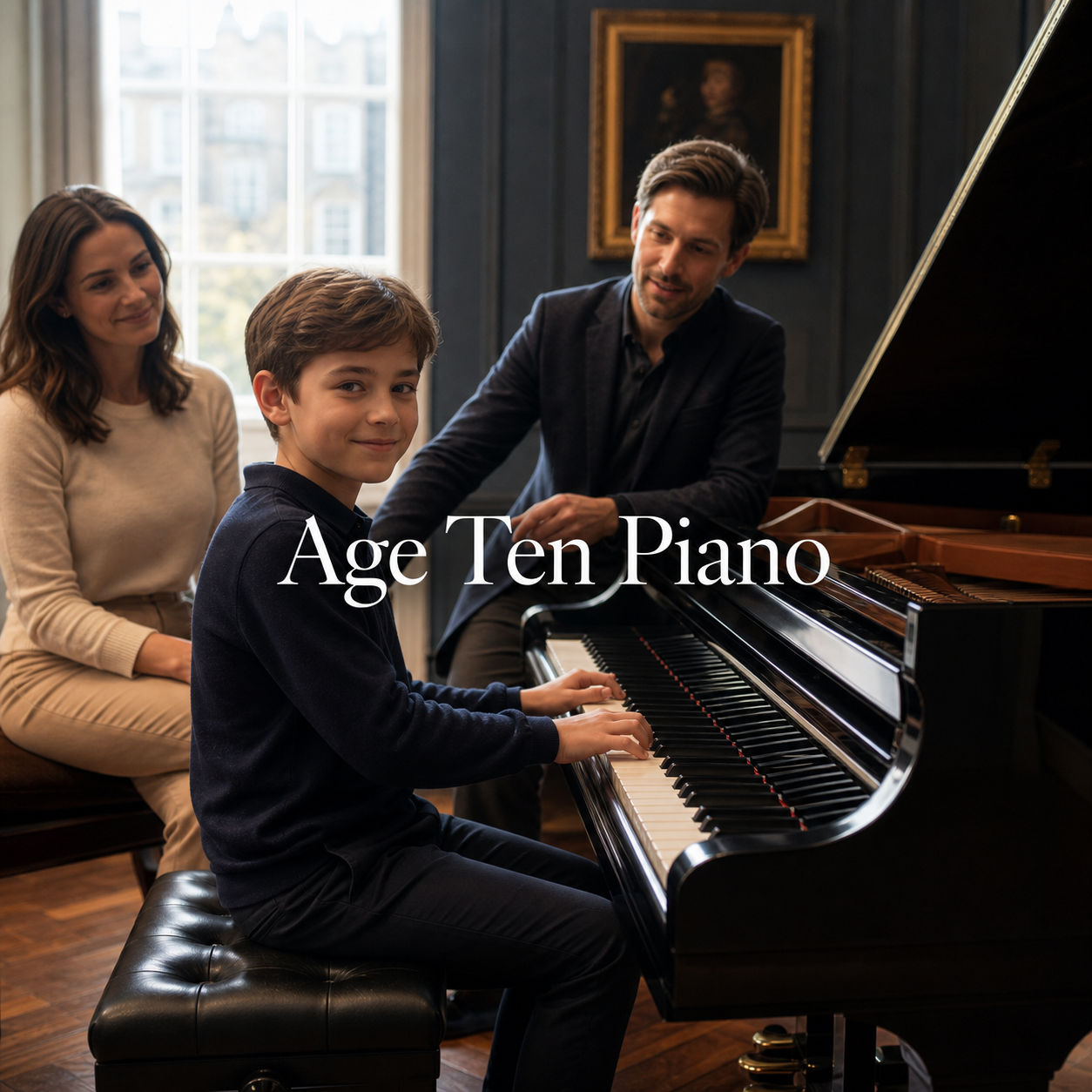
Parents searching for piano lessons for 10 year olds are usually past the vague “should we start?” stage. They want to know whether a ten-year-old can begin seriously, how fast progress should feel, what a teacher should notice in the first lesson, and how much parental help is still needed at home.
The short answer is encouraging. Ten is an excellent age to begin, restart or refine piano lessons. Most pupils can follow a weekly routine, understand why careful practice matters, and take pride in playing pieces that sound like real music rather than exercises. They are still young enough to build healthy technique from the beginning, but old enough to take a share of responsibility.
For parents: the best lessons for a ten-year-old do not rush towards grades. They build a musical routine: posture, reading, rhythm, listening, hand coordination, memory, repertoire and a realistic practice habit.
For London families considering structured piano lessons for children at WKMT, this guide explains what readiness looks like, what progress can sensibly include after three, six and twelve months, and how to support practice without turning the piano into a family argument.
Is ten a good age to start piano?
Yes. A ten-year-old beginner may not have the tiny-child advantage of starting before school routines become busy, but they often have stronger reading habits, better concentration and a more developed sense of taste. They can say whether a piece sounds elegant, comic, dramatic or awkward. That matters because music is not only finger movement; it is listening with intention.
At this age, readiness is less about being “naturally musical” and more about whether the child can work in short, repeatable steps. A good first lesson should reveal whether the pupil can copy a rhythm, listen for high and low sound, sit comfortably, follow a two or three step instruction and return to a small task after a correction.
Can focus for 20-30 minutes with changes of activity.
Can repeat a short phrase slowly without needing constant praise.
Can accept that music improves through revision, not instant success.
What should the first lessons include?
Strong piano lessons for 10 year olds should feel structured but not severe. The teacher should introduce the geography of the keyboard, a relaxed sitting position, simple five-finger patterns, rhythm work away from the keys, and short pieces that let the pupil hear musical shape quickly. Reading notation matters, but it should not dominate the whole lesson before the child has connected sound, movement and pulse.
Ten-year-olds can also understand why technique exists. A curved hand is not a decoration; it helps the fingers move freely. Slow practice is not punishment; it gives the ear time to judge sound. Counting aloud is not childish; it turns guessing into rhythm.
Teacher’s Note
A good teacher at this stage should correct kindly but precisely. Vague praise alone is not enough. The child needs to know exactly what improved: steadier pulse, softer wrist, cleaner fingering, more singing tone, or better listening after a mistake.
If the child has already played keyboard, sung in choir, learned another instrument or prepared music at school, the teacher should assess what is useful and what needs resetting. Some pupils arrive with enthusiasm but tense hands; others read well but do not listen. A careful teacher treats the first month as diagnosis as much as instruction.
Lesson length, formats and London family logistics
Most ten-year-olds do well with a weekly lesson of thirty to forty-five minutes. Thirty minutes can be excellent for a new beginner who is still learning how to concentrate at the piano. Forty-five minutes may suit a child who reads confidently, prepares school music, sings, or already has enough stamina to work through technique, repertoire and musicianship without fading.
One-to-one teaching is usually the clearest route for piano lessons for 10 year olds, because the teacher can adjust posture, fingering, pacing and repertoire immediately. Group music activities can still be valuable, especially for rhythm, singing, theory games and performance confidence, but they rarely replace the detailed physical correction a pianist needs at the keyboard.
London families should also think practically. A brilliant lesson at the wrong time can still fail if the child arrives tired after a long journey or has no realistic practice slot during the week. The best timetable is the one the family can keep: a regular lesson time, a predictable practice window, and a simple written summary that the child and parent both understand.
A useful first-month pattern
Week one checks readiness and posture. Week two confirms practice habits. Week three introduces a slightly harder reading or coordination task. Week four reviews whether the lesson length, repertoire and home routine fit the child.
If online continuity is needed during travel or illness, it can work for review lessons, rhythm tasks and supervised practice planning. For a beginner, however, regular in-person correction remains valuable because small physical habits are easier to notice at the instrument.
Practice at home without daily battles
The family routine matters more than heroic practice days. For most ten-year-old beginners, ten to twenty focused minutes on five or six days each week is more useful than one long weekend session. The aim is to make practice predictable, small and specific.
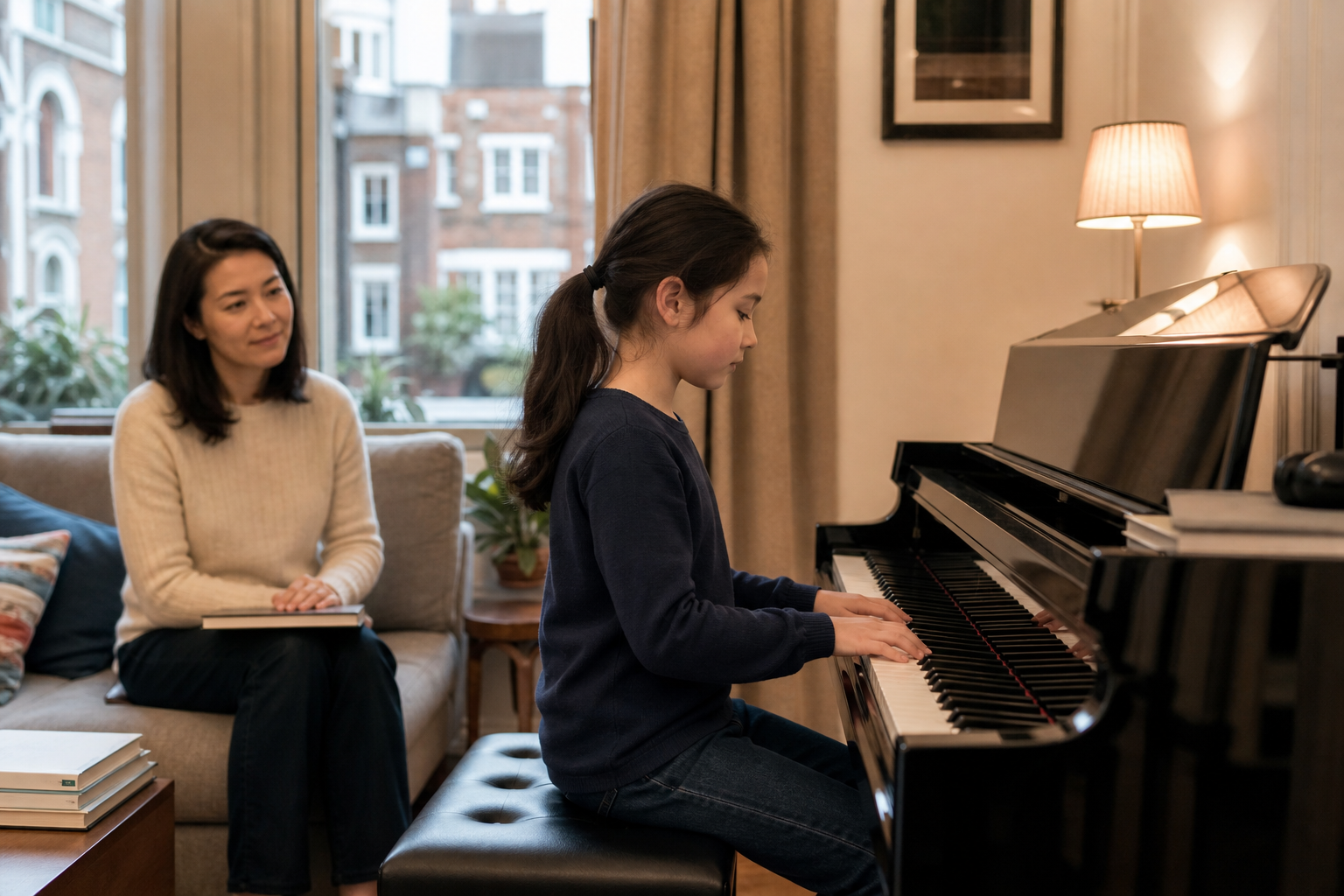
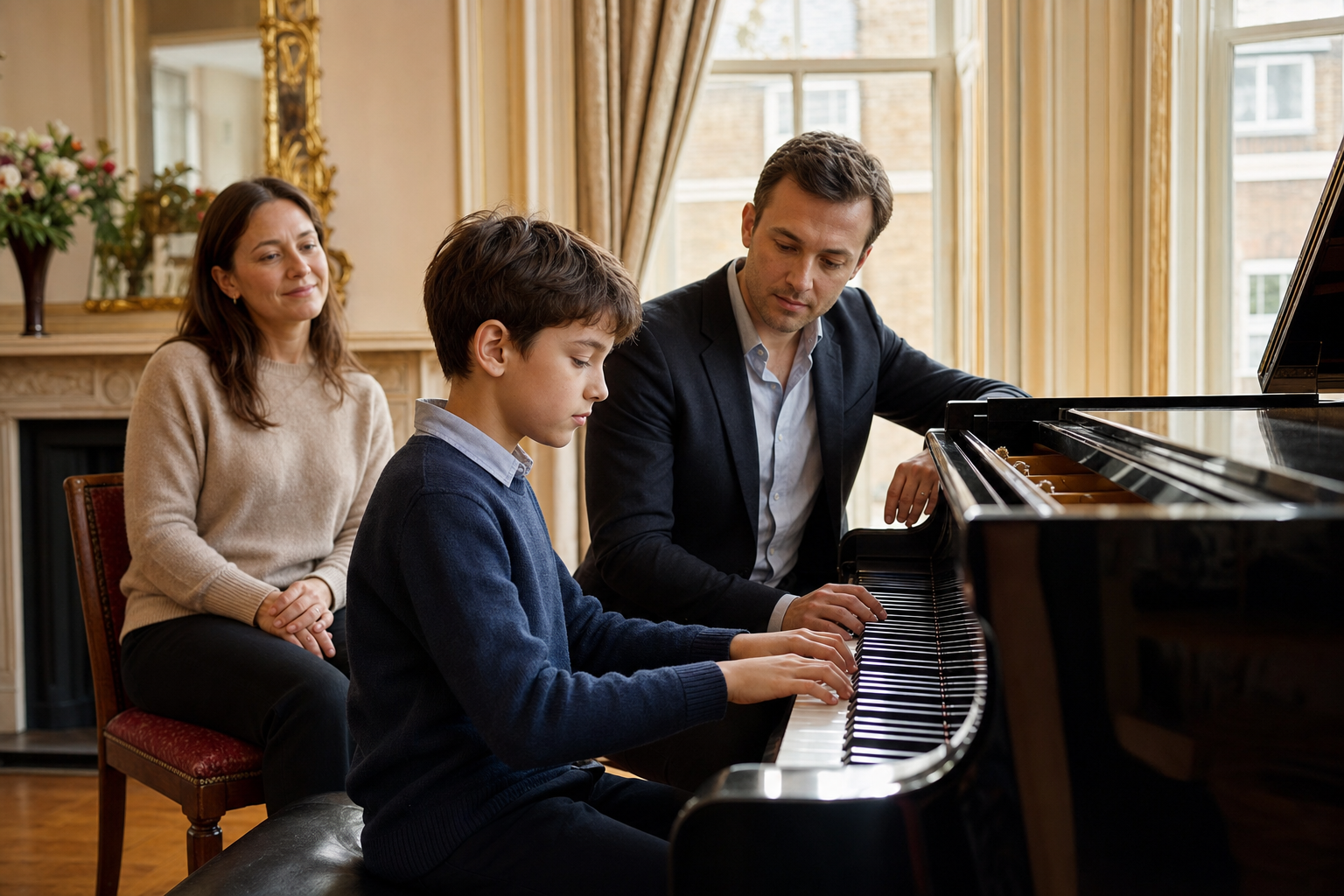
Parents should stay close enough to protect the routine, but not so close that every note becomes a correction. Ask “what did your teacher want first?” rather than “why is that wrong?” At ten, children often respond well to being treated as young musicians, not as pupils under surveillance.
A realistic 3, 6 and 12 month progress path
Progress in piano lessons for 10 year olds should be visible, but it should not be measured only by exam speed. A thoughtful teacher will balance notation, technique, rhythm, aural awareness, repertoire and confidence. ABRSM and Trinity both provide graded piano pathways, but the timing should fit the child rather than force the child into a timetable.
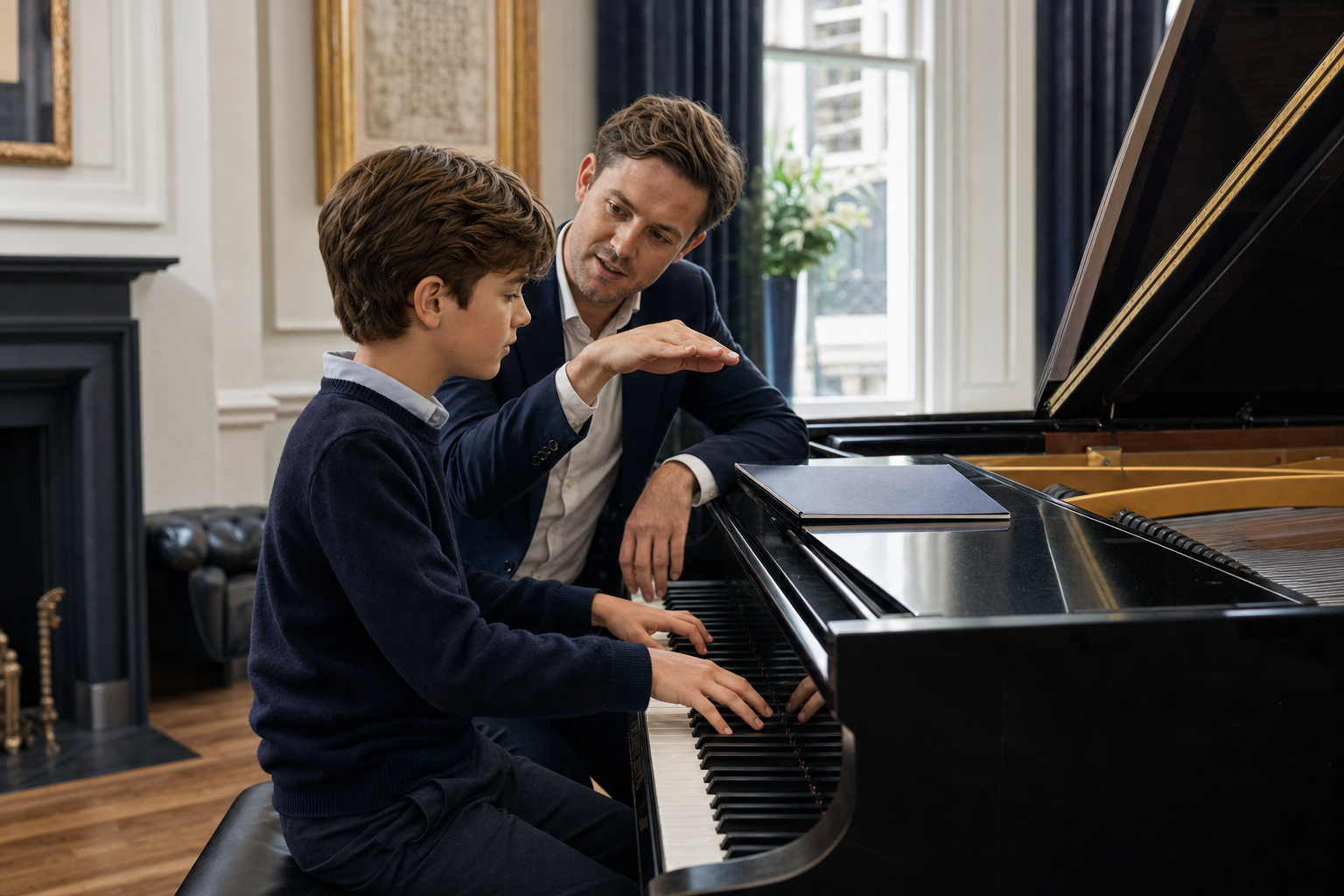
The best sign of progress is not a child who never makes mistakes. It is a child who knows how to listen, adjust and try again with dignity.
Basic keyboard geography, simple rhythm reading, comfortable hand position, two or three short pieces, and a stable practice habit.
More secure reading, simple scales or patterns, hands together in short passages, contrasting dynamics and clearer lesson independence.
A small repertoire, possible preparation towards an initial or Grade 1 pathway, better rhythm discipline and the ability to practise specific tasks.
Exams, repertoire and confidence
Some ten-year-olds enjoy the clarity of grades. Others need a longer repertoire-building year before any exam is sensible. ABRSM, Trinity and similar pathways can be useful when they motivate careful preparation, but they should not narrow the child’s musical world too soon.
A balanced programme might include one classical teaching piece, one lyrical piece, one rhythmically lively piece, a technical pattern, aural games and sight-reading in small doses. The teacher can then decide whether an exam, a studio performance, a school opportunity or an informal recording gives the child the healthiest goal.
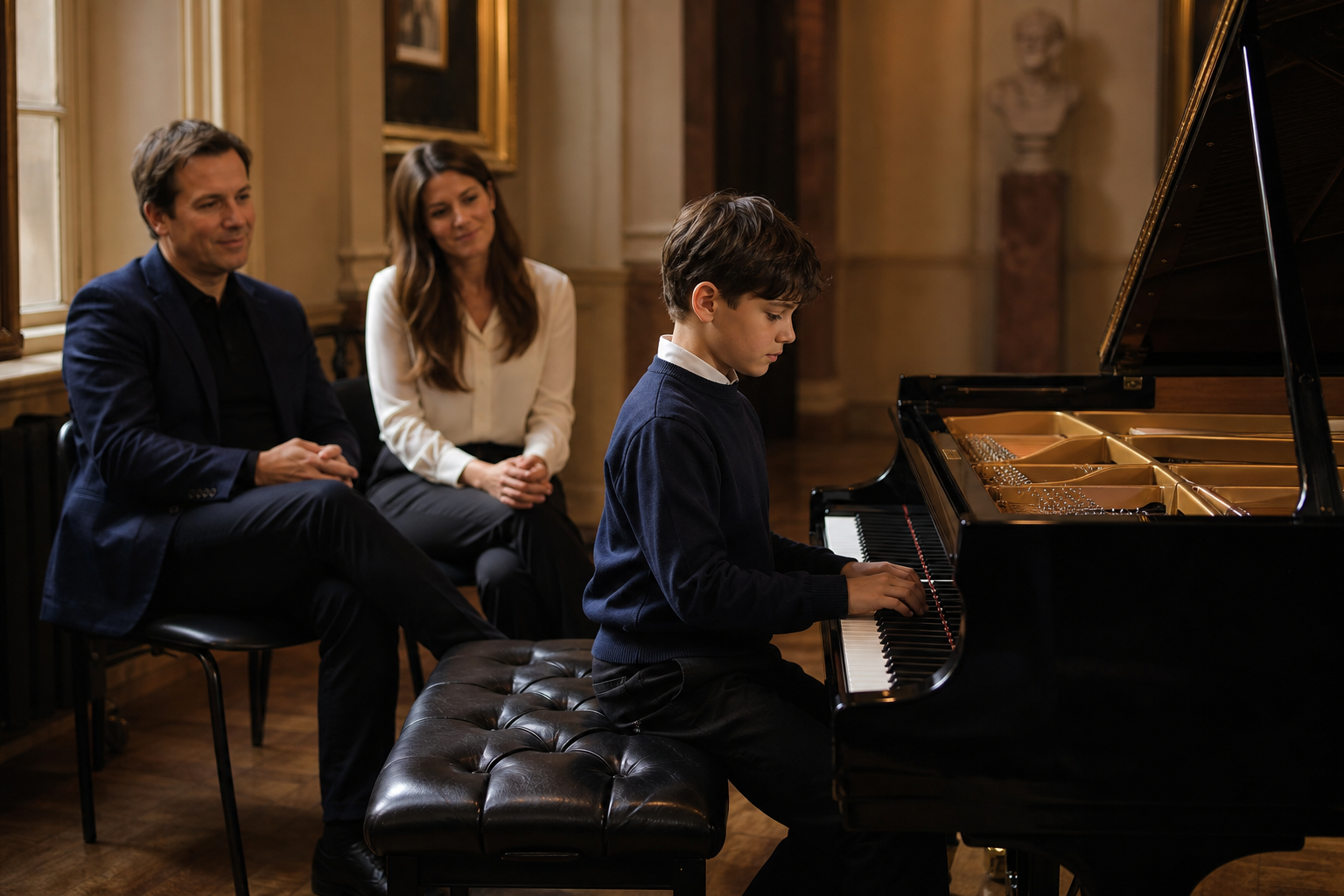
For Parents
Ask a prospective teacher how they balance reading, technique, repertoire, listening and confidence. A serious children’s teacher should be able to explain the route without promising a grade by a fixed date before they have met the pupil.
Repertoire choice is central. A ten-year-old can usually cope with more character than a very young beginner: marches, dances, folk-like melodies, simple Baroque textures, film-like moods and miniature classical pieces can all work. The teacher’s task is to choose music that stretches the child without making every page feel like a test.
Parents can listen for three signs of healthy musical growth. First, the child begins to notice sound quality: too heavy, too blurred, too rushed, too flat. Secondly, they can describe a practice problem in words rather than simply saying “I cannot do it.” Thirdly, they start to care about finishing phrases musically. Those signs are often more important than the number of pages covered.
Choosing a teacher in London
For children, the teacher’s musicianship and safeguarding judgement both matter. Parents should look for a teacher or school that explains lesson structure clearly, communicates practice expectations, has appropriate child-facing procedures and treats the parent as a partner without making the parent the teacher.
In the UK, safeguarding and DBS context should be discussed plainly. Not every private teaching situation is identical, but parents are entitled to ask how a school handles supervision, communication, lesson records, online contact and child protection. Serious teaching environments welcome these questions.
London families also need practical clarity: travel time, lesson length, replacement policies, recital opportunities, online continuity when travel is difficult, and whether the child can grow into more advanced classical training without changing school too soon.
Build a confident age-ten piano routine
WKMT’s children’s piano lessons support young beginners with structured classical teaching, parent communication and a clear path from first pieces to confident musicianship.
Questions parents often ask
How long should a ten-year-old practise?
Start with ten to twenty focused minutes, five or six days a week. Quality matters more than length. The teacher should make the week’s tasks specific enough for the child to understand.
Is Grade 1 realistic in the first year?
Sometimes, but not always. It depends on reading confidence, rhythm, hand coordination, practice regularity and the child’s temperament. A first-year musical foundation is more important than a rushed exam.
Should parents sit in lessons?
Often at first, especially if the child needs help remembering practice tasks. Over time, many ten-year-olds benefit from more independence, with the parent receiving a clear summary after the lesson.
Sources on Piano Lessons for 10 Year Olds: Parent Guide
“