
 TRIAL LESSON
Piano Lessons
Pattern Recognition: Why Piano Helps Children Organise What They Hear
Sep
WKMT London parent guide
Pattern Recognition: Why Piano Helps Children Organise What They Hear
Children often discover pattern recognition at the piano before they can explain it. A repeated rhythm, a stepwise melody, a familiar hand shape or a returning phrase gives the child something to recognise, predict and test through sound.
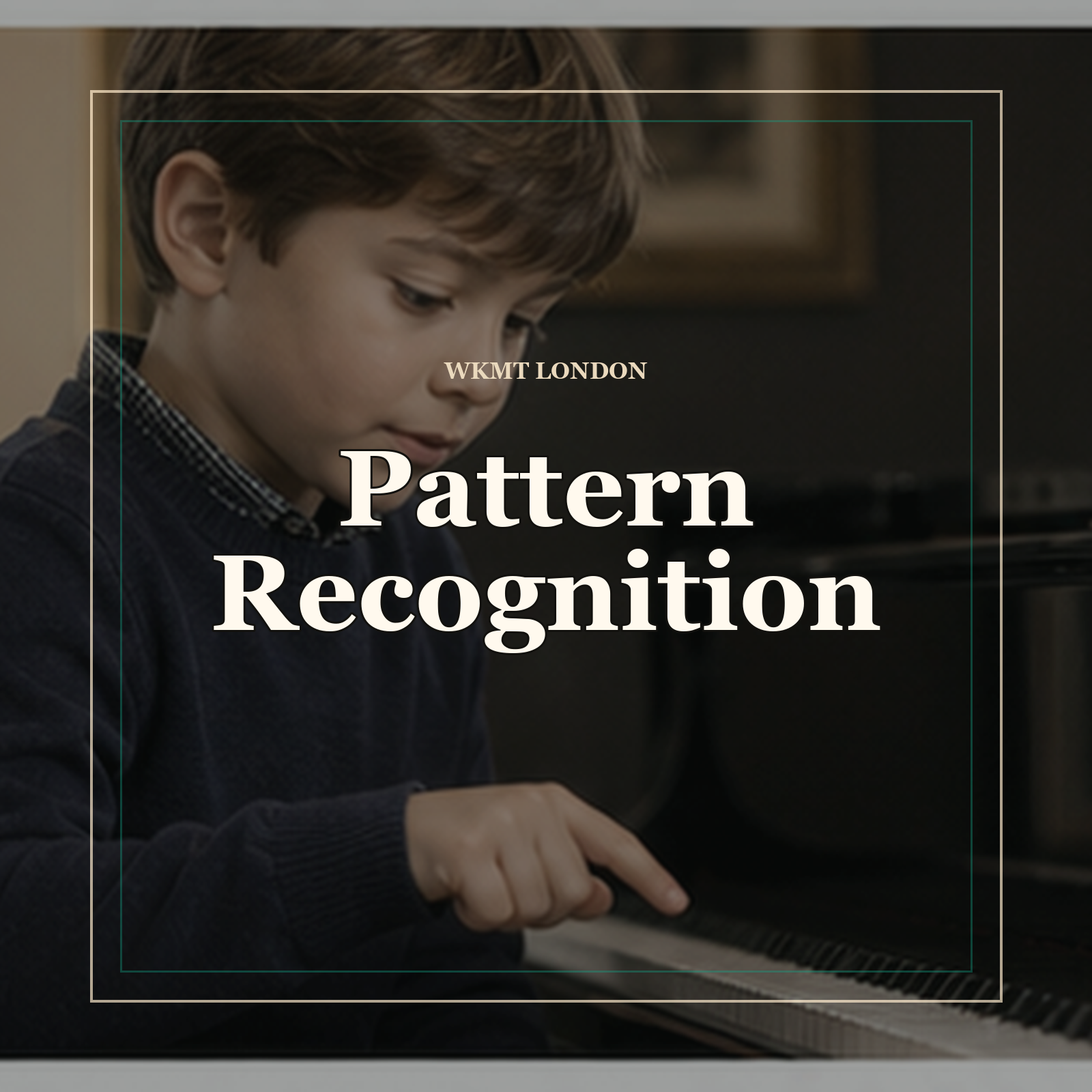
The educational value is concrete. A child notices that two bars share a rhythm, that a melody moves by steps, or that a left-hand shape returns in a new place. The lesson becomes richer when the teacher asks, “What is the same, what changed, and what does that mean for how you play it?”
At WKMT, this sits naturally inside children’s piano lessons in London. The teacher can reduce the page, sing the pattern, move it to another register, or ask the child to invent an answer. Pattern recognition then belongs to music, not to a worksheet.
How pattern recognition appears at the piano
At the keyboard, pattern recognition works through a loop: see a shape, hear its likely sound, prepare the movement, play, listen and correct. The loop can be tiny. Two notes moving up, a repeated clap rhythm or a familiar five-finger shape may be enough.
See
Find repeated shapes in the score or keyboard layout.
Hear
Predict whether the sound will rise, fall, repeat or answer.
Move
Prepare the hand before the next note arrives.
Name
Describe the pattern so it can be reused independently.
Research on music learning and cognition is careful rather than sensational. It supports the idea that structured musical training can engage attention, memory and auditory learning, but good teaching still matters more than vague claims about brain benefits.
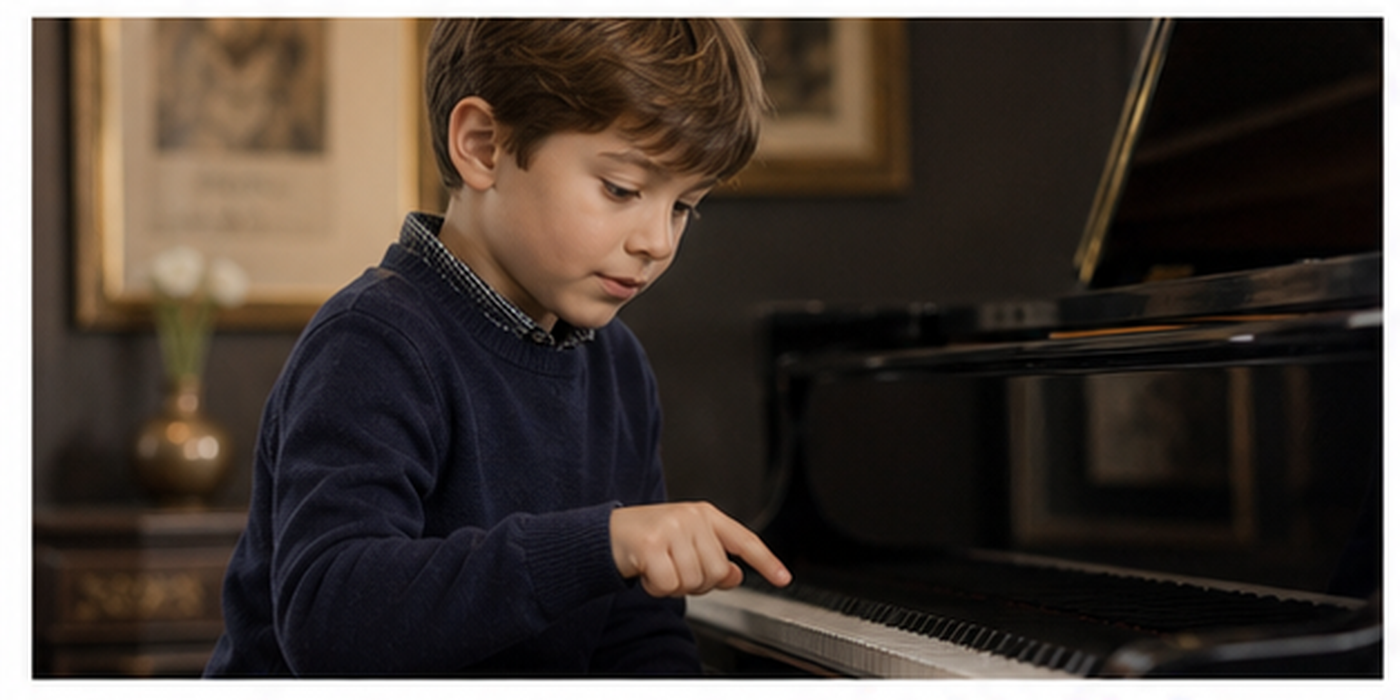
Four pattern recognition tasks for young learners
1. Find the returning rhythm
Clap two bars, then ask the child to point when the same rhythm comes back. The goal is recognition before naming.
2. Move a shape
Play three neighbouring notes, then move the same shape higher or lower. The child learns that patterns can travel.
3. Spot the changed note
Repeat a tiny melody with one note altered. Ask what changed and how the musical character changed with it.
4. Invent an answer
The teacher plays a question phrase; the child answers with the same rhythm but different notes. Pattern recognition becomes creative rather than passive.
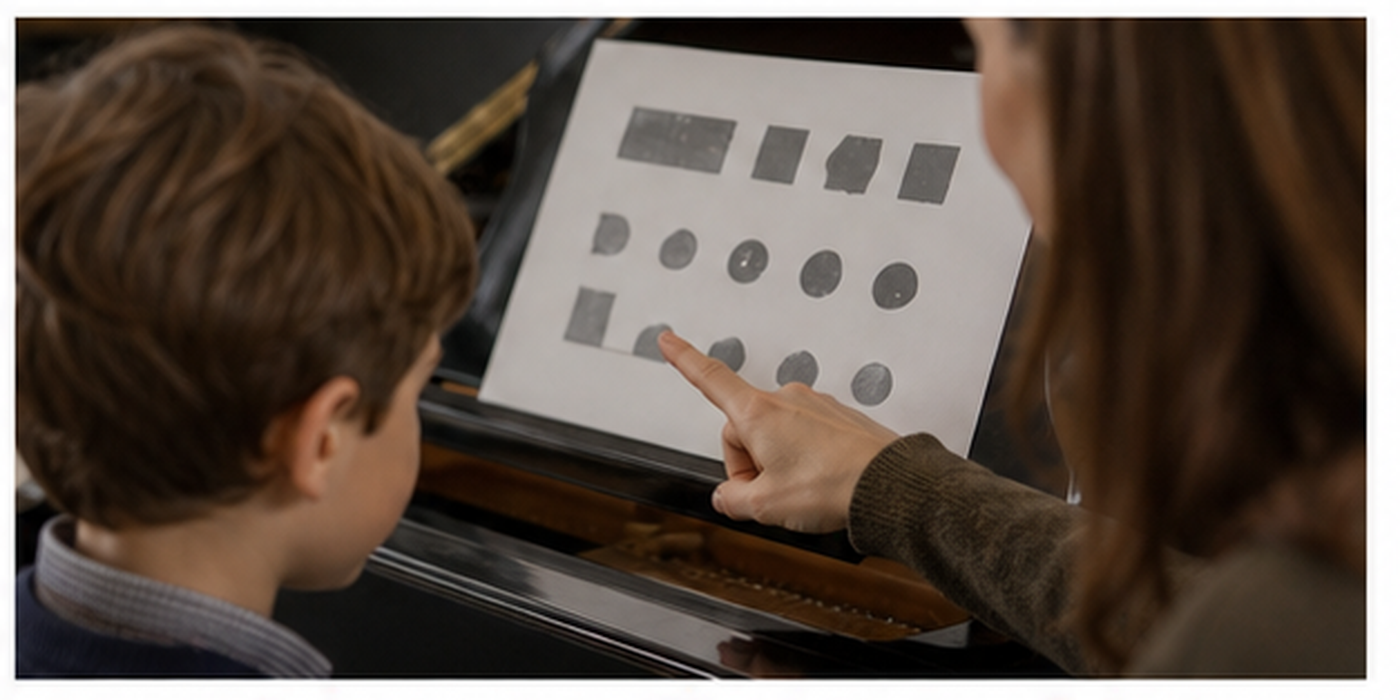
A child who recognises a pattern is not taking a shortcut; they are beginning to think like a musician.
What parents should notice
Progress may show as fewer lost places, quicker recovery after a mistake, or a child saying “this bit is like the first line”. Those comments are important. They show that the child is organising the music rather than surviving each note separately.
Parents should avoid turning pattern recognition into a quiz. The most useful home question is simple: “What is familiar here?” If the child can answer through playing, singing or pointing, the lesson has already begun to transfer into practice.
Selected video
Educational video on recognising musical patterns and listening with intention. Embedded from YouTube for educational commentary; rights remain with the publishing channel / YouTube.
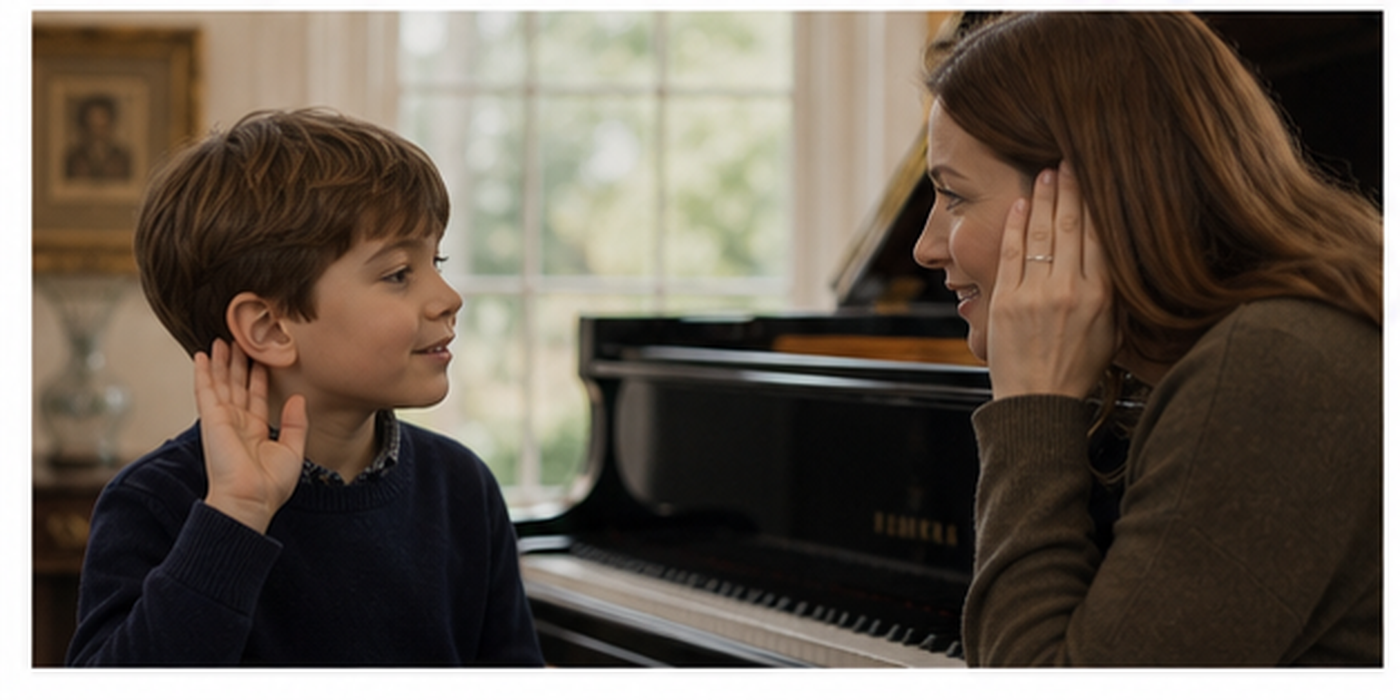
Pattern recognition without pressure
Pattern work should make the page less frightening and the music more meaningful. If the child starts guessing, reduce the passage. If the child becomes bored, invite variation. The best teaching keeps recognition, sound and imagination together.
Readers can also compare WKMT guides on music and concentration and music and memory, where similar learning habits are explored from different musical angles.
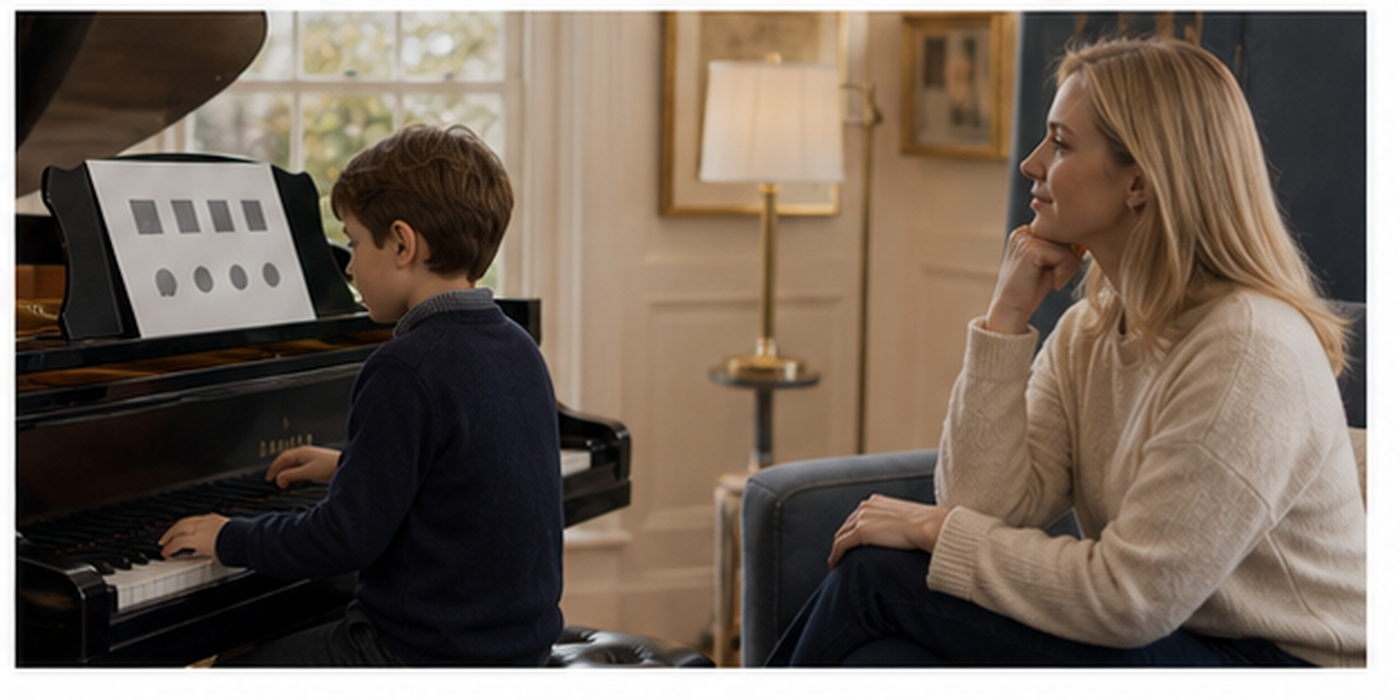
WKMT London
Discover thoughtful one-to-one piano teaching for young learners at WKMT London.
Sources
- Memory & Cognition: music training and cognitive skills
- Frontiers in Psychology: educational use of music in children
- Annals of the New York Academy of Sciences: music, language and the brain
- Music Perception: statistical learning and auditory patterns
Sources last checked 1 September 2026.