
 TRIAL LESSON
Piano Lessons
Cognitive Reserve: Why Piano Study Matters for Adult Learners
Aug
WKMT London adult learning guide
Cognitive Reserve: Why Piano Study Matters for Adult Learners
Cognitive reserve describes the brain’s capacity to cope with change by using flexible strategies and networks. Piano study is an unusually rich learning activity, but the honest case is about sustained challenge and engagement, not a promise to prevent illness.
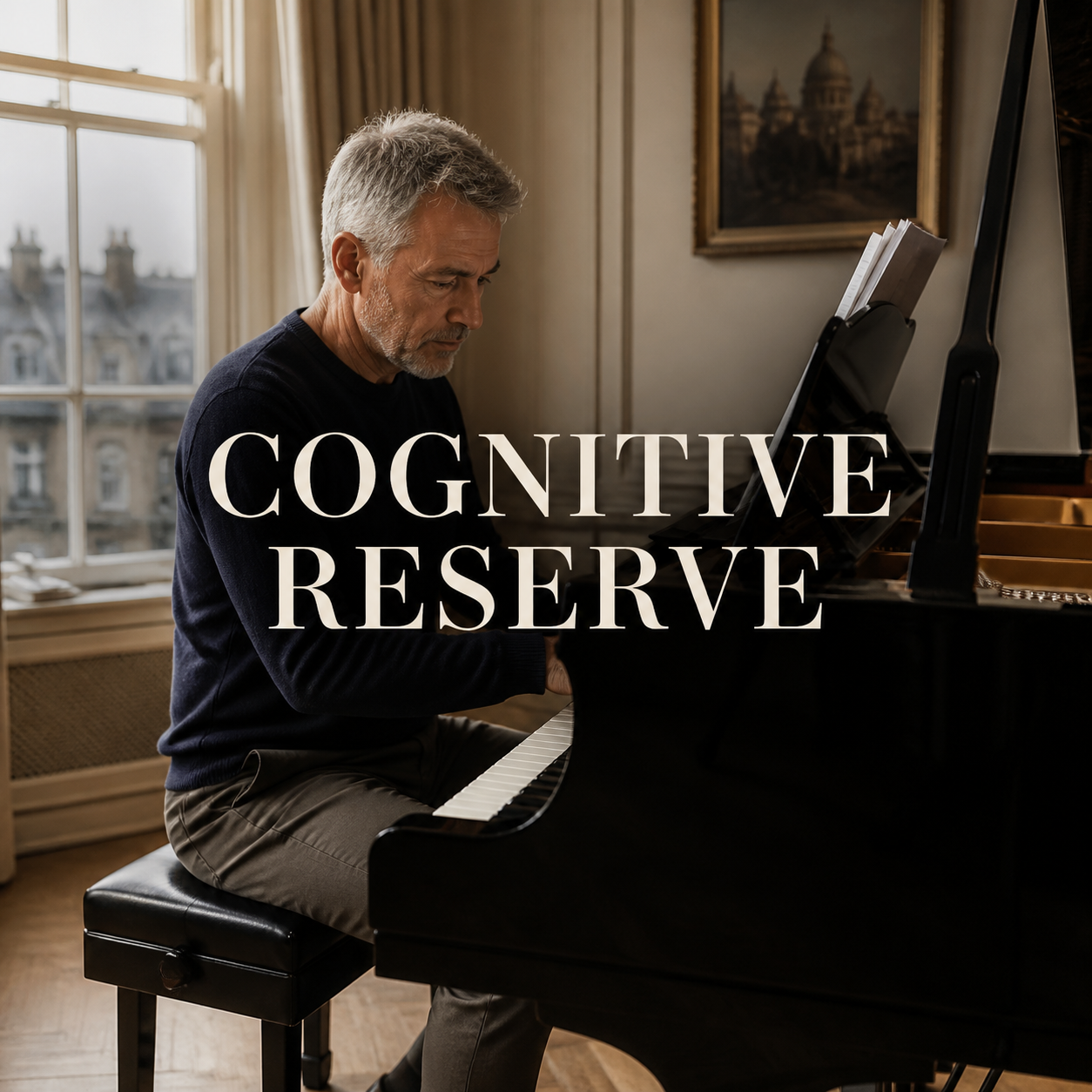
The attraction of the idea is easy to understand. Adult learners want their musical work to matter beyond the next piece. Yet cognitive reserve should not become a slogan attached to any difficult pastime. It is an explanatory framework shaped across a lifetime, not a score that a person can increase by a known number of points after a fixed amount of practice.
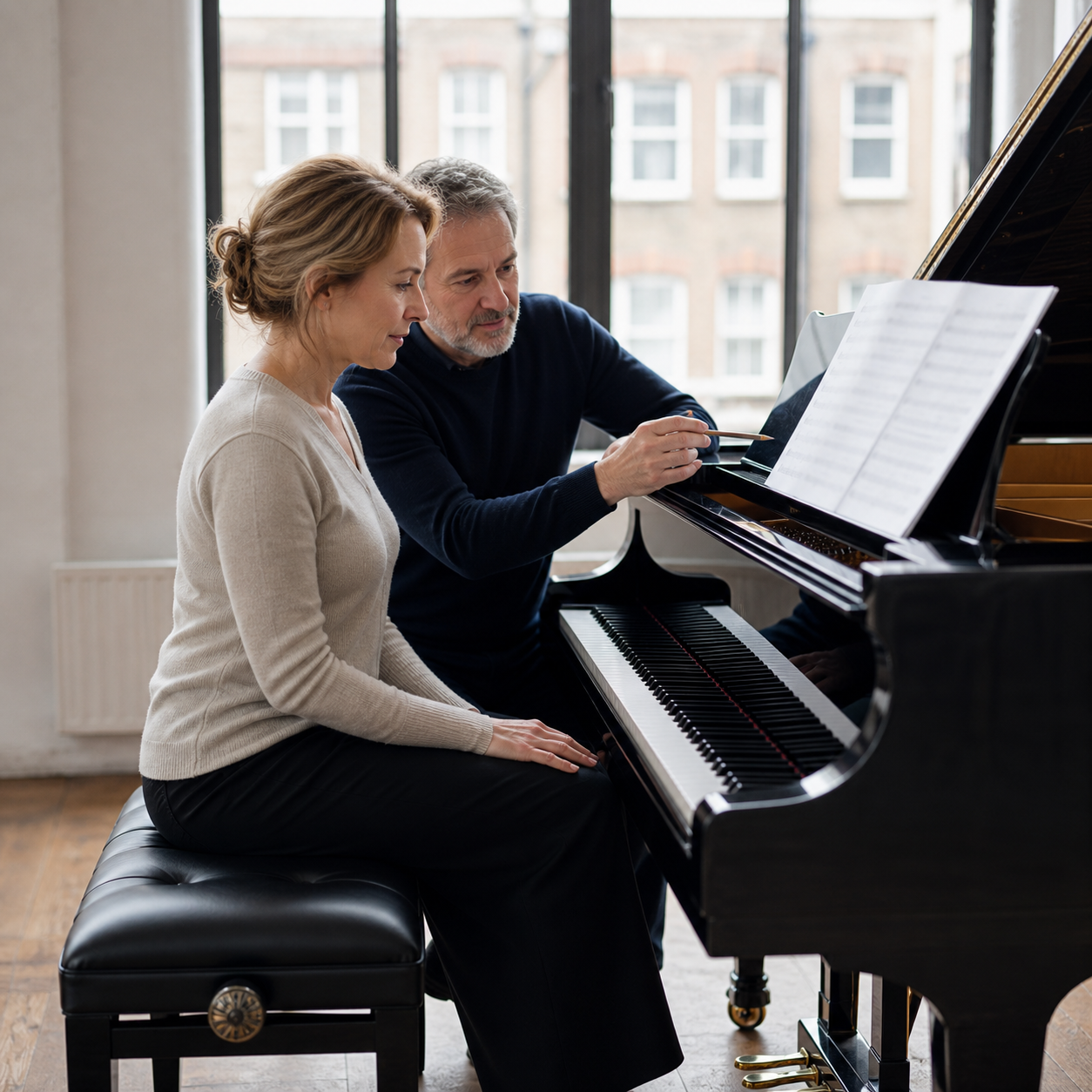
At WKMT London, adults learn one-to-one in Kensington, Camberwell, Bermondsey, Highbury and online. Individual adult piano lessons in London can keep the challenge appropriately difficult: new enough to demand attention, structured enough to support success and musically rewarding enough to sustain over time.
What cognitive reserve means
Researcher Yaakov Stern’s influential account distinguishes reserve from the amount of brain tissue alone. The concept concerns how flexibly or efficiently cognitive processes cope with brain ageing or pathology. Because reserve is inferred rather than observed directly, studies often use proxies such as education, occupation and mentally stimulating activity.
This distinction prevents two common misunderstandings. First, strong performance does not prove that the brain is unchanged. Second, a stimulating activity cannot guarantee immunity from decline. Cognitive reserve may help explain resilience, but health, vascular risk, sleep, hearing, social connection and many other factors also shape cognitive ageing.
Attention
Keep a goal active while selecting relevant notes and ignoring distraction.
Memory
Hold a phrase, retrieve a pattern and compare the present attempt with the plan.
Coordination
Join visual, auditory and motor information in precise time.
Adaptation
Diagnose an error, choose a new method and test whether it worked.
What piano studies have found
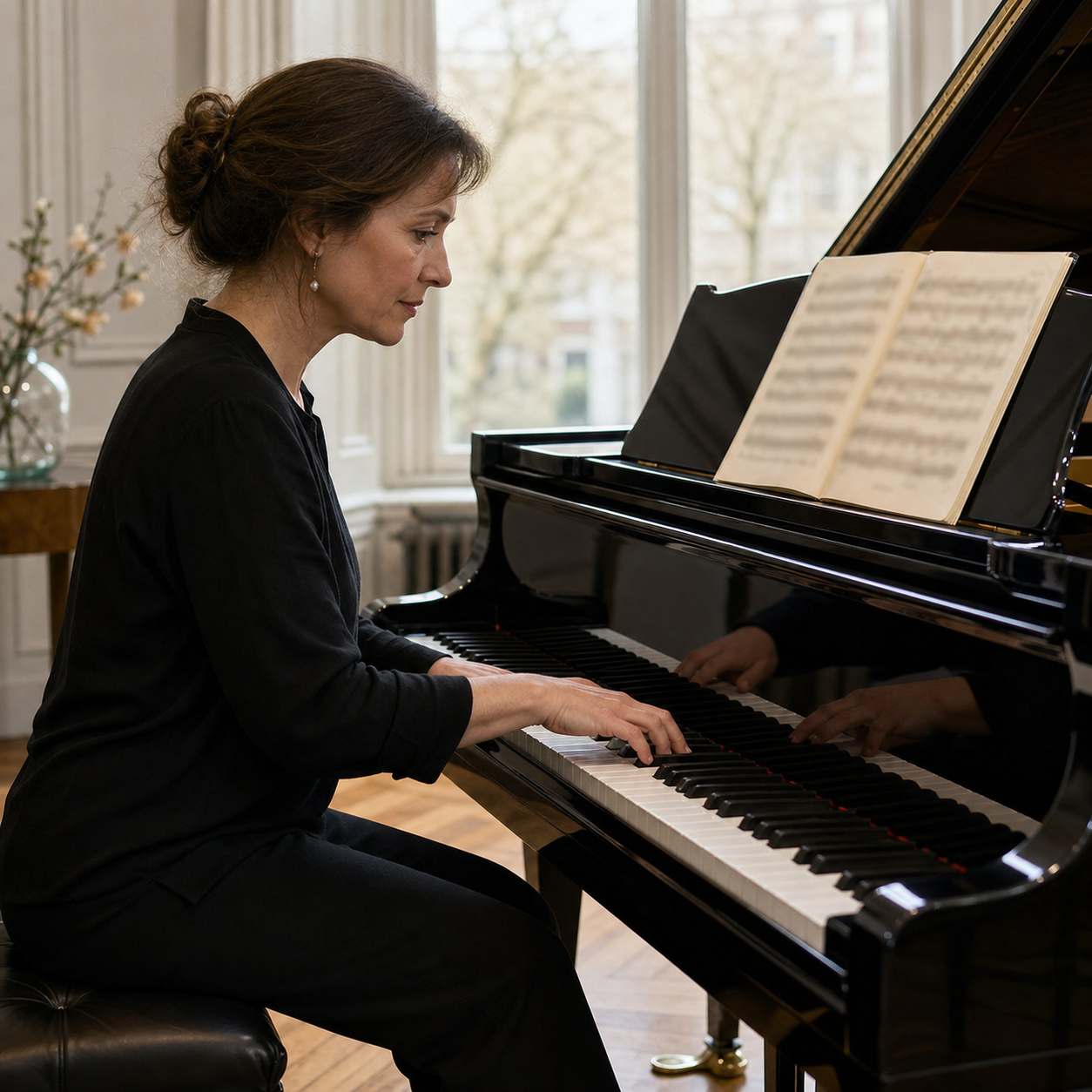
A six-month randomised music intervention in 132 healthy older adults compared piano practice with active music-listening education. Both groups showed changes in grey matter measures and improved auditory working memory, with no simple across-the-board advantage for piano. The finding supports music learning as a demanding form of engagement while resisting an exaggerated “piano fixes the brain” conclusion.
Another analysis from the same wider research programme followed older adults through twelve months of music training. Participants acquired musical skills, and the design examined cognition, wellbeing, motor abilities and brain measures. Earlier smaller work comparing four months of piano classes with other leisure activities reported improvements in some attention, executive-function, mood and quality-of-life measures, but its sample was modest.
White-matter research in 121 musically naïve older adults found that fornix fibre density declined in the active listening group but remained stable in the piano group over six months; changes were related to episodic-memory performance and practice amount. This is intriguing evidence, not a personal prognosis. A recent systematic review found only six qualifying neurobiological studies, overlapping cohorts and substantial risk of bias in several studies.
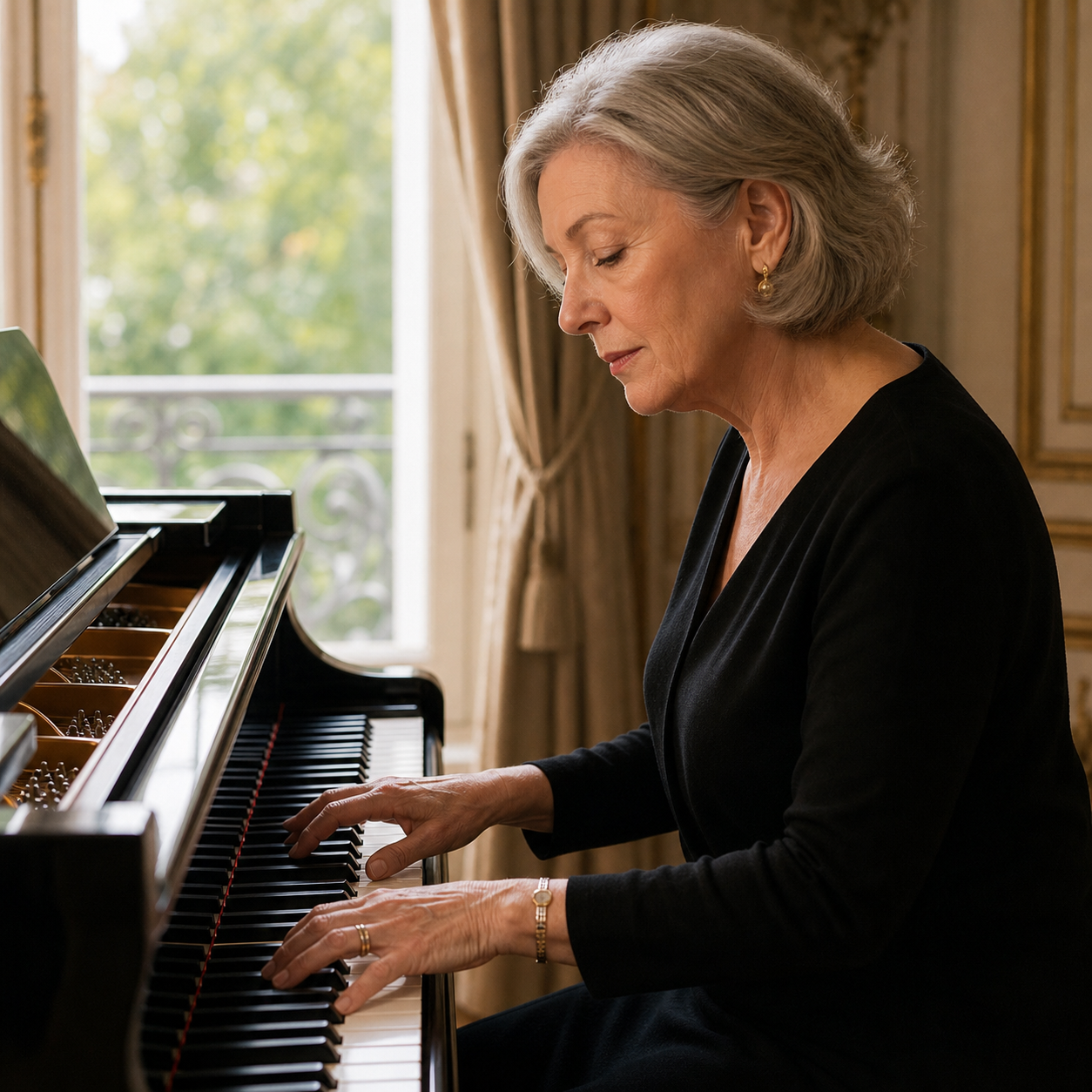
The strongest reason to learn piano is still musical: cognitive richness is a property of the journey, not a medical guarantee at its end.
How to make piano practice cognitively rich
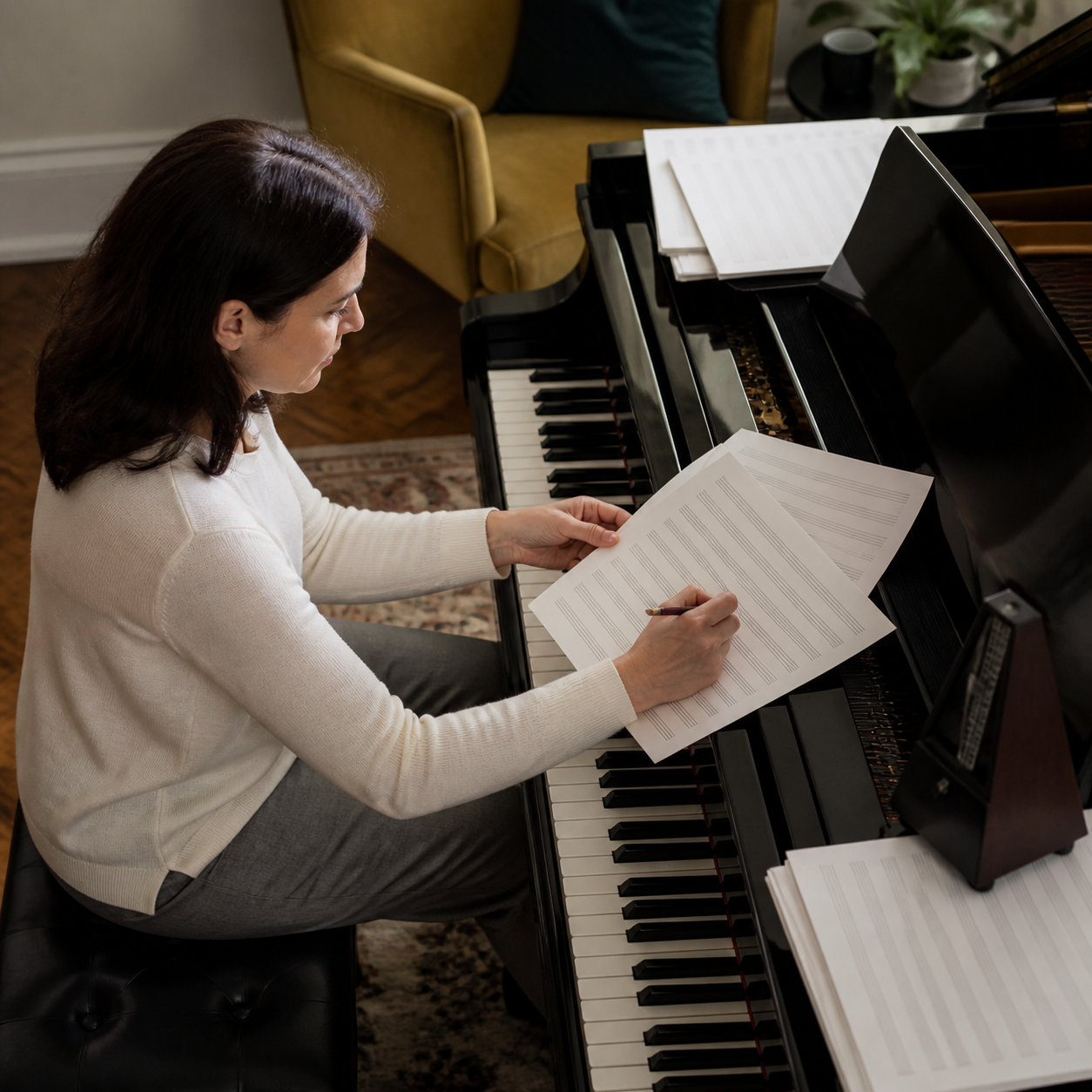
Repetition alone is not enough. If the hands run automatically while attention wanders, the task has become physically familiar but cognitively thin. Keep practice active by predicting before playing, varying retrieval, separating voices, transposing a pattern, recording a passage and explaining what changed.
A useful weekly design alternates four modes. Learn something new; retrieve something without the score; refine one technical or expressive problem; and play familiar music continuously for pleasure. The combination protects challenge without making every session feel like a test.
Cognitive reserve in a wider healthy life
Piano belongs inside, not instead of, a broader approach to health. Physical activity, cardiovascular care, sleep, hearing support, social connection and appropriate medical advice remain essential. Anyone worried about memory change should speak to a qualified health professional; a lesson is not an assessment or treatment.
The social and emotional dimensions also matter. Preparing music for a teacher, playing with another person or attending a student concert gives practice a purpose beyond abstract brain exercise. That meaning may help adults return week after week, which is more valuable than a dramatic claim followed by a short-lived routine.
Related WKMT reading includes how piano practice can support adult memory habits and what research says about piano and brain health.
WKMT London
Build a serious, enjoyable and sustainable musical practice with individual adult piano tuition at WKMT London.
Sources
- Neuropsychologia: cognitive reserve
- NeuroImage Reports: music intervention, grey matter and working memory
- Scientific Reports: twelve months of music training in older adults
- Frontiers in Aging Neuroscience: piano training and fornix white matter
- Frontiers in Psychology: piano practice, cognition, mood and quality of life
- Systematic review: neurobiological effects of music-making interventions
Sources last checked 30 August 2026.