
 TRIAL LESSON
Piano Lessons
Hand-Eye Coordination: What Piano Gives Young Learners
Aug
WKMT London parent guide
Hand-Eye Coordination: What Piano Gives Young Learners
At the piano, a child reads a visual pattern, predicts a sound, finds a key and adjusts the movement after hearing the result. That loop makes hand eye coordination visible, teachable and musical, without turning a lesson into a clinical exercise.
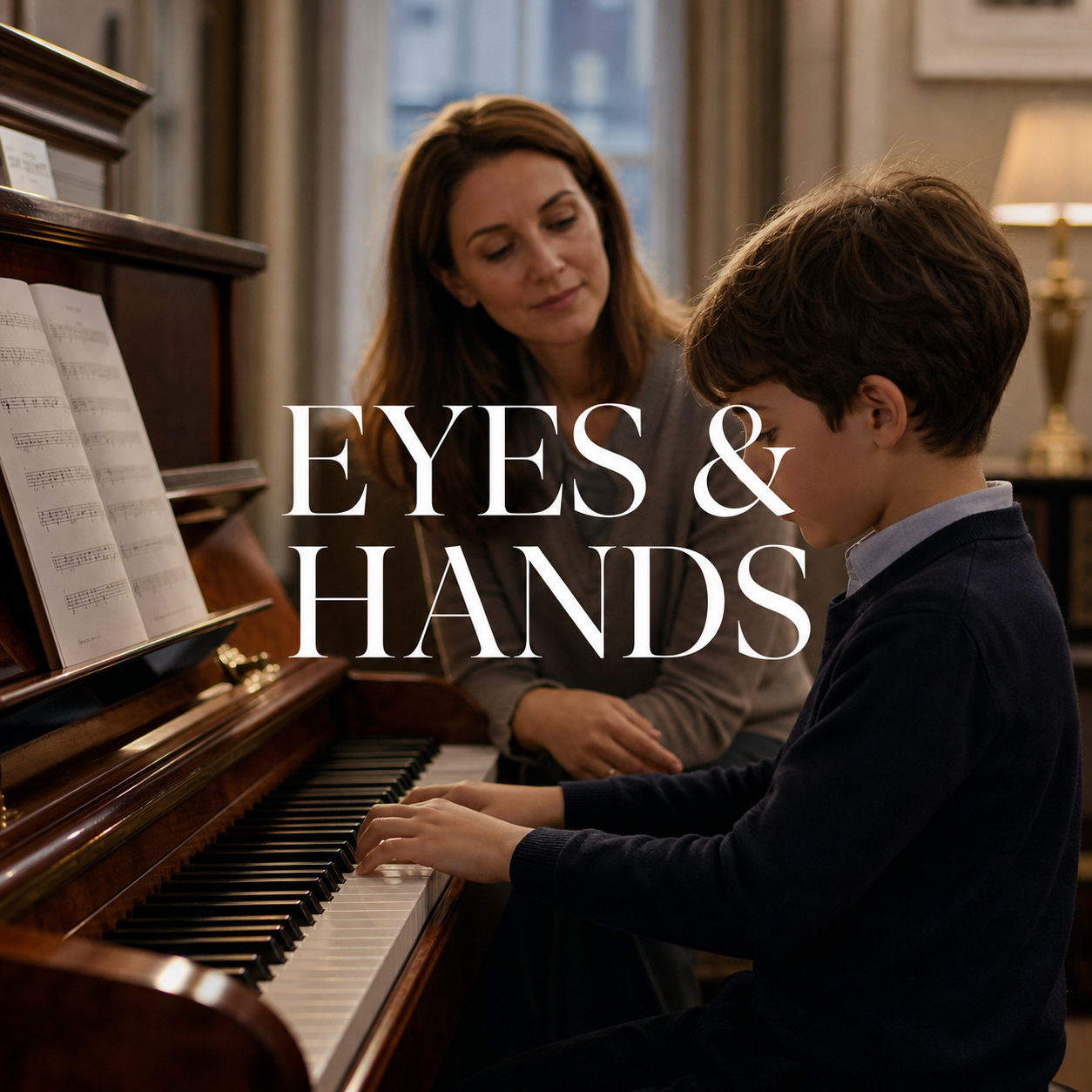
Hand eye coordination is not one single ability. At the keyboard it includes locating notes without constant visual checking, matching what the eyes read to where the hands move, preparing one hand while the other finishes, and correcting an action when the sound differs from the intention. Each part develops at its own pace.
WKMT London teaches children individually in Kensington, Camberwell, Bermondsey, Highbury and online. In structured piano lessons for children, the teacher can change tempo, visual complexity, hand position and task length so coordination grows without overload.
How hand eye coordination works at the piano
A beginner first looks from page to keyboard and back again. With experience, the keyboard map becomes more secure and the eyes can stay ahead in the score. The hands then prepare a movement before the note is due. Hearing completes the loop: the child decides whether timing, pitch and tone matched the plan.
See
Identify direction, rhythm, finger pattern or a landmark in the score.
Prepare
Move the hand towards the correct area before the musical moment arrives.
Play
Coordinate finger, wrist and arm with the pulse and the other hand.
Adjust
Use the sound and physical feeling to refine the next attempt.
Research helps define the limits of the claim. A study of young people with motor impairments found improved uniformity of keystrokes after extended piano training, but it was an open study and the authors explicitly called for further research. A newer study involving children with disabilities reported gains in a standard hand-motor task and non-dominant-hand piano measures, while also noting its small, non-randomised design. These findings show plausible, task-linked learning; they do not prove that every child will gain the same broad benefit.
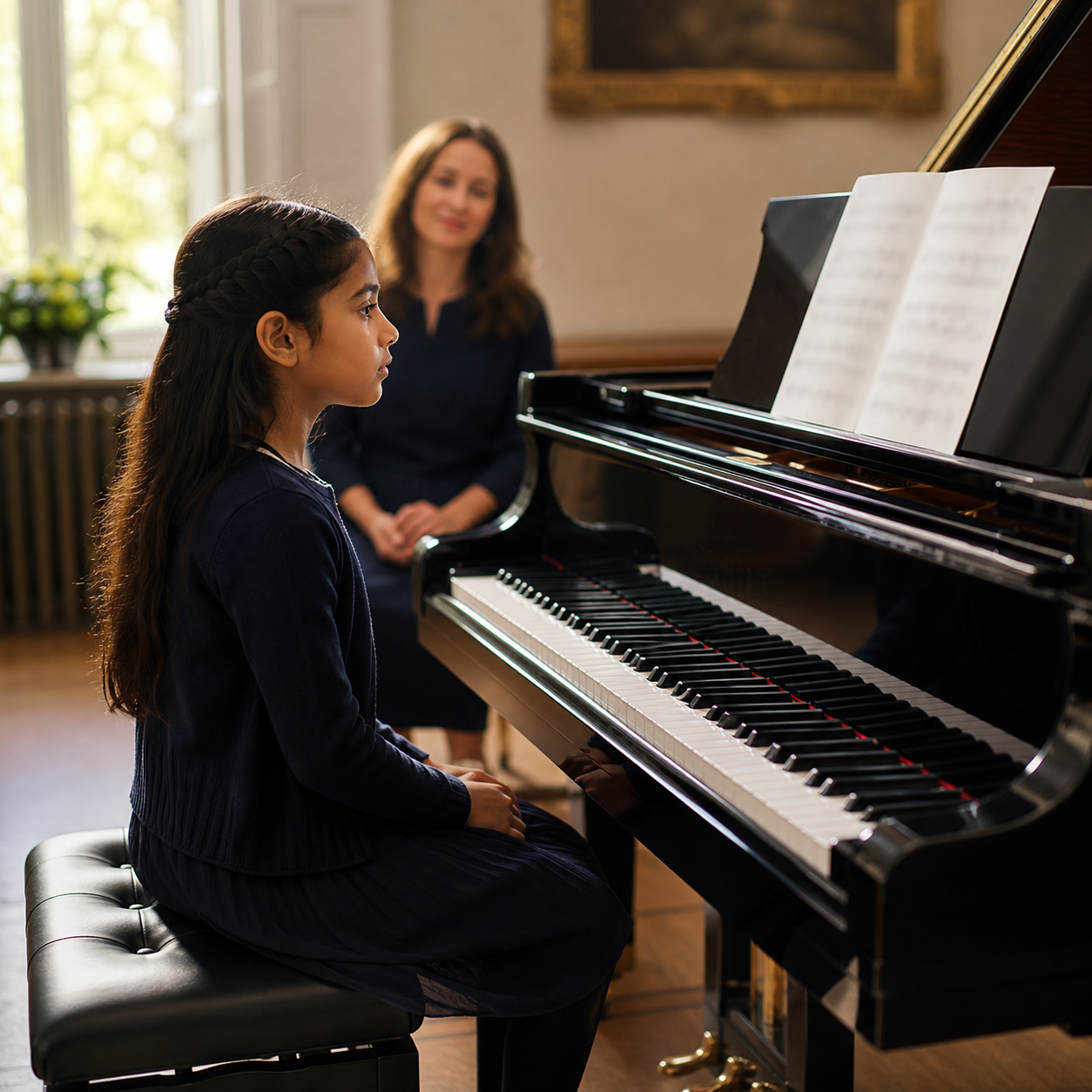
Four piano tasks that train coordination
1. Landmark finding
Ask the child to find groups of two and three black keys, then nearby named notes, without rushing. This builds a stable keyboard map. The goal is fewer anxious searches, not a speed test.
2. Copy and answer
The teacher plays a short pattern and the child answers in another register. Eyes follow the demonstration, ears retain the shape and hands reproduce it. Two or three notes are enough at first.
3. Look, cover, play
Study one small group in the score, cover it, then play from the visual memory. This reduces repeated page-to-keyboard scanning and reveals whether the child understood the pattern rather than memorised isolated finger numbers.
4. One hand steady, one hand changing
Keep a simple pulse in one hand while the other plays a two-note rhythm. Start separately, combine briefly and stop before tension appears. Hand eye coordination improves when the task remains clear enough for the child to notice errors.
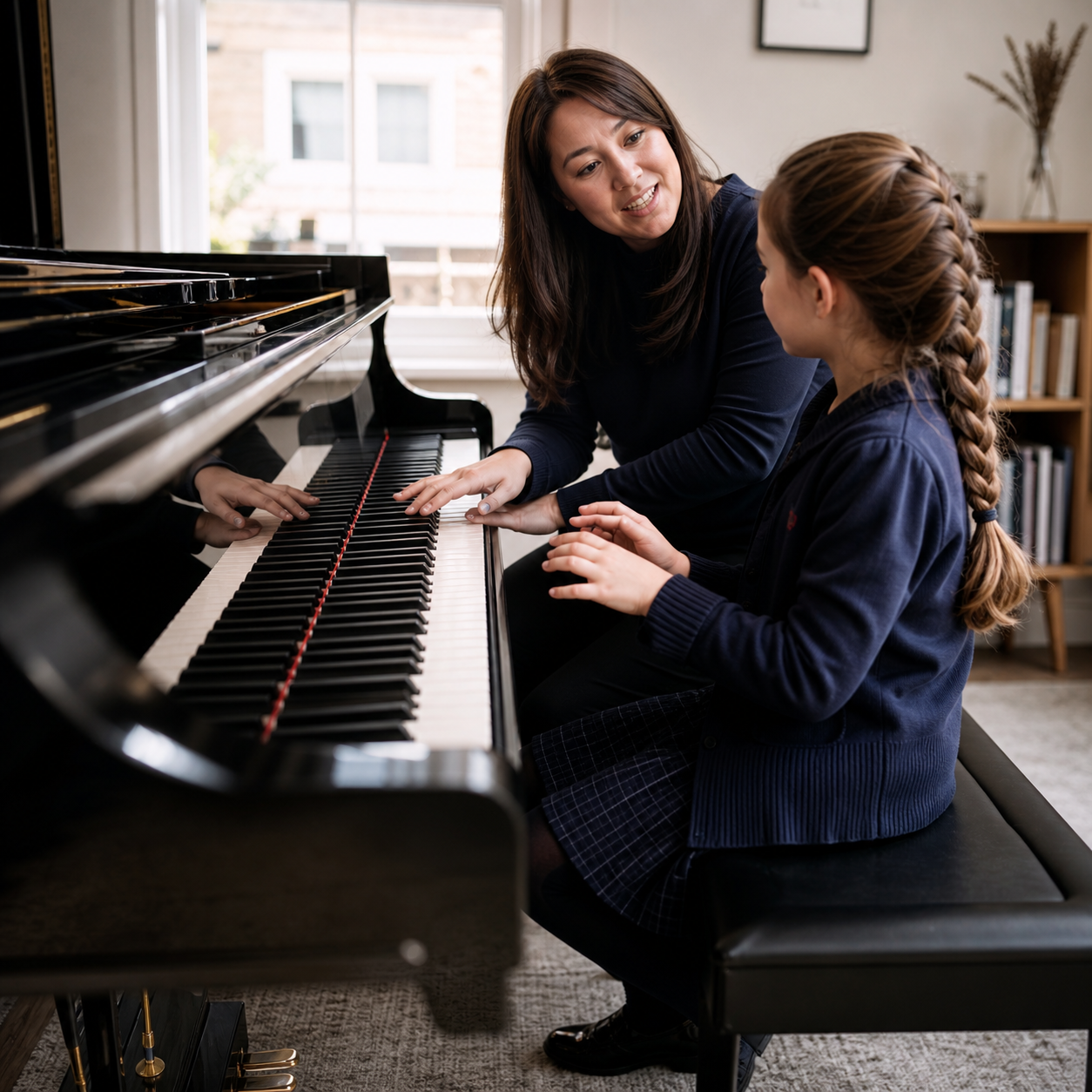
Coordination grows when the child can predict the next movement, hear its result and make one useful change.
What parents should notice
Look for practical changes: fewer lost places, smoother transfers between notes, a more stable pulse and the ability to continue after a small mistake. Avoid judging development by repertoire difficulty alone. A child may play an easy piece with increasingly independent eyes and hands, which is genuine progress.
Short practice is usually more revealing than one long weekly struggle. Five focused minutes can include a keyboard map, one rhythmic pattern and one line of music. If the child guesses repeatedly, simplify the visual field or slow the pulse. If discomfort, persistent weakness or unusual movement concerns arise, consult an appropriate health professional rather than asking piano practice to solve them.
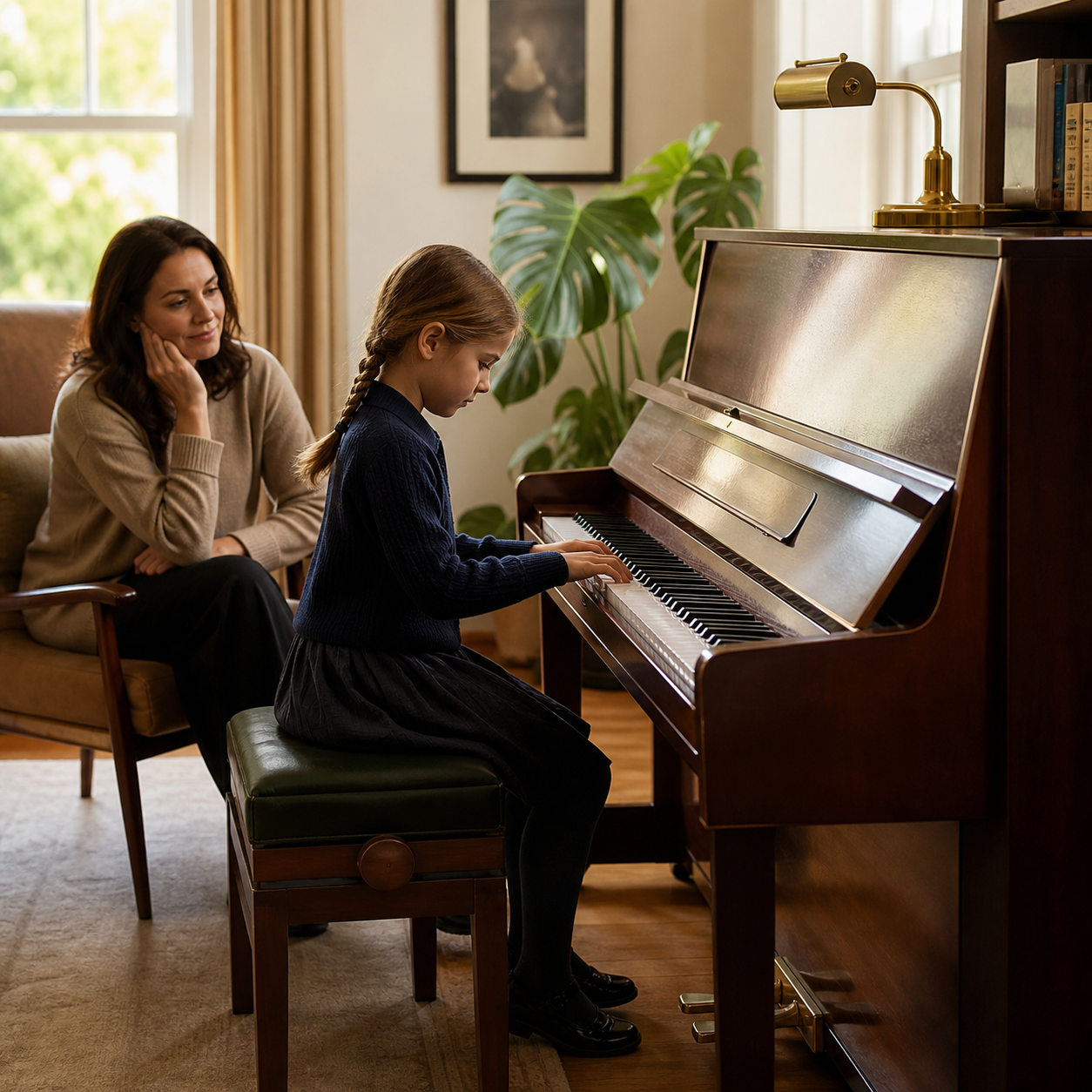
Hand eye coordination without pressure
Children differ in vision, motor planning, attention, confidence and prior musical experience. A good lesson adapts the route while keeping the musical aim intact. Colour cues may help briefly; larger notation may reduce visual crowding; playing by ear may establish a movement before notation is added. The destination is not dependence on prompts but increasingly independent musical action.
Parents may also find WKMT’s guides to fine motor skills at the piano and critical thinking in children’s piano practice useful. Together they show why a musical task is richer than a generic finger drill.
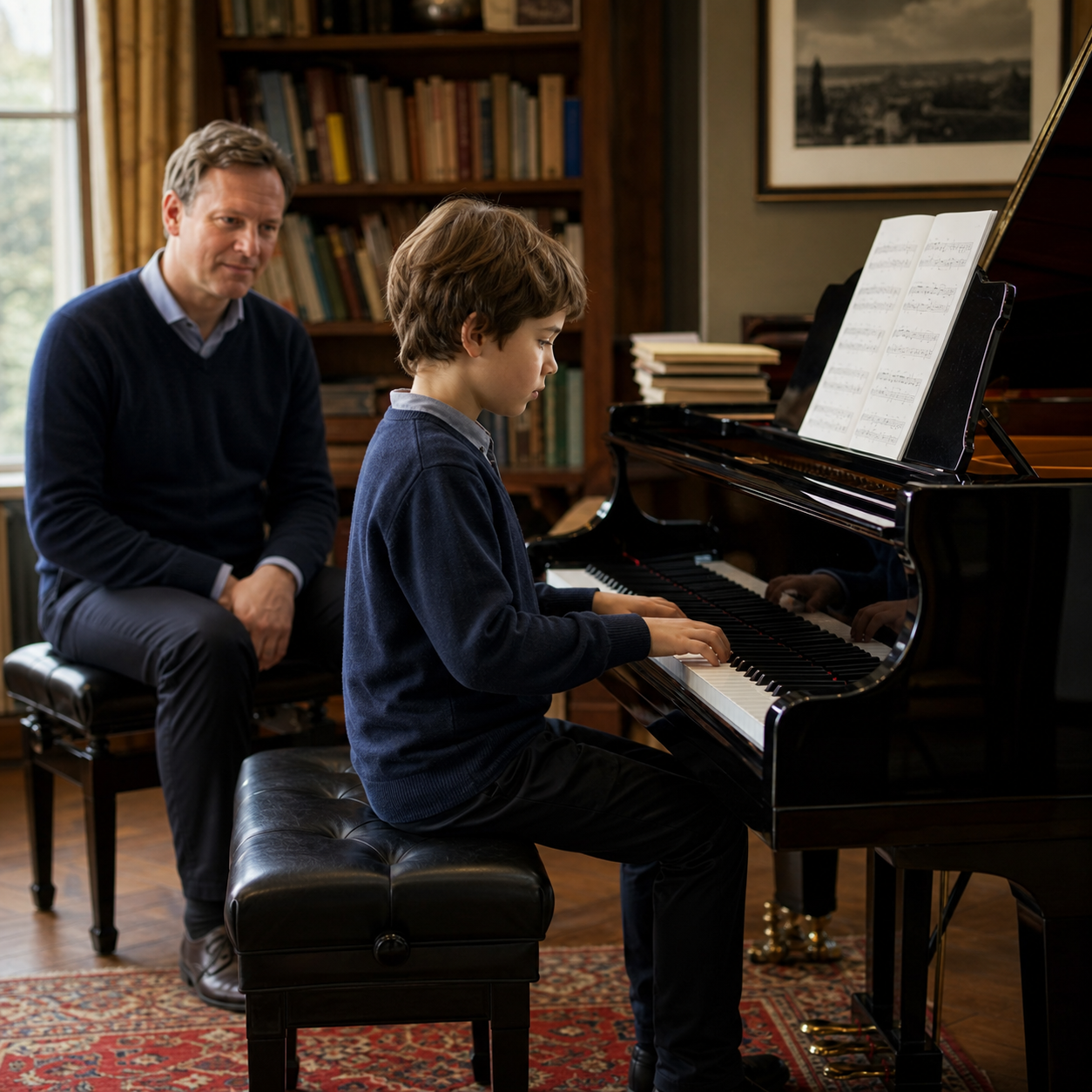
WKMT London
Discover thoughtful one-to-one piano teaching for young learners at WKMT London.
Sources
- Frontiers in Psychology: piano training and hand motor impairment
- Children: motor-sensory learning and piano practice
- Memory & Cognition: music training and children’s cognitive skills
- Frontiers in Psychology: piano learning, motor ability and cognition
- Frontiers in Psychology: metacognitive skills in instrumental practice
Sources last checked 30 August 2026.