
 TRIAL LESSON
Pianists, Piano Lessons
Mikhail Pletnev in London: Sound, Structure and the Art of Serious Piano Listening
Jul
Mikhail Pletnev in London
WKMT London · Pianists and interpretation
Mikhail Pletnev in London: Sound, Structure and the Art of Serious Piano Listening
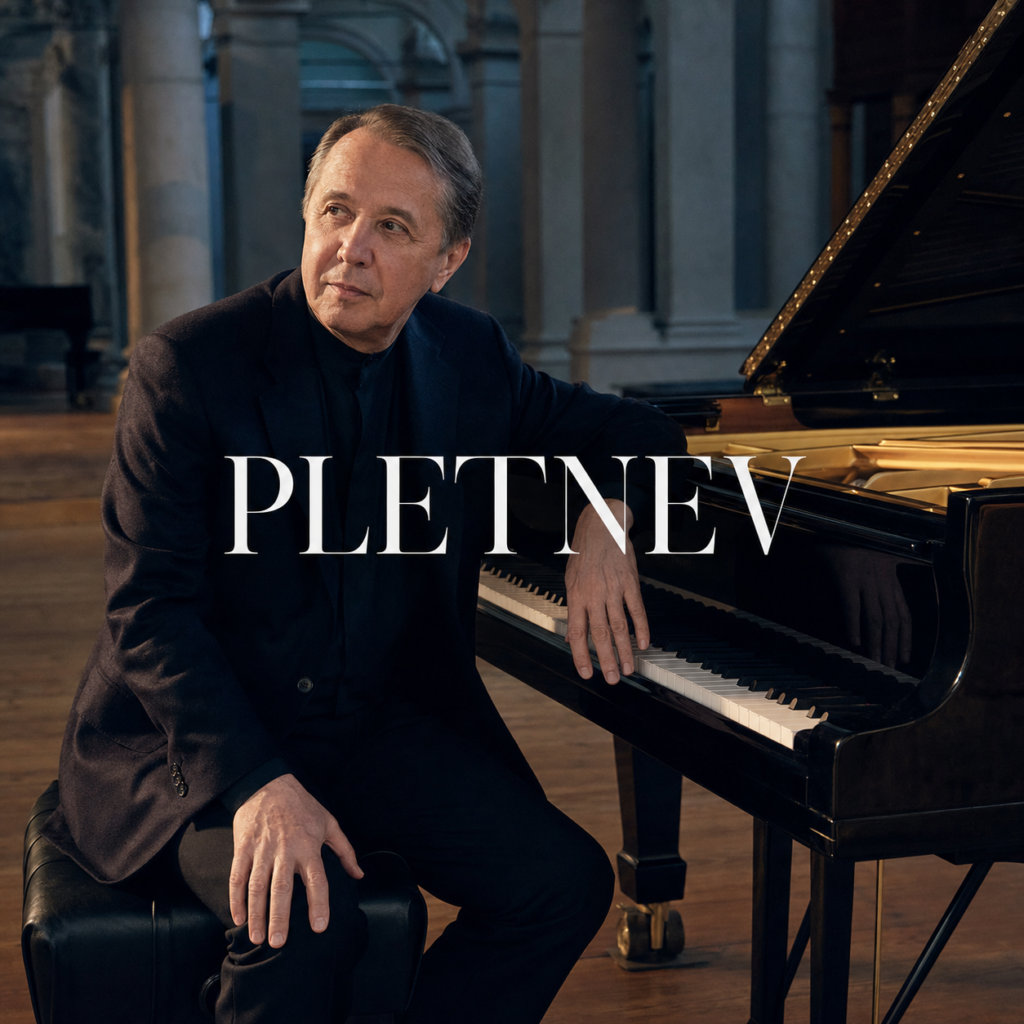
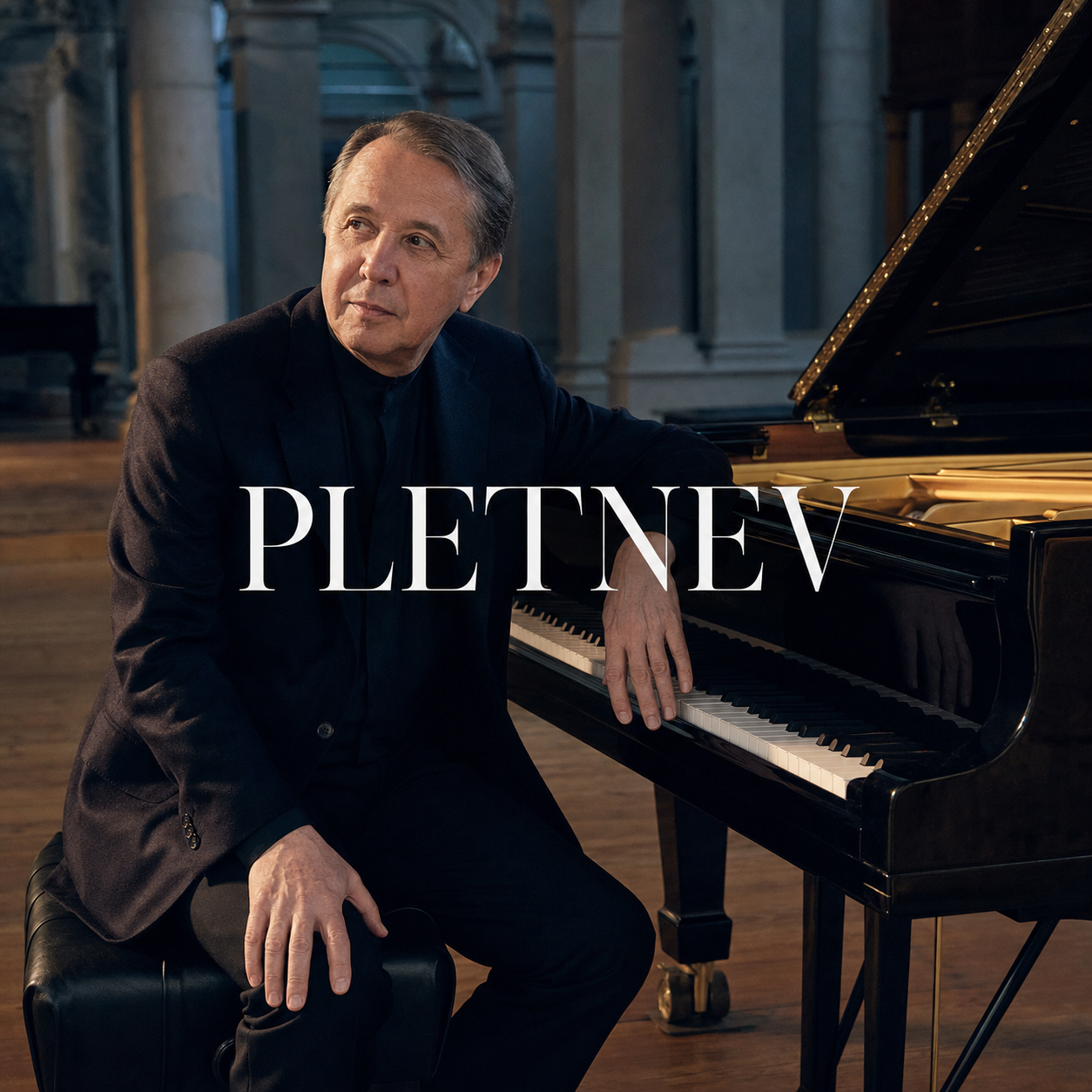
Mikhail Pletnev can make a familiar phrase sound newly examined. His playing joins orchestral breadth to minute control of colour, while his work as a conductor reveals the architectural thinking beneath every local surprise. For London listeners and serious pianists, that combination makes him a compelling guide to hearing beyond the obvious.
Why Mikhail Pletnev still matters in London
Pletnev belongs to the rare class of musicians whose identity cannot be reduced to one instrument. He won the Gold Medal and First Prize at the 1978 International Tchaikovsky Competition at twenty-one, then developed parallel careers as pianist, conductor, composer and arranger. In 1990 he founded the Russian National Orchestra. Deutsche Grammophon traces its recording relationship with him to 1994, when albums with that ensemble began a substantial catalogue.
Those facts explain his authority, but not the fascination. Pletnev often refuses the expected emotional temperature of a passage. He may cool a climactic line, sharpen a comic accent or allow an accompaniment to disturb the melody it supposedly supports. The result is interpretively risky because it asks the listener to reconsider hierarchy: which voice leads, where the pulse really lives, and whether beauty can include strangeness.
London is an especially revealing place in which to hear such an artist. Its audiences carry strong memories of the Russian piano school, yet its concert life also encourages comparison across generations, instruments and halls. A performance heard in the Royal Albert Hall occupies a very different acoustic world from a recital in a smaller room. Mikhail Pletnev’s sharply differentiated textures can therefore teach the listener to separate an interpretive decision from the resonance surrounding it. The same clipped articulation may sound severe in one acoustic and brilliantly transparent in another.
WKMT perspective
Pletnev is most rewarding when heard comparatively. Listen first for what he changes in your perception of a score, not for whether his decisions match a familiar recording.
This is a natural subject for classical piano study in London at WKMT. Interpretation becomes serious when technique, analysis and the ear begin to act as one faculty.
From competition winner to orchestral architect
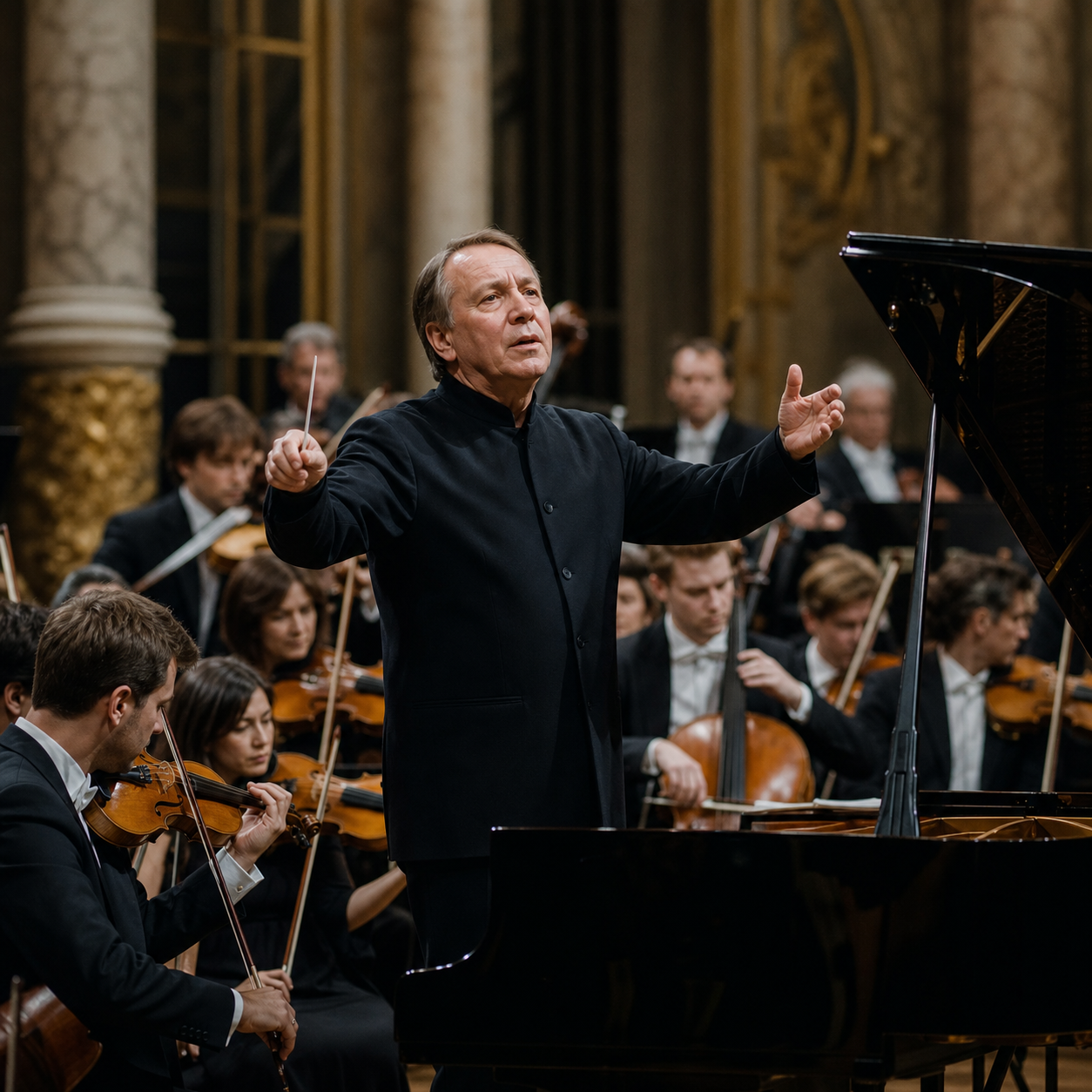
The competition victory of 1978 opened an international career, yet Pletnev did not remain within the conventional virtuoso path. The Russian National Orchestra became the larger instrument through which he could test ideas about balance, articulation and long-range tension. Conducting also sharpened a pianist’s understanding of registral weight: a bass line may behave like low strings, a repeated chord like brass, and a rapid treble figure like woodwind rather than generic keyboard brilliance.
That transfer between podium and keyboard deserves careful attention. A conductor cannot rely on physical contact with the sound; intention must be communicated through gesture, rehearsal language and the ordering of priorities. At the piano, the same priorities are compressed into touch and timing. When Mikhail Pletnev makes a secondary line unexpectedly vivid, it can feel like a conductor asking a normally concealed section of the orchestra to step forward. The gesture is local, but the purpose is dramatic: it changes how the surrounding material is understood.
London audiences encountered that double perspective at the BBC Proms. The archive records Pletnev as pianist in Rachmaninov’s Rhapsody on a Theme of Paganini at the Royal Albert Hall in 1989. In 1996 he conducted the Russian National Orchestra there in programmes including Haydn, Schnittke and Prokofiev. The appearances matter because they show two public identities meeting in one city: soloist and orchestral thinker.
The most revealing Pletnev performances make the piano sound less like a self-contained machine and more like an orchestra whose players can disagree.
That orchestral ear helps explain his transcriptions of Tchaikovsky ballet music. They are not merely demonstrations of keyboard resource. Their textures preserve contrasting planes of sound and the sensation of stage movement. Listeners interested in the wider tradition can also explore WKMT’s guide to Russian piano technique.
The Pletnev sound: tone, touch and the art of colour
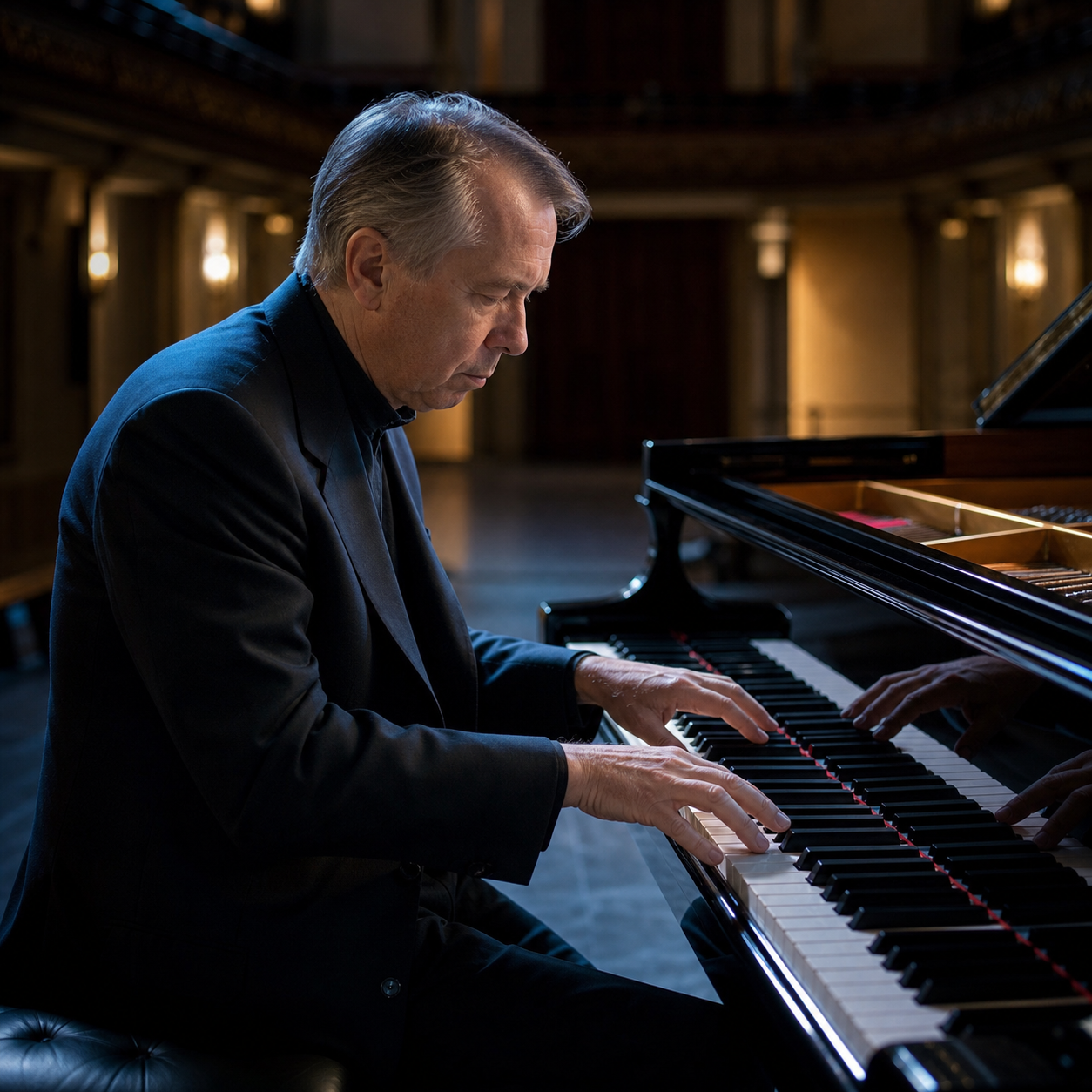
Descriptions of a pianist’s tone can become vague unless the ear is given a task. In Pletnev, begin with separation. A melody may remain lucid while the accompaniment is deliberately dry; an inner voice can take on a different weight from the outer line; a bass note may be placed early enough to ground the harmony without turning into an accent. Colour emerges from relationships between layers.
His new Chopin and Scriabin preludes recording offers a current point of entry. Deutsche Grammophon states that it was recorded in a single four-and-a-half-hour studio session, entirely in analogue form, on Pletnev’s preferred Shigeru Kawai grand. The release pairs Chopin’s Op. 28 with Scriabin’s Op. 11, two cycles whose short forms demand immediate decisions about atmosphere and proportion.
Key listening point
Choose three consecutive preludes. Notice how the final resonance of one piece changes the first sound of the next. Pletnev’s control of silence often makes the cycle’s sequence more important than any isolated miniature.
Then listen for the attack itself. Some notes begin with almost no percussive edge, while others arrive with a hard, speaking consonant. This is not random eccentricity. The contrast can expose harmonic stress, rhythmic irony or an uncomfortable turn in the phrase. Serious listening means asking what changed and what the change made newly audible.
Pedalling is part of the same argument. Instead of treating resonance as a continuous wash, hear how a sonority is cleared, retained or partially blurred across a harmonic change. Mikhail Pletnev may preserve a trace of the previous harmony so that the new one arrives already coloured by memory. Elsewhere he removes resonance with striking abruptness. For pianists, this is a reminder that pedal is neither cosmetic nor merely atmospheric. It controls the listener’s awareness of harmonic time.
Structure and form: how Pletnev shapes large-scale works
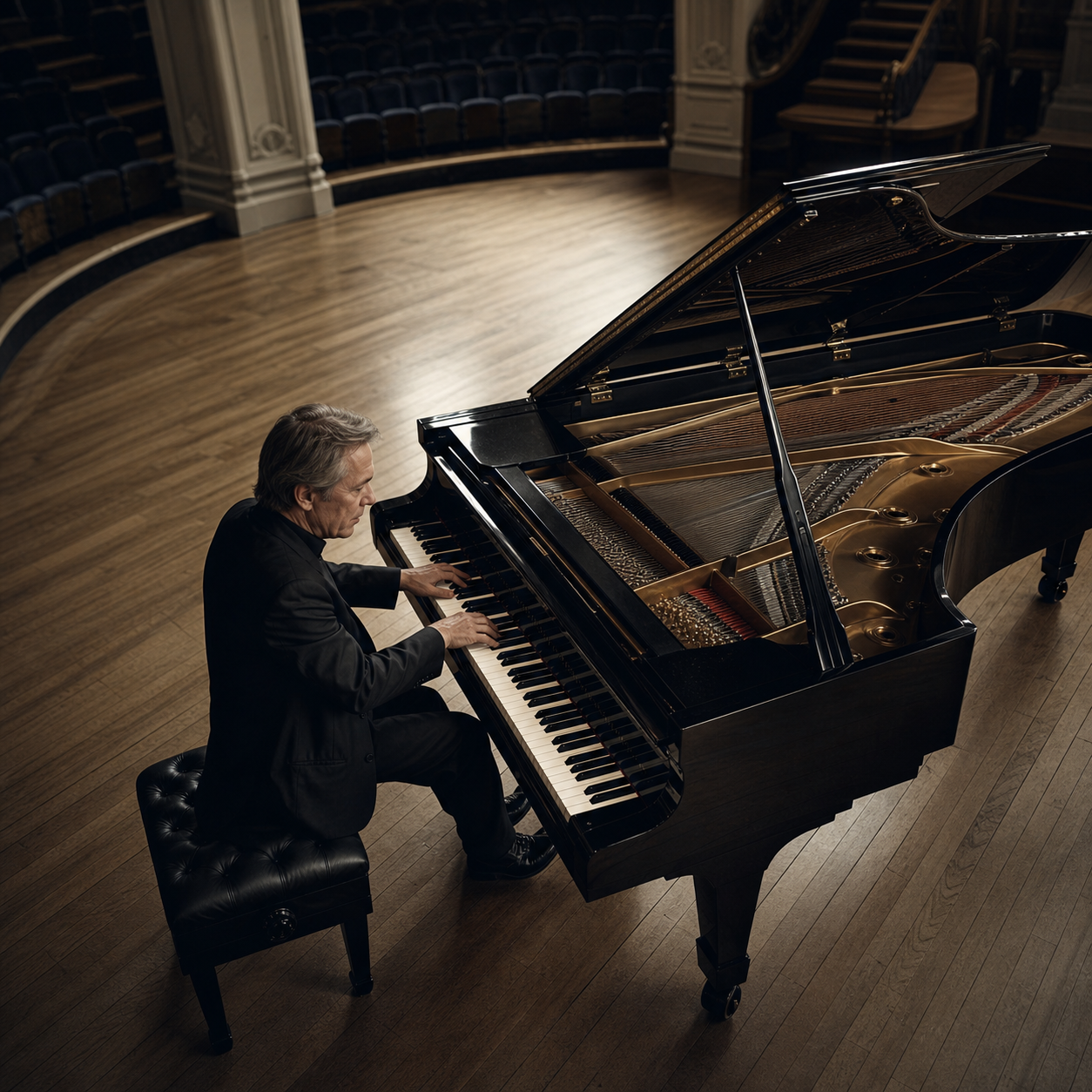
At first hearing, Pletnev’s flexible timing can sound local and spontaneous. Yet the larger design is usually exacting. He often treats tempo as a field of tension rather than a fixed speed: a phrase presses ahead because its harmony has become urgent, then releases when the formal destination has been reached. The listener should track arrival points rather than count every fluctuation as a separate effect.
His Beethoven, Tchaikovsky, Rachmaninov and Prokofiev interpretations make especially useful comparisons because their structures depend on different kinds of momentum. Beethoven needs argument; Tchaikovsky needs theatrical continuity; Rachmaninov needs long-breathed harmonic direction; Prokofiev needs rhythmic character without bluntness. Pletnev’s decisions can be controversial, but they nearly always identify the work’s governing problem.
A useful experiment is to compare the opening and the return of the same theme. Do the two statements occupy identical time? Is the voicing unchanged? Has the accompaniment acquired a sharper profile? In Mikhail Pletnev’s playing, recurrence rarely means simple repetition. The passage returns after the listener has travelled through the work, and its character may acknowledge that history. This is where apparent freedom reveals structural discipline: altered detail makes the formal return legible as an event rather than a copied paragraph.
| Listen for | Immediate question | Larger purpose |
|---|---|---|
| Bass placement | Does it lead, resist or stabilise? | Defines harmonic direction |
| Inner voicing | Which hidden line has become active? | Reframes the musical argument |
| Tempo release | What cadence or return permits it? | Clarifies formal proportion |
| Change of colour | What changed in harmony or character? | Separates dramatic planes |
For another view of how today’s artists balance personality and score, WKMT’s survey of modern classical pianists provides a useful wider frame.
Signature repertoire: four doors into Pletnev’s musicianship
Tchaikovsky
Hear theatrical pacing, orchestral colour and the arranger’s knowledge of instrumental character.
Rachmaninov
Follow bass direction and the long harmonic curve beneath changing surface speeds.
Prokofiev
Notice dry wit, sharply drawn characters and clarity inside dense virtuoso writing.
Chopin and Scriabin
Compare miniature atmospheres, attack, resonance and the expressive weight of silence.
Do not try to absorb the whole discography at once. One concerto, one substantial solo work, one transcription and one group of preludes will reveal more than a passive playlist. London’s concert culture is well suited to this kind of preparation: consult programmes first, then use recordings to learn the sound-world rather than predict the live interpretation. WKMT’s guide to classical music venues in London can help place that listening within the city.
A listening guide for the serious amateur pianist
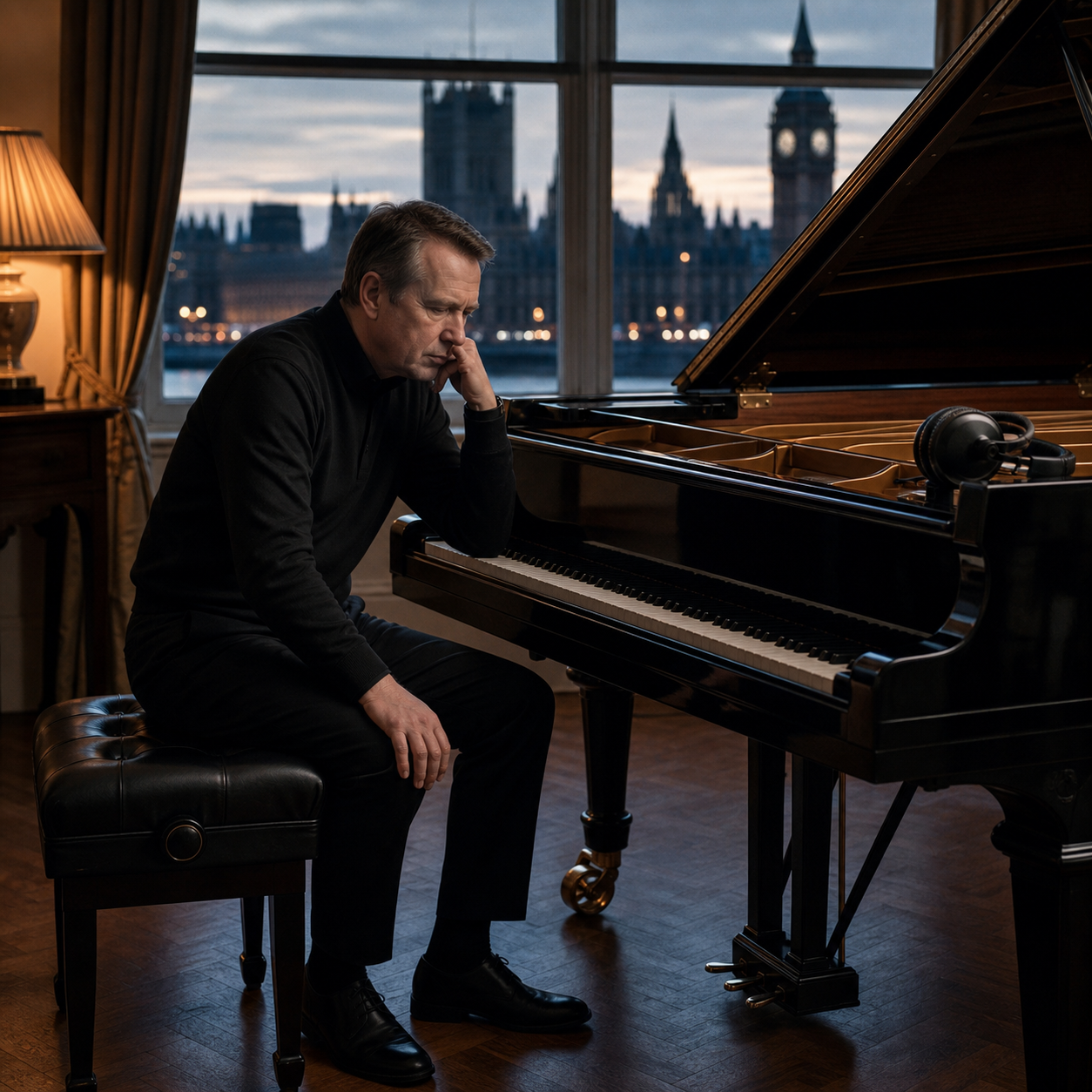
The adult learner has one advantage over the casual listener: the possibility of testing what is heard at the keyboard. That does not mean imitating Pletnev’s mannerisms. It means translating perception into a question that the hands and ear can investigate.
Work with a short passage and change only one variable at a time. First rebalance melody and bass; then expose an inner voice; finally alter the speed of harmonic arrival without changing the nominal tempo. Each version should have a verbal intention that can be heard, not merely felt by the player. This disciplined limitation protects the exercise from becoming impressionistic. It also reveals how much expressive variety can emerge before any large gesture, extra rubato or increase in volume is needed.
- Map the form. Mark the principal arrivals, returns and changes of character without judging them.
- Follow one layer. Listen only to bass, inner voice, melody or rhythmic accompaniment.
- Identify the surprise. Find one timing, accent or colour that differs from expectation and ask what it reveals.
- Test the principle. At the piano, explore the underlying balance or voicing problem in a short passage of your own repertoire.
For adult learners
Record your first and fourth passes. The goal is not to sound like Pletnev, but to hear whether a clearer structural intention has changed your touch, pacing or balance.
Adults returning to the piano can develop this work through adult piano lessons at WKMT, where listening, analysis and physical coordination can be joined without sacrificing individuality.
Before attending a recital, read the programme once and choose two structural questions for each substantial work. Afterwards, write down the moments that resisted your expectations while the memory remains fresh. The aim is not to produce a review. It is to preserve evidence of attention. Over time, these notes form a personal listening history and make it easier to distinguish a strong interpretive idea from novelty that fades after a single hearing.
A musician who keeps the score unsettled
Pletnev’s art resists a tidy summary. Its value lies precisely in that resistance. He reminds us that fidelity to a score is not the same as predictability, and that an interpretation can be intellectually rigorous while remaining disquieting, humorous or sensuous. The attentive listener leaves with more than admiration: one leaves with sharper questions.
Sources and further listening on Mikhail Pletnev in London
- Mikhail Pletnev biography, Deutsche Grammophon
- Mikhail Pletnev artist profile, Russian National Orchestra
- Mikhail Pletnev biography, Rachmaninoff International Orchestra
- BBC Proms 1996 programme archive, BBC Programme Index
- BBC Proms 1989 archive, BBC
- Chopin & Scriabin: Préludes, Deutsche Grammophon