
 TRIAL LESSON
Pianists, Piano Lessons
Lars Vogt in London: Chamber Music, Listening and the Art of Serious Piano Study
Jul
Lars Vogt in London
WKMT London · Pianists and interpretation
Lars Vogt in London: Chamber Music, Listening and the Art of Serious Piano Study
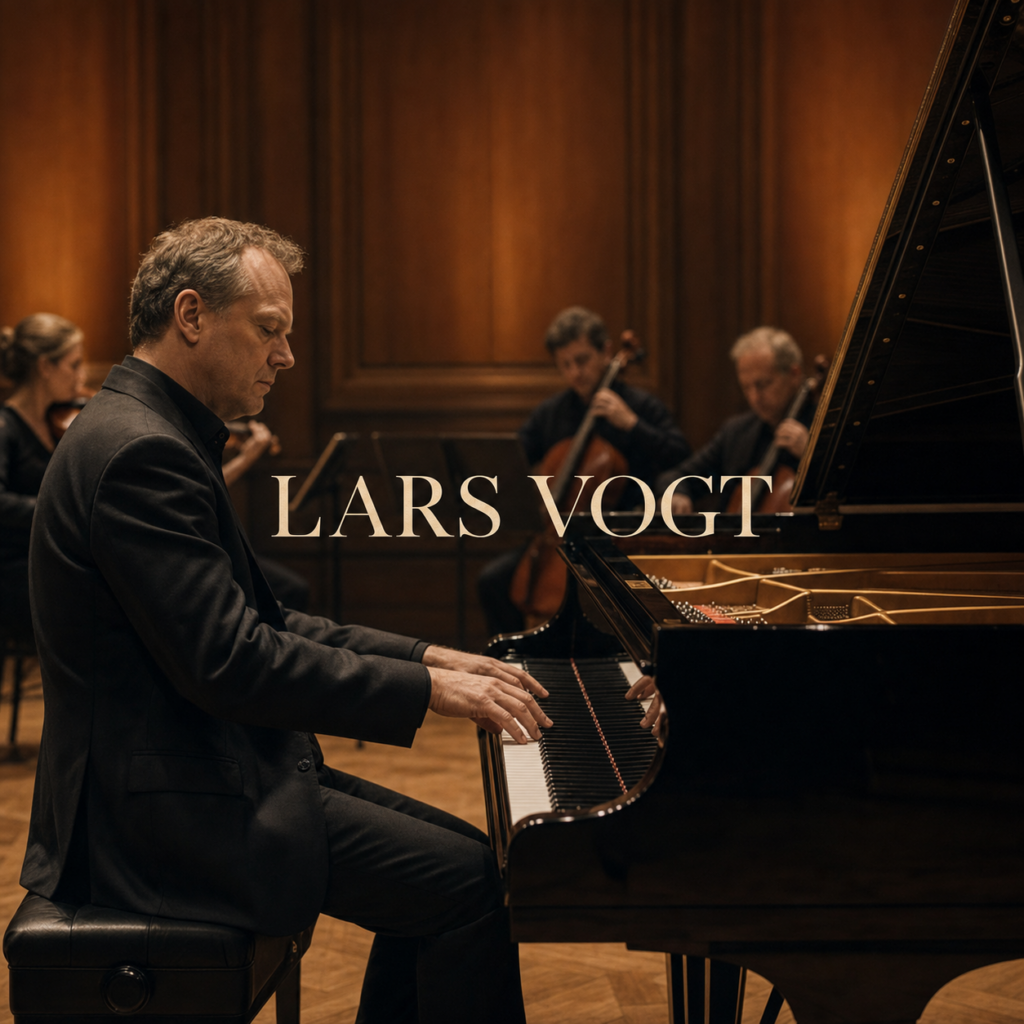
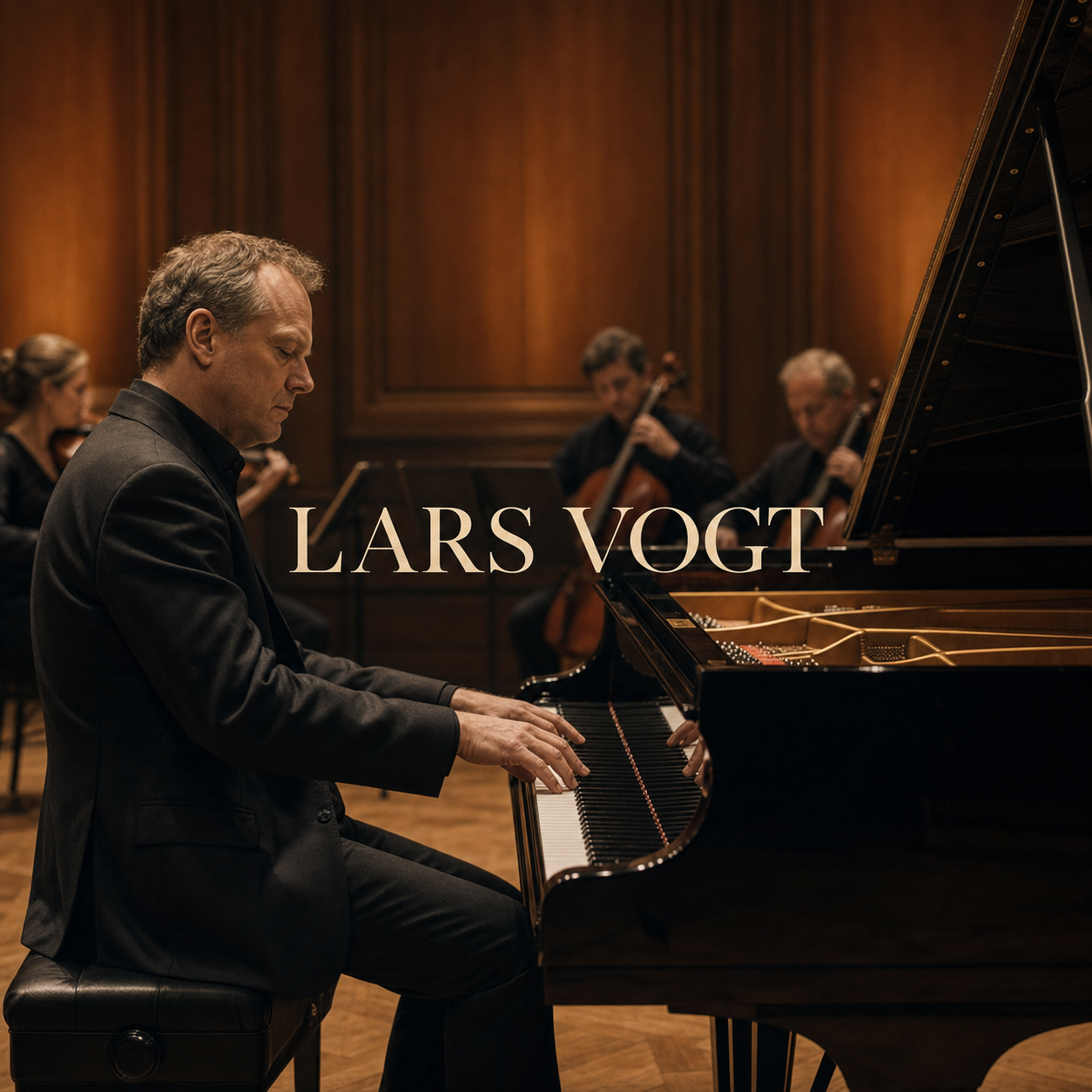
Lars Vogt built a musical life in which the piano rarely sounded self-sufficient. Whether playing Brahms with the Tetzlaffs, directing an orchestra from the keyboard or shaping an intimate recital, he treated attention to others as the source of expressive freedom.
Why Lars Vogt matters to London pianists and listeners
For a London pianist, Vogt offers something more useful than a catalogue of prestigious appearances. His work proposes a way of hearing. The pianist remains responsible for colour, pulse and projection, yet must also perceive the breath of a string player, the changing weight of an inner voice and the acoustic afterlife of a released chord.
That ideal suits London’s chamber culture. Vogt appeared many times at Wigmore Hall, where the scale of the room rewards precisely this kind of musical speech. The Hall’s own remembrance described him as a much-loved artist who made many appearances there. BBC archives also document a long Proms history, including chamber performances with violinist Christian Tetzlaff and major orchestral appearances across more than two decades.
This makes Lars Vogt a natural subject within WKMT’s wider approach to classical piano study in London. The point is not to imitate a personality. It is to understand the musical habits that allowed him to be both decisive and responsive.
A concise career shaped by partnership
Born in Düren in 1970, Vogt studied with Karl-Heinz Kämmerling in Hanover and came to international notice after winning second prize at the 1990 Leeds International Piano Competition. His repertoire ranged from Bach and Mozart to Lutosławski, but the centre of gravity was often the German Romantic tradition: Beethoven, Schubert, Schumann and Brahms.
His career joined roles that are too easily separated. He was a solo pianist, chamber musician, teacher and conductor. In 2015 he became Music Director of Royal Northern Sinfonia, his first orchestral directorship, and later led the Orchestre de chambre de Paris. The conductor’s awareness of proportion can be heard in his piano playing; the chamber musician’s alertness can likewise be felt in his orchestral work.
Conducting also sharpened a question that every pianist eventually faces: how can one project a clear conception without closing down possibility? In orchestral work, a gesture must be readable enough to unite many players, yet alive enough to accommodate their sound. At the piano, the equivalent is a phrase with direction but no stiffness. Vogt’s best performances seem planned at the level of structure and freshly discovered at the level of inflection.
In 1998 he founded the Spannungen chamber-music festival in Heimbach. Its setting, an Art Nouveau hydroelectric power station, became a laboratory for intense collaboration and live recording. In 2005 he also created Rhapsody in School, bringing professional musicians into schools so that young people could meet live music at close range. These projects show that his idea of musicianship extended beyond performance: musical value was realised through encounter.
The discography gives that breadth a practical shape. Alongside concerto cycles and solo Bach, Schubert and Mozart, there are substantial partnerships with Christian and Tanja Tetzlaff. These are not occasional prestige collaborations. Heard over several composers and years, they document musicians learning one another’s timing, weight and appetite for risk.
“The pianist’s authority becomes most persuasive when it leaves room for another musician to answer.”
Lars Vogt in London: a culture of close listening
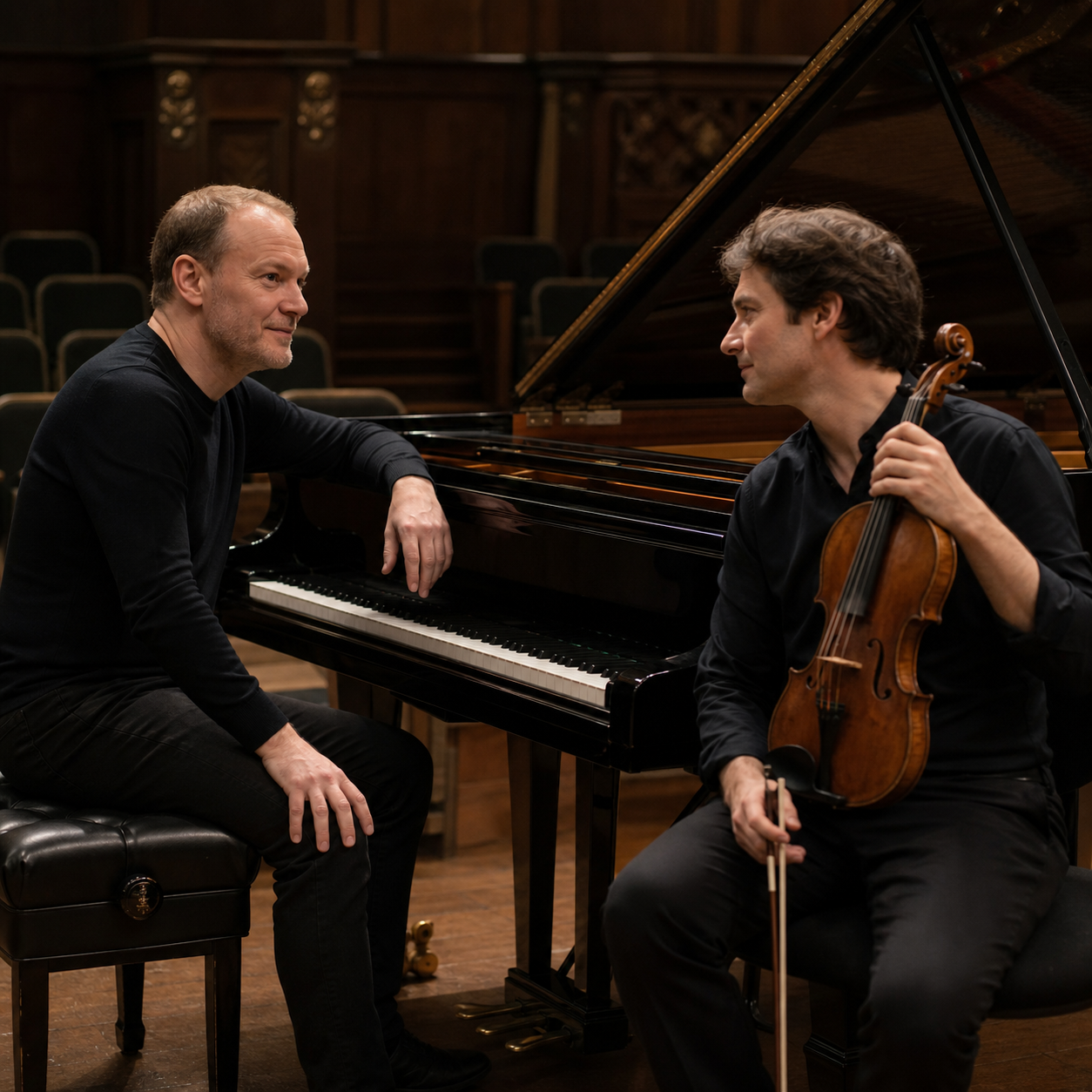
London heard Vogt in several musical identities. BBC records place him at the Proms from the 1990s onwards, including the 2011 Proms Chamber Music concert with Christian Tetzlaff. Wigmore Hall became an especially sympathetic home for his partnerships. In that acoustic, a pianist cannot rely on undifferentiated volume; voicing, pedal depth and the timing of consonants all become public.
His long association with Tetzlaff is an illuminating thread. Their Ondine recording of Brahms’s three violin sonatas presents the piano neither as accompaniment nor as orchestral substitute. The instrument changes role from bar to bar: it can carry harmonic atmosphere, answer a melodic impulse, disturb the pulse or withdraw into resonance. The recording’s vitality comes from this constant renegotiation.
This is particularly relevant in a city where listeners can encounter chamber music in radically different acoustics. Wigmore Hall offers concentration and immediacy; a larger festival or orchestral hall asks for a different scale of projection. Yet scale need not erase intimacy. Vogt’s Proms history demonstrates how a chamber musician’s responsiveness can remain audible within a larger public occasion.
London relevance should not be reduced to geography. It also concerns a habit of cultural comparison. A listener might hear a sonata recital, an orchestral concerto and a song partnership within the same week. Vogt’s career encourages those forms to illuminate one another: the pianist learns breath from song, long-range energy from orchestral playing and candour from chamber rehearsal.
Vogt’s London relevance therefore lies less in a list of dates than in the listening culture his appearances represented. Readers interested in that culture can continue through WKMT’s articles on the nature of chamber music, the responsibilities of a collaborative pianist and the importance of listening. Each concerns the same essential move: from controlling sound to participating in it.
What made Vogt’s chamber-music approach distinctive
The first quality is structural listening. Vogt could give a phrase freedom because the large span remained audible. Rubato was not a private fluctuation imposed upon partners; it emerged from shared harmonic direction. For a pianist, this means knowing which voice carries the argument and which merely intensifies it.
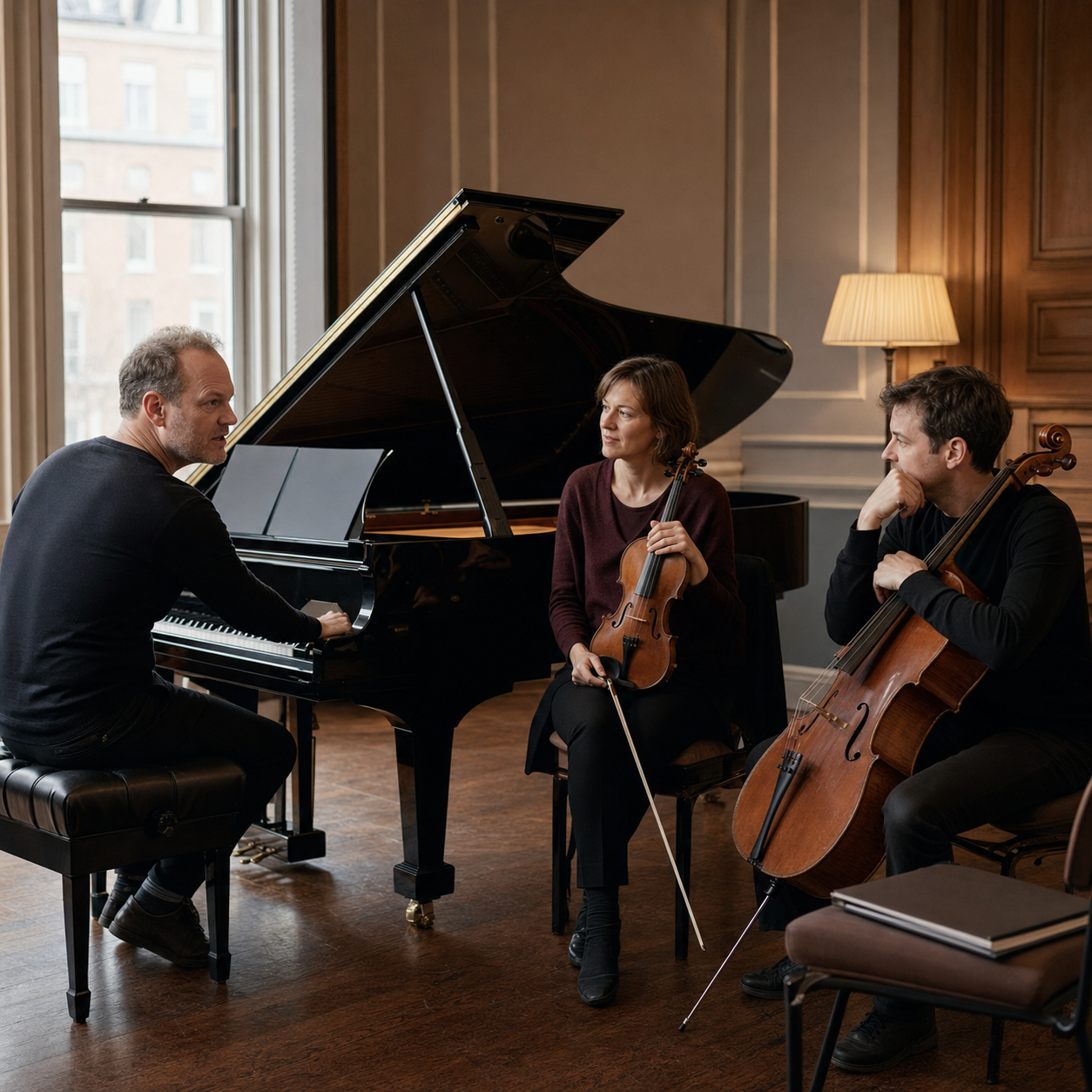
The second is a flexible idea of leadership. Chamber music needs initiative, but initiative is not permanent command. The piano may establish the pulse, then yield rhetorical priority to the cello; it may energise a transition, then soften its attack so that a violin entry arrives without being announced.
The third is tonal responsibility. A grand piano can cover strings without sounding objectively loud. Density, register and pedal can obscure an ensemble even at a moderate dynamic. Vogt’s recordings repeatedly show how articulation and texture create space. This is one reason they remain valuable to advanced amateurs: the lesson concerns judgement, not athletic display.
A fourth quality is emotional proportion. Romantic music invites intensity, but intensity loses meaning when every arrival is treated as final. Vogt could sustain seriousness without making the music heavy. Smaller gestures retain their scale, climaxes grow from accumulated pressure, and silence becomes part of the phrase rather than a break in it.
A four-part listening framework
A practical Lars Vogt listening guide
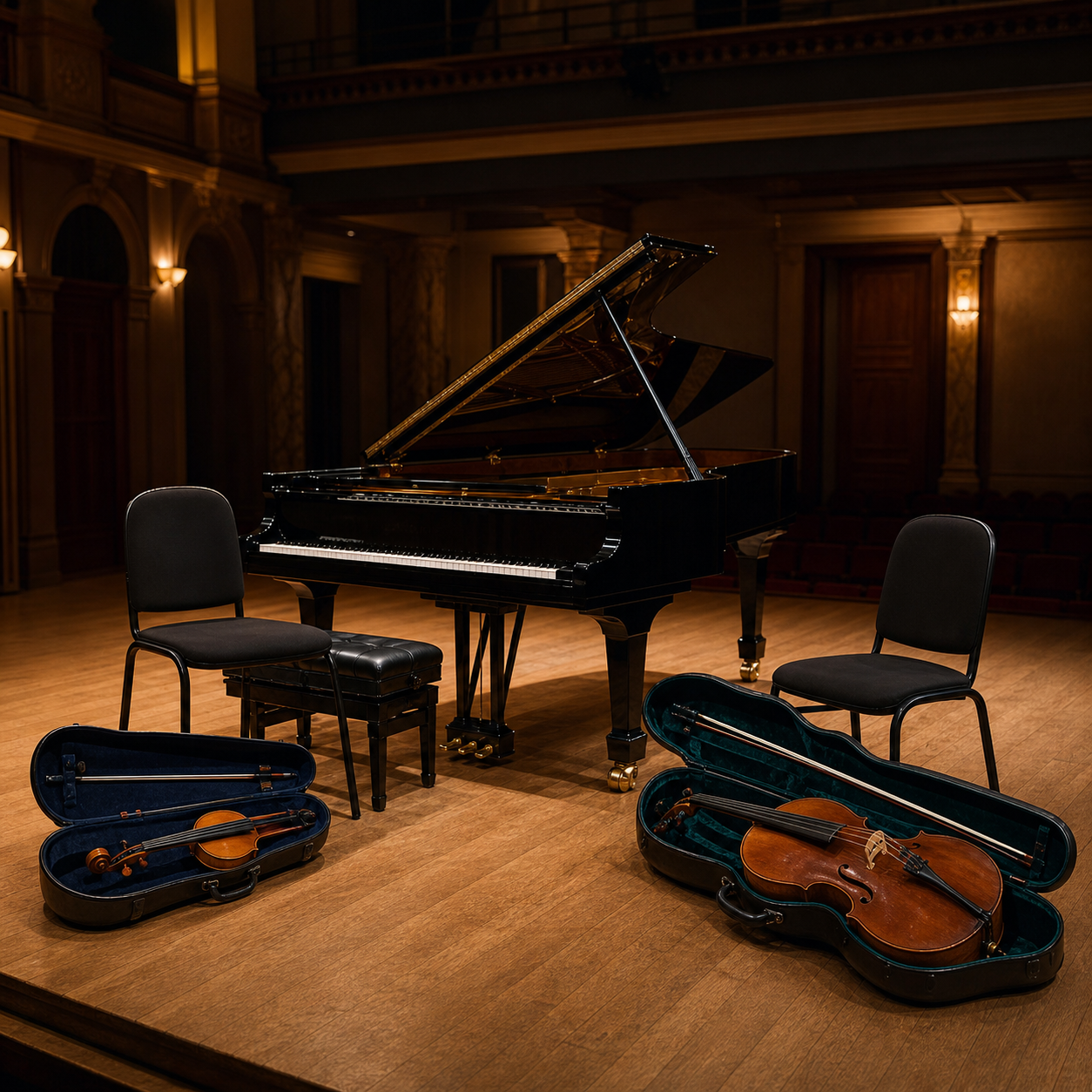
Begin with the Brahms violin sonatas recorded with Christian Tetzlaff. In the G major Sonata, Op. 78, listen to the first movement’s opening and ask how the piano turns repeated rhythm into atmosphere. Vogt avoids treating accompaniment as neutral ground. The pulse has weight, but its edges remain permeable enough for the violin to sing through it.
Next hear the Schubert piano trios with Christian and Tanja Tetzlaff. Follow the transitions rather than the main themes. When material moves between instruments, note how colour changes without damaging continuity. The useful question for a pianist is not “How softly is he playing?” but “What has he changed so that another voice becomes inevitable?”
Then compare the Brahms piano quartets issued by Ondine from Vogt’s final recordings. Their emotional force should not prevent analytical hearing. Attend to bass direction, the spacing of chords and the moment at which rhythmic pressure is allowed to relax. These are interpretive decisions that can transfer to solo repertoire, where the pianist must imagine an ensemble within two hands.
A productive listening session can be organised in three passes. On the first, do not stop the recording: identify the movement’s broad emotional and harmonic journey. On the second, choose one relationship, perhaps piano and cello, and follow only their exchanges. On the third, return to the whole ensemble and listen for how your chosen relationship changes the balance of everything around it.
Resist the temptation to turn every observation into an immediate technical instruction. Some insights need to remain aural for a while. If a transition feels unusually spacious, first describe what you hear: a delayed bass arrival, a lighter chord, a longer decay. Only then ask how touch, pedalling or timing may have produced the effect. This order protects musical intention from becoming a collection of mannerisms.
It is also useful to compare rather than rank. Place Vogt’s account beside another distinguished performance and name the differing priorities. One partnership may privilege rhythmic continuity; another may reveal more harmonic suspension. The aim is to hear choices with greater precision. A mature interpretation grows from knowing what a choice clarifies and what it necessarily leaves in shadow.
| Recording | Listen for | Lesson goal |
|---|---|---|
| Brahms violin sonatas | Shared breathing and changing foreground | Shape accompaniment as active speech |
| Schubert piano trios | Transitions and exchanges of colour | Preserve line while altering texture |
| Brahms piano quartets | Bass direction and controlled pressure | Hear orchestral roles within the piano |
Adult pianists who want to develop this kind of interpretive awareness can explore adult piano lessons at WKMT. The link is practical: guided listening becomes most valuable when a teacher helps connect what is heard to voicing, touch and formal understanding.
Where his legacy lives on
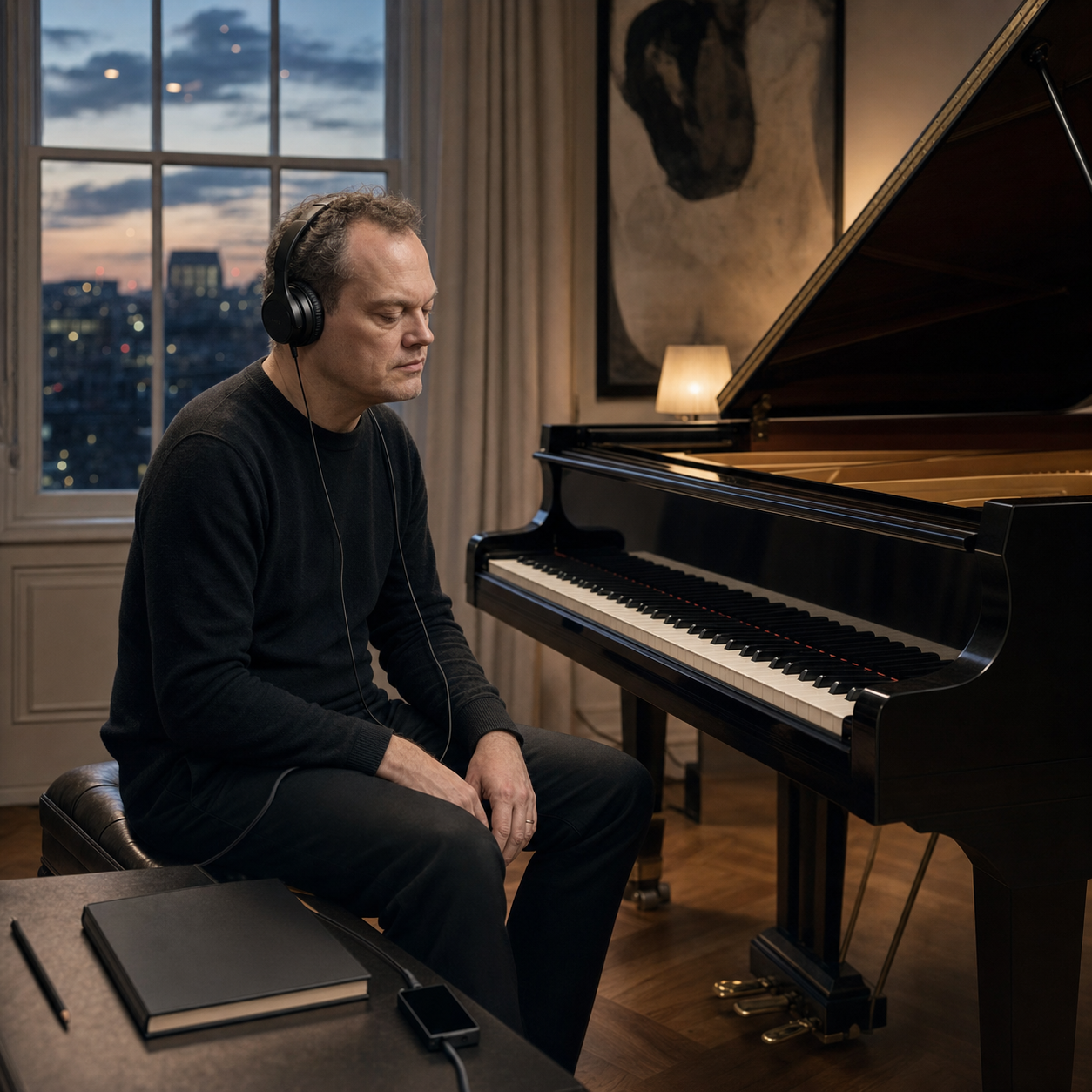
Lars Vogt died in September 2022, shortly before his fifty-second birthday. His legacy survives in recordings, in the continuing life of Spannungen and Rhapsody in School, and in the musicians for whom partnership with him altered the meaning of rehearsal. Wigmore Hall’s remembrance is especially telling because it situates that loss within a community of artists, audiences and staff.
For London listeners, the most faithful response is active rather than ceremonial. Attend chamber concerts in rooms where balance can be heard closely. Compare recordings without searching for a winner. Notice how a pianist changes the character of an ensemble through voicing rather than volume. Vogt’s example suggests that musical seriousness is compatible with warmth, curiosity and risk because each depends upon attention.
His educational work adds a final dimension. Rhapsody in School was founded on the belief that direct contact with musicians can make classical music immediate rather than remote. The principle applies at every age. Adults, too, learn through proximity: hearing an idea demonstrated, testing a description against sound and discovering that interpretive authority is made from close observation.
Continue the conversation at the piano
WKMT’s London teaching brings repertoire, interpretation and attentive listening into one sustained course of study.
Sources and further listening
Biographical and discographical details last checked 27 July 2026.
- Vogt official biography.
- BBC Proms performance archive.
- Wigmore Hall, The Score, Autumn 2022.
- Ondine: Brahms Sonatas for Violin and Piano.
- Ondine: Schubert piano chamber music.
- Ondine: Vogt’s final Brahms piano-quartet recordings.
- Rhapsody in School: remembrance and continuation.
- Spannungen: farewell to Lars Vogt.