
 TRIAL LESSON
Pianists, Piano Lessons
Jorge Bolet in London: Bel Canto, Big Sound and the Art of Serious Piano Listening
Jul
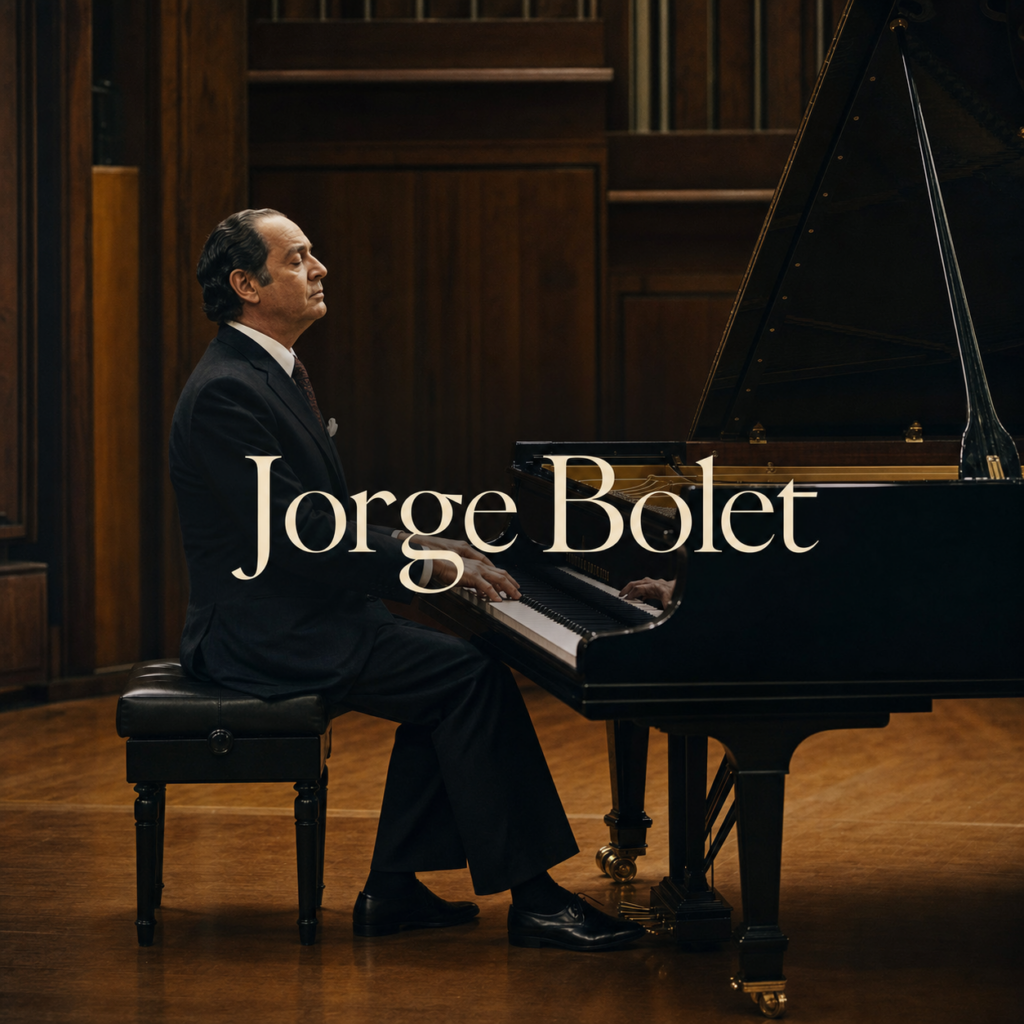
Jorge Bolet in London
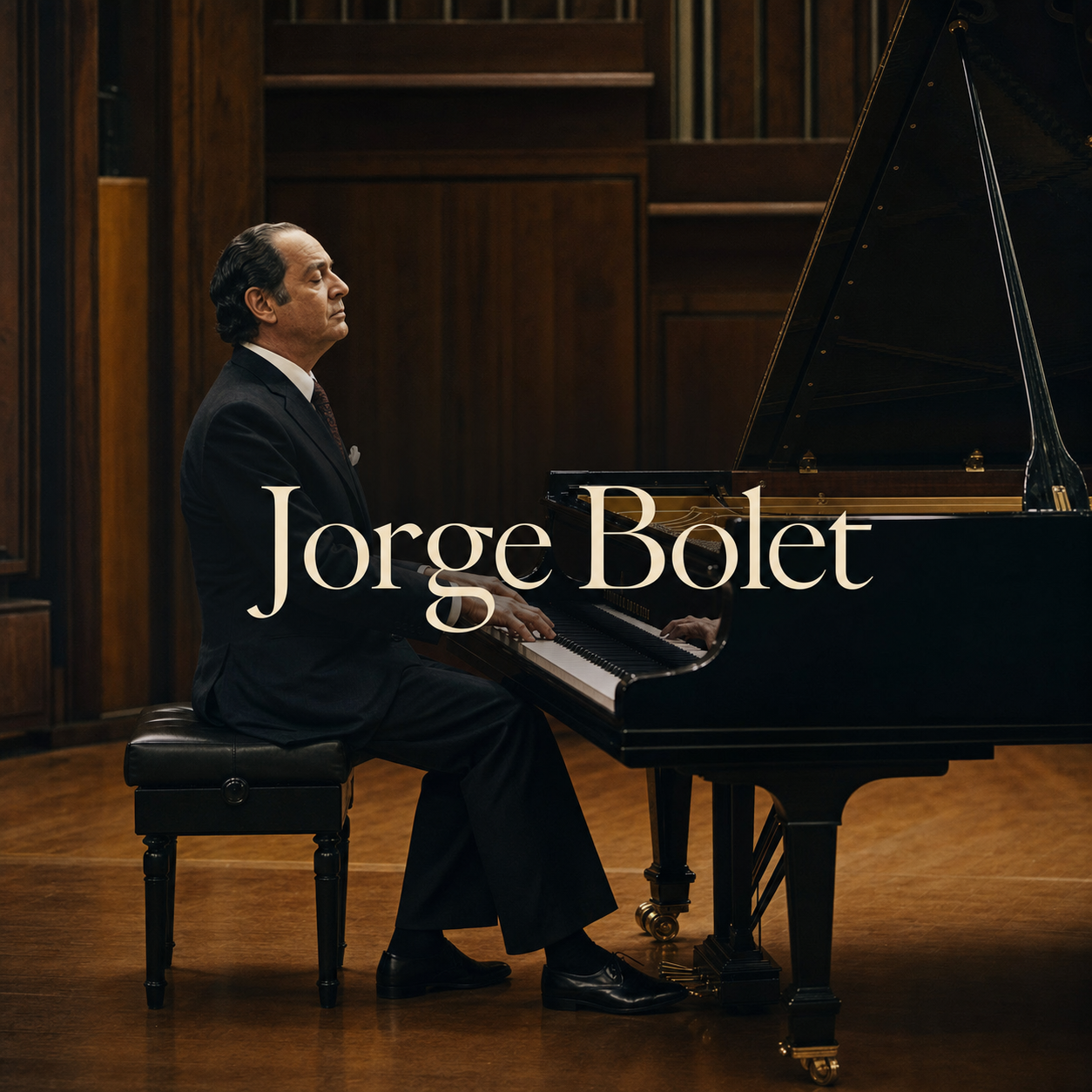
WKMT listening portrait
Jorge Bolet in London: Bel Canto, Big Sound and the Art of Serious Piano Listening
Jorge Bolet made the grand Romantic piano sing without sacrificing its architecture. His London appearances and Decca legacy offer a compelling lesson in how sonority, line and restraint can coexist.
Why Jorge Bolet still matters to London listeners
Imagine the first chord opening across a South Bank auditorium: dark at its centre, luminous at its edge, broad enough to fill the room yet never forced. That is the paradox at the heart of Bolet’s playing. He was celebrated for a luxuriant sound and formidable technique, but the lasting fascination lies in his control of proportion. Melody rises through the texture like a singer above an orchestra; bass lines support rather than smother; climaxes arrive as the result of long harmonic journeys.
For today’s listener, the useful question is not whether Bolet was “bigger” or “more Romantic” than another pianist. It is how he made complexity intelligible. Hear him in Liszt, Chopin, Rachmaninoff or Franck and three qualities recur: a vocal upper line, generous time that still has direction, and an ability to disclose the shape of a large work. That combination makes him especially valuable to serious amateurs and concertgoers developing the kind of attentive ear encouraged through classical piano study in London.
WKMT perspective
Listen first for the line, then for the weight beneath it. Bolet’s grandeur is persuasive because the piano continues to breathe.
Jorge Bolet at a glance
The Curtis Institute’s archival profile records the unusual breadth of Bolet’s formation, his 1937 Naumburg Award and his later return to Curtis as head of piano. The Naumburg Foundation likewise identifies him as its 1937 piano first-prize winner. These are more than biographical decorations: they locate him close to the last generation with direct access to the great nineteenth-century piano traditions.
A lineage that shaped the sound
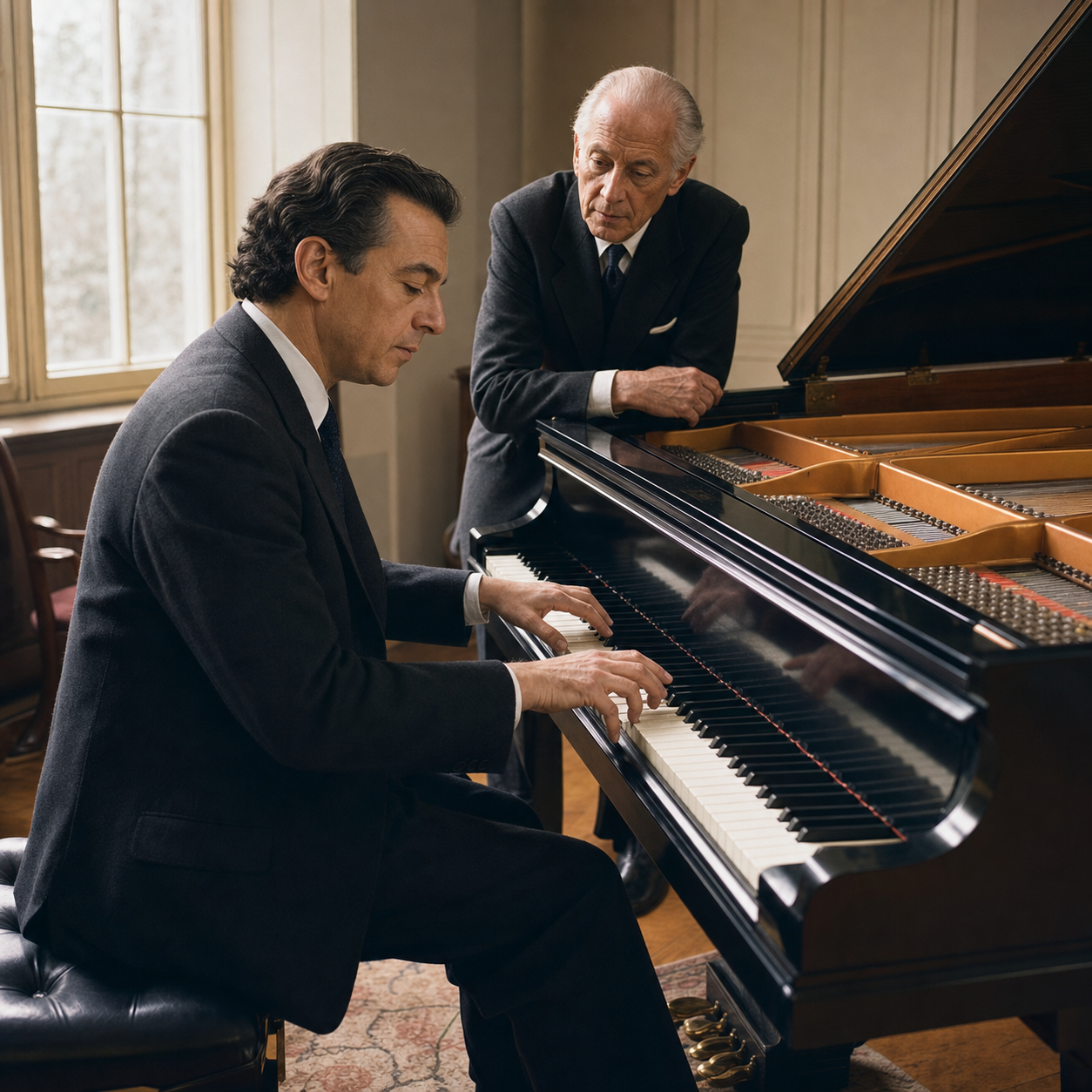
Bolet entered Curtis as a child and encountered teachers whose musical inheritance stretched back through Liszt and the late-Romantic virtuoso world. Yet lineage should not be mistaken for imitation. What he absorbed was a set of priorities: the piano as an instrument capable of vocal inflection; finger work integrated with arm weight; harmonic awareness guiding colour; and virtuosity serving an expressive design.
His career developed slowly. For years, the prevailing critical climate was suspicious of the repertoire and manner that suited him best. He recorded for smaller labels, taught, and continued performing before wider recognition arrived in his sixties. Curtis notes that by the later 1970s he could give as many as 150 appearances a year. The delay seems important. Bolet’s mature recordings do not sound like bids for attention; they sound considered, inhabited and free from haste.
In 1977 he succeeded Rudolf Serkin as head of piano at Curtis. A year later his sustained association with Decca began. That sequence joins the two sides of his musicianship: inherited knowledge passed on through teaching, and a late recording career through which listeners could finally hear his range under consistent studio conditions.
The most impressive sound is not the loudest one. It is the sound that keeps its centre while the phrase continues to move.
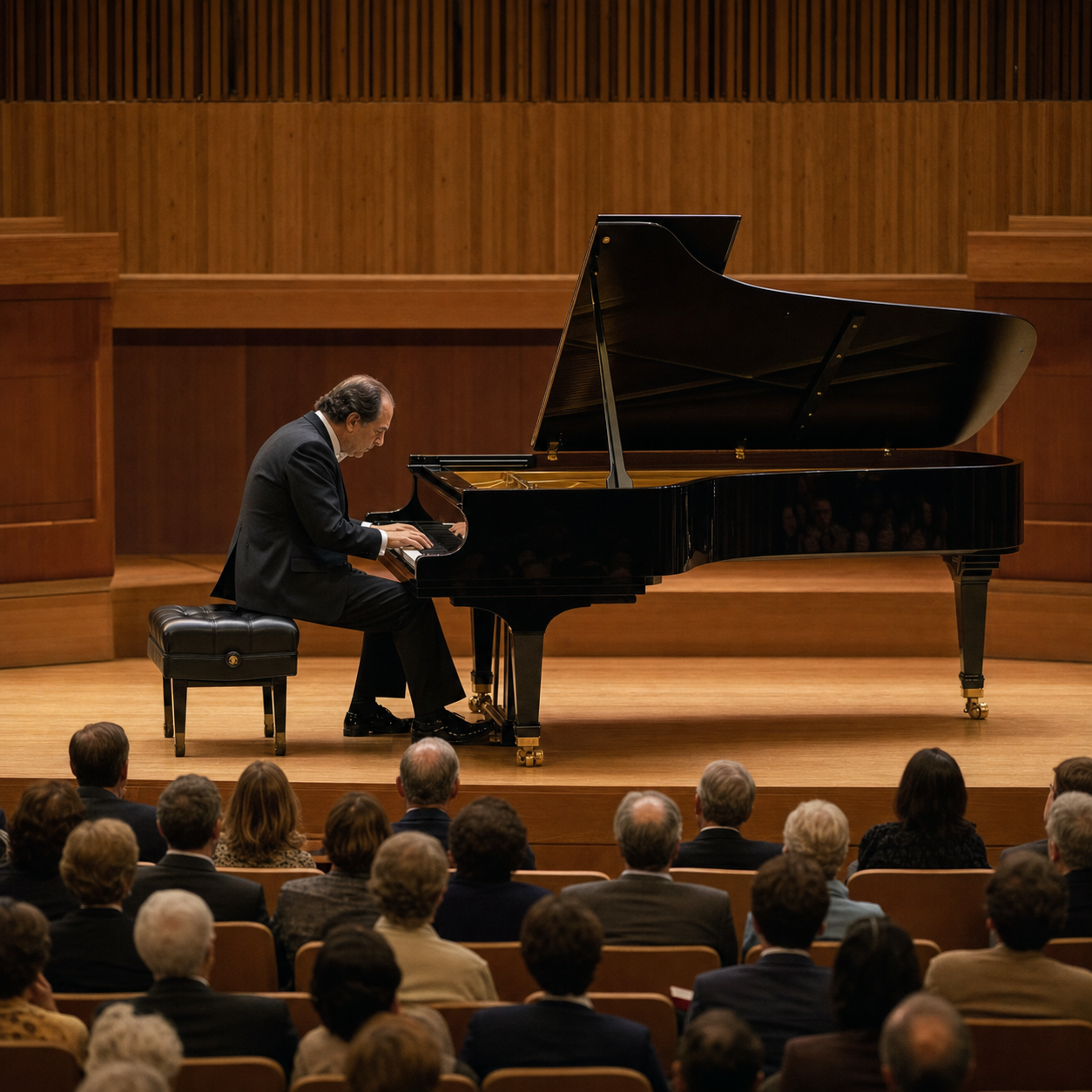
Bolet’s London story
London was one of the places where Bolet’s serious Romanticism found an alert audience. A specialist archive that reproduces contemporary notices from The Times records a Royal Festival Hall performance of Rachmaninoff’s Third Concerto on 11 January 1959. The review admired the playing’s imaginative intensity and its ability to project through the orchestral texture without mere banging. Two decades later, a Queen Elizabeth Hall recital on 10 May 1979 prompted praise for a “deeply serious yet romantic personality” in Chopin and the Chopin-Godowsky studies. The language belongs to its period, but the qualities it identifies remain audible.
London also shaped the recorded sound. An account of Bolet’s 1983 Gramophone interview places him at Kingsway Hall discussing a large Liszt project with Decca producer Peter Wadland. That setting matters: the generous acoustics of London recording venues suited a pianist who worked through resonance rather than percussion. The collaboration produced an extensive body of Liszt alongside Chopin, Brahms, Rachmaninoff, Franck, Schumann, Debussy and Schubert.
Decca’s 2024 complete edition assembles recordings from 1977 to 1990, including a final Chopin session made seven months before Bolet’s death. A 2025 Gramophone review returned to that legacy, evidence that his recorded work is not simply archival: it remains part of current British listening culture.
The orchestral catalogue strengthens that British connection. Bolet recorded Rachmaninoff’s Third Concerto with the London Symphony Orchestra and Ivan Fischer, while the concertante Liszt sequence includes the London Philharmonic Orchestra under Georg Solti. These are not incidental accompaniments to a solo legend. They show how his spacious phrasing functioned inside an ensemble, where a pianist must project a line while listening continuously to instrumental colour around it. Compare a passage of solo Liszt with the Rachmaninoff concerto: the sonority remains recognisably his, but the timing becomes a conversation with woodwind, strings and conductor. London heard the recitalist; London’s orchestras also helped preserve the collaborator.
Bel canto piano and the “big sound”
Bel canto means beautiful singing. At the piano, it describes an illusion: a struck note naturally begins to decay, yet the pianist persuades us that the line continues to breathe. Bolet created that illusion through voicing, timing and pedalling. Voicing is the art of giving one part of a chord greater presence than the others. Pedalling binds resonance, but only selective listening prevents harmony from becoming opaque. Timing gives a melodic arrival space without breaking the underlying pulse.
His “big sound” did not depend on pressing every note with equal force. The bass could be deep, but inner voices were graded and the melody retained a luminous edge. When the texture thickened, he often seemed to widen the span of time while keeping harmonic momentum intact. That is why a climax can feel grand without becoming coarse.
| Listen for | Less attentive impression | What Bolet actually reveals |
|---|---|---|
| Broad tempo | Slowness | Room for harmony and long melodic breath |
| Rich pedal | Blur | Layered resonance refreshed with harmonic change |
| Large dynamic range | Display | Structural distance between intimacy and arrival |
| Flexible phrase | Indulgence | Vocal emphasis within a controlled arc |
Key listening point
Follow the top line through three successive harmonies. If it remains alive while the accompaniment changes colour beneath it, you are hearing Bolet’s central art.
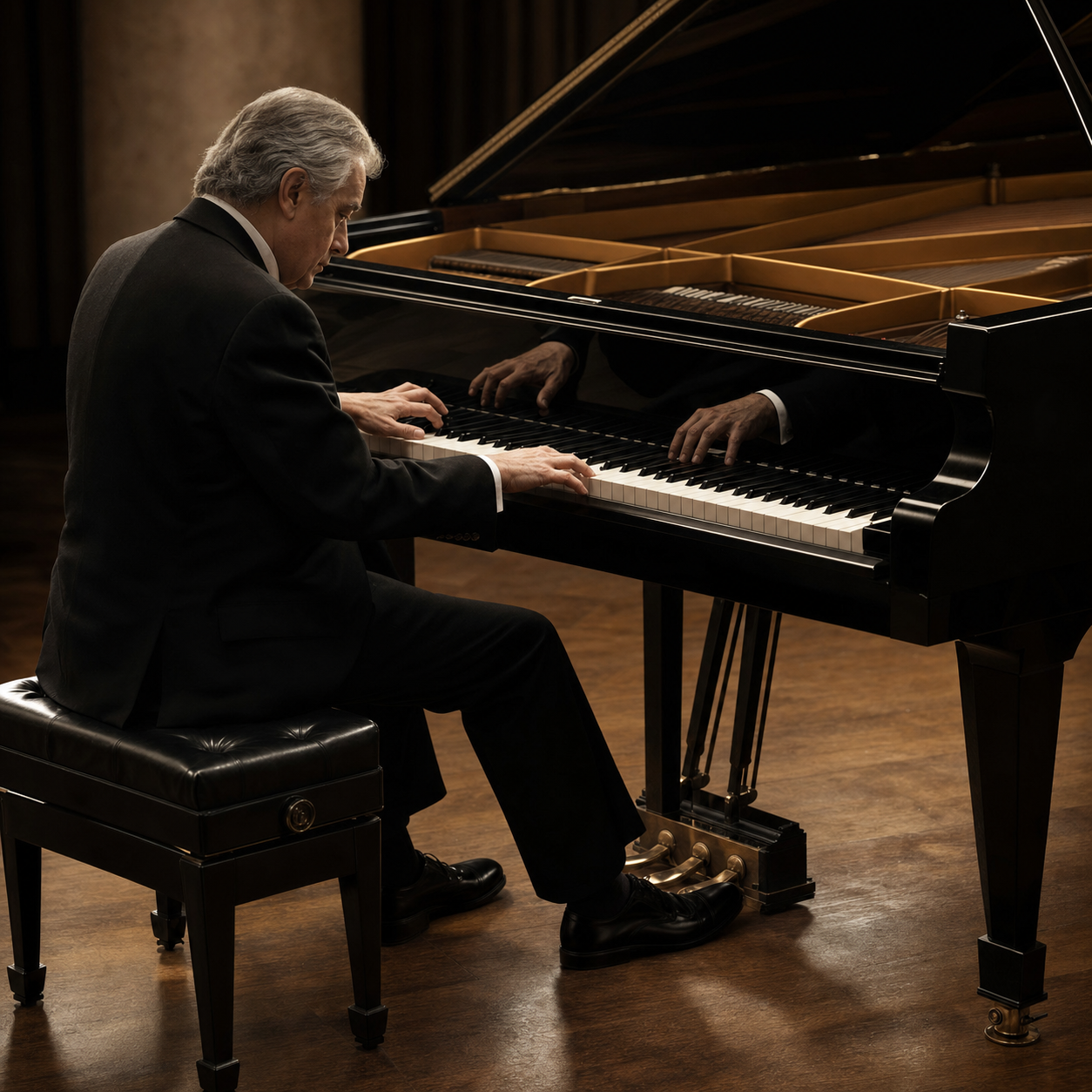
Six essential Jorge Bolet recordings
The Decca complete-recordings catalogue provides a reliable map of the studio legacy. These six starting points reveal contrasting aspects of his musicianship.
- 1Liszt: Sonata in B minor. Hear how episodes that can sound separate become stages in one long dramatic argument.
- 2Liszt: Schubert song transcriptions. Begin with the vocal line and notice how accompaniment becomes atmosphere rather than decoration.
- 3Chopin: the four Ballades. Listen for narrative pacing: local freedom serves the destination of each work.
- 4Rachmaninoff: Piano Concerto No. 3. The London Symphony Orchestra recording with Ivan Fischer shows projection without hardening the sound.
- 5Franck: Prélude, Choral et Fugue. Follow the recurrence of ideas and the patient growth of the final pages.
- 6Debussy: selected Préludes. A useful corrective to the idea that Bolet was only a heavyweight Romantic: colour becomes precise, economical and atmospheric.
Listeners curious about the wider tradition can continue with WKMT’s article on the Liszt tradition and modern piano technique, then compare Bolet’s resonance with the principles described in WKMT’s guide to the piano pedals.
A five-pass serious listening framework
Choose one movement and hear it five times across several days. This is not a test of memory. Each pass narrows attention so that interpretation becomes easier to describe.
Hum the principal melody and notice where Bolet lets it lean or release.
Follow the harmonic foundation. Which arrivals are prepared long in advance?
Mark changes from veiled to brilliant, dry to resonant, intimate to public.
Notice where flexibility clarifies a cadence and where pulse remains firm.
Hear the complete movement again and identify its single largest destination.
This kind of deliberate listening is particularly fruitful for returning players. It turns admiration into choices: where a melody needs support, when resonance must clear, and how a climax earns its scale. Those ideas can be explored at the instrument through adult piano lessons at WKMT without copying Bolet’s surface manner.
For adult learners
Take one observation from listening to the keyboard. Instead of trying to “sound like Bolet”, test a precise question: can the melody remain present at half the dynamic, or can the pedal change without breaking the line?
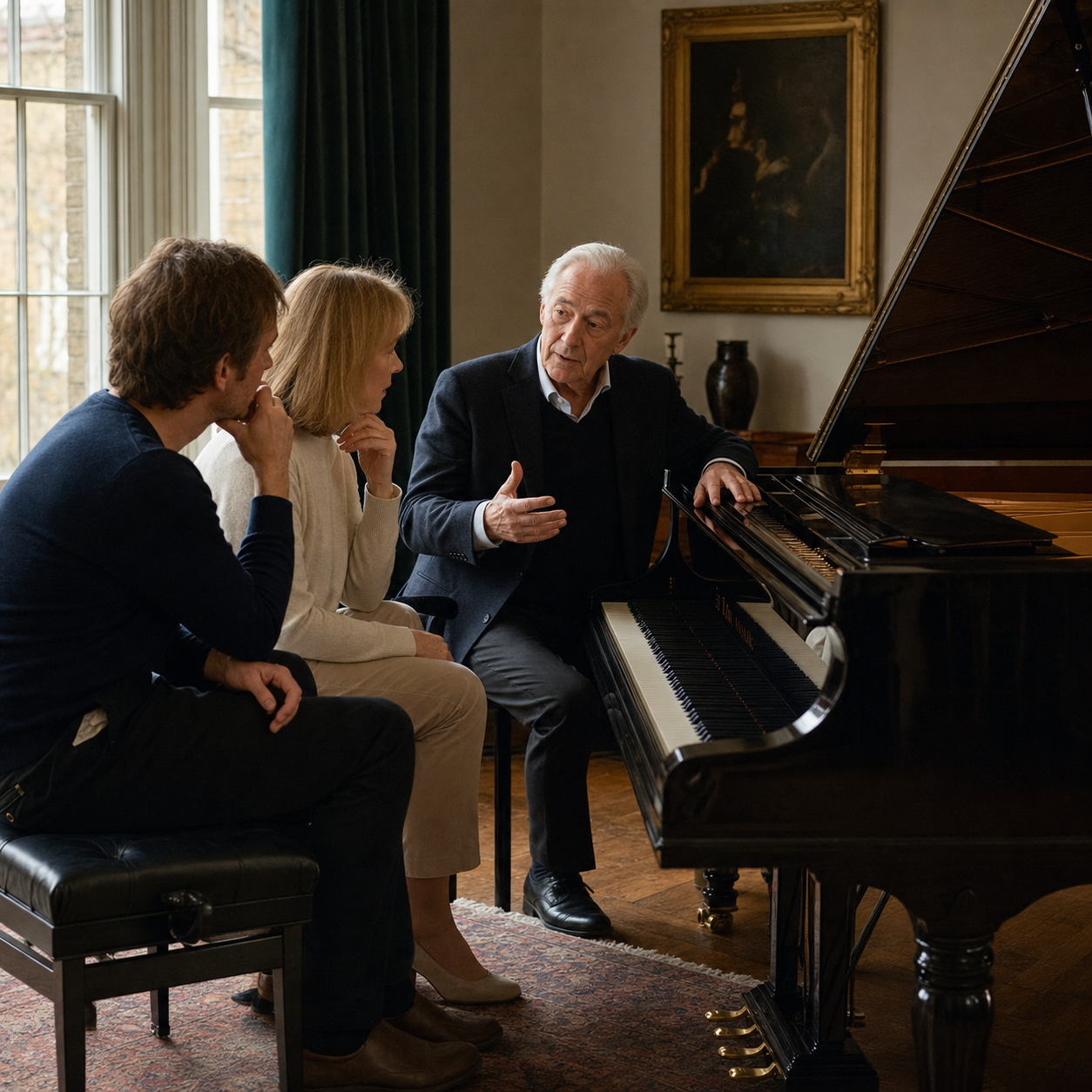
The living value of Bolet’s legacy
Jorge Bolet’s reputation no longer depends on a handful of collectors defending neglected records. The complete Decca edition, released on 15 November 2024, gathers the major studio sequence in one place and restores a final Chopin recording. Digital catalogues make comparisons easier, while archives preserve evidence of the long career that preceded his late fame. Current availability was last checked on 25 July 2026 through Decca’s official catalogue.
What survives most strongly is a standard of listening. Bolet asks us to hear virtuosity as organisation, power as resonance, and freedom as a form of disciplined timing. In a culture of excerpts and instant reactions, his playing rewards the opposite: sustained attention. Spend time with one phrase, then one movement, then the shape of an entire recital. The sound grows larger because the listening grows deeper.
Develop a more attentive musical ear
WKMT’s London piano teaching connects close listening with tone, technique and interpretation at the keyboard.
Sources and further listening
- Curtis Institute of Music, “Celebrating Hispanic Heritage: Jorge Bolet”
- Walter W. Naumburg Foundation, Jorge Bolet: 1937 Piano First Prize Winner
- Decca Classics, Jorge Bolet: Complete Decca Recordings (release 15 November 2024;
- Gramophone, review of the Complete Decca Recordings
- Jorge Bolet specialist archive, reproduced London reviews from The Times (primary reviews dated 1959 and 1979;
- Jorge Bolet specialist archive, 1983 Gramophone interview and Decca Liszt project