
 TRIAL LESSON
Pianists, Piano Lessons
Alice Sara Ott in London: Bach, Colour and the Art of Serious Piano Listening

Aug
Alice Sara Ott in London
WKMT London listening guide
Alice Sara Ott in London: Bach, Colour and the Art of Serious Piano Listening
Alice Sara Ott brings classical architecture, nocturnal colour and contemporary imagination into the same musical space. This guide follows that thread through her recordings and London appearances.
Concert information last checked: 31 July 2026

Quick portrait
Alice Sara Ott is easy to recognise and difficult to reduce to a formula. The German-Japanese pianist can make a familiar work feel newly lit, yet her playing is rarely about novelty for its own sake. The constant is attention: to the weight of one voice against another, to the way silence frames a phrase, and to the emotional temperature of a colour change.
That makes her particularly interesting to London listeners. Her relationship with the city has included a Southbank Centre residency, orchestral appearances and recital projects that place established repertoire beside contemporary work. On 6 November 2026 she is scheduled to return to the Royal Festival Hall for Beethoven’s Fourth Piano Concerto with the London Philharmonic Orchestra and Karina Canellakis, followed by Mahler’s First Symphony. The pairing suits her: intimacy meeting scale, and a familiar masterpiece heard through conversation rather than display.[3]
Why Alice Sara Ott matters now
Ott signed with Deutsche Grammophon in 2008 and first drew wide notice on the label with Liszt’s Transcendental Études. The catalogue that followed moves from Chopin, Beethoven and Grieg to Debussy, Satie, Ravel and cross-disciplinary projects. The sequence reveals an artist less interested in maintaining separate historical rooms than in asking how one musical language illuminates another.[1]
Her 2021 project Echoes of Life framed Chopin’s Op. 28 Preludes with contemporary and twentieth-century music. The 2025 recording of John Field’s complete nocturnes turned towards a composer often treated merely as Chopin’s predecessor, giving the pieces space to live on their own terms. In March 2026, her album of piano transcriptions from Jóhann Jóhannsson’s music extended the same curiosity into a world of film, memory and restrained repetition. Deutsche Grammophon describes the collection as thirty world-premiere recordings drawn from across Jóhannsson’s career.[2]
The progression matters because it resists the false choice between “core” and “new” repertoire. Ott’s best work suggests that serious listening is not a museum habit. It is a way of hearing connections while respecting difference.
There is also a valuable curatorial discipline in the way she builds programmes. A juxtaposition succeeds only when the listener can still hear the identity of each piece. Ott tends to preserve that boundary. Chopin is not made to sound contemporary by force, and contemporary music is not presented as an explanatory footnote to Chopin. Instead, differences of harmonic pace, texture and emotional distance become audible. That approach rewards an audience willing to notice transitions: the quality of silence after one work, the register in which the next begins, or the sudden change from resonant ambiguity to classical proportion.
Bach, colour and contemporary imagination
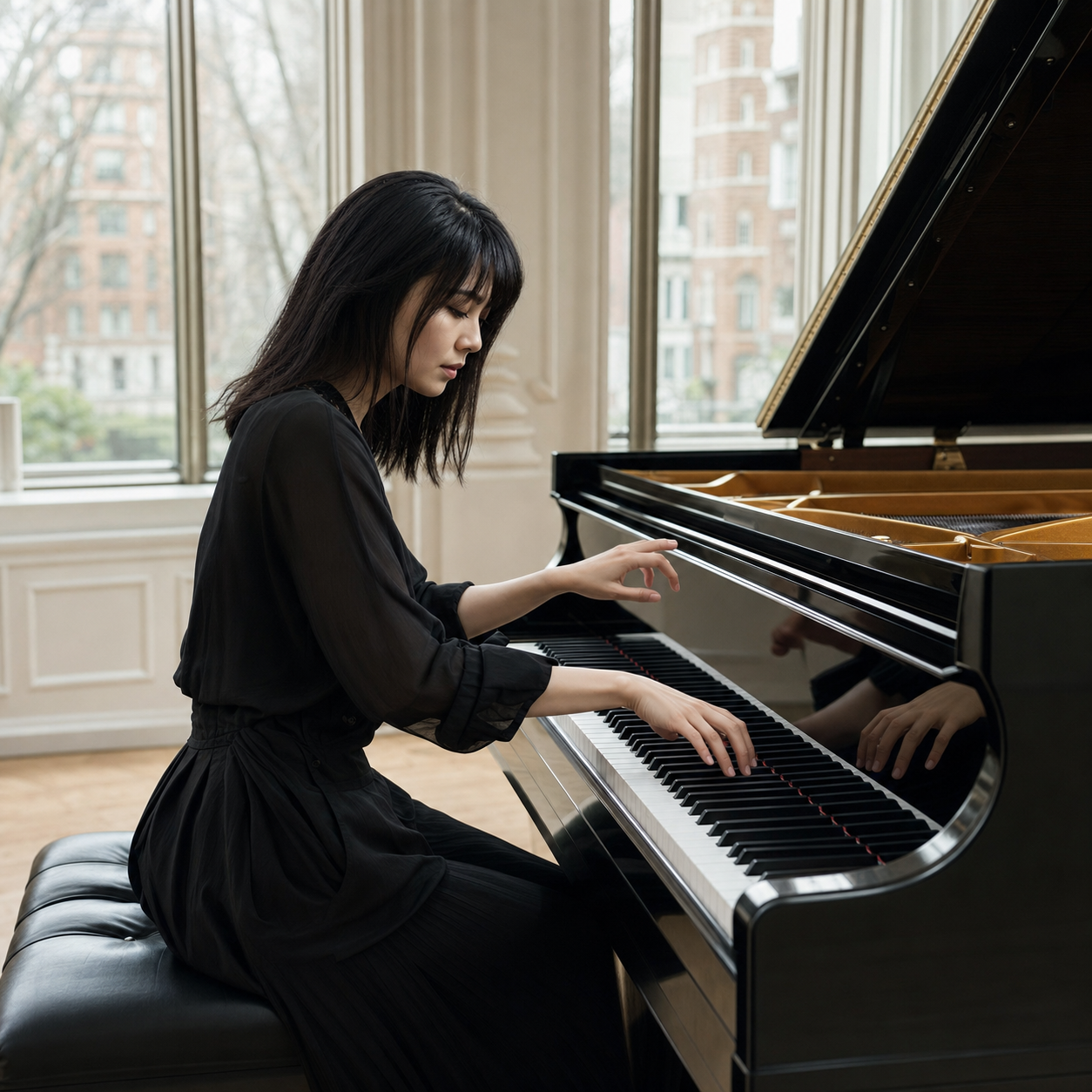
Although Ott’s recorded catalogue is broader than any single composer, Bach provides a useful point of orientation. In her playing, Baroque clarity is less a matter of making the modern piano imitate a harpsichord than of preserving the identity of each line. A bass may move with calm purpose while the upper voice remains vocal; an inner part can register without being over-emphasised. The result is transparent without becoming pale.
That quality carries into French repertoire. On Nightfall, music by Debussy, Satie and Ravel becomes an exploration of changing light. The important word is changing. Colour is not a wash laid over the harmony; it is the harmony perceived through voicing, timing, attack and release. WKMT’s guide to Debussy in London makes the same listening point: atmosphere is built from decisions.
Ott’s contemporary projects add another dimension. Her collaborations and multimedia presentations ask audiences to notice how space, image and sequence affect musical memory. That can sharpen rather than distract from the ear when the concept grows out of the score. Her official biography records partnerships with figures including Bryce Dessner, Ólafur Arnalds, Chilly Gonzales and Francesco Tristano, alongside residencies that have allowed larger programmes to unfold over time.[4]
Her sound world is therefore best understood through relationships. A clean attack has meaning because of the resonance allowed after it. A freely placed melody remains convincing because the accompaniment keeps its pulse. A dark sonority does not become heavy when the bass retains direction. These are small distinctions, but they explain why her playing can feel visually vivid without losing musical grammar. The colour is memorable because the structure remains legible underneath it.
“Colour becomes meaningful when it reveals the direction of a phrase, not when it merely decorates the sound.”
Five recordings that open her musical world
| Recording | Year | What to hear |
|---|---|---|
| Liszt: Transcendental Études | 2009 | Virtuosity organised by character and long line. |
| Nightfall | 2018 | How Debussy, Satie and Ravel use resonance differently. |
| Echoes of Life | 2021 | Chopin’s Preludes heard as a journey through memory and contrast. |
| John Field: Complete Nocturnes | 2025 | Singing line, supple accompaniment and unforced affection. |
| Jóhann Jóhannsson: Piano Works | 2026 | How repetition, decay and silence carry emotional weight. |
The Field set is an especially good doorway. The Guardian noted that Ott does not inflate the nocturnes into more dramatic music than they are; her affection allows their poise and variety to speak.[5] Begin with Nocturne No. 1 in E-flat major and notice the relationship between melody and accompaniment. Then move to No. 9 in E minor, where darker harmonic motion changes the scale of the form without destroying its intimacy.
After Field, listen to one of the Chopin Preludes from Echoes of Life. The comparison is useful because both composers can create intensity in a small span, but they organise expectation differently. Field often lets the singing line float above a stable pattern; Chopin may turn one harmonic change into an event that alters the whole emotional horizon. Ott’s control of voicing makes the distinction unusually clear. Then place a piece from the Jóhannsson album beside them. Repetition now works less as accompaniment than as environment, and the decay of sound becomes part of the musical syntax.
Alice Sara Ott in London
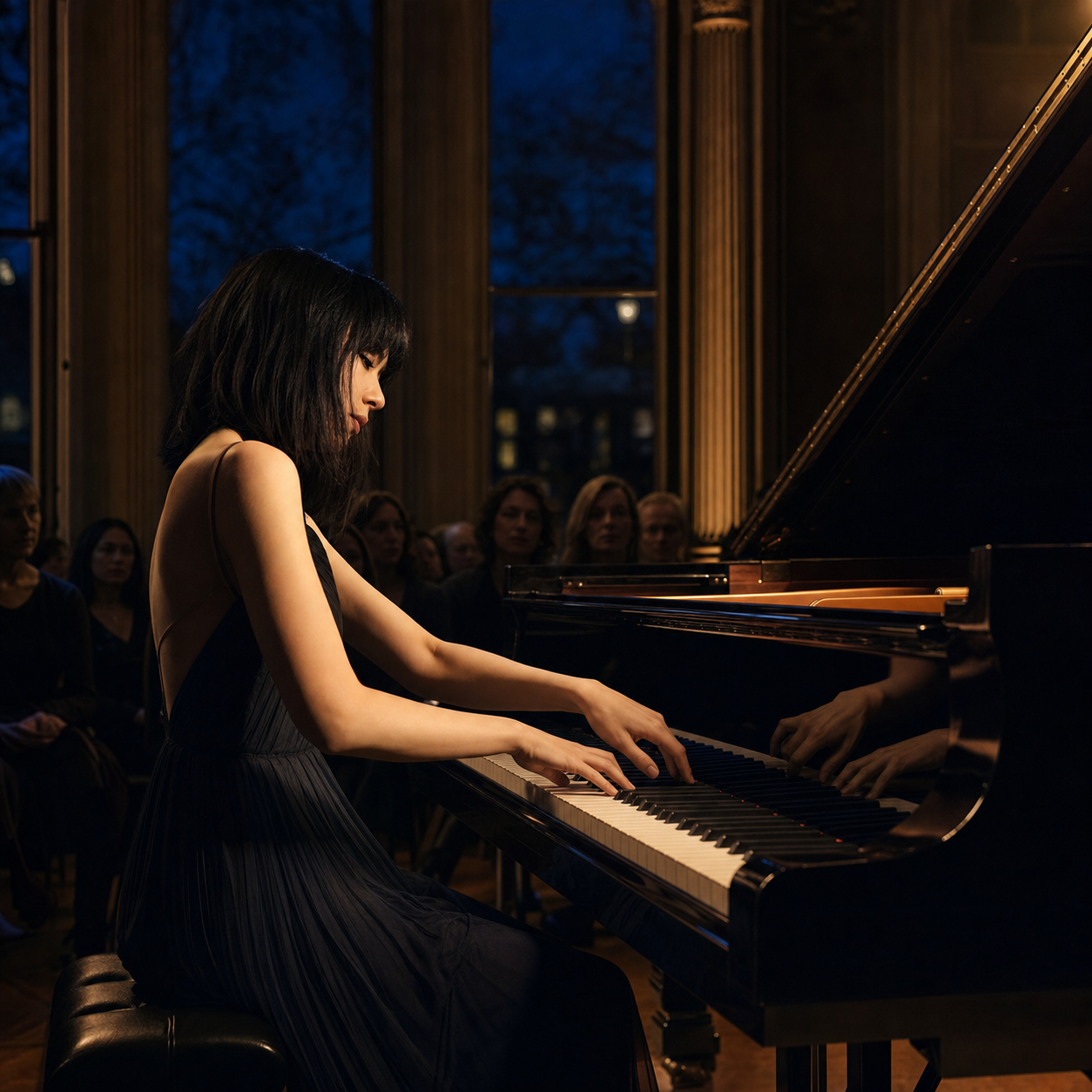
London has heard Ott in several artistic frames. At LSO St Luke’s in 2019, a BBC Radio 3 concert presented her as a collaborative musician alongside close colleagues.[6] Her 2023–24 Southbank Centre residency included contemporary work and recital thinking, while a February 2025 Queen Elizabeth Hall programme placed John Field’s nocturnes beside Beethoven sonatas. These appearances show continuity: a preference for programmes that encourage one work to alter the way the next is heard.[7]
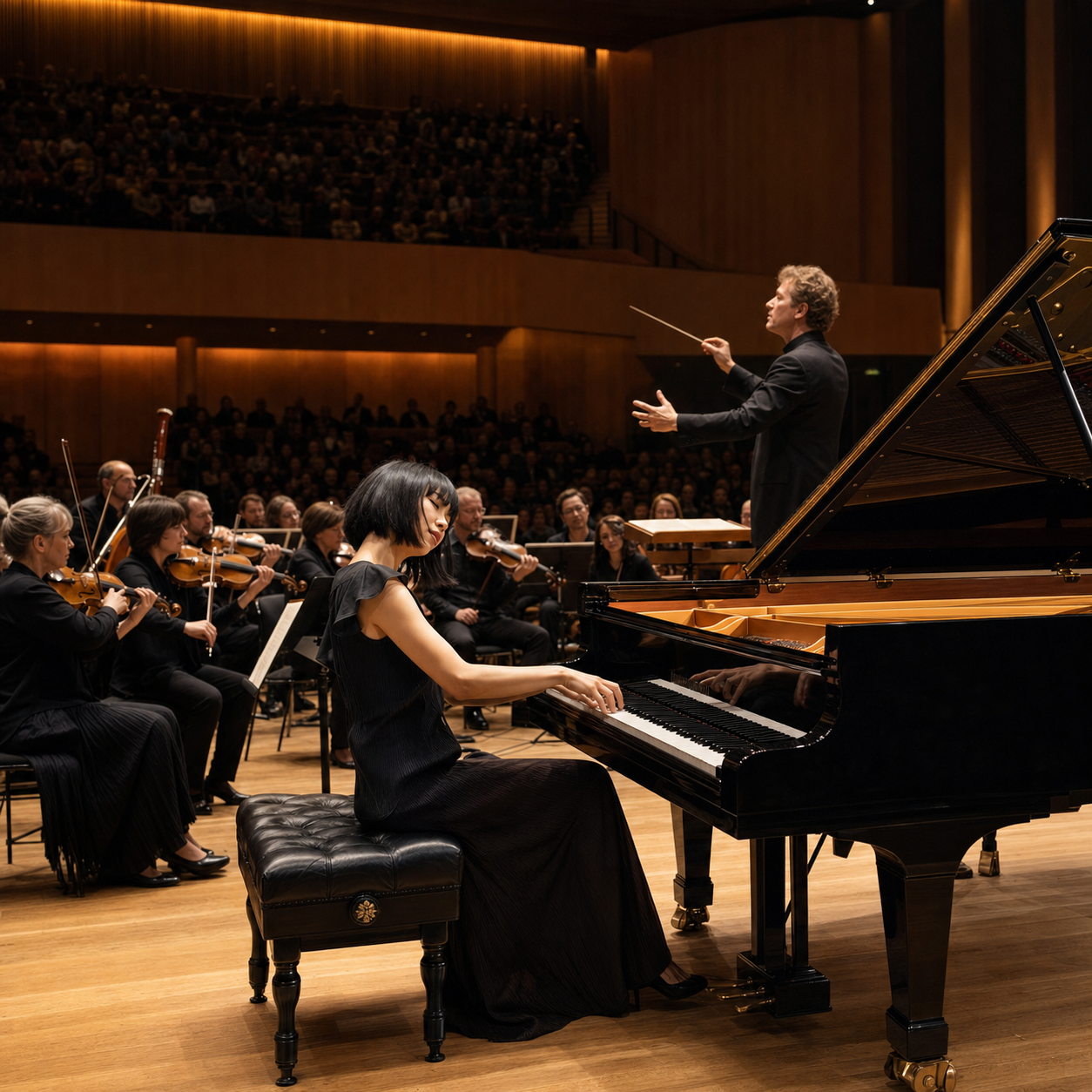
The announced Royal Festival Hall concert on 6 November 2026 offers a different scale. Beethoven’s Fourth Piano Concerto begins with the soloist alone, quietly proposing a world before the orchestra answers. Ott’s sensitivity to conversational balance should make that opening especially revealing. The programme continues with Mahler’s First Symphony, giving the evening a long arc from inward address to orchestral emergence. The Southbank Centre lists a 7.30pm start, an approximate running time of two hours and five minutes, and tickets from £16 plus booking fee; availability and prices can change, so use the official listing before travelling.[3]
The hall itself will be part of the experience. Royal Festival Hall gives the concerto room to breathe while making the balance between piano and orchestra a real interpretive question. Listen to whether Ott treats the first movement’s opening as a private confidence or a public statement. Later, notice how the slow movement’s stark orchestral gestures affect the character of the piano’s response. The finale then tests a different quality: rhythmic life without coarseness. These are more revealing questions than whether the performance is simply fast, powerful or beautiful.
A four-pass guide to serious piano listening
Serious listening does not require a specialist vocabulary. It requires repeatable attention. Use this four-pass framework with one Ott recording, ideally a short Field nocturne or a movement from Beethoven.
Follow only the melody. Where does it breathe, lean or refuse to hurry?
Shift attention to bass and inner voices. What changes when they lead?
Notice attack, resonance and release. Which change carries structural meaning?
Hear the whole performance again. Which return now sounds emotionally altered?
The method is simple enough for a first encounter and precise enough for an advanced pianist. WKMT’s music appreciation guide for piano students develops the same habit of repeated, purposeful hearing.
Keep the passes separate at first. Trying to hear melody, bass, pedalling, form and emotional meaning simultaneously often produces only a vague impression of attentiveness. A restricted question gives the ear something it can actually answer. On the final pass, allow the separate observations to recombine. The aim is not to turn listening into an examination, but to make intuition more articulate. You should finish with one sentence you could defend: perhaps that a return feels more fragile because the bass has withdrawn, or that a climax grows from accumulated resonance rather than volume alone.
What her career offers the adult pianist
Ott’s example is valuable because it places interpretation before display. The pianist’s task is not to accumulate colours as effects, but to decide what the musical argument needs. That principle travels from Bach to Field, Beethoven, Debussy and Jóhannsson. It also suits adult learners, who often arrive with rich listening histories and limited time. A well-chosen comparison between recordings can clarify a phrase more quickly than unstructured repetition.
For readers who want to connect concert listening with their own playing, WKMT offers structured adult piano study in London. The article’s primary purpose, however, is broader: to strengthen the culture of attentive piano listening that surrounds serious teaching, recitals and London musical life.
Continue the listening in London
Explore WKMT’s classical piano culture, teachers and concert community across West Kensington, Camberwell and Bermondsey.
Plan the next hearing
If you are attending the Royal Festival Hall concert, listen to the first movement of Beethoven’s Fourth Concerto beforehand in Ott’s 2023 recording. At the hall, notice how the opening changes when sound occupies a shared physical space. Arrive early enough to settle before the music begins, check current access and ticket information on the venue page, and leave the programme unhurried: Mahler’s First Symphony will change the emotional scale of the evening.
For another London route into colour, read WKMT’s Debussy listening guide; for live studio culture, consult WKMT classical concerts in London. Ott’s work rewards exactly this movement between recording, live sound and reflective return.
Sources and further listening on Alice Sara Ott
- Deutsche Grammophon, Alice Sara Ott biography
- Deutsche Grammophon, Jóhann Jóhannsson: Piano Works
- Southbank Centre, Alice Sara Ott Plays Beethoven
- Alice Sara Ott, official artist biography
- The Guardian, John Field: Complete Nocturnes review
- Barbican, Alice Sara Ott & Friends at LSO St Luke’s
- Southbank Centre, Alice Sara Ott: John Field & Beethoven programme