
 TRIAL LESSON
Piano Lessons
How Hard Is It to Learn Piano for Beginner Adults

Sep
How Hard Is It to Learn Piano for Beginner Adults
Table Of Contents:
- Piano for Beginners: Reality of the Challenge
- Key Takeaways
- Unveiling the Initial Hurdles of Learning Piano
- Identifying Common Beginner Mistakes
- Overcoming the Coordination Challenge Between Hands
- Scheduling Practice Sessions That Work for You
- Setting Realistic Daily Practice Goals
- The Importance of Consistency Over Duration
- Choosing the Right Piano and Learning Materials
- Acoustic Versus Digital Pianos for Beginners
- Recommended Books and Online Resources for Self-Teaching
- Navigating Your First Melodies and Chords With Ease
- Getting Familiar With Scales and Simple Chords
- Integrating Ear Training Into Your Practice Routine
- The Role of a Tutor in Your Piano Journey
- Evaluating if You Need Personal Tutoring or Can Go Solo
- How to Find a Tutor That Matches Your Learning Style
- Maintaining Motivation Amidst Challenges
- The Importance of Setting Attainable Goals
- Celebrating Small Wins to Keep Enthusiasm High
How Hard Is It to Learn Piano for Beginner Adults: Reality of the Challenge
Embarking on the journey of learning to play the piano can be exhilarating, but it’s not without its challenges. As an adult beginner, you’ll be facing the nuances of rhythm and the subtleties of touch, each of which are critical to your success. If you’re considering adult piano lessons, visiting WKMT London in West Kensington, Camberwell and Bermondsey, or even Online, is an excellent step towards realising your musical aspirations. Keep reading to discover how we can not only ease your transition into the world of piano but make it a truly vibrant and fulfilling adventure, right from the very first audition. How hard is it to learn piano, Complete guide.
Key Takeaways
- Consistent practice is essential for learning the piano
- A blend of theory and practical exercises enriches piano education
- Personalised teaching caters to individual learning styles and needs
- Ear training is a critical component of comprehensive music education
- Celebrating small achievements is key to maintaining motivation
Unveiling the Initial Hurdles of Learning Piano

Embracing the piano, one encounters a unique blend of art and technical prowess that can be as bewildering as it is rewarding. My experience in education, spanning across various skill levels and ages, has revealed common pitfalls that impede learning. These adult piano lessons, often masked by initial enthusiasm, include a neglect of music theory and a disregard for proper technique. Addressing such concerns early is crucial, as is the ability to master the coordination between hands—a challenge that demands patience and practice. In the realms of piano pedagogy, these formative stages are as critical as they are fascinating, laying down the bedrock for a fluent and expressive musical journey. How hard is it to learn piano, let’s go through this guide and do not hesitate to Visit WKMT London
Identifying Common Beginner Mistakes
As we begin to unravel the intricacies of piano education for beginners, particularly for those just starting their musical journey at WKMT London, located in the heart of Kensington, I see a pattern of common beginner mistakes. One frequent oversight involves students attempting to jump straight into playing chords without understanding their foundational structure, which is why our curriculum, inspired by the prestigious Berklee College of Music, starts with a solid grounding in music theory.
Overcoming the Coordination Challenge Between Hands
Mastering the coordination between one’s hands is a defining step in piano pedagogy and piano technique, and at WKMT London, we approach this challenge with targeted exercises that weave together melody and harmony. I guide students through the nuanced layers of blues scales and solfège, ensuring they not only understand but also feel the rhythm and flow intrinsic to proficient piano play. It’s a journey that transforms the complexity of dual-hand coordination into a harmonious and intuitive expression.
Mastering those first challenging steps in learning piano sets the stage for consistent improvement. Now, let’s arrange practice sessions that seamlessly fit into your daily routine.
Scheduling Practice Sessions That Work for You

Embarking on a journey to learn the piano draws upon a blend of discipline and creativity. In my teaching, I place significant emphasis on ear training and inspiring students to think like a composer, which begins with establishing understanding and mastery over the fundamentals of music. Key to this process is setting realistic daily practice goals that align with skill acquisition and ensures steady progress. Yet, even more crucial than the length of each practice session is the unwavering commitment to consistency; it is the regularity of practice that lays the foundation for deep musical comprehension and long-term success on the keys.
Setting Realistic Daily Practice Goals
As a teacher, I understand that every student’s life is bustling with unique commitments, which is why when establishing practice schedules, we must account for individual circumstances. Drawing on insights from my studies at the University of Cambridge, I collaborate with students to set achievable, daily goals that harmonise with their routines. To facilitate this personalised approach, my students can easily reach me via email address provided after their initial login to the WKMT learning platform, where they can schedule sessions on our Blüthner pianos that fit seamlessly into their lives.
The Importance of Consistency Over Duration
Consistency in practice trumps the allure of lengthy, sporadic sessions; it’s the daily engagement that tunes each finger to precise, responsive movements. As an expert with a firm background in both classical and jazz piano, I’ve seen that consistent, focused practice enables students to internalise complex rhythms and harmonies much more effectively than occasional marathons. During every music lesson, whether conceived at my university days or refined through professional teaching, the message is clear: regular, brief practice sessions lead to surer progress and more profound mastery over the instrument. How hard is it to learn piano, common question for all.
Now that you’ve pencilled in your practice sessions, let’s turn our attention to the instruments and resources that will optimise your learning journey. Selecting the right piano and materials is a pivotal step in sculpting your path to musical proficiency.
Choosing the Right Piano and Learning Materials

Stepping into the world of piano education brings forth crucial decisions, notably the choice between an acoustic or digital piano. These instruments set the tone for your musical odyssey, influencing not only exam preparation but also your enjoyment of the piano in myriad musical genres. As a connoisseur of both chamber music and the refined piano notes resonating through Covent Garden, I value the tactile profundity an acoustic piano offers. Conversely, the practicality and technological advantages of a digital piano cannot be overlooked for contemporary learners. Additionally, the correct selection of books and online resources is instrumental for self-teaching students, setting a clear path for their independent study and growth as pianists. These resources are tailored to complement personal styles and preferences, providing ample guidance and enrichment.
Acoustic Vs Digital Pianos for Beginners
In guiding beginners through their first forays into the world of piano, whether they lean towards the improvisational lilt of jazz or the pure notes of singing melodies, the choice between an acoustic or digital piano is pivotal. An acoustic piano, with its deep, resonant tones, may encourage a richer sentimental and technical growth in Bayswater‘s budding pianists, cultivating a sense of confidence through its physical presence. Conversely, digital pianos, with their portability and range of features, offer a practical, versatile approach, suiting those who are still amassing their knowledge and may appreciate the ability to experiment without constraints.
Recommended Books and Online Resources for Self-Teaching
From my studio near Baker Street, I’ve seen the transformative impact of proper pedagogy on self-learning pianists. A structured lesson plan tailored to the individual learner, paired with curated books and online resources, can bridge the gap between traditional classes and independent study with a musical instrument. To support this, I’ve compiled an FAQ on our website—your go-to guide for harnessing the power of self-teaching tools and material.
With the perfect piano and resources at your fingertips, it’s time to bring the music to life. Step forward into the world of melodies and chords, where your musical potential begins to unfold with clarity.
Navigating Your First Melodies and Chords With Ease

As one delves into the realm of becoming a pianist, mastering the initial elements of music—scales and simple chords—forms the bedrock for any aspiring musician. It’s here that the use of a methodical approach intertwines with creativity, giving life to melodies and the rhythmic pulse of genres from classical to funk. Incorporating ear training early in your practice routine is paramount. This element of auditory awareness is a critical password unlocking expressive performance, aiding in ABRSM exam preparation, and is a core part of our methodology at WKMT. In guiding you through these fundamental steps, I prioritize clarity and practicality, ensuring that foundational skills are not just learned, but deeply understood. Hoping we answer your question on: How hard is it to learn piano.
Getting Familiar With Scales and Simple Chords
Grasping the basics of scales and simple chords marks a significant phase in the learning process; it is here where the foundational landscape for understanding classical music begins to take shape. As an instructor, I ensure that every fledgling musician receives the nurturing necessary to cultivate their creativity, setting the tone for their future performances, perhaps even on the grand stage of a concert or within the hallowed halls of Trinity Laban Conservatoire of Music and Dance. Tutoring at this elemental level is not merely about imparting knowledge, but about opening a door to a world where technical skill meets imaginative invention. Guide on how hard is it to learn piano.
Integrating Ear Training Into Your Practice Routine
Integrating ear training into your practice routine is pivotal; it’s a skill that distinguishes a pianist informed by the rigour of the Royal Academy of Music from an amateur. Whether practising on a digital piano or an acoustic one, the aim is to develop an ear that detects nuances in pitch and rhythm—essentials for any serious musician. I encourage students to incorporate ear training exercises into their practice sessions, and as always, my door is open for guidance—just an email away for those keen on refining this indispensable skill, following the esteemed traditions of the University of Oxford.
- Develop your ear to recognise pitch and rhythm nuances, vital for all forms of music.
- Incorporate specific ear training exercises into daily piano practice.
- Seek continuous improvement with open communication, offering personalised guidance via email.
As your fingers glide across the keys, discovering the exquisite dance between melodies and chords, the significance of guidance becomes crystal clear. Let’s explore how a tutor’s wisdom elevates this musical voyage.
The Role of a Tutor in Your Piano Journey
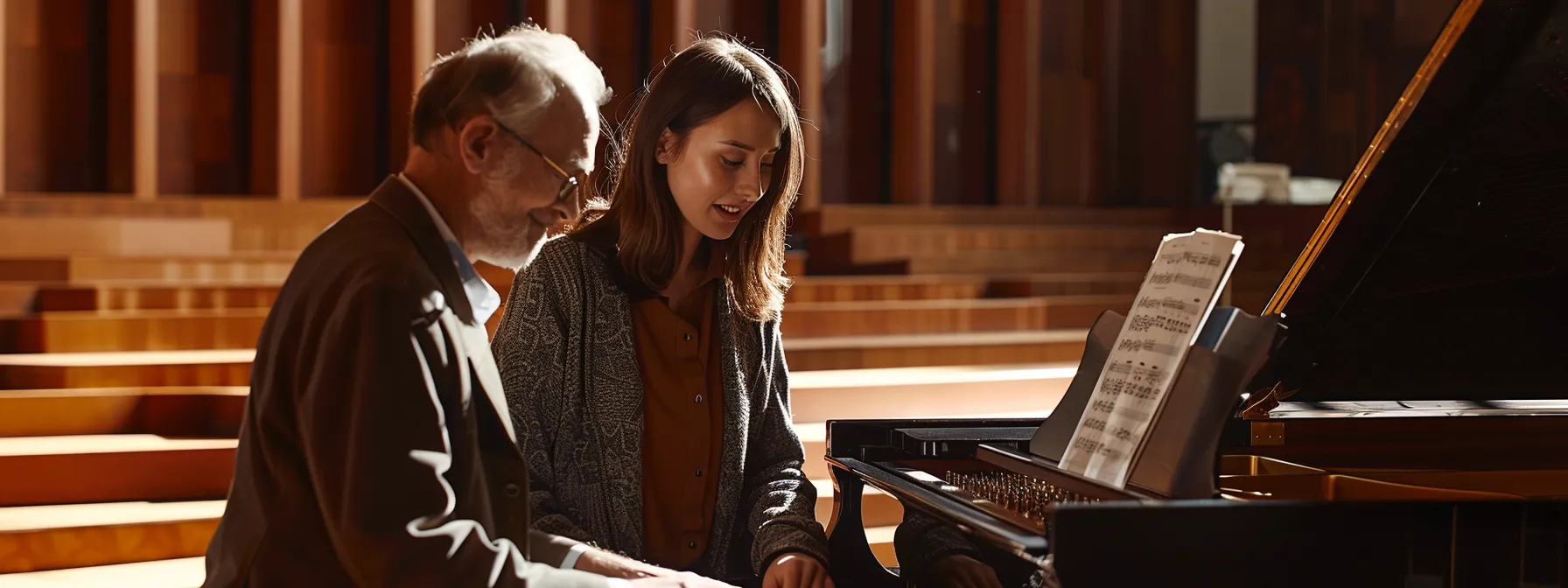
Navigating the path of a beginner pianist, one is often faced with the pivotal decision of selecting the appropriate mode of learning. With the complexities of musical notation and the finesse required for improvisation, the choice between personal tutoring and self-guided exploration is not to be made lightly. Every learner possesses a unique approach, whether dissecting sheet music or mastering the spontaneity of jazz, and finding a mentor who complements this process is paramount. Balancing the artistry inherent to music with the science of effective learning, as widely acknowledged in educational systems including the United States, can profoundly influence one’s pianistic progression. It is with this in mind that I help my students evaluate their needs, while guiding them towards the right educational synergy that honours their personal learning style.
Evaluating if You Need Personal Tutoring or Can Go Solo
As I guide students within our studio, the question of whether personal tutoring or independent study is more effective often arises, particularly for those with an affinitive pull towards pop music. The UK’s rich tradition of piano brilliance, echoing from the concert halls of Birmingham to the hustle of London, has shown me that a tutor’s tailored guidance can accelerate mastery, while self-study might suit those with a disciplined, exploratory approach.
How to Find a Piano Tutor That Matches Your Learning Style
Identifying a piano tutor who aligns with your individual learning style is crucial for success, whether your musical tastes veer towards the classical traditions of the Royal Birmingham Conservatoire or the pulsating rhythms of rock music. Consider a tutor’s expertise beyond a single instrument like the violin, their adaptability to your budget constraints, and their location, perhaps in the culturally rich cities of Manchester or London. The right mentor will elevate your musical journey, responding to your personal goals and learning preferences.
Navigating your piano journey requires more than just learning the notes; a dedicated tutor becomes your guide through every twist and turn. Keeping that momentum, even when faced with obstacles, is the next vital chapter we must explore.
Maintaining Motivation Amidst Challenges
Initiating piano lessons, much like learning any instrument—be it violin in Leeds or saxophone in Cardiff—situates one before an undulating path of progress and challenge. Within this journey, maintaining motivation becomes as instrumental as the music genre one aspires to master. An effective strategy to sustain drive is to define attainable goals. These milestones, while seemingly modest, are critical in ensuring that the pursuit of musicianship never becomes overwhelming. Likewise, celebrating small triumphs plays a further indispensable role; such acts of recognition preserve enthusiasm, transforming incremental achievements into compelling incentives to continue onwards. How hard is it to learn piano.
The Importance of Setting Attainable Goals
In Glasgow, as in every city where music is embraced, the journey of learning piano is enriched when students set attainable goals, particularly when venturing into complex areas like chord progression or exploring the complementary depths of a bass guitar. As a seasoned instructor with a Doctor of Philosophy in Music, my teaching method foregrounds the significance of measurable objectives, ensuring every student can track their own progress and remain motivated throughout the intricate process of musical development.
Celebrating Small Wins to Keep Enthusiasm High – How hard is it to learn piano
Celebrating each small victory is essential in the bustling musical scene of Bristol, where the melody of a well-played clarinet piece can be as invigorating as a newly mastered piano scale. In the world of music technology, every nuanced improvement feels like a personal triumph, reminiscent of the elation one might experience in the cultural heart of Edinburgh. It is this joy, echoed in the vibrant music venues from Spain to Scotland, that sustains our commitment to the craft and elevates our love for the piano.
Discover exceptional piano lessons with WKMT, a leader in piano education since 2010. Available in-studio in London or online worldwide.