
 TRIAL LESSON
Uncategorized
Baroque Harmony for Piano Students

Feb
Baroque Harmony for Piano Students
Baroque Harmony and What Piano Students Need to Know
A rehearsal with a Sammartini sonata opens a window into one of the most instructive surprises in music history: that the harmonic complexity we associate with the Romantics was already fully alive in the Baroque. These developments in music — from Sammartini to Bach — are the focus of this article, which explains why Baroque harmony matters for piano students — and which keyboard works to start with.
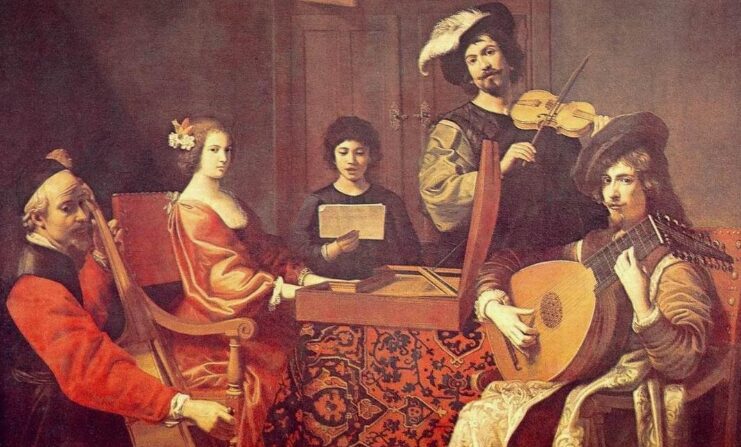
Some years ago, a rehearsal at WKMT for an upcoming classical concert introduced a Sammartini sonata from the early eighteenth century. What struck everyone in the room was the harmony: suspensions, seventh chords, ninth chords — sounds we instinctively associate with the Romantic era, present in full force nearly two centuries earlier. The Baroque was not a harmonically simple period preparing the ground for something richer. In many respects, it was the richest period of all.
Understanding Baroque harmony is not merely an academic exercise for piano students. It is the key to playing Bach’s Well-Tempered Clavier with genuine comprehension, to understanding why Handel’s keyboard suites sound the way they do, and to approaching Scarlatti sonatas with something more than finger agility. This guide lays out what piano students actually need to know — from the harmonic language itself to the tuning systems that shaped it.
What This Guide Covers
- The Baroque harmonic vocabulary — suspensions, seventh chords, circle-of-fifths sequences
- Well temperament vs equal temperament: what the difference means for piano students
- Baroque counterpoint vs Romantic melody — how they differ and why it matters
- Essential Baroque keyboard repertoire: Bach, Handel, Scarlatti, and where to begin
- Practical guidance on how to study Baroque music at the piano
- FAQ: common questions from piano students approaching the Baroque for the first time
The Baroque Harmonic Vocabulary
The Baroque period (roughly 1600–1750) established the tonal system that Western classical music still inhabits. Harmony moved from the modal ambiguity of Renaissance polyphony towards the clear major-minor tonal hierarchy that defines everything from Bach to Brahms.
The Sammartini sonata that prompted this discussion is a useful example. Giovanni Battista Sammartini (1700–1775) wrote in an idiom that bridged the late Baroque and early Classical periods. His harmony uses suspended dissonances with the same fluency that a Romantic composer uses them. The suspension (particularly the 7–6 and 4–3 types) is one of the defining fingerprints of Baroque harmonic writing.
“In the late Baroque, the sequence, the circle-of-fifths formula, seventh chords on all degrees, and the descending series of 6/3 chords are all important harmonic resources. The seventh chord on the leading note in minor keys was frequently used at climactic points before the final cadence.”
For piano students, recognising these patterns transforms the experience of practising Baroque repertoire. A 4–3 suspension in a Bach invention is not just a note to finger correctly — it is a moment of harmonic tension that tells you something about touch, weight, and timing.
The Circle of Fifths Sequence
Perhaps the most characteristic Baroque harmonic device is the circle-of-fifths descending sequence: a chain of chords each a fifth lower than the last, often with seventh chords added on each degree. This pattern drives the harmonic motor of Bach’s chorales, Handel’s keyboard suites, and much of Scarlatti’s sonata writing. Piano students who can hear and feel where a sequence is going are able to shape a phrase towards its natural harmonic destination rather than playing note by note.
Well Temperament vs Equal Temperament — What Piano Students Need to Know
Bach’s Well-Tempered Clavier is sometimes described as a celebration of equal temperament. This is a misreading. Bach used a system called well temperament. In equal temperament, every semitone is exactly the same size and every key sounds identical. In well temperament, each key has a distinct harmonic personality — C major sounds open and stable; C sharp minor sounds tighter.
“In well temperaments, every key is usable, but the keys do not all sound the same — instead, each key has a distinct harmonic personality, with some keys a bit sunnier and smoother, and others darker and edgier.”
For piano students studying the WTC on a modern instrument: you are not hearing exactly what Bach heard. Understanding the original tuning context sharpens interpretive instincts — a pianist who knows Bach associated certain keys with certain expressive qualities will make more considered decisions about touch, dynamics, and voicing.
The practical pitch difference is approximately one semitone: Baroque pitch was typically set around A=415 Hz, compared to the modern standard of A=440 Hz. For a detailed account of concert pitch history, see WKMT’s article on European tuning history.
Baroque Counterpoint vs Romantic Melody — A Critical Distinction
Romantic piano writing is fundamentally a melody-with-accompaniment idiom. Baroque keyboard writing is predominantly contrapuntal: two or more independent voices move simultaneously. In a Bach two-part invention, both voices are melodically significant. In a fugue, the subject passes between voices and the listener must follow it wherever it appears.
This demands a different approach at the piano. Practising hands separately in Baroque music is an exercise in hearing each voice as an independent musical line. The art of voicing is more complex in Baroque polyphony than in any other period.
Essential Baroque Keyboard Repertoire for Piano Students
The Baroque keyboard repertoire is vast, but it has a clear internal logic. Below is a structured overview organised by difficulty and pedagogical purpose.
| Work | Composer | Grade | Key Skill |
|---|---|---|---|
| Two-Part Inventions BWV 772–786 | J.S. Bach | 4–5 | Voice independence, counterpoint |
| Suite No.5 in E major (Harmonious Blacksmith) | Handel | 5–6 | Baroque variation, ornamentation |
| Sonata K.380 in E major | Scarlatti | 5–6 | Binary form, Iberian rhythmic character |
| French Suites BWV 812–817 | J.S. Bach | 6–7 | Dance styles, melodic ornamentation |
| Sonata K.466 in F minor | Scarlatti | 6–7 | Drama, dynamic contrast, cross-hand |
| English Suites BWV 806–811 | J.S. Bach | 7–8 | Large-scale form, prelude technique |
| Well-Tempered Clavier Books I & II | J.S. Bach | 8+ | All aspects of Baroque keyboard style |
Practical Guidance for Studying Baroque Music at the Piano
- Analyse before you play. Identify the key, the harmonic structure of each phrase, where the sequences occur, and where the cadences fall. Spotting the circle-of-fifths pattern before you play it means you understand where you are going.
- Practise each voice as a melody. Play the soprano alone; sing it. Play the alto alone. Then combine. This is not just a practice technique — it is the way the music was conceived.
- Learn ornamentation conventions. Baroque trills begin on the upper note in most contexts. Mordents, turns, and appoggiaturas have specific rhythmic realisations. Playing an ornament incorrectly in Baroque music is a misreading, not a stylistic choice.
- Use a light, articulated touch. The harpsichord had no dynamic variation and rapid decay. On a modern piano, clarity of articulation and minimal sustain pedal preserves the transparency Baroque textures require.
- Study with score and recording simultaneously. Angela Hewitt’s Bach recordings are an excellent starting point for calibrating interpretation.
Baroque Harmony and Its Connection to Later Music
The music teaching tradition at WKMT places strong emphasis on understanding how harmonic language evolves — and how much the Baroque provided. The suspensions Sammartini used in the early eighteenth century reappear in the slow movements of Beethoven’s sonatas. The circle-of-fifths sequences that drive Bach’s chorales power the developmental sections of Haydn’s symphonies and Schubert’s chamber music.
“Baroque quite often can be more complex than the Romantic period, which quite often uses melodies with slightly more ‘simpler’ accompaniment. The 20th century saw a lot of experimentation from Debussy and Ravel to Shostakovich and Prokofiev — yet they still sound atmospheric, imaginative, and musical in their own way.”
For piano students, this continuity is liberating rather than burdensome. The harmonic skills developed in studying Bach’s Well-Tempered Clavier are the same skills applied — with different surface language — in Chopin’s nocturnes or Debussy’s préludes. The Baroque is not a historical detour. It is the foundation. Adult learners often find that this historical context accelerates their musical understanding significantly — a reason many choose adult piano lessons in London with a teacher who explains the harmonic language behind every piece.
What is the difference between well temperament and equal temperament for piano students?
Equal temperament divides the octave into twelve identical semitones — every key sounds the same. Well temperament uses slightly unequal intervals so each key has its own harmonic personality. Bach’s WTC was written for well temperament, which means modern piano performances lose some original key-colour contrasts.
What Baroque piano repertoire should a Grade 5 student start with?
The Bach Two-Part Inventions are the standard starting point. Handel’s Suite No.5 in E major and the easier Scarlatti sonatas (K.380 is a good choice) offer valuable contrast in style and approach.
Is the Well-Tempered Clavier suitable for intermediate piano students?
The easier preludes in Book I (C major BWV 846, C minor BWV 847) are within reach of a solid Grade 6–7 student. The fugues are generally Grade 8 and above. Working through the French Suites first is the conventional preparatory path.
Why does Bach use so many suspensions?
Suspensions create controlled dissonance and resolution — the harmonic equivalent of tension and release. They intensify the sense of harmonic movement towards a cadence and are the primary expressive tool of the Baroque contrapuntalist.
Should I use the sustain pedal when playing Bach?
Sparingly. Bach wrote for the harpsichord, which had no sustain mechanism. Heavy pedalling blurs the contrapuntal voices. Use finger legato as your primary tool, and reserve the pedal for specific passages in slow movements.
How does Baroque harmony differ from Romantic harmony?
Baroque harmony is driven by contrapuntal logic — voice leading, sequences, suspensions — within a clearly defined tonal framework. Romantic harmony extends that framework through chromaticism and more ambiguous tonal centres. A student who understands Baroque harmony has the foundation for everything that follows.
Piano Lessons in London — From Baroque to Contemporary
WKMT’s teaching programme builds a genuine understanding of musical style and harmonic language, from Bach’s counterpoint to 20th-century repertoire. Lessons for children and adults, beginner to advanced.