
 TRIAL LESSON
Piano Lessons
How to Know If Your Child Is Ready for Piano
Aug
WKMT London parent guide
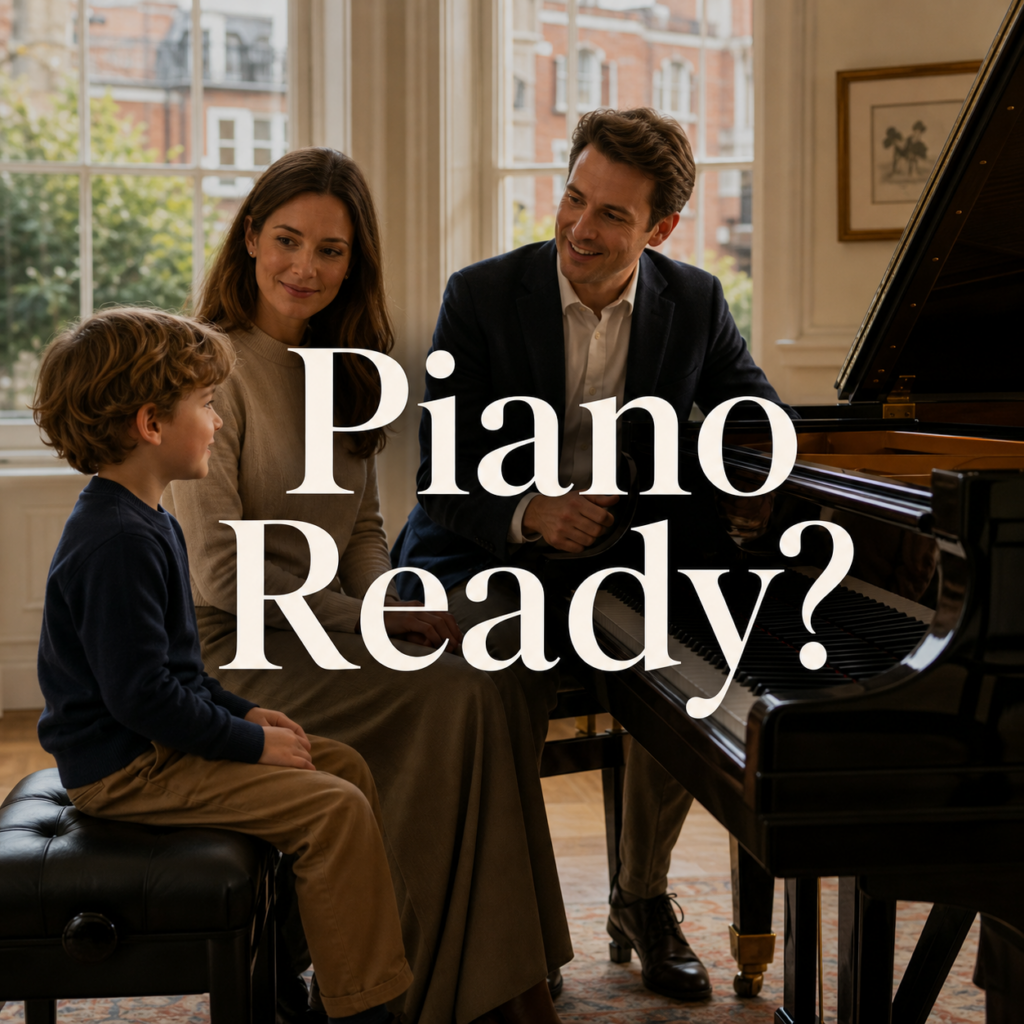
Piano readiness is not a race towards a stool. It is the moment when curiosity, listening, small discipline and parent support begin to meet around sound.
Quick answer
A child is usually ready for piano when they can enjoy short musical attention; that is the practical answer to how to know if your child is ready for piano; that is the practical answer to how to know if your child is ready for piano, copy a simple pattern, accept a teacher’s guidance, recover from small mistakes and practise briefly at home with a calm adult nearby. Age helps, but readiness is heard in response, not proved by a birthday.
If you are asking how to know if your child is ready for piano, begin with the quality of attention rather than a fixed age. A child who reaches for the piano is already telling you something. The question is what kind of answer the adults should give. Some children need a lesson. Some need songs, clapping, dance and listening before weekly piano study becomes fair. Some need a teacher to make the first encounter gentle enough that curiosity survives the seriousness of learning.
That distinction matters for London parents. A good first piano lesson should not make a child feel inspected. It should reveal whether they can share attention, copy sound, laugh after a mistake, and return to the keyboard with trust. The best beginning is structured, but it still feels like discovery.
For families comparing structured piano lessons for children in London, readiness is therefore practical. It asks whether the child can begin a musical relationship with a teacher, a parent and the instrument without pressure taking over.
Readiness at a glance
How to know if your child is ready for piano: musical attention
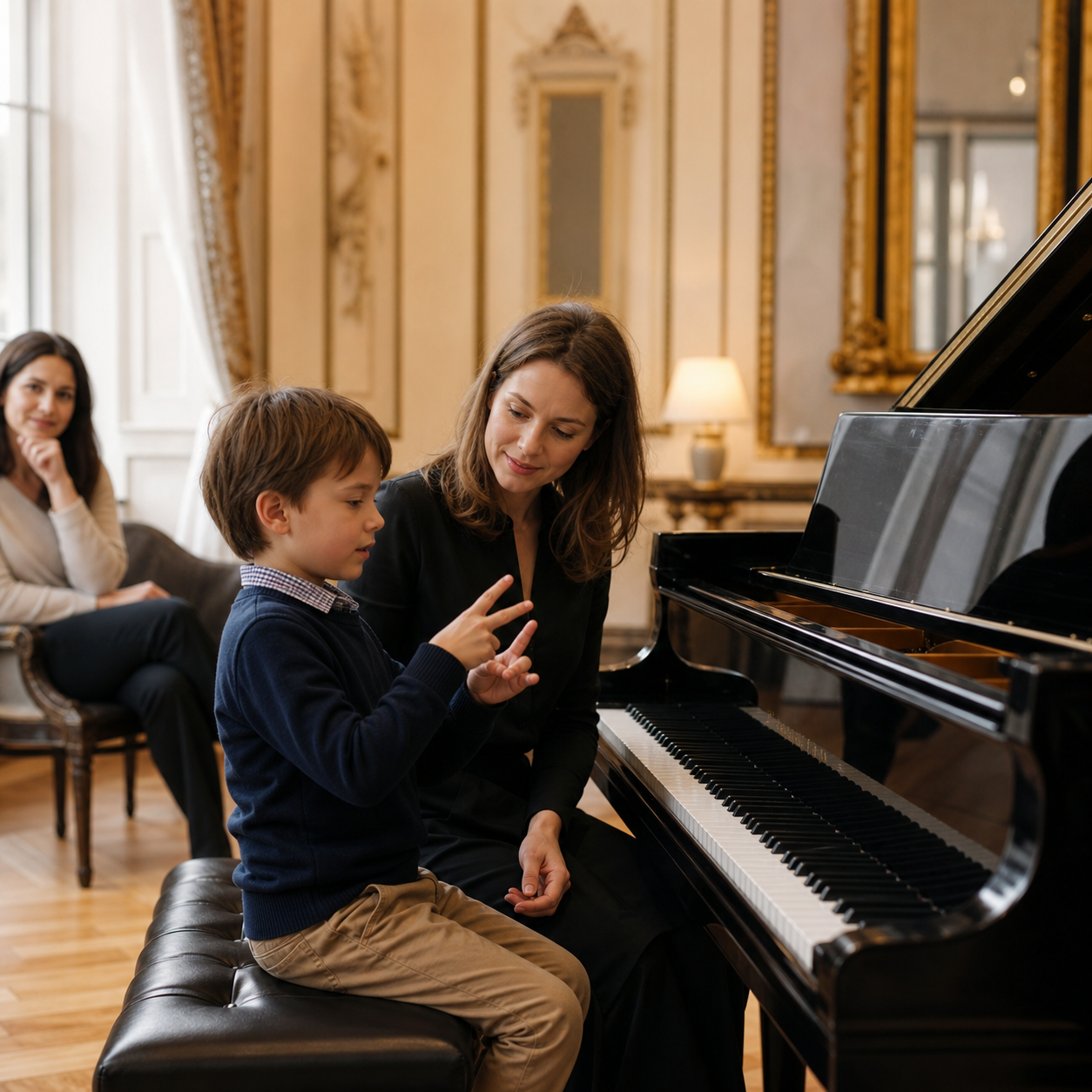
Parents often look for talent first. Teachers usually look for attention. Talent is attractive, but attention is teachable. A child who can listen to a three-note pattern, copy it, and notice that the second attempt sounded different has already entered the world of piano study.
This does not mean the child must behave like an older student. Young beginners wriggle, ask sudden questions and forget instructions. The useful sign is not stillness. It is return. Can the child come back to the task when the teacher makes it clear, playful and short?
A musical child may still need to wait
There is no shame in waiting. Some children love music but are not yet lesson-ready. They may want to touch the piano, invent songs, dance to recordings or sing fragments from memory, yet resist direct correction. That is still musical development. It simply belongs to a gentler stage.
The Early Years Foundation Stage in England treats expressive arts, imagination and communication as central to young children’s development. Piano fits beautifully into that world when it begins through singing, rhythm, movement and shared attention. It becomes less helpful when adults turn every sound into a task too soon.
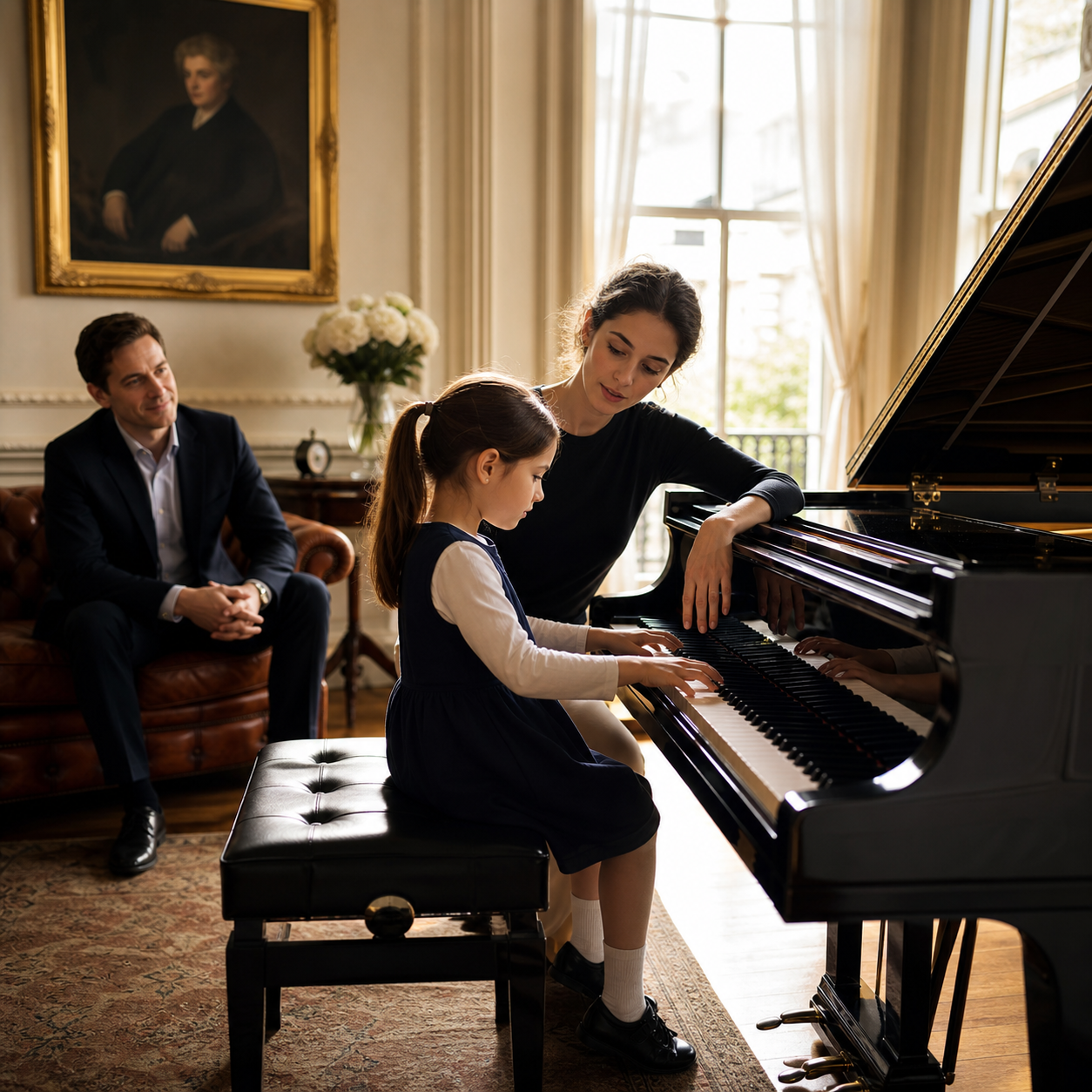
The question is not whether a child can press piano keys. It is whether they can begin to care how a sound is made.
How to know if your child is ready for piano: start, wait or prepare
The most useful parental decision is not simply yes or no. Many children sit between readiness and not-yet-readiness. The table below is designed as a calm map, not a verdict.
Watch the WKMT children lesson context
This WKMT video is useful because it shows the lesson as a musical relationship rather than a race through material. Watch for calm structure, teacher attention and the way a child’s confidence is protected while learning becomes more specific.
If the embedded player is unavailable, open the WKMT child-development piano education video on YouTube.
What the first months should build
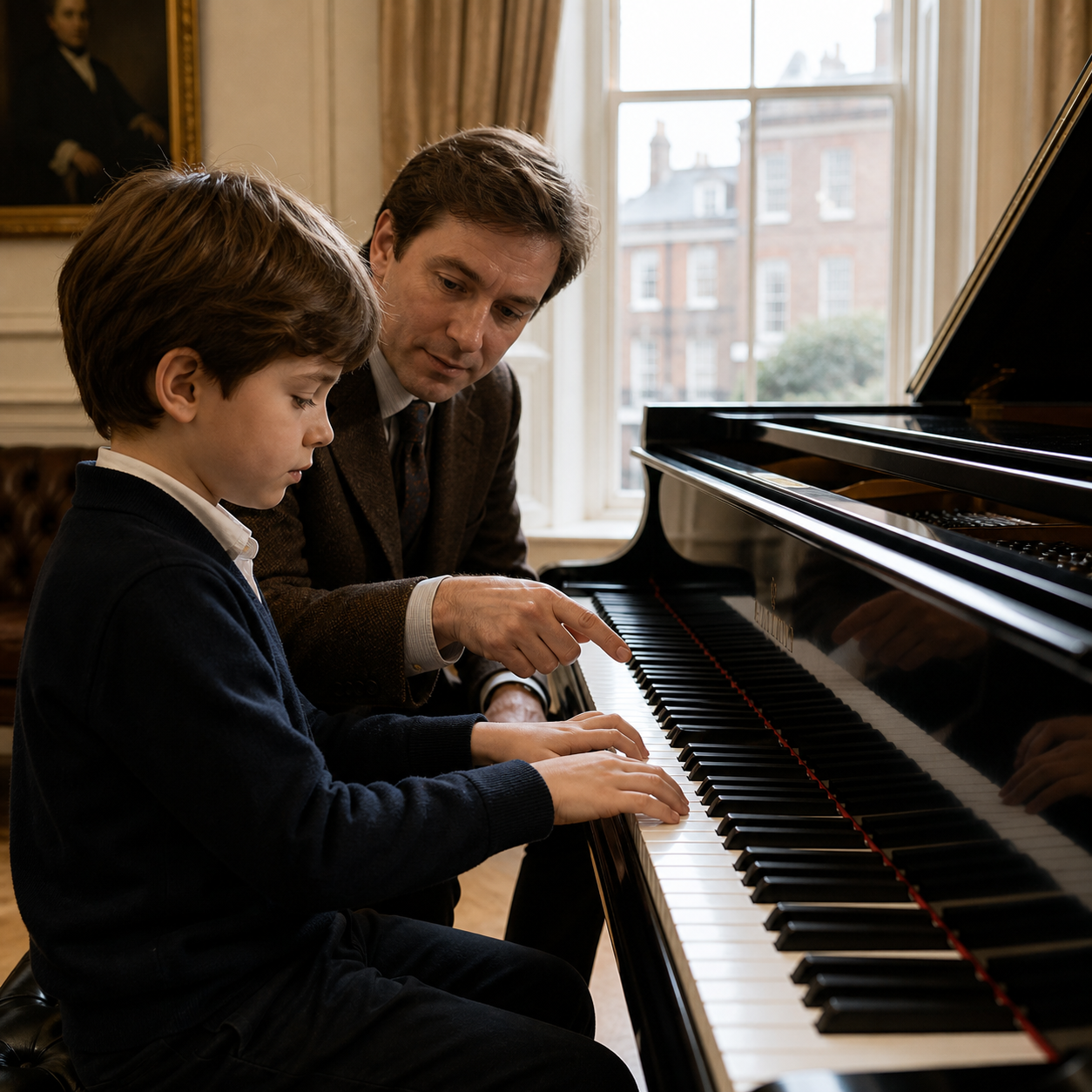
The first months should build musical security. That means pulse before speed, listening before correction, posture before volume, and small pieces that leave the child wanting to return. A young beginner does not need a heavy sense of duty. They need a ritual that makes the piano feel familiar and alive.
At WKMT, that route connects naturally with parent communication and structured piano practice guidance for parents. Children progress best when teacher and parent protect the same atmosphere: precise, warm, and not crowded by panic.
When waiting is the musical choice
Waiting is wise when every correction feels like rejection, when practice becomes a daily argument, or when the parent wants lessons more urgently than the child does. The waiting period should still be musical: sing together, hear live music, use rhythm games, and let the piano remain a place of fascination.
If confidence is the main concern, WKMT’s article on music and confidence is a useful companion. If you are thinking about longer-term development, read the guide on music and brain development as broader context, without treating research claims as a promise of instant results.
Begin children’s piano lessons calmly
If your child is curious, responsive and ready for gentle structure, WKMT can help you begin with serious teaching that still respects childhood.
Quick questions for parents
How to know if your child is ready for piano at a particular age?
Many children begin well between five and seven, but a musical four-year-old may enjoy a gentle introduction and an older beginner can progress strongly. The useful question is how the child responds, not only how old they are.
Does my child need to read music first?
No. Reading grows from listening, keyboard geography, rhythm and pattern recognition. Notation should clarify music, not overwhelm the first experience.
How much should a young beginner practise?
Short, regular and calm is best. Five to ten focused minutes, guided by the teacher’s assignment and supported by a parent, can be enough at the beginning.
Sources
- WKMT London children’s piano lessons (last checked 15 August 2026).
- WKMT: piano practice tips for parents (last checked 15 August 2026).
- Department for Education: Early Years Foundation Stage statutory framework (last checked 15 August 2026).
- MIT Gabrieli Lab: piano training and speech-sound discrimination in children (published 10 July 2018; checked 15 August 2026).
- ABRSM Prep Test information (last checked 15 August 2026).
- Harvard Center on the Developing Child: executive function and self-regulation (last checked 16 August 2026).
- Harvard Center on the Developing Child: executive function and self-regulation (last checked 16 August 2026).