
 TRIAL LESSON
Piano Lessons
How Adults Can Practise Piano After Work
Aug
WKMT London adult learner guide
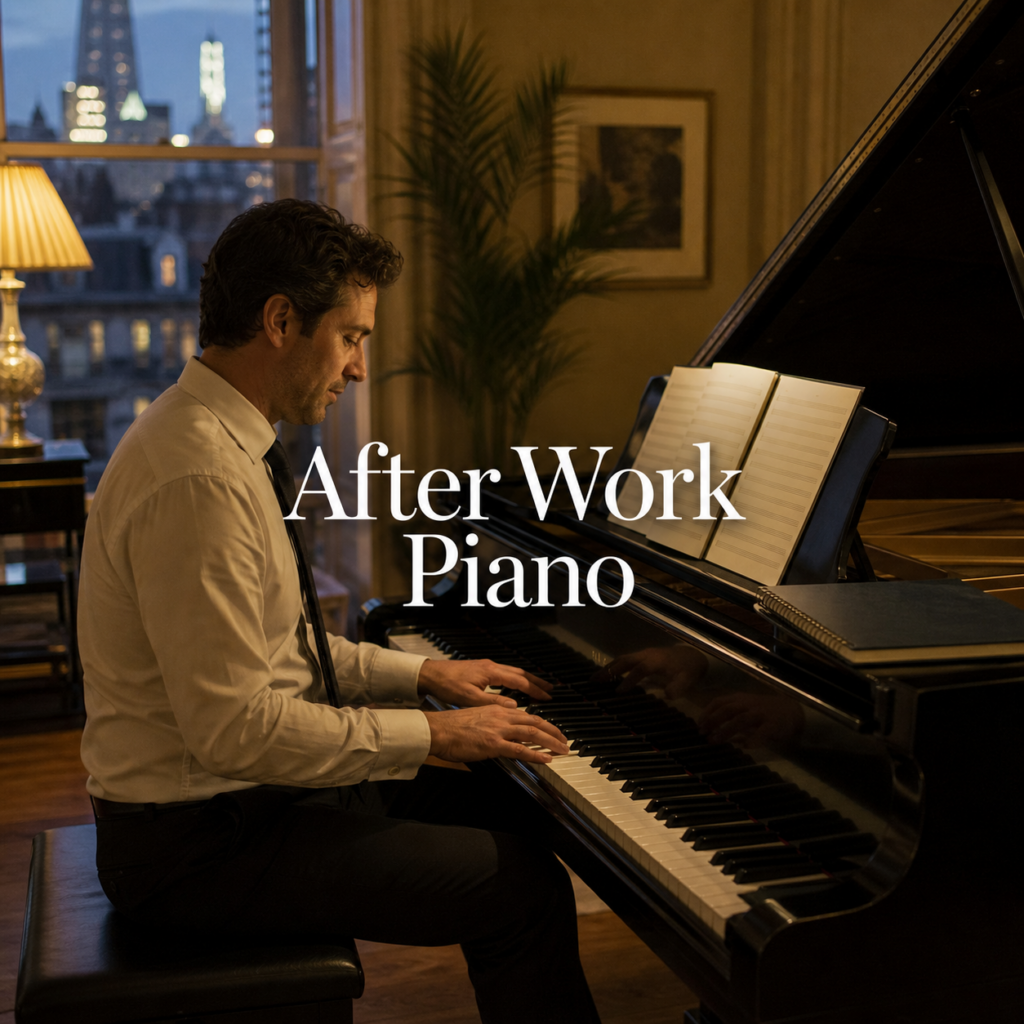
Evening practice should not feel like a second shift. For adult pianists, progress often begins when the work becomes smaller, more musical and more precisely chosen.
Quick answer
Adults can practise piano after work by making the session short enough; this is the simplest answer to how adults can practise piano after work; this is the simplest answer to how adults can practise piano after work to repeat and specific enough to matter: one reset, one musical problem, one clean passage, and one satisfying ending. The aim is not heroic effort. It is musical clarity when the day has already used most of your attention.
For anyone wondering how adults can practise piano after work, the first task is to make the piano feel possible at the end of a real day. The piano can be strangely exposed after work. The room is quiet, but the mind is not. Emails are still speaking. The commute is still in the shoulders. A difficult passage that felt possible at the weekend can suddenly look like another demand.
This is why adult practice needs a different kind of intelligence. A child often needs routine before reason. An adult often needs reason before routine. The task has to make musical sense: why this bar, why this fingering, why this sound, why stop now. Without that clarity, the piano becomes another place to feel behind.
For adults considering face-to-face adult piano lessons in London, the after-work question is central. A good teacher should not merely ask for more practice. They should help you choose the kind of practice your real week can sustain.
How adults can practise piano after work: the principle
The problem is not laziness
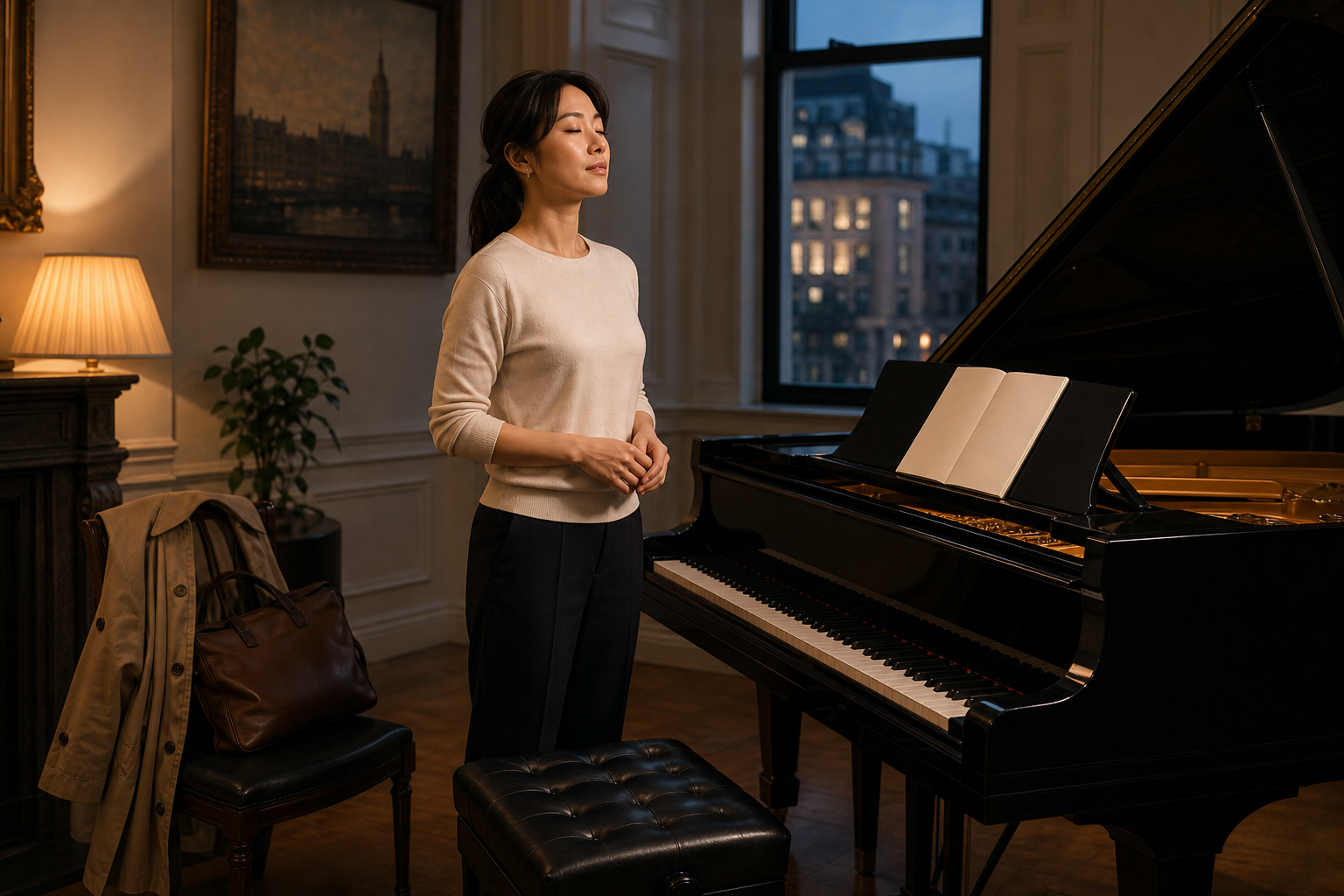
Most adult learners are not short of ambition. They are short of clean energy. Work, family, screens and travel leave a residue. If practice begins by demanding a heroic version of yourself, it will often fail before the first page is open.
The better question is: what can a serious adult learner do tonight that will still matter next week? Research on practice and skill learning is clear enough on the broad principle: repetition matters, but repetition only helps when the movement, attention and feedback are well organised. In piano terms, that means the evening session must be narrow, audible and supervised by the ear.
Three kinds of tired need three kinds of practice
Tiredness is not one thing. Sometimes the body is heavy. Sometimes the mind is noisy. Sometimes the real problem is guilt about the days you missed. Each state needs a different musical answer.
Progress after work rarely comes from practising longer. It comes from knowing what is worth repeating.
How adults can practise piano after work in 25 minutes
The most reliable adult routine is short enough to repeat and clear enough to remember. Use your lesson notes as the authority, then make the evening task smaller than your enthusiasm.
What adults often do better than they expect
Adults can be excellent practisers when the task is named clearly. A child may repeat because a teacher asks; an adult can repeat because the musical reason is understood. That difference matters. When the left hand is too loud, the work is not simply “do it again”. The work is “hear the bass as support, not as a second melody”.
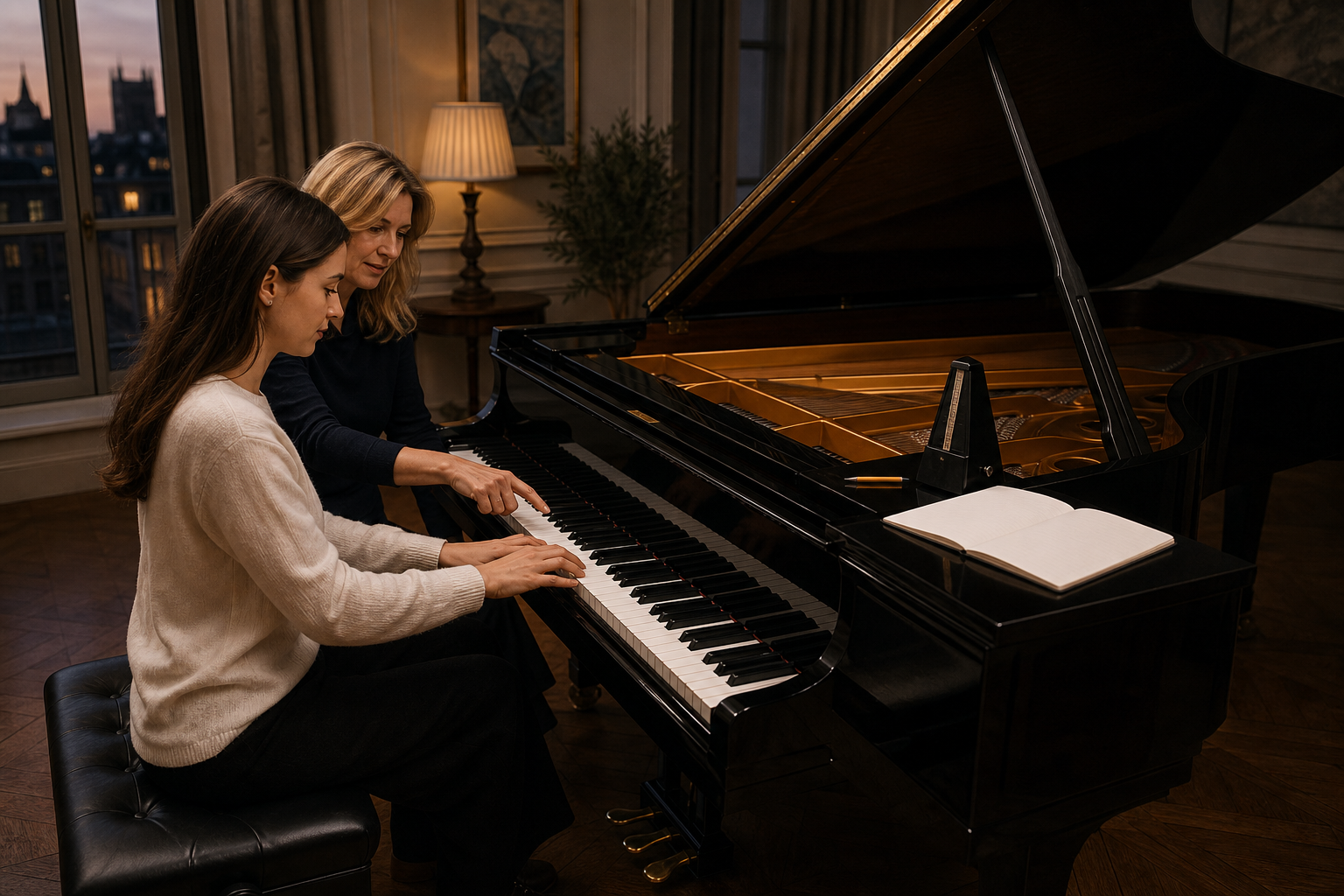
This is where face-to-face teaching becomes unusually valuable. A teacher can see the tired shoulder, the tense wrist, the rushed breath before the difficult bar, and the moment where the ear stops leading the hands. Online tips can suggest routines. A lesson can diagnose the living person at the piano.
Watch the WKMT adult lesson context
A good adult lesson should make practice feel more organised, not heavier. This WKMT video gives a useful sense of the adult lesson route in London.
If the embedded player is unavailable, open the WKMT piano technique video on YouTube.
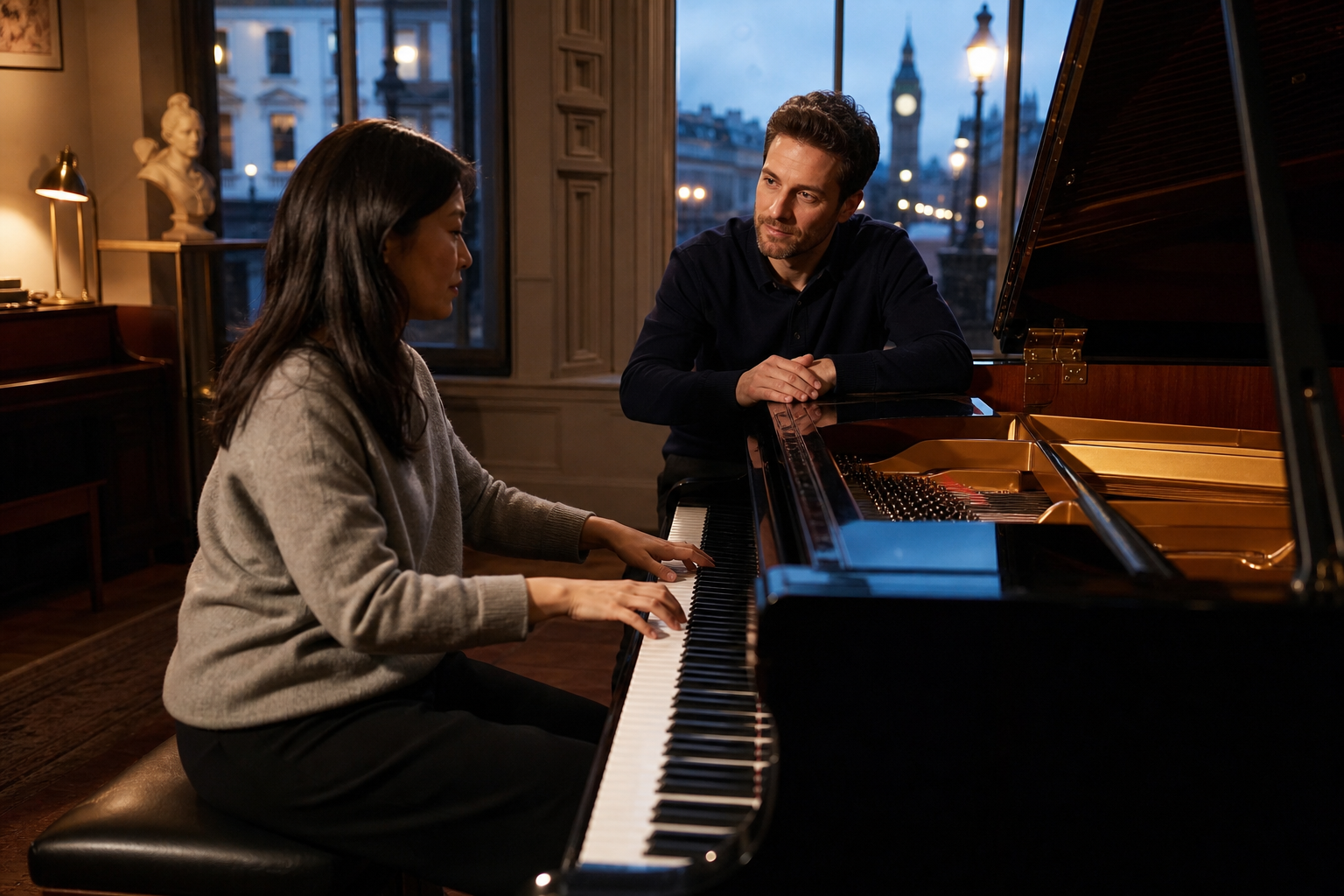
What a London adult lesson should give you
A weekly lesson is not just a slot in the diary. It is the place where the after-work practice question becomes solvable. The teacher decides what belongs in the short session, what should wait, and what must be changed before repetition makes a bad habit stronger.
If the issue is schedule, WKMT’s guide to flexible adult piano lessons is a useful companion. If the deeper worry is age or returning after years away, read the article on beginning piano as an adult. For wider practice technique, see WKMT’s note on how to practise effectively.
Study piano as an adult in London
If your best practice time is after work, your lessons should help you use that time intelligently. WKMT helps adults build a calm, structured and musical route through repertoire, technique and confidence.
Quick questions for adult learners
Is 20 minutes enough for how adults can practise piano after work?
Yes, if the task is specific. Twenty clean minutes on one passage, one rhythm or one sound can be more useful than an unfocused hour.
Should adults practise every evening?
Not necessarily. A realistic rhythm might be two or three short sessions, one listening session and one lesson. Consistency matters more than guilt.
What if I am too tired to play well?
Do something musical but lighter: listen with the score, revise fingering away from speed, or play one phrase beautifully and stop.
Sources
- WKMT London adult piano lessons (last checked 15 August 2026).
- Piano with Po: How to Practice as an Adult (last checked 15 August 2026).
- The Cross-Eyed Pianist: The Adult Learner’s Roadmap to Piano Excellence (published 26 August 2024; checked 15 August 2026).
- Pianist Magazine: Rediscovering the piano as an adult (last checked 15 August 2026).
- Haith and Krakauer: The multiple effects of practice (PubMed; checked 15 August 2026).
- Platz, Kopiez, Lehmann and Wolf: deliberate practice and musical achievement (published 25 June 2014; checked 15 August 2026).