
 TRIAL LESSON
Piano Lessons
Music and Confidence: How Piano Helps Children Build Self-Belief, Courage and Steady Progress
Aug
Music and Confidence: How Piano Helps Children Build Self-Belief, Courage and Steady Progress
Music and Confidence: How Piano Helps Children Build Self-Belief, Courage and Steady Progress
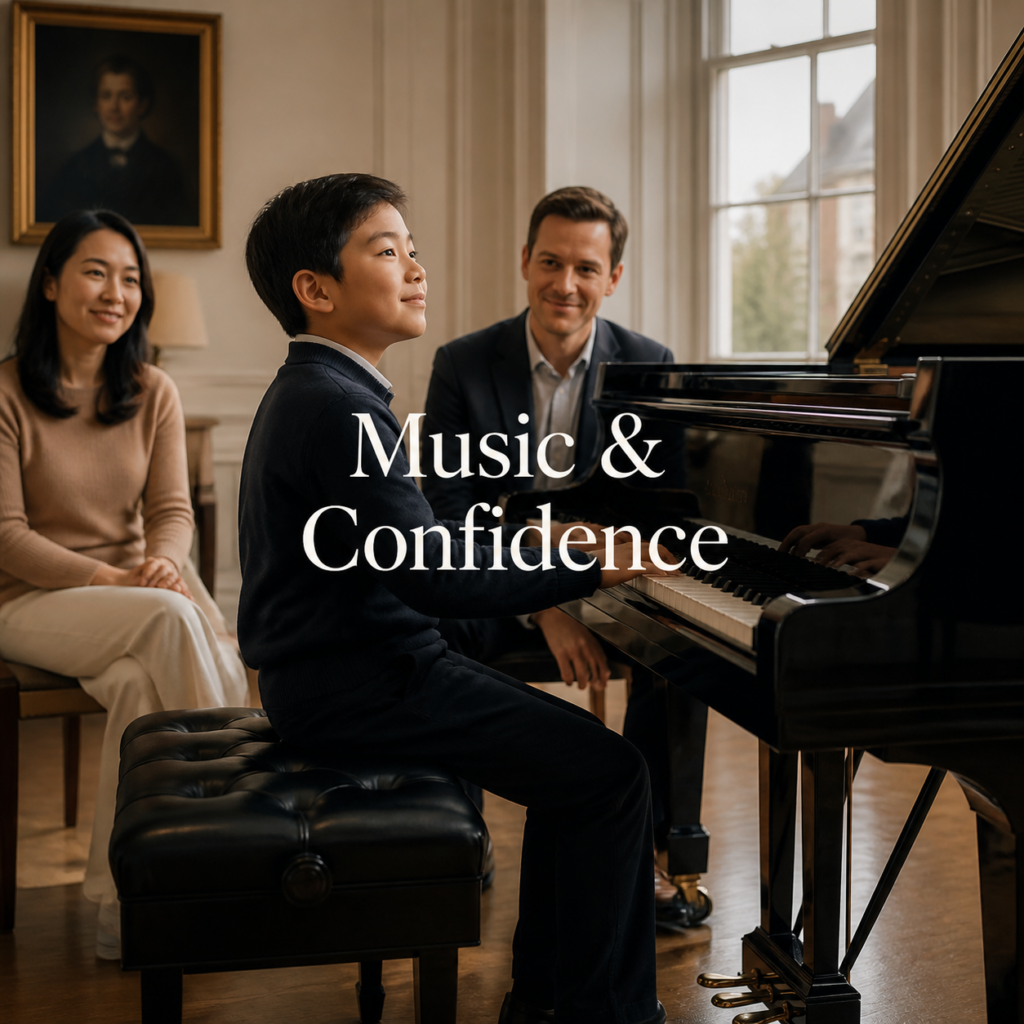
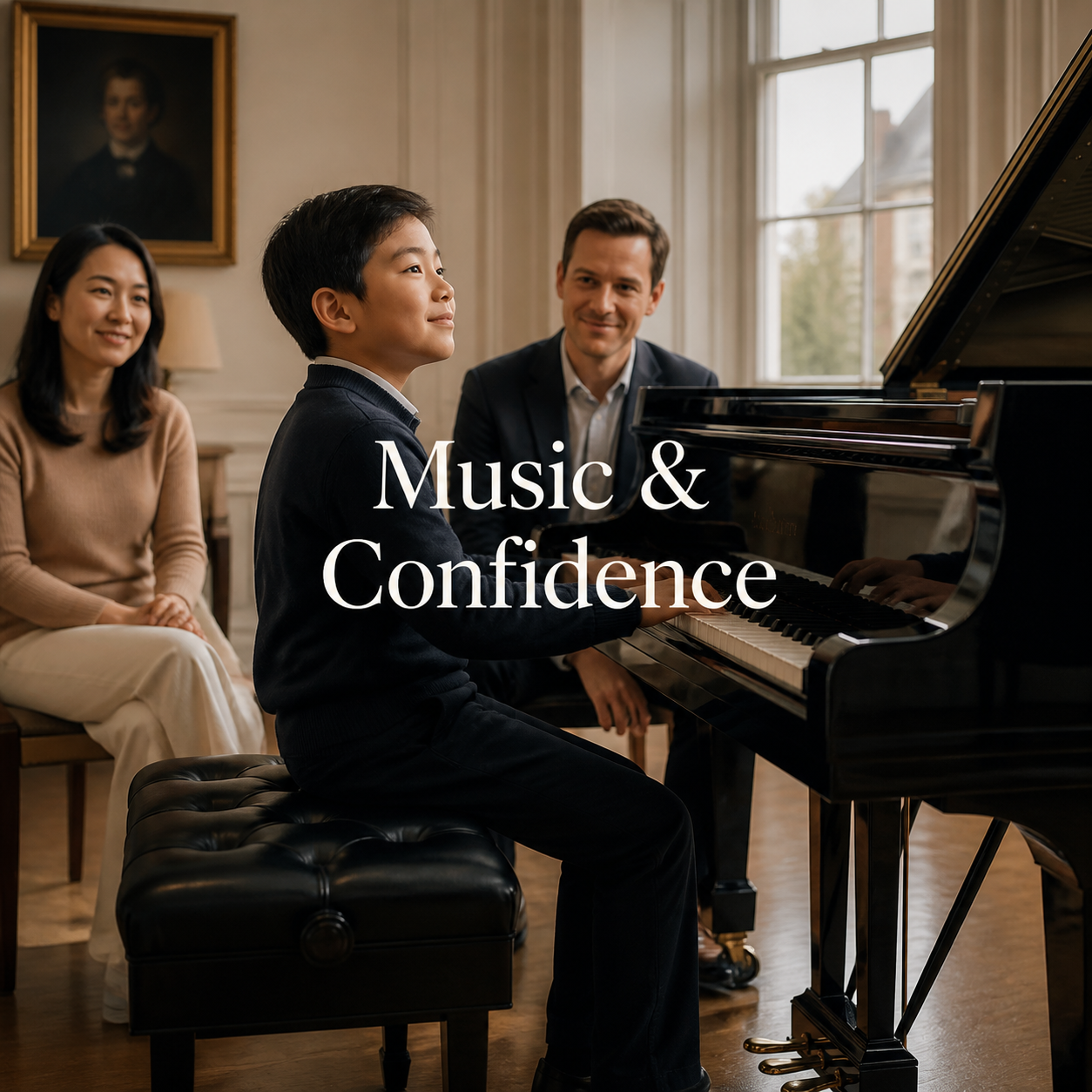
Music and confidence can grow together when a child meets achievable challenges, receives thoughtful guidance and learns that a mistake is information rather than a verdict. Piano lessons make that process unusually visible: progress can be heard, repeated and owned.
What parents should expect from music and confidence
Learning music does not automatically turn a hesitant child into an extrovert. Nor should that be the goal. A quiet pupil can be deeply confident: able to begin, persist, ask for help, recover after an error and share a prepared piece without pretending not to care.
A 2025 systematic review of research on self-esteem in music education found a broadly positive relationship, particularly for some children and adolescents, while also warning that much of the evidence is cross-sectional and cannot prove simple cause and effect. That distinction matters. Good teaching creates repeated experiences from which confidence may grow; the instrument itself is not a cure.
For parents: look for increased willingness, not constant certainty. A child who says “I am not sure, but I will try once more” is showing a more useful form of confidence than one who needs every attempt to feel easy.
For families considering structured piano lessons for children in London, the strongest confidence-building environment is neither indulgent nor severe. It combines musical standards with tasks the child can understand and complete.
How piano turns effort into evidence
Confidence is easier to build when improvement is concrete. On the piano, a child can compare a first attempt with a later one. A rhythm becomes even; a phrase reaches its destination; two bars that once stopped now continue. The achievement is small enough to be believable and substantial enough to belong to the pupil.
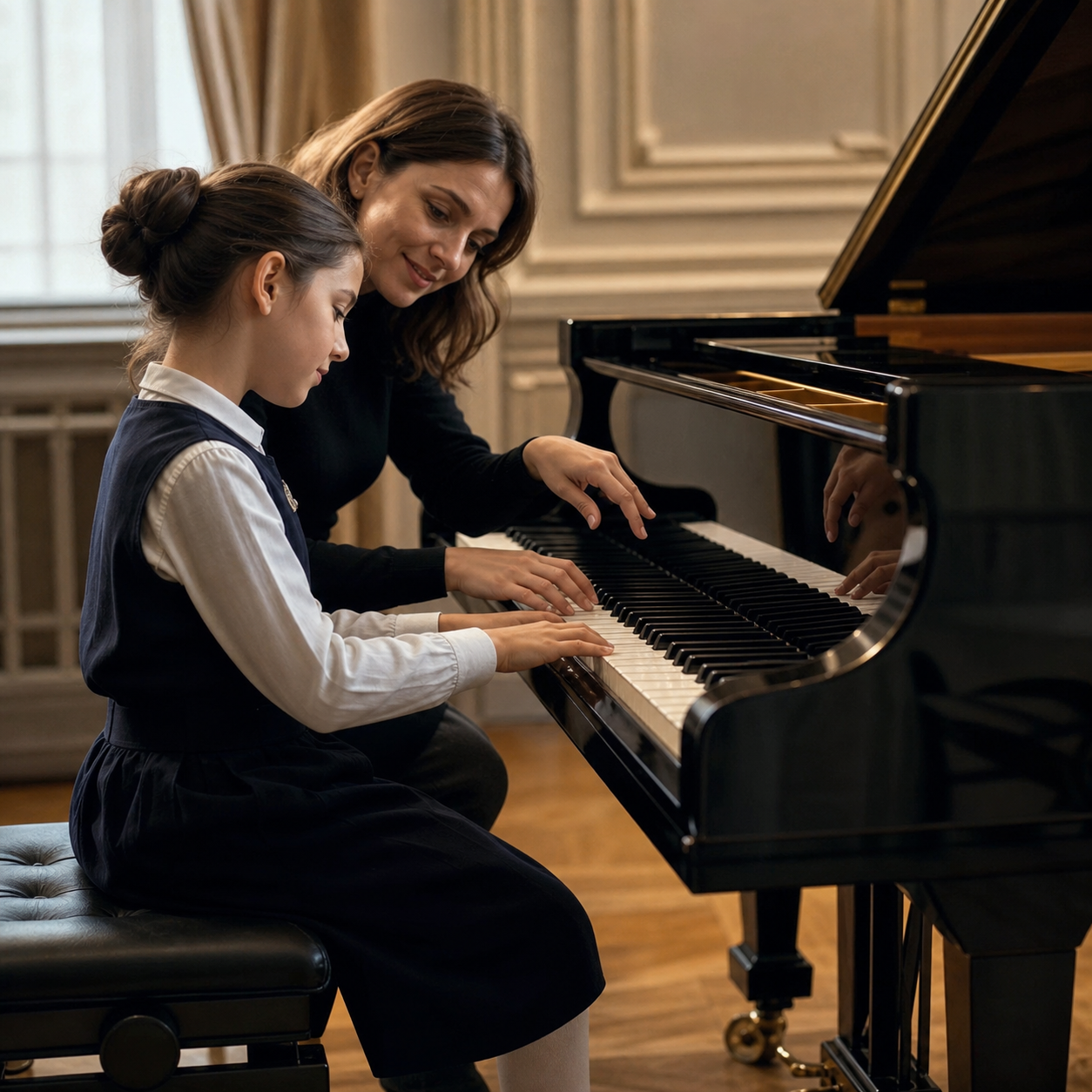
This four-part cycle protects a child from vague praise. “Brilliant” can feel pleasant, but it teaches little. “Your left hand stayed quiet enough for the melody to sing” gives the pupil evidence. The next success can then be reproduced rather than hoped for.
Music and confidence in performance
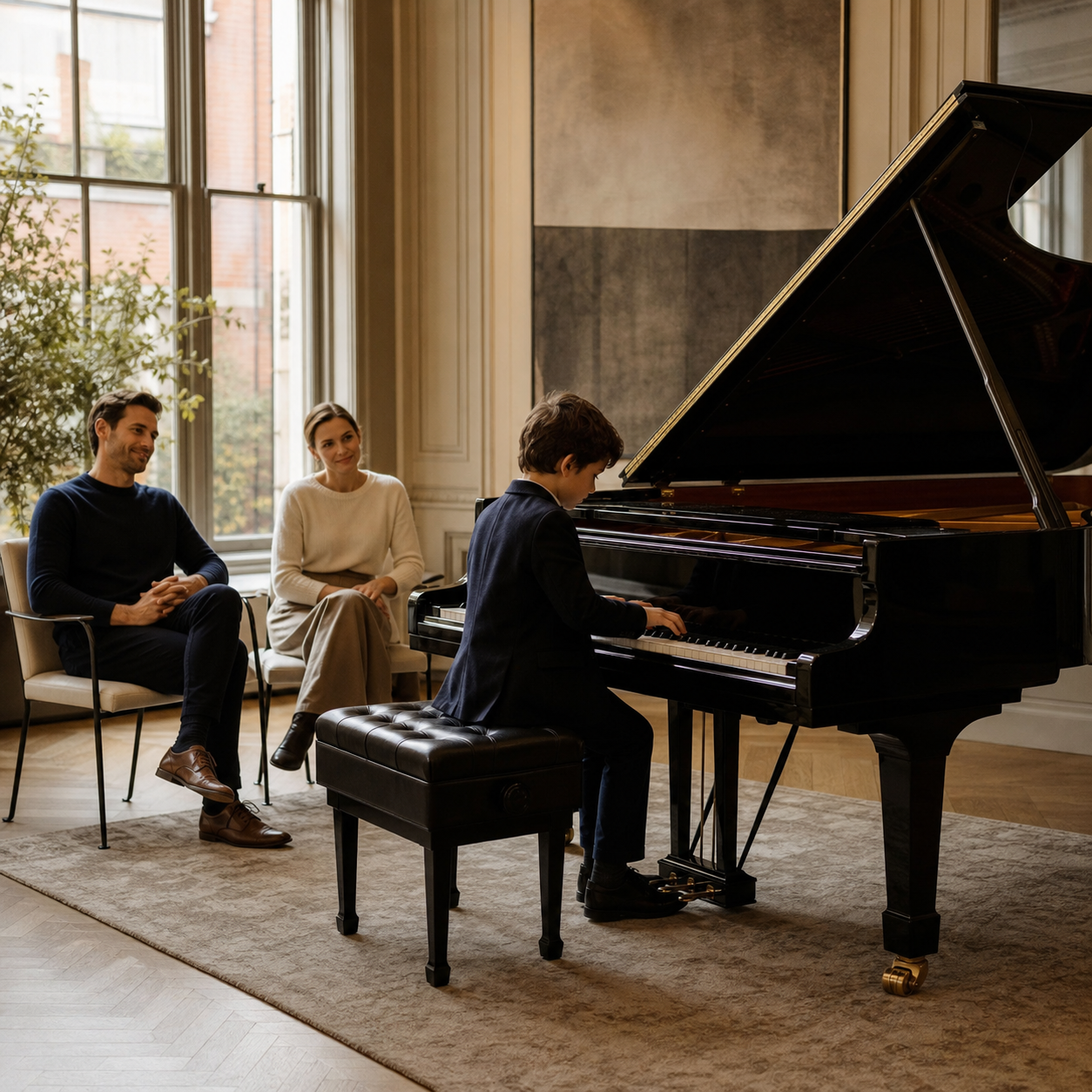
Performance is often treated as a final test. For a young pianist it works better as a ladder. The first rung might be playing to a teacher without stopping. The next could be playing to one parent, recording a single take, joining an informal studio class and eventually participating in a concert.
| Stage | Useful aim | Parent response |
|---|---|---|
| Teacher only | Continue after a small slip | Ask what felt steadier than last week |
| One listener | Shape a clear beginning and ending | Comment on preparation, not personality |
| Small studio group | Manage waiting and attention | Keep the occasion ordinary and warm |
| Concert | Communicate a well-known piece | Celebrate courage and musicianship, not perfection |
WKMT’s history of connecting musical practice with live performance reflects this principle: the stage should grow out of preparation. It should not be used to frighten a child into working.
Why recovering from mistakes matters
A pupil who believes that a wrong note exposes a lack of talent will avoid risk. A pupil who learns to diagnose the moment can stay curious. Was the fingering unsettled? Did the pulse rush? Was the passage practised too quickly? These are musical questions, not judgements about the child.
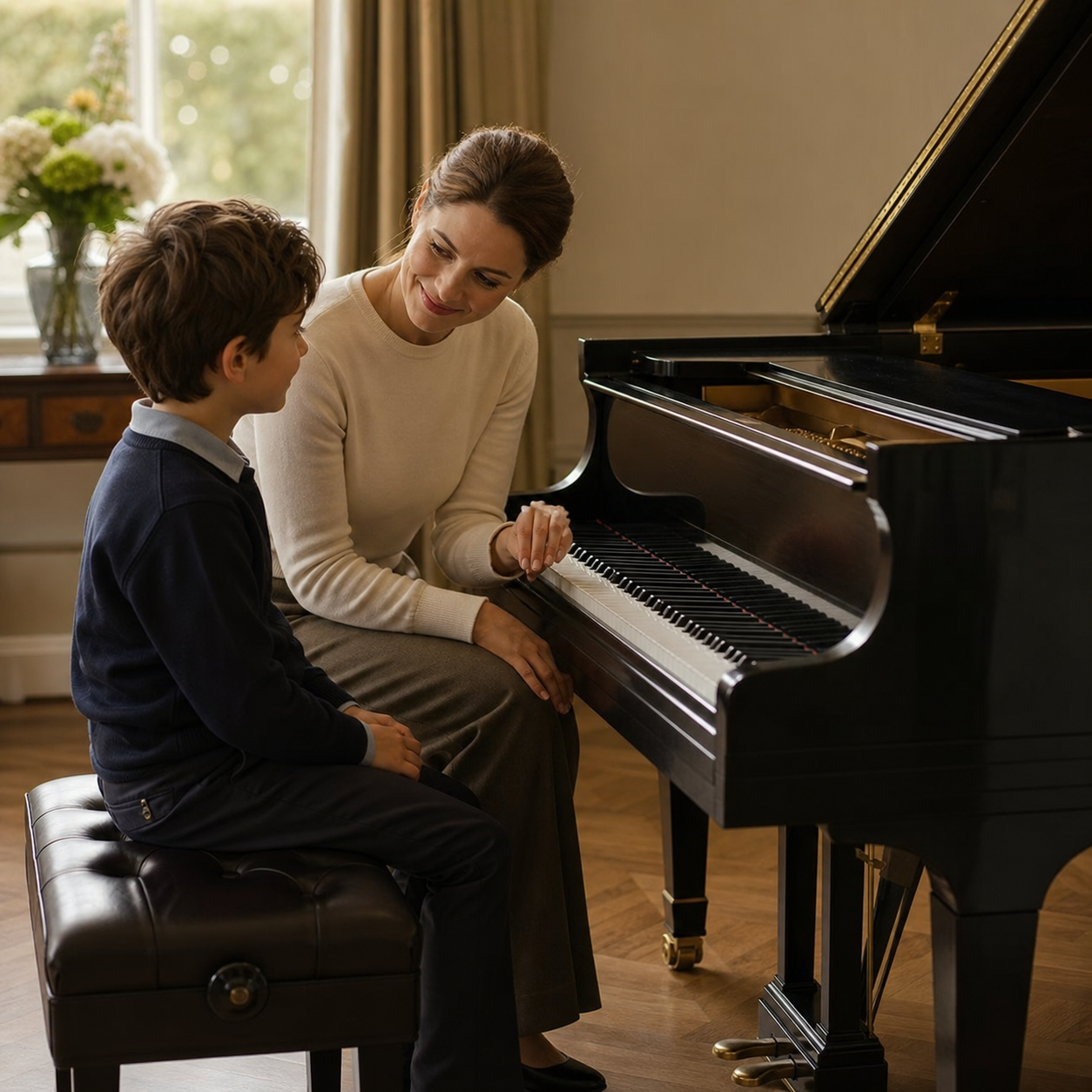
Teacher’s note
After a slip, reduce the task before repeating it. One hand, two beats, a slower pulse or a silent fingering rehearsal often restores control. Repeating the whole piece in frustration merely rehearses alarm.
This approach also helps performance nerves. Children discover that they possess recovery tools: breathe, find the next landmark, restore the pulse and continue. The useful message is not “nothing will go wrong”; it is “you will know what to do”.
Parent language that supports musical self-belief
Home practice can strengthen the lesson or quietly undo it. Pressure often arrives in apparently harmless questions: “Why can you not play it yet?” or “Are you going to make a mistake in the concert?” A better conversation keeps attention on choices.
“You are so talented.”
“That was perfect.”
“Do not be nervous.”
“Your preparation made that secure.”
“The ending sounded clear.”
“What will help you feel ready?”
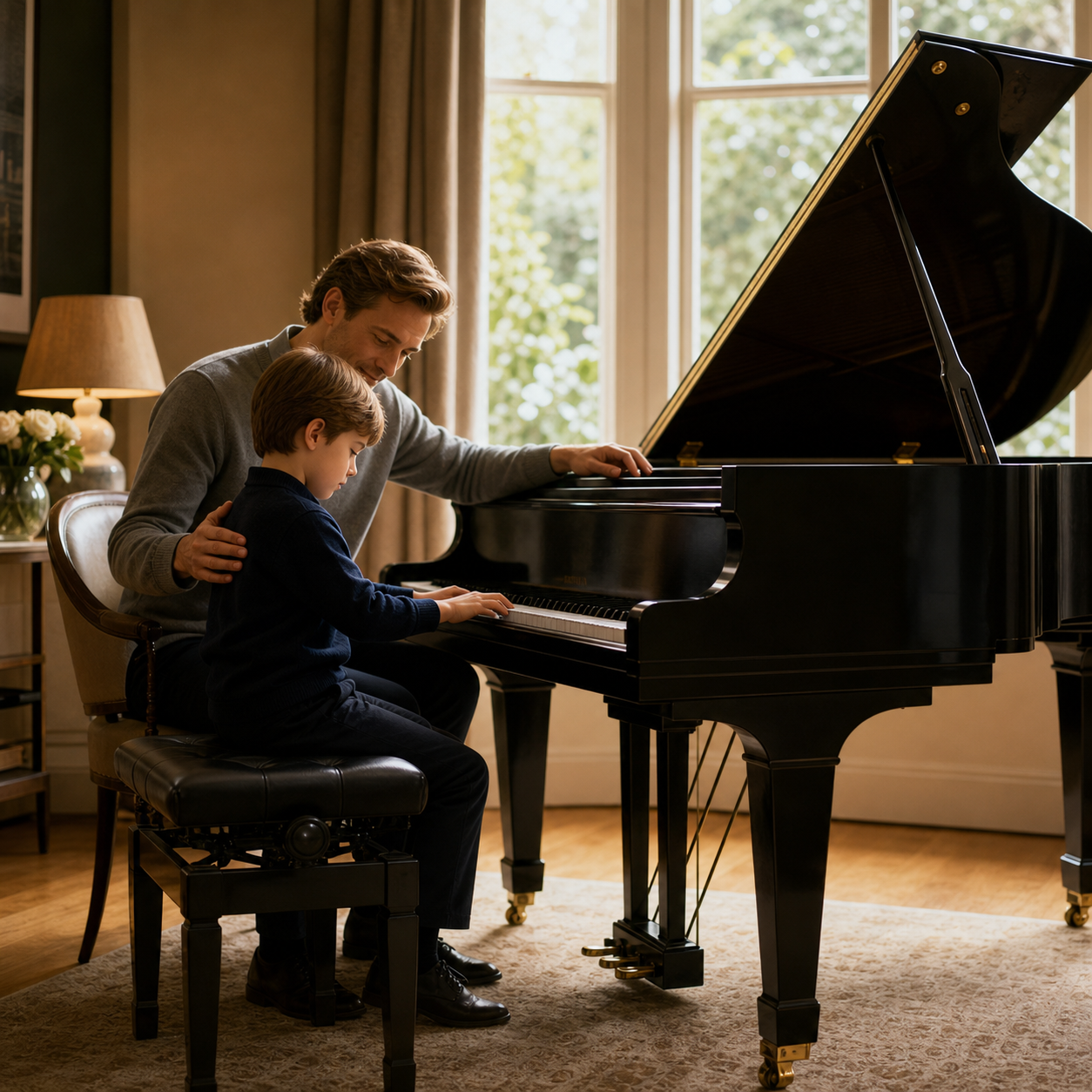
Parents can also protect confidence by ending practice while attention is still usable. A short session with one clear achievement is preferable to a long struggle that associates the piano with helplessness. Consistency builds identity: “I am someone who returns to a problem and makes progress.”
Five signs that confidence is becoming durable
The relationship between music and confidence is best judged over months, not by the mood after one lesson. Children develop unevenly, and a pupil may show courage at the piano while remaining reserved elsewhere. The following signs indicate that musical self-belief is becoming more independent.
- The child begins without prolonged reassurance. They may still feel uncertain, but they can organise the music, find the starting position and make an attempt.
- Feedback produces curiosity rather than collapse. A correction becomes a problem to solve. The pupil can separate “this rhythm needs work” from “I am bad at music”.
- The child can name progress precisely. Instead of saying only “it was good”, they notice a steadier pulse, a clearer phrase or a more reliable fingering.
- Recovery becomes quicker. Disappointment still occurs, but one awkward attempt no longer consumes the whole session.
- Responsibility gradually moves away from the adult. The pupil remembers a practice aim, chooses a sensible starting point or asks a focused question.
These changes are more meaningful than a sudden display of bravado. Music and confidence meet most productively when the child learns to act with care despite uncertainty. The aim is not to remove every uncomfortable feeling; it is to give the pupil musical knowledge strong enough to work through it.
Common questions from parents
Should a shy child be encouraged to perform?
Yes, if the performance is carefully scaled and the child is prepared. Begin with one trusted listener and a very secure piece. Participation should feel purposeful, not like public exposure arranged to “fix” shyness.
What if praise seems to make my child more anxious?
Highly general praise can create pressure to repeat an undefined success. Describe one observable musical choice instead. “The melody stayed clear” is easier to understand and reproduce than “You were amazing”.
How long does confidence take to develop?
There is no fixed timetable. Look for small behavioural changes across a term: starting more readily, tolerating correction, recovering after slips and taking greater ownership. Music and confidence both deepen through repeated, well-supported experience.
Give confidence a musical foundation
Thoughtful tuition gives children suitable challenges, clear technique, patient feedback and carefully paced opportunities to perform. Explore WKMT’s approach to young beginners and developing pupils.
A balanced conclusion
The best connection between music and confidence is modest, cumulative and real. A child learns a phrase, presents it, receives useful feedback and tries again. Over time, the pupil gains evidence that preparation changes outcomes and that discomfort need not end the attempt.
That is why confidence-building piano education remains musical at its core. Listening, technique, memory, interpretation and performance are not distractions from wellbeing. When taught with intelligence and care, they are the experiences through which genuine self-belief can take shape. Families can learn more about WKMT’s wider approach to classical piano study in London.
Sources on Music and Confidence Guide
- Jiang, X. and Tong, Y., Student self-esteem in music education contexts: a systematic literature review, Frontiers in Psychology, 2025.
- Department for Education and Department for Culture, Media and Sport, The power of music to change lives: a national plan for music education.
- Ofsted, Striking the right note: the music subject report.
- Ramos, D. et al., Effects of the educational use of music on 3- to 12-year-old children’s emotional development: a systematic review, 2021.
- Department for Culture, Media and Sport, Turn It Up: Our plan for music, 2026.
- Education Endowment Foundation, Arts participation.