
 TRIAL LESSON
Pianists, Piano Lessons
Yefim Bronfman in London: Power, Colour and the Art of Serious Piano Listening
Aug
Yefim Bronfman in London
WKMT London listening guide
Yefim Bronfman in London: Power, Colour and the Art of Serious Piano Listening
A guide to the formidable technique, lyrical intelligence and orchestral imagination of one of the defining pianists of his generation.
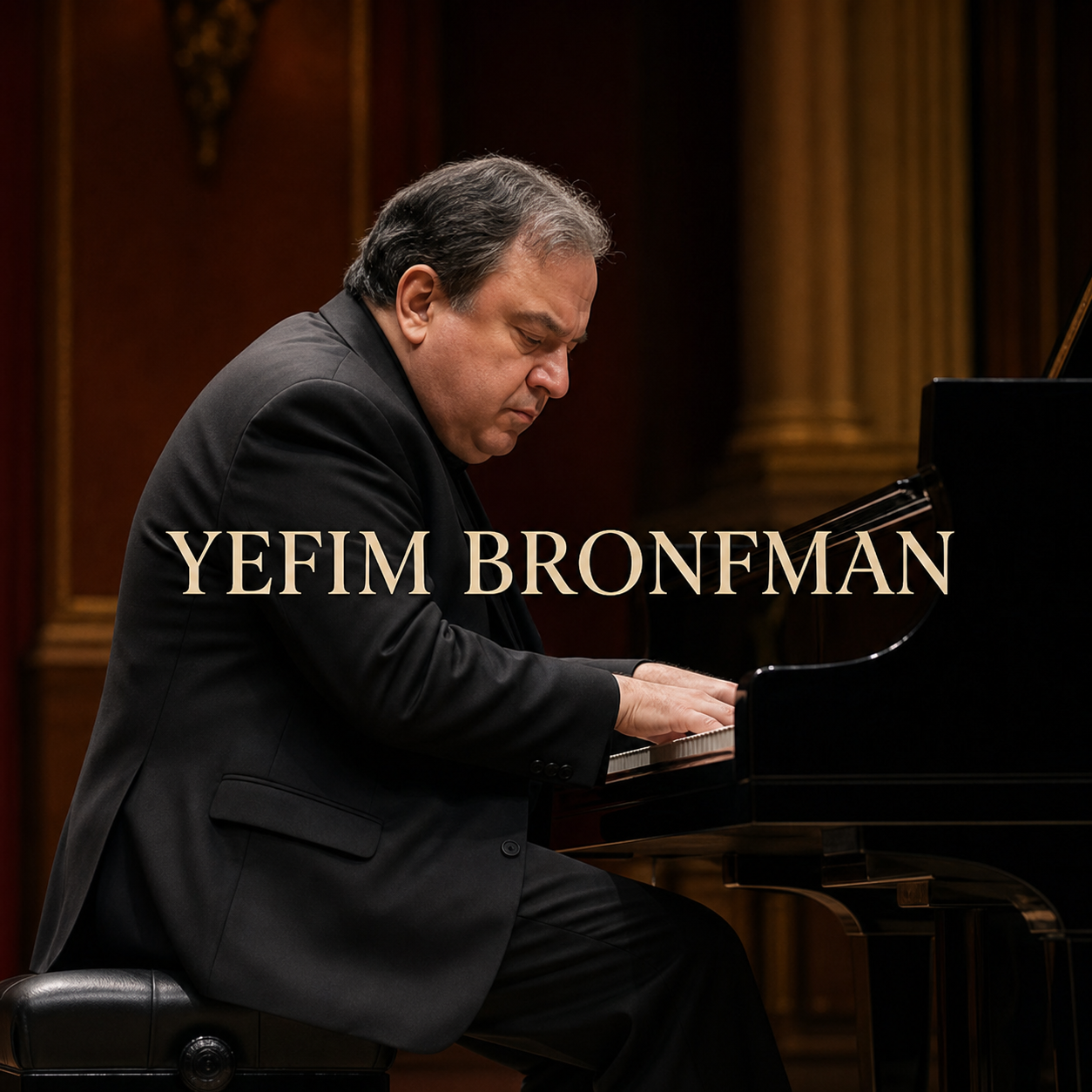
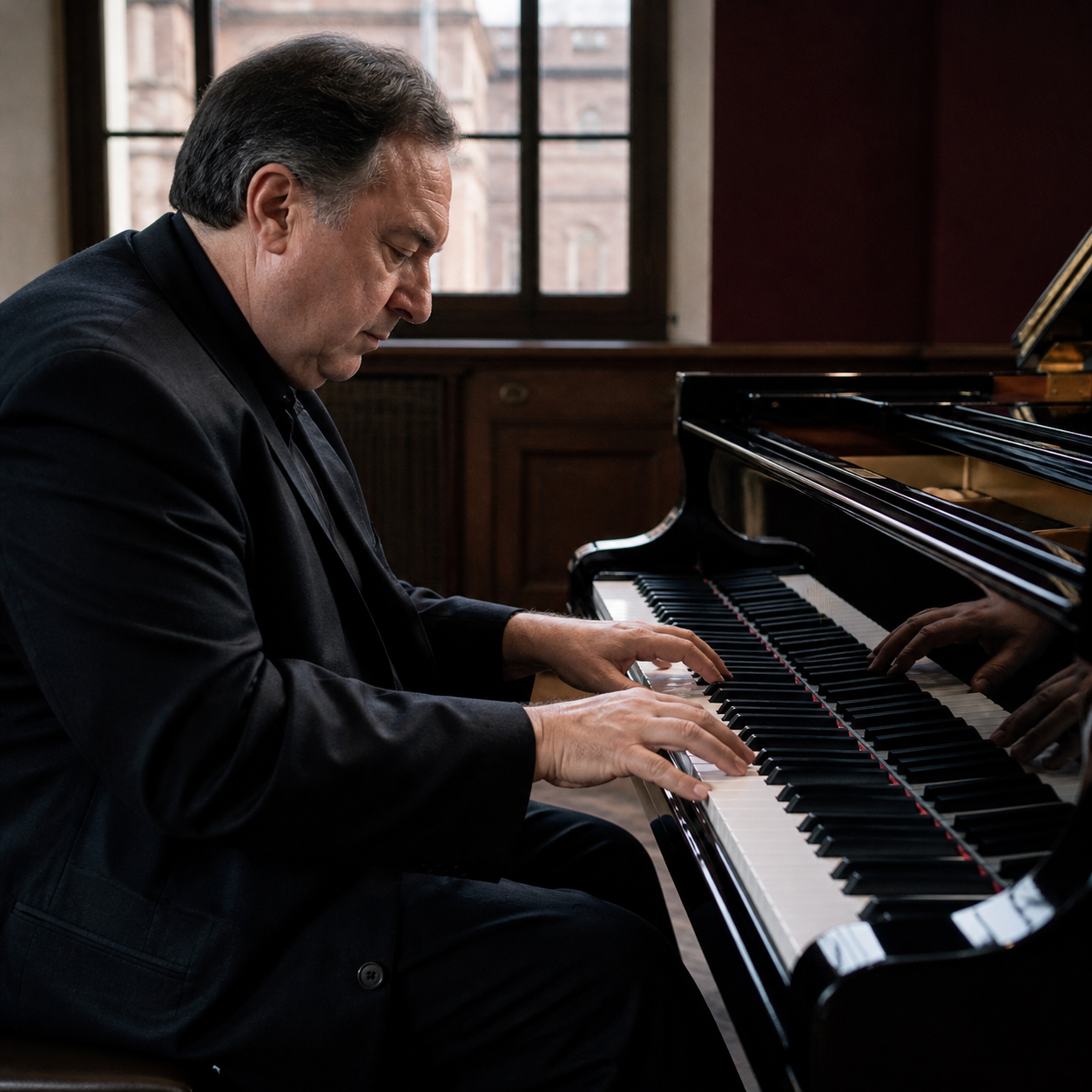
Yefim Bronfman can make a concert grand sound almost orchestral: bass lines carry architectural weight, chords possess a firm centre, and brilliant passagework remains sharply defined. Yet power is only the most obvious part of his artistry. Beneath it lies a singer’s attention to the length of a phrase, an exact feeling for rhythmic character and an ability to change colour without weakening the musical argument.
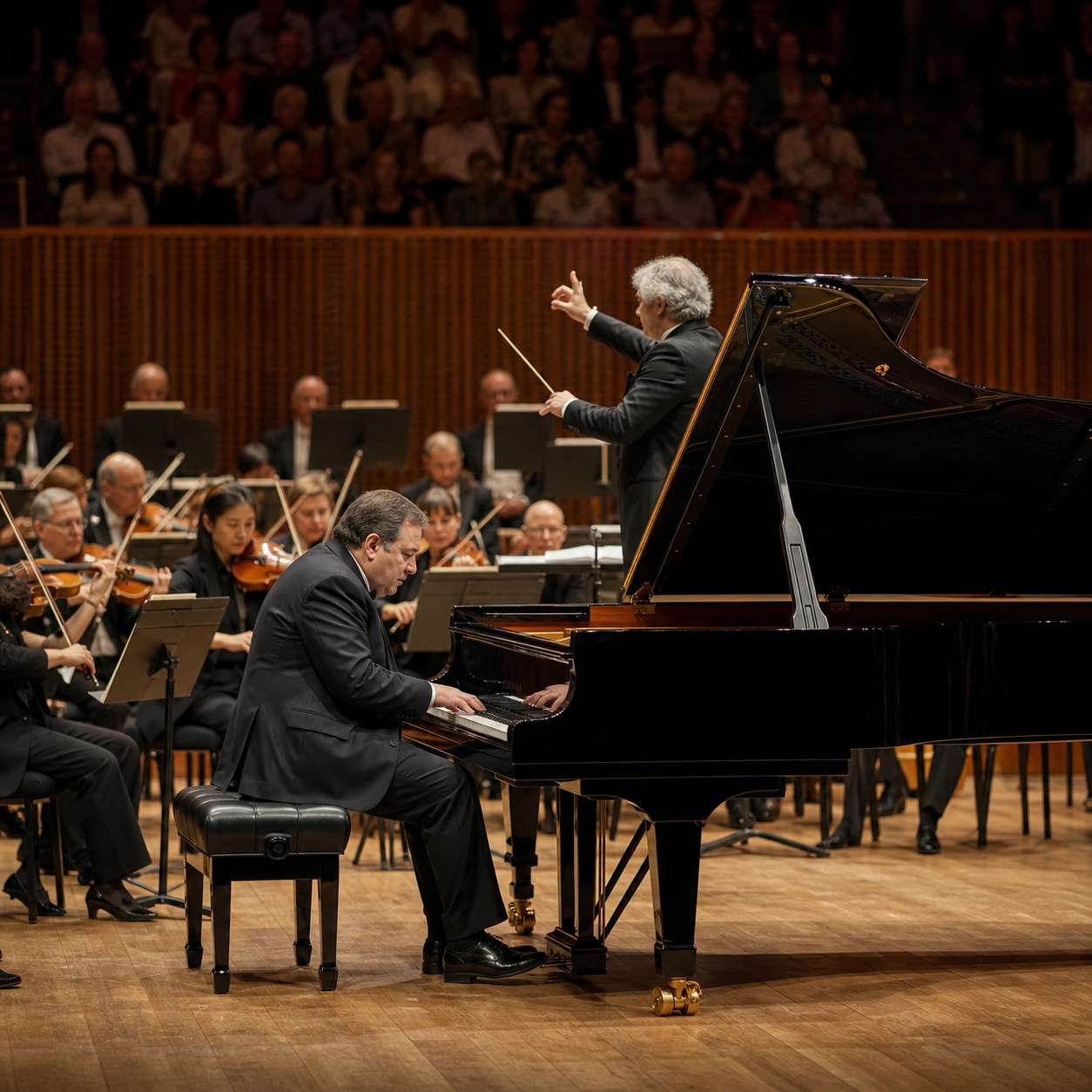
For London listeners, Bronfman is especially revealing in a large hall. His September 2025 appearance with the London Philharmonic Orchestra at the Royal Festival Hall placed him in Beethoven’s Fifth Piano Concerto, the Emperor, a work that tests whether grandeur can remain flexible. He also appeared at the BBC Proms in 2018 with the Rotterdam Philharmonic Orchestra and Yannick Nézet-Séguin in Liszt’s Second Piano Concerto. These programmes illuminate a central question: how does a pianist project scale without sacrificing detail?
Yefim Bronfman at a glance
Tashkent, then Soviet Union
Arie Vardi, Rudolf Firkušný, Leon Fleisher, Rudolf Serkin
Bartók, Prokofiev, Beethoven, Rachmaninoff
Avery Fisher Prize; one Grammy win and seven nominations
From Tashkent to the international concert stage
Bronfman’s biography crosses several pianistic traditions. Born in Tashkent, he emigrated to Israel with his family in 1973 and studied with Arie Vardi at Tel Aviv University’s Rubin Academy of Music. In the United States, his teachers included Rudolf Firkušný, Leon Fleisher and Rudolf Serkin, with study at Juilliard, Marlboro and Curtis. That combination matters. Vardi’s disciplined formation, Fleisher’s structural intelligence and Serkin’s moral directness belong to different lineages, but Bronfman’s playing absorbs their common demand for purpose.
His career soon extended across the major orchestras, festivals and recital series. The official artist biography records longstanding collaborations with conductors including Zubin Mehta, Riccardo Muti, Esa-Pekka Salonen, Sir Simon Rattle, Semyon Bychkov and Franz Welser-Möst. His chamber partners have ranged from Isaac Stern and Pinchas Zukerman to Anne-Sophie Mutter, Martha Argerich and Emmanuel Pahud. This breadth helps explain why his concerto playing rarely feels like a solo line imposed on an orchestra: he listens laterally, responding to the colour and timing around him.
The Bronfman sound: weight without heaviness
Bronfman’s tone is often described in physical terms, but its impact comes from organisation. A large chord sounds compelling because its top, middle and bass have a clear relationship. Fast octaves remain rhythmically pointed because their direction has been decided before volume is added. Even in Prokofiev’s most percussive writing, he avoids a featureless metallic surface. Different attacks carry different meanings: one can be sarcastic, another martial, another suddenly vulnerable.
His legato is equally instructive. Bronfman does not create continuity by blurring. He grades weight from finger to finger and uses pedal to enlarge resonance rather than conceal the join. This is particularly audible in Rachmaninoff, where a generous line can become shapeless if every harmony receives the same warmth. Bronfman gives the phrase a destination, allowing inner voices and bass movement to determine when the sound should bloom and when it should clear.
Rhythm provides the spine. In Bartók, accents reveal the construction of a dance rather than merely increasing impact. In Beethoven, a repeated figure can gather inevitability without losing spring. In Liszt, virtuosity serves transformation: material that returns in a new tempo or register acquires a new dramatic identity. Such playing rewards attention because the surface excitement is always tied to form.
Built from balance and harmonic direction, not force alone.
Changed through voicing, attack, register and orchestral response.
Firm enough to propel, flexible enough to breathe.
Sustained by hierarchy among melody, inner voices and bass.
Bronfman in London: what the hall reveals
The Royal Festival Hall is a revealing setting for Bronfman’s playing. In the LPO’s season-opening concert on 27 September 2025, Edward Gardner conducted Beethoven’s Emperor Concerto with Bronfman as soloist. The work begins by setting piano flourishes against orchestral chords, so the pianist must sound spontaneous while establishing the scale of the whole movement. Bronfman’s experience in this repertoire makes the relationship audible: the piano can be heroic without becoming detached from the ensemble.
The BBC’s international catalogue also documents his 2018 Proms performance of Liszt’s Second Piano Concerto with the Rotterdam Philharmonic and Yannick Nézet-Séguin. Liszt’s single-movement design moves through sharply contrasted identities. A successful reading must make those changes feel like one argument. Bronfman’s rhythmic steadiness and palette of attacks are particularly suited to this task, allowing brilliance, lyric reflection and martial weight to belong to the same unfolding structure.
As of 7 August 2026, Bronfman’s official tour page lists later 2026 engagements in the United States but no forthcoming London date. Concert schedules change, so readers should consult the artist and venue pages directly before planning a visit. Meanwhile, WKMT’s guides to classical concerts at the Royal Festival Hall, the importance of listening and modern classical pianists offer useful context drawn from the live WKMT sitemaps.
A guided route through the recordings
Bronfman’s discography is large, but four starting points disclose the essential qualities of his playing. The aim is not to compile a definitive list. It is to hear how the same pianist changes his priorities when the score, ensemble and acoustic demand it.
| Recording | What to hear | Best first focus |
|---|---|---|
| Bartók: Three Piano Concertos Los Angeles Philharmonic, Esa-Pekka Salonen |
Percussive colour, dance rhythm and exact orchestral balance. | How accents organise metre. |
| Prokofiev: Piano Concertos Israel Philharmonic, Zubin Mehta |
Steel, wit and lyricism held in the same frame. | Changes of attack within repeated figures. |
| Rachmaninoff: Works for two pianos with Emanuel Ax |
Generous sonority disciplined by ensemble listening. | Bass clarity beneath the long line. |
| Beethoven: Piano Concertos Tonhalle Orchestra Zürich, David Zinman |
Classical proportion enlarged by modern-piano range. | The transition from rhetoric to song. |
The Bartók set is the indispensable starting point. It earned Bronfman’s 1997 Grammy for instrumental solo performance with orchestra, and it displays his most recognisable virtues without reducing them to spectacle. In the First Concerto, listen to how the piano’s attack joins the percussion family. In the Second, follow the quick transfer of energy between soloist and orchestra. In the Third, hear the gentler palette without assuming that gentleness means diminished focus.
The complete Prokofiev concertos with Mehta reveal a different kind of theatre. Bronfman can project the Second Concerto’s enormous cadenza, yet the playing remains alert to grotesque humour and sudden lyric retreat. The Rachmaninoff partnership with Emanuel Ax then shows what happens when two substantial pianists must share resonance: transparency becomes an ethical necessity. Finally, the Beethoven cycle with Zinman demonstrates how weight can be placed within proportion, especially when the piano moves from public declaration to intimate dialogue.
Bronfman’s force is convincing because it is never anonymous: every sonority has a function, a direction and a place within the whole.
What pianists can learn from Bronfman
Bronfman’s playing offers a practical model for serious students because its effects can be traced back to decisions. Begin with voicing. Play a chord at moderate volume and decide whether the ear should follow the top, an inner line or the bass. Then repeat the chord more loudly without changing that hierarchy. If every note becomes equally prominent, the sound has grown but the argument has disappeared.
Next, separate rhythm from speed. In a passage by Prokofiev or Bartók, practise the accent pattern slowly enough to hear its character. A displaced accent should disturb the metre; a repeated-note figure should lean towards a destination. Only increase tempo when those relationships survive. Bronfman’s virtuosity is formidable, but it remains intelligible because rhythmic identity precedes velocity.
Finally, compare the solo part with the orchestral score or a trusted recording. Notice which instrument hands the phrase to the piano and which voice receives it afterwards. This changes pedalling, articulation and timing. It also guards against the common habit of treating a concerto as a solo piece with accompaniment. Bronfman’s chamber experience is audible precisely because he continues to respond while occupying the centre of the stage.
Is Bronfman’s playing mainly about power?
No. Power is the immediately impressive quality, but it depends on subtler disciplines. His loudest passages retain separate layers, rhythmic character and a sense of harmonic arrival. At quieter levels, the same control appears as finely graded legato and a refusal to let the phrase lose direction. The useful lesson is that volume should reveal structure. If it obscures the bass, flattens the rhythm or makes every voice equally urgent, it has ceased to serve the music.
Which Bronfman recording should a new listener choose first?
The Bartók concertos with Esa-Pekka Salonen offer the clearest introduction because they place Bronfman’s defining qualities in constant dialogue with an orchestra. Listeners who prefer nineteenth-century lyricism may begin with the Rachmaninoff works for two pianos with Emanuel Ax, while those interested in theatrical modernism should try the Prokofiev concertos. Choose one movement and hear it twice: first for the overall drama, then for the relationship between piano attack and orchestral colour.
What should a London concert-goer listen for live?
Notice how Bronfman calibrates the instrument to the room. A large hall rewards projection, but excessive sustaining pedal can blur fast harmonic change. Follow the bass at the start of a development section, then shift attention to the upper line as the climax approaches. In a concerto, watch less and listen more: the most revealing moment may be the way he releases a phrase so that a woodwind solo can enter naturally.
At WKMT, classical piano study in London joins technique to repertoire, historical context and attentive listening. Adult players developing a more confident interpretive voice may also find a natural next step in our adult piano lessons in London, where musical choices can be tested at the instrument rather than admired at a distance.
Develop a more purposeful musical ear
Explore a classical piano education in which sound, structure and interpretation belong to the same musical language.
Sources for Yefim Bronfman
- Yefim Bronfman official biography
- Yefim Bronfman official tour page
- Southbank Centre: Beethoven’s Emperor Concerto
- London Philharmonic Orchestra 2025/26 season announcement
- London Philharmonic Orchestra programme, 27 September 2025
- BBC Radio International classical catalogue: Proms 2018
- Recording Academy: Yefim Bronfman awards and nominations