
 TRIAL LESSON
Pianists, Piano Lessons
Vikingur Olafsson in London: Bach, Clarity and the Art of Serious Piano Listening
Aug
Vikingur Olafsson in London
WKMT London listening guide
Vikingur Olafsson in London: Bach, Clarity and the Art of Serious Piano Listening
Vikingur Olafsson makes clarity feel dramatic. In Bach, every line has its own grain, yet the music moves as one living argument. For London listeners and adult pianists, his playing offers a precise lesson in how attention becomes interpretation.
Why Vikingur Olafsson matters now
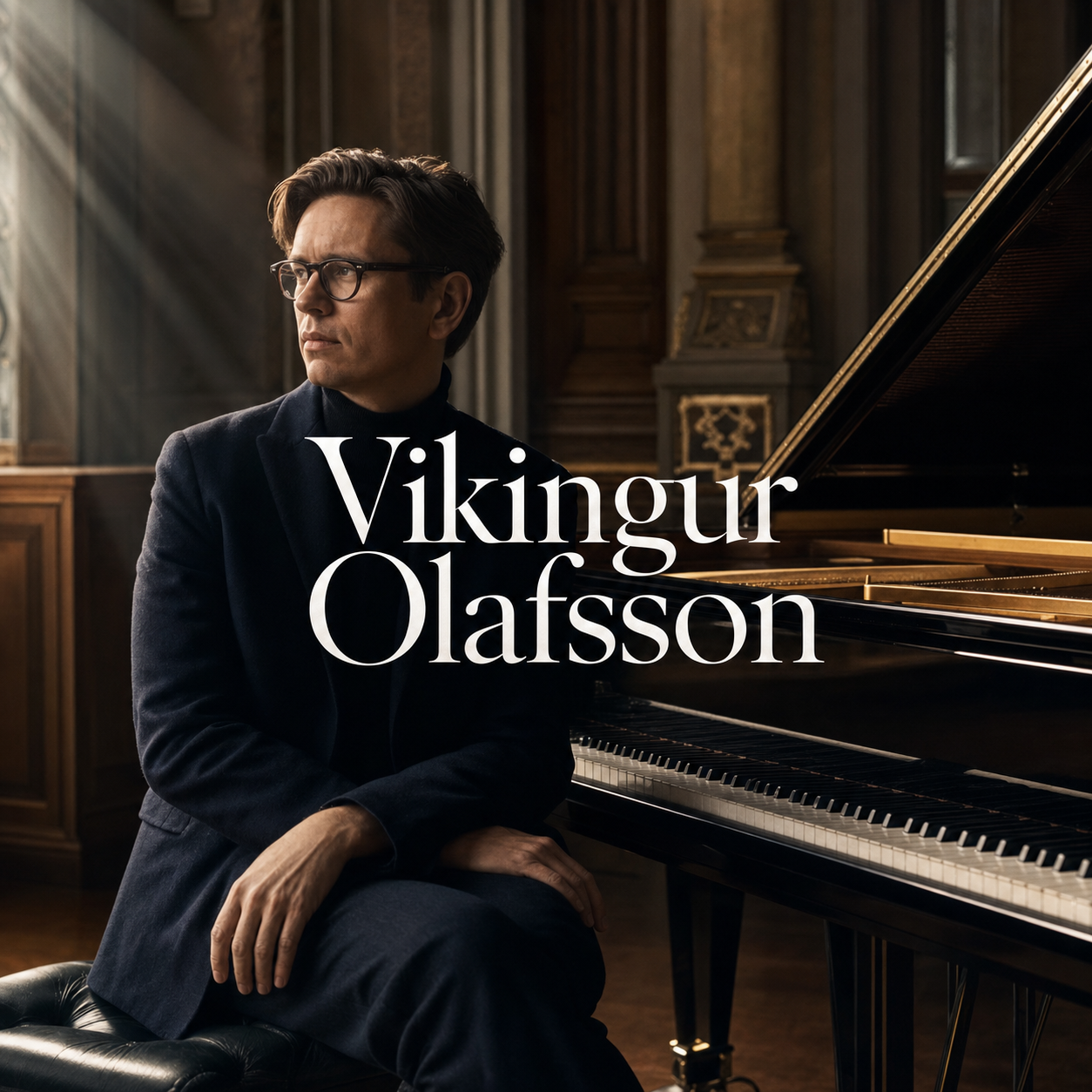
Ólafsson’s rise has coincided with a renewed appetite for classical recordings that behave like arguments rather than catalogues. His albums do not simply gather attractive pieces. They place works beside one another so that familiar music is heard through a changed frame: Bach beside transcriptions, Debussy beside Rameau, Mozart among his contemporaries, Beethoven’s late Op. 109 surrounded by Bach and Schubert.
This curatorial instinct matters because it restores active choice to listening. Repertoire order changes colour, proportion and memory. A Bach transcription can reveal the modern piano’s capacity for sustained song; a short contemporary work can make an eighteenth-century cadence sound newly strange. Ólafsson asks us to notice these relations without turning them into a lecture.
London has been an important stage for that work. His 2023 Royal Festival Hall performance of the Goldberg Variations drew attention to the tension between crystalline control and live spontaneity. The Guardian heard a reading whose dramatic momentum exceeded the sum of its individual variations.[5] That is a useful description of his wider appeal: detail accumulates until it changes the scale of the whole.
Vikingur Olafsson also matters because his precision never sounds like a demand for one correct answer. Bach’s notation leaves decisive questions of tempo, articulation, dynamics and instrumental colour open to the performer. Ólafsson responds with choices that are strongly characterised but still invite comparison. A listener can disagree with a release, a tempo relation or a heightened accent and become more attentive through that disagreement.
For WKMT, a pianist profile belongs within the culture of classical piano study in London. Listening to a major interpreter is not passive admiration. It trains the ear to distinguish voicing from volume, articulation from accent, and structural direction from speed.
Listening to Bach: five signatures of clarity
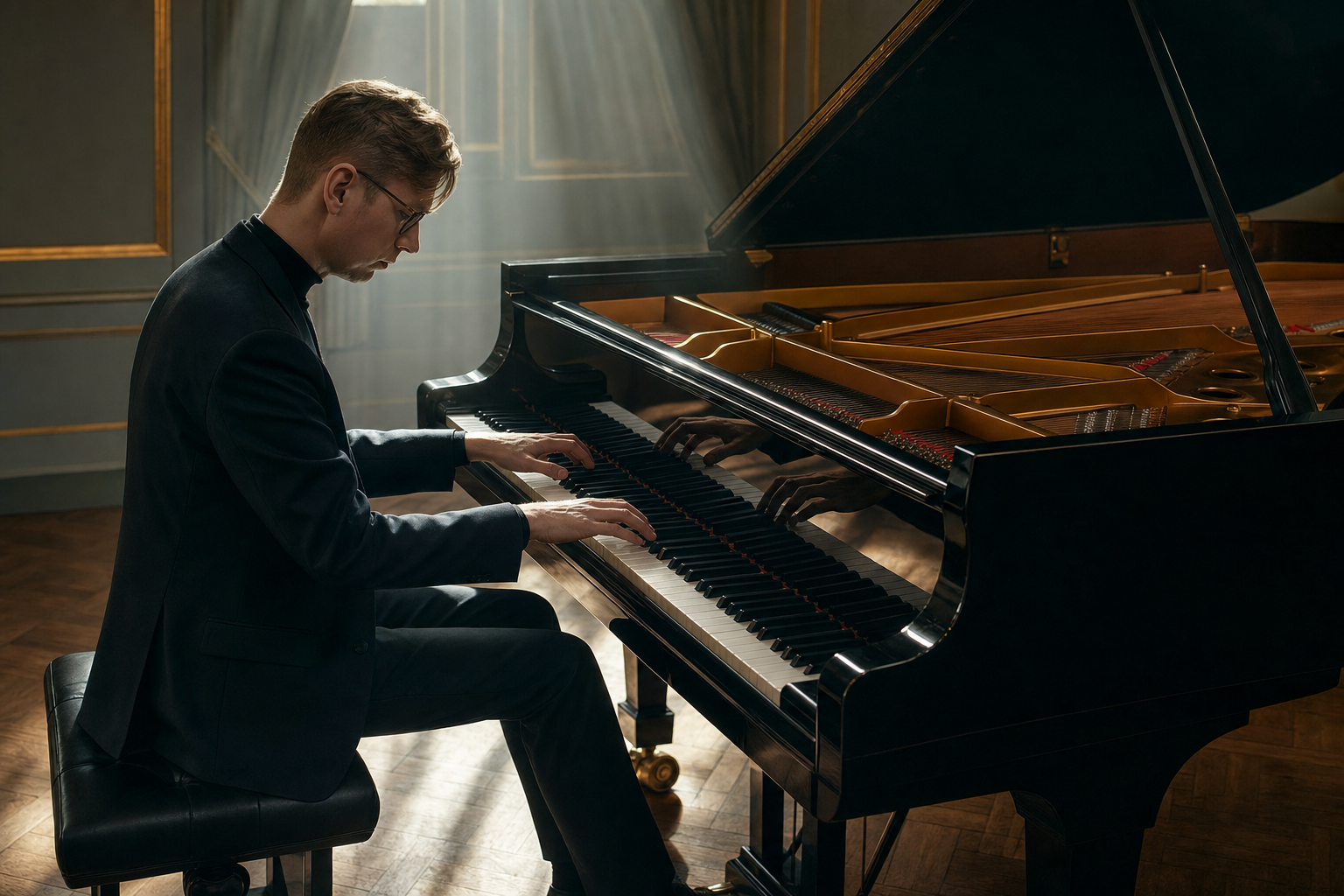
Ólafsson has described Bach as music of inexhaustible openness. His own account of the Goldberg Variations emphasises both formal perfection and the individual drama of each variation. He recorded the work after twenty-five years of thought and then performed it eighty-eight times across six continents.[2] The scale of that immersion is impressive, but the listening lessons are concrete.
Follow one inner line without losing the melody. Clarity comes from differentiated touch, not from making everything equally prominent.
Hear where a figure releases, answers or interrupts. Short notes can carry direction without becoming dry.
Notice tiny expansions at harmonic turns. The pulse remains intelligible even when the phrase breathes.
Listen for colour without blur. Pedal connects decay and register while contrapuntal edges remain legible.
Each variation becomes a distinct scene, yet tempo relations and harmonic memory bind the journey.
This five-part framework works best in short passages. Listen first for the surface, then assign one pass to each question. On the final hearing, stop analysing and ask whether the performance now feels more inevitable. WKMT’s article on the importance of listening develops the same habit from a student’s perspective, while its guide to what inspired Bach’s music widens the historical frame.
When comparing Vikingur Olafsson with another pianist, keep the question narrow. Take the same variation and hear only the left-hand articulation, or the amount of time allowed before a repeat. Avoid ranking whole performances after a few seconds. Comparison is valuable when it reveals the range of musically coherent decisions available inside the same score.
Clarity is not the absence of mystery. It is what allows mystery to have a shape.
The Goldberg Variations: architecture made human
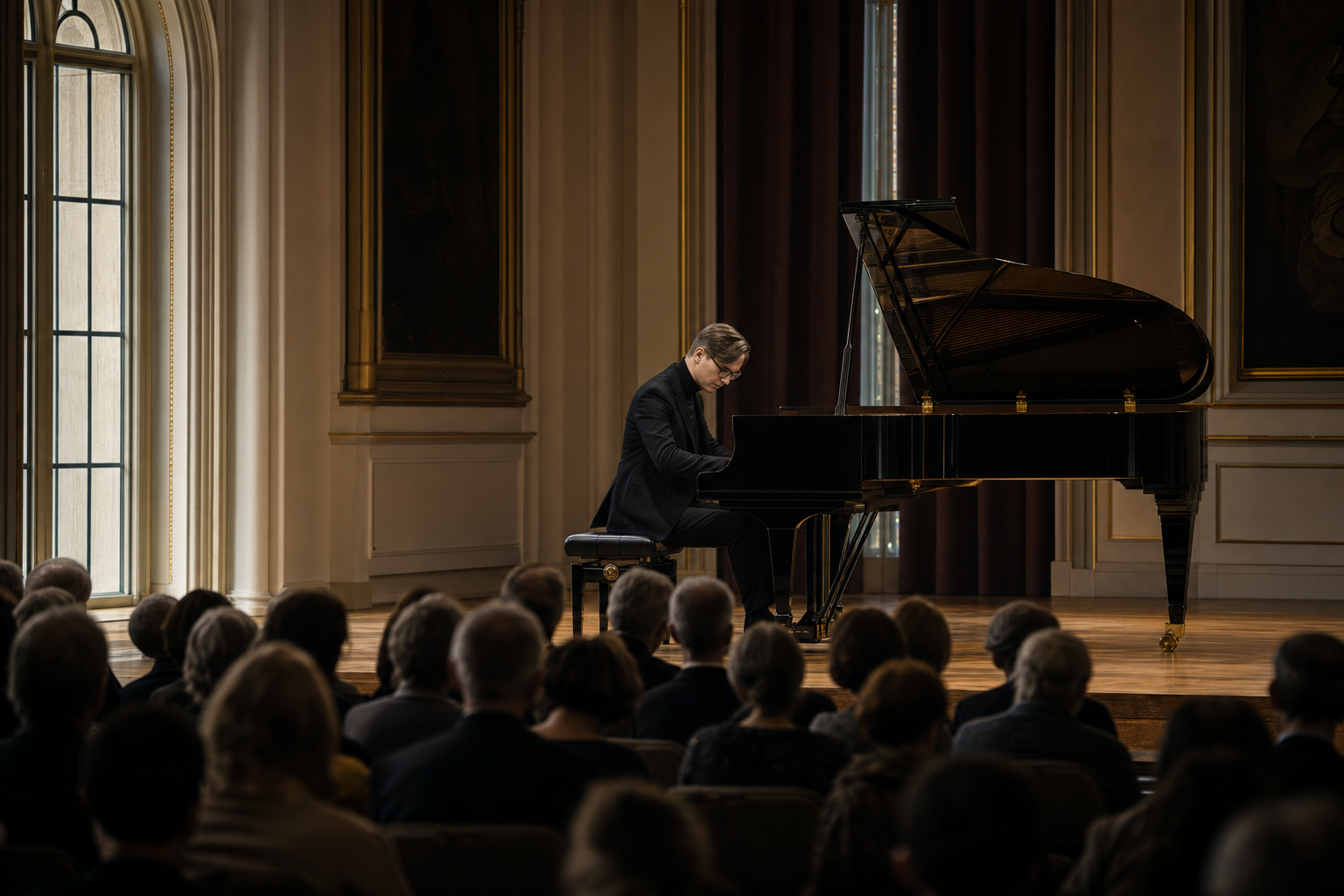
Bach’s aria and thirty variations are built over a recurring harmonic foundation. That fact explains the work, but it does not account for its emotional reach. Ólafsson’s insight is to treat each variation as a complete microcosm while preserving the listener’s memory of the larger journey. The result can feel both minutely observed and naturally unfolding.
Compare the opening Aria with its return. The notes are essentially the same, but an hour of rhythmic wit, counterpoint, virtuosity and inward stillness stands between them. A listener who concentrates only on speed or polish misses the transformation. The returning Aria has acquired memory.
Vikingur Olafsson makes that memory audible through proportion. Quick variations do not merely display dexterity; they alter the energy with which the next reflective movement arrives. Repeats are opportunities to change inflection rather than duplicate an event. The bass remains a quiet source of continuity even when the surface becomes dazzling. Listening for those connections prevents the cycle from breaking into thirty attractive miniatures.
The recording’s public recognition is significant. Deutsche Grammophon released it on 6 October 2023, and the Recording Academy lists it as the winner of the 2025 Grammy for Best Classical Instrumental Solo.[1][3] Yet awards are less useful to the listener than the specific qualities identified in critical response: supple movement, flexible tempo, clear counterpoint, a singing bass and expression without intrusive mannerism.[6]
Four recordings and what each reveals
Ólafsson’s discography rewards comparison because each project sets a different problem for the modern piano. Begin with one album rather than sampling at random, then move sideways when a particular quality catches the ear.
| Recording | Released | What to hear |
|---|---|---|
| Philip Glass: Piano Works | 2017 | How repeated patterns gain direction through voicing and gradual change. |
| Johann Sebastian Bach | 2018 | Transcription, colour and the illusion of several instruments within one keyboard. |
| Debussy · Rameau | 2020 | How two French sound worlds illuminate ornament, dance and resonance across centuries. |
| Bach: Goldberg Variations | 2023 | How thirty distinct characters grow from one harmonic ground and return to silence. |
Deutsche Grammophon’s catalogue confirms a discography that also includes Mozart & Contemporaries, From Afar, Continuum and the 2025 project Opus 109.[4] The useful thread is not one favourite composer. It is the habit of placing pieces in dialogue so that style becomes audible through contrast.
For a first route through Vikingur Olafsson, hear the 2018 Bach album before the Goldberg Variations. The earlier project moves among original works and transcriptions, making the piano’s changeable identity easy to hear. The later cycle then concentrates that curiosity within one vast design. Continue with Debussy · Rameau to notice how ornament and resonance change when counterpoint gives way to a more openly sensuous relationship with colour.
How to hear him in London in September 2026
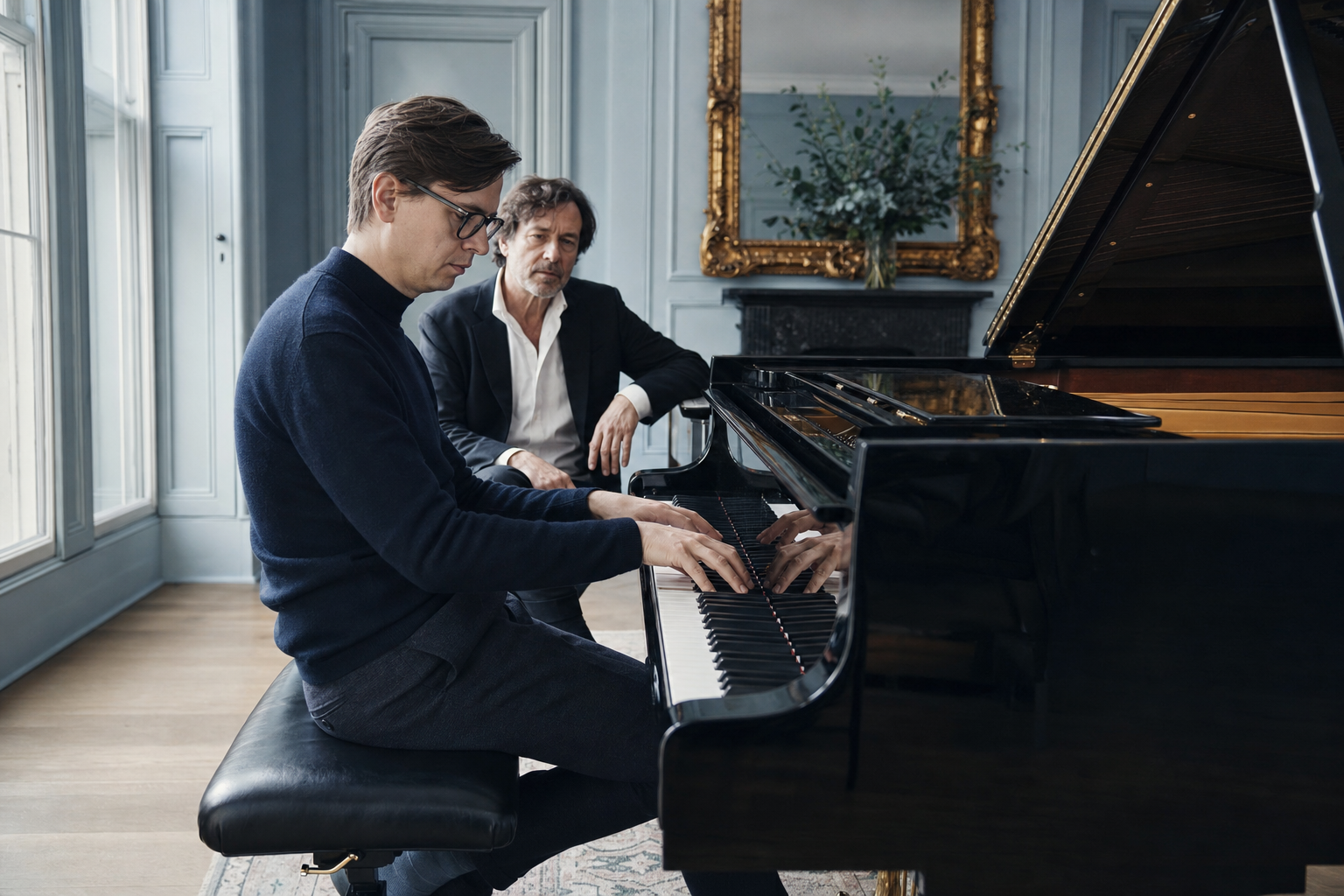
Wigmore Hall has announced three performances by Víkingur Ólafsson from 10 to 12 September 2026, featuring seminal works by Bach, Beethoven and Schubert. The information appears in the hall’s official 2026/27 season announcement and was last checked on 2 August 2026.[7] Programme details, availability and ticket conditions can change, so consult the venue directly before travelling.
These appearances offer a particularly clear way to hear Vikingur Olafsson in London because the programme joins composers already central to his recent recording work. Bach establishes contrapuntal discipline, Beethoven’s late language compresses argument into gesture, and Schubert tests the listener’s sense of scale and suspended time. The sequence should make differences in touch and pacing as revealing as similarities.
Wigmore Hall’s intimate acoustic rewards fine gradations of attack and decay. Sit where you can hear the instrument directly rather than choosing solely for a view of the hands. Arrive with one question, perhaps how Ólafsson differentiates Bach from late Beethoven without changing his basic sound identity. Too much preparatory reading can make a recital feel like a test; a focused curiosity leaves room for surprise.
For wider concert context, see WKMT classical concerts in London. The point of preparation is not to predict the evening. It is to make the ear responsive enough to notice when the performance overturns expectation.
What adult pianists can take into practice
The strongest lesson is not to copy Ólafsson’s articulation or tempo. It is to imitate the quality of his questions. Which voice carries the argument? Where does a cadence genuinely end? How much resonance can the harmony bear before the texture loses speech? These questions turn practice from repetition into listening.
Vikingur Olafsson is especially useful for adult learners because his recordings reward repeated, selective attention. You do not need conservatoire-level technique to hear a bass line change character or a repeated phrase acquire a new colour. Naming one audible difference is already a serious musical act. It creates a clear intention that the hands can then attempt to realise.
Choose eight bars and record three versions. In the first, privilege the upper line. In the second, shape the bass. In the third, reduce pedal and articulate inner voices more clearly. Listen away from the instrument and decide which version best communicates the phrase’s direction. The exercise is simple enough for an adult amateur, yet sophisticated enough to expose habits that disappear while playing.
For adults who want to connect this listening method to their own repertoire, WKMT’s adult piano lessons in London provide a natural next step. The aim is not celebrity imitation. It is to make interpretation accountable to what the ear can actually distinguish.
Continue the listening in London
Explore WKMT’s classical piano culture, teachers and concert community across London, where attentive listening remains the beginning of serious musical work.
Sources and further listening Vikingur Olafsson
- Deutsche Grammophon, Bach: Goldberg Variations album information
- Víkingur Ólafsson, essay on Bach’s Goldberg Variations, The Guardian.
- Recording Academy, Víkingur Ólafsson awards record
- Deutsche Grammophon, Víkingur Ólafsson discography
- The Guardian, Royal Festival Hall review
- The Guardian, home-listening review of the Goldberg Variations
- Wigmore Hall, 2026/27 season announcement