
 TRIAL LESSON
Pianists, Piano Lessons
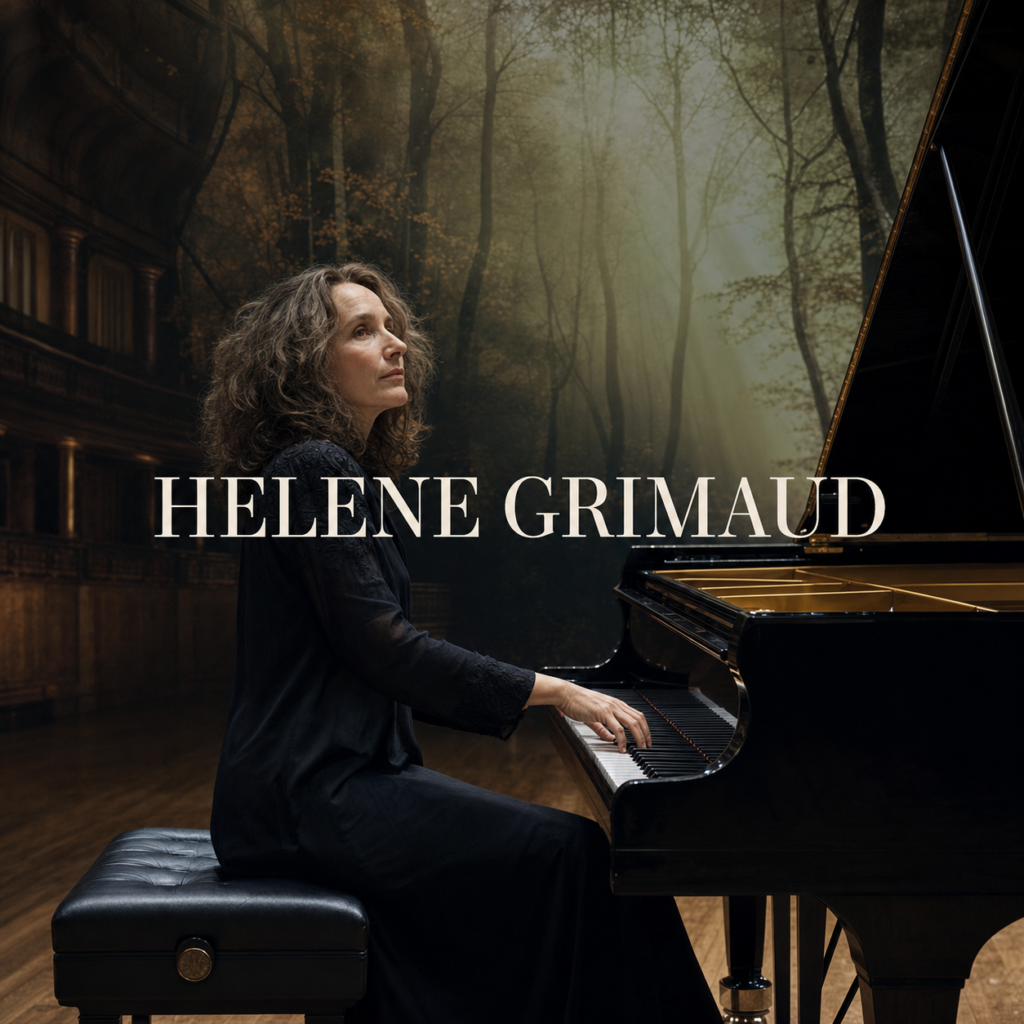
Helene Grimaud in London: Imagination, Colour and the Art of Serious Piano Listening
Aug
Helene Grimaud in London
WKMT London listening guide
Helene Grimaud in London: Imagination, Colour and the Art of Serious Piano Listening
Helene Grimaud makes the piano sound less like a fixed machine than a field of changing light. Her London appearances reveal how imagination, structure and physical sonority can belong to the same musical thought.
Why Helene Grimaud matters to London listeners
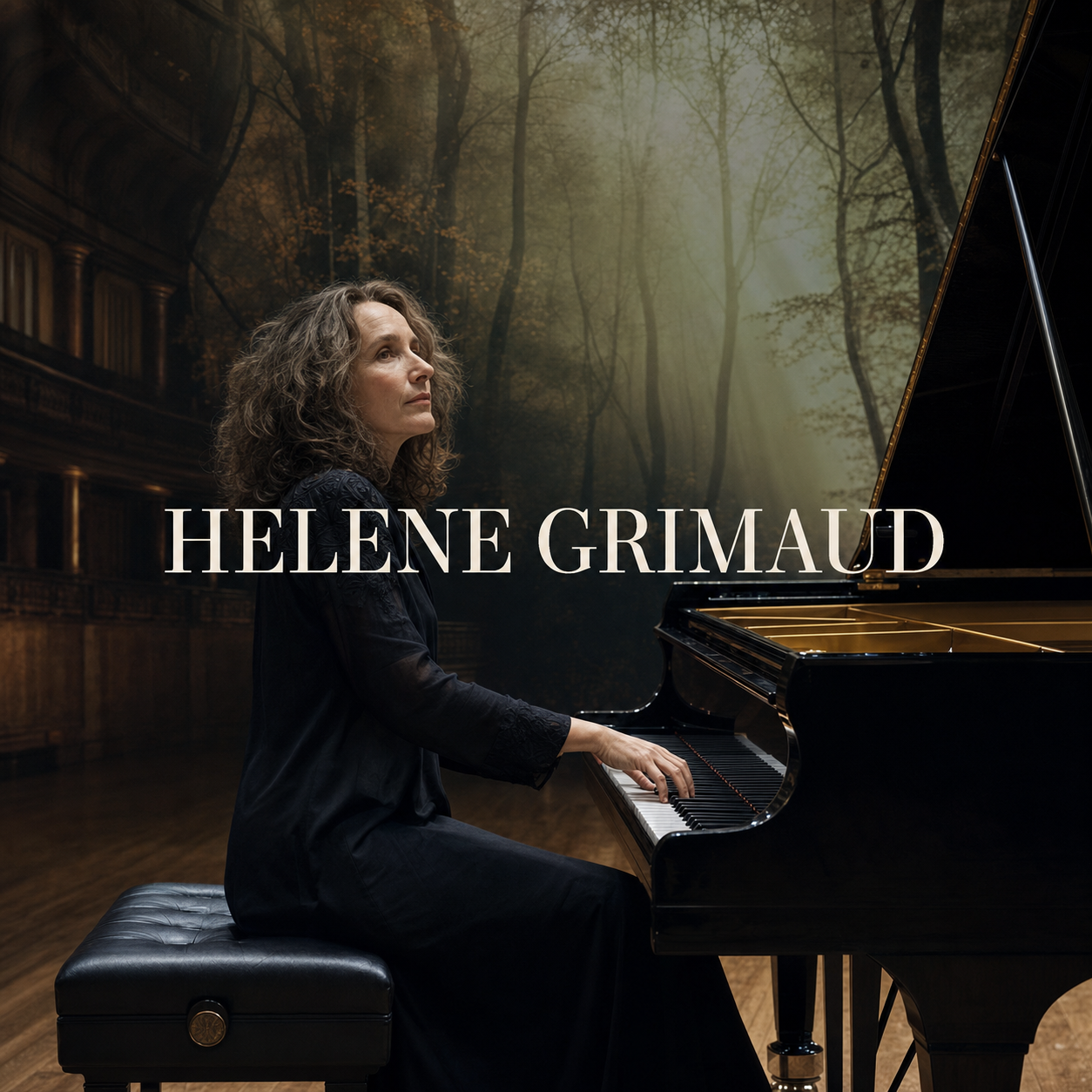
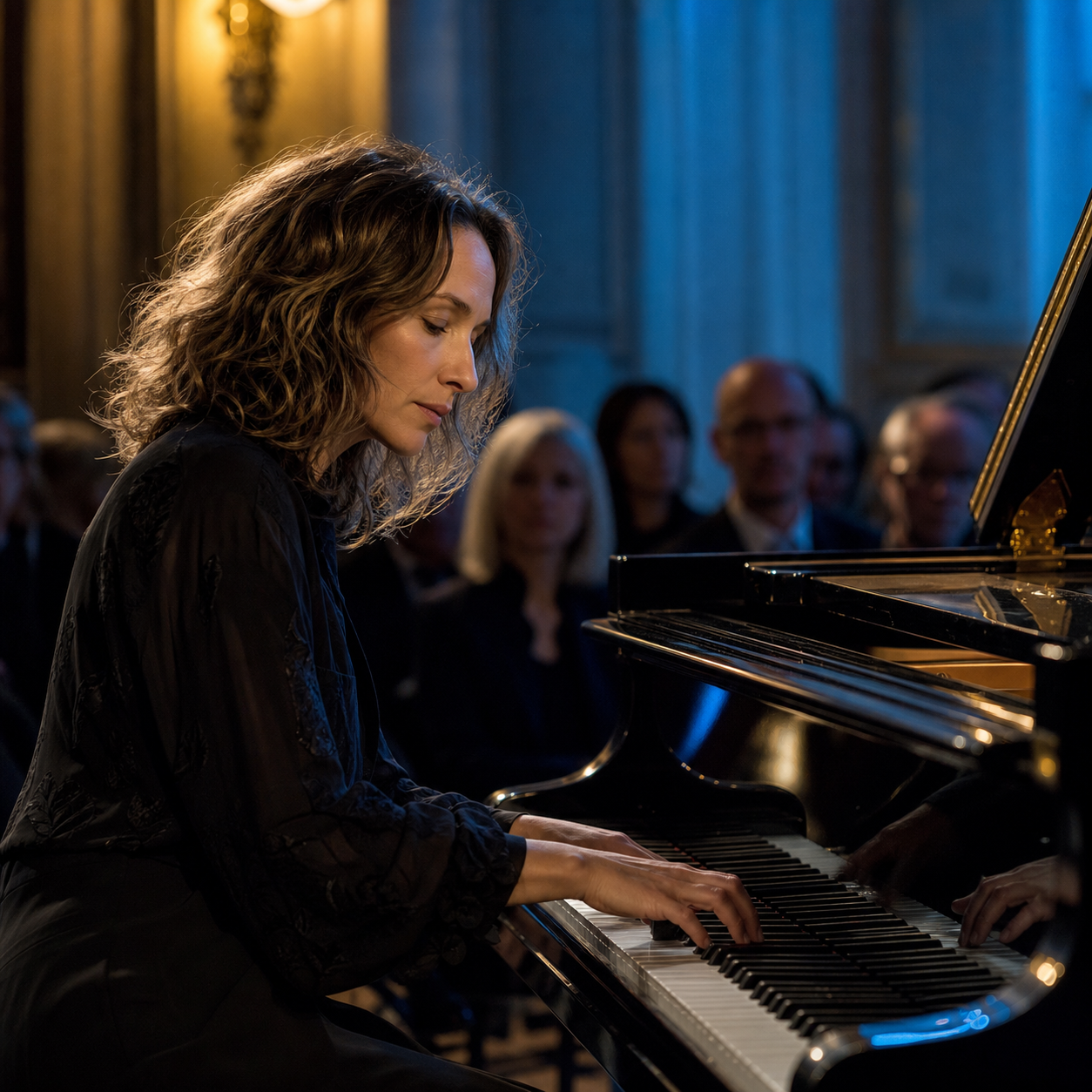
London has heard Grimaud in many guises: solo recitalist, concerto soloist and curator of programmes whose juxtapositions ask the audience to listen across periods. Her Barbican recital of May 2023 moved from Beethoven’s Sonata in E major, Op. 109, through Brahms’s late piano pieces to the Bach-Busoni Chaconne. The hall’s programme presented the evening as an exploration of late style and contrast, not a procession of unrelated masterpieces.[3]
That distinction is central to her appeal. Helene Grimaud does not treat a recital programme as a neutral container. One piece leaves a resonance that changes the next. Beethoven’s compressed argument prepares the ear for the inward world of Brahms; Brahms’s private speech changes the scale on which Busoni’s monumental transcription is heard. The listener becomes alert to relationships rather than waiting for isolated climaxes.
This suits London particularly well. The city offers a dense concert calendar, but abundance can encourage hurried consumption. Grimaud’s art argues for the opposite habit: fewer works, heard with greater concentration. For readers discovering her before a concert, the useful question is not whether she is a Romantic, cerebral or instinctive pianist. It is how she makes a musical structure feel newly unstable, inevitable or alive.
That form of attention also explains why a famous-pianist feature belongs within WKMT’s wider culture of classical piano study in London. Listening is not an ornament to teaching. It is how a student learns to recognise balance, direction and character before attempting to reproduce them.
From early intensity to a mature artistic voice
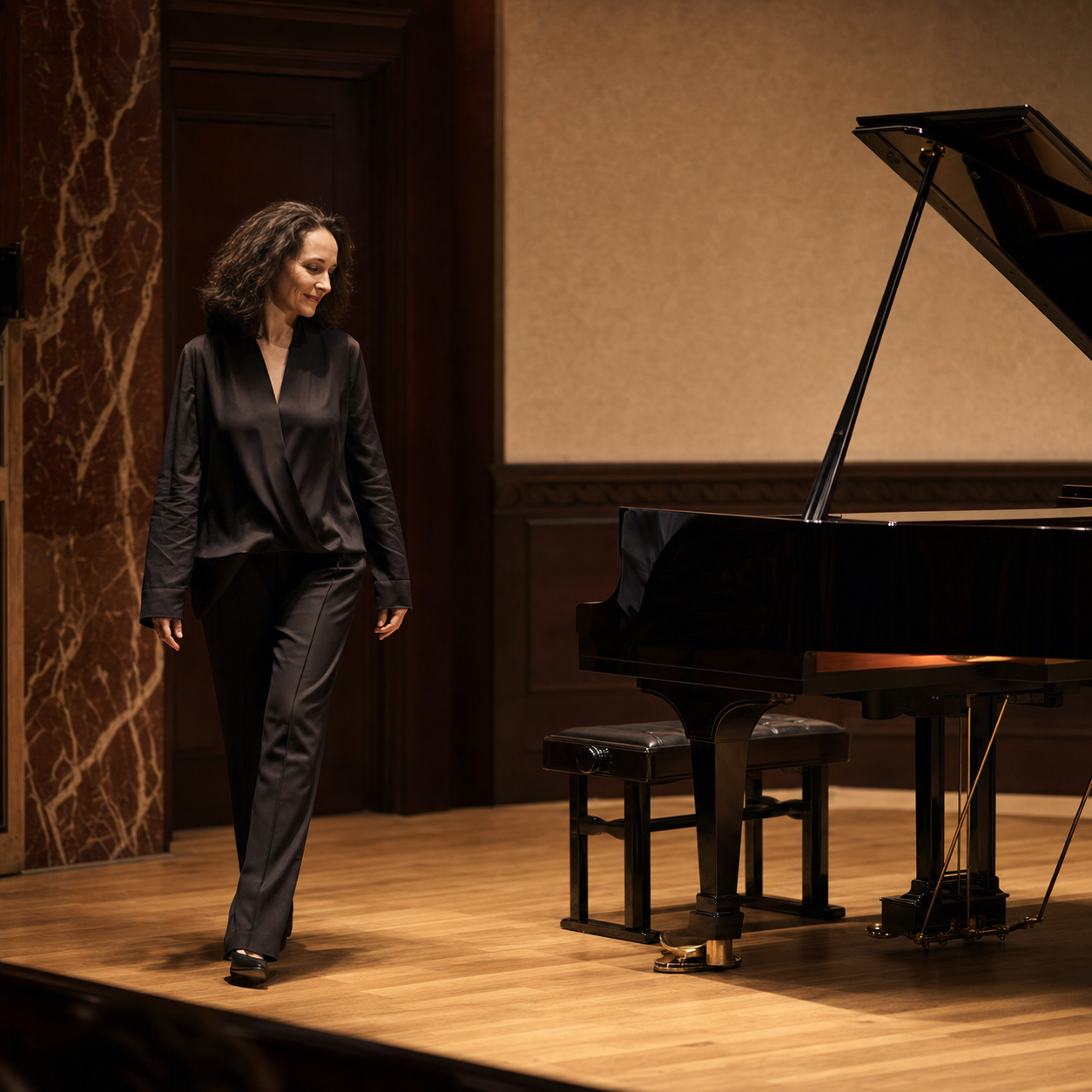
Grimaud began piano lessons in Aix-en-Provence, continued with Pierre Barbizet in Marseille and entered the Paris Conservatoire at thirteen. Her first-prize studies were followed by work with figures including György Sándor and Leon Fleisher. In 1987 she gave a Tokyo recital and was invited by Daniel Barenboim to perform with the Orchestre de Paris, events that helped launch an international career.[1]
Those facts describe acceleration, but not the quality that has sustained the career. Grimaud’s playing is recognisable because it combines strong instinct with an unusually searching relationship to sound. A phrase may seem to discover its destination in real time, yet the long line rarely disappears. Bass weight, inner voices and pedal resonance are used to alter perspective. The performance feels spontaneous because the underlying choices are alive, not because the structure has been abandoned.
Critics have sometimes admired precisely this volatility and sometimes questioned it. Reviewing her 2015 Water programme, Andrew Clements described an “instinctive, impulsive approach” while also asking whether the sequence’s abrupt shifts allowed larger pieces enough space.[6] That tension is instructive. Grimaud’s individuality is not a smooth layer applied to every score. It can illuminate one work and provoke resistance in another. Serious listening includes both responses.
A memorable interpretation does not remove uncertainty; it gives uncertainty a musical shape.
How to hear colour without losing structure
“Colour” can become a vague compliment in writing about pianists. With Helene Grimaud, it is more useful to hear colour as a relationship among attack, voicing, register and decay. A dark tone is not simply loud or bass-heavy. It may result from a rounded attack, an inner line brought forward and a pedal release delayed just enough for harmonies to overlap.
Begin with the first minute of one piece and make four short passes. The aim is not to turn music into an exercise, but to give attention a clear task.
Follow the melody alone. Where does it lean, wait or resist arrival?
Listen to bass and inner voices. Which line changes the emotional scale?
Notice what remains after each attack. When does sound become atmosphere?
Hear the passage again. Which familiar idea now carries a different weight?
On the final pass, resist the urge to name every detail. Form one defensible sentence: perhaps the melody sounds freer because the bass stays firm, or a climax grows through accumulated resonance rather than force. This is the bridge between sensation and understanding. WKMT’s article on the importance of listening develops the same principle from a student’s perspective.
Five recordings that open her musical world
Grimaud’s discography is broad, but several releases reveal her recurring interests particularly clearly. The official Deutsche Grammophon catalogue documents a path from large Romantic statements to projects built around memory, water, dialogue and silence.[2]
| Recording | Year | What to hear |
|---|---|---|
| Credo | 2003 | How Beethoven, Pärt and Corigliano create continuity through contrast. |
| Bach: Piano Works and Transcriptions | 2008 | The balance between contrapuntal clarity and the modern piano’s orchestral reach. |
| Water | 2016 | A continuous arc built from pieces whose textures suggest flow, reflection and depth. |
| Memory | 2018 | How miniatures preserve atmosphere without losing individual form. |
| For Clara | 2023 | Schumann’s Kreisleriana beside Brahms songs and intermezzi, heard through affinity and distance. |
For Clara is the most direct starting point for the current phase of her work. The project pairs Schumann’s Kreisleriana with Brahms and the baritone Konstantin Krimmel; an extended edition adds Schumann’s Piano Concerto. The connection is historical, but Grimaud does not reduce the music to biography. Hear instead how instability, inward song and suspended time pass between the composers.[2]
Then move backwards to Bach. The comparison exposes two kinds of freedom. Schumann often invites abrupt changes of character; Bach demands that freedom remain accountable to independent lines. In the Bach-Busoni Chaconne, architecture and sonority meet at their most public scale. WKMT’s guide to the major Beethoven piano sonatas offers another useful route into the late-sonata world that appears throughout Grimaud’s London programming.
The wolf, the writer and the attentive artist
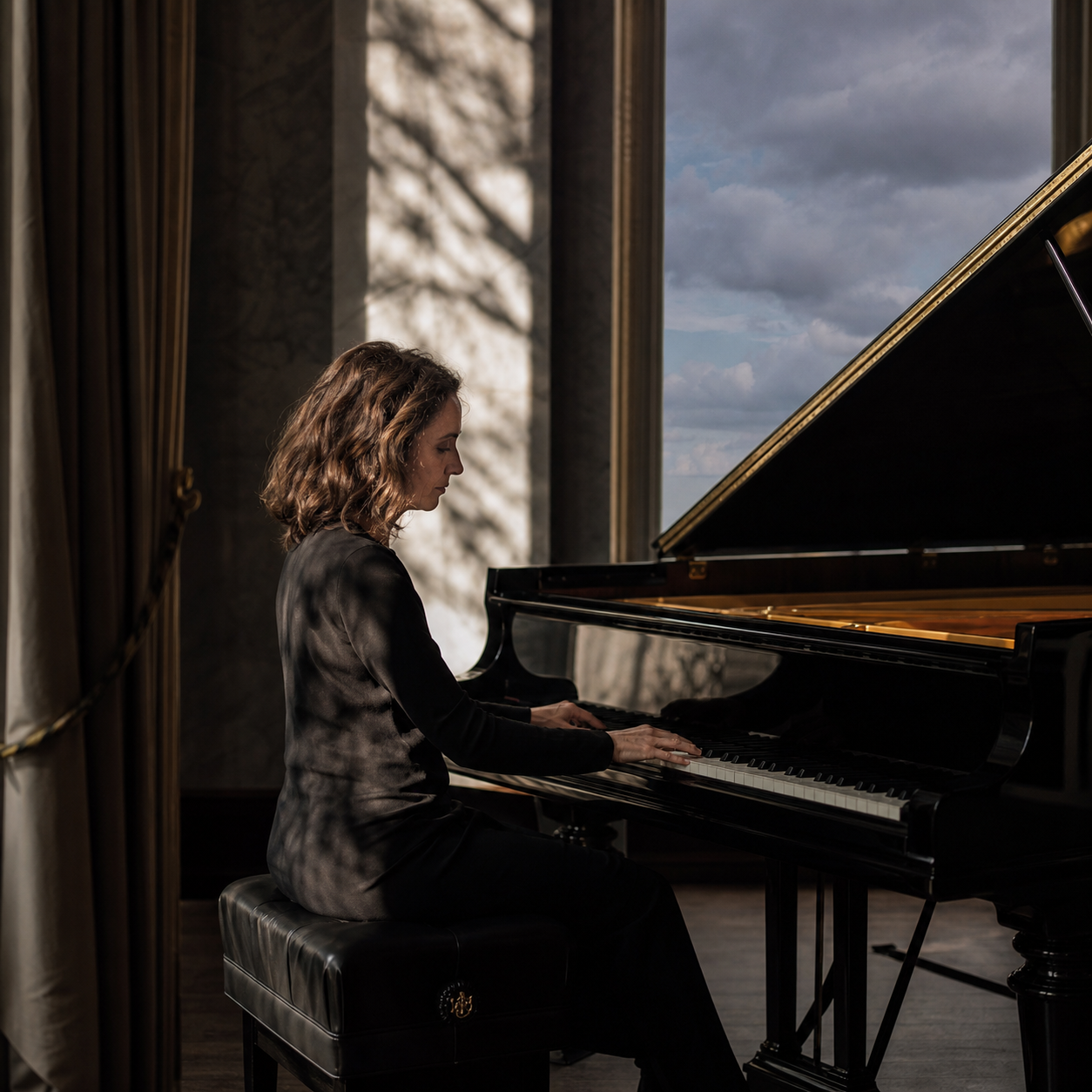
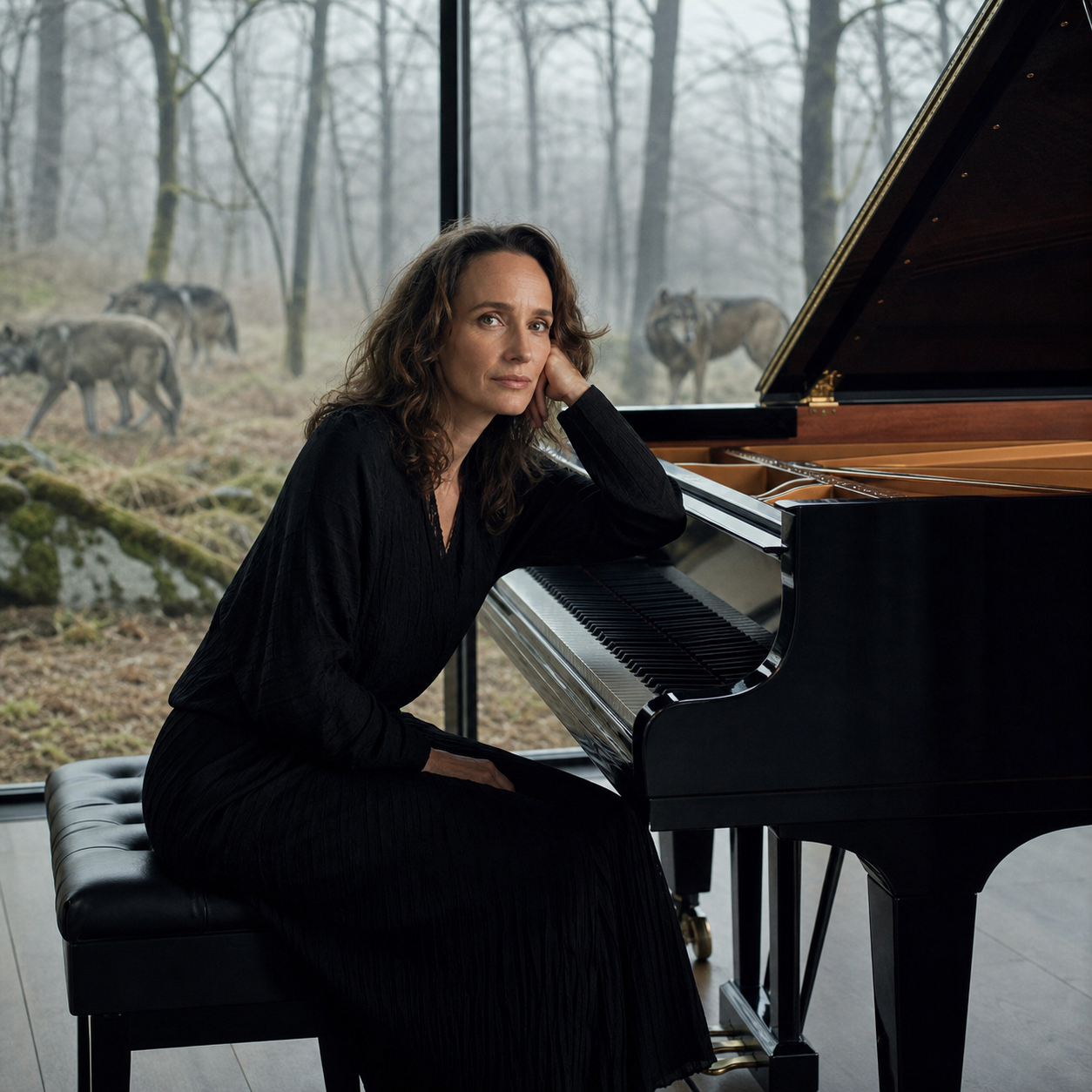
Grimaud’s public life cannot be understood through music alone. She established the Wolf Conservation Center in New York State after an encounter with a wolf awakened a lasting commitment to the species. The organisation works through education, advocacy and participation in recovery programmes for endangered Mexican grey and red wolves.[5]
It is tempting to turn conservation into a convenient metaphor for her playing: wildness balanced by discipline, instinct contained by form. That can become sentimental very quickly. The stronger connection is attention. Both a musical interpretation and responsible conservation begin by observing a living system closely enough to recognise relationships. Neither is served by imposing a comforting story before the evidence has been heard.
Her writing and human-rights work widen that field further. They suggest an artist unwilling to divide technique from the world in which technique is used. This does not make every performance a public statement. It does make the seriousness of her listening easier to understand: sound matters because attention itself has ethical weight.
Helene Grimaud at the Barbican in 2027
Grimaud returns to the Barbican Hall on Tuesday 16 March 2027 at 7.30pm with The Last Testament: Beethoven’s final piano sonata, Op. 111, and Schubert’s last sonata, D. 960. The pairing places two endings beside one another. Beethoven compresses struggle and release into two movements; Schubert lets time open into a vast, fragile landscape. The Barbican lists tickets from £34 and a Silk Street, London EC2Y 8DS venue address. Details and availability were last checked on 1 August 2026 and may change.[4]
The same official page lists wheelchair spaces, essential companion tickets through its Access Scheme, an induction loop and large-print programmes by advance request. Check the venue page before travelling. Arrive early enough to settle without hurry, and avoid reading a movement-by-movement synopsis during the performance. These sonatas depend on memory across long spans.
For more live-music context, consult WKMT classical concerts in London. The most rewarding concert preparation is modest: know the shape of the programme, then leave enough uncertainty for the performance to change your mind.
What adult pianists can take into practice
Helene Grimaud offers adult pianists a useful model because her identity is audible without becoming a mannerism. She does not ask every piece to produce the same colour. Instead, the chosen sound follows the score’s harmony, register and dramatic scale. Adult learners can apply that principle without copying her gestures: decide what a phrase needs before deciding how impressive it should sound.
Choose one passage and state its musical problem in plain language. Is the melody becoming trapped by the accompaniment? Does the bass lose direction when the pedal changes? Does a return sound identical when it should feel altered? A precise question narrows physical work and makes comparison with recordings genuinely useful.
For readers who want that listening habit connected to their own repertoire, WKMT offers structured adult piano lessons in London. The point is not imitation. It is learning to hear a musical intention clearly enough that technique has something definite to serve.
Continue the listening in London
Explore WKMT’s classical piano culture, teachers and concert community across London, where attentive listening remains the beginning of serious musical work.
Sources and further listening on Helene Grimaud
- Hélène Grimaud, official biography
- Deutsche Grammophon, Hélène Grimaud discography
- Barbican, Hélène Grimaud digital programme
- Barbican, Hélène Grimaud: The Last Testament
- Wolf Conservation Center, annual report and mission overview
- The Guardian, Hélène Grimaud review: Water programme