
 TRIAL LESSON
Pianists, Piano Lessons
Alexander Melnikov in London: Chamber Music, Clarity and the Art of Serious Piano Listening
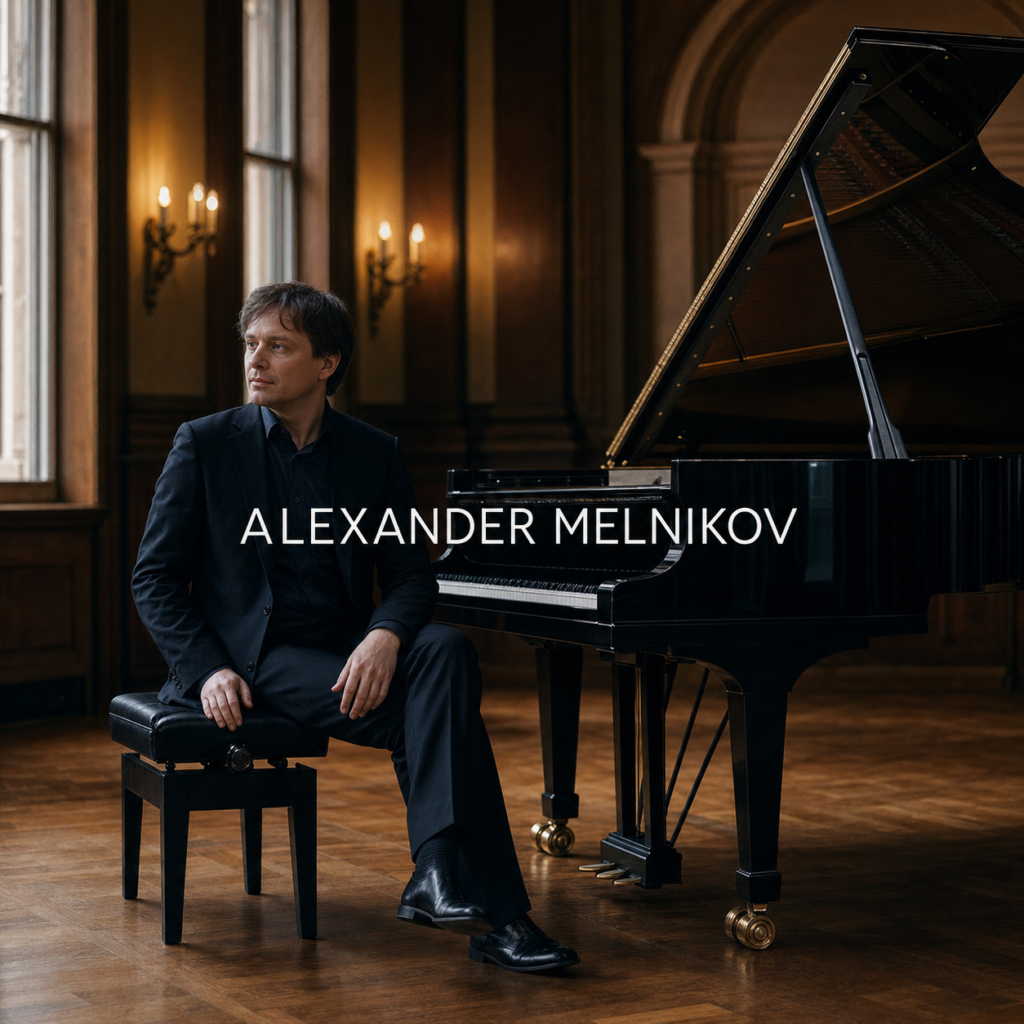
Aug
Alexander Melnikov in London
WKMT London listening guide
Alexander Melnikov in London: Chamber Music, Clarity and the Art of Serious Piano Listening
A pianist who treats instruments, partners and acoustics as part of the argument offers London listeners a particularly rich lesson in how interpretation works.
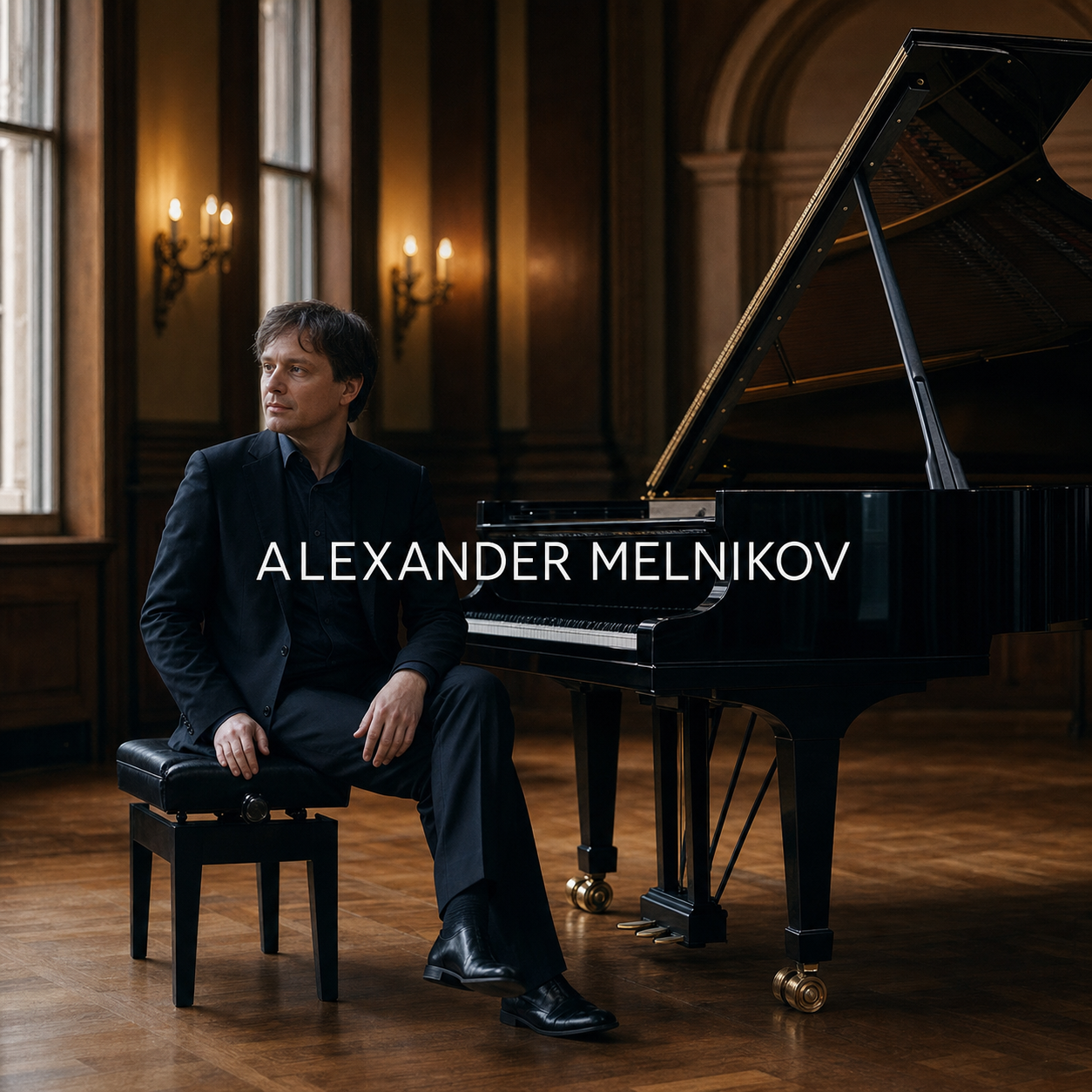
Alexander Melnikov is difficult to place in a single pianistic category, and that is precisely why he rewards close attention. Born in Moscow in 1973 and trained at the Moscow Conservatory, he came under the formative influence of Sviatoslav Richter, yet his mature career has moved far beyond the conventional image of the Russian virtuoso. He plays modern concert grands, fortepianos, early pianos and harpsichords; he is as compelling in Shostakovich’s private arguments as in the conversational give-and-take of a Mozart sonata with Isabelle Faust.
For London listeners, Alexander Melnikov offers more than a distinguished biography. His long association with Wigmore Hall, including an artist residency and recitals on contrasting historical keyboards, makes his work unusually well suited to the city’s culture of chamber music. This guide provides a route through his recordings, his London presence and the qualities worth hearing: articulation, ensemble balance, rhetorical timing and the changing identity of the piano itself.
Alexander Melnikov: quick facts
1973, Moscow
Moscow Conservatory, Lev Naumov
Isabelle Faust, Jean-Guihen Queyras, Andreas Staier
Shostakovich, Prokofiev, Beethoven, Schumann, historical keyboards
Why Alexander Melnikov matters today
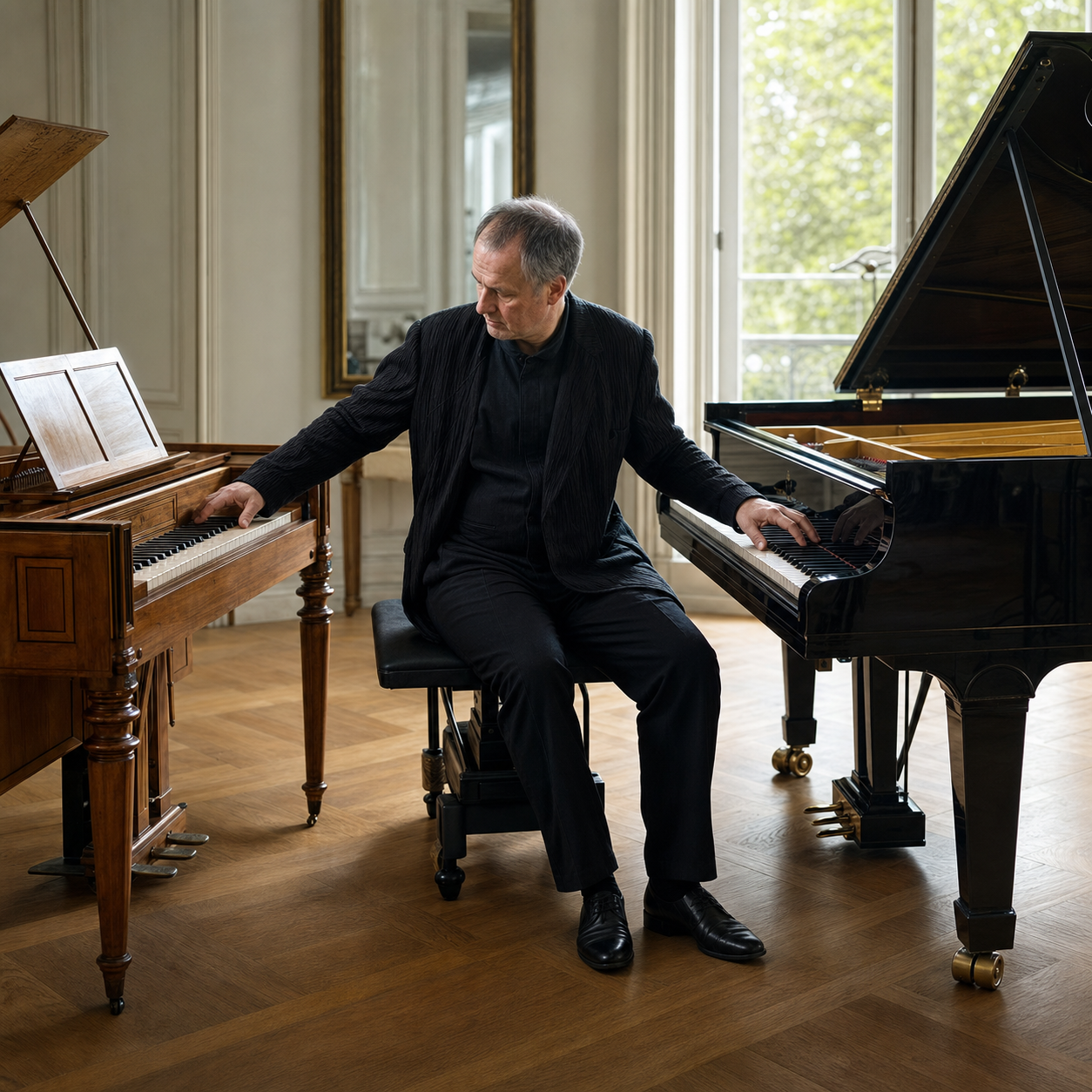
Melnikov’s importance lies less in a trademark sound than in his refusal to pretend that one sound fits every score. On a modern grand he can produce weight, colour and long-range tension; on an earlier instrument he allows quicker decay, lighter bass and more exposed articulation to reshape the phrase. The change is not antiquarian theatre. It alters which voice leads, where a cadence releases and how strongly a rhythmic gesture speaks.
That curiosity has led to projects of unusual conceptual clarity. Fantasie: Seven Composers, Seven Keyboards, released by harmonia mundi in 2023, moves from Bach and C. P. E. Bach to Mozart, Mendelssohn, Chopin, Busoni and Schnittke using instruments connected to each musical world. The listener hears continuity and difference at once: the fantasy as freedom, but freedom spoken through changing mechanisms, registers and resonances.
Melnikov’s London presence and where to hear him
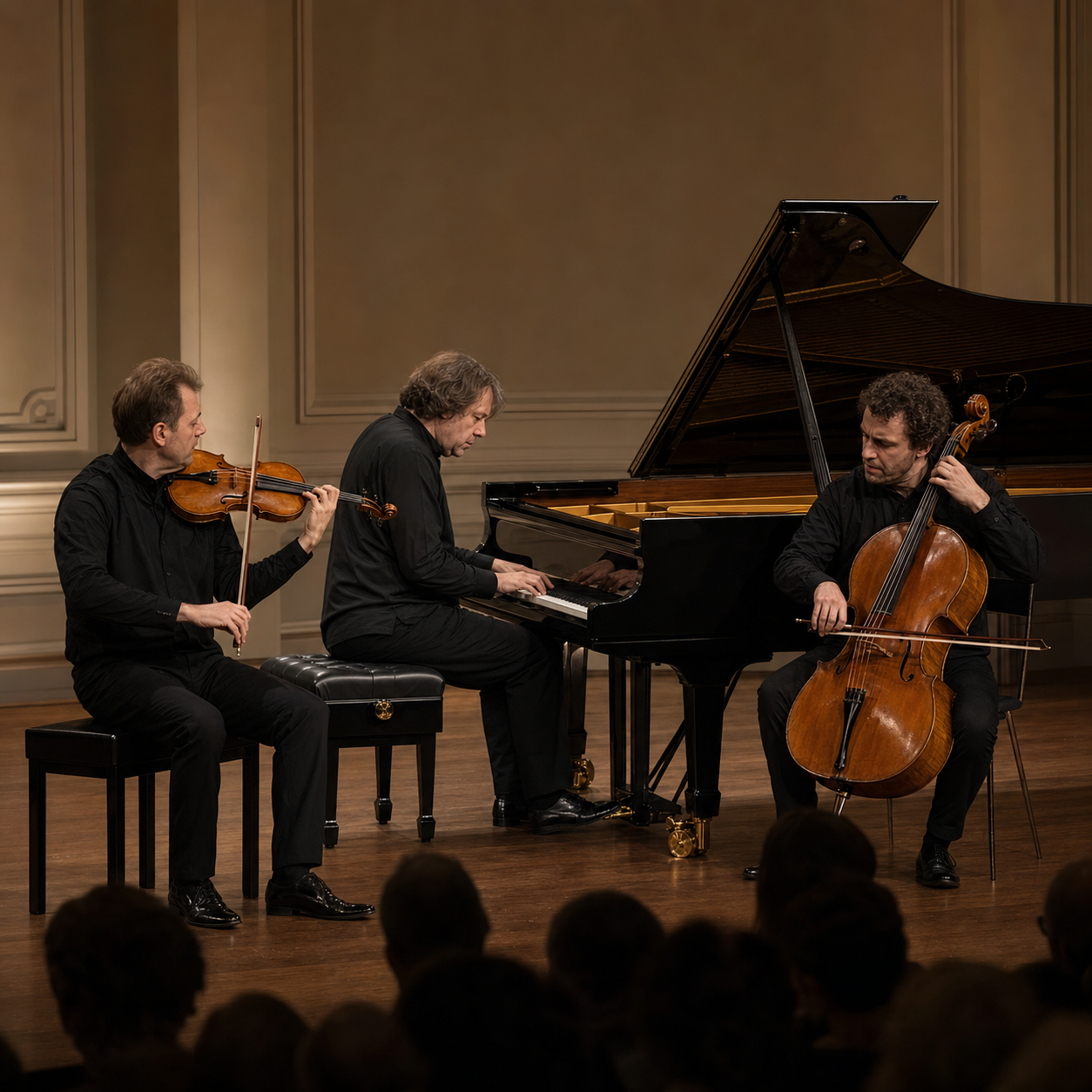
Wigmore Hall has been central to Melnikov’s London story. He was an Artist in Residence there in the 2018/19 season, shaping programmes around the relationship between modern piano, fortepiano and chamber collaboration. An official Wigmore Hall conversation from that residency discusses the demands of adapting his style between instruments. More recently, an October 2024 programme placed him alongside Alexei Lubimov, Mikhail Shilyaev and Olga Pashchenko in a characteristically exploratory keyboard event.
His London appearances are often framed through chamber music or instrument-led programming rather than celebrity recital convention. That suits Wigmore Hall’s intimate acoustic, where a change of attack or balance can register with exceptional precision. Current artist information also lists further Wigmore activity and orchestral work with the London Philharmonic Orchestra in the 2025/26 season. Because schedules change, consult the official venue and artist pages before making plans; these details were last checked on 4 August 2026.
Within WKMT’s own editorial landscape, the most useful companion readings are our guides to London chamber music, the importance of listening and modern classical pianists. Each page exists in the live WKMT sitemap and deepens a different part of Melnikov’s artistic context.
Listening guide: five revealing starting points
There is no single definitive Melnikov album. A better beginning is to hear how his priorities change across repertoire, partners and instruments.
Hear how formal rigour permits, rather than suppresses, emotional volatility. Follow the separation of voices before attending to sheer sonority.
Listen to equality. The piano comments, provokes and yields; it is never merely an accompaniment.
Notice dry wit, motor rhythm and sudden lyric distance. Melnikov keeps the textures lucid even at their most percussive.
Compare decay, bass weight and register colour. The instrument becomes part of the musical thesis.
Recorded at Villa Senar on Rachmaninoff’s own grand, the 2025 album joins the Chopin Variations to songs with Julia Lezhneva. Hear how the piano breathes like a singer.
The Shostakovich cycle is the most revealing place to study Melnikov’s control of scale. A prelude may arrive with the directness of a public utterance, while its fugue turns inward, testing the same material in a denser moral space. Melnikov does not make every voice equally loud. He makes its destination clear. In the spare textures, listen to the precise interval between one line ending and another taking responsibility; in the climaxes, hear how the bass preserves direction beneath accumulated weight.
The Beethoven sonatas with Isabelle Faust offer a different lesson. Their partnership is founded on rapid exchange: a clipped violin consonant can make the piano shorten its answer, while a sustained piano harmony can give the violin room to change colour. Compare this with a conventional soloist-and-accompanist reading and the difference is immediate. Melnikov’s left hand often behaves like a third participant, redirecting the conversation through harmonic emphasis rather than volume.
Prokofiev exposes another side of his playing. The sonatas require velocity and force, but Melnikov is most interesting when he refuses to turn their brutality into a single hard surface. Repeated notes carry different weights; brittle humour interrupts lyrical retreat; a motor rhythm may be exact without becoming mechanical. Start with the short pieces in Visions fugitives, where the compressed scale makes his timing especially easy to follow, then move to the larger sonatas to hear those decisions projected across an architecture.
Visiting Rachmaninoff closes the circle between instrument, place and collaboration. Harmonia mundi records that the 2025 album was made on Rachmaninoff’s own piano at Villa Senar. In the Chopin Variations, do not expect a wash of inherited Russian melancholy. Listen instead for how the instrument’s individual response shapes the transition between variations. When Julia Lezhneva enters for the songs, Melnikov’s experience as a chamber musician becomes decisive: the piano carries imagery, breath and atmosphere without crowding the vocal line.
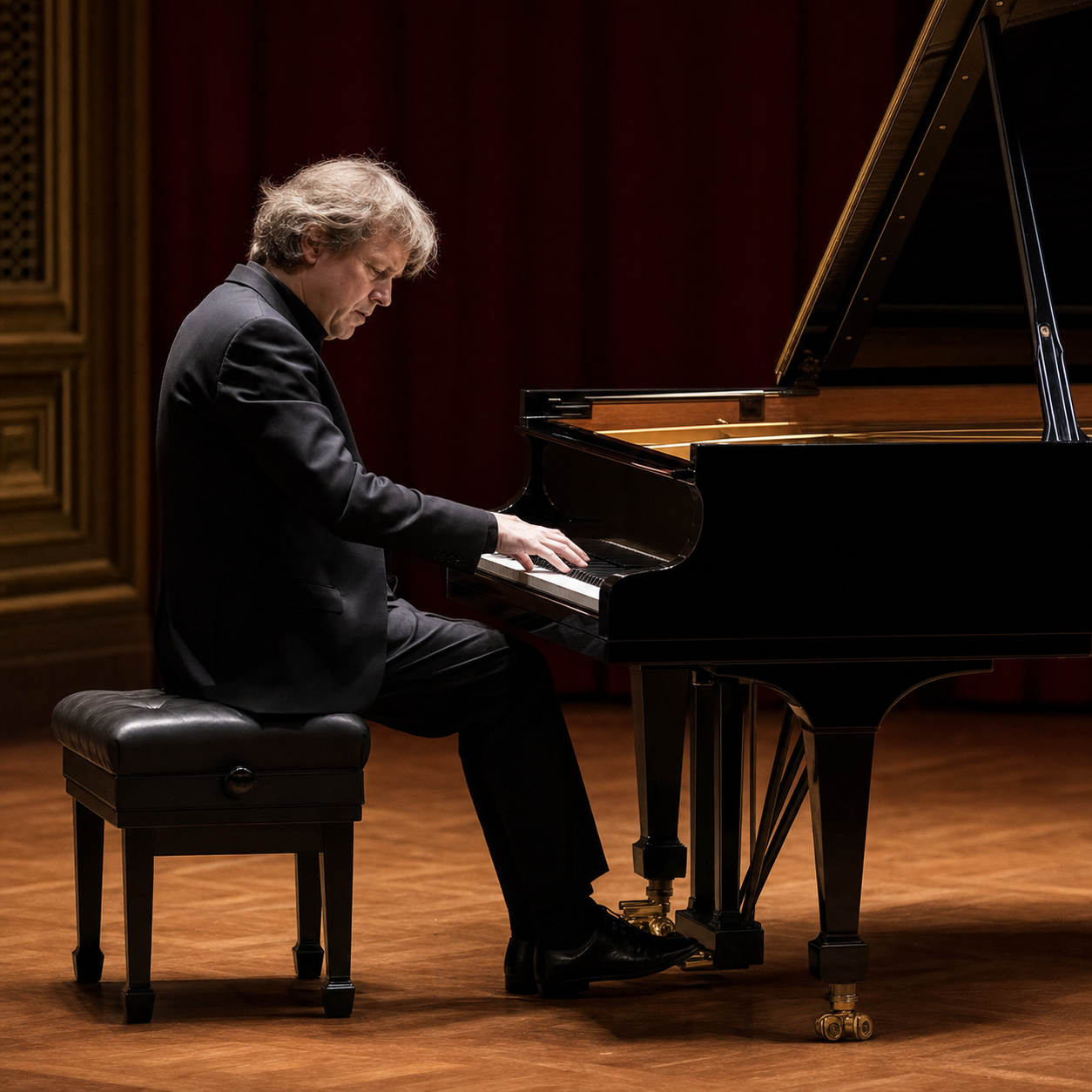
What to listen for in Melnikov’s playing
| Quality | What you may hear | Where to begin |
|---|---|---|
| Articulation | Edges of phrases remain legible without becoming clipped. | Prokofiev sonatas |
| Voicing | Inner parts carry argument, not just harmonic filling. | Shostakovich Op. 87 |
| Ensemble balance | The piano changes colour to answer a partner rather than simply reducing volume. | Beethoven with Faust |
| Instrument awareness | Tempo and rhetoric respond to the instrument’s decay and resistance. | Fantasie |
The most serious listening is not solemn. It is alert to how one musical idea changes the conditions of the next.
Melnikov and historically informed performance
Historically informed performance is sometimes reduced to a choice of old instruments. Melnikov’s work demonstrates a more demanding principle: historical knowledge should sharpen musical decisions. A fortepiano’s lighter action and shorter resonance can make an accompaniment transparent; a modern grand can sustain a long dramatic curve unavailable to its predecessor. Neither is automatically more truthful.
His collaborations with musicians such as Andreas Staier and Isabelle Faust show this vividly. In Mozart, the fortepiano can answer gut strings with speech-like immediacy. In Schubert, an early piano’s contrasting registers can reveal sudden changes of psychological distance. In Shostakovich, a modern instrument can build architectural tension while preserving contrapuntal independence. Melnikov’s distinction is his willingness to let the score, instrument and partner negotiate the result.
This approach also protects historical performance from mannerism. Light articulation is not automatically elegant, just as a broad modern legato is not automatically profound. The useful question is functional: what does the sound allow the listener to perceive? Melnikov’s projects repeatedly test that question across centuries. A quicker decay may clarify rhetoric; a heavier sustaining instrument may reveal continuity; a partner’s timbre may require a wholly different balance. The result is historical curiosity serving present-tense expression.
For piano teachers and serious students in London
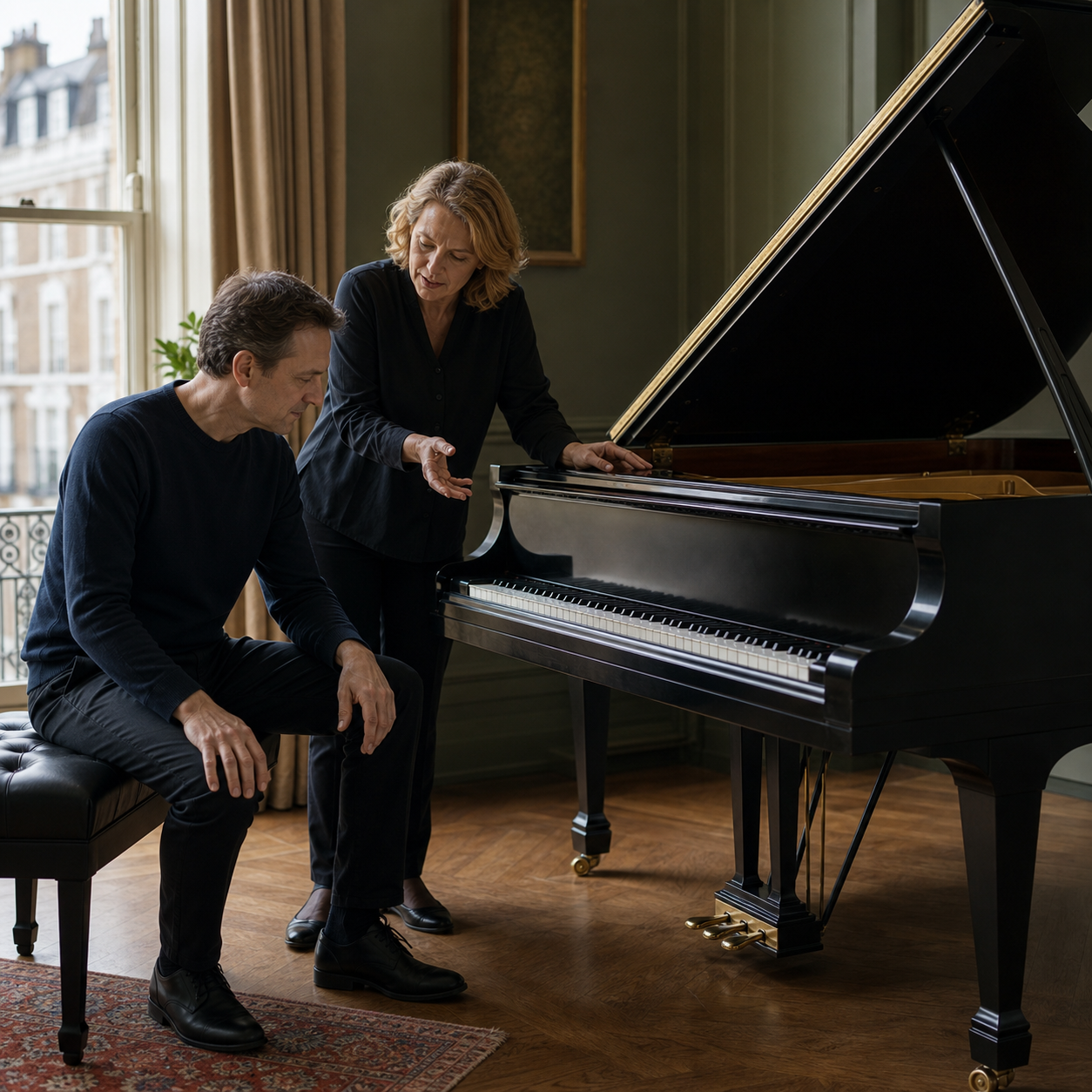
Melnikov’s example is valuable because it turns listening into a disciplined form of study. A pianist can compare two instruments without declaring a winner; trace an inner voice before judging the melody; or hear how a chamber partner changes the natural timing of a cadence. These are interpretive habits, not tricks, and they strengthen both performance and musical independence.
At WKMT, classical piano study in London connects technique to repertoire, listening and historical context. For musicians returning to the instrument or developing a more personal interpretive voice, our adult piano lessons in London provide a natural route from attentive listening to purposeful work at the keyboard.
Develop a more informed musical ear
Explore WKMT’s approach to classical piano study, where sound, structure and interpretation are taught as parts of one musical language.
Questions about Alexander Melnikov
What recordings should a new listener start with?
Begin with the Shostakovich 24 Preludes and Fugues for contrapuntal clarity, the Beethoven violin sonatas with Isabelle Faust for chamber dialogue, and Fantasie for his approach to historical keyboards.
Does Alexander Melnikov play the fortepiano?
Yes. He performs on fortepiano and other historical keyboards as well as the modern concert grand. The instrument is chosen as part of the interpretation rather than as a fixed identity.
Has Alexander Melnikov performed in London?
Yes. His London history includes numerous Wigmore Hall appearances and an artist residency there. Official artist information also records London orchestral engagements; always check current venue listings before booking.
Sources and further listening for Alexander Melnikov
- Alexander Melnikov biography and current activity, Impresariat Simmenauer
- Alexander Melnikov discography, harmonia mundi
- Fantasie: Seven Composers, Seven Keyboards, harmonia mundi
- Visiting Rachmaninoff, harmonia mundi
- Interview on the Wigmore Hall residency, Wigmore Hall, 2019.
- Alexander Melnikov and colleagues, programme, Wigmore Hall, 14 October 2024.
- Wigmore Hall 2026/27 season brochure
- Alexander Melnikov at Wigmore Hall, The Guardian, 2011.
Alexander Melnikov’s art resists the passive consumption of beautiful sound. It asks why this instrument, why this balance, why this gesture now. For a London audience surrounded by excellent halls, players and traditions, that question is an invitation: hear the performance as a sequence of choices, and familiar music begins to disclose another life.