
 TRIAL LESSON
Piano Lessons
Wigmore Hall Concerts: How Serious Piano Learners Listen in London
Aug
Wigmore Hall concerts Complete Guide
WKMT London listening guide
Wigmore Hall Concerts: How Serious Piano Learners Listen in London
A recital in this intimate room can sharpen the ear more decisively than hours of passive listening. The value lies in noticing how sound begins, travels and resolves, then carrying those observations back to the piano.
The concise answer
Wigmore Hall concerts reward close listening because the 552-seat auditorium brings tone, breath, balance and silence into unusually clear focus. For a piano learner, the most useful approach is to choose one question before the recital, listen for it throughout, and write down two precise observations afterwards. WKMT London treats concert-going as part of a serious musical education, alongside individual teaching, informed practice and performance experience.
Why Wigmore Hall concerts change the scale of listening
Wigmore Hall began life in 1901 as Bechstein Hall, built by the piano manufacturer beside its London showrooms. It was designed by Thomas Collcutt to feel both grand and intimate. That history is not decoration: the room was conceived around the close projection of acoustic instruments. The Hall’s own historical account records early praise for its acoustic and its carefully judged interior.
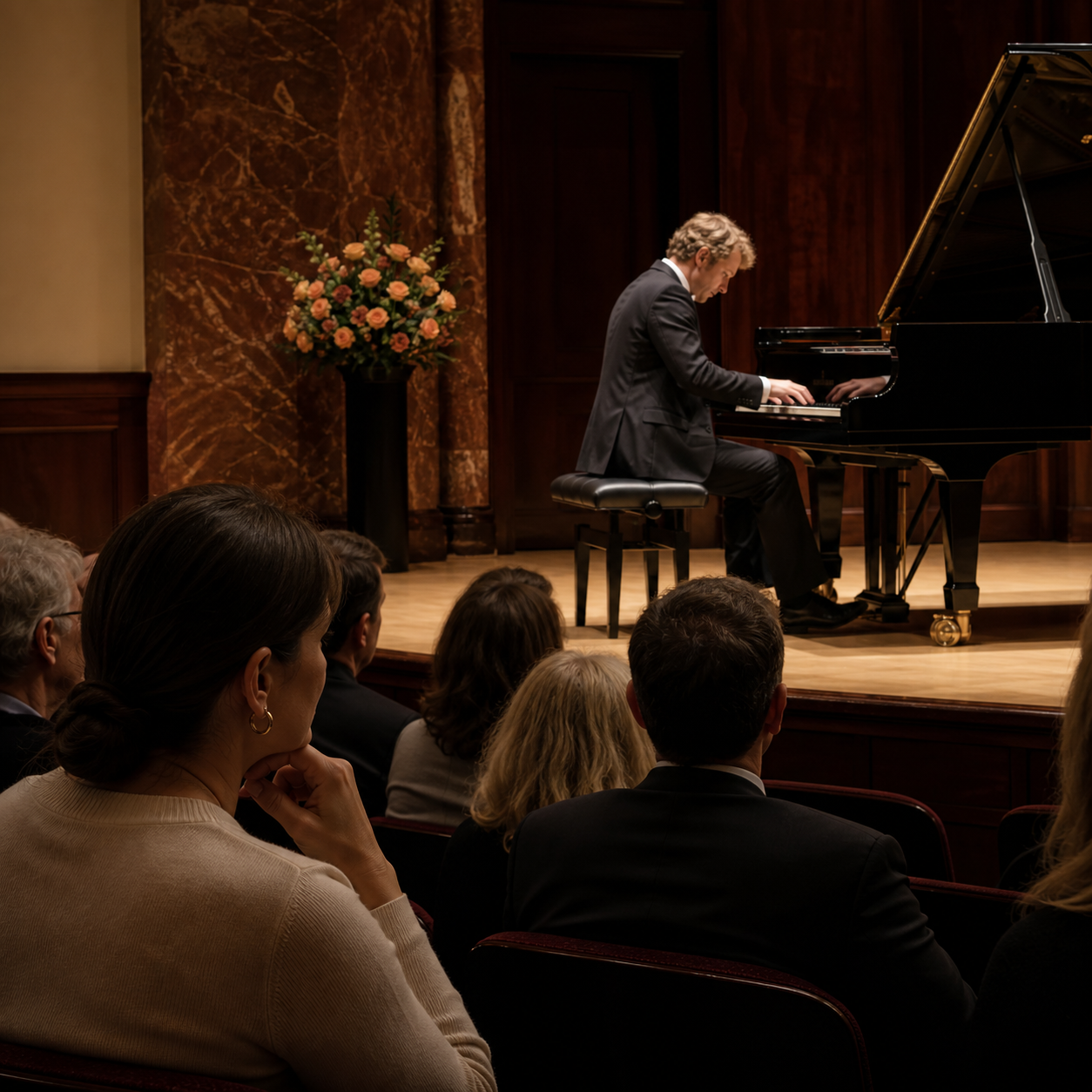
In a large venue, a listener may register sweep and spectacle first. At Wigmore Hall concerts, small events become structural: the colour of a repeated note, the slight release before a cadence, or the changing relationship between melody and accompaniment. A pianist cannot hide the beginning of a sound, and the audience is close enough to hear whether a phrase has direction.
“A concert becomes a lesson when the listener arrives with a question and leaves with a more exact ear.”
A listening framework for Wigmore Hall concerts
The framework is deliberately small. Trying to collect every interpretive detail usually reduces attention. A single question creates continuity across a programme and helps comparison. If the recital contains several composers, notice how the pianist changes articulation and pedalling without losing an identifiable artistic voice.
In our London studios, teachers often ask pupils to describe sound before prescribing a technical solution. Precise listening makes later practice economical: the student knows what must change and can judge whether it has changed.
Listen for beginnings, middles and releases
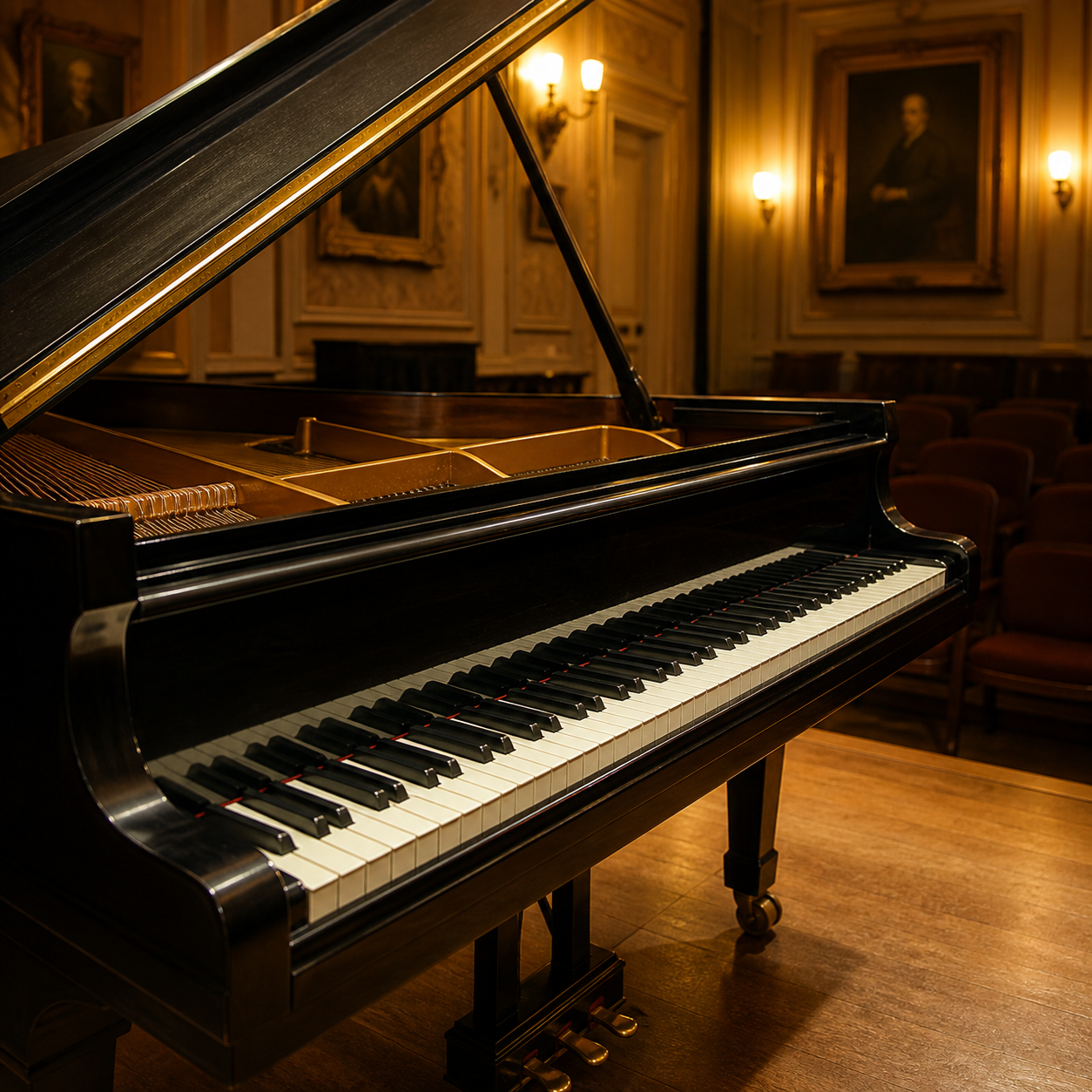
A note is not a point. It has an attack, a life and a release. At Wigmore Hall concerts, listen to whether the pianist begins a melody from the key surface or with a more projected gesture. Then follow how the sound is sustained through finger connection, pedal and harmonic timing. Finally, hear whether the release completes the phrase or merely stops it.
What to compare without turning music into a scorecard
Is the singing line carried by weight, speed of key descent, balance, or a mixture?
Where does the performer allow flexibility, and what underlying pulse makes it coherent?
Which inner parts become audible, and how do they change the meaning of the harmony?
Does a pause conclude, suspend, prepare or unsettle?
Comparison should deepen curiosity rather than produce a winner. The same sonata may support very different tempi if each performance makes its harmonic and rhetorical logic convincing. Serious listening asks, “What is this interpretation making audible?” before asking whether it matches our preference.
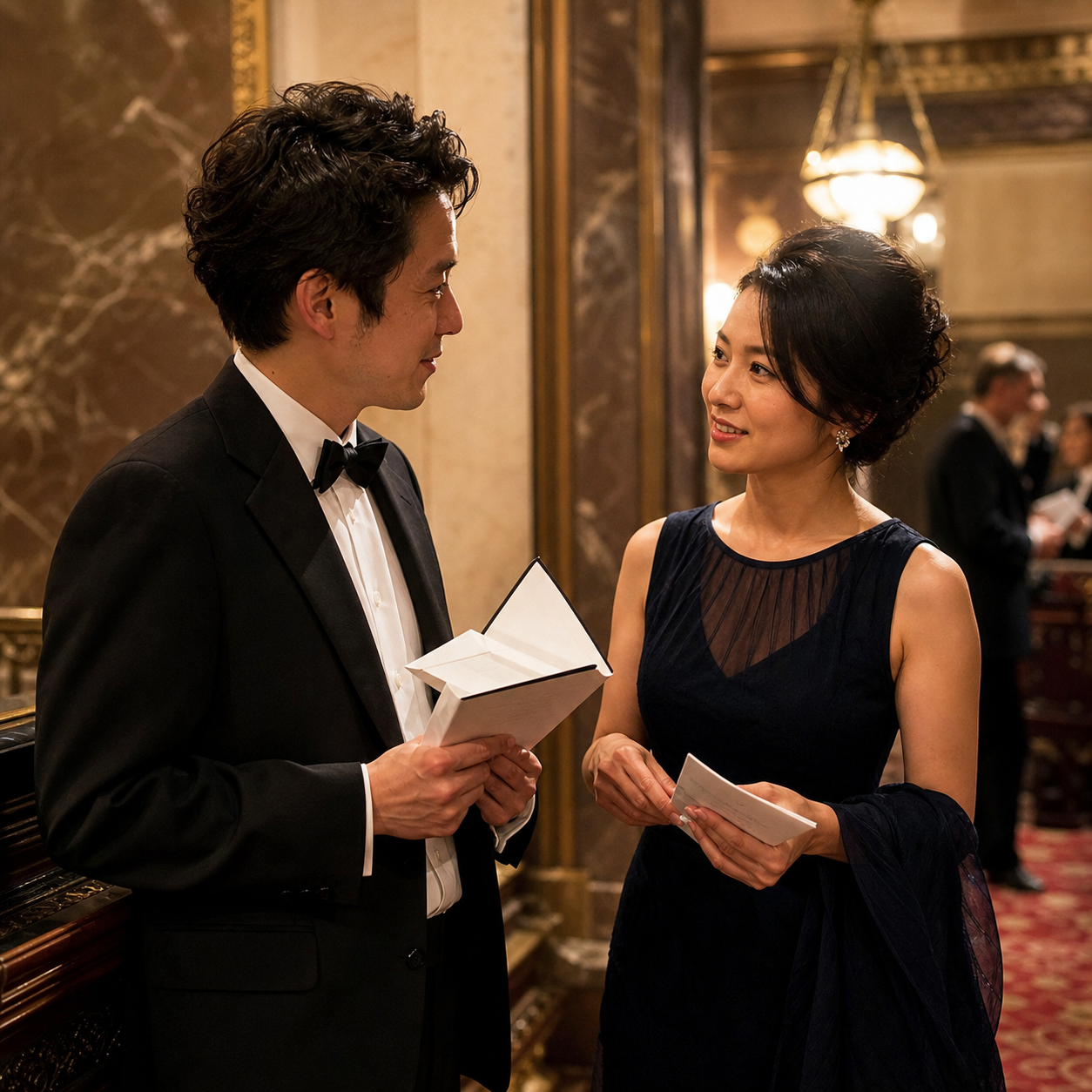
Wigmore Hall describes a programme of song, chamber music, early music, jazz and solo recitals, with a free digital strand for listeners who cannot attend. Its access information and online provision can help listeners plan a visit or begin remotely. BBC Radio 3 also documents the Hall’s long broadcasting relationship in its classical-music coverage.
From the concert hall back to the keyboard
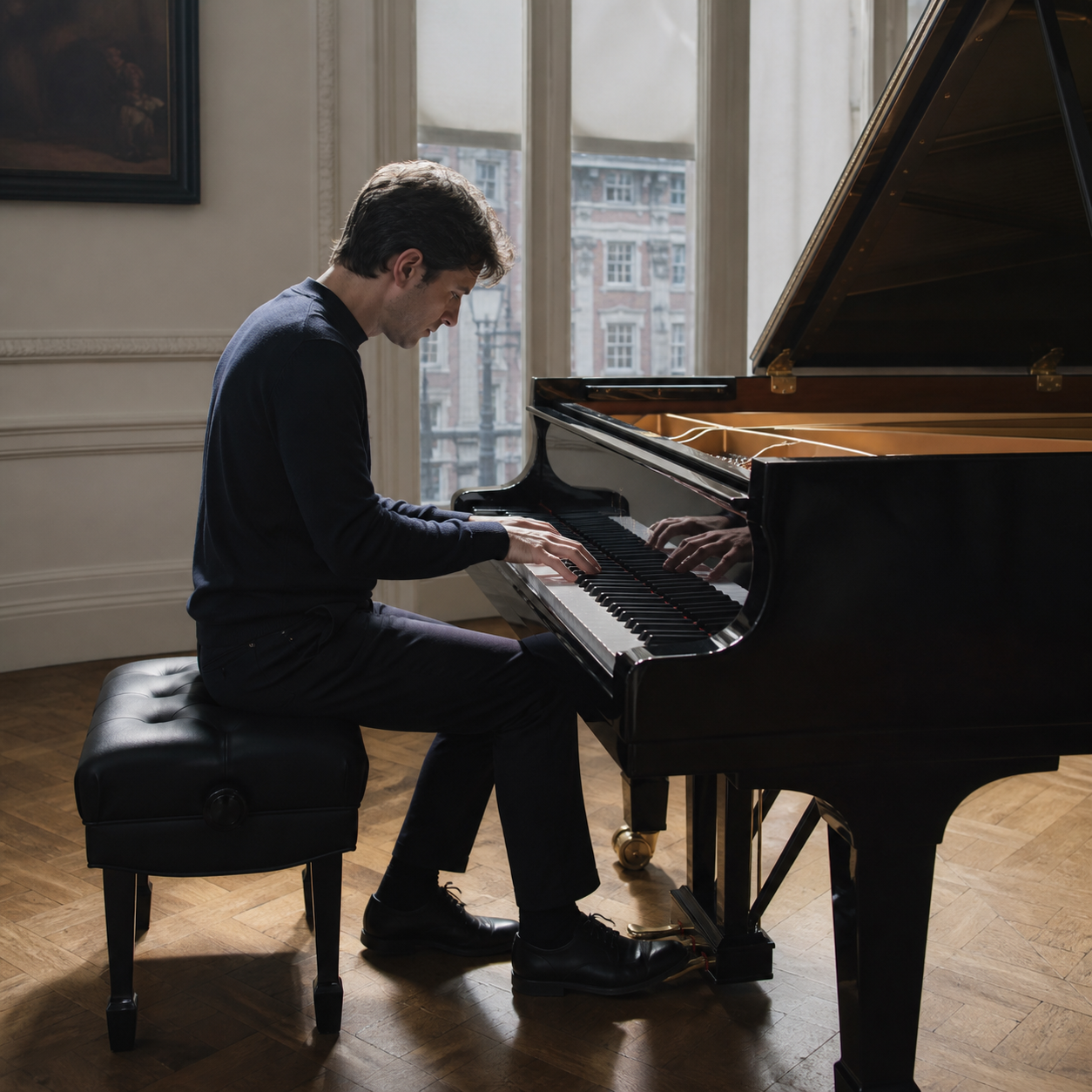
The most valuable transfer is modest. Do not try to imitate a complete performance the next morning. Choose one observed quality: a bass line that moved without heaviness, an accompaniment kept alive at soft dynamic, or a pause that clarified form. Test it in four bars of suitable repertoire. This keeps inspiration connected to craft.
Describe the result in sound rather than anatomy. “The melody continues through the long note” is more useful than forcing a fixed wrist position. Your teacher can then help find the economical movement that serves the audible intention.
This is where concert culture and classical piano study in London meet. WKMT London teaches pupils across ages and levels in one-to-one lessons, while its concerts and festivals give learners a practical relationship with performance. Our guide to classical concerts in London and the reflection on Sir András Schiff at Wigmore Hall offer further listening context.
Make listening part of your piano education
WKMT London connects individual tuition with the listening, repertoire and performance culture that gives technical work its musical purpose.
Sources and further listening on Wigmore Hall concerts
- Wigmore Hall: History of the Hall (checked 22 August 2026)
- Wigmore Hall: current programme (checked 22 August 2026)
- Wigmore Hall: access and digital programme (checked 22 August 2026)
- BBC Radio 3: classical music and concert broadcasts
- Victoria and Albert Museum: music and musical instruments