
 TRIAL LESSON
Piano Lessons
Music and Language: How Piano Helps Children Hear Pattern
Aug
Music and language with WKMT London
WKMT London parent guide
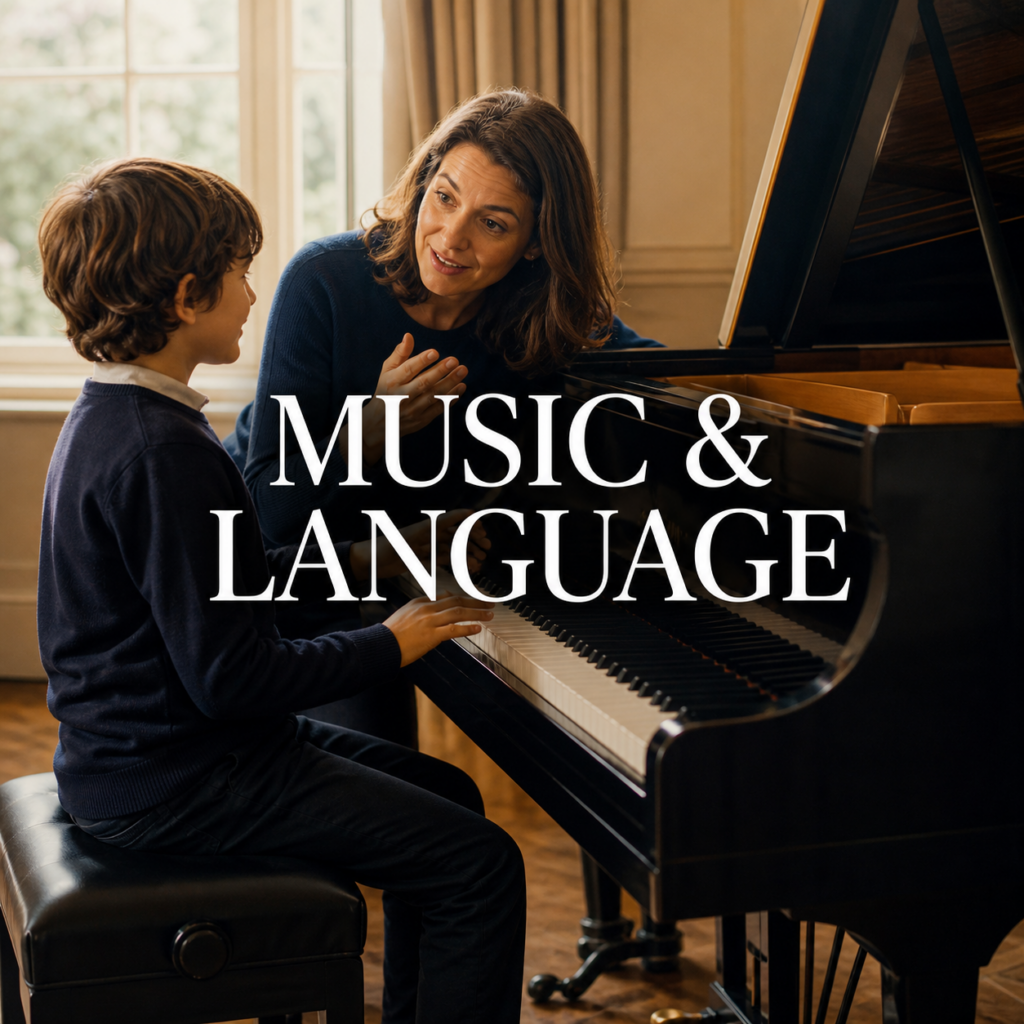
Music and Language: How Piano Helps Children Hear Pattern
Children meet language as patterned sound before they meet it as print. Piano lessons can make timing, contrast, sequence and turn-taking unusually clear, while keeping the purpose musical and the expectations humane.
The concise answer
Music and language share sensitivity to rhythm, pitch, grouping, memory and expectation. Piano learning can support a child’s attentive listening by turning these features into audible, visible and repeatable patterns. Research shows meaningful associations between musical and language abilities, but it does not justify promising that lessons will treat speech or language difficulties. WKMT London approaches piano as musical education: a rich setting for listening, expression and confident response.
What music and language genuinely share
Speech has pulse and contour. We group syllables, anticipate endings, notice emphasis and infer meaning from the rise or fall of a voice. Music organises different materials, yet the act of hearing pattern is central to both. A 2023 review in Frontiers in Psychology found consistent associations between children’s musical and language abilities across the studies it examined, including links involving rhythm, melody, grammar and phonological awareness.
The relationship between music and language is therefore promising, not magical. Children differ in development, home experience and opportunity. An association does not prove that one weekly activity causes broad gains. The strongest educational reason for piano remains the music itself; the wider listening habits are valuable companions.
“Pattern gives a child something to anticipate; silence gives the child room to answer.”
Music and language at the piano: four listening habits
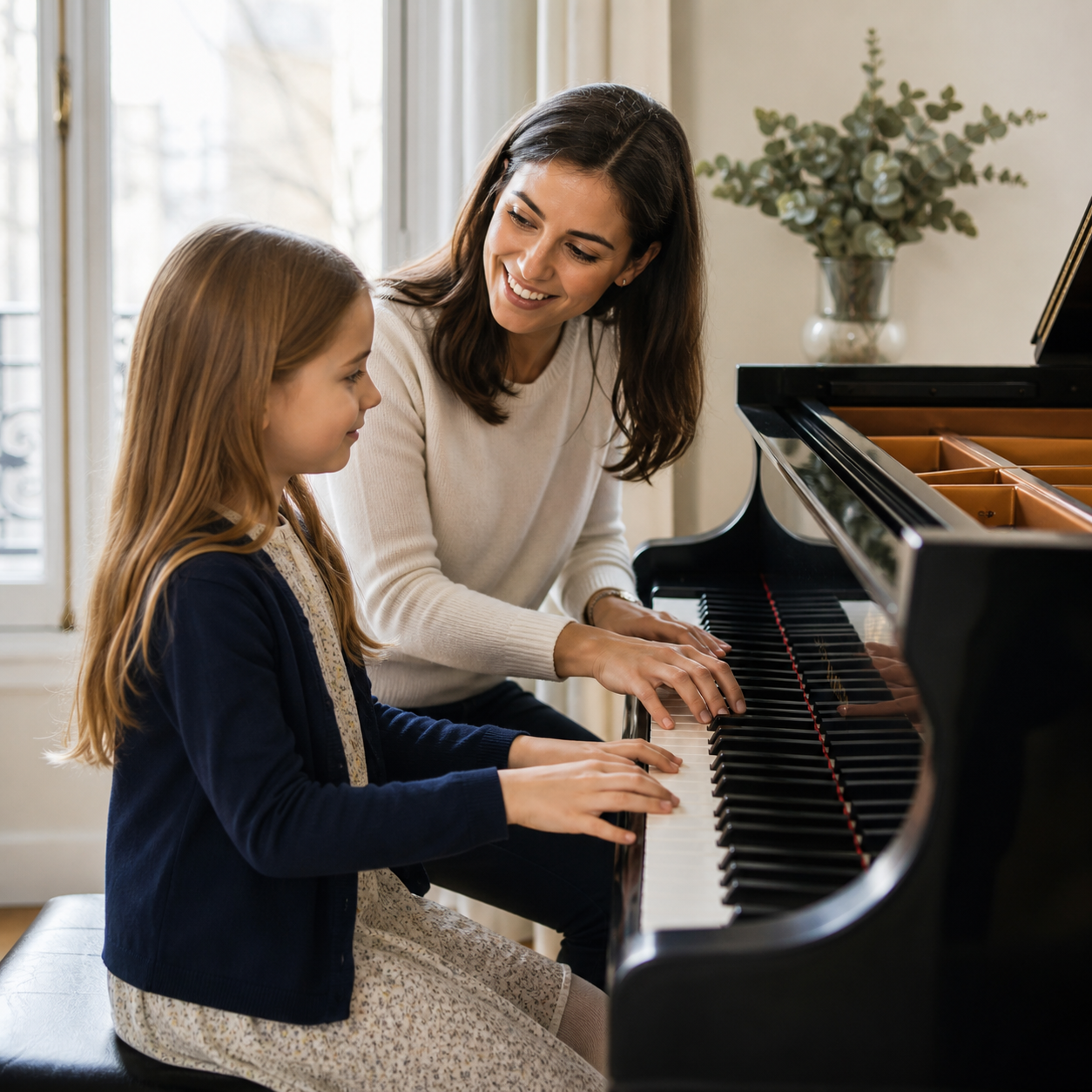
A piano makes these habits concrete. Pitch rises visibly from left to right. A two-note pattern can be repeated exactly, then changed by one feature. The child can hear the difference and point to where it happened. This stability helps a teacher keep explanations short and invite active response.
Rhythm, grammar and prediction
Research on developmental language disorder has sharpened interest in rhythm and grammatical processing. A study available through PubMed Central describes difficulties in producing musical rhythmic groupings among children with developmental language disorder and situates them within wider work on rhythm and grammar. Such findings help researchers understand shared processing demands; they do not turn a piano teacher into a clinician.
What a thoughtful lesson sounds like
A short phrase, sung or played clearly once.
Pulse, direction, dynamic or a point of change.
By copying, choosing, completing or inventing.
One feature changes while the task remains recognisable.
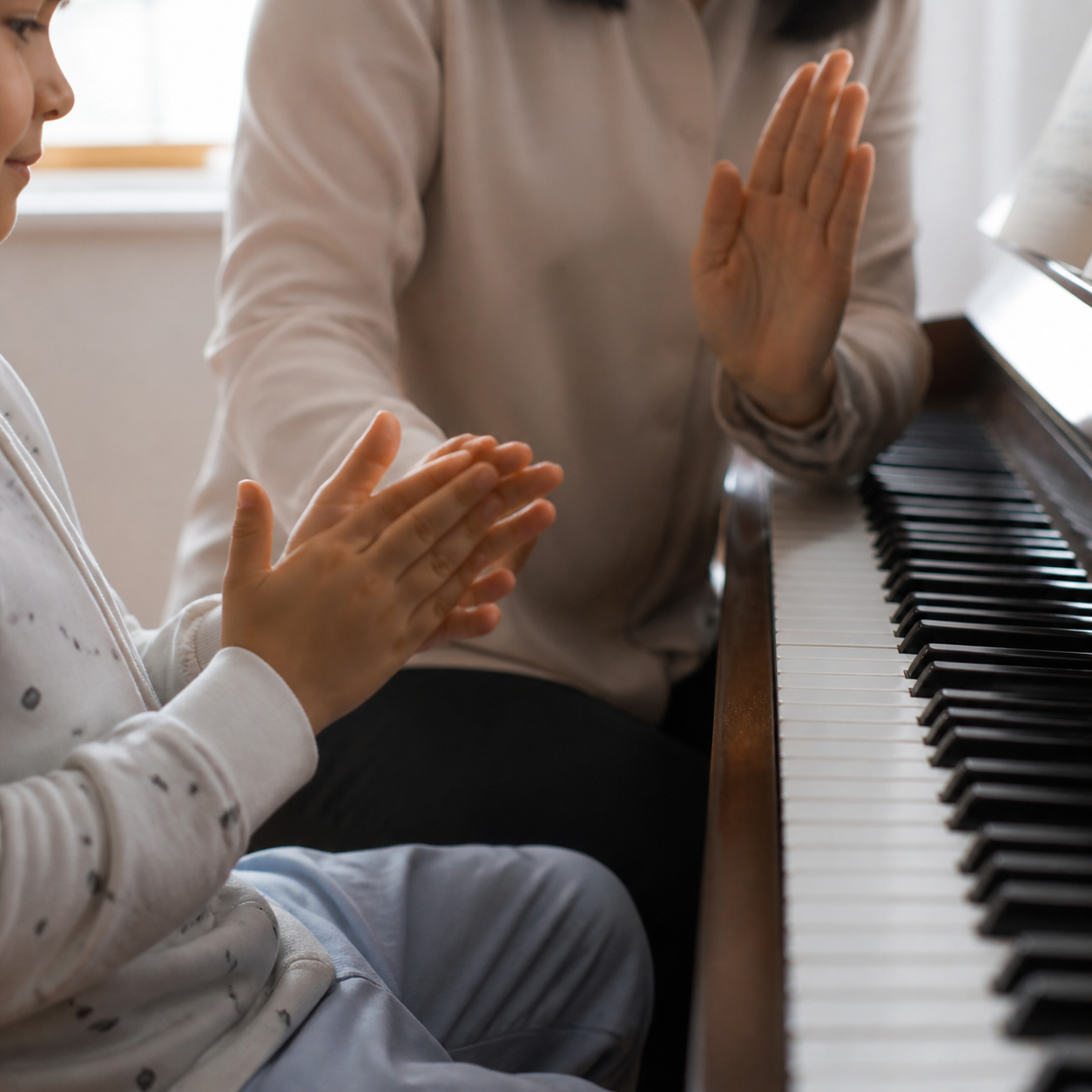
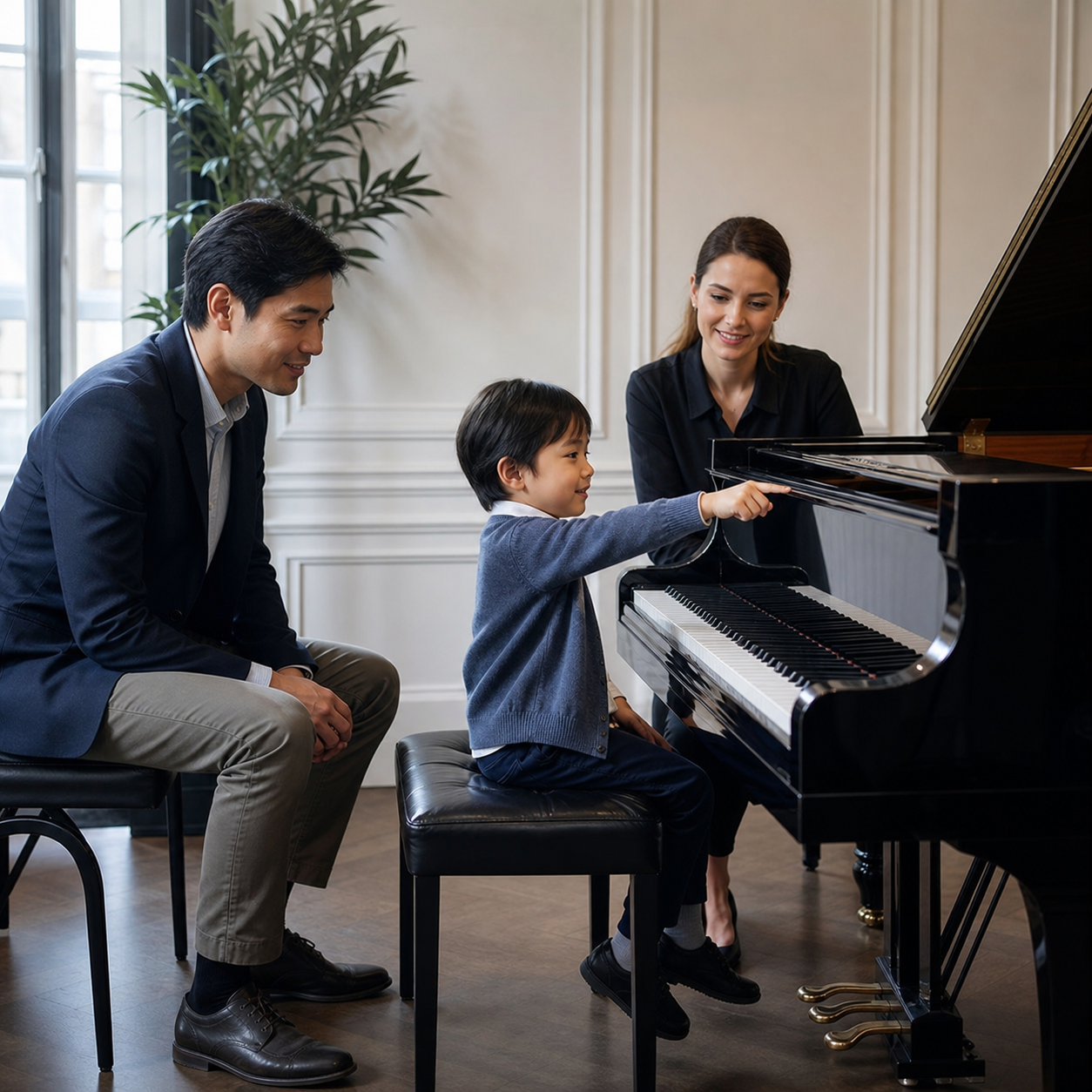
This sequence links music and language without turning the lesson into a vocabulary class. The teacher demonstrates more than lectures, waits long enough for an answer, and accepts that a response may first appear as movement, singing or a deliberate single note. The child experiences communication through music.
In multilingual families, songs and musical games can sit comfortably beside every home language. NHS guidance encourages families to speak in the language that feels natural and notes that learning more than one language does not cause language problems. Its early language guidance emphasises responsive conversation, songs and shared attention.
How this differs from speech and language therapy
Piano tuition is education, not treatment. A qualified speech and language therapist assesses communication difficulties and plans clinical support. Families with concerns should not wait for musical activities to solve them. Evelina London provides practical guidance on when to seek advice about speech and language development.
That boundary strengthens good teaching. A piano lesson can focus honestly on musicianship: pulse, pitch, memory, expressive contrast and ensemble awareness. Those experiences may complement a child’s broader development without carrying promises the evidence cannot support.
A London pathway from listening to first lessons
WKMT London teaches children individually across its London studios, adapting pace and repertoire to age, attention and experience. In piano lessons for children in London, musical conversation can move gradually from singing and rhythm to keyboard geography, notation and independent practice.
Parents may also find our guide to music language development in younger children useful for earlier home-based sound play, while signs that a child is ready for piano helps distinguish curiosity and participation from a rigid age threshold.
Begin with a musical conversation
If your child enjoys listening, copying and answering through sound, a carefully paced individual lesson can give that curiosity shape.