
 TRIAL LESSON
Pianists, Piano Lessons
Vladimir Horowitz and London: The Curious Reason His UK Appearances Became Instant Legends
Mar
Vladimir Horowitz in London
London recital culture • Press Memory • Archives
Vladimir Horowitz and London: The Curious Reason His UK Appearances Became Instant Legends
Intro
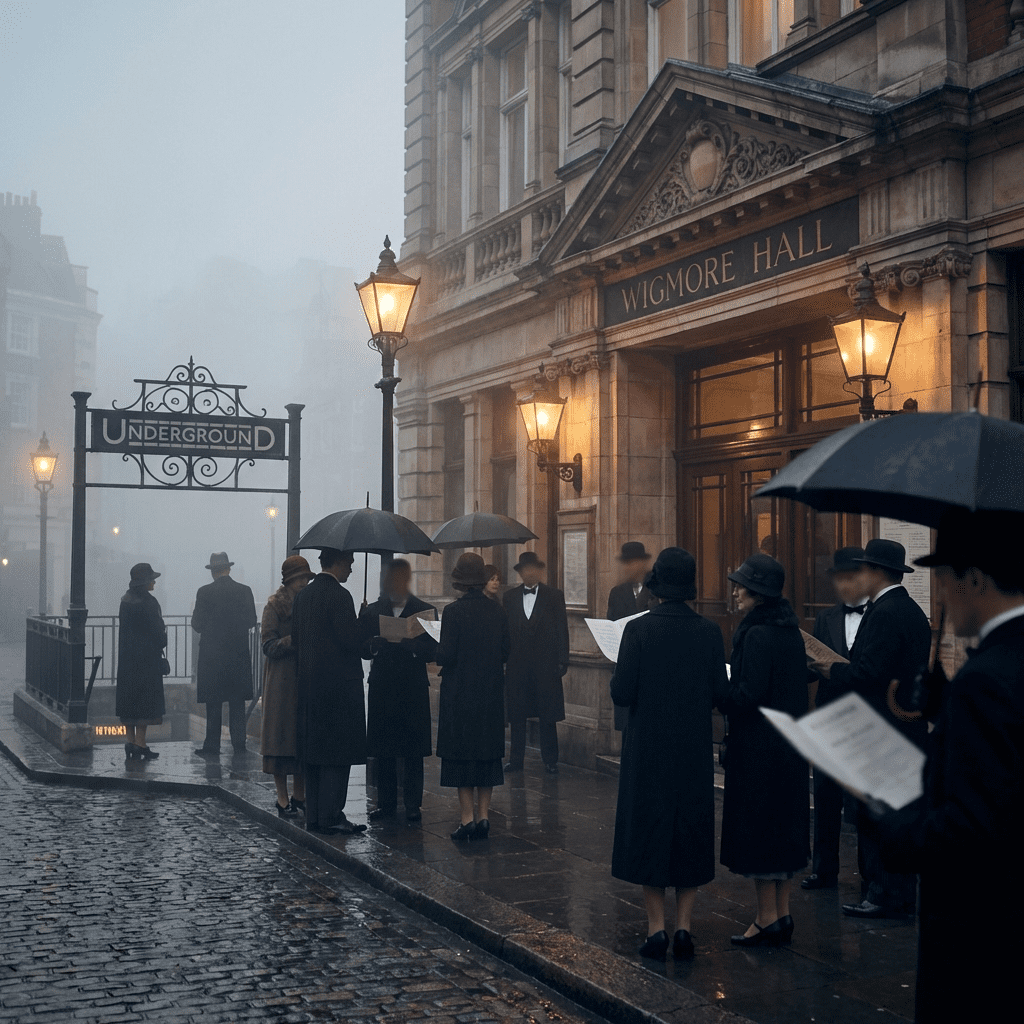
In London, you can feel a piano recital before you hear it: wet pavement outside the tube, the clean hush of a foyer, the brief rustle of programmes like leaves. Then the first chord lands, and the city listens with its whole body. A hall either blooms or bites; a forte either crowns the room or turns hard. This is a city that has made reputations on timbre alone.
Vladimir Horowitz became a London legend by doing something paradoxical in such a place: he was rarely there. London met him in high-voltage bursts—an early controversy, long silences, then a late return whose meaning was amplified by British media and the archival habits of a collecting capital. The record is unusually verbal. The Times could remember his 1927 Chopin as “execrable”, “horribly noisy”, and “very tiring on the ear”, while Neville Cardus fixed the opposite extreme—“the greatest pianist alive or dead”—into British musical folklore.
That scarcity—not merely genius—is the curious reason his UK appearances became instant legends: absence made each return feel like proof.
Scarcity became the story. In London, Horowitz was not a regular fixture but an event—arriving in bursts, argued over in print, and preserved for replay.
Quick portrait: Horowitz at a glance
Horowitz’s career is often described through superlatives—octaves, thunder, velvet pianissimi—but his London story makes sense only if you also accept the other half: withdrawal. A long Times profile from 1986 captures a performer who could provoke “stinking reviews” and yet remain, in his own mind, vulnerable enough to stop appearing.
Key dates and career highlights (London and UK touchpoints)
- 1927 — London debut year; later remembered in The Times with sharply divided reactions, and documented in the Royal Albert Hall’s programme listings as a “Horowitz Recital”.
- 1930s — Wider UK touring recalled by Horowitz as “25 towns in Britain”.
- 22 May 1982 — Royal Festival Hall recital, recorded live in London (as named in a National Library of New Zealand catalogue record).
- 6 May 1985 — BBC2 listing promotes “HOROWITZ IN LONDON” as “another chance” to see the recital after a “30-year absence” (as printed in The Guardian’s schedule pages).
- 31 May 1986 — The Times looks back, quoting the 1927 critical brutality and Cardus’s counter-mythmaking phrase.
Horowitz’s relationship with London — a chronological narrative
First visits and early UK receptions
The first London chapter is a collision between city, sound, and print. The most vivid surviving language comes from The Times (31 May 1986), looking back to the 1927 debut year and reproducing the kind of phrase that creates instant enemies and instant devotees: his Chopin, it recalls, was described as “execrable”, “horribly noisy” and “very tiring on the ear”. These are not merely negative adjectives; they imply physical discomfort—London as a jury that punishes excess.
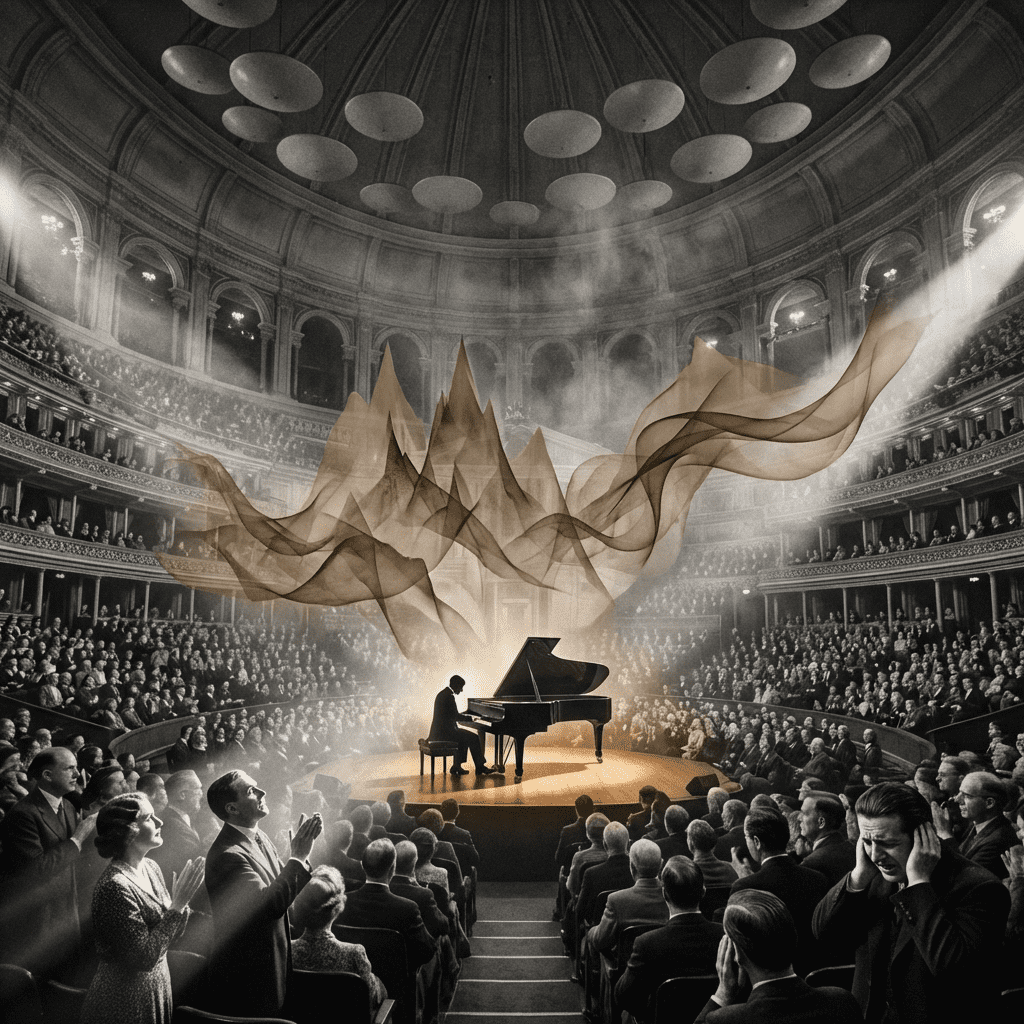
Yet the counter-legend formed at the same time, and it is equally, if differently, absolute. Neville Cardus, as reported by The Times, called him “the greatest pianist alive or dead”. The paper adds the famous afterthought: Cardus later claimed the phrase was English irony aimed at American hyperbole, but “it was too late”. London had already learned the pleasure of arguing about Horowitz in absolutes.
Mid-career returns and headline tours
Horowitz’s mid-career relationship with Britain is glimpsed through the strange honesty of his own memory. Asked about the country, he says, “I don’t remember London.” Then, prompted by his wife Wanda Toscanini, recollection arrives as fragments: the Queen’s Hall, and conductors such as Sir John Barbirolli (“I recommended him in America,” he claims) and Sir Thomas Beecham. Even the aside that he toured “25 towns” in Britain in the 1930s reinforces how little London was a routine stop: Britain mattered to him, but London remained the symbolic summit.
Late-career concerts, broadcasts and the afterlife of a return
By the time he returned late in life, London did not greet a familiar visitor. It greeted a legend that had been growing in absence. That return is anchored by unusually verifiable documentation. A national library catalogue record locates the event precisely: Royal Festival Hall, London; recorded live; 22 May 1982.
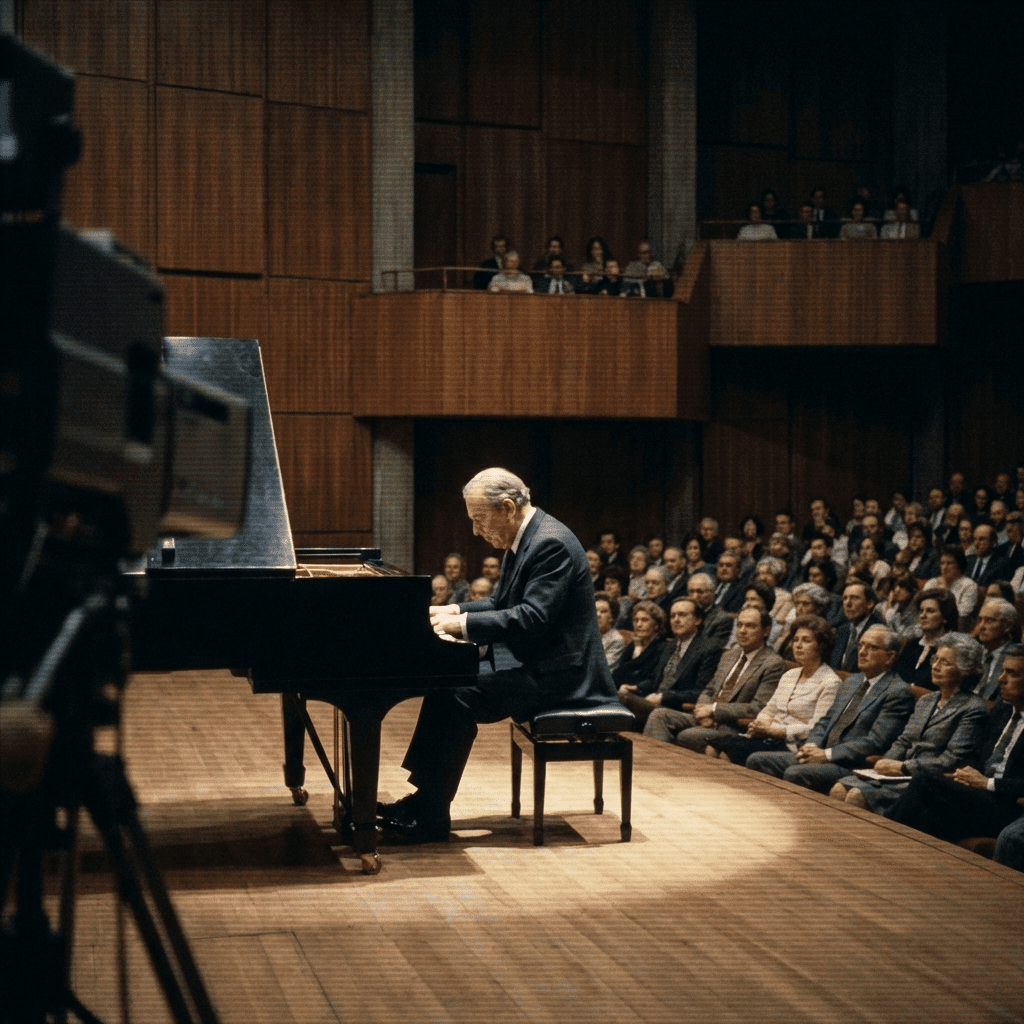
The afterlife is corroborated by British television ephemera. On 6 May 1985, the BBC2 schedule printed in The Guardian sells “HOROWITZ IN LONDON” as “another chance” to see the recital through which the “eminent pianist” returned to London after a 30-year absence. An early controversy, then a long silence, then an event framed as a once-in-a-generation return: it is hard to imagine a more efficient legend-making machine.
Venues, acoustics and the London concert experience
Royal Albert Hall, Royal Festival Hall, Queen’s Hall, Wigmore Hall
Horowitz’s London story is also a story of rooms, because his playing depended on extremes: near-whispered softness and overwhelming volume. The 1986 Times profile frames the aesthetic dispute around him as a tug-of-war between “ultra-Romantic” freedom and critics who felt he “obliterated” a composer’s wishes. In London, that dispute was inseparable from acoustics.
The 1927 evidence places him, at least once, under the dome of the Royal Albert Hall: the hall’s collections catalogue includes “Horowitz Recital” among the 1927 programmes. The hall’s own historical note adds a crucial detail for how we hear those early reports: suspended acoustic diffusers (“mushrooms”) were installed in 1969 to improve sound in the immense space. Before that intervention, Chopin in that room could easily feel more percussive than intimate; the remembered protest about “horribly noisy” playing gains real acoustic plausibility when you picture a pre-1969 dome.
The Royal Festival Hall—London’s modernist civic room and postwar concert platform—frames the late return. The Southbank Centre’s institutional history emphasises the hall’s Festival of Britain origins and its centrality to London’s cultural life. In 1982, modern London served as stage décor for a pianist associated with an older idea of virtuosity; in 1985, television turned that stage into repeatable public memory.
The Queen’s Hall is the ghost in the middle of the map. The Times interview confirms that Horowitz associates his British past with the Queen’s Hall. Which specific London dates he played there, however, is not confirmed in the publicly accessible catalogues consulted for this article.
And then there is Wigmore Hall, the London room many pianists regard as confessional. The publicly citable record available here is institutional rather than event-specific: a published archive description notes decades of programmes, press cuttings, and related material, accessible by arrangement. A definitive statement that Vladimir Horowitz performed at Wigmore Hall is not confirmed in publicly accessible catalogues consulted for this article.
British press and public reaction — what made the appearances “instant legends”
Contemporary language: a London habit of judgement
The instant-legend effect depends on language, and London’s language around Horowitz was unusually sharp. The Times’s remembered verdict on the 1927 Chopin—“execrable”, “horribly noisy”, “very tiring on the ear”—is not polite disagreement; it is taste defending itself. It suggests a city that treats sound as a moral category: loudness becomes vulgarity; intensity becomes imposition.
Against this stands Cardus, whose phrase is totalising in the opposite direction: “the greatest pianist alive or dead”. The Times’s note that he later attempted to recast it as irony is revealing precisely because it failed. The phrase persisted because it expressed a real public temptation: in Horowitz, technique looked like metaphysics.
Broadcast culture: scarcity, replay, and a shared memory
Broadcast culture then turns scarcity into civic memory. The Guardian’s TV listing for 6 May 1985 is a tiny paragraph, yet it crystallises how Britain framed the event: “another chance” to see the recital with which Horowitz “returned to the London concert platform after a 30-year absence”. The tone is not review but exhortation—an instruction to treat an artist’s presence as something to be caught.
This is also where the BBC belongs in the London story: as the infrastructure that let a rare recital become shared memory, replayed into the living room and preserved in print through schedule language.
The Gramophone belongs here too, as a gatekeeper for how British audiences heard pianists at home. The digitised index to its 1983–84 volume—immediately after the London return—advertises itself, in block capitals, as “THE MOST INFLUENTIAL RECORD AND AUDIO MAGAZINE IN THE WORLD.” A directly quotable Gramophone review of the 1982 London recital (concert or recording) cannot be confirmed from publicly accessible catalogues consulted for this article; the OCR-derived volume indices list Horowitz as an entry in the period, but do not reliably surface the relevant review pages or verdicts.
As for the folklore of ticket demand—queues, secondary prices, who got in—those stories are precisely what scarcity breeds, and precisely what the open record cannot yet guarantee. Where the evidence is silent, it is better to stay silent too.
“Execrable”, “horribly noisy”, “very tiring on the ear” — The Times recalling the 1927 Chopin reception in London (as quoted in a 31 May 1986 profile).
“The greatest pianist alive or dead” — Neville Cardus on Horowitz (as reported by The Times, 31 May 1986).
Horowitz’s London repertoire and recordings
London’s documented Horowitz repertoire is best reconstructed from what British listings chose to name. The BBC2 entry printed in The Guardian singles out six Domenico Scarlatti sonatas and points to music by Sergei Rachmaninoff and Franz Schubert. A parallel BBC2 listing printed in The Daily Telegraph likewise anchors the event to the Royal Festival Hall and describes the programme in slightly different terms, naming Scarlatti and adding Robert Schumann alongside Rachmaninov.
Put together, the public UK framing is clear: old-keyboard clarity as a prelude, then Romantic interiority, then the Russian repertoire London expected Horowitz to make personal. The anchor document is unusually clean for researchers: the National Library of New Zealand catalogue record that names the Royal Festival Hall recital and fixes it to 22 May 1982, recorded live in London.
A modern scholarly layer reinforces how the event was later packaged. A Cambridge University Press chapter published online in 2024 treats Horowitz in London: A Royal Concert as a Sony video documentary and notes that an interview segment was filmed in May 1982.
Influence, archives, and London’s habit of keeping things
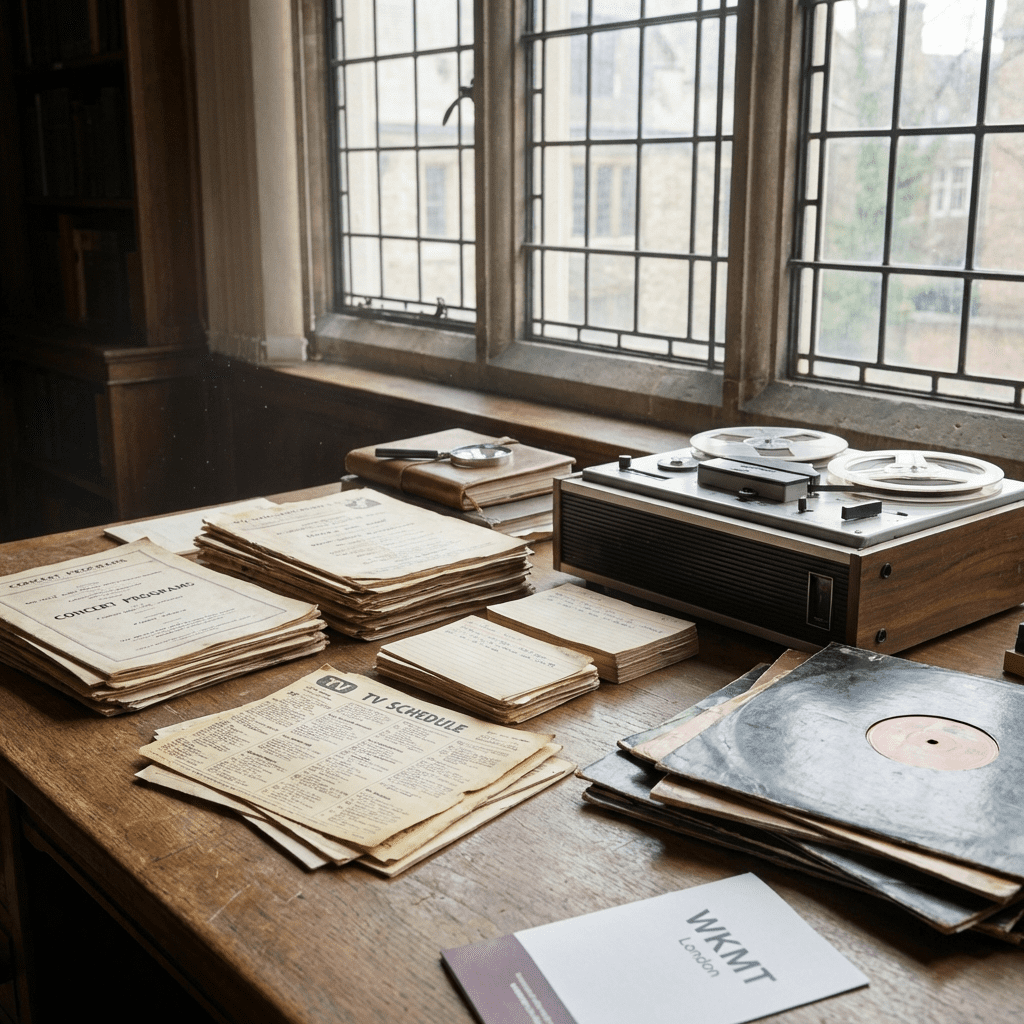
Part of the Horowitz legend in London is not only what happened on the night, but what was kept afterwards. London is unusually good at institutional memory: catalogues, programme files, broadcast listings, and the practical machinery of access. That matters for an artist whose reputation was shaped as much by absence as by presence.
For researchers today, the British Library remains a key route into sound and documentation culture. Its current public guidance makes clear that catalogue services and access routes—including for sound recordings—have been affected by the 2023 cyber incident, requiring phased restoration and updated requesting procedures (last checked: 2026-03-13). For the wider London musical ecosystem, public-facing archive guidance is also available through the Royal College of Music and the Royal Academy of Music. The Royal Philharmonic Society also maintains an archive held at the British Library, a plausible route into concert-era documentation.
Specific publicly citable catalogue entries for HMV/EMI London studio sessions or BBC radio broadcast holdings related to Vladimir Horowitz were not confirmed from the open sources consulted for this article.
Where to hear Horowitz in London today (and how to continue the habit)
If you want “Horowitz-in-London” rather than “Horowitz in general”, begin with the one anchor the public record names precisely: the live Royal Festival Hall recital recorded on 22 May 1982. Then add the way Britain itself encouraged the public to consume the event: as a repeatable broadcast—“another chance” to see the recital after a 30-year absence—listed on BBC2 on 6 May 1985. That pairing—hall plus replay—is the engine of the legend.
If you plan on-site research, build around current access rules. The British Library’s Sound & Vision services and catalogue systems have been in long recovery after the 2023 cyber incident; confirm the latest guidance before travel or making requests (last checked: 2026-03-13). If you are tracing printed culture—programmes, reviews, correspondence—use the access information published by the Royal College of Music and Royal Academy of Music as practical starting points.
And if your interest in Vladimir Horowitz is really an interest in what a great pianist can do in a London room, continue the journey in the present tense: explore WKMT’s London concert and salon events (WKMT link), and see upcoming masterclasses and performance opportunities for students and guests (WKMT link). A legend is only useful if it sharpens how we listen now.
Conclusion on Vladimir Horowitz
Horowitz’s London story is not mainly a list of appearances. It is a case study in how a city makes legends: a harsh early verdict, a competing critical coronation, and a late return framed as scarcity and preserved for replay. London’s halls—vast and intimate—turned his extremes of sound into arguments about taste, and broadcasting let those arguments echo far beyond the night itself.
The curious reason his UK appearances became instant legends is therefore simple and modern: London did not get used to Vladimir Horowitz. It experienced him as an event—then used print, broadcast, and archives to keep that event alive. If you value that kind of listening culture, consider following WKMT’s programme of concerts and masterclasses (WKMT link), and subscribe to the WKMT newsletter for more London-centred musical history and guides (WKMT link).
FAQ on Vladimir Horowitz in London
- When did Vladimir Horowitz first play in London?
- The London debut year discussed in the available record is 1927. The Times (31 May 1986) looks back to that year, and the Royal Albert Hall collections catalogue includes “Horowitz Recital” among its 1927 programme listings.
- Why did Horowitz’s London appearances become “instant legends”?
- The record points to a particular pattern: strong early controversy, followed by long silences, followed by a late return framed explicitly as rare. British print and broadcast culture then preserved that rarity: The Guardian’s BBC2 listing (6 May 1985) sells the 1982 Royal Festival Hall recital as “another chance” after a 30-year absence.
- Which London venues are confirmed in publicly accessible sources?
- Publicly accessible sources consulted here confirm the Royal Albert Hall (via 1927 programme listings) and the Royal Festival Hall (via a catalogue record specifying the live recital recorded on 22 May 1982). The Queen’s Hall is mentioned in The Times interview as part of Horowitz’s recollection, but specific dates are not confirmed in the catalogues consulted. Wigmore Hall is included as an archive resource; a definitive public confirmation of a Horowitz performance there is not established from the sources used for this article.
- What did British critics say about Horowitz in the early London years?
- The Times (31 May 1986) recalls that his 1927 Chopin was described as “execrable”, “horribly noisy”, and “very tiring on the ear”. In the same account, Neville Cardus is reported as calling Horowitz “the greatest pianist alive or dead”.
- Is there a clearly documented Horowitz-in-London recording?
- Yes: a National Library of New Zealand catalogue record describes a recital recorded live at the Royal Festival Hall, London, on 22 May 1982.